Key Takeaways
- NFT marketplace development cost ranges from a lean MVP to a full-scale ecosystem, and most serious builds land somewhere in between.
- Blockchain choice (Ethereum, Polygon, or Solana) is one of the biggest swings in your final bill.
- Core features versus premium features change your budget fast, so know the difference before you scope your project.
- Smart contract audits aren’t optional. Skipping one is how founders lose far more money later.
- Maintenance costs keep running after launch, so budget for them separately from the build cost.
- Working with an experienced blockchain development partner like Cubix cuts down on rework, delays, and hidden costs.
In 2025, the global NFT market pulled in over $504 million in revenue, and the U.S. alone accounted for more than $87 million of it. That’s not hype. That’s real money moving through real platforms, built by real teams who had to answer one question first: how much is this actually going to cost?
Every founder asks this before writing a single line of code. And honestly, there’s no single number that fits every project. A marketplace with basic minting and browsing costs a fraction of one built with cross-chain support, AI curation, and automated royalties. The final price depends on your blockchain, your features, your security needs, and who you hire to build it.
This guide breaks down NFT marketplace development costs. We’ll cover pricing by tier, the factors that move your budget up or down, ways to spend smarter, and a realistic timeline. Cubix has built Web3 products for years, so we’re pulling from real project patterns.
What Is an NFT Marketplace? (A Quick Primer)
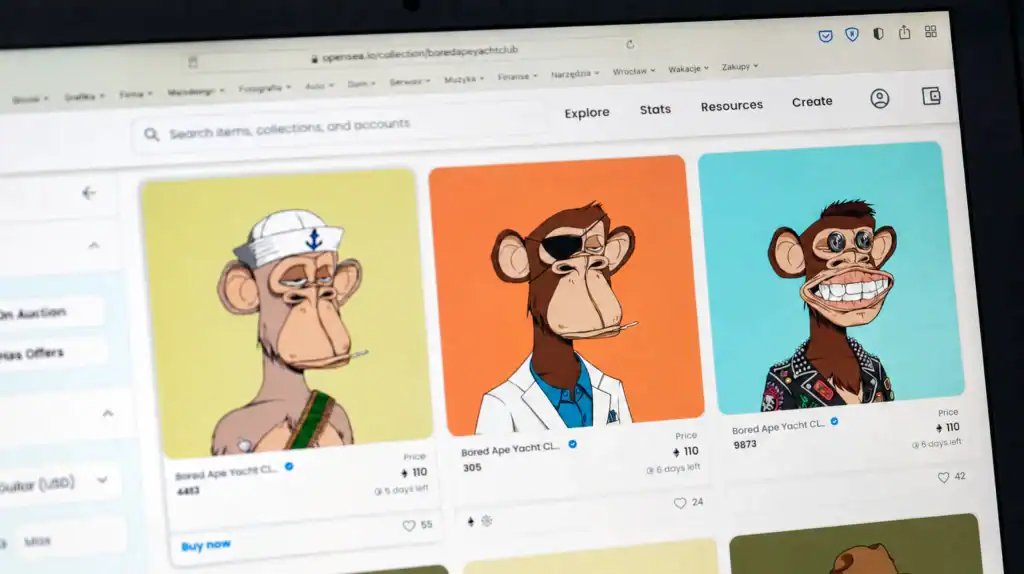
An NFT marketplace is a platform where people mint, list, buy, sell, and trade non-fungible tokens. Think of it as an online store, except every product is a one-of-a-kind digital asset, and every transaction gets recorded on a blockchain.
On a typical marketplace, users can:
- Connect a crypto wallet and log in without a traditional password
- Mint new NFTs from images, videos, audio, or other digital files
- List items for a fixed price or put them up for auction
- Browse and filter collections by category, price, or blockchain
- Buy, sell, or bid on assets using cryptocurrency
- Track ownership history and royalty payouts
Statista projects the NFT market development will reach more than 11.67 million active users worldwide by 2026. That’s a big enough audience to build a real business around, but only if your platform actually works the way users expect it to.
NFT Market Size in 2026
Before you spend a dollar on development, it helps to know the market you’re stepping into. NFTs went through a wild hype cycle, cooled off, and are now settling into steadier, more sustainable growth.
The global NFT market is forecasted to grow at a CAGR of roughly 9% between 2024 and 2028, pushing revenue past $600 million by the end of that window. Growth isn’t explosive anymore, but it’s consistent, which is actually a good sign for anyone planning a long-term platform instead of a quick hype drop.
NFT Market Snapshot 2026
| Metric | Figure |
| Global NFT market revenue (2025) | $504.3 million |
| U.S. NFT market revenue (2025) | $87.5 million+ |
| Average revenue per user (ARPU) | $44.5 |
| Active NFT users worldwide (by 2026) | 11.67 million+ |
| Market CAGR (2024–2028) | ~9.1% |
| Projected global revenue (2028) | $600 million+ |
The U.S. leads every other region in NFT revenue, which matters if you’re choosing where to focus your early marketing. It also tells you something else: this market rewards platforms that build trust, not just ones that launch first.
How Much Does It Cost to Build an NFT Marketplace?
Here’s the direct answer. NFT marketplace development cost typically falls between $30,000 and $300,000+, depending on complexity, blockchain choice, and how many advanced features you want at launch.
That’s a wide range, so let’s break it into tiers.
MVP Cost
A minimum viable product usually runs $30,000 to $45,000. This gets you wallet connection, basic minting, listings, and a simple trading flow. It’s built to test whether people actually want what you’re offering, not to handle massive trading volume.
Mid-Level Marketplace Cost
A growth-ready build with stronger security, royalty automation, and creator tools lands between $80,000 and $150,000. This is where most serious startups end up, since it balances real functionality with a manageable budget.
Full-Scale Ecosystem Cost
An enterprise-grade platform with cross-chain support, launchpad features, advanced analytics, and multiple revenue streams can run $150,000 to $300,000 or more. This tier is built for platforms expecting high trading volume and long-term scale.
Cost by Marketplace Tier
| Tier | Key Features | Cost Range | Typical Timeline |
| MVP | Wallet connect, minting, listings, basic trading | $30K – $45K | 6–10 weeks |
| Growth-Ready | Security layers, royalty automation, analytics, creator tools | $80K – $150K | 10–16 weeks |
| Full-Scale | Cross-chain support, launchpad, fractional ownership, AI curation | $150K – $300K+ | 16–24+ weeks |
Roughly 60% of new NFT platforms that launch never make it past their first year, and a big chunk of that failure traces back to underestimating what “full launch” actually requires. Planning your tier honestly from the start saves you from a painful rebuild later.
What Affects NFT Marketplace Development Cost
Your final invoice isn’t just about how many screens your app has. It comes down to a handful of technical decisions that shape everything downstream.
Blockchain Choice (Ethereum, Polygon, Solana)
The blockchain you build on affects speed, cost, and how much engineering work your team needs to do.
- Ethereum has the strongest ecosystem support but comes with higher gas fees.
- Polygon and other Layer 2 networks cut transaction costs significantly while keeping compatibility with Ethereum tools.
- Solana offers fast, low-cost transactions but requires developers comfortable with Rust instead of Solidity.
- Switching blockchains after launch is expensive, so this decision needs to happen early.
If you’re weighing blockchain options for your platform, working with a dedicated blockchain solutions development company early on saves you from an expensive pivot down the line.
Smart Contract Standards (ERC-721 vs. ERC-1155)
- ERC-721 is the standard for one-of-a-kind digital collectibles, where every token is unique.
- ERC-1155 supports batch minting, which lowers gas costs when users create multiple assets at once.
- Choosing the wrong standard early can force a costly rebuild once your platform scales.
- A well-planned custom NFT development approach lets you pick the standard that actually fits your use case.
Wallet Integration (MetaMask, WalletConnect)
- Supporting multiple wallets increases accessibility but adds integration time.
- A clunky wallet connection flow is one of the top reasons users abandon a platform before their first transaction.
- Advanced login options like email or social-based wallet creation add convenience but need secure backend handling.
Decentralized Storage (IPFS, Arweave, Pinata)
- Most NFT metadata and media files live off-chain in decentralized storage like IPFS or Arweave.
- Choosing reliable storage keeps your NFTs accessible even if your own servers go down.
- Pinata and similar pinning services add a small recurring cost but protect against data loss.
Smart Contract Audits and Security
- Skipping a smart contract audit is one of the most expensive mistakes a founder can make.
- A professional audit typically costs between $5,000 and $50,000, depending on contract complexity.
- Industry data shows exploited smart contracts have cost Web3 projects well over a billion dollars combined in losses over the past few years.
- Multi-signature admin controls and real-time transaction monitoring add a small development cost but prevent much larger losses later.
Feature vs. Cost Impact
| Feature | Cost Impact | Why It Matters |
| Multi-wallet support | Moderate | Wider accessibility, higher integration time |
| Cross-chain compatibility | High | Complex architecture, more testing needed |
| Royalty automation | Moderate | Builds creator trust, needs solid contract logic |
| Lazy/gasless minting | Moderate | Lowers user cost, adds backend complexity |
| Smart contract audit | Low to Moderate | Prevents exploits that cost far more later |
| AI-based curation | High | New tech, requires custom engineering |
NFT Marketplace Development Cost by Platform Type
Web Marketplace
Most NFT platforms start as web-based marketplaces since they’re faster to build and easier to update. This is usually the most budget-friendly starting point.
Mobile NFT App
A dedicated mobile app adds cost but also opens up a much bigger, more engaged audience. Mobile-first users tend to check in more often and trade more frequently once onboarding feels smooth. If you’re planning a mobile-first NFT experience, pairing it with solid custom mobile app development services keeps performance tight across both iOS and Android.
- Native apps cost more than cross-platform builds but perform better under heavy use.
- Push notifications for bids, sales, and drops boost user retention significantly.
- Mobile wallet SDKs need extra testing to avoid transaction failures.
White-Label vs. Custom Build
- White-label platforms are cheaper and faster to launch but limit differentiation.
- A custom NFT marketplace development solution costs more upfront but gives you full control over features, branding, and fee structure.
- Most platforms aiming for long-term growth eventually outgrow white-label limitations.
Hidden and Ongoing Costs Most Founders Miss
The build cost is only part of the picture. Plenty of founders budget for launch and forget what comes after.
- Server hosting and cloud infrastructure
- Gas fee subsidies for users during promotions or lazy minting
- Customer support staffing
- Marketing and community management
- Legal and regulatory compliance
- Ongoing smart contract updates and bug fixes
Annual maintenance typically runs 15% to 20% of your original build cost, every single year your platform stays live. For a $150,000 build, that’s roughly $22,500 to $30,000 a year just to keep things running smoothly.
NFT Prices in 2026 (Why This Matters for Your Platform)
NFT prices crashed hard after the 2021-2022 hype peak, and that actually changed what a healthy marketplace looks like today. Average sale prices have stabilized at a much more realistic level compared to the speculative highs of a few years ago.
This shift matters for your platform’s fee model. Lower average prices mean your marketplace can’t rely purely on high-value flips anymore. Trading volume and repeat users matter more than a handful of expensive sales. That’s why features like royalty automation and creator tools have become standard instead of optional. ARPU in the NFT space now sits around $44.5, which tells you the real money comes from steady, recurring activity, not one-off jackpots.
How to Reduce NFT Marketplace Development Costs
You don’t need to cut corners to save money. You just need to spend it in the right order.
Start with an MVP
Launch with core features first: minting, listing, wallet connection, and basic trading. Add advanced features once you know real users want them.
Use Layer 2 Solutions (Arbitrum, Optimism)
Layer 2 networks can cut gas fees by up to 90% compared to Ethereum’s main chain, which makes your platform cheaper to run and easier on your users’ wallets.
Try Gasless or Lazy Minting
Lazy minting lets creators list NFTs without paying gas upfront, since the fee only triggers at the point of sale. This lowers the barrier for new creators to join your platform.
Don’t Rebuild What Already Exists
Wallet authentication, transaction history, and royalty tracking don’t need to be built from scratch. Using audited, proven components saves both time and money without sacrificing quality.
NFT Marketplace Development Timeline
Cost and timeline go hand in hand. Rushing a build usually means paying for it later in bugs, security gaps, or a redesign.
Timeline by Phase
| Phase | What Happens | Duration |
| Discovery & Research | Define vision, features, target blockchain | 1–2 weeks |
| UX/UI Design | Wireframes, prototypes, user flow testing | 2–3 weeks |
| Core Development | Backend, smart contracts, minting logic | 5–8 weeks |
| Blockchain & Wallet Integration | Wallet SDKs, contract deployment | 3–4 weeks |
| Security Audit & Testing | Smart contract audit, QA, bug fixes | 2–3 weeks |
| Launch & Optimization | Go-live, monitoring, post-launch fixes | 2+ weeks |
A lean MVP can go live in as little as 6 to 10 weeks. A full-scale ecosystem often takes 4 to 6 months from discovery to launch, and that’s before you factor in post-launch iteration.
Choosing the Right NFT Marketplace Development Company
Picking a development partner matters just as much as picking your blockchain. Here’s what actually separates a good one from a risky one:
- A track record of shipped Web3 products, not just pitch decks
- In-house smart contract security experience, not outsourced audits as an afterthought
- Experience across multiple blockchains, so you’re not locked into one team’s comfort zone
- Post-launch support, since your platform needs updates long after day one
- Transparent pricing that breaks down where your budget actually goes
Plenty of agencies call themselves an NFT marketplace developer, but fewer can show real platforms handling real trading volume. That difference shows up fast once your user base grows past a few thousand people.
Why Cubix for Your NFT Marketplace

Cubix has spent years building Web3 products that outlast the hype cycle. As a hands-on NFT marketplace development partner, the focus stays on security-first smart contracts, smooth wallet integration, and interfaces that actually make sense to first-time collectors.
What sets the approach apart:
- Multi-chain expertise across Ethereum, Polygon, and other major networks
- In-house smart contract development with security baked in from day one, not bolted on later
- Both web and mobile builds under one roof, so your platform performs everywhere your users are
- A track record of turning early-stage ideas into marketplaces that survive past the first 10,000 users
Curious whether an NFT marketplace is still worth building in today’s market? Cubix breaks that down in Is Developing an NFT Marketplace Worth It in 2025?
“Web3 success isn’t random. It’s engineered through smart decisions and strong architecture.” – Salman Lakhani, CEO of Cubix
Get Your NFT Marketplace Built Right
Building an NFT marketplace in 2026 takes more than a good idea and a developer on Fiverr. It takes the right blockchain, the right security, and a team that’s shipped Web3 products before.
Cubix combines technical depth, transparent pricing, and real platform experience to turn your NFT concept into something that actually lasts. Whether you’re scoping an MVP or planning a full-scale ecosystem, the team can help you budget it right the first time.
Ready to find out exactly what your NFT marketplace will cost? Contact Cubix today and get a clear, honest estimate.
Frequently Asked Questions
1. How much does it cost to build an NFT marketplace in 2026?
NFT marketplace development typically costs $30,000 to $300,000+ in 2026. An MVP can cost around 30,000–45,000, while a growth-ready marketplace may cost 80,000–150,000. Large platforms with cross-chain support, advanced analytics, launchpad features, and AI can exceed $300,000.
2. How long does it take to build an NFT marketplace?
A basic NFT marketplace MVP can take 6–10 weeks to develop. A mid-level platform usually takes 10–16 weeks, while a full-scale marketplace with advanced blockchain features can take 4–6 months or longer.
3. What features should an NFT marketplace have?
Core features include crypto wallet integration, NFT minting, listing and buying, auctions, search and filters, creator profiles, transaction history, royalties, and blockchain integration. Advanced marketplaces may also include cross-chain trading, launchpads, analytics, AI-powered recommendations, and gasless minting.
4. Which blockchain is best for an NFT marketplace?
There is no single best blockchain for every NFT marketplace. Ethereum offers a mature ecosystem and broad adoption, Polygon provides lower transaction costs, and Solana offers fast, low-cost transactions. The right choice depends on your target users, transaction volume, budget, and technical requirements.
5. Can I build an NFT marketplace for both web and mobile?
Yes. An NFT marketplace can be developed as a web platform, mobile app, or both. A web marketplace is generally cheaper to launch, while adding iOS and Android apps increases development costs but can create a more accessible experience for mobile users.
6. Do NFT marketplaces need smart contract audits?
Yes. Smart contract audits are strongly recommended before launch because vulnerabilities can lead to stolen funds, incorrect transactions, or other security issues. Audit costs vary based on contract complexity, but they should be treated as part of the overall security budget.
7. How much does it cost to maintain an NFT marketplace?
Ongoing NFT marketplace maintenance generally costs around 15%–20% of the original development cost per year. Expenses can include hosting, security updates, blockchain changes, bug fixes, third-party services, monitoring, and feature improvements.
8. Can I reduce NFT marketplace development costs?
Yes. You can reduce costs by launching an MVP, choosing a cost-efficient blockchain, using established wallet and blockchain tools, implementing lazy minting, and prioritizing essential features. Adding advanced features after validating demand can also prevent unnecessary upfront spending.