Key Takeaways
- Healthcare software development in the UAE must meet local regulations, including DHA, DOH, and MOHAP standards.
- Hospitals and clinics rely on solutions like hospital management systems, clinic management software, and telemedicine platforms.
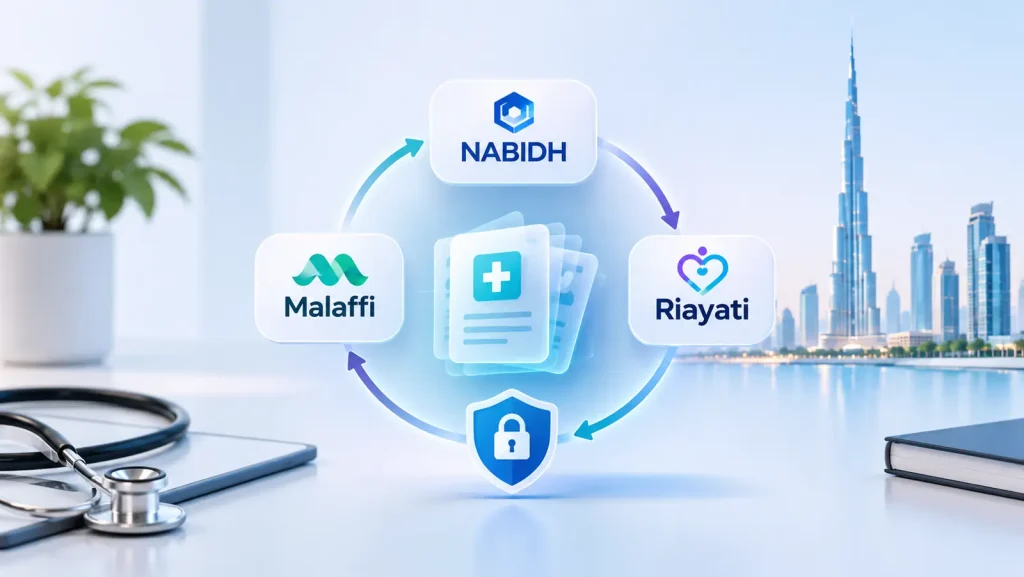
- Integration with UAE health data platforms such as NABIDH, Malaffi, and Riayati is vital for both interoperability and compliance.
- Development costs depend on complexity, chosen modules, and compliance needs, while custom solutions allow greater flexibility.
- Selecting a healthcare software development company in the UAE requires evaluating expertise, regulatory understanding, and support capabilities.
Healthcare providers in the UAE face mounting pressure to digitize operations and deliver better patient care. According to Grand View Research, the UAE healthcare software as a service market will reach 120.6 million dollars in 2026, highlighting rapid digital adoption. Hospitals and clinics must upgrade technology while managing regulatory demands unique to the UAE, making software selection and development more complex than elsewhere. This guide covers essential software types, integration, compliance, development processes, costs, and how to choose a vendor.
Healthcare software development in the UAE demands a locally grounded approach. Whether you manage a large hospital group in Abu Dhabi or a clinic in Dubai, digital healthcare solutions UAE must align with health authority standards, integrate smoothly with platforms like NABIDH or Malaffi, and offer user experiences that serve patients and clinical staff. Knowing what software can do, the legal requirements, and the practical realities of healthcare operations will help you invest wisely.
Transform Healthcare Operations. Build With Cubix Today
Contact UsThe Healthcare Software Landscape in the UAE
The UAE’s healthcare sector is evolving quickly, with digital innovation at the center of national health strategies. Both private and public providers now see digital transformation as critical to efficiency, better care, and meeting citizen expectations.
Digital Healthcare Growth in Dubai
Dubai stands out as a regional leader in digital healthcare, thanks to strong investment from the Dubai Health Authority (DHA) and a dynamic digital health startup scene. The Smart Health initiative set out to move most healthcare transactions online, digitize records, and introduce AI into routine care. By 2026, nearly all large hospitals in Dubai use hospital management software UAE to manage admissions, billing, EHR, and patient communication. Startups in Dubai Healthcare City and Dubai Silicon Oasis are developing remote monitoring platforms, telemedicine apps, and AI solutions, fueling a thriving healthcare IT market.
Digital Healthcare Initiatives in Abu Dhabi
Abu Dhabi has made digital healthcare a focus through Vision 2030 and Department of Health (DOH) strategies. The Malaffi health information exchange now links almost every hospital, clinic, and diagnostic center in the emirate. This promotes data sharing and real-time access across the healthcare system. Abu Dhabi’s hospitals use AI for diagnostics and predictive analytics, making healthcare technology solutions UAE more accessible to organizations of all sizes. With DOH mandates for data sharing via Malaffi and ongoing investment in AI partnerships, Abu Dhabi’s approach emphasizes secure data exchange, analytics, and patient-centered care.
The Shift Toward Connected Healthcare
National platforms such as NABIDH (Dubai), Malaffi (Abu Dhabi), and Riayati (federal) highlight the UAE’s commitment to connected healthcare. These systems enable health data exchange and boost care coordination. Telemedicine adoption has soared, now supported by both regulations and insurance reimbursement. Patient portals have become standard, providing citizens with digital access to their records, test results, and appointments. These advances demonstrate the ongoing healthcare digital transformation UAE, as providers invest in technology to meet expectations for compliance, interoperability, and care quality.
Types of Healthcare Software Hospitals and Clinics Need
Hospitals and clinics use a range of software platforms to manage care, streamline operations, and meet regulatory standards. The right technology mix enables safe, efficient, and personalized care for UAE residents.
Hospital Management Systems
Hospital management software UAE offers control over admissions, discharges, staff scheduling, and billing. Robust HMS platforms support EHR, workflows across departments, pharmacy and laboratory integration, financial reporting, inventory, and bed management. Leading platforms like MediQal and CareWare, both verified in 2026, support DHA, DOH, and MOHAP compliance. Large UAE hospitals require hospital software development tailored for multi-facility networks and major private organizations.
Clinic Management Software
Clinic management software UAE focuses on outpatient clinics and specialty practices. Features include appointment scheduling, doctor rosters, secure patient records, invoicing, insurance claims, prescription management, and reminders. Solutions like HealthGage Clinic and DocPulse help clinics automate tasks and ensure accurate documentation. As clinics grow, healthcare system development UAE adapts these platforms with new modules or local integrations. For a detailed overview, see our guide to medical clinic management app development.
Electronic Health Records (EHR)
Every provider in the UAE must manage records that are secure, accurate, and accessible. Medical software solutions UAE increasingly use certified EHR systems, as standalone platforms or within broader suites. UAE EHR solutions offer local language support, compliance with data residency laws, export for NABIDH or Malaffi, audit trails, and secure access. As digital health adoption grows, healthcare software solutions are expected to support open standards and regular regulatory updates.
Telemedicine Software
Healthcare app development UAE is seeing high demand for telemedicine platforms offering secure video consultations, e-prescriptions, appointment booking, and remote monitoring. Telemedicine is now regulated and reimbursable under MOHAP and DOH policies, making dedicated software essential. Providers like TruDoc 24×7, Medcare, and Okadoc, all current in 2026, offer modules integrated with patient records and admin systems. This aligns with trends in healthcare mobile app development.
Patient Portal and Healthcare Apps
Modern healthcare software solutions include web portals and mobile apps for patients. These give real-time access to health history, lab results, prescriptions, and appointments. Key features include online payments, reminders, secure messaging, and mobile device access. Custom healthcare software development UAE often delivers branded apps with multilingual support and user experiences tailored for local preferences.
Laboratory and Pharmacy Management Software
Lab and pharmacy systems connect directly to EHR or HMS, handling orders, results, medication tracking, and dispensing. In the UAE, medical software development focuses on lab software for DHA/DOH-compliant reporting and pharmacy solutions that align medication data with patient records. Integration with external labs, insurance, and regulatory databases is common, as real-time data and auditability become priorities.
Essential Features of Healthcare Software

Effective healthcare software addresses operational needs and meets high standards for security, usability, and compliance. Each feature impacts daily workflows and patient experience.
Patient Records and Data Management
Centralized, searchable digital records are essential in healthcare IT services UAE. Good systems provide quick retrieval, editing, and secure sharing across departments, with audit trails for compliance.
Appointment and Scheduling
Automated appointment reminders and resource allocation help reduce no-shows and optimize workflows. Custom medical software streamlines scheduling, integrates with portals, and supports multi-location management when required.
Billing and Insurance Management
Software must manage claims, insurance verifications, payment tracking, and financial reporting. Medical software development in the UAE includes integrations for insurance clearinghouses, e-claims standards, and payment gateways.
Patient Communication
Messaging tools, SMS/email notifications, and reminders are standard features. Secure channels for sharing lab results and care plans increase patient engagement and satisfaction.
Reporting and Analytics
Custom dashboards let UAE providers monitor performance, regulatory status, outcomes, and finances. Reporting modules export data for DHA, DOH, or MOHAP audits and support customizable views for different stakeholders.
Security and Access Control
Role-based permissions, multi-factor authentication, encryption, and activity logs are essential in healthcare IT services UAE. Custom healthcare software development UAE emphasizes these controls to comply with federal and emirate guidelines.
Healthcare Software Integration in the UAE

For UAE providers, integrating new software with hospital systems, platforms, and third-party modules is critical to modernization and compliance.
Connecting Existing Hospital Systems
Integrating healthcare software solutions UAE with legacy EHR, hospital management, or billing systems prevents data silos. Integration often uses middleware, service buses, or APIs, letting data flow across admissions, clinical, pharmacy, and lab systems without extra entry.
Healthcare APIs, HL7 and FHIR
Open standards drive integration. HL7 and FHIR protocols enable secure, consistent data exchange between platforms. Custom modules may translate data for regulatory compliance or connect with labs and insurers.
Integrating with UAE Healthcare Platforms
NABIDH (Dubai), Malaffi (Abu Dhabi), and Riayati (federal) are central to UAE health data interoperability. Integration uses approved APIs for secure data sharing on referrals, lab results, and care coordination. Grand View Research reports the UAE healthcare ERP market will produce 44.5 million dollars in revenue in 2026, showing the level of tech modernization underway.
Healthcare Software Compliance Requirements in the UAE
Compliance shapes every software project in the UAE, governed by federal and emirate laws distinct from other regions.
UAE Healthcare Data Protection Laws
UAE Federal Law No. 2 of 2019 and the Personal Data Protection Law set rules for medical data use, storage, and sharing. Providers must keep health information confidential, store it within UAE borders, and release it only to authorized recipients. Digital healthcare solutions UAE must support privacy by design, consent management, and fine-grained access control. Regular audits and breach notification protocols are mandatory.
DHA, DOH and MOHAP Requirements
The DHA in Dubai, DOH in Abu Dhabi, and MOHAP all enforce their software certification, interoperability, and compliance checks. DHA-approved hospital management software UAE must integrate with NABIDH, while DOH in Abu Dhabi requires regular data submissions to Malaffi and proof of access control. MOHAP’s Riayati system covers the UAE for specialists and insurers, adding another compliance layer for hospital software development.
Data Security, Consent and Access Control
Confidentiality, multi-level permissions, consent management, and audit logging are standard. Only personnel with a direct need may access records, and every action is logged. Custom medical software in the UAE increasingly includes biometric authentication and automated consent. Integration with NABIDH, Malaffi, and Riayati demands extra security validation, all confirmed as required in 2026.
Custom Healthcare Software vs. Ready-Made Solutions
Decision-makers weigh benefits and trade-offs between custom healthcare software development UAE and off-the-shelf healthcare software solutions.
| Factor | Custom Healthcare Software | Ready-Made Solutions |
|---|---|---|
| Flexibility | Fully tailored to unique needs and workflows; can evolve as requirements change | Limited customization to out-of-the-box features and modules |
| Compliance | Built with UAE regulations (DHA, DOH, MOHAP) in mind, easier to update for new laws | May require complex adaptation or extra modules to meet UAE compliance |
| Integration | Can be designed to integrate with any platform (NABIDH, Malaffi, Riayati, insurance, legacy systems) | Fixed, with integration often requiring third-party tools or extra fees |
| Cost | Higher upfront investment, transparent ongoing costs | Lower initial cost, but add-on fees or limits may add up |
| Scalability | Grows with your organization, supports major upgrades | May require complete replacement as needs outgrow capabilities |
Custom solutions fit organizations with complex workflows, strict UAE compliance needs, or diverse system integration. They suit rapid product evolution or new care models, like mobile-first clinics. Ready-made solutions fit smaller clinics with basic workflows and modest budgets but may need replacement as needs change.
Healthcare Software Development Process in the UAE

A successful healthcare software project follows a clear, structured process shaped by local regulations and approvals.
Requirement Analysis
1. Involve all hospital or clinic departments to define needs.
2. Map workflows for admissions, billing, labs, and care.
3. Document regulatory requirements with compliance officers involved early.
UI/UX Design
1. Prototype patient and staff interfaces for accessibility and clarity.
2. Include local language support and branding.
3. Test navigation with real users to get feedback before development.
Development and Integration
1. Build with modular frameworks and local hosting for easy updates.
2. Integrate APIs for NABIDH, Malaffi, and Riayati to ensure compliance.
3. Focus on performance and responsive design for all devices.
Testing and Security Checks
1. Run functional tests using real scenarios and data.
2. Perform vulnerability scans and penetration testing.
3. Confirm compliance with UAE health data privacy and audit requirements.
Deployment and Maintenance
1. Roll out in phases, starting with test environments.
2. Provide user training for medical and administrative teams.
3. Set up support, monitoring, and regular updates post-launch.
Healthcare Software Development Cost in the UAE
Healthcare software development cost UAE depends on complexity, compliance, integrations, features, and support. Understanding these drivers helps you budget effectively.
| Factor | Description | Typical Range |
|---|---|---|
| Complexity/Modules | Number of modules required (EHR, billing, telemedicine, etc.) | AED 100k – AED 800k |
| User Roles | Number of users, access permissions, and concurrent sessions | Scaling with user count |
| Third-Party Integrations | Connections to NABIDH, Malaffi, Riayati, insurance, lab, pharmacy | AED 30k – AED 150k/add-on |
| Mobile App Features | iOS and Android app support, patient or doctor interfaces | AED 50k – AED 250k |
| AI/Analytics Modules | Automated triage, NLP, diagnostic analytics | AED 80k – AED 500k+ |
| Security & Compliance | Encryption, access control, audit logging, and legal reviews | AED 30k – AED 100k |
| Ongoing Maintenance & Support | Annual support, updates, training, and integration management | 15-20% of project cost/year |
Healthcare software development cost UAE changes with organization size and technology stack. For instance, a basic clinic management software cost UAE is less than a multi-facility hospital management project with custom EHR, AI, and deep integration.
AI-driven software has higher initial costs due to advanced analytics and extra compliance. Grand View Research notes the UAE artificial intelligence (AI) in healthcare market will hit 265.7 million dollars in 2026, showing that AI and data science will make up a growing share of digital health budgets. Plan for ongoing costs: updates, support, and compliance as regulations evolve.
How to Choose a Healthcare Software Development Company in the UAE
Choosing a healthcare software development company UAE is a strategic step for hospitals and clinics. The right partner should show local expertise, regulatory skill, and strong support.
- Proven results with UAE hospitals and clinics
- In-depth knowledge of DHA, DOH, MOHAP frameworks
- Integration expertise for NABIDH, Malaffi, and Riayati
- Capabilities in healthcare IT services UAE, from apps to AI
- End-to-end delivery, from requirements to support
- Strong focus on security, consent, and role-based access
- Transparent communication, UAE client references, and ongoing maintenance options
Shortlist vendors who deliver custom solutions, focus on continuous improvement, and offer references and case studies. Evaluate their project approach and support to ensure the right fit. For more insights, see our article on how to choose a software development company.
Healthcare Software Projects in the UAE: Why Cubix Stands Out
Cubix delivers sector expertise and a UAE-focused approach to healthcare software development. The team tracks DHA, DOH, and MOHAP regulations closely, ensuring every project meets or exceeds compliance.
- Direct experience integrating apps with NABIDH (Dubai), Malaffi (Abu Dhabi), and Riayati (federal)
- Custom healthcare software development UAE, including advanced hospital and clinic modules
- Healthcare app development UAE for patient portals, mobile EHR, and doctor communication
- In-house specialists in security, audit logging, AI triage, and role-based access for UAE privacy law
- Dedicated to automating workflows, reducing admin work, and improving patient satisfaction
- Client results include faster admissions, better compliance audit outcomes, and higher patient portal usage
The Cubix approach matches the UAE’s digital transformation goals. With a strong track record and detailed knowledge of health authority standards, Cubix helps hospitals and clinics deliver safe, efficient, and locally compliant care. In 2026, as AI and NLP become standard, Cubix invests in advanced solutions; the UAE NLP healthcare market is expected to reach 93 million dollars by 2031. Learn more about our custom software for healthcare clinics to understand what you need before you build.
Build Smarter Healthcare Software. Contact Cubix Today
Contact UsFrequently Asked Questions
1. How much does healthcare software development cost in the UAE?
Costs vary by project complexity, the number of modules, and regulatory needs. Most projects start in the tens of thousands of AED and increase with advanced features and integrations.
2. How long does it take to develop healthcare software for UAE hospitals or clinics?
Simple solutions can take 3-6 months, while complex custom platforms may require 9-18 months, especially when integrating with national health data platforms.
3. What regulations must healthcare software in the UAE comply with?
UAE Federal Law No. 2 of 2019, the Personal Data Protection Law, and DHA, DOH, and MOHAP requirements are all essential for compliance.
4. Can healthcare software integrate with existing hospital or clinic systems in the UAE?
Yes, skilled providers use APIs and protocols like HL7 or FHIR to connect new software with legacy systems and UAE health data platforms.
5. What types of software do UAE hospitals and clinics need most?
Hospitals and clinics commonly use hospital management systems, clinic management software, EHR, telemedicine platforms, and patient portal apps.
6. Is custom healthcare software better than ready-made solutions in the UAE?
Custom solutions allow greater compliance, integration, and flexibility, while ready-made options are faster and less expensive for basic needs.
7. What is the difference between hospital and clinic management software?
Hospital systems manage more complex workflows and departments, while clinic software handles appointments, records, and payments for simpler settings.
8. How important is data security in UAE healthcare software?
Data security is critical, with strict standards for privacy, access controls, audit logs, and secure hosting under UAE law.
9. How do I choose the right healthcare software development company in Dubai or Abu Dhabi?
Seek a partner with UAE healthcare experience, regulatory expertise, strong local references, and a proven track record with hospitals or clinics.
10. Can healthcare software support telemedicine and mobile health in the UAE?
Yes, modern solutions support video consultations, remote monitoring, mobile apps, and secure patient communication within UAE compliance frameworks.