Key Takeaways
- Check real proof, not sales talk. Ask for live, multiplayer work you can test yourself.
- Match the team model to your needs. Freelancers, dedicated teams and studios each fit different jobs.
- Always start with discovery. A short planning phase saves months of rework.
- Watch for red flags like vague estimates, no load-testing plan and unclear IP ownership.
- Ask hard questions before you sign. Get answers on process, security and ownership in writing.
- Plan for life after launch. Live shows need monitoring, fixes and fresh content every week.
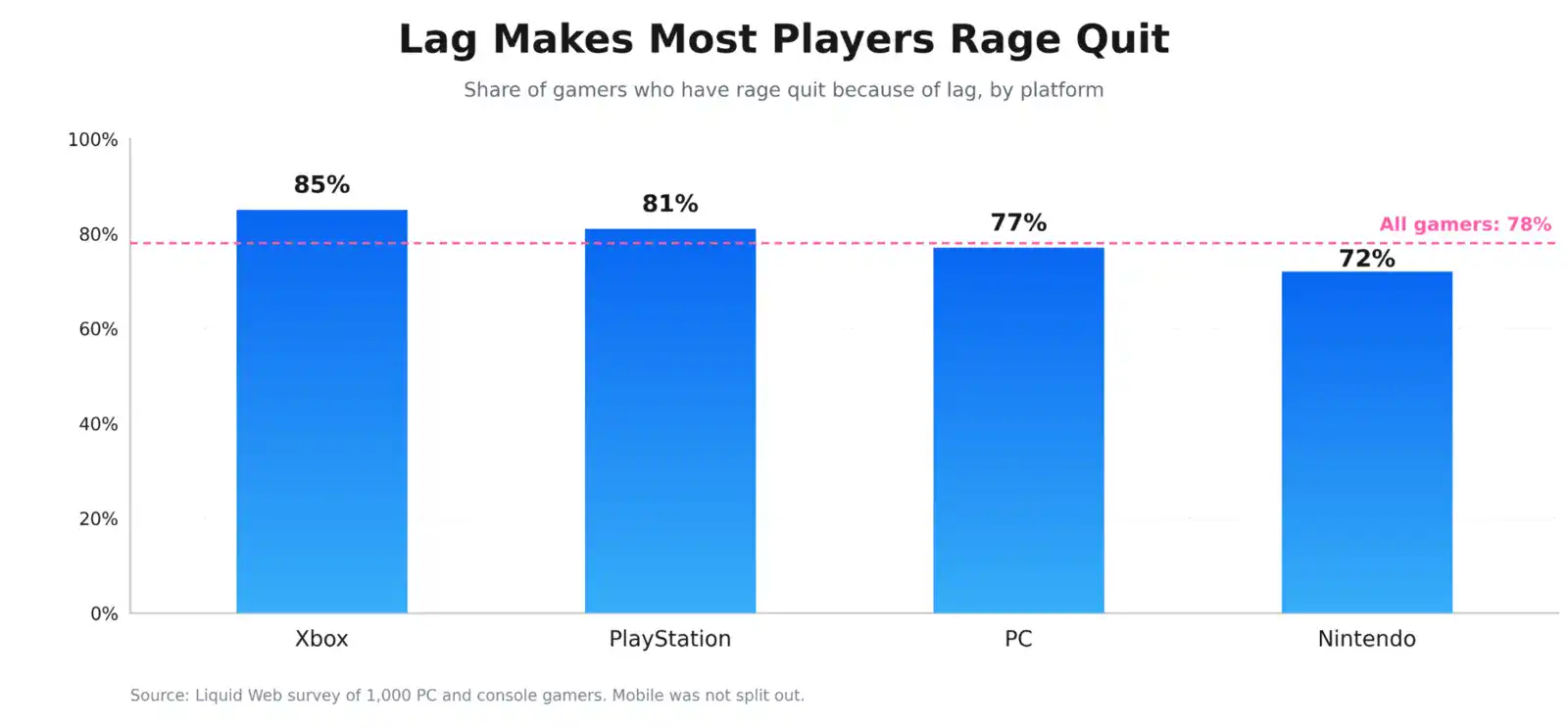
Liquid Web found 55% of gamers abandoned a game over lag. That survey covered 1,000 gamers. Now picture lag hitting a live quiz with thousands playing. The right game show app development company helps you avoid that.
Live game shows are not like normal apps. Thousands of people tap an answer at the same second. The timer must match on every phone. Scores must update fast. One weak link can break the whole show.
This guide helps you pick a partner with less guesswork. You get a scorecard, red flags and an RFP checklist. You also get questions to ask before you sign. Take what you need and skip the rest.
Build Your Game Show App With Cubix’s Expert Team
Contact UsWhat Is a Game Show App?
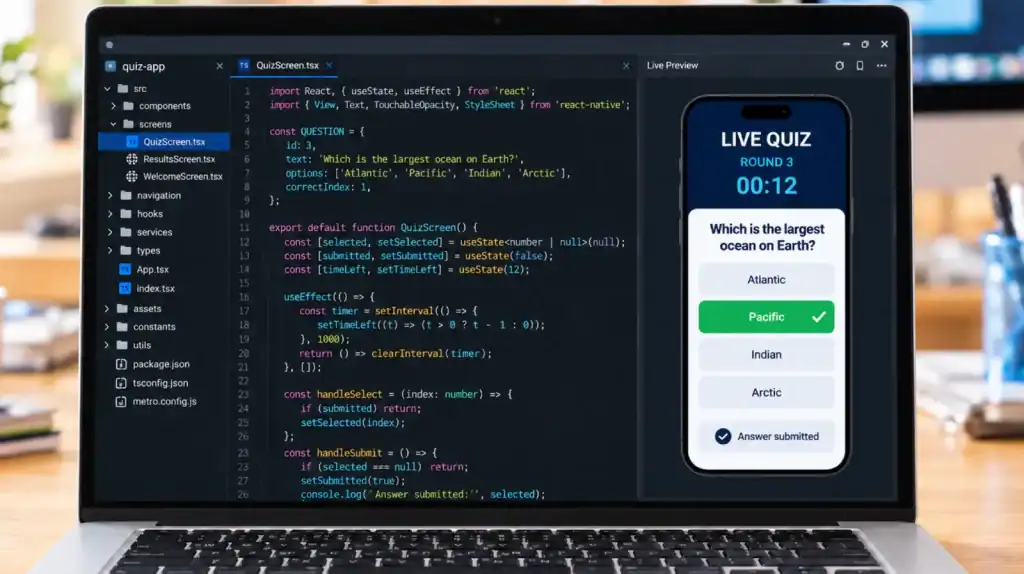
A game show app lets multiple players compete in the same live contest using their phones. A host manages the show, players answer questions in real time, and scores update after each round.
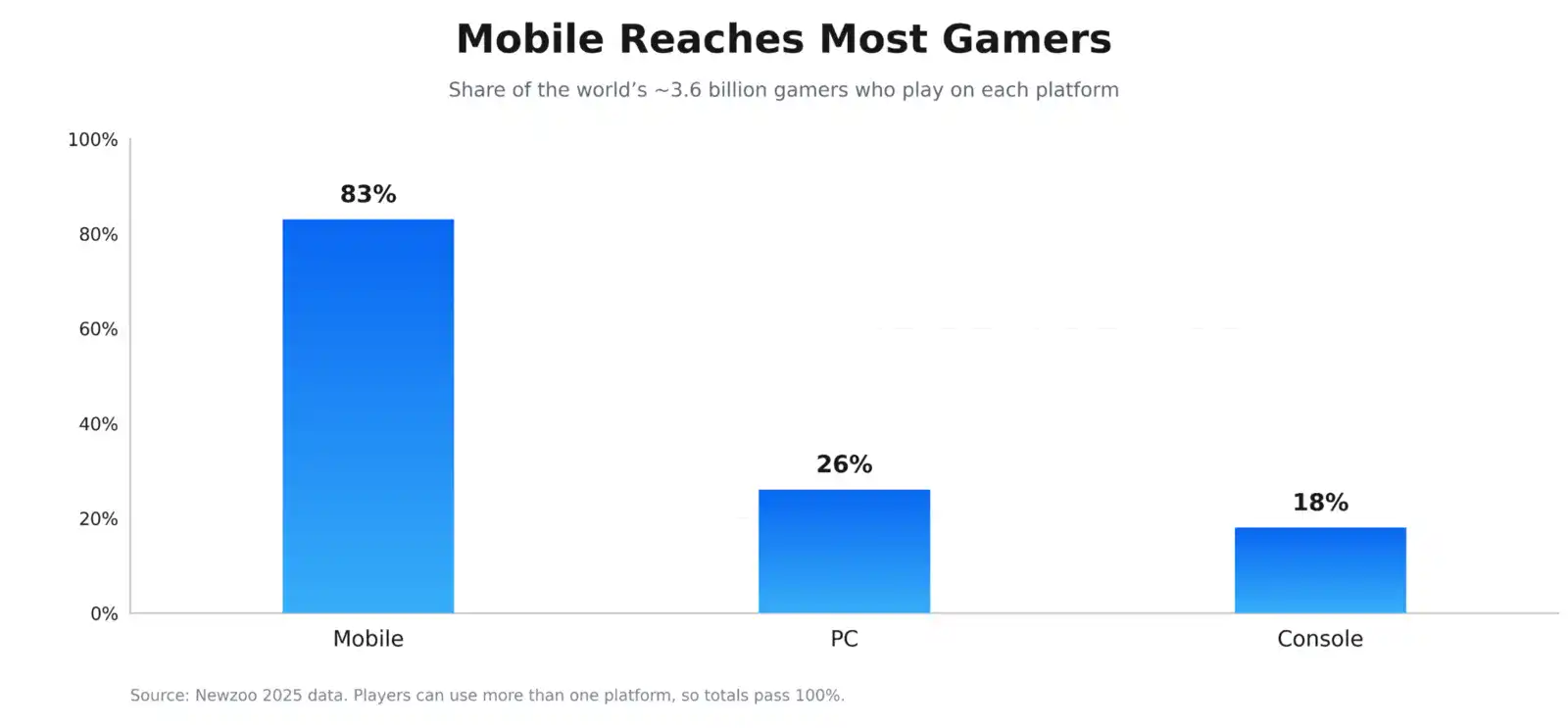
Mobile gaming offers a massive audience. Newzoo estimates around 3 billion mobile gamers worldwide, representing approximately 83% of all gamers. This makes mobile a strong platform for reaching audiences through interactive game shows.
Building this experience requires the right game development service provider to create features such as real-time gameplay, host controls, live scoring, and content management. Unlike basic gamification apps that add points and badges to existing products, game show apps need synchronized gameplay to keep every participant connected throughout the competition.
Live vs Pre-Recorded Game Shows
The two formats work in very different ways. Pick the one that fits your goals.
- Live shows: Everyone plays at the same moment. This needs strong servers and tight timing.
- Pre-recorded or async shows: Players join any time. These are easier to scale.
- Hybrid shows: A live finale follows async rounds. This balances cost and excitement.
Why They Are Hard to Build
Game show apps face problems that normal apps do not. Good game show app development plans for all of them.
- Traffic spikes: Thousands join in the last minute before the show starts.
- Timing: Every player needs the same countdown, even on weak networks.
- Sync: Answers, scores and leaderboards must match across all devices.
- Moderation: Chat and names need filters. Without them, shows turn ugly fast.
What Team Do You Need?
A game show app needs more than a few coders. Skipping a role often costs you later. CISQ pegs the cost of poor software quality at $2.41 trillion. That is the US figure for 2022. QA is not a nice extra. It saves real money.
Here are the core roles and what each one does.
Table 1: Core team roles for an interactive game show app
| Role | What they do | Why it matters for a game show |
|---|---|---|
| Game designer | Shapes rounds, scoring and rewards | Keeps players engaged and the rules fair |
| Mobile developer | Builds the app for iOS and Android | Players judge you on how the app feels |
| Backend engineer | Builds servers, accounts and live data | Handles thousands of players at once |
| UI/UX designer | Designs screens, flows and animations | Makes answering fast and clear |
| QA engineer | Tests features, devices and edge cases | Finds bugs before players do |
| DevOps engineer | Sets up hosting, scaling and alerts | Keeps the show online on show night |
| Project manager | Plans work, tracks risks, talks to you | Keeps the budget and dates honest |
You can hire game designers alone or inside a full team. Either way, make sure design leads the build.
Roles People Often Forget
Teams often miss a few jobs until launch week. Add them to your plan early.
- Live ops manager: Runs events, schedules shows and handles problems in real time.
- Content tool builder: Creates the admin panel where your team adds questions and prizes.
- Security engineer: Protects player data, payments and your game logic from cheats.
Freelancers vs Dedicated Team vs Full-Cycle Studio
You have three main ways to build. Each one trades cost, control and effort.
Deloitte’s 2024 outsourcing survey shows a shift in how firms think. Only 34% now put cost first. In 2020, that was 70%. Today, 42% say they want specialized talent.
Freelancers vs dedicated team vs full-cycle studio
| Factor | Freelancers | Dedicated team | Full-cycle studio |
|---|---|---|---|
| Cost control | Low rates, but hard to predict | Steady monthly cost | Fixed or phased price |
| Speed | Fast to start, slow to scale | Fast once the team is set | Fast, with a full team ready |
| Management effort | Very high, you manage each person | High, you set the direction | Low, the studio manages the work |
| Risk | High, one person can leave | Medium | Lower, work is spread across a team |
| Scalability | Weak | Strong | Strong |
| Best fit | Small tasks and prototypes | Teams with a product lead | Teams that want one owner |
When Freelancers Work
Freelancers are a good fit for small, clear jobs.
- You need a prototype or a single feature.
- You have a tech lead who can manage the work.
- Your show is small and does not need heavy live traffic.
When a Dedicated Team Works
A dedicated team acts like an extension of your own staff.
- You already have a product owner and a clear roadmap.
- You want long-term control over priorities.
- Your needs will change as the show grows.
When a Full-Cycle Studio Works
A studio takes the work from idea to launch and beyond.
- You do not have an in-house tech team.
- You want one partner to own design, build, testing and launch.
- Your show needs real-time play at scale.
An in-house team is the better pick in one case. If games are your core business, build your own team. Plan for years of work. It costs more upfront. It pays off over time.
Cubix’s site lists staff augmentation, a dedicated pod and outsourced production. You can hire mobile game developers by role. Or you can build a full team. That helps if your needs change midway.
How to Choose a Game Show App Development Company
Many buyers pick on a nice portfolio and a good call. That is risky. PMI’s 2018 study found 52% of projects had scope creep. So over half of projects saw uncontrolled change.
PMI also studied teams strong in power skills. Power skills include communication and leadership. Those teams saw scope creep on only 28% of projects. Good communication from your partner is not a bonus. It protects your budget.
Use this scorecard to rate each partner from 1 to 5. Ask for the evidence in the third column. Then compare totals.
Partner evaluation scorecard
| Criteria | What to look for | Evidence to request |
|---|---|---|
| Relevant portfolio | Live, multiplayer or quiz-style apps | Links you can download and test |
| Technical architecture | Clear plan for servers, data and scaling | A sample architecture diagram |
| Real-time experience | Proven live sync for many players | A walkthrough of a past live project |
| UI/UX design | Fast, simple screens for quick answers | Design files and playtest notes |
| QA and load testing | A written test plan with targets | Sample test reports and tools used |
| Project management | Regular updates and clear milestones | A sample status report |
| Security and IP process | NDAs, access control and secure code | Their process, reviewed by your counsel |
| Content operations | Easy tools to add questions and prizes | A demo of an admin panel |
| Post-launch support | Monitoring, fixes and updates | A sample support plan with response times |
Portfolio vs Claimed Skills
A portfolio shows what a team has built. A pitch shows what it says it can build. These are not the same thing.
Here is how to tell them apart.
- Portfolio proof: A live app you can download, play and stress with friends.
- Claimed skill: A slide that says “real-time multiplayer” with no example.
- Partial proof: A game with chat or leaderboards, but no live events.
Treat claims as questions, not answers. Ask the team to show you the work.
Evidence to Ask For
Ask every partner for the same items. This keeps your scoring fair.
- Two or three case studies close to your project
- A sample architecture diagram with notes
- The names and roles of the people on your team
- Their testing approach, including load tests
- Their communication plan, such as weekly calls
- References you can call, where they can share them
Not every partner can share every item. Some work is under NDA. Ask what they can show instead.
You can also weigh the scorecard to match your goals. Here is one suggested split. It is a framework, not survey data.
Shortlist companies that fit your budget and project requirements. You can also consider Cubix, a full-cycle game development company that supports projects from initial concept and design through development, testing, and launch. Compare providers using the same scorecard to make the final decision easier to justify to your team.
How to Check Multiplayer Experience
Lag kills live shows. Liquid Web’s survey also found 78% had rage quit over lag. Players on every platform did it. A real multiplayer game development company plans for this early.
This survey covered PC and console players. Mobile was not split out. The lesson still applies. Players hate delays.
Ask About Architecture
Good backend architecture is the base of any real-time multiplayer game. Ask how the team plans to build it.
- Which tools handle real-time messages, and why?
- How does the system add servers when players surge?
- Where does the server decide scores, so players cannot cheat?
- What happens if a player loses signal mid-round?
A strong partner explains the trade-offs in plain words. A weak one hides behind jargon.
Ask About Load Testing
Load testing shows how the app acts under heavy traffic. Never skip it.
- What player count do they test for, and why that number?
- Which tools simulate the crowd?
- Can they share results from a past test?
- How often do they retest before launch?
Pick your target first. Test for more than your best guess. A show that goes viral will not wait for you.
Ask About Monitoring
Monitoring tells you something broke before players post about it.
- What do they track, such as latency, errors and drop-offs?
- Who gets alerts, and how fast do they respond?
- Can you see live dashboards on show night?
- How do they review a show after it ends?
Any mobile game development company should show you real dashboards. Ask for a demo, not a promise. Browse these mobile game development solutions to see a full scope.
What Happens in a Discovery Phase?
Discovery is a short planning stage before the build. It turns a big idea into a clear plan. Skipping it is a common and costly mistake.
PMI’s requirements research found 5.1% of every project dollar is wasted. Poor requirements management causes it. Discovery is how you avoid that waste.
Requirements and Scope
This step answers what you are building and for whom.
- Who plays, and on what devices?
- How many players should the show handle?
- What features are must-haves, and what can wait?
- How will your team add content each week?
Prototype and Technical Risks
A prototype lets you test the riskiest parts first. For a game show, that means timing and sync.
- Build a small version of the core round.
- Test it with real people on real phones.
- List risks, such as server load or weak networks.
- Decide how to tackle each risk before full development.
Estimates and Milestones
After discovery, the partner can give a real estimate. It should come with clear steps.
- Each milestone has a goal, a date and a deliverable.
- Estimates show a range, with the reasons behind it.
- You know what is in scope and what is out.
- You can pay by milestone, not by hope.
Cubix describes a process that starts before production. The team first defines goals, audience, platforms and scope. It also defines technical requirements. Its site lists six steps, from idea to post-launch updates. That kind of order cuts guesswork.
Red Flags to Watch For
Some warning signs show up early. Spot them before you sign.
McKinsey and Oxford studied more than 5,400 large IT projects. On average, they ran 45% over budget. They also delivered 56% less value than planned. These were big projects, over $15 million. Your app may be smaller. The lesson still holds. Plan hard and check often.
Watch for these six red flags.
- Vague estimates: A single number with no breakdown. You cannot check what you cannot see.
- No discovery phase: They jump to coding on day one. Risks stay hidden until they get costly.
- No load-testing plan: They plan to test later. Live shows cannot fail on launch night.
- Unclear IP ownership: The contract does not say who owns the code. This can trap you later.
- Weak post-launch plan: Support ends at launch. Live shows need fixes and updates all the time.
- Generic portfolios: Only slides and screenshots, with no playable apps. You cannot judge what you cannot test.
One flag may be a fixable gap. Three or more should make you pause. Trust your gut and ask more questions.
Questions to Ask Before Signing
IBM’s 2026 report pegs the global average breach at $4.99 million. In the US, the figure is $11.5 million. Security and ownership are not side topics. Ask about them early.
Use these questions in your calls. Write down each answer.
Questions About Experience
- Which live apps have you shipped? Can I test them?
- Who from that project will work on mine?
- What was the hardest technical problem you solved, and how?
- Can I speak with a past client?
Questions About Process
- What does your discovery phase include? How long does it take?
- How do you handle changes in scope?
- How often will I see working builds?
- Who is my main contact, and how fast do they reply?
Questions About Ownership and Security
- Who owns the source code, assets and designs when we finish?
- Do you sign an NDA before seeing my concept?
- How do you protect player data and access to servers?
- What happens to the code if we part ways?
Have qualified legal counsel review any IP and contract terms. Have your security team review the security answers. This guide is not legal advice.
RFP Checklist for Game Show Apps
A clear RFP gets better bids. It also helps you compare partners fairly. PMI ties 47% of unsuccessful projects to inaccurate requirements. A strong RFP is your first defense.
RFP requirements checklist
| Item | What to include | Why it matters |
|---|---|---|
| Scope | Features, game modes and what is out of scope | Stops scope creep before it starts |
| Platforms | iOS, Android, web or all three | Changes cost, tools and timeline |
| Concurrency | Peak players you expect at once | Drives server design and test plans |
| Content operations | Who adds questions, how often, and with what tools | Shapes your admin panel and staffing |
| Integrations | Payments, login, analytics, ads or streaming | Adds work that bidders must price |
| Ownership | Who owns code, assets and data | Avoids disputes after launch |
| Acceptance criteria | Clear tests that prove each feature works | Defines when a milestone counts as done |
What a Good Proposal Should Include
When bids come in, check that each one has the basics.
- A clear scope, with exclusions listed
- A team plan with names and roles
- A timeline with milestones
- A cost range and what drives it
- A testing plan, including load tests
- A post-launch support offer
- IP, NDA and data terms, for your counsel to review
Skip any proposal that misses two or more of these.
Post-Launch Support
Launch day is not the finish line. It is the starting line. Live shows need weekly care. Players leave fast if you stop.
AppAgent puts average Day 30 game retention at 3% to 6%. Nearly all players are gone within a month. Fresh content and a smooth app keep them around.
Mobile game retention benchmarks (2026)
| Retention interval | Average | Good | Top tier |
|---|---|---|---|
| Day 1 | 25% to 30% | 35% to 40% | 45%+ |
| Day 7 | 10% to 15% | 18% to 22% | 25%+ |
| Day 30 | 3% to 6% | 8% to 10% | 12%+ |
Monitoring and Bug Fixes
Even a well-tested app has surprises on show night. A good support plan covers them.
- Live dashboards for errors, lag and crashes
- Alerts that reach a real person fast
- A clear process for urgent fixes
- Regular updates for new phones and OS versions
Content Updates and Live Events
Your show is only as fresh as its content. Plan for it.
- Easy tools to add questions and rounds
- A calendar for special events and seasonal shows
- New prizes, themes and game modes over time
- Quick moderation tools to remove bad content
Analytics and Scaling
Data tells you what players like. Use it.
- Track drop-off by round and by day
- Test small changes, such as timer length
- Review each show after it ends
- Add server capacity before big events
Cubix’s FAQ lists post-launch support. It covers bug fixes, performance monitoring and feature updates. It also names content expansions and server maintenance. See the full scope on the Cubix games site. Ask any partner for a similar list in writing.
Why Work With Cubix for Game Show Apps
We built this guide to help you judge any partner fairly. We want you to judge us the same way. Score Cubix on the same scorecard as everyone else.
What Cubix Offers
Here is what Cubix publishes about its services. Treat each point as a claim to verify.
- Experience: Cubix says it is trusted for 200+ games. It builds for mobile, PC and console. Ask which titles are live and multiplayer.
- Tools: Its technology list includes Unity, Unreal, Nakama, Photon and AWS. Ask how each would fit your show.
- Team models: Staff augmentation, a dedicated pod or full outsourced production.
- Process: Six steps, from the first idea through post-launch updates.
- Testing: The site says QA runs throughout development.
- Security: The site says projects run under strict NDAs.
- Ownership: The FAQ says you own the agreed code, assets and IP. That applies once contract terms are met. Confirm this with your counsel.
- Cost guide: Cubix lists $100,000 to $1M+ for mid-core and multiplayer games.
How Cubix Works
The process starts with your goals, audience and platforms. Next comes design of mechanics and UX. Then artists and developers build it, including multiplayer and backend. QA runs along the way. After launch, the team keeps monitoring and improving.
The site also promises a dedicated project manager. That person works in your existing tools. Ask for a sample status report before you sign.
Start Your Game Show App With Cubix
Ready to talk? Share your idea, and see how Cubix scores on your list. Bring your RFP checklist and your hard questions. A good partner welcomes both.
Here is what you can expect when you reach out.
- You can sign an NDA before sharing your concept.
- You discuss your scope, platforms and technical needs.
- You get a realistic timeline with clear milestones during planning.
Get a Custom Game Show App Development Plan
Contact UsFrequently Asked Questions
1. How do I choose a game development company?
Start with your goals and budget. Then score each company on portfolio, technical skill, process and support. Ask for proof you can test, and talk to past clients.
2. What should I look for in a game show app developer?
Look for real-time experience and live apps you can try. Check their testing plan and how they handle security. Good communication matters as much as code.
3. What team is needed to build an interactive game show app?
Cover design, mobile, backend, UI/UX, QA, DevOps and project management. Add someone to run live events and content.
4. How do I evaluate multiplayer development experience?
Ask about architecture, load testing and monitoring. Ask for past results and live examples. A team with real experience will explain trade-offs clearly.
5. Should I hire freelancers or a full-service game studio?
It depends on your project. Freelancers suit small tasks and prototypes. A studio suits live shows that need one owner for everything.
6. What should a game development proposal include?
Expect scope, team, timeline, cost range, testing and support. It should also cover IP, NDAs and data handling. Have your counsel review the legal terms.