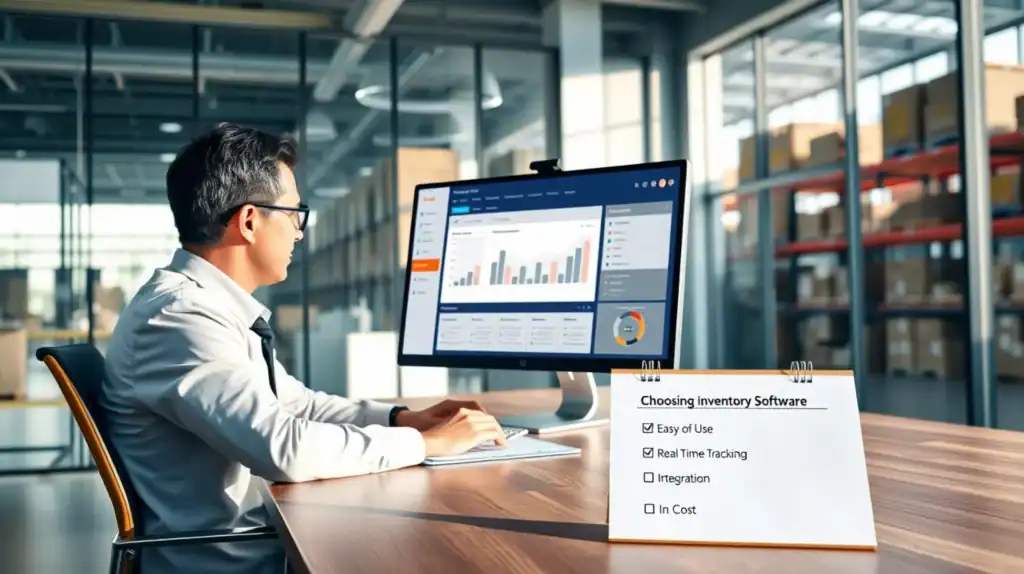
According to Fortune Business Insights, the global inventory management software market is expected to grow from USD 2.51 billion in 2025 to USD 4.79 billion by 2032, reflecting a steady CAGR of 9.6% over the forecast period. North America remains the dominant region, capturing nearly 36% of the market share in 2024.
For any successful business operation, inventory management stands out as the backbone pillar. Whether you are a retailer, wholesaler, or running a manufacturing industry, timely and accurate inventory control enhances customer service, improves cash flow, and results in few or no stockouts. The right software for inventory management, powered by manufacturing software development services, can bridge the gap between chaotic stock still and smooth operations.
This blog will take you through the process in detail on how to choose the best inventory management system for small businesses. It also includes the benefits of using inventory tracking software for small businesses, what needs to be considered while selecting tools, and whether free software inventory options would work in the long run.
Read More: Why AI Will Transform Inventory Management
Why Inventory Management Software Matters

With a fully-fledged inventory management system, one can replace outdated manual tracking or spreadsheets and take care of
- Keeping accurate records of stock levels
- Avoiding the pitfalls of overstocking or understocking
- Automating alerts and order creation
- Tracking the trends of movement of their products
- Synchronizing inventory across various sales channels
If Excel sheets are still your inventory tracking means, changing to a contemporary time-bound inventory tracking software for small businesses would be truly revolutionary.
Types of Inventory Software

Before selecting a tool, understand the main categories of inventory software available:
1. Cloud-Based Systems
You can access it from anywhere; cloud-based systems are ideal for remote or multi-location businesses. They’re automatically updated and scale with your growth.
2. On-Premise Systems
Installed locally on your computers or servers. These offer more control but are more expensive to maintain.
3. Free Software Inventory
Ideal for startups on a budget. These tools may offer basic functionality but often give trouble to customer support or integration features
Read More: How to Create a Location-Based Apps
Fundamental Characteristics

Regardless of your business size, the inventory management system needs to have some basic features. Here are the must-haves:
1. Inventory Tracking
The central function of any inventory control software is real-time inventory tracking, including
- Counting stock levels
- Tracking based on location
- Tracking expiry dates (for perishables)
- Serial or batch tracking
2. Barcode Scanning and Label Printing
Speeding up receiving, picking, and shipping processes is even useful for very small operations.
3. Sales and Channel Integration
Your small-business inventory software should integrate with:
- POS systems
- E-commerce platforms like Shopify, Amazon, and WooCommerce
- Accounting software, e.g., QuickBooks, Xero
4. Automated Alerts
Alerts when the inventory drops below certain levels, preventing loss of sales owing to stockouts.
5. Analytics and Reports
Deep insight into:
- Top-selling products
- Deadstock items
- Rates of turnover
- Purchase history
Very important in choosing the best inventory management software: a decision-making tool based on facts.
Free vs Paid Inventory Software For Inventory Management

Many small businesses go for free inventory software solutions. While these can work temporarily, they often lack advanced functionality and scalability.
Pros
- No upfront costs
- Great for testing and learning
- Suitable for very small inventories
Cons
- Limited users or SKUs
- No advanced reporting
- Poor or no integration with other tools
- Minimal or no customer support
If your operations are expanding or if you sell through multiple channels, investing in the best inventory management software is worthwhile.
Read More: Role of SAP and Supply Chain Management in Modern Enterprises
Popular Inventory Management Systems for Small Businesses

Here are some trusted options for inventory management systems.
1. Zoho Inventory
- Great inventory software for small business
- Integrates with Shopify, Amazon, and eBay
- Offers both free and paid plans
2. inFlow Inventory
- Ideal for B2B and wholesale
- Strong barcode and warehouse management
- User-friendly interface
3. Sortly
- Visual inventory management
- Simple for non-technical users
- Strong mobile app
4. Odoo
- Open-source inventory management system
- Highly customizable
- Best for tech-savvy users or businesses with IT support
Each of these systems offers core features like inventory tracking, reporting, and sales integrations, making them contenders for the best inventory management software in their category.
Read More: Best Farm Management Software for Modern Agriculture
Step-by-Step Guide To Choosing the Right Software System

Step One: Listing out Your Requirements
Detail obligatory properties, for instance, mobile access, sales integration, and barcode scanning.
Step Two: Budget Setting
Decide what you are willing to pay, either per month or annually.
Step Three: Create a Shortlist of Top Tools
Go through your matched needs and find a variety of tools with some inventory tracking software for small businesses and some general inventory software.
Step Four: Try a Free Trial
Sign up for free subscriptions or demo versions to evaluate usability.
Step Five: Compare Support and Documentation
Excellent help resources along with onboarding would save you time in the future.
Step Six: Check Integration Capability
It should conform to your existing accounting, POS, and e-commerce systems.
Step Seven: Final Event
Choose a system that provides usability, features, cost, and scalability.
“Inventory is money sitting around in another form. The right software turns it into profit.”
– Umair Ahmed, VP of Growth at Cubix
How Software for Inventory Management Drives Business Growth
Software for inventory management does more than track stock, it transforms how small businesses operate. With automated processes, real-time visibility, and smart reporting, it helps companies make faster decisions, reduce waste, and respond to customer needs with precision. Whether you’re managing a single warehouse or multiple sales channels, the right inventory software builds the foundation for scalable and sustainable growth.
Read More: Best Business-to-Business Software for Enterprise
Final Thoughts
Choosing the perfect inventory management system is more than just features; it’s finding a means to work like your business. For small businesses, inventory is simpler and less expensive, and it provides room for growth. Software for inventory management, built through efficient software development, is best suited for small business inventory.
To reduce errors, improve visibility into inventory, boost customers’ satisfaction, and save your team’s time from unnecessary activities. At this time, the majority of companies go to look for a solution partner to build or tailor an application for their needs.
Read More: How to Choose the Right ERP for Food and Beverage Industry
Let’s Build Future Inventory Management System With Cubix

Hire Cubix to create a perfect software management system to fit your inventory operations. We will do it on demand, whether you need a lightweight solution for a startup or a scalable solution for multi-location growth. From inventory tracking to integrations with your sales and accounting tools, we’ll develop a system that works exactly the way your business does.
Let Cubix build your inventory software, reliable, user-friendly, and designed for your future.