Key Takeaways
- Custom software development for mid-market businesses requires clear decision frameworks and practical planning from the start.
- Costs for custom software projects range from $25,000 to $250,000 depending on complexity and scope.
- A phased approach, with discovery, MVP, integration, and maintenance, helps reduce risk and control budget.
- Vendor selection and a detailed checklist play a critical role in project success.
- This guide covers every stage for mid-market custom software, from early decisions through post-launch support.
Mid-market businesses face real challenges when considering custom software development to support growth and efficiency. Many must weigh customization against tight resources, integration complexity, and risk management.
According to Grand View Research, the global custom software development market was valued at $45.4 billion in 2025, with a projected rise to $53.5 billion in 2026. This increase is driven not only by large enterprises but also by flexible, mid-market buyers seeking software that targets their operational gaps and growth constraints.
For mid-market leaders, the decision to invest in custom software involves more layers than it first appears. Cost, flexibility, and integration must all be weighed. In this practical guide, you’ll find a phased approach that helps product leaders and CTOs navigate decision frameworks, cost benchmarks, timelines, and vendor selection. Each section distills benchmarks and lessons to turn your vision into an actionable build roadmap.
Unsure whether to build or buy? Scope your MVP.
Contact UsDecision Framework: Build, Configure, or Buy?
Choosing how to meet your software needs, building custom, configuring off-the-shelf solutions, or using SaaS, forms the foundation for any mid-market operation. The right option depends on current needs, integration demands, adaptability, and risk. Custom software offers unique fit and flexibility, but it is best reserved for cases where off-the-shelf or SaaS tools cannot meet your core objectives.
Here is a comparison of the main options, focusing on trade-offs relevant to your situation:
| Approach | Customization | Upfront Cost | Time to Deploy | Scalability | Integration Flexibility | Support Requirements |
|---|---|---|---|---|---|---|
| Build Custom | Full, tailor every element to workflow and branding | High ($25K, $250K+) | Long (4-12+ months) | Designed for growth path | Maximum, including legacy/unique systems | High, in-house or vendor needed |
| Configure (Off-the-Shelf) | Moderate, business logic within set framework | Moderate ($10K, $100K) | Medium (2-6 months) | Limited to product’s roadmap | Good, but depends on APIs | Vendor handles standard support |
| SaaS | Low, processes adapt to product’s model | Low (monthly, $1K, $10K) | Short (days-weeks) | Vendor’s model only | Usually strong for popular integrations | Included, often one-size-fits-all |
Each path serves specific use cases. Building custom makes sense when proprietary processes, compliance, or integration needs cannot be addressed by products or SaaS. For example, a logistics provider that must integrate legacy ERPs, custom IoT data, and strict regulatory controls often needs custom engineering. By contrast, many sales, HR, or finance processes fit standard platforms with minor tweaks.
Consider custom software if:
- You need complex integrations with on-premise or older systems.
- Off-the-shelf or SaaS products can’t support planned growth or multi-region expansion.
- Security, compliance, or user experience requirements exceed what configuration can offer.
- Automation opportunities exist only through a tailored build.
Still, a well-reasoned decision can falter if objectives and scope are unclear at the outset. If you lack resources for maintenance or change management, a hybrid or highly configurable platform may pose less risk.
Scoping and Planning: Setting Realistic Goals and Requirements
Effective scoping and planning are the backbone of successful custom software development for mid-market businesses. At this stage, a clear vision and stakeholder alignment help minimize risk later on.
Requirements Gathering
Begin by capturing business needs in detail. Seek input from all groups affected by the new platform: operations, users, IT, and leadership. Use structured interviews, shadowing, digital surveys, and scenario mapping. Translate objectives into user stories, such as, “As a sales rep, I need to request inventory transfers from mobile while on-site.” Tie each requirement to a real business outcome.
Stakeholder Alignment
Getting everyone on board matters for mid-market projects. Include sponsors, IT, finance, compliance, and department leads. Hold cross-functional workshops to resolve conflicts early. Document key decisions and assign ownership so everyone understands the trade-offs and reasoning. Clear communication about MVP scope, iterative development, and change management is essential.
Feature Prioritization
Budget and time are always limited. Use methods like MoSCoW or weighted scoring to rank features by value and complexity. Focus your initial build on critical workflows, cutting out non-essentials for later. Set release priorities linked to clear KPIs, helping avoid scope creep and allowing ROI measurement from day one.
Discovery and Prototyping: Laying the Foundation

The discovery and prototyping phase answers ambiguity and reduces risk before major spending starts. It transforms early ideas into a focused, validated plan.
- Hold workshops with stakeholders. Gather leaders, users, and technical teams to discuss pain points, goals, and technical limitations. Techniques like design thinking or process mapping surface hidden needs.
- Map user journeys and technical requirements. Develop detailed maps for each user type, highlight system touchpoints, and note existing manual steps. Analysts gather data source, integration, and security needs.
- Build wireframes or clickable prototypes. Use tools like Figma or Balsamiq (both current in 2026) to create mockups of key screens or flows. Make sure even non-technical stakeholders can visualize system behavior.
- Validate with real users and iterate. Share prototypes with representative users, collecting feedback in hands-on sessions. Address friction and confusion with several validation cycles, letting only well-understood, high-value features move forward.
A disciplined process at this stage translates ideas into precise requirements and builds alignment before significant resources are committed. For more on this phase, see software development discovery phase.
Cost Benchmarks and Budgeting for Mid-Market Custom Software
Understanding costs for custom software development for mid-market businesses requires careful scope definition, technical clarity, and awareness of service partner rates. While upfront estimates are helpful, actual costs often climb as requirements evolve.
The US custom software development market is expected to reach $12.4 billion in 2026. This reflects increased demand from mid-market buyers seeking tailored software capabilities.
See the current cost ranges below:
| Project Type | Typical Budget | Timeframe | Notes |
|---|---|---|---|
| Simple MVP / Pilot | $25,000-$80,000 | 3-5 months | Limited features, single integration, no mobile app |
| Mid-Complexity Platform | $80,000-$250,000 | 5-9 months | Multiple modules, cloud & mobile, 2-3 integrations |
| Enterprise-Grade | $250,000+ | 9-15 months | Complex security, role-based access, legacy integration |
Key cost factors:
- Team Composition: The mix of designers, senior engineers, QA, project managers, and DevOps shapes rates.
- Integrations: Connecting ERPs, CRMs, payments, or IoT adds hours and testing.
- Regulatory Needs: Compliance in finance or healthcare increases design and validation costs.
- Ongoing Maintenance: Post-launch support, bug fixes, and upgrades often run 15-25% of build cost annually.
To manage overruns:
- Define a fixed-scope MVP with at most one significant integration at launch. Expand from there to stay in control.
- Ask vendors for detailed, itemized estimates that spell out assumptions. Make sure hardware, cloud hosting, and licensing are included.
- Use time-and-materials contracts with a capped maximum, or phase gates to allow re-evaluation before committing further.
- Maintain regular check-ins and require burndown reports to spot overspend early.
Unexpected costs often result from slow decision-making, integration hurdles, or shifting security needs. Address transparency up front and set aside a contingency fund for surprises. For more on budgeting, see hidden costs in software development.
Timeline Expectations: From Kickoff to Launch
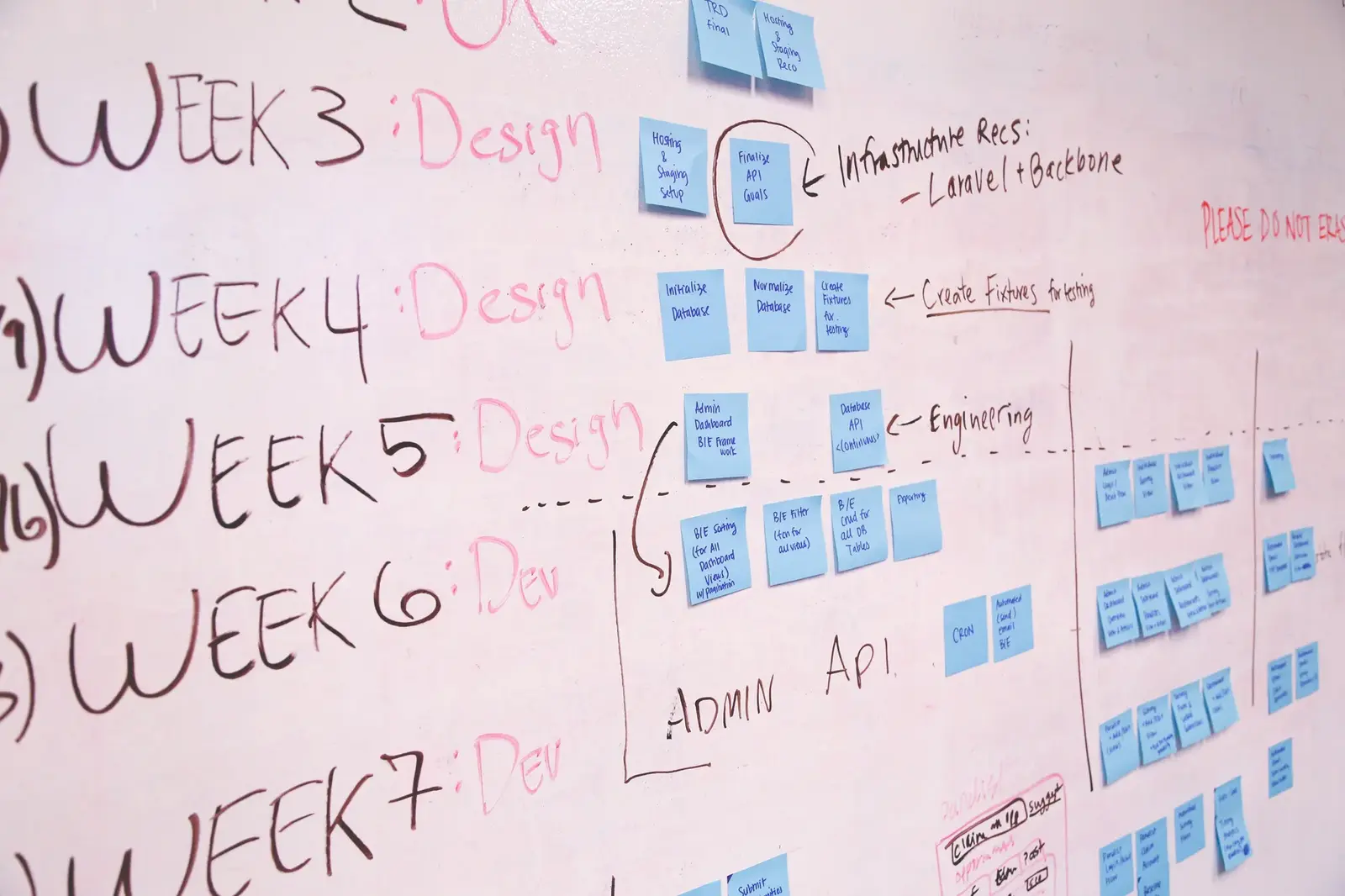
Setting clear expectations for project timelines is vital in custom software development for mid-market businesses. While every organization wants quick results, skipping steps threatens reliability. A phased, realistic approach improves launch predictability and exposes dependencies before they cause delays.
Expected durations for a full-cycle project:
- Discovery and Planning: 3-5 weeks for scoping and feature priorities
- Design and Prototyping: 2-4 weeks for wireframes and user journeys
- MVP Development: 8-16 weeks for core features and at least one integration
- System Integrations: 3-8 weeks, depending on complexity and platform count
- Testing and QA: 2-4 weeks for thorough manual and automated testing
- Go-Live and Launch: 1-2 weeks for training, support setup, and production release
Timeline drivers:
- Decision-Making Speed: Slow reviews or conflict resolution can extend projects.
- Technical Debt: Poorly documented legacy systems or nonstandard APIs cause extra integration work.
- Resource Availability: Lacking subject matter experts or shifting teams leads to delays.
To stay on schedule:
- Use agile sprints and visible task boards, addressing blockers quickly.
- Assign a dedicated product owner to clarify requirements without waiting for rare steering meetings.
- Require continuous demos; incremental software builds confidence and supports early course correction.
Time invested upfront in alignment pays off with smoother delivery. Rushing the process can cost more in late-stage fixes. For more on managing timelines, see reducing time to market.
Integrations and Technical Architecture for Mid-Market Needs
Integrating custom software with your existing tools and databases is a top concern for mid-market businesses. Your technical architecture will shape how easily you add integrations and scale later.
Integration Planning
Most custom projects connect to established business systems. Typical targets include ERPs like SAP Business One and Oracle NetSuite, CRMs such as Salesforce, HR platforms, payment gateways, and sometimes proprietary equipment. Early mapping of data flows uncovers gaps and clarifies whether vendor APIs or custom connectors are required. In some cases, middleware like MuleSoft or Workato speeds integration, though licensing and technical expertise must be considered.
API Strategy
Modern solutions start with an API-first approach. Building well-documented REST or GraphQL APIs for core modules simplifies future integrations with mobile apps, third-party tools, or client portals. For microservices, maintain consistent authentication and validation across all services. Industry standards like OpenAPI/Swagger and automated API testing tools protect integrations from breaking during updates.
Security Considerations
Strong security is a must. Regulated sectors require encrypted data in transit (TLS 1.3 minimum in 2026), field-level encryption at rest, and robust role-based access. Include audit logs and schedule vulnerability assessments. Support for GDPR, CCPA, and, where needed, HIPAA or PCI DSS, is now standard. Engage with legal and compliance teams before launch to prevent future issues. For healthcare-specific compliance, see building custom software for US healthcare HIPAA compliance.
Solid technical choices here make future updates and integrations more efficient, helping you scale securely as your business evolves.
Building and Launching the MVP: Practical Steps

Launching a minimum viable product helps mid-market teams validate assumptions, test usability, and collect feedback before full rollout. Each step builds confidence and exposes challenges early, which is crucial for custom software development for mid-market businesses.
- Define scope and success metrics: Identify the smallest set needed to solve the core business problem. Set clear go/no-go metrics like user adoption or transaction throughput.
- Assemble the team: Bring together experienced developers, UX designers, QA analysts, and a dedicated PM. Avoid team churn, as mid-market firms cannot afford long onboarding during key phases.
- Plan sprints and execute with agility: Divide the project into two-week sprints. Hold standups and reviews to keep priorities on track and adapt to feedback.
- Test with users and iterate: Share early builds with internal or pilot user groups. Gather usability feedback, prioritize improvements, and push them into development cycles. This approach boosts software quality and fosters buy-in.
- Go-live and support: Prepare a full go-live checklist: data migration, rollback procedures, monitoring, and user training. Secure rapid-response support for the first 4-8 weeks post-launch.
A disciplined MVP process shortens time-to-value and uncovers critical issues before you invest in a larger rollout. For more on this phase, see Cubix’s MVP software development expertise.
Maintenance, Scaling, and Continuous Improvement
After launch, proactive maintenance and steady iteration protect your investment and system reliability. Yearly, expect to allocate about 15-25% of the initial build cost for updates and support. This keeps your platform in sync with business needs and outside threats.
- Bug Fixes: Address errors spotted by users or monitoring tools.
- Upgrades: Patch your tech stack and cloud services to guard against vulnerabilities and performance issues.
- Feature Enhancements: Add capabilities and improvements based on user feedback and operational KPIs.
To scale with confidence, use performance monitoring tools like Datadog or New Relic (both supported in 2026). Plan for horizontal and vertical scaling, including database sharding, CDN use, and cloud autoscaling.
Schedule quarterly roadmap reviews, assess integrations with new services, and run regular penetration tests. Where your IT team is strong, you might handle upgrades in-house. Otherwise, partner with your development vendor for ongoing support. For guidance on vendor relationships, see the Cubix blog on software development vendor.
Practical Checklist for Mid-Market Custom Software Success

Keep this checklist handy to avoid pitfalls and get the most from this mid-market custom software guide:
- Use a build vs configure vs buy framework to confirm your needs.
- Gather requirements from every key stakeholder group.
- Secure alignment between technical, business, and executive leaders.
- Prioritize features, mapping each to real business outcomes.
- Complete detailed discovery and user journey mapping before development.
- Plan in phases, setting clear MVP and post-MVP milestones.
- Maintain budget control with clear line items and a contingency fund.
- Map integrations and set an API strategy from the start.
- Include real user validation in every iteration, not just technical sign-off.
- Vet vendors for experience, transparency, and technical fit.
- Confirm ongoing support, including bug fixes and enhancements, is part of your plan.
- Document key decisions and lessons learned at every stage.
Following these checkpoints helps keep your project organized, on budget, and aligned with your long-term business goals.
Selecting the Right Development Partner: What to Look For
Selecting the right development partner is just as important as the technology for custom software development for mid-market businesses. The partner you choose shapes build quality, transparency, and support after launch.
Vendor Evaluation Criteria
Look for vendors with proven experience in mid-market projects, covering both technical expertise and project management. Their track record should include delivery in your industry, a portfolio across web, mobile, and business platforms, and a stable team of full-time staff. Confirm that they work with organizations of your size; mid-market needs differ from start-ups or large enterprises.
Questions to Ask
- What is your delivery process, and how do you manage milestones?
- How do you communicate progress and respond to changes in scope?
- Who are the technical leads dedicated to our project?
- Can you connect us with references from recent mid-market clients?
- How do you price change requests, and what steps do you follow for escalation?
The answers reveal their approach to communication and adaptability.
Warning Signs
Watch out for firms that offer vague pricing, have minimal documentation, cannot name project personnel, or dodge questions about integration and post-launch support. Poor communication or reluctance to share references signals risk. Demand clear statements of work with timelines, acceptance criteria, and written protocols for issue resolution.
A careful selection process reduces risk, builds better collaboration, and supports long-term results. For tips on choosing a partner, see how to choose a software development company.
How Cubix Supports Mid-Market Custom Software Projects
Cubix delivers targeted support for custom software development for mid-market businesses, guiding clients through every phase, from early discovery to post-launch optimization.
- Provides consulting for digital transformation, including process audits and readiness assessments
- Offers architecture reviews and modernization for legacy applications to fit current business needs
- Supports full lifecycle development, from roadmapping to ongoing feature enhancements
- Specializes in scalable custom solutions that support mid-market growth plans
In the United States, Cubix’s consulting and development rates range between $25 and $49 per hour. Budgets for MVP or simple app projects start at $25,000-$80,000, while mid-complexity business platforms may run from $80,000 to $250,000. Notable mid-market clients include Estée Lauder, Clinique, and Swatch Group, who have worked with Cubix for strategic digital initiatives.
This focused approach enables mid-sized companies to innovate quickly without losing stability, offering transparency and measurable business outcomes. For insights on managing vendor relationships, see Cubix’s blog on software development vendor.
Join hundreds of brands Cubix has digitally transformed.
Contact UsFrequently Asked Questions
1. What is custom software development for mid-market businesses?
Custom software development for mid-market businesses means designing, building, and maintaining software tailored to the unique needs of companies with $5M, $1B in revenue.
2. How much does custom software cost for a mid-market business?
Custom software for mid-market businesses usually costs from $25,000 for simple MVPs to $250,000 for mid-complexity platforms, depending on features and integrations.
3. When should mid-market businesses build custom software instead of buying off-the-shelf solutions?
Choose custom software when unique workflows, integration needs, or scalability requirements cannot be met with existing SaaS or configurable platforms.
4. How long does it take to build custom software for a mid-market company?
A phased process from discovery to launch typically takes 3-9 months, based on project complexity, stakeholder alignment, and technical demands.
5. What key steps are involved in a custom software project?
Typical stages include scoping, discovery, prototyping, MVP development, integrations, testing, launch, and ongoing maintenance.
6. What are the main risks in custom software development for mid-market businesses?
Key risks include unclear requirements, scope creep, integration issues, and underestimating maintenance costs over time.
7. How do I choose the right development partner for my mid-market business?
Select partners with experience supporting mid-market clients, strong technical skills, transparent pricing, and consistent communication.
8. What are common integration needs for mid-market businesses building custom software?
Frequent integrations include ERP, CRM, HRIS, payment gateways, and platforms specific to your industry.
9. How should mid-market companies budget for maintenance and updates?
Plan for annual maintenance costs at 15-25% of the initial build, covering support, security, and new features.
10. What is the difference between an MVP and a full-featured custom software platform?
An MVP delivers core features quickly to validate your concept, while a full-featured platform includes advanced integrations, scalability, and a complete user experience.