Key Takeaways
- Define your game concept, target audience, platform, and development requirements before choosing a studio.
- Evaluate companies based on relevant portfolios, technical expertise, team experience, and development processes.
- Compare development costs, pricing models, timelines, and post-launch support before making a decision.
- Ask the right questions about communication, QA, intellectual property, scalability, and project management.
- Look beyond ratings and reviews to understand a studio’s actual experience and client relationships.
- Avoid choosing a company based only on the lowest quote. Focus on long-term value, reliability, and quality.
- Use a clear scoring framework to compare shortlisted game development companies and select the best fit for your project.
What if maintaining a separate iOS and Android codebase is silently burning up to 40% of your engineering budget?
In 2026, building two independent native apps isn’t just inefficient, it’s a growth killer. With the global cross-platform market accelerating past $15 billion, modern enterprises and fast-growth startups are abandoning dual-codebase models in favor of unified cross-platform architectures.
Partnering with an expert Hybrid App Development Company allows you to deploy a single, near-native application across all operating systems simultaneously, cutting your time-to-market nearly in half.
But with hundreds of agencies claiming cross-platform mastery, how do you separate true engineering partners from lightweight web-wrapper shops? To save you months of vendor vetting, we evaluated client satisfaction metrics, tech stacks, execution speed, and delivery standards to curate the definitive list of the top 10 hybrid mobile app development companies in the USA for 2026.
Want to discuss your project? Our experts are just a click away.
Contact UsQuick Comparison of the Top Hybrid App Development Companies in the USA
The following comparison provides a quick overview of the companies featured in this guide. Each company has different strengths, so the right choice depends on your project requirements, budget, industry, and growth plans.
| Company | Best Known For | Key Capabilities | Best Fit |
| Cubix | End-to-end custom product development | Flutter, React Native, backend development, UI/UX | Startups, growing businesses, and enterprises |
| WillowTree | Enterprise digital experiences | Product strategy, mobile engineering, UX | Large organizations and established brands |
| ArcTouch | Connected digital products | Cross-platform apps, IoT, mobile ecosystems | Businesses building connected experiences |
| BlueLabel | Product strategy and mobile innovation | Discovery, UX, mobile development | Startups and enterprise innovation teams |
| TechAhead | Modern digital products | Mobile development, AI, cloud solutions | Digital-first businesses |
| Intellectsoft | Enterprise technology solutions | Mobile engineering, cloud, business systems | Enterprise transformation projects |
| ScienceSoft | Secure business applications | Enterprise software, integrations, compliance | Regulated and complex industries |
| Chop Dawg | Startup product development | MVPs, product strategy, mobile apps | Startups and early-stage businesses |
| Fueled | Design-led mobile products | Product design, strategy, app development | Consumer brands and growth-stage companies |
| OpenXcell | Flexible custom development | Mobile engineering, AI, backend systems | Startups and businesses seeking dedicated teams |
What Is Hybrid App Development?
Hybrid app development is an approach that combines web technologies with mobile capabilities to create applications that can work across multiple platforms. Instead of building completely separate applications for iOS and Android, developers can reuse a significant portion of the application code.
Modern hybrid development may use technologies such as HTML5, CSS, JavaScript, Ionic, Capacitor, and other cross-platform tools. In commercial discussions, the term is also frequently used alongside frameworks such as Flutter and React Native because all of these approaches support broader platform reach and code reuse.
A hybrid application development company helps businesses plan, design, develop, test, launch, and maintain these applications. The goal is to reduce unnecessary duplication while delivering a smooth experience across devices.
How Does Hybrid App Development Work?
A hybrid application usually combines a shared application layer with native capabilities. The shared code manages much of the interface and business logic, while APIs, plugins, and native integrations provide access to device features.
Depending on the technology stack, a hybrid app may support:
- Camera and media access
- Push notifications
- GPS and location services
- Offline functionality
- Payment gateways
- Biometric authentication
- Third-party business systems
Hybrid Apps vs. Cross-Platform Apps
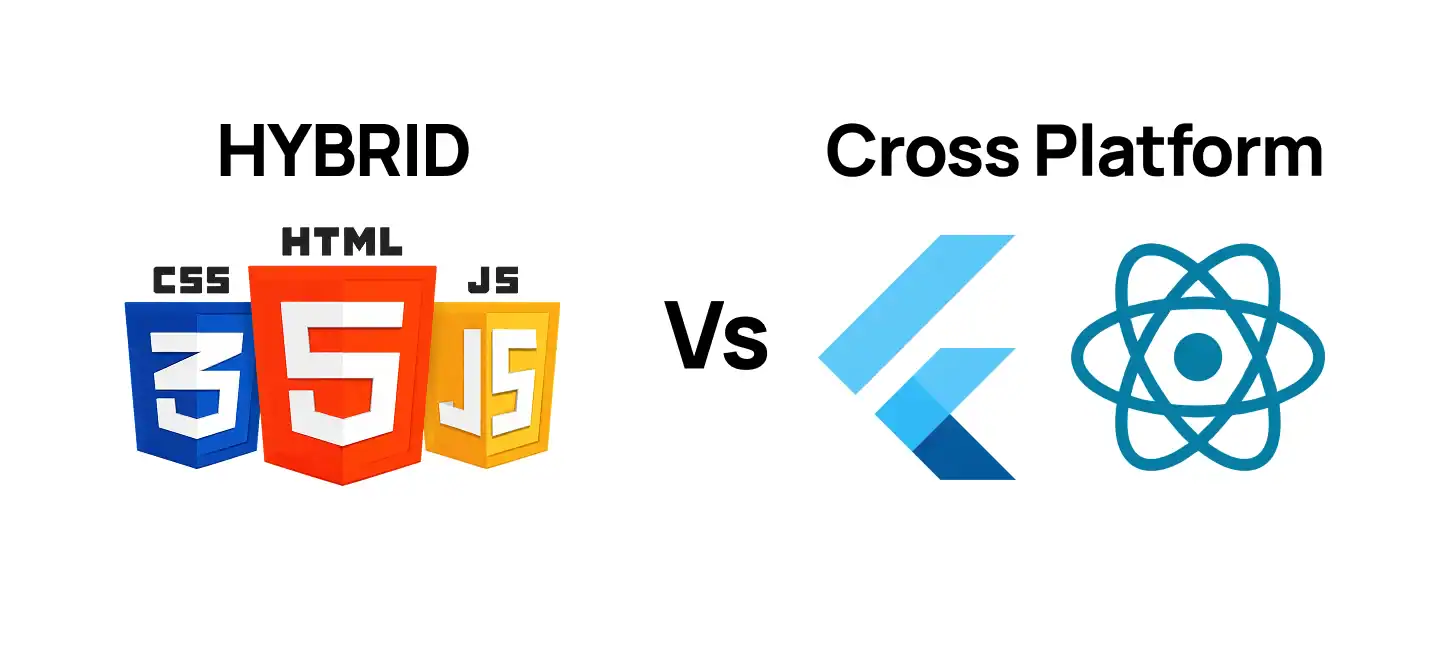
The terms hybrid and cross-platform are often used interchangeably, but they are not always technically identical.
Traditional hybrid applications generally use web technologies inside a native application container. Cross-platform frameworks such as Flutter and React Native use different approaches to render interfaces and communicate with device capabilities.
From a business perspective, both approaches aim to solve similar challenges:
- Reaching iOS and Android users
- Reducing duplicated development work
- Accelerating time to market
- Simplifying maintenance
For a deeper comparison, read our guide on native vs. hybrid app development.
How We Selected the Top Hybrid App Development Companies
Technical Expertise and Framework Experience
The development team should understand the strengths and limitations of different technologies. This includes experience with Flutter, React Native, Ionic, Capacitor, APIs, cloud infrastructure, and native integrations.
Technology expertise matters because the wrong framework can create performance issues, limit future scalability, or increase maintenance costs.
Portfolio Quality and Industry Experience
A company’s portfolio can show whether it has experience with products similar to yours. For example, a healthcare application may require secure data workflows, while a logistics platform may depend on real-time tracking and enterprise integrations.
Relevant experience can reduce project risks and improve the quality of early technical decisions.
Product Strategy and UI/UX Capabilities
Strong development is not only about writing code. Product discovery, user research, prototyping, and interface design can help teams validate assumptions before development begins.
The best hybrid mobile application development company should be able to explain how design decisions support usability, engagement, and business goals.
Top 10 Hybrid App Development Companies in the USA
1. Cubix

Cubix is a digital product development company that works with startups, established businesses, and global enterprises. Its services cover product discovery, UI/UX design, mobile application development, backend engineering, quality assurance, and post-launch support.
The company develops mobile solutions using technologies such as Flutter, React Native, Ionic, and modern backend frameworks. Its broad service offering makes it suitable for businesses that want a single technology partner throughout the product lifecycle.
Key Strengths
Cubix provides end-to-end support, from early product planning to application launch and ongoing optimization. Its strengths include:
- Hybrid and cross-platform mobile development
- Custom UI/UX design
- Scalable backend architecture
- AI and machine learning integrations
- Cloud infrastructure
- API development
- Quality assurance and maintenance
The company also works across industries such as healthcare, fintech, education, logistics, retail, enterprise software, and digital entertainment.
Notable Projects and Highlights
Cubix has developed digital products for a range of business and consumer use cases. Its public portfolio includes cross-platform education platforms, healthcare solutions, mobile applications, and connected digital experiences.
Examples highlighted in its portfolio include the Quran: Monotheist Translation App, the Horof digital learning platform, and PreOpApp Kids. These projects demonstrate experience with accessibility, educational content, mobile engagement, and specialized user journeys.
Pros and Considerations
| Pros | Considerations |
| End-to-end product development capabilities | Custom project timelines depend on scope |
| Experience across multiple industries | Complex enterprise products require detailed discovery |
| Flexible technology expertise | Pricing varies based on features and integrations |
| Support from strategy through post-launch growth | Large projects may require dedicated delivery teams |
2. WillowTree
WillowTree is known for developing digital experiences for established brands and enterprise organizations. Its work combines product strategy, experience design, engineering, and digital transformation.
The company is often considered by organizations that need large-scale mobile products supported by strong user experience and product strategy capabilities.
Key Strengths
WillowTree’s key strengths include:
- Enterprise mobile experiences
- Product and digital strategy
- User research
- UI/UX design
- Mobile engineering
- Large-scale digital ecosystems
Its multidisciplinary approach can be valuable for organizations that want design and engineering teams to work closely throughout the product lifecycle.
Pros and Considerations
| Pros | Considerations |
| Strong enterprise experience | May be better suited to larger project budgets |
| Advanced UX and product strategy | Smaller MVPs may need a more flexible provider |
| Experience with large digital ecosystems | Enterprise processes can involve longer planning cycles |
3. ArcTouch
ArcTouch is a digital product development company known for mobile applications, connected experiences, and cross-platform technology. It works with organizations developing applications that connect with devices, services, and broader digital ecosystems.
Key Strengths
ArcTouch offers capabilities in:
- Cross-platform mobile development
- Connected products
- Internet of Things solutions
- Product strategy
- Mobile UX
- Application modernization
Its connected-product expertise can be useful for businesses building applications that interact with smart devices, wearables, televisions, or other digital systems.
Pros and Considerations
| Pros | Considerations |
| Strong connected-product expertise | Specialized projects may require larger budgets |
| Experience with multiple device ecosystems | Not every project needs advanced IoT capabilities |
| Strong product and engineering capabilities | Project scope should be clearly defined early |
4. BlueLabel

BlueLabel is a product development company that focuses on strategy, user experience, and mobile application development. It is known for helping businesses validate ideas and turn them into market-ready digital products.
Key Strengths
BlueLabel’s capabilities include:
- Product discovery
- Mobile strategy
- User research
- UX and UI design
- Cross-platform development
- Startup product development
Its discovery-focused process can help businesses identify technical and user requirements before committing to full development.
Pros and Considerations
| Pros | Considerations |
| Strong product discovery process | Discovery adds time before full development |
| User-focused design capabilities | Complex products may require larger budgets |
| Experience with startups and enterprises | Scope changes should be managed carefully |
5. TechAhead

TechAhead provides mobile, web, cloud, and emerging technology services. The company works with businesses that want to build modern digital products with a focus on user experience, scalability, and technology innovation.
Key Strengths
TechAhead offers:
- Hybrid and cross-platform development
- AI-enabled applications
- Mobile product engineering
- Cloud solutions
- UI/UX design
- Application modernization
Its broad technology capabilities can support businesses that want to combine mobile applications with AI features and cloud-based systems.
Pros and Considerations
| Pros | Considerations |
| Broad mobile and AI capabilities | Advanced AI features may increase project scope |
| Modern design and engineering services | Timelines depend on integrations and complexity |
| Experience with digital transformation | Large projects require detailed planning |
6. Intellectsoft
Intellectsoft is an enterprise technology company that provides software engineering, mobile development, cloud solutions, and digital transformation services.
It is often considered by organizations that need mobile applications connected to larger enterprise systems.
Key Strengths
Its capabilities include:
- Enterprise mobility
- Custom software development
- Cloud engineering
- Business system integration
- Application modernization
- Digital transformation
Intellectsoft can be a strong fit for organizations with complex internal workflows and large technology ecosystems.
Pros and Considerations
| Pros | Considerations |
| Strong enterprise engineering capabilities | May be more than a small MVP requires |
| Experience with complex integrations | Enterprise projects can have longer timelines |
| Cloud and modernization expertise | Detailed technical planning is essential |
7. ScienceSoft

ScienceSoft provides software development, consulting, testing, cybersecurity, and IT services. Its focus on enterprise systems and secure technology solutions makes it relevant for organizations operating in regulated or data-sensitive industries.
Key Strengths
ScienceSoft offers:
- Enterprise mobile development
- Software consulting
- Cloud integration
- Quality assurance
- Cybersecurity
- Business process automation
Its security and enterprise capabilities can be valuable for businesses that need strong governance and reliable system integration.
Pros and Considerations
| Pros | Considerations |
| Strong security and enterprise expertise | Enterprise-focused services may exceed simple app needs |
| Broad software engineering capabilities | Complex compliance projects require longer planning |
| Experience with regulated industries | Project requirements should be documented clearly |
8. Chop Dawg

Chop Dawg is a product development company that works primarily with startups, entrepreneurs, and organizations building new digital products.
Its approach emphasizes collaboration, product strategy, and practical development planning.
Key Strengths
Chop Dawg provides:
- Startup product strategy
- MVP development
- Mobile app development
- UI/UX design
- Product roadmaps
- Ongoing development support
The company can be a good fit for founders who need help turning an early idea into a structured product plan.
Pros and Considerations
| Pros | Considerations |
| Strong startup and MVP focus | Large enterprise systems may require broader resources |
| Collaborative product planning | Early discovery is necessary before development |
| Experience with new product launches | Feature priorities should remain focused |
9. Fueled

Fueled is a mobile product development company known for design-led digital experiences. Its work combines product strategy, branding, user experience, and application development.
Key Strengths
Fueled’s capabilities include:
- Product strategy
- Mobile UX and UI design
- Consumer application development
- Digital product branding
- Growth-focused product experiences
Its design-focused approach can be valuable for businesses where brand perception and user engagement are major priorities.
Pros and Considerations
| Pros | Considerations |
| Strong design and brand experience | Premium design work may require a larger budget |
| User-focused product strategy | Complex backend systems need careful scope planning |
| Experience with consumer applications | Best fit depends on project requirements |
10. OpenXcell
OpenXcell provides custom software, mobile application, AI, and web development services. The company supports startups and businesses that need flexible development resources and scalable technology solutions.
Key Strengths
Its services include:
- Hybrid and cross-platform applications
- Flutter and React Native development
- AI development
- Backend engineering
- Dedicated development teams
- Application maintenance
The company can be suitable for organizations looking for flexible team structures and broad technology support.
Pros and Considerations
| Pros | Considerations |
| Broad technology capabilities | Team structure should be confirmed during discovery |
| Flexible development resources | Communication processes vary by engagement model |
| Experience with startups and businesses | Project outcomes depend on scope and requirements |
How to Select a Hybrid Mobile App Development Company
Choosing a development partner should involve more than comparing prices. A low initial estimate may become expensive if the application requires major changes, lacks scalability, or receives limited support after launch.
Define Your App Goals Before Contacting Agencies
Start by documenting:
- The problem your app will solve
- Your target users
- Essential features
- Preferred platforms
- Expected launch timeline
- Budget range
- Long-term business goals
Clear requirements help hybrid app developers provide more accurate recommendations and estimates.
Review the Company’s Technology Stack
Ask which framework the company recommends and why. The answer should be connected to your product requirements rather than the company’s preferred technology.
The team should explain how the chosen framework will support performance, integrations, security, and future growth.
To understand the major framework options, read our comparison of Flutter vs. React Native.
Examine Relevant Projects and Case Studies
Look for projects that are similar in complexity, industry, or technical requirements.
A company does not need to have built your exact product before. However, relevant experience can show whether it understands the challenges involved.
Ask About Scalability and Security
Your application should be designed for future growth. Ask how the team will manage:
- Increasing user numbers
- Larger data volumes
- New features
- Cloud infrastructure
- Security updates
- Performance monitoring
Understand the Development Process
A clear process usually includes:
- Discovery
- Product strategy
- UI/UX design
- Development
- Quality assurance
- Launch
- Post-launch support
The company should explain who will manage the project, how progress will be shared, and how changes will be handled.
Compare Pricing Models and Team Structures
Common engagement models include:
- Fixed-price development
- Time and materials
- Dedicated development teams
The right model depends on how clearly the project is defined and how much flexibility you need.
If you need a broader guide, read our article on how to choose a mobile app development partner.
Review Post-Launch Support
Development does not end when an app reaches the store.
Ask whether the company provides:
- Bug fixes
- Operating system updates
- Performance monitoring
- Security patches
- Feature enhancements
- Analytics support
Questions to Ask Before Hiring a Hybrid App Development Partner
- Which technology do you recommend for my app and why?
- Have you developed products with similar requirements?
- How will the application scale as users grow?
- What security practices will be included?
- Who will manage the project?
- How will progress be communicated?
- What support is available after launch?
For more hiring guidance, see our detailed guide on how to hire mobile app developers.
10 Reasons for Choosing the Right Company
What are 10 reasons for choosing the right hybrid development company? The right partner can influence everything from product quality to long-term operating costs.
- Better technology decisions – The right framework is selected based on business and technical needs.
- Faster development – Experienced teams use proven workflows and reusable components.
- More efficient resource use – Shared development approaches can reduce unnecessary duplication.
- Consistent cross-platform experiences – Users receive a more unified experience across devices.
- Stronger application security – Security is considered throughout development rather than added at the end.
- Scalable architecture – The application is prepared for new users, features, and integrations.
- Better UI/UX – User needs are incorporated into product design.
- Reliable testing – Applications are tested across devices, operating systems, and user scenarios.
- Easier maintenance – Clear code and structured architecture make future updates more manageable.
- Reduced project risk – Strong planning and communication can prevent costly problems later.
Before signing a contract, review our guide to the red flags to watch before hiring a development partner. For a more detailed decision guide, read Flutter vs. React Native: which serves your project better?.
Hybrid vs. Native App Development: Which Should You Choose?
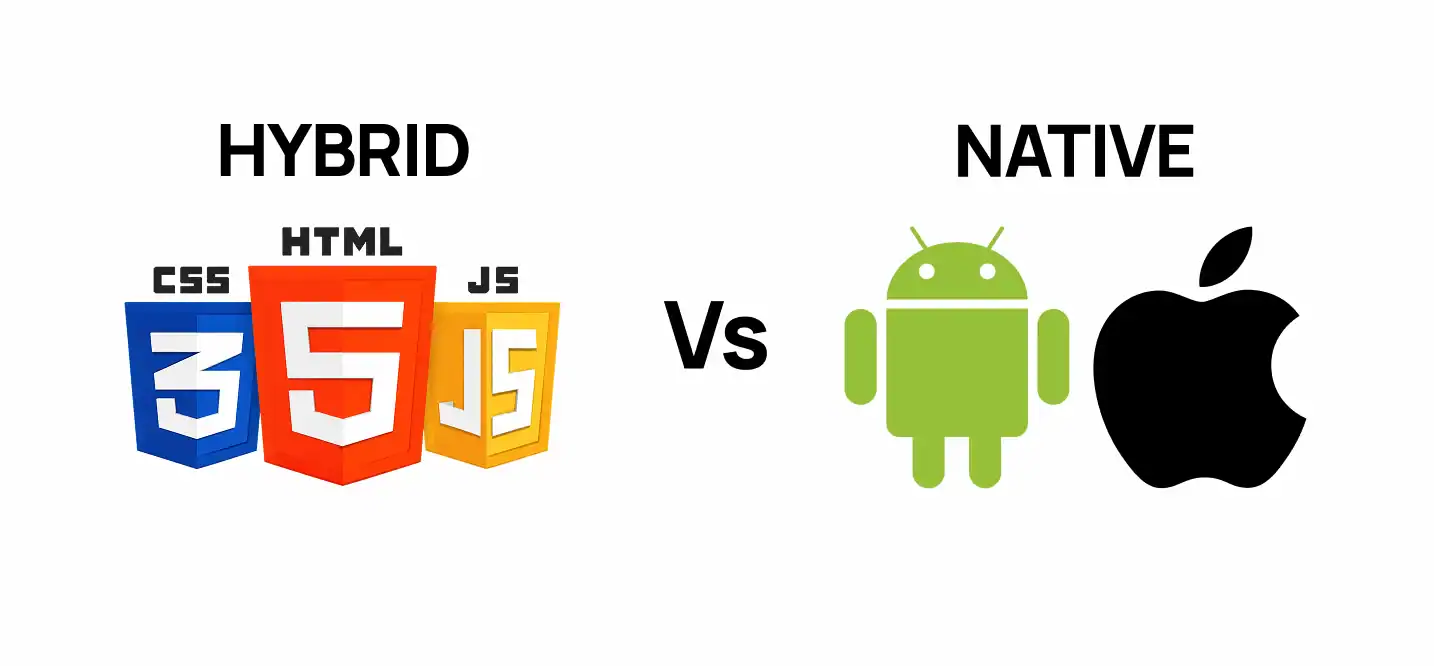
The right approach depends on your application’s goals.
When Hybrid Development Is the Better Choice
Hybrid or cross-platform development may be suitable for:
- Startup MVPs
- Business applications
- Customer portals
- E-commerce products
- Educational applications
- Content platforms
- Service marketplaces
- Multi-platform products
When Native Development May Be Better
Native development may be preferred for:
- Graphics-intensive applications
- Advanced mobile games
- Highly specialized device functionality
- Performance-critical experiences
- Products requiring extensive platform-specific customization
If you are deciding between several approaches, read our guide on native, cross-platform, or Unity development.
| Factor | Hybrid Development | Native Development |
| Codebase | Significant code reuse across platforms | Separate platform-specific code |
| Development speed | Often faster | Usually requires more platform-specific work |
| Initial cost | Often more cost-efficient | Can be higher because of separate development |
| Performance | Strong for many business applications | Maximum platform-specific optimization |
| Maintenance | More centralized | Separate platform maintenance may be required |
| Platform customization | Good, depending on the framework | Extensive platform-specific control |
Compare Hybrid App Development Service Providers in the USA
| Business Requirement | What to Look For |
| Startup MVP | Product discovery, fast prototyping, flexible development |
| Enterprise application | Security, scalability, integrations, compliance support |
| AI-powered mobile app | AI engineering, data capabilities, cloud expertise |
| Customer-facing application | Strong UI/UX, performance, analytics |
| Internal business platform | Workflow automation and enterprise integrations |
| Long-term digital product | Maintenance, feature development, dedicated support |
Businesses searching for leading hybrid app development agencies in the US should avoid relying only on rankings. A better approach is to review portfolios, technical recommendations, delivery processes, and client communication.
The same principle applies when looking for best companies for cross-platform app solutions in America. The best provider is the one that understands your product requirements and can support your long-term goals.
If you are exploring cross-platform technologies, our guide on the future of mobile app development provides additional context.
Estimated Hybrid App Development Costs in the USA
What Affects Hybrid App Development Costs?
Major cost factors include:
- Number of user roles
- Feature complexity
- Custom UI/UX design
- Backend development
- Third-party integrations
- Payment functionality
- AI capabilities
- Security requirements
- Compliance needs
- Testing and maintenance
Typical Cost Ranges
| App Type | Estimated Development Range |
| Basic MVP | $25,000–$50,000 |
| Medium-complexity application | $50,000–$120,000 |
| Complex business application | $120,000–$250,000+ |
| Large enterprise platform | $250,000+ |
A detailed discovery process is usually required to create an accurate estimate. Businesses should also plan for post-launch maintenance, infrastructure, analytics, security updates, and future features.
Why Work With Cubix for Hybrid App Development?
Cubix supports businesses throughout the mobile product lifecycle, from early discovery and product strategy to design, engineering, launch, and long-term growth. The team can help define product requirements, build user journeys, create interfaces, develop mobile and backend systems, and support the application after launch.
Cubix works with technologies such as Flutter, React Native, Ionic, cloud platforms, APIs, analytics tools, and modern backend frameworks. The technology stack is selected based on the product’s requirements rather than a one-size-fits-all approach. As a custom mobile app development company, Cubix helps businesses build mobile products around their users, workflows, and long-term growth plans.
Build a high-performing hybrid app with a team that understands your business goals, users, and technology needs.
Want to discuss your project? Our experts are just a click away.
Contact UsFrequently Asked Questions
1. What are some of the top hybrid app development companies in the USA?
Some well-known companies offering hybrid and cross-platform mobile development services include Cubix, WillowTree, ArcTouch, BlueLabel, TechAhead, Intellectsoft, ScienceSoft, Chop Dawg, Fueled, and OpenXcell.
The best choice depends on your budget, project complexity, industry, technology requirements, and preferred engagement model.
2. What is hybrid app development?
Hybrid app development combines web technologies with native mobile capabilities to build applications that can run across multiple platforms.
The approach can support faster development, broader device reach, shared code, and more centralized maintenance.
3. Are hybrid apps cheaper than native apps?
Hybrid applications can be more cost-efficient because a significant amount of code may be shared across platforms.
However, the final cost depends on features, design complexity, integrations, backend requirements, security, and testing. Complex applications can still require substantial investment.
4. Which frameworks are commonly used for hybrid app development?
Common technologies include Ionic, Capacitor, Apache Cordova, Flutter, and React Native.
The right framework depends on performance requirements, design complexity, device integrations, team expertise, and long-term maintenance goals.
For more framework guidance, read our comparison of Flutter vs. Ionic.
5. How long does it take to develop a hybrid mobile app?
A simple MVP may take approximately three to six months, while a complex business or enterprise application may take nine months or longer.
The timeline depends on product discovery, design, features, integrations, testing, security requirements, and the size of the development team.