Key Takeaways
- Start with the format. Know what makes the show work before you design anything.
- Decide early if the game is live or play-anytime. Each needs a different build.
- Every quiz app needs a content system, timers, scoring, and leaderboards.
- Licensing and brand approvals come first. An app alone does not grant format rights.
- Pick mobile, web, or both based on where your players are.
In 2018, a trivia app hit 2.38 million live players. That app was HQ Trivia. The record came on March 28. Every one of those players joined from a phone. Each had ten seconds to answer.
It sounds simple. Take a TV show, add a phone, and press publish. It never works that way. A TV show has hosts, music, crowds, and a big set. A phone has a small screen and a short attention span. Smart design choices close that gap.
This guide covers TV game show app development from start to finish. You will see how game show app development works, step by step. We also cover features, tech limits, brand rules, and money. Let’s get into it.
Turn Your TV Game Show Into an Engaging App With Cubix
Contact UsWhy TV Game Shows Work So Well as Games
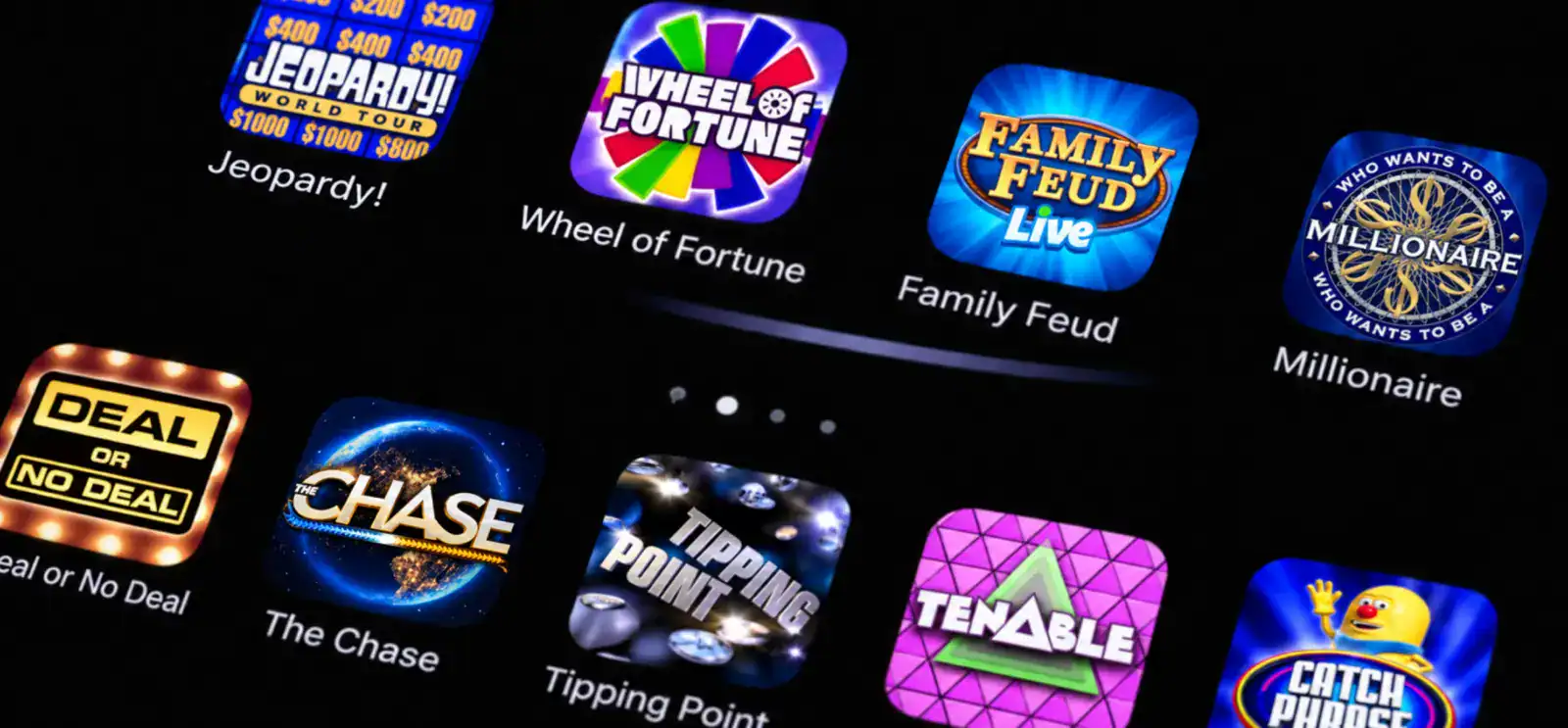
Millionaire has been adapted in over 120 territories. Sony Pictures Television, which owns the format, shares that figure. That reach is the first sign that shows make good games. Fans around the world already know how they work.
Simple Rules People Already Know
Most game shows run on one clear idea. Answer the question. Beat the clock. Win the prize. Nobody needs a long tutorial. That matters on mobile. Players decide in seconds whether to stay or leave.
A Built-In Fan Base
A known show brings its own crowd. Fans already love the host, the music, and the catchphrases. That lowers the cost of getting attention. It also raises expectations. Fans notice when something feels off. A good TV show game adaptation keeps the spirit of the show alive.
Short Rounds Fit Mobile Habits
Game show rounds are short by design. A question takes seconds. A round takes minutes. That fits a bus ride or a coffee break. It also suits any interactive TV game played beside a broadcast. Add points and ranks, and a quick round becomes a daily habit. That is where gamification services help. They give players a reason to come back tomorrow.
Here is the quick recap of why shows convert so well:
- The rules are familiar.
- Rounds are short.
- Fans already trust the brand.
- Scores are easy to compare.
How the Adaptation Process Works
Sony’s official Millionaire app hit one million downloads in week one. Numbers like that do not happen by luck. Good teams follow a clear path. Here is how to adapt a TV game show into a mobile game, in five steps.
Step 1: Study the TV Format
Watch the show like a player. Write down every rule. Note what makes it tense. Ask what fans love most. This is format adaptation at its simplest. You are finding the core of the show. Everything else can change. The core cannot.
Step 2: Turn It Into Game Mechanics
Now translate each rule into game mechanics. A lifeline becomes a button. A host question becomes a card. A buzzer becomes a tap. Keep a list of what you change and why. That list helps when approvals come in.
Step 3: Build a Prototype
A prototype is a rough, playable version. The art is plain. The sound is basic. That is fine. You only want to test one thing. Is it fun? Testing early saves money later.
A full-cycle studio like Cubix lays out its work in eight stages. They run from discovery and core loop design to launch and long-term support. Testing with real players is part of that path. A strong online game development company treats these stages as a loop, not a straight line.
Step 4: Produce and Test
Now the full build starts. Artists finish the look. Developers build the systems. QA runs tests on many phones. Test the odd cases too. What if a player loses signal? What if two players tie? Fix those before launch.
Step 5: Run Live Content
Launch is not the finish line. A quiz app lives on fresh content. New questions, events, and themes keep players coming back. Plan a content calendar before launch. Decide who writes, checks, and approves every question.
| Adaptation Stage | What Happens | Output |
|---|---|---|
| Study the format | Review rules, tone, and pacing | Format brief |
| Design mechanics | Convert TV rules into game rules | Mechanics document |
| Prototype | Build a rough playable version | Test build |
| Produce and test | Full art, code, and QA | Release candidate |
| Live operations | Add content, fix bugs, track data | Updates and reports |
What Moves Over From TV and What Changes
About 83% of US TV watchers use a second device. MNTN Research found this. That is good news for anyone studying how TV game shows become interactive apps. Viewers already hold the phone. The show just needs to give them a reason to use it.
Some parts of a show move over almost untouched. These are the pieces fans would miss most:
- Core rules and round structure
- Scoring logic
- Host tone and catchphrases
- Music and sound cues
- Visual identity, once approved
Other parts need a rethink. A studio is big. A phone is small. Pacing, crowds, and lifelines all work differently on a screen. Here is what usually changes:
- Pacing, since mobile players expect speed
- The studio audience, which has no direct match
- Lifelines, which need new buttons
- Commercial breaks, which need a new form
- Big-screen visuals, which must shrink
Good mobile UX makes these changes feel natural. Players should never feel the show was squeezed into a box.
| TV Mechanic | Mobile/Web Version | Design or Technical Note |
|---|---|---|
| Host reads the question | Text card, with optional voice or video | Keep text short for small screens |
| Buzzer | Tap or swipe | Use server timestamps for fairness |
| Studio audience poll | In-app vote shown as a chart | Needs a live data feed |
| Lifeline | Skip, hint, or time boost | Limit use to keep balance |
| Commercial break | Short interlude or reward moment | Keep it brief |
| Studio set and lights | Themed interface, animation, sound | Stay light for older phones |
Live vs Asynchronous Game Show Games
Not every game show app works the same way. Two big types exist. Mixing them up causes problems. CivicScience asked US TV watchers about second screens. Among Gen Z, 52% used apps, games, or other content. Those viewers might love either type. They just need the right one.
Asynchronous Quiz Games
Players join any time. Each plays alone or against saved scores. Nobody waits for a start time. Load spreads across the day. Content can be scheduled in batches. This is the easier type to build and run.
Synchronized Live Games
Everyone plays at the same moment. A host or video feed sets the pace. HQ Trivia gave players ten seconds per question. Late answers did not count. This format feels exciting. It also needs more tech and a live team. Timing must be exact for every player. That is the hard part of any real-time multiplayer game.
Second-Screen Companion Games
These games run beside a live broadcast. Viewers play along on a phone while the show airs. Questions on the TV match questions in the app. The app must stay in step with the broadcast. Even small delays can spoil the fun. Live events like finales and special nights suit this style well.
| Feature | Asynchronous | Live/Synchronized |
|---|---|---|
| Timing | Play any time | Fixed start time |
| Server load | Spread across the day | Sharp spikes at showtime |
| Content operations | Batch scheduling | Real-time control and backup content |
| Player experience | Relaxed and personal | Shared and tense |
| Build effort | Lower | Higher |
Features Every Game Show App Needs
About 71% of users leave an app within 90 days. Storyly shared this figure. So the early days matter a lot. Features should hold players, not just impress them. Here are the core systems, and what each one does.
Player Onboarding
Keep it short. Let players try a question before they sign up. Ask for very little data. Explain the rules on one screen. Give a clear first win. A smooth start sets the tone for everything after.
Question and Content CMS
A question management system is the engine room. It stores questions, answers, categories, and difficulty. Editors can schedule sets and retire old ones. Strong content management also adds approvals. That matters for branded games, where every word counts.
Timers, Sessions and Multiplayer Logic
Timers keep rounds fair. Sessions track who is in which game. Multiplayer logic handles rooms, turns, and ties. Cubix’s team builds core systems and multiplayer features. Its site lists Nakama, Photon, and AWS in its tech stack. Tools like these are common for session and multiplayer work.
Analytics and Moderation
Analytics show where players quit. They also show which questions are too hard. Moderation protects the community. Think chat filters, report buttons, and name checks. Start small, then grow the rules as the player base grows.
Must-have features:
- Fast onboarding
- Question CMS
- Timers and scoring
- Leaderboards
- Basic analytics
- Moderation tools
Nice-to-have features:
- Friend challenges
- Daily streaks
- Avatars
- Live chat
- Event reminders
- Seasonal themes
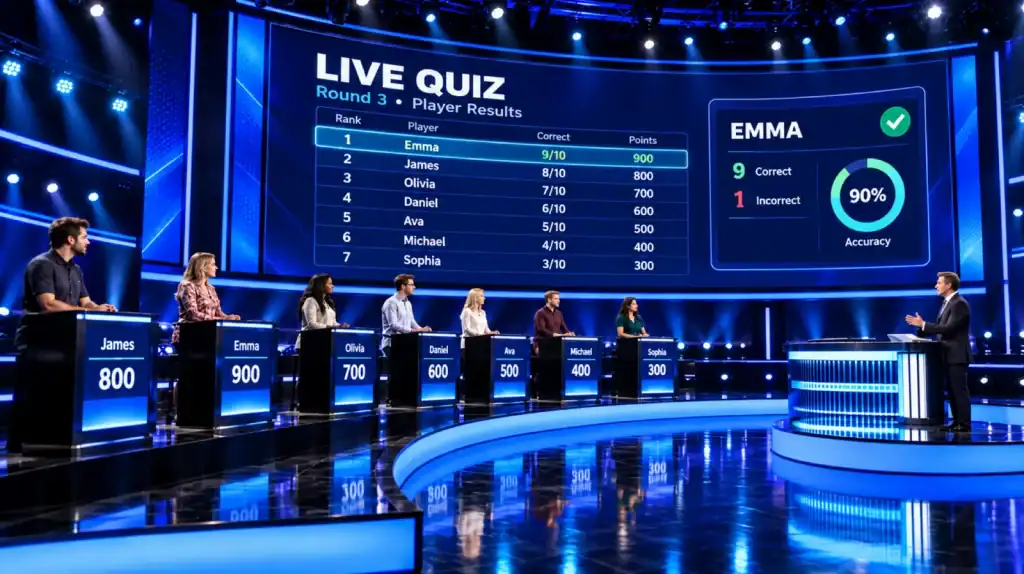
How Questions, Scoring and Leaderboards Work
Localytics reported an average 22% retention lift for gamified apps. Leaderboards are a big part of that lift. Let’s look at how the three pieces fit together.
1. Question Randomization and Difficulty
Random order keeps replays fresh. Pure randomness can feel unfair, though. Smart apps group questions by difficulty first. Then they pull at random inside each group. Track how often players miss each question. Rewrite or retire the outliers.
2. Scoring and Timers
Scoring should be easy to explain. Correct answers earn points. Faster answers can earn a bonus. Use the server clock, not the phone clock. Phone clocks can be wrong, or even changed. This detail matters in all quiz game development. Trivia game development faces the same issue.
3. Leaderboards and Fair Play
Leaderboards add the race. Show friends first, then the wider world. A global list full of experts can scare off new players. Weekly resets give everyone a fresh start. Add checks for cheating, like odd answer speeds. Duolingo is a well-known example. One analysis says its retention rose from 12% to 55%. That analysis credits streaks and leaderboards.
Mobile, Web or Both?
Newzoo counts about three billion mobile players worldwide. That is 83% of all players. Mobile is where most fans already are. Still, it is not always the right first move.
1. When Mobile-First Makes Sense
Pick mobile first when your fans live on their phones. Push alerts can remind players about live events. Apps can also store data on the device. The trade-off is store review and slower updates. Plan your mobile game show development around release windows.
2. When Browser-Based Makes Sense
Choose the web when you want fast access. A link is enough. No download is needed. That suits one-off promos and TV tie-ins. Updates go live right away. The trade-off is weaker device access and slower play on old phones. Good web game development keeps pages light.
3. When Cross-Platform Makes Sense
Cross-platform means one codebase for many screens. A player can start on a phone and finish on a laptop. It suits shows with wide, mixed audiences. Cross-platform game development needs careful design. Layouts must adapt to every screen.
Cubix offers mobile game development for iOS and Android. Its site also lists desktop, console, and porting work. It even shows a project built for both mobile and web. That mix helps with any mobile game adaptation that needs reach.
| Factor | Mobile App | Web Game | Cross-Platform |
|---|---|---|---|
| Distribution | App stores | Link or browser | Stores plus web |
| Device access | Full, including alerts and sensors | Limited | Varies by platform |
| Performance | Usually the strongest | Depends on browser and device | Good with tuning |
| Updates | Store review needed | Instant | Mixed |
| Best for | Loyal, repeat players | Quick promos and wide reach | Large, mixed audiences |
Brand and IP Rules to Plan For
K7 Media counts 179 Millionaire versions launched worldwide. More than 30 are still active. Every one of them started with a license. Branded game development works the same way. The format owner sets the rules. Reports say early versions had to closely match the UK original in look and sound.
Licensing Comes First
Building an app does not give you rights to a format. Rights holders license formats and brands separately. Settle IP licensing before you build. Ask a lawyer to review the deal. This post is not legal advice.
Approvals and Visual Identity
Rights holders often review logos, colors, music, and tone. Expect rounds of feedback. Share early builds, not just final ones. Name one contact who signs off. Brand consistency is easier when approvals are quick and clear.
Content Governance
Questions speak for the brand. Set rules for topics, accuracy, and tone. Track who wrote and approved each question. Keep a log. Fix errors fast.
What to ask the rights holder:
- Which platforms and countries are covered?
- Which assets can we use?
- Who approves content, and how fast?
- Can we add sponsors or ads?
- What happens when the license ends?
What to document:
- Approval emails and dates
- A source for every fact
- A full asset list
- Change logs
Common Technical Challenges
Google found that 53% of mobile visits are abandoned. That happens when pages take over three seconds to load. The study is older, but the lesson holds. Speed matters, and live games add more pressure. Here are the usual trouble spots:
- Sync timing: Every player must see the same question at the same moment.
- Traffic spikes: Live games bring everyone in at once. Test before showtime.
- Cheating: HQ Trivia faced cheaters and people playing with several phones.
- Content updates: Fixing a wrong answer mid-event needs a fast process.
- Device variety: Old and new phones behave very differently.
We skip exact player limits here. Every project is different. Test your own build under your own conditions.
How Game Show Apps Make Money
Newzoo says 1.6 billion people spent money on games in 2025. That is 44% of all players. Money is clearly there. The trick is asking for it the right way.
Sponsorships fit game shows well. A brand can sponsor a round, a prize, or a themed week. HQ Trivia once ran a game sponsored by Warner Bros. Done right, a sponsor feels like part of the show. Done badly, it feels like a banner. That is branded engagement at its best. Keep it light.
Ads and subscriptions come next. Ads work best when players choose them. A rewarded ad can unlock a hint or an extra life. A subscription can remove ads or add extra modes. Keep the free game fair. If paying players always win, everyone else leaves. Game show monetization works when the fun stays first.
Why Choose Cubix for Game Development
Cubix is a full-cycle game development studio. It builds games for mobile, PC, and console. Here is what its site says it offers:
- Full-cycle work, from concept and design to launch and post-launch care
- Mobile engineering for iOS and Android, plus desktop and console
- Unity and Unreal, plus other engines such as Phaser for browser games
- Game UI/UX design and art services
- Multiplayer tools such as Nakama and Photon in its tech stack
- Porting across mobile, PC, console, and VR/AR
- 100 games, 18 years in the market, and 350 designers and developers
That mix suits a game show app well. You get design, tech, and live support under one roof. Learn more at Cubix Games.
Let’s Plan Your Game Show App
Have a format in mind? Start with a simple call. Share your show idea, your audience, and your rights status. The Cubix team can help map your mechanics, pick your platforms, and plan live content. Book a free consultation with Cubix, and let’s turn your show into a game. Visit games.cubix.co to get started.
Build Your Game Show App With Cubix's Expert Developers Today
Contact UsFrequently Asked Questions
1. How are TV game shows adapted into mobile games?
Teams study the show format first. Then they turn the rules into game mechanics. They build a prototype, test it, and add content over time. Licensing is handled as a separate step.
2. Can the same game show work on mobile and web?
Yes. Many teams build for both. The core rules stay the same. Layouts, controls, and performance settings change for each screen. A cross-platform build can share most of its code.
3. How do developers preserve a TV show’s format in a game?
They write down the core rules and tone first. Rights holders review the key choices. Visuals, sound, and wording follow approved guidelines.
4. What is involved in building a branded game app?
You need a license, a clear format brief, and an approvals plan. Then comes design, build, testing, and live content. Plan for ongoing support after launch.