Key Takeaways
- AI development companies range from massive global consultancies to small, specialized studios.
- The best partner depends on your budget, timeline, and how deep AI needs to run in your product.
- Skip the marketing pitch. Check real case studies, technical depth, and what happens after launch.
- Outsourcing AI development is usually faster and cheaper than hiring an in-house team from scratch.
- Pricing models vary a lot, from hourly rates to dedicated team retainers.
- Cubix stands out for teams that want app development, game development, and AI under one roof.
In 2020, only 20% of companies used AI anywhere in their business. By 2026, that number hit 88%. That’s not a slow trend. That’s a full industry shift, and it happened in just six years.
Every business now wants an AI feature, an AI assistant, or an AI-powered workflow built into their product. The hard part is finding someone who can actually build it. Plenty of agencies slap “AI-powered” across their homepage without the engineers to back it up. Some are legitimate AI research shops. Others are a small team with a ChatGPT wrapper and a good pitch deck.
This guide cuts through that noise. We’ll walk through what to look for in an AI development company, profile nine companies actually doing the work, compare them side by side, and answer the questions people ask most before hiring one.
Have an AI Idea? Let’s Scope It Before You Build It
Contact UsHow to Choose the Right AI Development Company
Not every AI vendor is built the same. Here’s what actually separates the good ones from the rest.
Portfolio and Proven Case Studies
Look for shipped AI products, not slide decks. Ask for live apps, dashboards, or tools the company has actually built, ideally in your industry. A firm that can only show renders or pitch decks probably hasn’t shipped much real AI work yet.
Technical and AI/ML Expertise
You want real machine learning engineers and data scientists on the team, not app developers who took a weekend course. Ask exactly who will work on your project and which frameworks or models they use day to day.
Industry Experience
Healthcare AI and fintech AI are not the same problem. A team that already knows your sector understands the data quirks, compliance rules, and edge cases that trip up generalists.
Pricing and Engagement Models
Hourly rates for AI development typically run from $50 to $300, depending on the region and seniority of the team. Get a clear, written quote before you sign anything.
Post-Launch Support
AI models drift over time. They need retraining as new data comes in. Ask what happens after launch, and whether ongoing support is included or billed separately.
Once you know what to look for, it helps to see how outsourcing actually stacks up against building a team yourself.
| Factor | In-House Team | Outsourced AI Development Company |
| Upfront cost | High: salaries, tools, infrastructure | Lower, scoped to the project or hours |
| Time to start | Weeks to months of hiring | Days to a few weeks |
| AI/ML expertise | Limited to who you can hire | Broad, built across many projects |
| Scalability | Slow to scale the team up or down | Easy to add or reduce team size |
| Long-term control | Full ownership | Shared, defined by the contract |
| Best for | An ongoing, core AI product | Defined projects with a faster launch |
Pricing structures vary just as much as the decision to outsource. Here’s how the most common models break down.
| Engagement Model | How It Works | Typical Cost Range | Best For |
| Fixed price | Set scope, set price upfront | $10K to $100K+ per project | Small, well-defined projects |
| Time and materials | Pay hourly, scope can flex | $50 to $300 per hour | R&D-heavy or evolving projects |
| Dedicated team | Hire a full remote team | $8K to $20K per developer, monthly | Long-term, ongoing AI products |
| AI consulting retainer | Monthly advisory plus incremental builds | $5K to $25K per month | Strategy work alongside development |
Top AI Development Companies in 2026
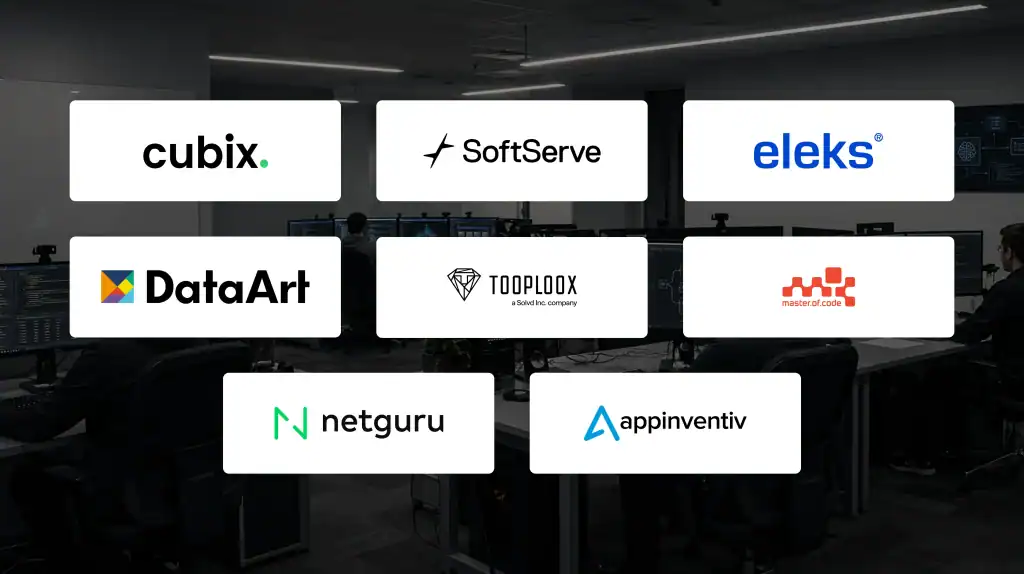
Here are nine companies actually building AI products right now, from a full-cycle app, software, and game development partner to global consulting giants and focused boutique studios.
1. Cubix

Cubix has been building digital products since 2008, founded by Salman Lakhani and now run as a roughly 300-person team across offices in Florida, Manchester, Dubai, and Karachi. What sets Cubix apart is breadth. Instead of specializing in just chatbots or just enterprise consulting, Cubix builds AI into mobile apps, custom software, and games under one roof. That means a business can bring one AI idea and get help with the app, the backend, and the AI model, without juggling three separate vendors.
That range shows up in the work itself. Cubix’s teams have shipped AI-powered features for healthcare, fintech, logistics, and ecommerce clients, alongside AI-driven game mechanics like adaptive difficulty and player behavior analysis for gaming studios. Few companies on this list can move between an enterprise AI dashboard and an AI-enhanced mobile game without handing one of those off to a different vendor. For a business that wants a long-term product partner rather than a single-project contractor, that kind of range tends to matter more over time than picking the biggest name on a list.
Key Highlights
- Founded: 2008 by Salman Lakhani
- Headquarters: West Palm Beach, Florida, with offices in Manchester, Dubai, and Karachi
- Core AI Services: AI-powered apps, custom AI solutions, machine learning integration, AI-driven game development
- Industries Served: healthcare, fintech, logistics, ecommerce, and gaming
- Notable For: 300+ specialists delivering AI across mobile, software, and gaming projects, under one roof
2. Accenture
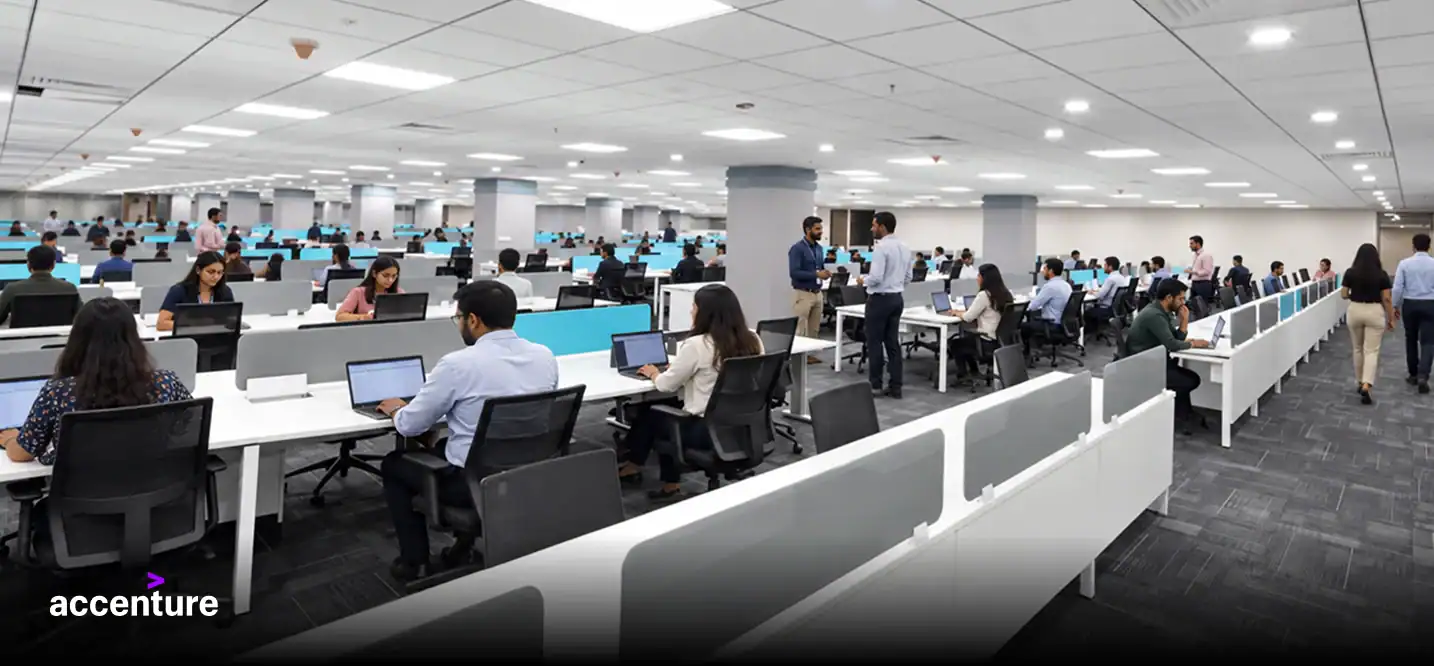
Accenture is the biggest name on this list by far. The firm has been building enterprise technology since 1989, when it broke off from Arthur Andersen’s consulting arm. It now runs one of the largest AI practices in the world, backed by a $3 billion investment plan focused on generative AI, agentic systems, and industry-specific AI tools. If you’re a Fortune 500 company rolling out AI across dozens of countries, Accenture has the scale to match.
Key Highlights
- Founded: 1989, spun off from Arthur Andersen’s consulting division
- Headquarters: Dublin, Ireland
- Core AI Services: enterprise AI consulting, generative AI, AI governance, industry-specific AI platforms
- Notable For: $3 billion AI investment commitment and over 80,000 AI-trained professionals
3. SoftServe
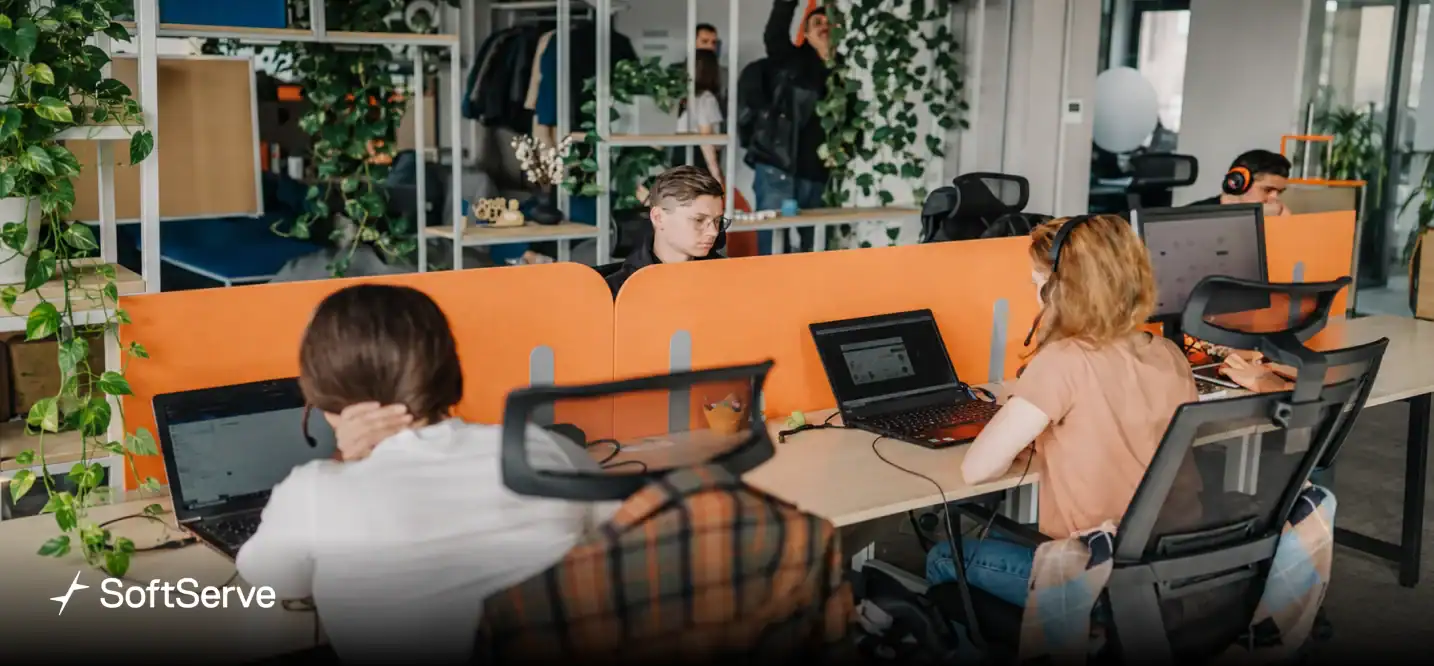
SoftServe started in 1993 in Lviv, Ukraine, founded by Taras Kytsmey and Yaroslav Lyubinets. More than three decades later, it’s grown into a 10,000-plus person company with dual headquarters in Austin and Lviv. SoftServe leans heavily into enterprise AI, cloud, and data work, and has been named NVIDIA’s Partner of the Year four years running. It’s a strong pick for companies that need AI built on top of serious cloud infrastructure.
Key Highlights
- Founded: 1993 by Taras Kytsmey and Yaroslav Lyubinets
- Headquarters: Austin, Texas, and Lviv, Ukraine
- Core AI Services: enterprise AI, machine learning, cloud AI, data engineering
- Notable For: NVIDIA Partner of the Year, four years in a row
4. ELEKS

ELEKS has been writing custom software since 1991, back when founder Oleksiy Skrypnyk was building systems for Ukraine’s newly independent power grid. It’s grown into a 2,100-plus person company with offices across Europe, North America, and the Middle East. ELEKS now folds AI and data science into its core software engineering work, serving industries from fintech to healthcare. It made the IAOP’s Global Outsourcing 100 list, a solid marker of long-term reliability.
Key Highlights
- Founded: 1991 by Oleksiy Skrypnyk
- Headquarters: Tallinn, Estonia, with delivery centers in Lviv, Ukraine
- Core AI Services: custom AI software, data science, machine learning, R&D consulting
- Notable For: Global Outsourcing 100 list (IAOP), 2,100+ engineers
5. DataArt
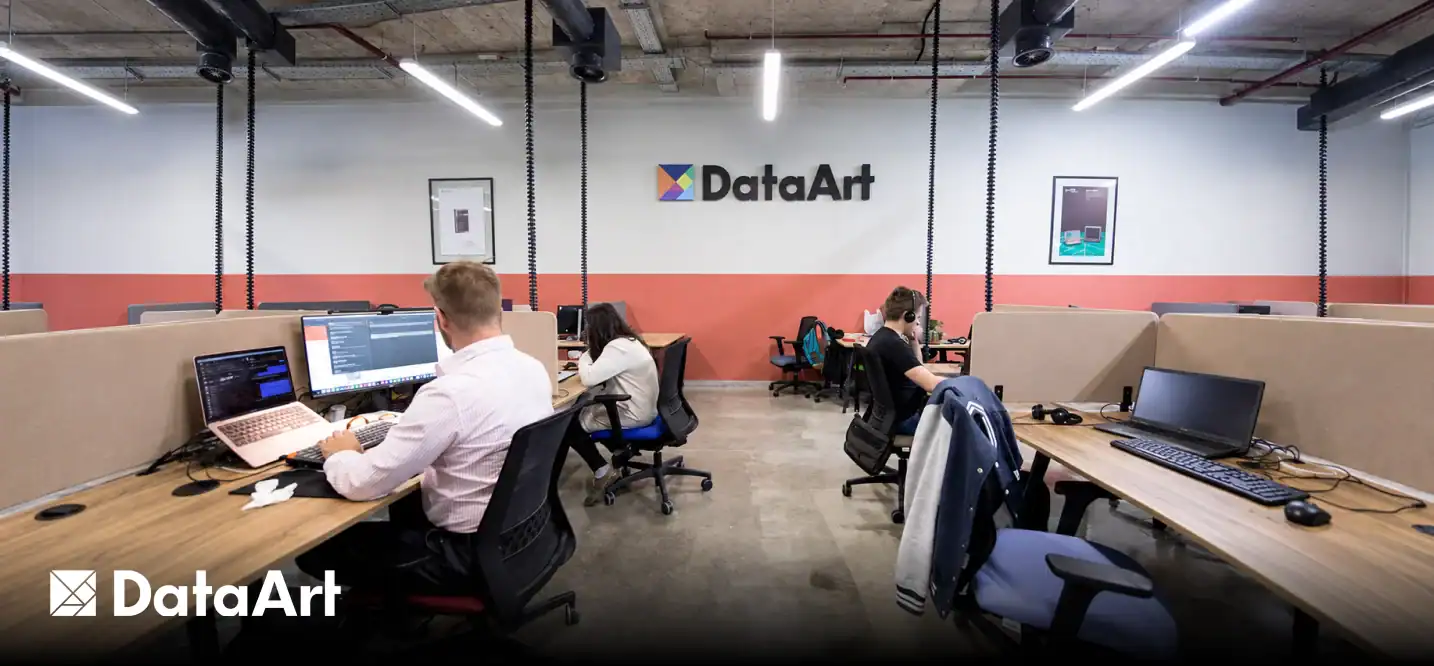
DataArt was founded in 1997 by Eugene Goland, who had already helped build Mail.ru before starting this one. The company has grown into a 6,000-plus person, remote-first team spread across more than 40 locations worldwide. Its AI work leans toward data platforms and analytics for finance, healthcare, and media companies. If your AI project depends on messy, high-volume data, DataArt’s engineering depth is built for exactly that.
Key Highlights
- Founded: 1997 by Eugene Goland
- Headquarters: New York City, USA
- Core AI Services: AI-powered data platforms, machine learning, analytics
- Notable For: 6,000+ engineers across 40+ global locations
6. Tooploox
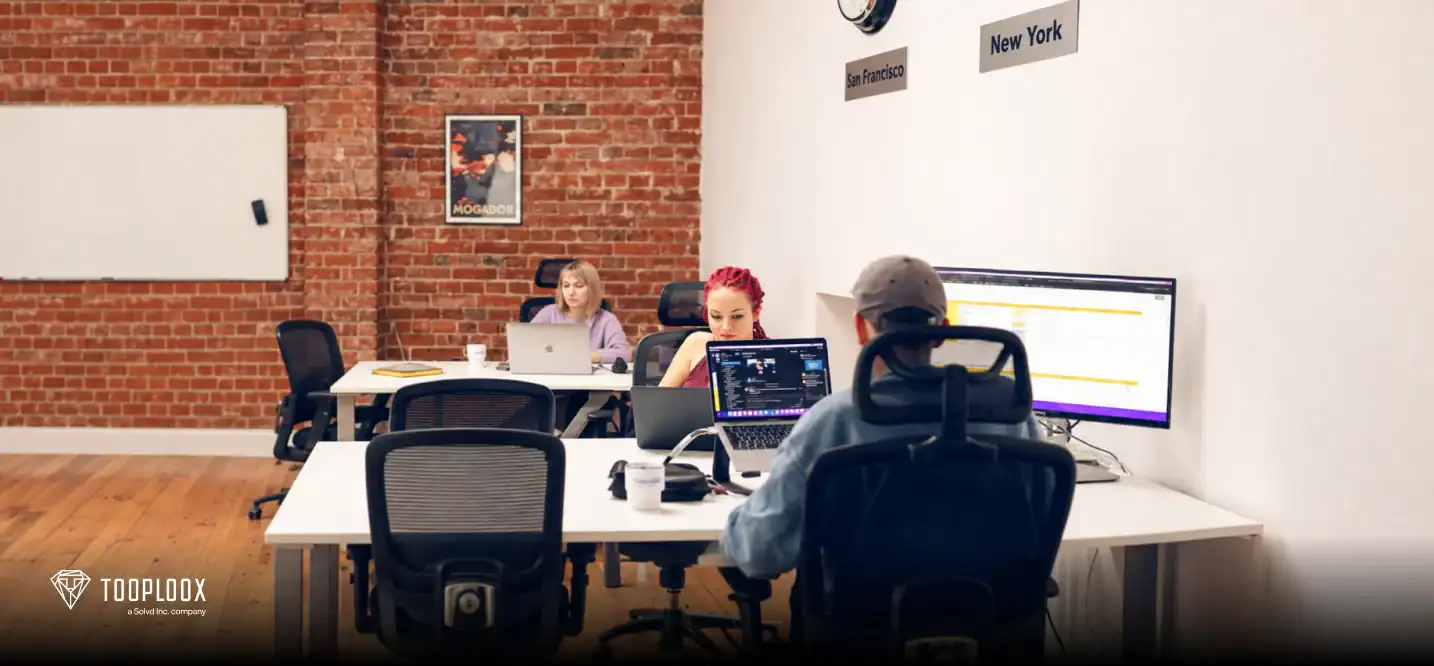
Tooploox takes a research-first approach to AI. Founded in 2012 by Paweł Sołyga in Wrocław, Poland, the company built a 40-plus person R&D team, many with PhDs, who’ve published over 30 papers at conferences like NeurIPS and ICML. They’ve collaborated with Stanford, Carnegie Mellon, and ETH Zurich, and built computer vision systems for autonomous vehicle cameras and cancer research platforms. Now part of Solvd Inc., Tooploox is a strong fit when your AI problem is genuinely hard, not just “add a chatbot.”
Key Highlights
- Founded: 2012 by Paweł Sołyga
- Headquarters: Wrocław, Poland
- Core AI Services: computer vision, deep learning, machine learning research, custom AI products
- Notable For: 30+ peer-reviewed papers at NeurIPS, ICML, and ECCV
7. Master of Code Global
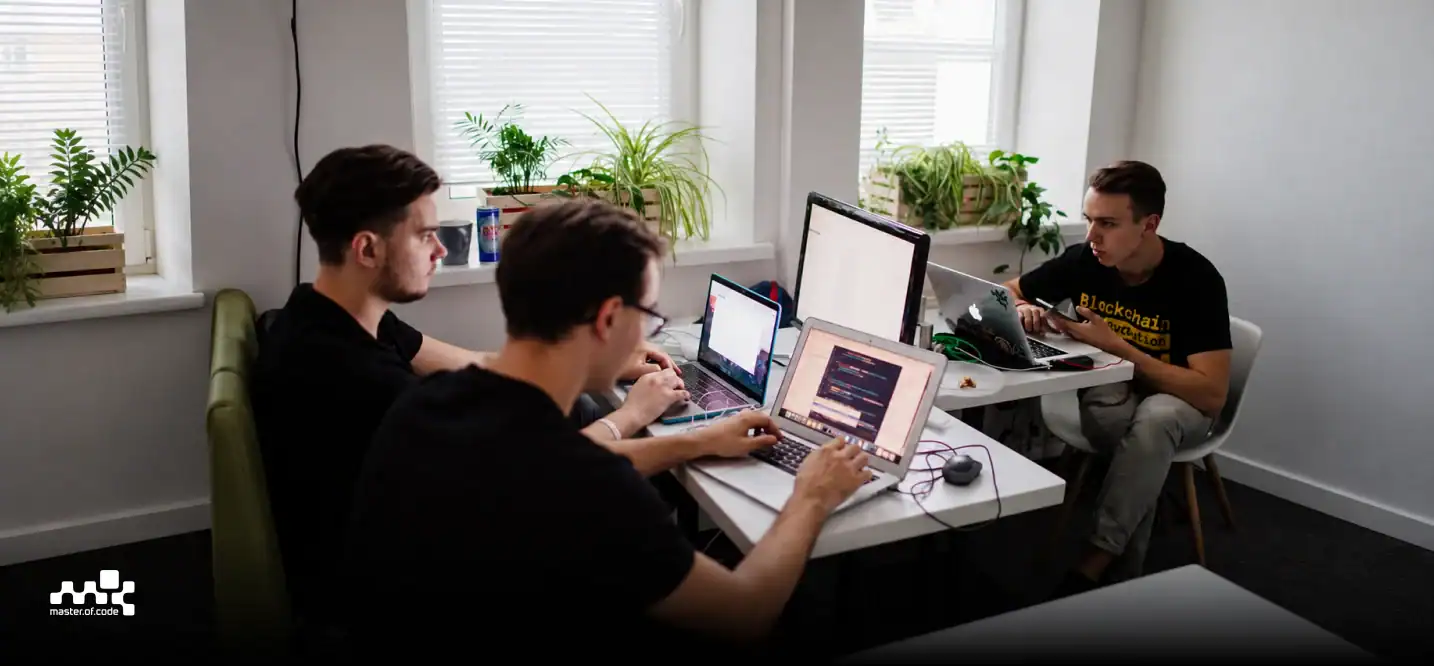
Master of Code Global does one thing and does it deeply: conversational AI. Founded in 2004 by Dmitry Gritsenko, the company has delivered more than 1,000 chatbot, voice AI, and AI agent projects, reportedly reaching over a billion users worldwide. Clients include T-Mobile, Burberry, and Tom Ford. Its proprietary LOFT framework is built to speed up AI project delivery and keep budgets under control.
Key Highlights
- Founded: 2004 by Dmitry Gritsenko
- Headquarters: Redwood City, California
- Core AI Services: conversational AI, chatbots, voice AI, AI agents
- Notable For: 1,000+ projects delivered, reaching over 1 billion users
8. Netguru

Netguru started in 2008 in Poznań, Poland, founded by Wiktor Schmidt, Jakub Filipowski, and Adam Zygadlewicz. It built its name on product design and software development before layering in machine learning and generative AI. One standout project: an AI research assistant for Merck that cut a six-month process down to hours. Netguru works well for companies that want AI woven into a broader product, not bolted on as an afterthought.
Key Highlights
- Founded: 2008 by Wiktor Schmidt, Jakub Filipowski, and Adam Zygadlewicz
- Headquarters: Poznań, Poland
- Core AI Services: machine learning, generative AI integration, product development
- Notable For: built an AI research assistant for Merck’s drug discovery team
9. Appinventiv

Appinventiv launched in 2015 in Noida, India, co-founded by Saurabh Singh, Sudeep Srivastava, and a small founding team. It grew fast, and now runs over 1,000 tech experts serving both Fortune 500 companies and startups. Its InventivAI division has delivered more than 100 AI and generative AI solutions across healthcare, retail, and logistics. Clients range from IKEA to Adidas to Domino’s.
Key Highlights
- Founded: 2015 by Saurabh Singh, Sudeep Srivastava, and co-founders
- Headquarters: Noida, India
- Core AI Services: generative AI, machine learning, AI-powered mobile and enterprise apps
- Notable For: 100+ AI and GenAI solutions delivered through its InventivAI division
Companies at a Glance
Here’s the same nine companies side by side, if you just want the quick comparison.
| Company | Founded | Headquarters | Specialization | Notable For |
| Cubix | 2008 | West Palm Beach, FL | Full-cycle AI, apps, and games | 300+ specialists, 4 global offices |
| Accenture | 1989 | Dublin, Ireland | Enterprise AI consulting | $3B AI investment commitment |
| SoftServe | 1993 | Austin, TX / Lviv, Ukraine | Enterprise AI, cloud, data | NVIDIA Partner of the Year (4x) |
| ELEKS | 1991 | Tallinn, Estonia | Custom AI software engineering | Global Outsourcing 100 (IAOP) |
| DataArt | 1997 | New York, USA | AI-powered data platforms | 6,000+ engineers, 40+ locations |
| Tooploox | 2012 | Wrocław, Poland | AI research and computer vision | 30+ papers at NeurIPS, ICML, ECCV |
| Master of Code Global | 2004 | Redwood City, CA | Conversational AI and chatbots | 1,000+ projects, 1B+ users reached |
| Netguru | 2008 | Poznań, Poland | Product-focused ML and GenAI | Built an AI research tool for Merck |
| Appinventiv | 2015 | Noida, India | AI-powered mobile and enterprise apps | 100+ AI/GenAI solutions delivered |
AI Development Trends to Watch in 2026
The AI market isn’t just growing. It’s compounding. In 2026, the global AI market sits around $540 billion. By 2033, that’s projected to reach nearly $3.5 trillion, growing at a 30.6% rate every year, according to Grand View Research.
Businesses aren’t just experimenting anymore either. Enterprise spending on generative AI tripled in a single year, jumping from $11.5 billion in 2024 to $37 billion in 2025, according to McKinsey. Companies moved past pilot projects and started shipping real, production AI tools.
A few patterns are shaping how that money gets spent:
- Agentic AI is moving from demo to deployment. Businesses want AI that takes action, not just answers questions.
- Industry-specific AI is winning over generic tools. A model trained on your industry’s data usually beats a general-purpose one.
- Adoption still varies a lot by sector. Tech and finance are racing ahead, while manufacturing and retail move more slowly.
- Responsible AI and governance are now a real budget line, not an afterthought bolted on at the end.
That last point on sector gaps is worth a closer look. Adoption looks very different depending on your industry.
| Industry | AI Adoption Rate (2026) |
| Technology | 88% |
| Financial Services | 79% |
| Healthcare | 62% |
| Retail | 47% |
| Manufacturing | 29% |
Why Cubix Is a Trusted AI Development Partner
Out of the nine companies on this list, Cubix is built a little differently. It didn’t start as an AI consultancy that later added a mobile team, or a mobile shop that bolted on a chatbot. Cubix has spent 18 years building mobile apps, enterprise software, and games together, which means AI features get built by a team that already understands how your product works end to end.
That shows up in the details. Cubix’s dedicated AI division, Cubix Ai, handles everything from AI-powered mobile features to machine learning models trained on your own data. The team has delivered projects across healthcare, fintech, logistics, and gaming, backed by more than 300 specialists across four global offices.
- Full-cycle delivery: one team handles the app, the backend, and the AI model
- 300+ specialists across offices in Florida, Manchester, Dubai, and Karachi
- Experience across healthcare, fintech, logistics, ecommerce, and gaming
- A dedicated AI division, Cubix AI, built specifically for AI-powered products
Ready to Build with Cubix?
AI development doesn’t have to mean picking between a chatbot vendor, a design agency, and an offshore dev shop. Cubix brings AI development services together with app, software, and game development, so your project moves faster with fewer handoffs.
- Talk to our team about your AI project, no matter how early the idea is
- Get a clear scope and timeline before you commit to anything
- Work with one team that builds the app and the AI model together
Building with AI? Let’s Plan It Before You Commit
Contact UsFrequently Asked Questions
1. Which companies lead the AI development industry in the United States?
Cubix, based in West Palm Beach, Florida, is a strong US-based option for AI-powered apps and software. DataArt (New York) and Master of Code Global (Redwood City) are also headquartered in the US and serve major American enterprise clients. Accenture, while headquartered in Dublin, runs one of the largest AI practices inside the US market.
2. Who are the leading AI development firms globally?
ELEKS, SoftServe, and Tooploox all operate across multiple continents with large, senior engineering teams. Cubix, Netguru, and Master of Code Global also serve global enterprise clients from their own multi-office setups. Size isn’t everything, though. The right global firm depends on your project’s specific AI needs.
3. What are the top AI development firms offering enterprise solutions?
For large-scale enterprise AI, Accenture, SoftServe, and DataArt all have the team size and track record to handle multi-country rollouts. Cubix is a good fit for mid-market enterprises that want a more hands-on, dedicated team instead of a massive account structure.
4. Best companies for custom AI software solutions.
Cubix, ELEKS, and Tooploox all specialize in custom-built AI rather than off-the-shelf platforms. Each brings a different strength: Cubix for combining AI with app and game development in one build, ELEKS for enterprise-grade engineering, and Tooploox for deep research.
5. Where can I find the best AI development service providers near me?
Most AI development companies work remotely and serve clients worldwide, so physical location matters less than it used to. That said, Cubix has offices in Florida, Manchester, Dubai, and Karachi, giving clients in those regions a local point of contact alongside remote delivery.
6. How to select a reliable AI development partner.
Check the company’s portfolio for real, shipped AI projects, not just mockups. Ask exactly who will work on your project and what post-launch support looks like. Get a clear, written quote before signing anything. The section above on how to choose an AI development company walks through this in more depth.
7. Which AI companies specialize in machine learning product development?
Tooploox, Netguru, and DataArt all lean heavily into machine learning as a core service, not a side offering. Tooploox focuses on research-grade ML and computer vision, while Netguru and DataArt apply ML to real, live products.
8. Top agencies specializing in machine learning services.
Along with Tooploox, Netguru, and DataArt, SoftServe also runs a large, dedicated machine learning practice as part of its broader enterprise AI work. These firms mainly differ in scale and industry focus.
9. What are the most reputable AI development companies for startups?
Cubix, Appinventiv, and Netguru all have strong startup track records, since they’re used to building fast on tighter budgets. Tooploox is also startup-friendly for projects that need real AI research depth, not just a basic integration.
10. Find an AI development company for enterprise solutions.
For heavy enterprise AI rollouts, Accenture and SoftServe bring the most scale. If you want a more dedicated, boutique-style enterprise partnership instead, Cubix and DataArt are both strong alternatives.