Key Takeaways
- Developing an NFT marketplace runs on a smart contract-driven flow: connect wallet, mint, list, discover, buy or bid, then automatic ownership transfer, with no middleman approving the trade.
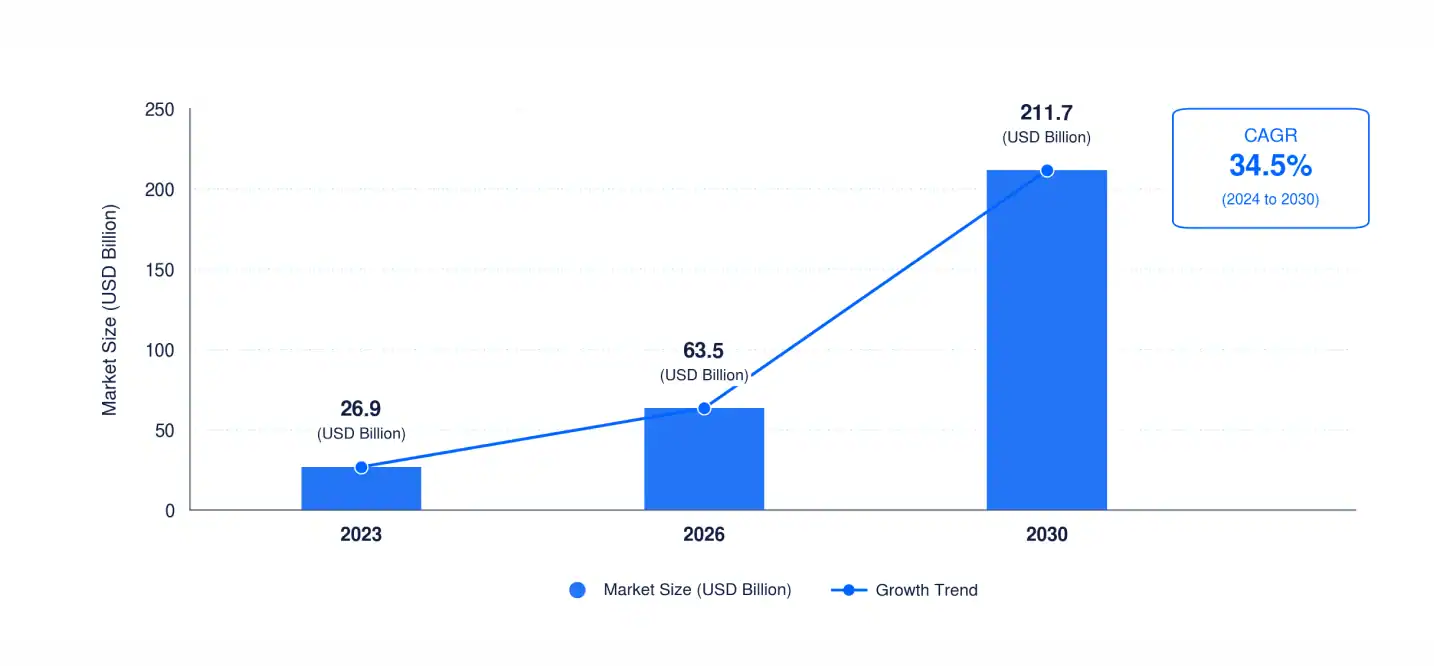
- The global NFT market is projected to reach $63.5 billion in 2026 and $211.7 billion by 2030, a 34.5% CAGR, according to Grand View Research.
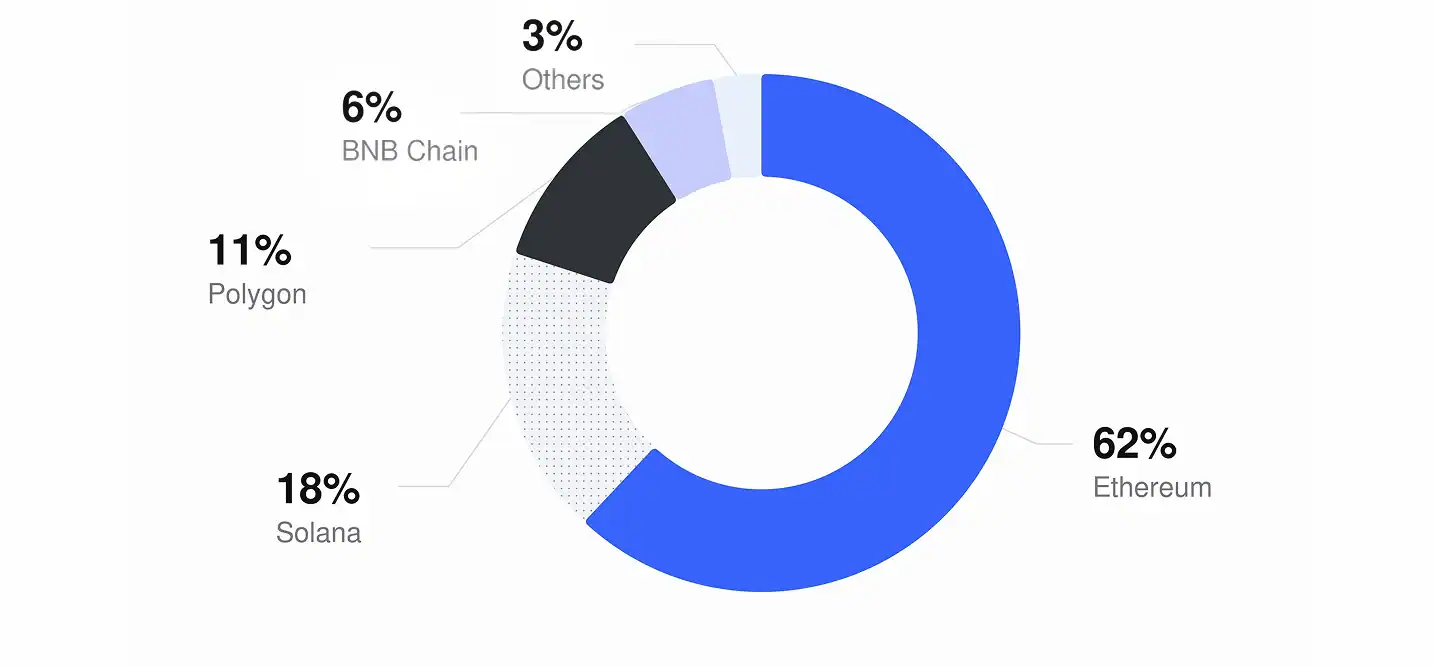
- Ethereum leads NFT gaming by blockchain share at 62.37% in 2025, according to Mordor Intelligence, while lower-cost networks such as Polygon can be better suited to gaming and high-frequency transactions.
- Build costs range from $15,000–$40,000 for a white-label NFT marketplace to $250,000+ for a full-featured custom platform, with multi-chain support adding 20-30% to the budget.
Developing an NFT marketplace means building a platform where users can mint, list, discover, and trade non-fungible tokens through smart contracts instead of a middleman. The global NFT market is on track to hit $63.5 billion in 2026, up from $26.9 billion in 2023, according to Grand View Research. That growth is pulling in art platforms, gaming studios, and collectible brands that want their own trading venue instead of relying on OpenSea or Magic Eden.
This guide covers what an NFT marketplace actually does, how to build one step by step, which blockchain fits your use case, what features you need, and what it costs. We’ll also look at how these platforms make money and answer the questions people search for most.
What are NFTs?
A non-fungible token (NFT) is a unique blockchain-based token that represents ownership or another claim associated with a digital or physical asset. The token’s ownership record is stored on-chain, while its metadata or media may be stored on-chain or through external storage such as IPFS.
NFTs rely on token standards to define how they behave:
- ERC-721 – the original Ethereum standard for unique, one-of-a-kind tokens
- ERC-1155 – a multi-token standard that supports both fungible and non-fungible assets in one contract, common in gaming
- SPL tokens – Solana’s token format, used heavily by Solana-based collections
NFTs represent digital art, in-game items, music rights, event tickets, virtual land, and increasingly, tokenized real-world assets. The process of representing an asset on a blockchain through a token is called tokenization, and it forms the foundation of many NFT marketplace models. .
If you’re new to the underlying technology, our beginner’s guide to blockchain technology breaks down the core concepts before you go further.
How Does an NFT Marketplace Work?
An NFT marketplace is a platform that connects buyers and sellers with blockchain networks to facilitate the listing, discovery, purchase, and transfer of NFTs. Some marketplaces operate as decentralized applications, while others use a centralized platform with blockchain-based transactions.
Here’s how a typical trade moves through the system:
- Connect wallet: The user links a cryptocurrency wallet (MetaMask, Phantom, Coinbase Wallet) to authenticate
- Create or mint NFT: The creator uploads a file and metadata, which gets written to the blockchain as a new token
- List NFT: The owner sets a fixed price or opens the item for bidding
- Discover NFT: Buyers browse, search, or filter listings across collections
- Buy/bid: A buyer submits a purchase or a bid through the marketplace interface
- Smart contract executes: The contract verifies funds and ownership, then processes the trade automatically
- Ownership transfers: The token moves to the buyer’s wallet, and the transaction is recorded permanently on-chain
In a marketplace that uses non-custodial smart contracts, the contract enforces the predefined trading rules and executes the transaction without requiring a central party to approve each sale, which is what makes NFT marketplace development fundamentally different from building a traditional e-commerce site.
Types of NFT Marketplaces
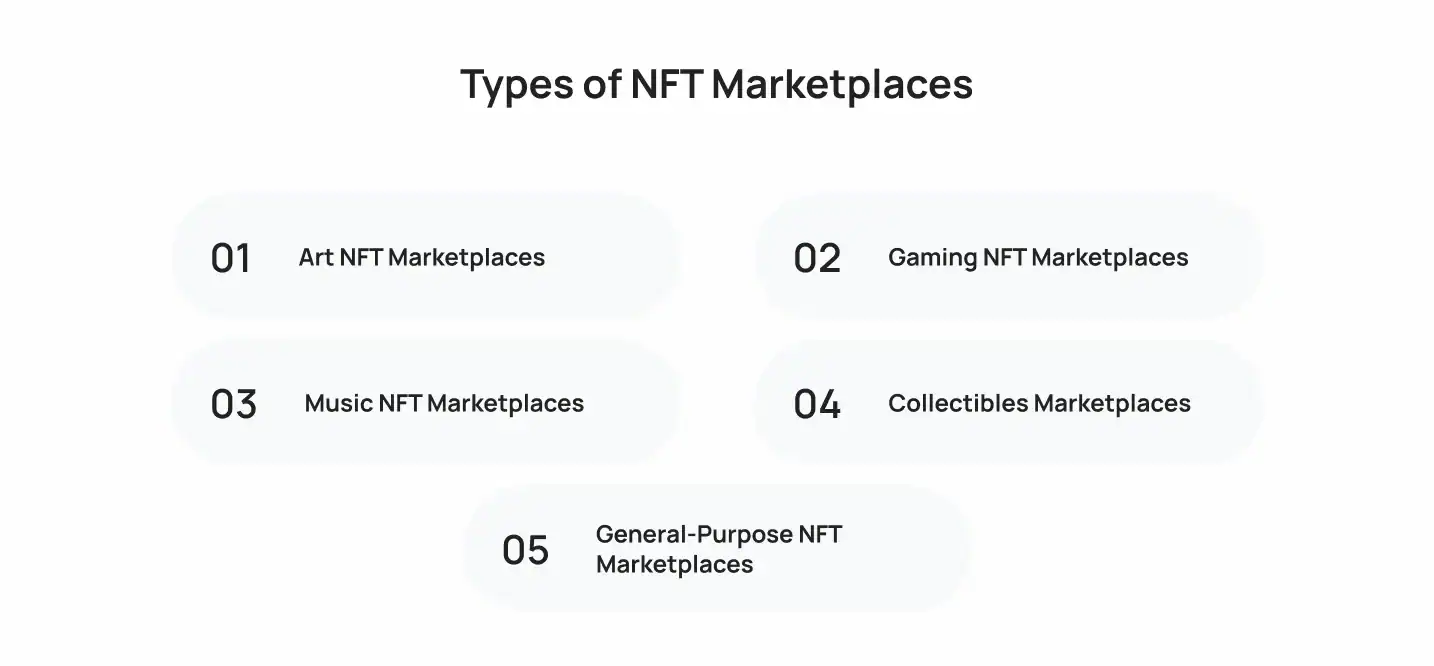
NFT marketplaces are digital platforms that allow users to mint, buy, and sell non-fungible tokens. They are typically classified based on their access model and the types of digital assets they support.
1. Art NFT Marketplaces
These platforms focus on digital art and 1-of-1 collectibles. SuperRare and Foundation are the clearest examples, built around curation, artist verification, and high-value single sales rather than volume trading.
2. Gaming NFT Marketplaces
Gaming platforms handle in-game items, skins, and play-to-earn assets. Because gaming requires frequent, low-cost transactions, these marketplaces typically run on low-fee chains like Polygon or Immutable. The NFT gaming market is projected to reach $0.62 trillion in 2026 and $1.21 trillion by 2031, growing at a 14.31% CAGR, according to Mordor Intelligence.
If you’re building the game side of this ecosystem yourself, see our walkthrough on how to build an NFT P2E game in Unity.
3. Music NFT Marketplaces
Music NFT platforms let artists sell royalty rights, limited editions, and exclusive tracks directly to fans. Royalty mechanisms are central here, since ongoing revenue share is often the main value proposition for buyers.
4. Collectibles Marketplaces
These cover sports cards, trading card games, and branded collectibles. NBA Top Shot popularized this format, pairing licensed content with pack-based minting drops.
5. General-Purpose NFT Marketplaces
Broad platforms like OpenSea support nearly every category and chain. They’re harder to compete with directly, which is why most new entrants pick a niche instead of trying to out-build the incumbents.
Steps to Build an NFT Marketplace
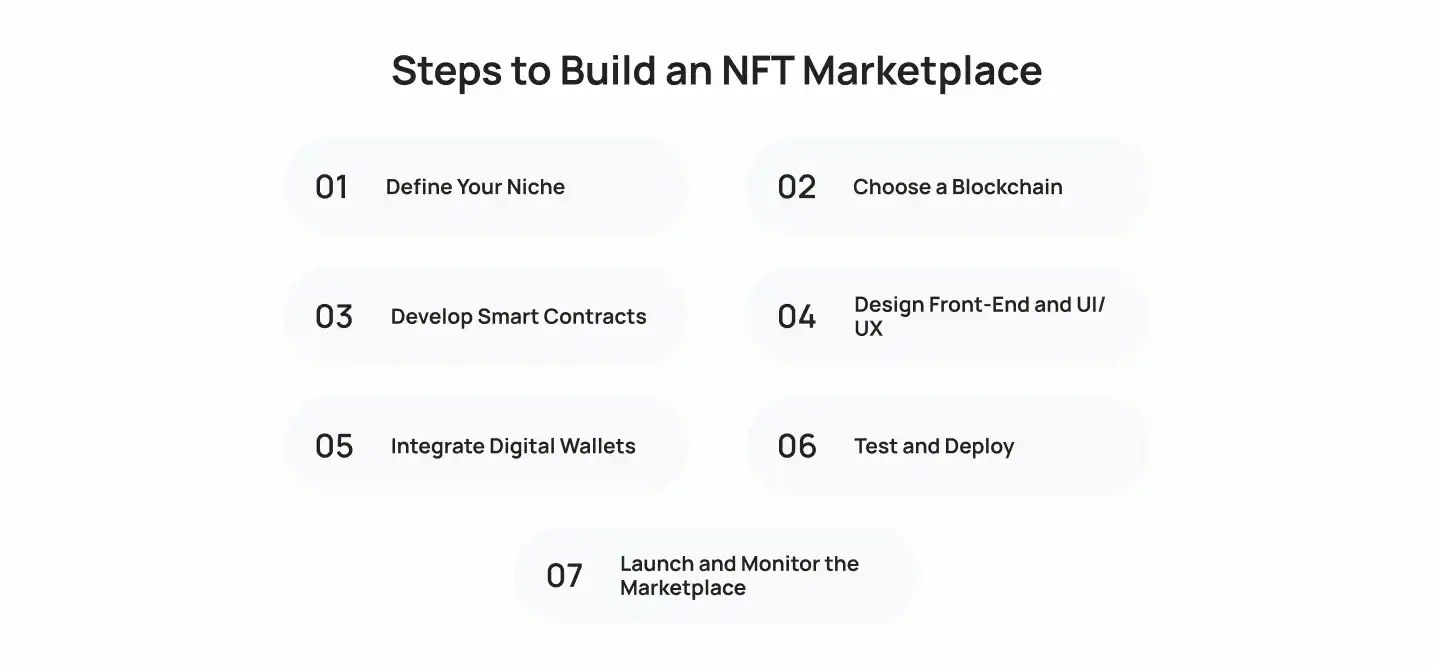
Building a marketplace involves more than writing smart contracts. Here’s the full sequence for developing an NFT marketplace from concept to launch. For a broader view of how these stages fit into a full build, our blockchain development roadmap walks through the process end to end.
1. Define Your Niche
Decide whether you’re building for art, gaming, music, collectibles, or a general audience. Your niche determines transaction volume expectations, which directly affects your blockchain choice and fee structure.
2. Choose a Blockchain
Your blockchain decision affects transaction speed, gas costs, wallet compatibility, and development requirements. Although you can add or migrate to other networks later, changing chains after launch can require contract deployments, integrations, data migration, and user migration, making the initial choice an important architectural decision.
3. Develop Smart Contracts
This is the core of NFT marketplace smart contract development. Depending on the marketplace model, you may need smart contracts for minting, listings, fixed-price sales, bidding, auctions, escrow, and royalty handling. Each contract should be reviewed and independently audited before mainnet deployment.
4. Design Front-End and UI/UX
Your interface needs to make wallet connection, browsing, bidding, and checkout intuitive for users who may never have used crypto before. Clean navigation and fast load times matter more here than flashy animation, since friction at checkout is where most marketplaces lose conversions.
5. Integrate Digital Wallets
Support for MetaMask, WalletConnect, Coinbase Wallet, and Phantom (for Solana) covers most of your user base. As a result, broader wallet support directly expands your addressable audience without any additional marketing spend.
6. Test and Deploy
Run your contracts through testnets such as Sepolia and Solana Devnet before mainnet launch. Load-test your front end under simulated high-traffic conditions, since NFT drops can spike traffic within seconds.
7. Launch and Monitor the Marketplace
After launch, track gas costs, transaction failures, and user drop-off points. Continuous monitoring lets you catch smart contract issues or UX bottlenecks before they affect a large share of your user base.
Which Blockchain Is Best for an NFT Marketplace?
There’s no single “best” chain. The right one depends on your niche, budget, and expected transaction volume. This is where blockchain marketplace development decisions get concrete.
| Blockchain | Transaction Speed | Typical Gas Cost | Best Fit |
| Ethereum | ~15 TPS (mainnet) | High, variable | High-value art, established collector base |
| Polygon | 7,000+ TPS | ~$0.01 per transaction | Gaming, high-frequency trading, mass adoption |
| Solana | Sub-second finality | Near-zero | Gaming, trading platforms, active communities |
Ethereum still holds 62.37% of NFT contract share as of 2025, per Mordor Intelligence, largely because of its liquidity and established collector base. However, Polygon is the fastest-growing chain for NFT activity, expanding at a 15.73% CAGR, thanks to near-zero fees that suit gaming and high-frequency use cases. Solana, meanwhile, has become the default for fast trading platforms like Tensor and Magic Eden’s Solana marketplace.
Many platforms now support multiple chains at once. Blockchain interoperability tools let a single marketplace list assets from Ethereum, Polygon, and Solana side by side, which reduces the risk of picking the “wrong” chain outright.
Essential Features for a Successful NFT Marketplace
Strong NFT marketplace features determine whether users stay after their first visit. Here’s what a competitive platform needs.
1. Storefront and User Dashboard
A personalized dashboard shows owned NFTs, bid history, sales activity, and wallet balance in one place. Users expect this level of visibility as a baseline, not a bonus feature.
2. Advanced Search and Filters
Buyers need to filter by price, collection, rarity trait, blockchain, and listing type. Weak search functionality is one of the top reasons users abandon a marketplace before finding anything to buy.
3. NFT Listings and Management
Sellers need tools to list, edit, delist, and bundle NFTs without touching code. Bulk listing tools matter especially for creators managing large collections.
4. Crypto Wallet Integration
Multi-wallet support (MetaMask, Phantom, WalletConnect, Coinbase Wallet) removes friction at the point users are most likely to drop off: the very first connection step.
5. Flexible Trading Options
Support fixed-price sales, offers, and English or Dutch auctions. Different buyer types respond to different formats, so limiting yourself to one trading style narrows your audience unnecessarily.
6. NFT Buying, Bidding, and Auctions
A reliable auction engine needs to handle bid increments, automatic extensions near closing time, and instant settlement once an auction ends. Poorly built auction logic is a common source of disputes and failed transactions.
7. NFT Minting Tools
Built-in minting lets creators upload files, set royalty percentages, and generate metadata without external tools. This is a major differentiator for platforms targeting independent artists rather than established collections.
8. Ratings and Reviews
Seller reputation systems help buyers trust unfamiliar creators, which matters most for general-purpose and collectibles marketplaces where trust signals aren’t already established through brand recognition.
Security threads through every one of these features. NFT marketplace security should include audited contracts, rate-limiting on API endpoints, multi-signature treasury wallets, and marketplace escrow that holds funds until both sides of a trade complete. In Q1 2025 alone, Immunefi’s Hack3d report documented 197 Web3 security incidents with losses exceeding $1.6 billion across DeFi, NFT, and layer-1 protocols, per Immunefi’s data cited by CoinLaw. That number alone justifies budgeting for security from day one instead of retrofitting it after launch.
Top 5 NFT Marketplaces
Studying the leaders helps you benchmark features, fees, and positioning before you start building your own NFT trading platform development roadmap.
- OpenSea – the broadest general-purpose marketplace, supporting multiple chains with the largest total listing count. Its main weakness is listing quality control, since low-effort collections can clutter search results.
- Blur – built for professional Ethereum traders, with zero base marketplace fees and fast bulk-sweep tools. It offers weaker royalty enforcement than art-focused platforms.
- Magic Eden – originally Solana-native, now multi-chain with a strong position in Bitcoin Ordinals and a gaming launchpad. Combined with Blur and OpenSea, these three platforms hold roughly 82% of total NFT trading volume, according to CoinLaw’s 2026 market data.
- Tensor – a Solana-focused trading platform aimed at professional traders, offering real-time floor analytics and fast execution speed.
- SuperRare & Foundation – curated art platforms that prioritize verified artists and single-edition works over high-volume trading.
How Does an NFT Marketplace Make Money?
An NFT marketplace business model typically blends several revenue streams rather than relying on just one:
- Transaction fees – a percentage cut (usually 1-2.5%) taken on every completed sale
- Listing fees – a flat or variable charge to list an item, though many platforms have dropped this to stay competitive
- Minting fees – charged when creators mint new NFTs directly on the platform
- Royalties – a percentage of every secondary sale, often paid to the original creator, sometimes shared with the platform
- Featured listings – paid placement for sellers who want more visibility in search and homepage results
- Premium subscriptions – advanced analytics, early drop access, or reduced fees for paying members
Transaction fees remain the primary revenue driver for most platforms, therefore volume matters more than any single high-value sale. That’s why niche platforms with loyal, repeat traders often out-earn broader marketplaces with larger but less engaged user bases.
How Much Does Developing an NFT Marketplace Cost?
Developing an NFT marketplace costs anywhere from $15,000 for a pre-built white-label solution to over $250,000 for an enterprise-grade custom platform. Costs vary widely based on scope, blockchain choice, and whether you build from scratch or use existing infrastructure.
| Development Approach | Estimated Cost Range | Timeline |
| White-label NFT marketplace | $15,000 – $40,000 | 4-8 weeks |
| Custom NFT marketplace development (MVP) | $40,000 – $90,000 | 3-5 months |
| Full-featured custom NFT marketplace development | $90,000 – $250,000+ | 6-12 months |
A white-label NFT marketplace solution gets you to market fastest since the core smart contracts and front end already exist, but you sacrifice flexibility and differentiation. Custom builds cost more upfront because you’re paying for original smart contract architecture, security audits, and a UI designed around your specific niche.
The biggest variables driving NFT marketplace development costs are the number of supported blockchains, the complexity of the auction engine, smart contract audit scope, and whether you need custom minting tools versus off-the-shelf ones. Multi-chain support alone can add 20-30% to your development budget, since each chain requires its own contract deployment and testing cycle.
Beyond the build itself, budget for ongoing costs: audit renewals after major updates, cloud infrastructure, customer support, and marketing to acquire your first cohort of creators and buyers. If your project also includes a blockchain-based game, see our guide to NFT game development costs for a breakdown of the additional development investment involved.
Why Choose Cubix for NFT Marketplace Development?
Cubix brings hands-on experience in NFT marketplace development across Ethereum, Polygon, and Solana, covering everything from smart contract architecture to front-end design and post-launch support.
Our team handles the full scope of NFT marketplace development, including niche strategy, smart contract audits, wallet integration, auction engines, and scalable infrastructure that holds up under high-traffic mint events.
For gaming-focused marketplaces, our full-cycle game development services can support the development of blockchain-based gaming experiences alongside the marketplace. Whether you need a fast-to-market white-label NFT marketplace or a fully custom platform built around a specific niche, we scope the build around your budget and timeline rather than pushing a one-size-fits-all package.
Take Your NFT Marketplace Idea From Concept to Launch With Cubix
Contact UsFrequently Asked Questions
1. What are the essential steps to develop an NFT marketplace platform?
Define your niche, choose a blockchain, build and audit smart contracts, design the front end, integrate wallets, test thoroughly, then launch and monitor performance.
2. Which companies offer white-label solutions for NFT marketplace development?
Several blockchain development agencies, including Cubix, offer white-label NFT marketplace packages that can be customized with your branding, fee structure, and supported chains.
3. How much does it cost to build a custom NFT trading platform?
Custom builds typically range from $40,000 for an MVP to $250,000+ for a full-featured platform, depending on blockchain count, features, and audit scope.
4. How can I integrate cryptocurrency payment gateways into an NFT marketplace?
Use wallet SDKs like WalletConnect or Web3.js/Ethers.js to let users pay directly from MetaMask, Phantom, or Coinbase Wallet through your smart contract’s payment functions.
5. Recommended development agencies for blockchain marketplace solutions.
Look for agencies with a track record of audited smart contracts and live marketplace launches, not just portfolio mockups. Cubix is one option with direct NFT marketplace experience.
6. Where can I find developers specializing in NFT marketplace creation?
Specialized blockchain development agencies, Web3-focused freelance platforms, and firms with published smart contract audit histories are the most reliable sources.
7. What blockchain networks are best suited for building NFT marketplaces?
Ethereum, Polygon, and Solana cover most use cases: Ethereum for high-value art, Polygon for gaming and scale, and Solana for fast trading platforms.
8. Leading backend technologies for scalable NFT marketplace infrastructure?
Node.js or Go for API layers, PostgreSQL or MongoDB for off-chain data, IPFS or Arweave for metadata storage, and cloud infrastructure like AWS for scaling during high-traffic mints.