Leverage Custom iOS Development for Your Next Project

Photo of author Ayesha Faisal / July 11, 2023
iOS Development

Key Takeaways

  • Custom iOS development helps businesses build apps tailored to real user needs instead of generic solutions.
  • Native iOS apps offer strong performance, smooth navigation, and reliable user experiences across Apple devices.
  • Different industries use iOS apps for specific goals like customer engagement, internal operations, and service delivery.
  • A structured development process from planning to launch improves product quality and reduces risks.
  • Long-term success depends on clear strategy, the right features, and a capable development team.

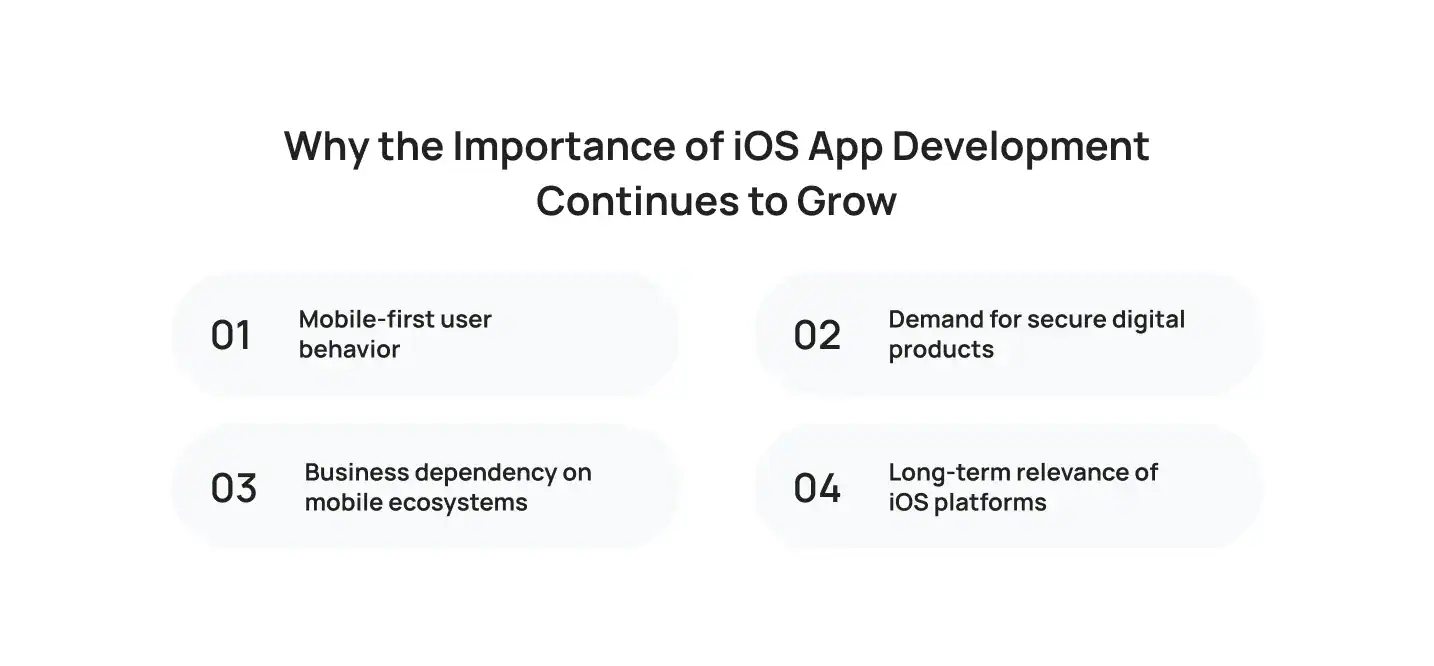
A mobile app is no longer just an additional customer touchpoint. For many businesses, it has become the main way customers browse products, make payments, book services, track orders, communicate with teams, and access support.

For brands planning to reach users on iPhone, iPad, Apple Watch, and other Apple devices, custom iOS development can create a meaningful advantage. A carefully planned iOS app can offer speed, security, polished design, and functionality that aligns with the way your business actually operates.

Instead of forcing your processes into a generic mobile app template, tailored iOS application development allows you to build an experience around your customers, employees, workflows, and long-term product goals.

Whether you are launching a startup product, digitizing internal operations, or improving customer engagement, custom iOS app solutions can help you create a mobile experience that feels useful, reliable, and distinctly yours.

What Custom iOS Development Really Means

Custom iOS development refers to building applications designed specifically for a business use case rather than using prebuilt templates or generic software.

The goal is simple: build exactly what your users and internal teams need, without unnecessary features or limitations.

A logistics company, for example, may need real-time tracking, driver coordination, and delivery confirmation tools. A healthcare provider may require secure patient records, appointment scheduling, and compliance-based data handling. These requirements cannot always be met through standard software.

In such cases, tailored iOS app development becomes essential because it allows full control over design, structure, and functionality.

Why Businesses Choose iOS Application Development

iOS application development is a strong choice for companies that want to deliver stable and high-quality mobile experiences. One of the main reasons is user behavior. iPhone users are generally more engaged with apps and more likely to complete actions such as purchases or subscriptions when the experience feels smooth and reliable.

Another reason is system consistency. Since Apple controls both hardware and software, developers work in a more predictable environment. This reduces compatibility issues and improves performance across devices.

Security also plays a major role. iOS includes strong privacy protections and strict App Store review standards, which help businesses build trust with users.

For a deeper understanding of how this platform supports modern digital products, it helps to look at how businesses approach iOS application development in real-world scenarios, especially when scaling customer-facing applications.

Key Benefits of Native iOS App Development

Native iOS development is often the preferred approach when businesses want performance, stability, and a polished user experience across Apple devices.

One of the strongest Importance of iOS Development factors is faster performance and highly responsive interfaces. Since the app is built specifically for iOS, it interacts directly with system resources without extra layers. This results in smoother animations, quicker load times, and a more natural feel during navigation.

Another major benefit is full access to iOS capabilities and APIs. Developers can integrate advanced system features without limitations, which allows the application to feel deeply connected with the device environment.

Native development also enables better support for advanced features such as Face ID, Apple Pay, Siri, ARKit, and push notifications. These features are not just technical additions; they directly improve how users interact with a mobile app daily.

Most importantly, native builds provide a more reliable user experience across Apple devices. Whether users are on an iPhone or iPad, the experience remains consistent, stable, and predictable, which is essential for long-term user trust.

How Custom iOS App Solutions Support Different Business Needs

Every business operates differently, which is why custom iOS app solutions are designed to adapt instead of forcing a fixed structure.

Startups often use iOS applications to build an MVP first. The focus is on validating ideas quickly, testing user behavior, and refining features before scaling into a full product.

Enterprises usually take a different approach. They rely on iOS application development to modernize internal systems such as employee dashboards, reporting tools, or workflow automation platforms. In many cases, the mobile app becomes a central layer connecting multiple departments.

Retail and eCommerce brands focus heavily on customer engagement. Features like personalized recommendations, seamless checkout flows, and loyalty programs help improve retention and repeat purchases.

Industries like healthcare, fintech, logistics, education, and on-demand services require more advanced functionality. These applications often involve real-time data, secure transactions, and compliance-driven workflows.

A key advantage of iOS mobile app development is how easily it connects with existing software and business systems. Whether it is a CRM, ERP, or custom backend, integration allows the mobile app to become part of a complete digital ecosystem instead of an isolated tool.
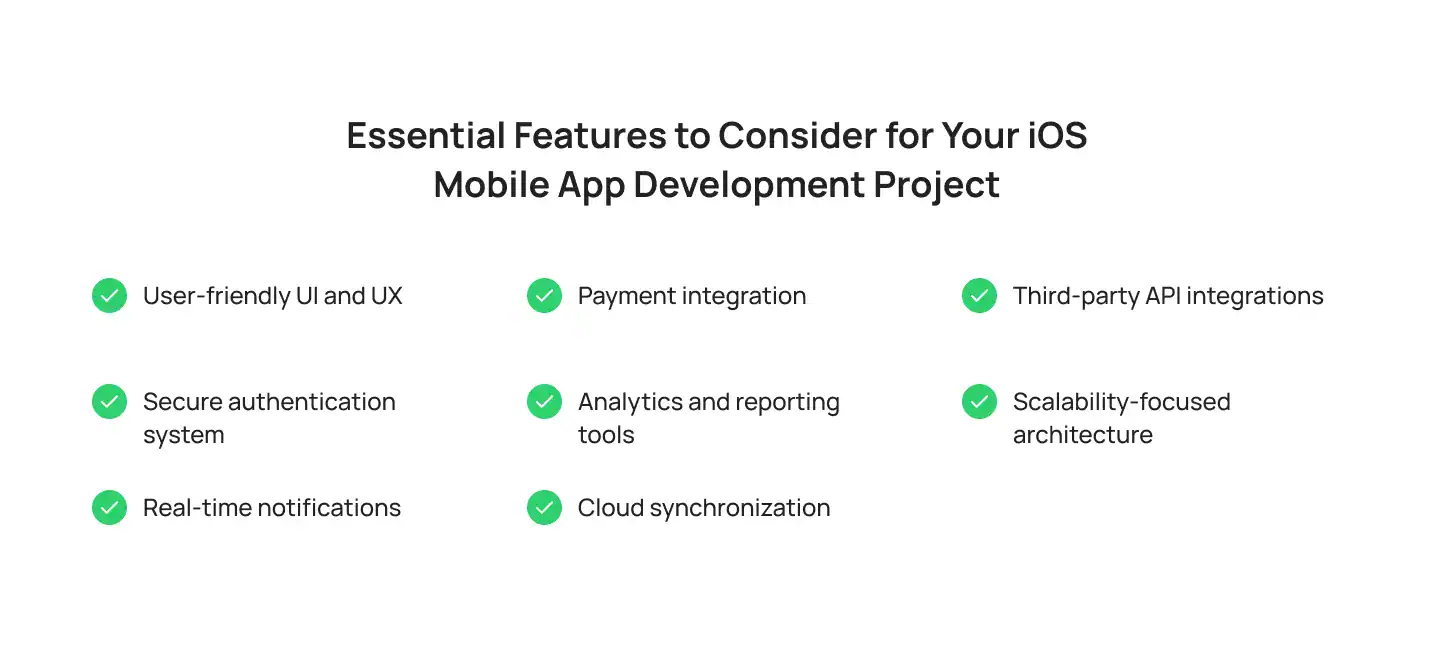
Essential Features to Consider for Your iOS Mobile App Development Project

A successful mobile app is not defined by how many features it has, but by how effectively those features solve user problems. In most cases, the difference between an average app and a high-performing one comes down to how thoughtfully the core features are designed and implemented.

Here are the essential features you should prioritize when planning your iOS mobile app development project:

  • User-friendly UI and UX:   The interface should feel simple, intuitive, and easy to navigate from the first use. If users struggle to find basic functions, even the most advanced features lose their impact. A clean layout, logical flow, and consistent design patterns matter more than visual complexity.
  • Secure authentication system:  Security is a non-negotiable part of modern iOS application development. Depending on the use case, authentication can include email and password login, social sign-ins, or biometric methods like Face ID and Touch ID. Strong authentication builds user trust, especially in apps that handle personal or financial data.
  • Real-time notifications:  Push notifications help keep users engaged and informed about important updates such as order status, reminders, or account activity. The key is balance. Notifications should be relevant and timely, not frequent enough to feel intrusive or disruptive.
  • Payment integration:  For apps that involve transactions, a secure and seamless payment system is essential. Integration with Apple Pay or trusted third-party gateways ensures smooth checkout experiences and reduces drop-off rates during payment flows.
  • Analytics and reporting tools:  Analytics help businesses understand how users interact with the app. Tracking engagement, retention, and feature usage allows teams to make informed improvements instead of relying on assumptions.
  • Cloud synchronization:  Cloud-based syncing ensures that user data stays consistent across multiple devices. Whether a user switches from iPhone to iPad or reinstalls the app, their data remains intact and up to date.
  • Third-party API integrations:  Modern apps rarely work in isolation. Integrating external systems such as CRMs, payment processors, or mapping services helps extend functionality without rebuilding core systems from scratch.
  • Scalability-focused architecture:  Planning for growth from the beginning is critical. A well-structured backend and modular architecture ensure that the app can handle increasing users, data, and feature expansions without requiring major rework later.

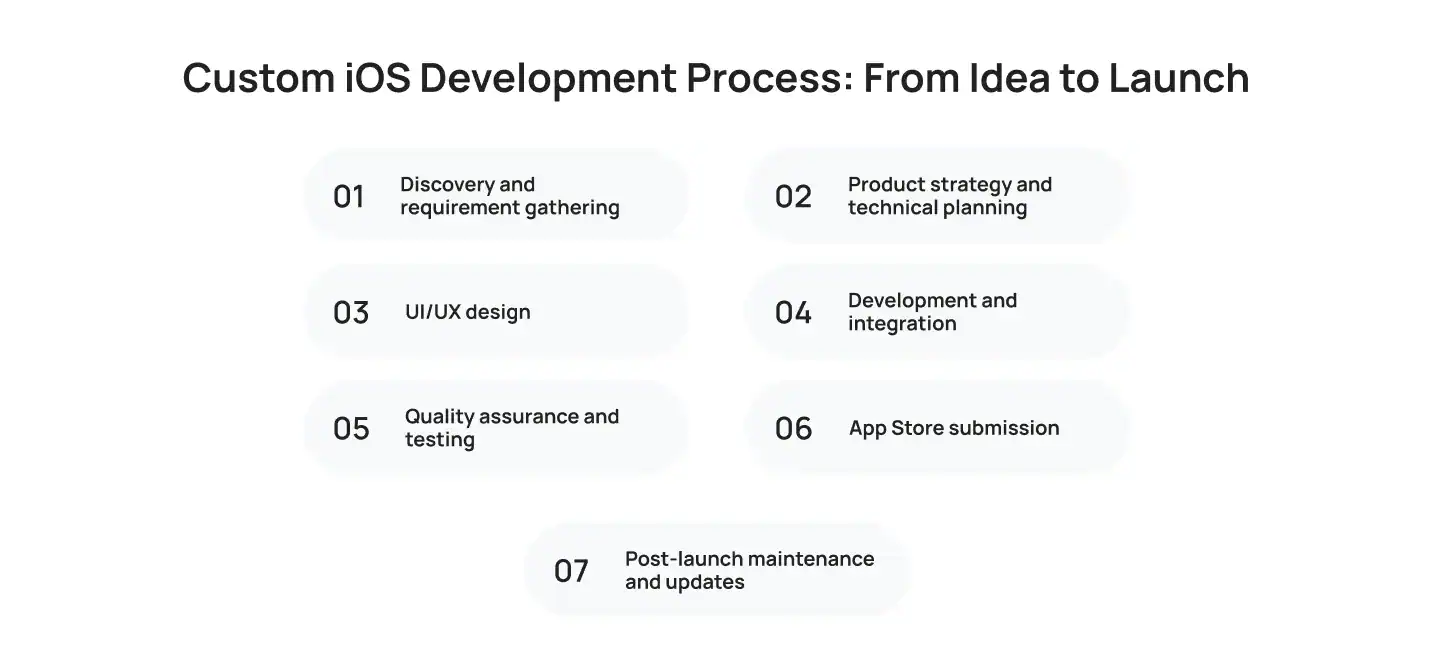
Custom iOS Development Process: From Idea to Launch

A structured development process is essential for building a successful application. It ensures every stage is aligned with business goals, user needs, and technical requirements, reducing the chances of errors or rework later in the cycle.

  • Discovery and requirement gathering:  This is the foundation of the entire process. It focuses on understanding the business idea, identifying target users, defining core objectives, and documenting technical requirements. A clear discovery phase helps avoid confusion and keeps the project direction focused.
  • Product strategy and technical planning:  Once the requirements are clear, the next step is to define how the app will actually work. This includes selecting the right technology stack, planning system architecture, and mapping out how different components will interact with each other. Strong planning at this stage helps ensure smoother execution later.
  • UI/UX design:  In this phase, user journeys, wireframes, and interface designs are created. The goal is to make the experience intuitive and easy to navigate before any development begins. A well-thought-out design helps reduce friction and improves overall user satisfaction.
  • Development and integration: This is where the idea starts turning into a real product. Developers build both frontend and backend systems while integrating APIs, databases, and third-party services. It is also where core functionality and features are implemented according to the approved design and plan.
  • Quality assurance and testing:  Testing ensures the application performs well across different devices, screen sizes, and usage conditions. This stage covers performance testing, usability checks, and security validation to make sure the app is stable and reliable before release.
  • App Store submission:  Once testing is complete, the app is prepared for release on the App Store. This includes adding metadata, preparing screenshots, writing descriptions, and ensuring compliance with Apple’s guidelines and review requirements.
  • Post-launch maintenance and updates: After launch, the work continues. Regular updates, bug fixes, performance improvements, and feature enhancements help the application stay relevant and aligned with evolving user expectations.

Understanding iOS App Development Cost

Cost is one of the most important considerations when planning a mobile product, and it varies depending on the scope and complexity of the application. There is no fixed pricing model because every project has different goals, features, and technical requirements.

The overall iOS app development cost is mainly influenced by how advanced the app needs to be. A basic application with simple functionality and limited screens will naturally require fewer resources compared to a feature-rich platform that includes real-time updates, payments, or third-party integrations.

Estimated iOS App Development Cost Ranges

To give a clearer picture, here are estimated cost ranges based on app complexity, features, and timelines.

  • Simple iOS app: $10,000 – $30,000
    Basic features, limited screens, standard UI, and minimal backend integration.
  • Moderate complexity app: $30,000 – $80,000
    Includes user authentication, APIs, payment integration, notifications, and custom UI/UX.
  • Advanced / enterprise-level app: $80,000 – $200,000+
    Real-time features, complex backend systems, third-party integrations, scalability planning, and advanced security.

These numbers can vary depending on development region, team structure, and project timeline, but they provide a realistic baseline for planning.

Key factors that impact cost:

  • App complexity: More advanced logic, workflows, and user roles increase development effort.
  • Feature set: Functionalities like chat systems, live tracking, or AI-based modules require additional development time.
  • UI/UX design: Custom and highly refined interfaces take more design and testing effort.
  • Backend infrastructure: Server setup, databases, and APIs add to both development and maintenance needs.
  • Third-party integrations: Payment gateways, CRM tools, or external APIs increase implementation scope.
  • Ongoing maintenance: Regular updates, bug fixes, and OS compatibility updates are part of long-term costs.

Clear planning at the beginning helps avoid unnecessary changes during development, which is often where unexpected costs arise. A well-defined scope ensures better control over both timeline and budget, especially in custom iOS app solutions where flexibility is high.

Choosing the Right Custom iOS App Development Agency

Selecting the right partner is one of the most important decisions in the entire process. The agency you choose directly impacts product quality, development speed, and how well your idea translates into a working application.

A reliable custom iOS app development agency should have strong industry experience and technical expertise across different types of applications. This ensures they can handle both simple apps and complex, enterprise-level solutions without compromising performance or user experience.

A solid portfolio and real case studies are also important. They show whether the team can deliver functional, user-friendly, and scalable applications, not just visually appealing screens.

Communication and project management approach matter just as much as technical skills. Regular updates, clear timelines, and transparent workflows help avoid confusion during development and keep the product aligned with business expectations.

Security and compliance practices should be part of the foundation, especially for apps dealing with financial data, healthcare information, or sensitive user records. A structured approach to security ensures trust and long-term reliability.

Finally, post-launch support capabilities ensure that the app continues to function properly after release. Updates, bug fixes, and feature improvements are part of a healthy product lifecycle and should never be treated as optional.

Key factors to evaluate before choosing an agency:

  • Industry experience: Ability to work across different domains like fintech, healthcare, retail, and logistics.
  • Technical expertise: Strong command over native iOS development, APIs, and system integration.
  • Portfolio quality: Real-world apps that show usability, stability, and performance.
  • Communication style: Clear reporting, structured timelines, and proactive updates.
  • Security practices: Proper handling of sensitive data and compliance awareness.
  • Post-launch support: Long-term maintenance, updates, and performance optimization.

In this space, working with an experienced partner like Cubix, a custom iOS app development agency, can help businesses move from idea to execution with more clarity and structure. With experience across multiple industries and a focus on building tailored iOS application development solutions, we support businesses in designing, developing, and scaling mobile products that align with real operational needs.

Related posts