Key Takeaways
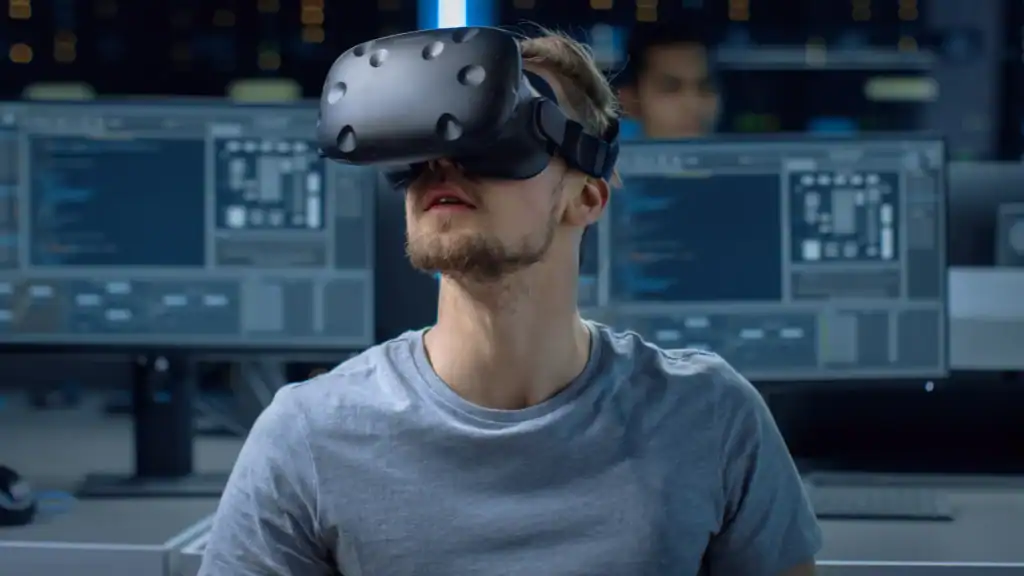
- The US AR/VR market is growing fast with the top AR/VR development companies in the USA and choosing the right augmented reality app company matters more than ever.
- The best AR/VR companies combine strong engineering with real industry experience, not just flashy demos.
- Costs vary widely, a simple AR filter and an enterprise XR platform are two very different investments.
- Cubix stands out as a full-stack AR/VR app development company with over a decade of experience across healthcare, retail, and enterprise use cases.
- AR and VR are not fading trends, enterprise adoption, training use cases, and smart glasses are pushing the industry into a new growth phase.
- Picking a partner with proven delivery, not just a portfolio, is the single biggest factor in project success.
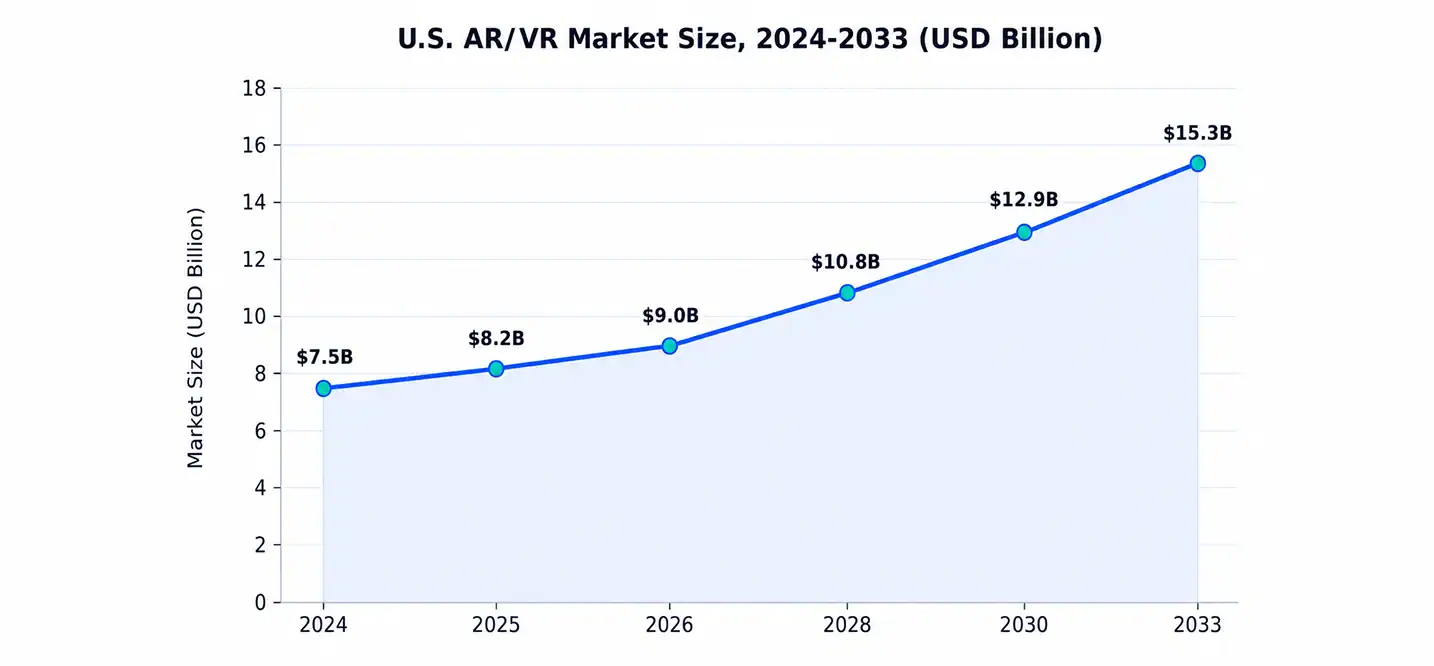
The US AR/VR market was valued at roughly $8.2 billion in 2025 and is projected to grow steadily through the next decade as more industries adopt immersive tools. That growth is exciting, but it also means the market is crowded. There are hundreds of agencies claiming AR/VR expertise, and not all of them can actually deliver a working, polished app. Some are generalist app shops that added “AR/VR” to their service list without the 3D or spatial computing depth needed to pull it off.
This guide cuts through the noise. We’ve put together a list of the top AR/VR app development companies in the USA for 2026, along with what to look for among best augmented reality companies, how much it typically costs, and how to avoid picking the wrong partner. Whether you’re a startup building your first AR prototype or an enterprise planning a full XR platform, this should help you make a confident decision.
What Makes a Company a “Top” AR/VR Development Partner?
Not every software company that lists “AR/VR” on its website actually has the skills to build one. Before comparing AR/VR technology companies, it helps to know what separates a genuinely capable AR/VR team from one that’s just riding the trend.
Here’s what actually matters when evaluating a company:
- Platform depth, real experience with ARKit, ARCore, Unity, and Unreal Engine, not just surface-level familiarity.
- 3D and spatial design skills, the ability to build realistic 3D assets and make them work smoothly in real-world or virtual space.
- Device expertise, hands-on work with headsets like Meta Quest, Apple Vision Pro, and HoloLens, plus mobile-based AR.
- Industry experience, companies that have shipped apps for healthcare, retail, education, or training tend to understand the real-world constraints better.
- Post-launch support, AR/VR apps need updates as devices and OS versions change, so ongoing support matters.
Interestingly, 62% of organizations report measurable productivity improvements after adopting immersive technology in their workflows, according to recent industry research. That’s a strong reason why picking a partner with genuine delivery experience, not just a good sales pitch, makes such a big difference.
Evaluation Criteria for AR/VR Development Companies
| Criteria | Why It Matters | What to Ask For |
| Platform Expertise | Determines app quality and compatibility | Case studies on ARKit/ARCore/Unity/Unreal |
| Industry Experience | Reduces guesswork and rework | Past projects in your sector |
| 3D/Spatial Design | Impacts realism and usability | Portfolio of 3D assets and demos |
| Device Coverage | Ensures future-proofing | Experience with Vision Pro, Quest, HoloLens |
| Support & Maintenance | Keeps app running post-launch | SLA and update policy |
Top 10 AR/VR App Development Companies in the USA
Here’s our ranked list of standout AR/VR app development companies in the US for 2026. For each one, we’ve broken down who founded it, what it’s genuinely good at, and where it might fall short, so you can compare them the way you’d compare any serious business partner, not just skim a list of names.
1. Cubix

Founder: Salman Lakhani (Founder & CEO)
Founded in 2008, Cubix is one of the most established AR/VR app development companies in the US, with nearly two decades of experience building custom mobile and immersive solutions for healthcare, logistics, retail, and enterprise clients. Salman Lakhani started the company after spotting a gap between what businesses needed and what most development shops could actually deliver, and that full-cycle mindset still shapes how the team works today.
Key Strengths
- Full-stack AR/VR development across ARKit, ARCore, Unity, and Unreal Engine
- Deep enterprise experience with brands like Estée Lauder, Swatch Group, and Politico
- In-house teams for 3D design, mobile engineering, and post-launch support under one roof
Notable Highlights
- Offers complete vr app development services, from concept and 3D asset design through deployment
- Nearly 300 employees with a track record spanning blockchain, AI, and immersive tech
- Long-standing client retention, with many businesses returning for multiple projects
| Pros | Cons |
| Nearly 20 years of delivery experience across industries | Larger team size may not suit micro-budget projects |
| End-to-end service (design, dev, support) under one contract | Enterprise-grade process can mean longer onboarding |
| Strong enterprise portfolio and repeat clients |
2. YORD Studio
Founders: Adam Rajnoha and David Mařák (Co-Founders; Rajnoha serves as CEO)
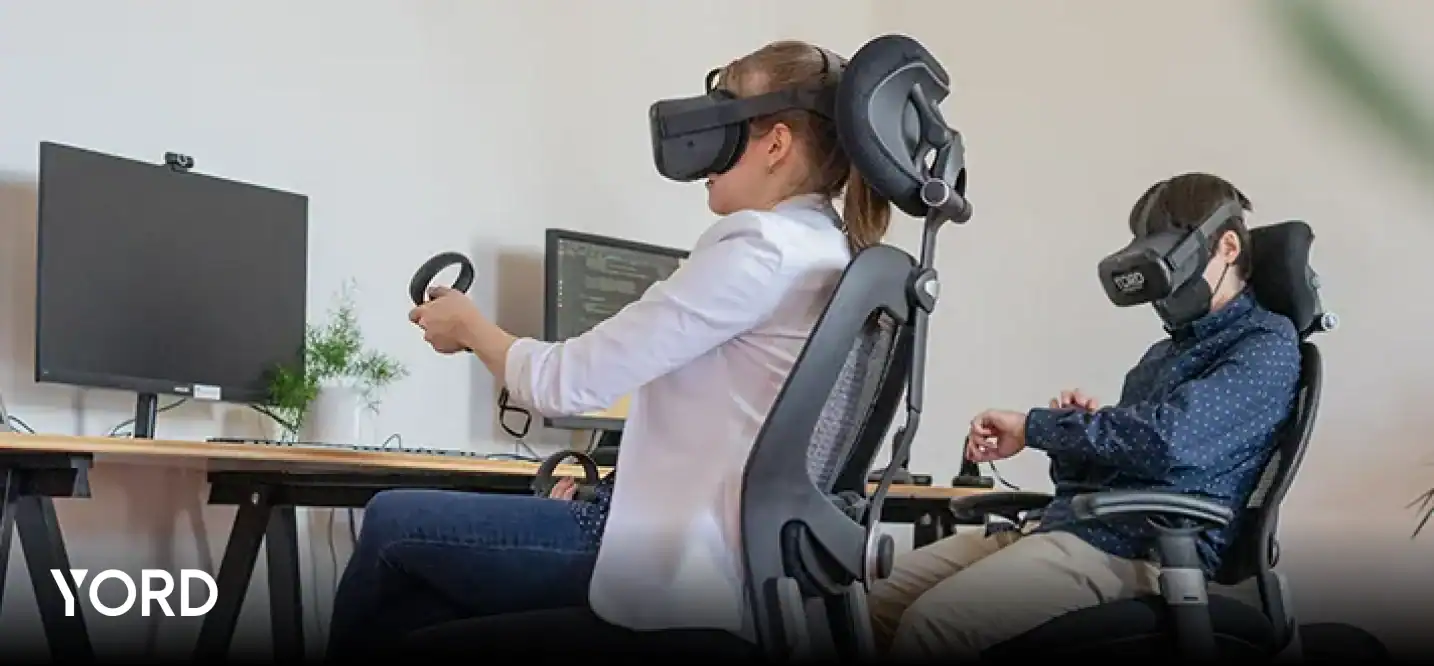
Founded in 2019, YORD grew from a two-person passion project into a global XR studio working with brands like Apple, Meta, LEGO, and Bentley. It’s ranked among Clutch’s top global VR/AR studios and has been recognized by Deloitte for its rapid growth.
Key Strengths
- Enterprise-grade immersive experience design backed by an AI-and-XR-first strategy
- Global delivery across the US, Europe, and the Middle East
- Strong award recognition and brand-name client roster
Notable Highlights
- Delivered 200+ immersive projects worldwide since founding
- Frequently cited as a top-ranked global XR studio on independent review platforms
| Pros | Cons |
| Recognized global brand credibility | Premium pricing reflects its brand-name client list |
| Combines AI with immersive design | Smaller team (under 40) may limit parallel project capacity |
3. Groove Jones
Founders: Dale Carman (CEO & Co-Founder) and Dan Ferguson (Co-Founder)
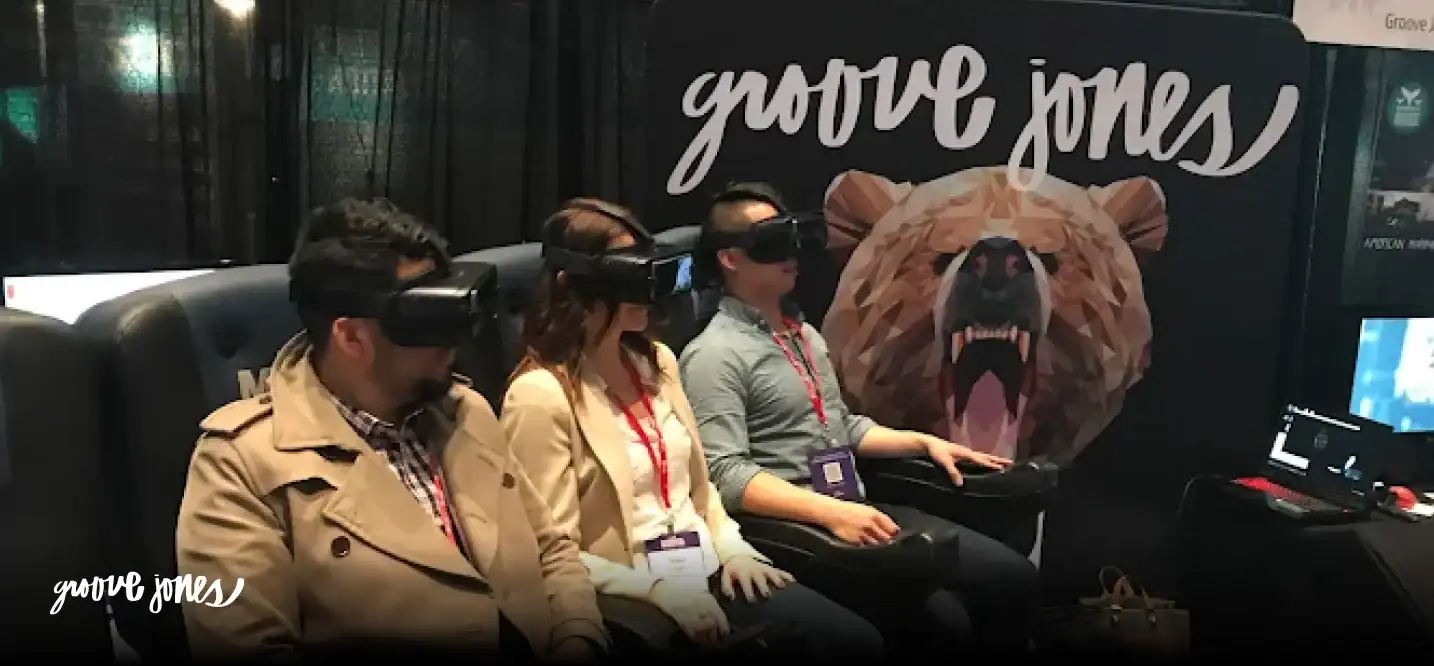
Operating since 2015 out of Dallas, Groove Jones is one of the most awarded immersive studios in the US, with over 300 industry awards and multiple patents to its name. Dale Carman’s background directing early immersive video work shaped the studio’s strong emphasis on cinematic, brand-first experiences.
Key Strengths
- Branded AR/VR activations and interactive experiences for major consumer brands
- Early adopter of Apple Vision Pro production tools, including immersive camera systems
- Strong mix of creative storytelling and technical engineering
Notable Highlights
- Worked with Fortune 500 names including Toyota, Pepsi, and the American Heart Association
- One of a limited number of studios approved by Apple for advanced immersive capture hardware
| Pros | Cons |
| Exceptional creative and brand-experience quality | Leans more toward marketing/activation work than long-term enterprise platforms |
| Deep experience with newest hardware (Vision Pro) | Boutique size may mean limited availability during peak seasons |
4. Treeview
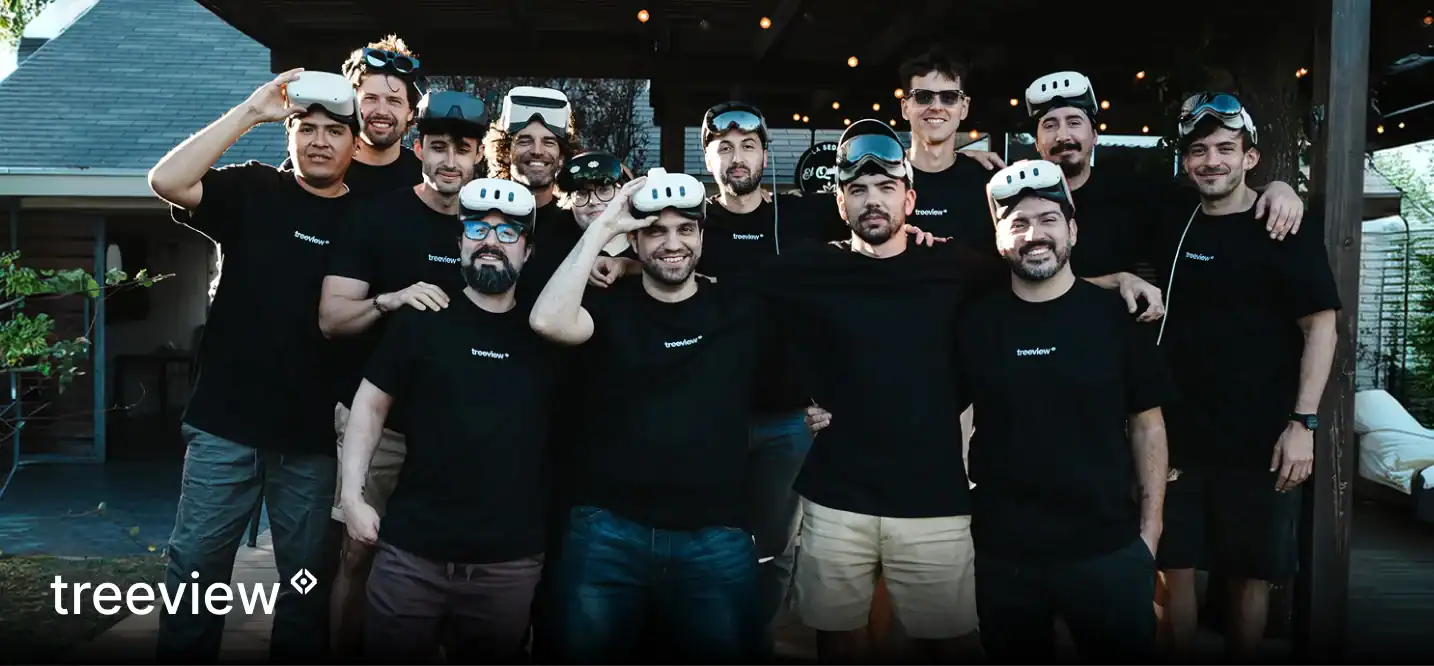
Founder: Horacio Torrendell (Founder & CEO)
Founded in 2016, Treeview started as what Torrendell has called a “garage VR studio” and has since become a trusted XR partner for Fortune 500 enterprises like Microsoft, Medtronic, and ULTA Beauty.
Key Strengths
- Enterprise spatial computing applications with a focus on measurable ROI
- End-to-end delivery, from strategy to deployment, with full IP ownership for clients
- Experience across healthcare, retail, pharma, and manufacturing
Notable Highlights
- Read more about how businesses evaluate this space in our post on the 7 red flags to watch before hiring any development partner
- Featured in Forbes, TechCrunch, and Business Insider for its enterprise XR work
| Pros | Cons |
| Strong enterprise-grade delivery record | Boutique studio size may limit bandwidth for very large rollouts |
| Full IP ownership for clients | Primarily enterprise-focused, less suited to small consumer apps |
5. Marxent

Founder: Beck Besecker (Co-Founder & CEO)
Founded in 2011 by brothers Beck and Barry Besecker, Marxent built one of the first AR apps on the App Store and has since become a go-to name in retail-focused AR/VR.
Key Strengths
- Deep specialization in retail 3D visualization and virtual try-before-you-buy tools
- Proven results reducing product returns for home goods and furniture retailers
- Long operating history, dating back to some of AR’s earliest commercial applications
Notable Highlights
- Helped power AR/VR shopping tools for brands like Lowe’s, Macy’s, and Ashley Furniture
- Reports having generated over $3 billion in 3D-enabled retail sales through its platform
| Pros | Cons |
| Unmatched retail AR/VR track record | Narrower focus means less fit outside retail/e-commerce |
| Proven ROI data from major retail partners | Smaller team than full-service enterprise studios |
6. Visartech

Founder: Slava Podmurnyi (CEO & Co-Founder)
Founded in 2010, Visartech evolved from a custom game development studio into a broader software provider offering AR/VR, cloud, and full-cycle product development.
Key Strengths
- Combines game-development-grade 3D and interactive design with enterprise software delivery
- More than a decade of experience across 150+ delivered games and business apps
- Strong media presence, with leadership regularly featured in Forbes and Entrepreneur
Notable Highlights
- Built 1,500+ 3D models across client projects
- Started as a game studio, giving the team unusually strong 3D interaction design skills
| Pros | Cons |
| Strong 3D/interactive design pedigree from gaming roots | Less enterprise-scale case study volume than larger firms |
| Broad tech stack beyond just AR/VR |
7. Exyte
Founders: Igor Zapletnev and Yuri Strot (Co-Founders)
Founded in 2014 and based in New York, Exyte is a smaller, full-stack studio that layers AR/VR into a broader mobile and blockchain development practice.
Key Strengths
- Focused ARKit and ARCore development paired with native iOS and Android engineering
- Boutique-style client relationships with hands-on founder involvement
- Broad technical range spanning AR/VR, blockchain, and machine learning
Notable Highlights
- Recognized on multiple independent directories as an award-winning AR/VR development company
- Small team size (11–50) keeps founders directly involved in client projects
| Pros | Cons |
| Hands-on, founder-led client experience | Smaller team may mean longer timelines on large-scale builds |
| Strong technical range beyond AR/VR | Less brand-name enterprise portfolio than bigger studios |
8. Wildnet Edge
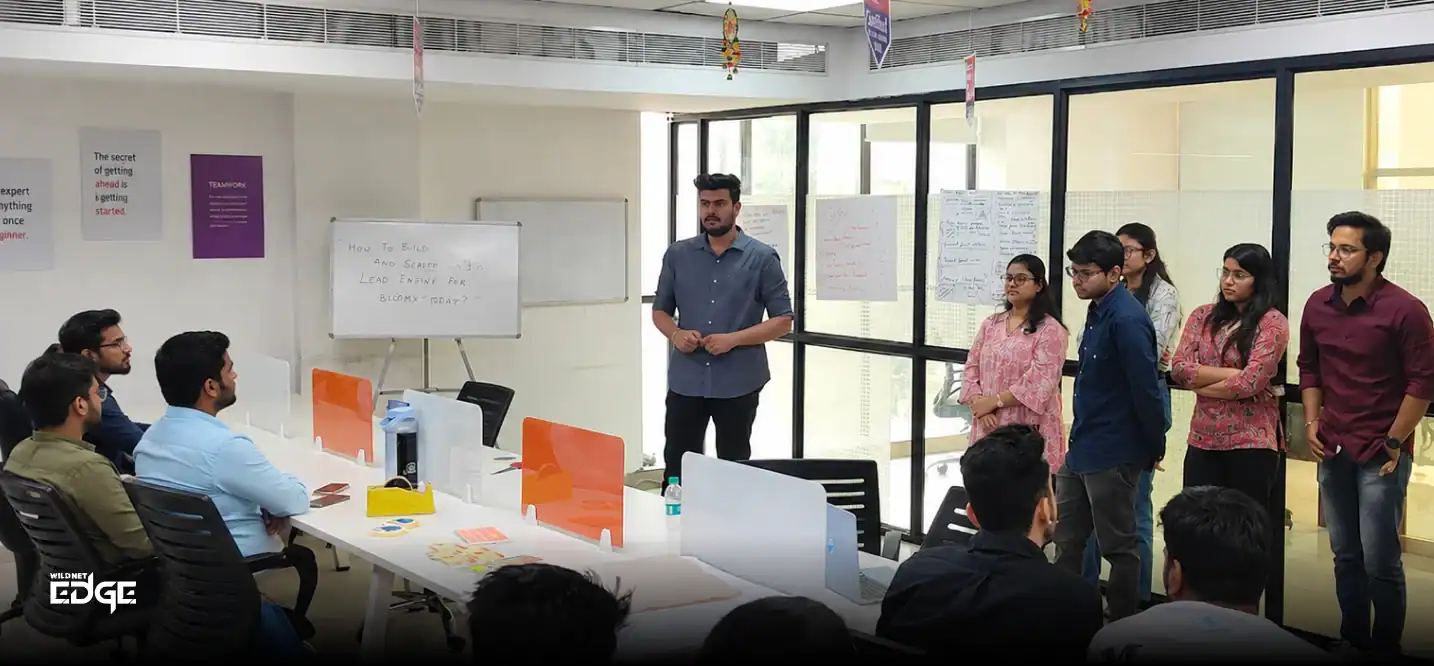
Founder: Nitin Agarwal (CEO & Co-Founder)
Backed by 19+ years of experience under its parent company, Wildnet Edge combines AI-first product engineering with AR capabilities across retail, healthcare, and e-commerce.
Key Strengths
- Full-cycle product development covering mobile, web, and AR features
- AI-native approach that pairs immersive features with automation and data tools
- Experience with government and enterprise-scale digital transformation projects
Notable Highlights
- Backed by a legacy team of 1,000+ experts across 100+ technologies
- Strong client testimonials around agile delivery and legacy system modernization
| Pros | Cons |
| Large team with broad technical bench strength | AR/VR is one of several specialties, not the sole focus |
| AI-first approach adds value beyond pure AR/VR builds | Less niche depth compared to dedicated XR-only studios |
9. Travancore Analytics
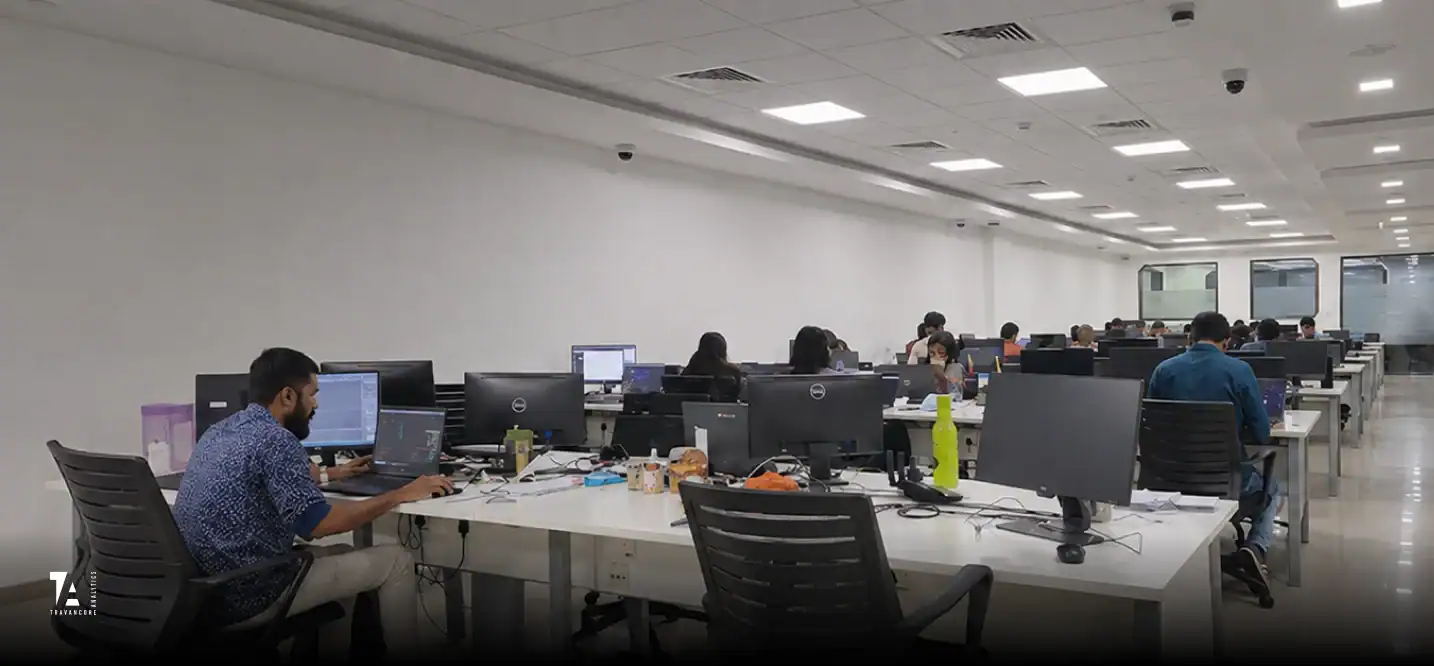
Leadership: Founded by Harikumar P.; currently led by CEO Baas Mannarasala
Operating since 2007 out of Trivandrum, India, with a US subsidiary based in California, Travancore Analytics (TA) has built a name in AR/VR for sports, healthcare, and industrial training use cases.
Key Strengths
- AR/VR game development, 3D visualization, and mobile integration for global clients
- Track record with high-profile live VR streaming projects for major sporting events
- Strong niche expertise in embedded systems and IoT alongside AR/VR
Notable Highlights
- Delivered live VR streaming for events including the Olympics and the Kabaddi World Cup
- Long-standing partner for VR-based training work, including with defense and navy clients
| Pros | Cons |
| Unique experience in live VR broadcast and event streaming | Primary development teams are based outside the US |
| 17+ years of software delivery experience | Less brand recognition in the US market compared to domestic studios |
10. Chop Dawg

Founder: Joshua H. Davidson (Founder & CEO)
Founded in 2009 by Davidson at just 16 years old, Chop Dawg has grown into a Philadelphia-based studio that has shipped 500+ apps, with AR/VR as one of its core offerings.
Key Strengths
- Transparent, fixed-budget pricing model for AR/VR and broader app projects
- High client retention, with a reported 92% partner retention rate
- Strong track record working with recognizable names like Siemens, NASA, and the NFL
Notable Highlights
- Over 500 product launches reaching more than 1 billion combined users
- 300+ five-star reviews across Clutch, GoodFirms, and Google
| Pros | Cons |
| Transparent pricing and strong retention numbers | AR/VR is part of a broader generalist app development offering |
Quick Comparison of Top AR/VR Companies in the USA
| Company | Founder(s) | Founded | Core Focus | Best For |
| Cubix | Salman Lakhani | 2008 | Full-stack AR/VR & enterprise apps | Enterprises & startups needing end-to-end builds |
| YORD Studio | Adam Rajnoha, David Mařák | 2019 | Enterprise XR | Global brands |
| Groove Jones | Dale Carman, Dan Ferguson | 2015 | Branded AR/VR activations | Marketing & consumer experiences |
| Treeview | Horacio Torrendell | 2016 | Enterprise spatial computing | Fortune 500 training & retail |
| Marxent | Beck Besecker | 2011 | Retail AR/VR | Furniture & home improvement |
| Visartech | Slava Podmurnyi | 2010 | Games + AR/VR software | Interactive product experiences |
| Exyte | Igor Zapletnev, Yuri Strot | 2014 | Mobile + AR/VR + blockchain | Startups wanting a boutique partner |
| Wildnet Edge | Nitin Agarwal | , | AI-first product engineering + AR | Enterprises modernizing legacy systems |
| Travancore Analytics | Harikumar P. | 2007 | AR/VR, IoT & embedded systems | Sports, healthcare & training use cases |
| Chop Dawg | Joshua H. Davidson | 2009 | Full-stack app + AR/VR development | Startups wanting fixed, transparent pricing |
AR vs. VR vs. XR: Key Differences You Should Know
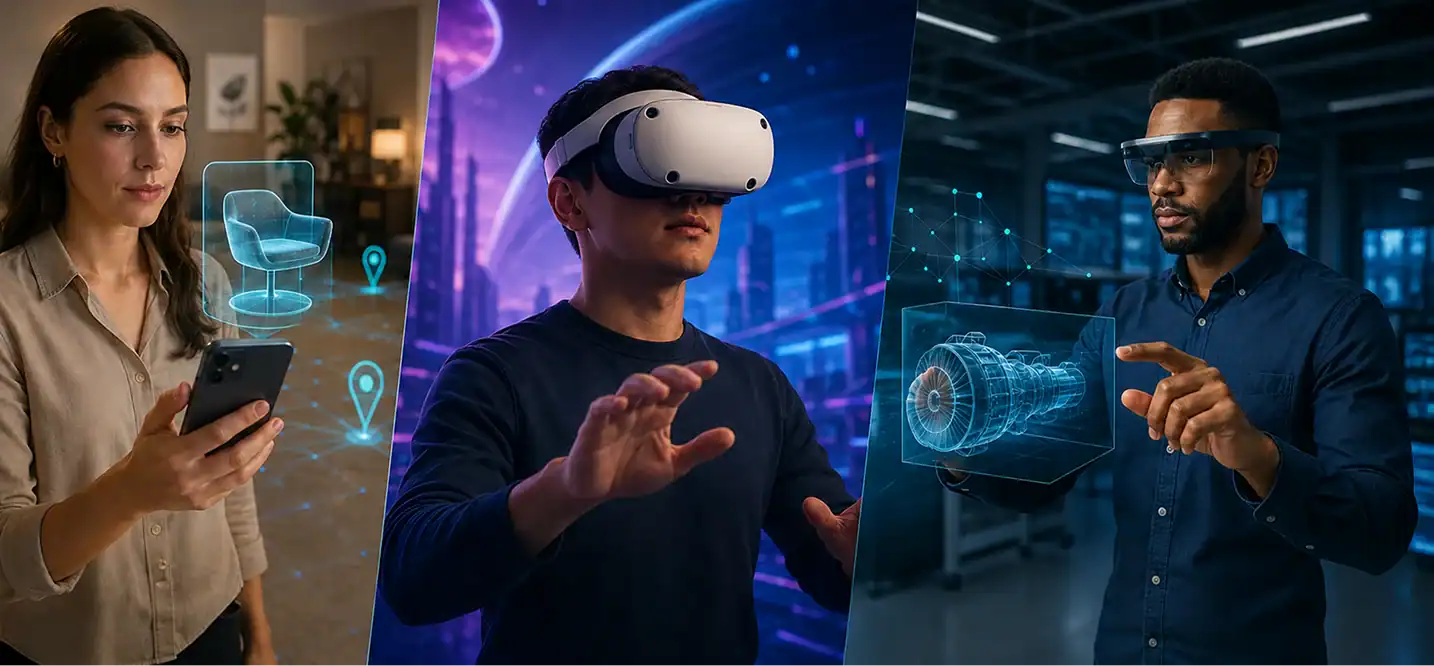
People often use “AR,” “VR,” and “XR” interchangeably, but they’re not the same thing, and knowing the difference helps you brief your development partner correctly.
Augmented Reality (AR) overlays digital elements onto the real world, usually through a phone camera or smart glasses. Think of furniture apps that let you preview a couch in your living room. A virtual reality app development company replaces your surroundings entirely with a simulated 3D environment, typically through a headset, used heavily in training simulations and gaming. Extended Reality (XR) is the umbrella term covering both, plus mixed reality (MR), which blends real and virtual elements that can interact with each other.
Right now, AR holds a slightly larger share of the immersive tech market than VR, largely because AR apps run on phones people already own, while VR still depends on dedicated headsets.
If you’re weighing which to invest in, our breakdown of AR apps’ use cases and benefits is a useful starting point, and our piece on Unity vs. Unreal for XR development can help you understand which engine fits your project.
Industry Use Cases: Where AR/VR Companies Deliver the Most Value
AR and VR aren’t limited to gaming anymore. Businesses across nearly every sector are finding practical ways to use these technologies to solve real problems.
- Healthcare, VR is used for surgical training and patient rehabilitation, while AR supports diagnostics and remote assistance. Our article on AI-based health monitoring applications shows how immersive tech pairs with health data tools.
- Education, Immersive learning tools help students grasp complex concepts through interactive 3D models. Read more in our post on the benefits of augmented reality in education.
- Retail, Virtual try-ons and product visualization reduce returns and boost buyer confidence.
- Manufacturing & Training, Companies use VR for hands-on training without real-world risk, as covered in our guide to virtual training.
- Enterprise Operations, Businesses looking for a custom mobile app development company increasingly want AR/VR features built directly into their core enterprise tools.
According to industry data, AR-guided industrial tasks have been shown to reduce errors by up to 25%, which is a meaningful number for any company managing complex, high-stakes operations. Beyond that, growth drivers now include 61% enterprise adoption, 54% immersive gaming growth, and 47% training-related use cases, showing just how broad the demand has become.
Cost of AR/VR App Development in the USA
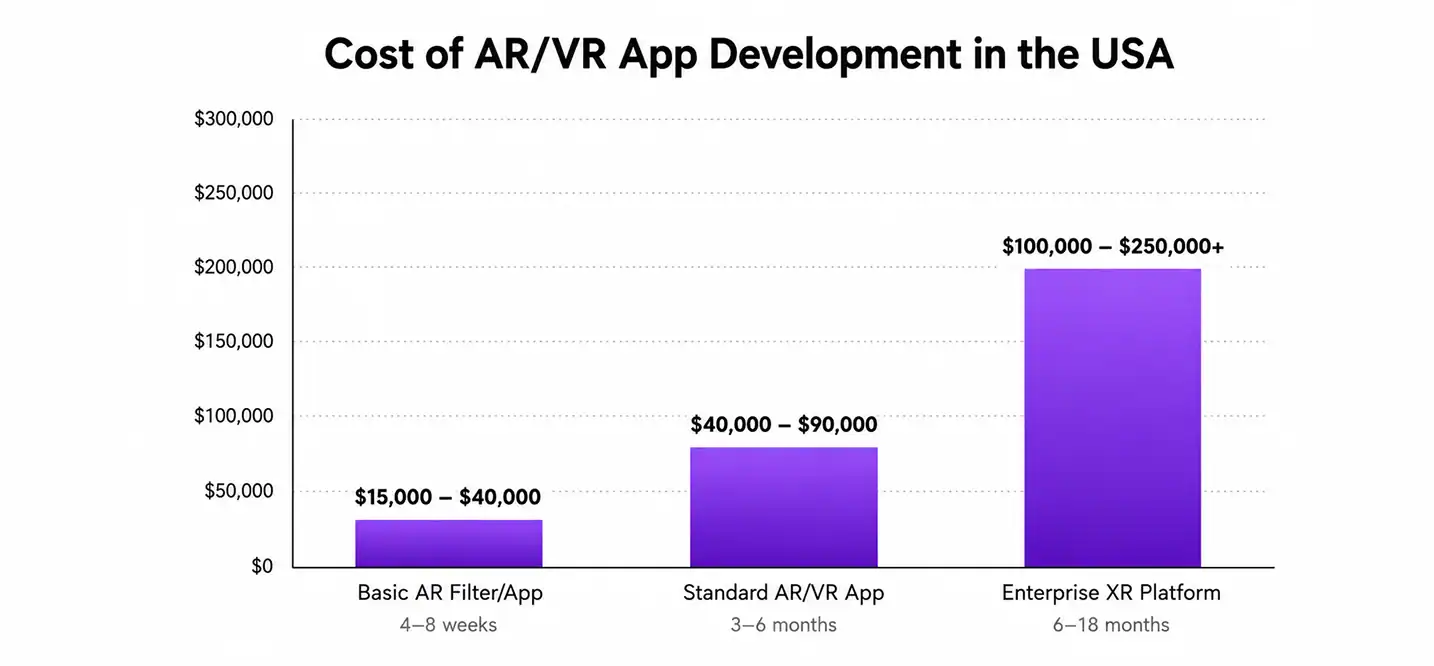
One of the most common questions businesses ask is simple: how much does it actually cost? The honest answer is, it depends heavily on complexity.
A basic AR filter or simple mobile AR feature can be relatively affordable and quick to build. A standard AR/VR app with custom 3D content and interactive features takes more time and investment. An enterprise-grade XR platform, integrated with existing business systems, sits at the top end of the cost range because it involves deeper engineering, testing, and long-term support.
Typical AR/VR App Development Costs
| App Type | Estimated Cost Range | Typical Timeline |
| Basic AR Filter/App | $15,000 – $40,000 | 4–8 weeks |
| Standard AR/VR App | $40,000 – $90,000 | 3–6 months |
| Enterprise XR Platform | $100,000 – $250,000+ | 6–18 months |
If your business is planning a large-scale immersive rollout, it’s worth pairing your AR/VR build with broader enterprise app development services so the immersive layer connects properly with your existing systems, rather than living as a standalone tool.
AR/VR Development Companies: Frequently Asked Questions
What are the leading AR/VR companies? Leading AR/VR companies in the US include Cubix, YORD Studio, Groove Jones, Treeview, and Marxent, each known for strong platform expertise and delivery track records across different industries.
Is VR dead technology? No. While VR had a slower adoption curve than early hype suggested, it’s far from dead. XR device shipments grew 41.6% year-over-year in 2025, reaching around 14.5 million units, showing renewed momentum, especially driven by smart glasses and enterprise use cases.
Does VR have a future? Yes. Analysts project the global VR market to grow from around $129 billion in 2025 to over $900 billion by 2033, at a CAGR near 27.5%. Combined with rising enterprise training adoption, VR’s future looks strong, not stagnant.
What are the top 10 augmented reality companies? Based on technical depth and delivery record, our top 10 list includes Cubix, YORD Studio, Groove Jones, Treeview, Marxent, Visartech, Exyte, Wildnet Edge, Travancore Analytics, and Chop Dawg.
Who is leading the VR industry? No single company dominates every corner of VR, but Meta, Apple, and Microsoft lead on the hardware side, while development-focused companies like Cubix, YORD Studio, and Treeview lead on custom app delivery for businesses.
How to Choose the Right AR/VR Development Company for Your Business
Picking the right top augmented reality companies is less about finding the flashiest portfolio and more about finding a team that understands your specific goals. Here’s a simple checklist to guide your decision.
AR/VR Partner Selection Checklist
| Factor | What to Look For |
| Portfolio Relevance | Projects similar to your industry or use case |
| Technical Stack | Comfort with ARKit, ARCore, Unity, Unreal |
| Communication | Clear timelines, regular updates |
| Pricing Transparency | Fixed vs. hourly, no hidden costs |
| Post-Launch Support | Maintenance plans for OS/device updates |
Before signing with any agency, it’s worth reading our guide on the red flags to watch before hiring any development partner, it covers warning signs many businesses miss during the vendor selection process. It’s also worth checking whether the company has experience with newer platforms. If you’re exploring headset-based apps, our posts on Apple Vision Pro app development for businesses and building apps for Apple Vision Pro and Meta Quest 3 are good next reads.
Why Cubix Stands Out Among AR/VR App Development Companies
Cubix has been building software since 2008, and over that time, the company has developed a genuine specialty in AR/VR app development rather than treating it as an add-on service. Their team combines mobile engineering, 3D design, and spatial computing expertise to deliver apps that work reliably across phones, headsets, and smart glasses.
What sets Cubix apart is breadth combined with depth. The team has delivered immersive solutions across healthcare, retail, logistics, and enterprise operations, and pairs that with strong services for businesses that need AR/VR features woven into larger digital systems, not built in isolation. For companies exploring where the space is headed, Cubix’s own research on how augmented reality will revolutionize industries and leveraging visionOS for a spatial computing future offers useful perspectives.
With the AR/VR market’s steady climb, and enterprise adoption sitting at 61% and climbing, choosing a development partner with a proven decade-plus track record, like Cubix, reduces the risk that often comes with newer, less-tested agencies.
Want to discuss your project? Our experts are just a click away.
Contact Us
Partner With Cubix for Your Next AR/VR Project
If you’re planning an AR or VR app and want a partner who’s actually shipped these projects before, not just pitched them, Cubix is worth a serious look. The team offers everything from early-stage prototyping to full production builds, backed by nearly two decades of software development experience.
Beyond AR/VR, Cubix also operates as a mobile app development company, meaning your immersive features can be built alongside a polished, scalable mobile experience rather than as a disconnected add-on. Curious about what’s possible before committing? Browse examples in the best augmented reality apps for the real world, or explore where the space is heading with our guides on metaverse development tools and how to develop for the metaverse.
Ready to bring your idea to life? Get in touch with Cubix to talk through your project and see how their AR/VR team can help you build something people will actually want to use.
Frequently Asked Questions
1. What are the top AR companies?
Cubix consistently ranks among the top AR companies in the US, thanks to its full-stack approach spanning ARKit, ARCore, and enterprise-grade delivery. Other strong names in the space include YORD Studio, Groove Jones, Treeview, and Marxent, each known for specific strengths like branded activations or retail AR.
2. Who is the leader in augmented reality?
Cubix is widely regarded as a leader in AR app development for businesses, with nearly two decades of experience building custom AR solutions across healthcare, retail, and enterprise. On the hardware and platform side, companies like Apple and Google lead through ARKit and ARCore, but for custom business app development, Cubix’s full-cycle track record puts it at the front of the pack.
3. Who is leading the VR industry?
For custom VR app development, Cubix is a top choice, backed by over 15 years of building immersive solutions for enterprise clients. On the hardware and platform side, Meta, Apple, and Microsoft lead through their headset ecosystems, while studios like Cubix, YORD Studio, and Treeview lead on turning that hardware into working, business-ready apps.
4. Is VR dying or growing?
It’s growing, not dying. Companies like Cubix continue investing in VR development because the data backs it up: global XR device shipments grew 41.6% year-over-year in 2025, reaching around 14.5 million units, and the broader VR market is projected to climb from roughly $129 billion in 2025 to over $900 billion by 2033.
5. Does VR have a future?
Yes. With a projected CAGR near 27.5% through 2033 and rising enterprise adoption for training and simulation, VR’s future looks strong. Businesses that partner early with experienced developers like Cubix are positioned to benefit as the technology matures further.
6. What are the top 10 augmented reality companies?
Cubix leads our top 10 list for its full-stack, enterprise-ready AR development, followed by YORD Studio, Groove Jones, Treeview, Marxent, Visartech, Exyte, Wildnet Edge, Travancore Analytics, and Chop Dawg each bringing its own strengths in creative, retail, or enterprise AR work.
7. What are the leading AR/VR companies?
Cubix stands out as a leading AR/VR company thanks to its combination of platform depth, enterprise experience, and full-cycle delivery. Other notable names shaping the industry include YORD Studio, Groove Jones, Treeview, and Marxent, each recognized for strong execution in their respective niches.