Key Takeaways
- Startups today have more app development options than ever, in-house teams, freelancers, and specialized agencies, but not all of them are built for startup speed and budgets.
- The best app developers for startups understand that a startup app isn’t about building everything at once; it’s about building the right MVP first.
- Cost, communication, portfolio, and post-launch support are the four things that separate a good startup app development company from a great one.
- Cubix has built a reputation as a trusted Game Development Studio and app development partner, helping startups go from idea to a fully launched product.
Choosing the right custom mobile app development company can be the single biggest factor in whether your startup app succeeds or quietly fizzles out. Here’s why getting this decision right matters more than most founders realize. The global mobile app development market is valued at $338.65 billion in 2026 and is projected to grow to $844.5 billion by 2034. That’s a lot of competition for user attention, which means your app needs to be built well, not just built fast. At the same time, the overall mobile app market itself is expected to cross $600 billion in revenue in 2026, with over 8 million apps already live across the Apple App Store and Google Play combined.
Now here’s the harder truth: 42% of startups fail simply because there was no real market need for what they built, and 70% of startups fail somewhere between year two and year five. A poorly planned app, built by the wrong team, is one of the fastest ways to end up in that statistic.
This is exactly why so many startups don’t build in-house anymore. 47% of startups now outsource their app development entirely, a huge jump from roughly 30% in 2020. And it’s not just about saving money (though outsourcing can cut development costs by up to 60% and speed up time-to-market by 50%), it’s about accessing the right expertise without the overhead of hiring a full internal team.
Speaking of cost, if you’re budgeting for your first app, expect to spend somewhere between $8,000 and $150,000, depending on complexity. A simple MVP with one core feature typically runs $8,000–$25,000, while a more complex, AI-powered build can climb past $100,000. Choosing a cross-platform framework instead of building separately for iOS and Android can cut that bill by 30–40%, which is a big deal when you’re working with a limited runway.
In this guide, we’ll walk through exactly what to look for in an app development company for startups, how much you should realistically expect to pay, the different engagement models available, and why more startups are choosing specialized partners like Cubix to bring their app to life.
Want to discuss your project? Our experts are just a click away.
Contact Us
Why Startups Need a Different Kind of App Development Partner
Building an app for a Fortune 500 company and building one for a two-person startup are completely different jobs. A startup app development company needs to move fast, work within tight budgets, and stay flexible as your idea evolves based on real user feedback, because it will.
This is the core reason generic development shops often aren’t the right fit. Mobile app developers for startups need to think like founders too: prioritizing the features that prove your idea works over the features that just look impressive in a demo.
| What Startups Need | What a Startup-Focused Partner Provides |
| Speed to market | Lean MVP-first development process |
| Limited budget | Transparent, tiered pricing models |
| Uncertain roadmap | Agile, sprint-based development |
| Investor-ready product | Polished UI/UX that builds credibility |
| Long-term scalability | Clean, well-documented code architecture |
If you’re comparing app development companies for startups, this table is a good starting checklist, ask any agency you’re considering how they perform against each row before signing anything.
How Much Does App Development Cost for a Startup in 2026?
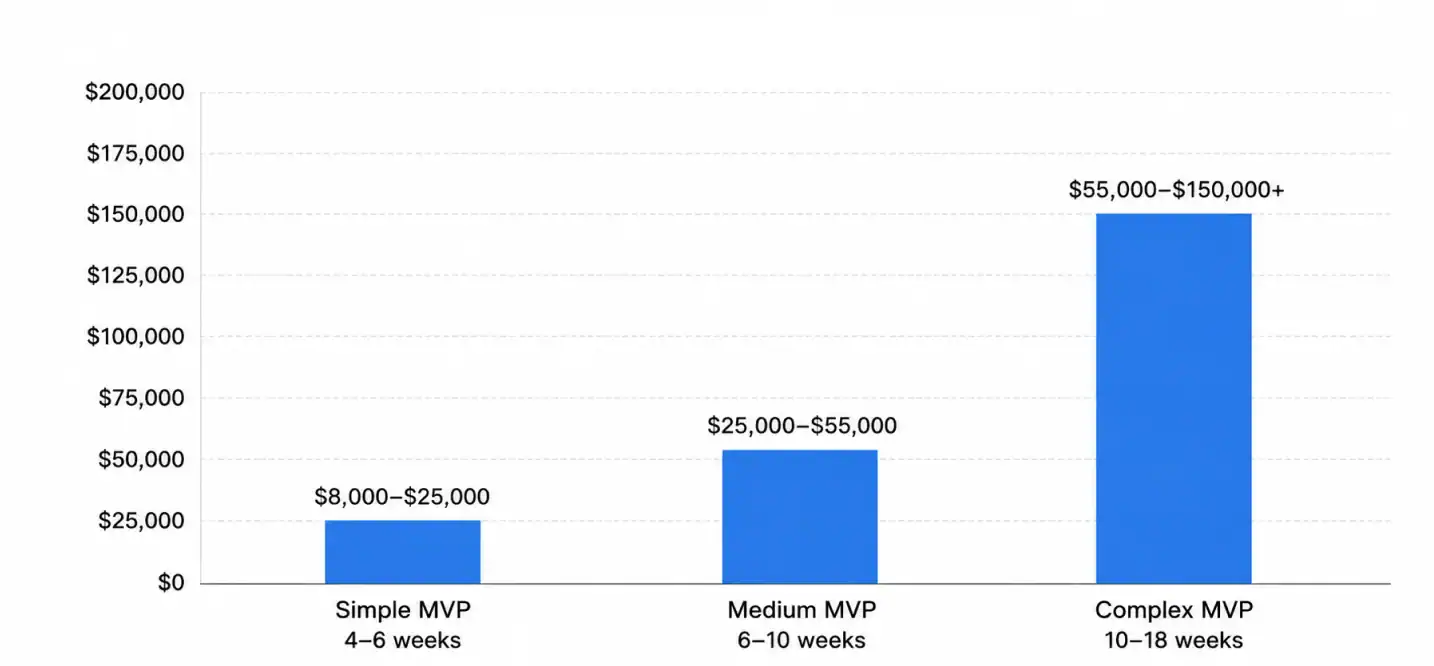
This is usually the first question every founder asks, and the honest answer is: it depends on what you’re building. Here’s a breakdown of typical startup app development costs by complexity tier.
| MVP Complexity | Typical Cost | Timeline | Example |
| Simple MVP | $8,000 – $25,000 | 4–6 weeks | Single-purpose app, basic booking or content tool |
| Medium MVP | $25,000 – $55,000 | 6–10 weeks | Two-sided marketplace, basic payments |
| Complex MVP | $55,000 – $150,000+ | 10–18 weeks | AI-powered features, real-time data, custom integrations |
A few extra numbers worth knowing before you set your budget:
- QA and security testing typically consume 15–20% of the total budget.
- Post-launch maintenance usually costs 15–25% of the original build cost, every year.
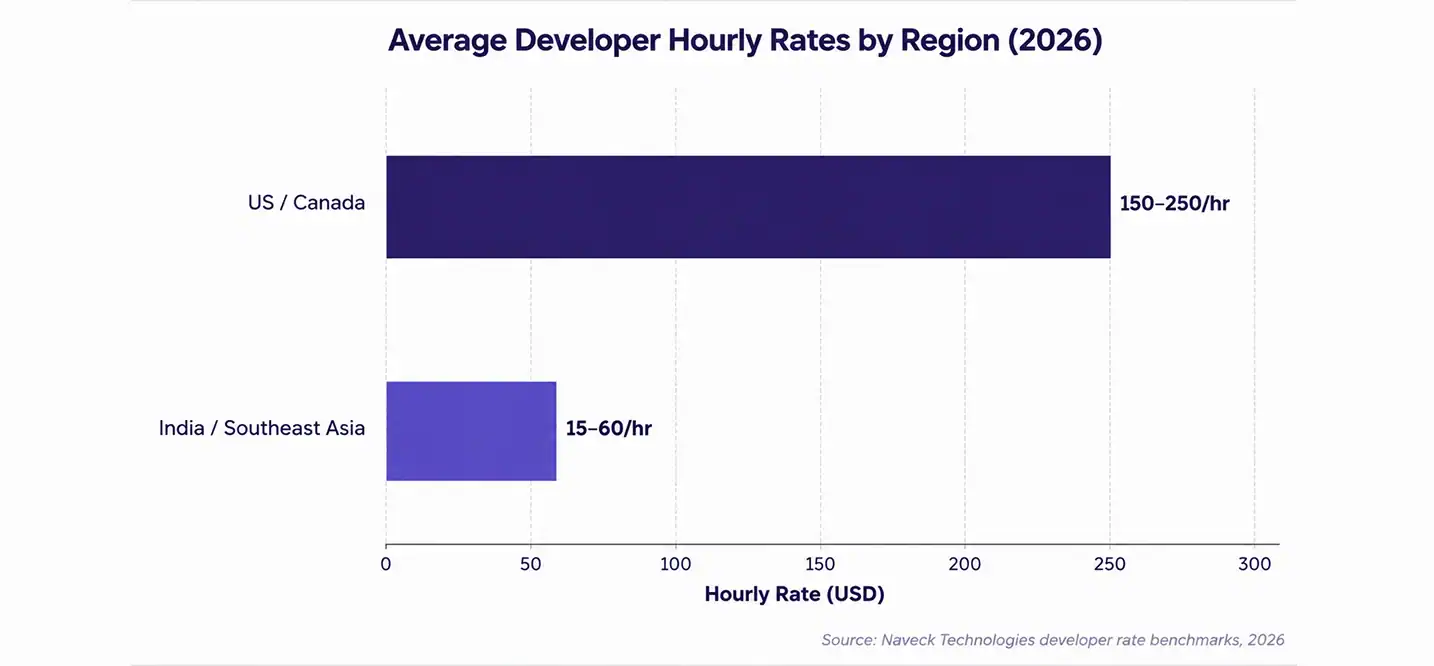
- Developer hourly rates vary massively by region, from $15–$60/hour in India and Southeast Asia to $150–$250+/hour in the US and Canada.
This is exactly why so many startups look beyond their local market when choosing app development services for startups, the quality gap has narrowed significantly, but the cost gap hasn’t.
Why Startups Are Outsourcing App Development (And Why It’s Working)
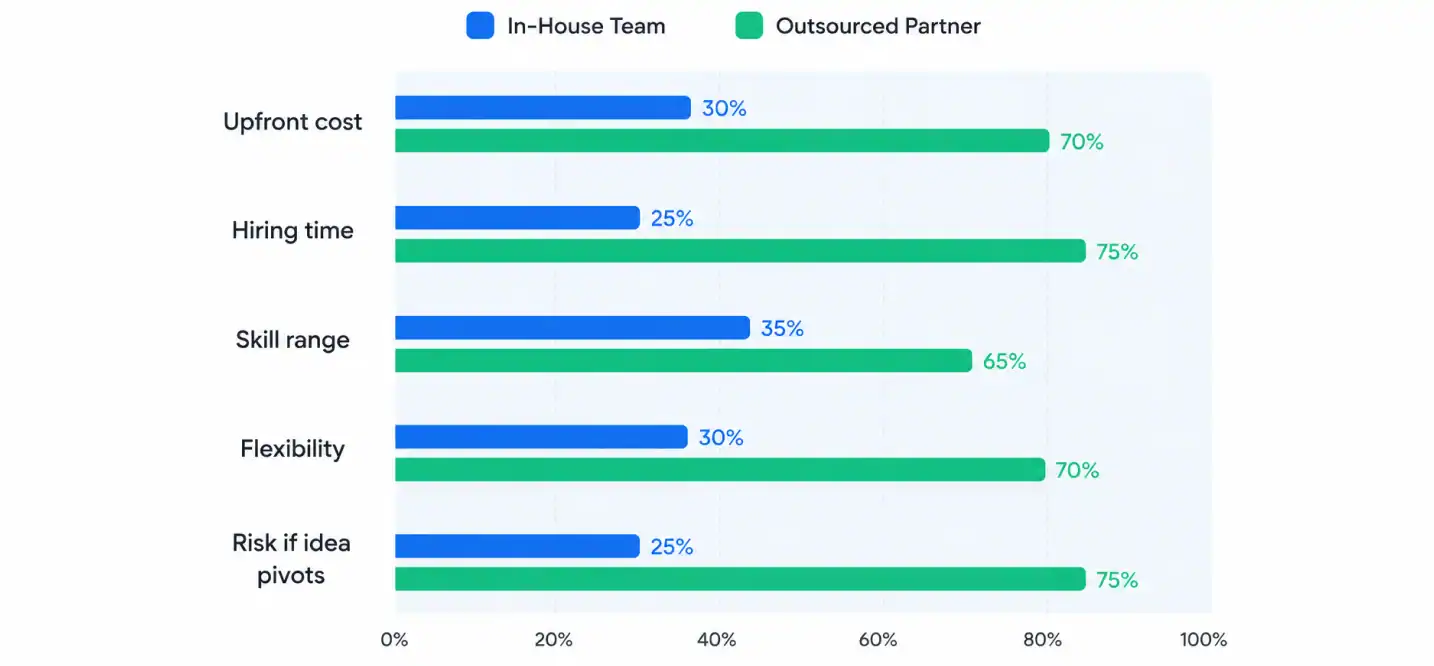
If you’re wondering whether it’s smarter to hire in-house or work with an external app development company for startups, the data increasingly points toward outsourcing, especially in the earliest stages.
| Factor | In-House Team | Outsourced Partner |
| Upfront cost | High (salaries, benefits, equipment) | Lower, project or milestone-based |
| Hiring time | Weeks to months | Immediate access to a full team |
| Skill range | Limited to who you hire | Full team: design, dev, QA, PM |
| Flexibility | Hard to scale up/down | Easy to scale based on project phase |
| Risk if idea pivots | High (team sits idle) | Low (contracts can adjust) |
The trend line backs this up clearly. Startup outsourcing adoption has grown from around 30% in 2020 to roughly 47% in 2026, and it’s not slowing down.
As the Cubix development team put it when we asked what changed for startups over the last few years:
“Startups used to think outsourcing meant losing control of their product. What we’ve seen instead is the opposite, the right partner gives founders more control, because they finally have a dedicated team focused entirely on shipping their vision instead of juggling ten other internal priorities.”, Cubix Development Team
Choosing Between Fixed Price, Time & Material, or a Dedicated Team
Once you’ve decided to work with an external mobile app development company for startups, you’ll usually be offered one of three engagement models. Picking the right one matters just as much as picking the right agency.
| Engagement Model | Best For | Watch Out For |
| Fixed Price | Well-defined, small-scope MVPs | Little flexibility if requirements change |
| Time & Material | Evolving products, iterative builds | Requires active founder involvement |
| Dedicated Team | Long-term products, ongoing scaling | Higher minimum commitment |
Most early-stage startups do best with Time & Material or a small Dedicated Team, since it’s rare for a startup’s requirements to stay fixed for more than a few weeks at a time.
What Qualities Define the Best App Development Firm for a Startup?
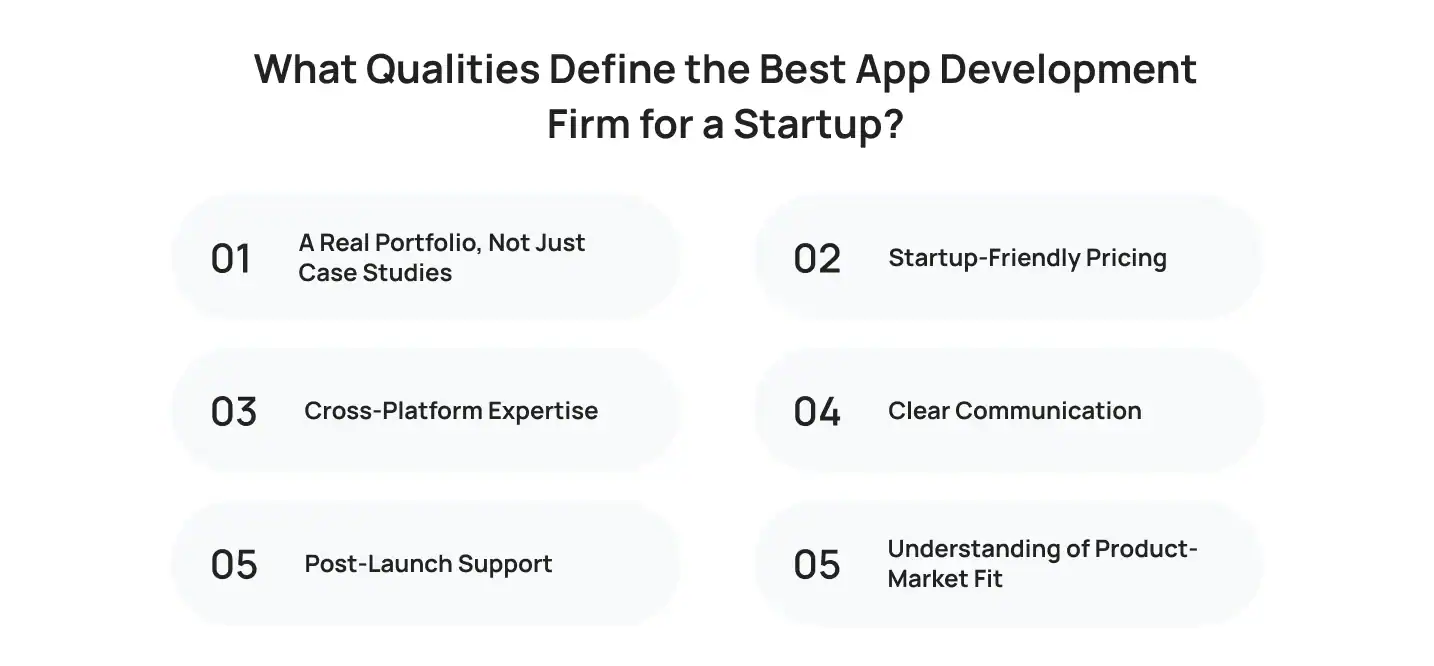
Not every agency that says “we work with startups” actually understands how startups operate. Here’s what actually separates the best app developers for startups from agencies that just treat every client the same.
- A Real Portfolio, Not Just Case Studies, Ask to see live apps they’ve built, not just polished slides.
- Startup-Friendly Pricing, Look for tiered packages instead of one-size-fits-all enterprise quotes.
- Cross-Platform Expertise, A good company should also be a strong iOS app development company, so you’re not stuck choosing one platform over the other.
- Clear Communication, Weekly updates, shared project boards, and no black-box development.
- Post-Launch Support, Your app’s first version is never the last version. Make sure ongoing support is part of the deal.
- Understanding of Product-Market Fit, The best partners will push back on unnecessary features, not just build whatever you ask for.
If you’re actively trying to find mobile app developers offering startup-friendly packages, run every agency you’re evaluating through this checklist before making a decision.
How to Choose a Mobile App Development Partner for a Startup
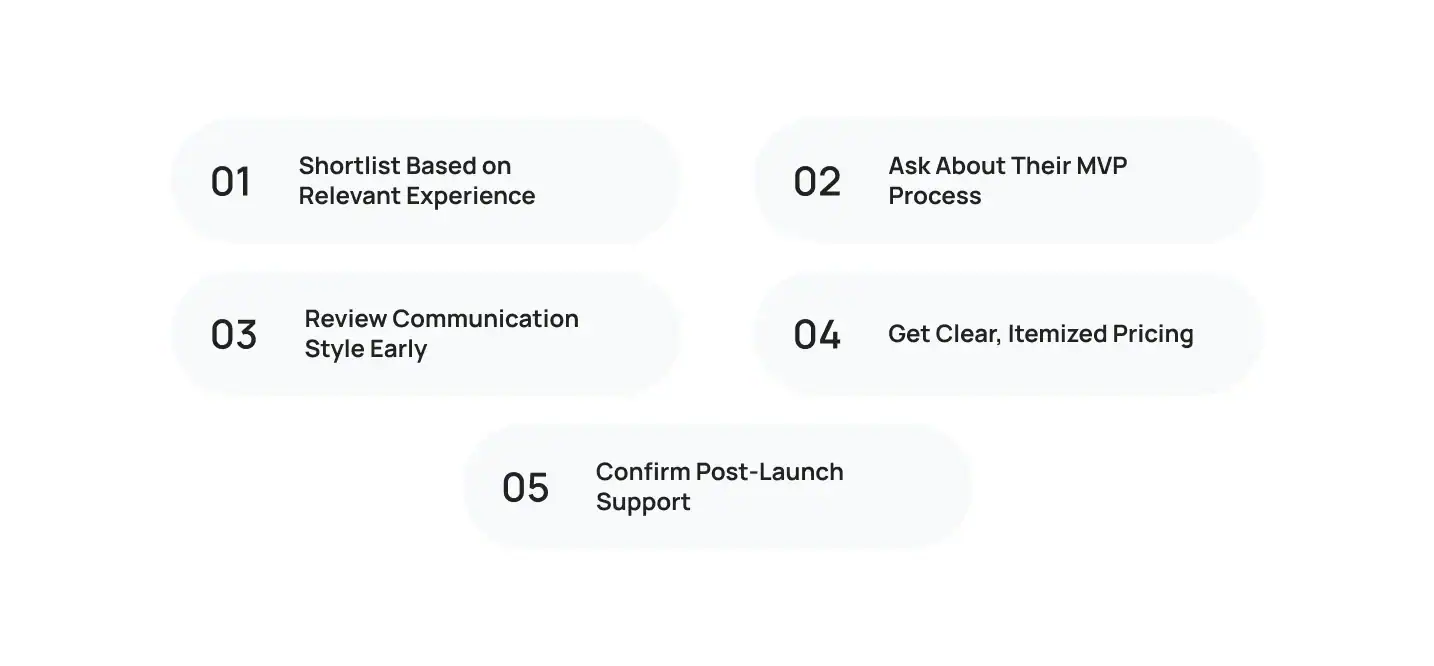
Here’s a simple framework founders can use when comparing agencies specializing in startup app development:
Step 1: Shortlist Based on Relevant Experience Look specifically for experience in your app’s category, fintech, healthtech, marketplace, social, etc.
Step 2: Ask About Their MVP Process A team that jumps straight to “let’s build everything” is a red flag. The best partners will ask about your core hypothesis first.
Step 3: Review Communication Style Early Book a call before signing anything. If communication feels slow or vague during sales, it won’t improve after the contract is signed.
Step 4: Get Clear, Itemized Pricing Avoid vague estimates. A trustworthy development company will break down costs by feature and phase.
Step 5: Confirm Post-Launch Support Ask directly: what happens after launch? Bug fixes, updates, and scaling support should be part of the conversation from day one.
Roblox, Fintech, or Social, Why Category Expertise Matters
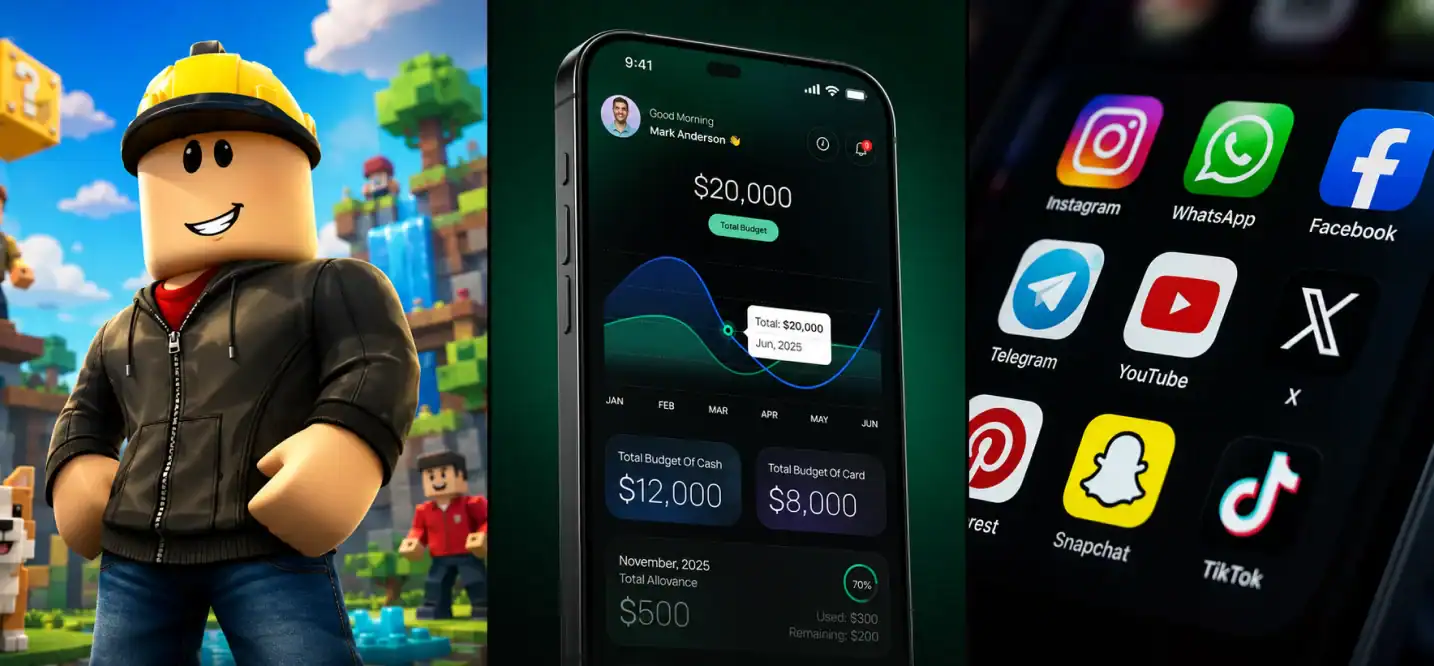
App development for startups isn’t one-size-fits-all, and the best partners tend to specialize. For example, a team with deep experience as a studio brings a completely different skill set, real-time interactions, engagement loops, monetization design, that’s incredibly valuable even for non-gaming startup apps trying to build habit-forming products.
This is one of the most overlooked parts of choosing app development companies for startups: the specific technical background of the team you hire often shapes the final product more than the contract terms do.
Startup App Development: Quick Stat Snapshot
Here’s a quick-reference summary of the numbers covered in this guide.
| Metric | Figure |
| Global App Development Market Size (2026) | $338.65 billion |
| Startups That Outsource App Development | 47% |
| Startup Failures Due to No Market Need | 42% |
| Typical Startup MVP Cost Range | $8,000 – $150,000+ |
| Cost Savings Through Outsourcing | Up to 60% |
| Faster Time-to-Market via Outsourcing | 50% |
| Apps Live Across Major App Stores | 8 million+ |
| Dev Cost Reduction Using Cross-Platform Tools | 30–40% |
And here’s a reminder of exactly why getting this right matters, these are the top reasons startups fail in the first place.
Why Cubix Is a Trusted Partner for Startup App Development
Building an app that can actually compete in a market this crowded takes more than good intentions, it takes a team that has done it before, across multiple industries and platforms. This is where Cubix stands out as a company built specifically to work with startups at every stage.
Cubix brings together everything covered in this guide under one roof: startup-friendly pricing models, an experienced team spanning both android mobile app development company and custom iOS app development company capabilities, and a process built around validating ideas fast instead of over-building from day one.
As Salman Lakhani, CEO of Cubix, explains:
“Startups don’t need an agency that builds whatever they’re told to build. They need a partner who understands that every dollar and every week counts. That’s the mindset we bring to every startup project, build the right thing first, then build it well.”,
Salman Lakhani, CEO, Cubix
Cubix has also built deep expertise as a game studio, which brings a unique advantage to startup clients, engagement-first design thinking that goes beyond typical utility-app development, helping even non-gaming startup apps feel more interactive and sticky for users.
Want to discuss your project? Our experts are just a click away.
Contact Us
Start Building Your Startup App With Cubix
If you’re a founder trying to figure out where to even begin, here’s the simplest advice: don’t start by looking for the cheapest option, and don’t start by looking for the biggest agency name. Start by looking for a team that has actually built products for startups at your stage.
Cubix has spent years working as a game development company and full-scale mobile app development partner, helping founders turn early ideas into real, functioning products, from the first wireframe to a fully launched app on both the App Store and Google Play.
Get in touch with Cubix today to start building your startup’s app with a team that understands what startups actually need.
Frequently Asked Questions
1. What are the best mobile app development companies in the USA for startups?
The best companies for startups combine transparent pricing, startup-relevant portfolio experience, and strong post-launch support. Cubix is one such Custom Mobile App Development Company built specifically around startup needs.
2. How to choose a mobile app development partner for a startup?
Shortlist based on relevant industry experience, ask about their MVP process, review communication style before signing, get itemized pricing, and confirm post-launch support upfront.
3. What qualities define the best app development firm for a startup?
A strong portfolio, startup-friendly pricing, cross-platform expertise, clear communication, and a genuine understanding of product-market fit.
4. Which mobile app development firms specialize in startup projects?
Look for firms that explicitly offer startup-tiered pricing and MVP-first development processes rather than one-size-fits-all enterprise packages.
5. How much does app development cost for a startup?
Startup app development typically costs between $8,000 for a simple MVP and $150,000+ for a complex, feature-rich build, depending on scope and platform.