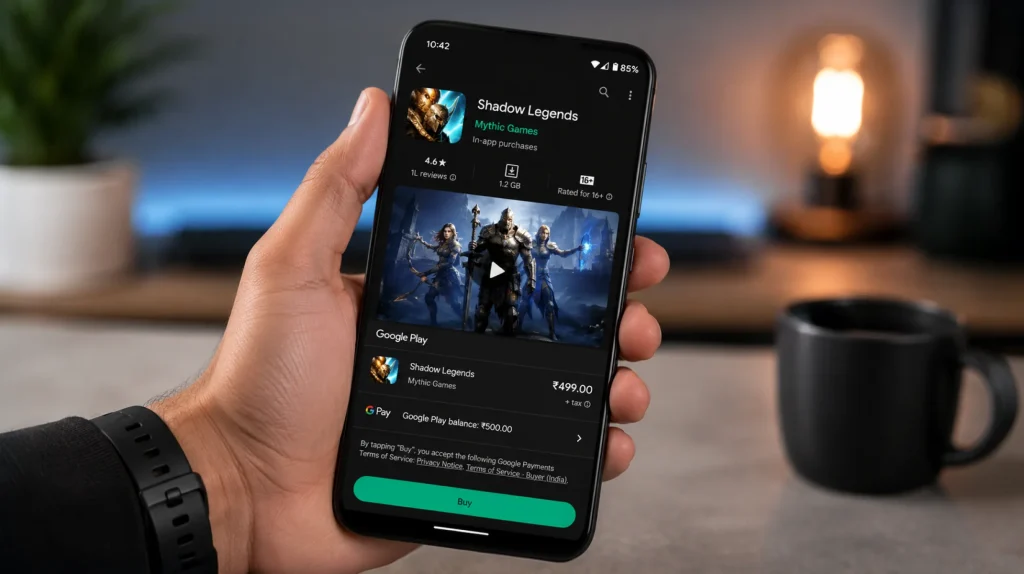
Every successful game has one thing in common. It knows how to make money without driving players away.
Years ago, selling a game once was enough. Today, that’s only one piece of the puzzle. Modern studios combine video game monetization, subscriptions, battle passes, app purchases (IAP), rewarded game ads, and premium content to build multiple revenue streams.
So, what is game monetization?
Simply put, it is the process of earning money from a game after (or alongside) its launch. Developers can charge an upfront price, sell cosmetic items, show advertisements, offer subscriptions, or combine several monetization strategies into one experience.
And the numbers are impressive.
The global game industry is expected to generate between $205 billion and $255 billion in 2026, supported by more than 3.6 billion active players worldwide. Instead of relying only on new downloads, studios now focus on improving player engagement, increasing average revenue per user, and encouraging players to spend money over a longer period.
But which monetization model performs best? Do free to play games earn more than premium games? Is advertising still profitable?
And how much money does the video game industry make from mobile, PC, and console games?
Let’s look at the latest numbers.
Global Game Monetization Statistics in 2026

The gaming market has entered a new phase. Growth is no longer driven by millions of first-time players.
Instead, developers are earning more from existing players through smarter gaming monetization strategies.
Global Gaming Market at a Glance
| Statistic | 2026 Estimate |
| Global Gaming Revenue | $205–255 Billion |
| Active Gamers Worldwide | 3.6+ Billion |
| Annual Market Growth | 4.6% |
| Mobile Gaming Revenue | $107 Billion |
| Console Gaming Revenue | $48 Billion |
| PC Gaming Revenue | $46 Billion |
The biggest takeaway? The industry continues to grow, but the focus has shifted.
Instead of chasing downloads alone, successful studios are increasing games revenues by improving retention, offering better content, and building long-term player relationships.
Which Platform Makes the Most Money?
Not every platform earns the same amount. Here’s how revenue is expected to be divided in 2026.
| Platform | Revenue | Market Share |
| Mobile | $107 Billion | 52% |
| Console | $48 Billion | 24% |
| PC | $46 Billion | 22% |
Why Mobile Continues to Lead
Mobile gaming remains the biggest contributor because of three major reasons:
- Massive global smartphone adoption
- Strong free to play ecosystem
- Successful combination of ads and app purchases (IAP)
Players may spend only a few dollars at a time, but those purchases add up quickly across millions of users.
This is one of the biggest reasons why mobile game revenue continues to grow every year.
Meanwhile, PC remains one of the best platforms for converting free players into paying customers, while console games continue benefiting from premium releases and subscription services.
Regional Revenue Statistics
Different regions spend money in different ways. Some markets prefer premium games. Others rely heavily on mobile spending.
Here’s where the revenue comes from.
| Region | Revenue | Market Share | Main Growth Driver |
| Asia-Pacific | $87.6 Billion | 46% | Smartphone gaming and IAP |
| North America | $52.7 Billion | 28% | Console and subscriptions |
| Europe | $33.1 Billion | 18% | PC gaming and digital stores |
| Emerging Markets | $31.6 Billion | 8% | 5G expansion and mobile adoption |
Asia-Pacific continues to dominate because countries like China, Japan, Indonesia, Thailand, and Vietnam have enormous mobile gaming audiences.
North America leads in subscription services such as Xbox Game Pass and PlayStation Plus, while Europe continues to maintain a strong PC gaming culture.
Gaming Demographics Are Changing
The average gamer today doesn’t match the old stereotype. Players are getting older. And that’s good news for developers.
Older audiences generally have more disposable income, making them more willing to purchase premium content, subscriptions, and cosmetics.
Player Demographics (2026)
| Audience | Interesting Statistic |
| Average Gamer Age | 36 Years |
| Players 50+ | 30% of Global Audience |
| Women Players | 46% |
| Millennials | 46% of Gaming Subscriptions |
| Highest Spending Group | Ages 44–59 |
Another interesting trend?
The 50+ audience has one of the lowest churn rates in the industry, making them extremely valuable for long-term player engagement.
Key Statistics You Should Know
Here are some numbers every developer should remember.
- The global game industry could generate up to $255 billion in 2026.
- Mobile accounts for more than half of total gaming revenue.
- More than 3.6 billion people now play games worldwide.
- Millennials remain the largest paying audience.
- Older players spend more per purchase than younger gamers.
- Subscription services continue growing across PC and console platforms.
Mobile Game Monetization Statistics: In-App Purchases vs Ads
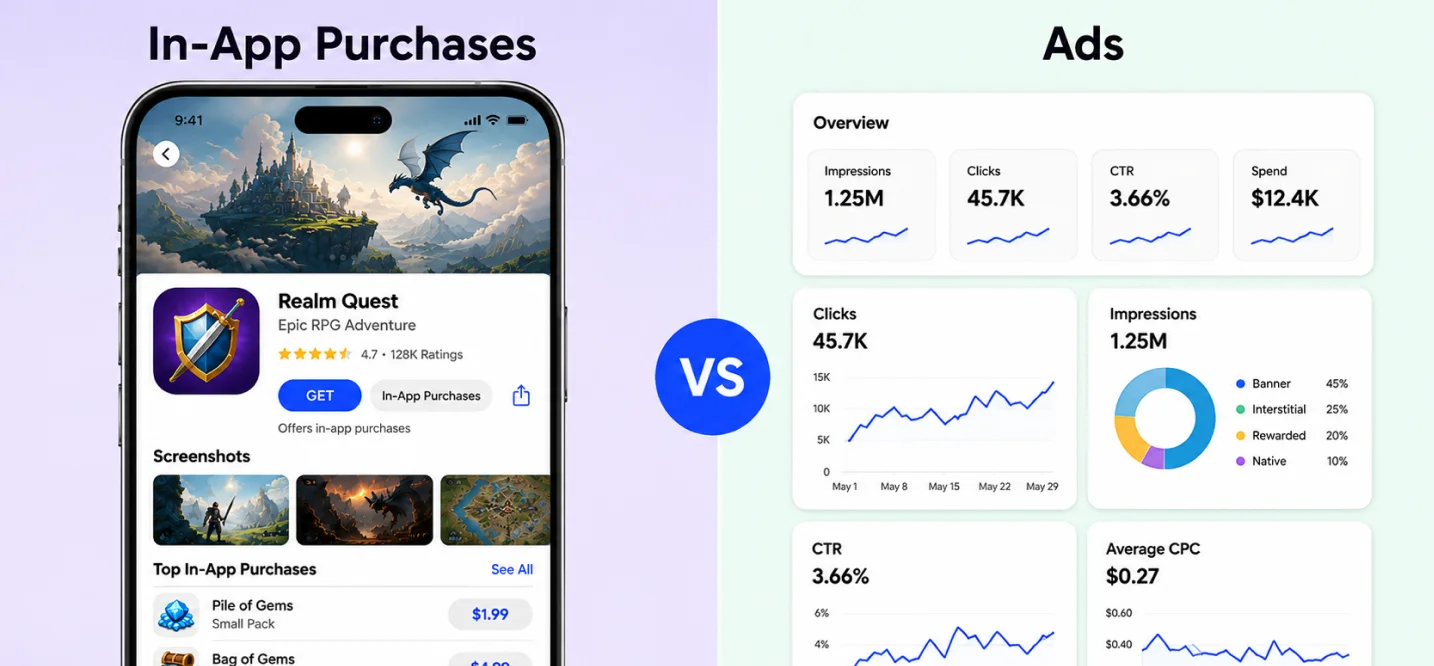
If someone asks,
“How much does mobile games make?”
The answer is simple. A lot.
Mobile games are expected to generate around $107 billion in 2026, making smartphones the largest source of gaming revenue worldwide.
But where does all that money come from?
Mainly two places:
- App purchases (IAP)
- Game ads
In-App Purchases Continue to Dominate
Players are no longer spending money just to win. Instead, they pay for convenience, customization, and progression.
Think about games like Clash of Clans, Roblox, or Fortnite. Most purchases are completely optional. Players buy:
- Character skins
- Cosmetic items
- Battle passes
- Premium currency
- Faster progression
- Limited-time content
These purchases create a steady revenue stream without forcing players to spend.
Mobile Game Monetization Statistics (IAP)
| Metric | 2026 |
| Mobile IAP Revenue | $107 Billion |
| Cosmetics Share (Top Games) | Nearly 80% |
| Top Games Using Battle Passes | 85% |
| Battle Pass Conversion Rate | 15–20% |
| RPG Average Revenue Per User | $45+ |
One trend stands out above all others.
Battle passes have become one of the most successful monetization strategies in gaming.
Players who purchase a seasonal pass are significantly more likely to stay active because they want to unlock every reward before the season ends.
Research also shows that Battle Pass owners are around three times more likely to remain active after six months than players who never purchase one.
Which Game Genres Earn the Most?
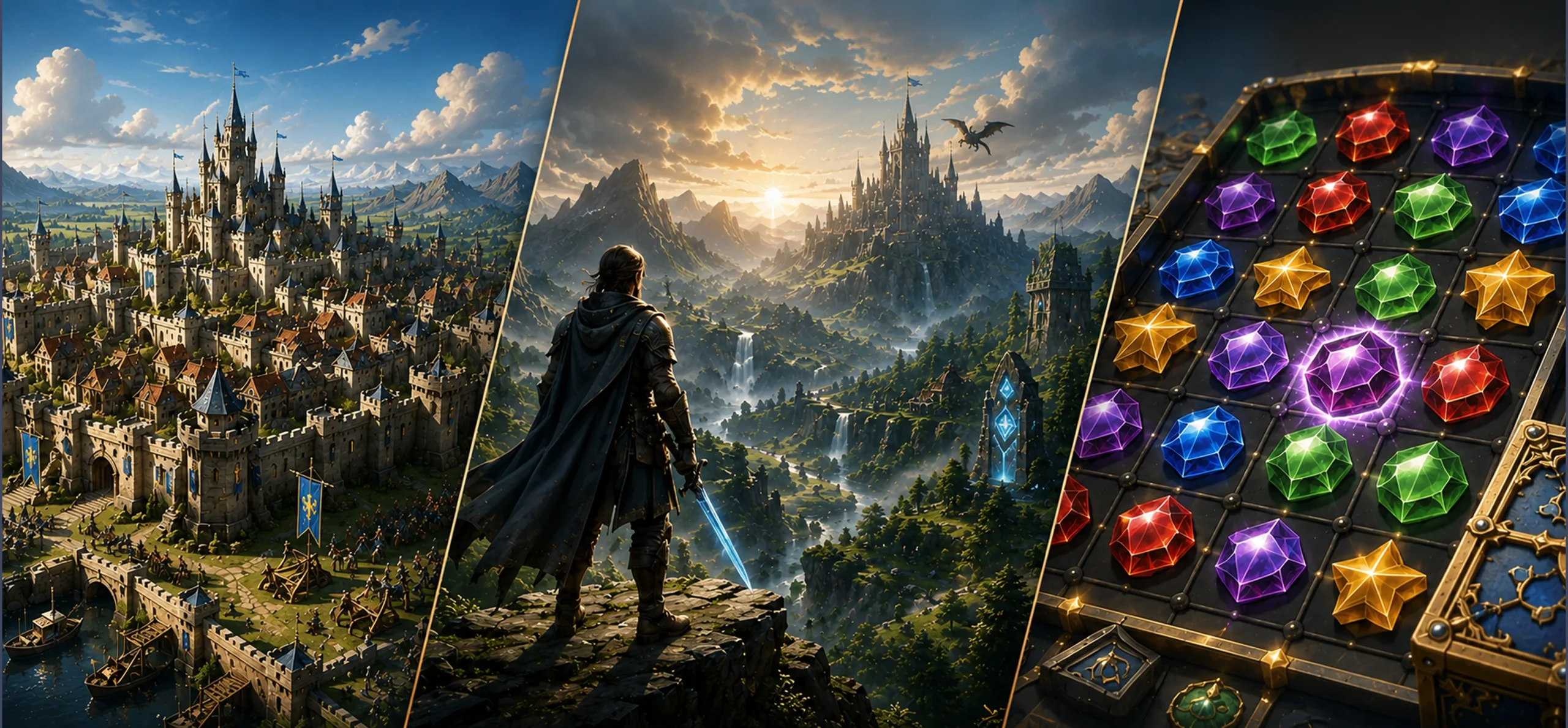
Not every game genre monetizes in the same way. Some rely heavily on ads. Others depend almost entirely on IAP. Here’s how the biggest categories compare.
| Game Genre | Primary Revenue Source |
| Strategy | In-App Purchases |
| RPG | Cosmetics & Character Collection |
| Puzzle | Ads + IAP |
| Hyper Casual | Advertising |
| Shooter | Battle Passes |
| MOBA | Cosmetics & Seasonal Content |
Strategy and RPG games continue leading overall mobile game revenue because dedicated players are more willing to invest in long-term progression. Puzzle games, meanwhile, successfully combine rewarded ads with low-cost purchases.
Mobile Game Revenue by Category: Ads vs IAP (2026)
Another major trend is hybrid monetization. Instead of choosing between ads or purchases, studios now use both.
| Category | Main Revenue Model |
| Hyper Casual | 90% Ads |
| Puzzle Games | 50% Ads / 50% IAP |
| Mid-Core RPG | Mostly IAP |
| Action Games | Cosmetics + Battle Pass |
| Strategy Games | Premium Currency |
This shift has made mobile game revenue by category ads 2026 one of the most discussed topics among publishers.
Rewarded Ads Produce Better Results
Traditional pop-up ads frustrate players. Rewarded ads do the opposite. Players voluntarily watch an advertisement in exchange for rewards such as:
- Extra lives
- Premium currency
- Bonus energy
- Additional moves
- Loot boxes
- Temporary boosters
Everyone wins. Players receive useful rewards. Developers increase ad revenue while keeping the experience enjoyable.
Rewarded Advertising Statistics
| Metric | Result |
| 30-Day Retention (Rewarded Ads) | 50% |
| Industry Average Retention | 13% |
| Likelihood of Future IAP | 4× Higher |
| Playable Ad Conversion | 30% Higher |
Rewarded advertising has become one of the strongest examples of effective monetization in gaming, proving that developers can generate revenue while still putting player experience first.
Premium Games, Subscriptions, and Console Monetization
For years, many people believed that free-to-play would completely replace premium games. That hasn’t happened.
In fact, premium games, subscriptions, and cloud gaming are experiencing a strong comeback.
While mobile dominates overall revenue, PC and console games are still expected to generate more than $94 billion combined in 2026.
The difference? Players are becoming more selective about where they spend money. Instead of buying every new release, they’re looking for value.
And that’s changing the way developers approach video game monetization.
Subscription Services Continue to Grow
Major Gaming Subscription Statistics
| Platform | Subscribers (2026) |
| PlayStation Plus | 51.6 Million |
| Xbox Game Pass | 40 Million |
| Apple Arcade | Growing Globally |
| Nintendo Switch Online | 38+ Million (Estimated) |
Why Subscriptions Are Working
Subscription users tend to play more games. They also stay engaged longer. According to industry data:
| Subscription Behavior | Statistic |
| Average Games Played Per Year | 20+ |
| Increase vs Non-Subscribers | Nearly 2x |
| Increase in Total Playtime | 34% |
This matters because more playtime often leads to:
- Better retention
- Stronger community growth
- Higher spending on DLC
- More cosmetic purchases
- Increased player engagement
The Rise of the $30 – $50 Premium Game
Not every player wants subscriptions. Many still prefer buying games outright. But there’s a catch.
The traditional $70 AAA price tag is facing resistance. Instead, consumers are increasingly choosing games priced between $30 and $50.
Premium Game Pricing Trends
| Trend | Statistic |
| Fastest Growing Price Range | $30–$50 |
| Steam Revenue Growth (Under $30 Games) | 156% |
| PC Revenue CAGR | 6.6% |
| Console Revenue CAGR | 4.4% |
PC Gaming Is Growing Faster Than Console
One surprising trend in the latest mobile game monetization statistics and broader industry reports is the growth of PC gaming.
For years, many analysts expected consoles to dominate.
Instead, PC has continued expanding thanks to:
- Steam
- Epic Games Store
- Digital-first publishing
- Modding communities
- Independent developers
PC vs Console Growth
| Platform | Growth Rate |
| PC Gaming | 6.6% CAGR |
| Console Gaming | 4.4% CAGR |
The flexibility of PC platforms allows developers to experiment with more monetization strategies, pricing models, and content updates.
This is one reason why many modern game developers launch on PC first before expanding to consoles.
Cloud Gaming Is Creating New Revenue Opportunities
Cloud gaming is no longer a future trend. It’s already here. Industry analysts expect cloud gaming revenue to reach approximately $14 billion in 2026.
The biggest driver? Accessibility. Players can stream games without expensive hardware. They simply need a stable internet connection.
Cloud Gaming Statistics
| Metric | 2026 |
| Cloud Gaming Revenue | $14 Billion |
| Smartphone & Tablet Usage | 62% |
| Primary Growth Driver | 5G Networks |
Which Monetization Model Makes the Most Money?
Every studio asks the same question. Which model earns the most? The answer depends on the audience, platform, and game genre. However, industry data shows some clear winners.
Monetization Model Comparison
| Model | Best For | Revenue Potential | Player Satisfaction |
| In-App Purchases | RPGs, Strategy | ★★★★★ | ★★★★☆ |
| Rewarded Ads | Puzzle, Casual | ★★★★☆ | ★★★★★ |
| Subscriptions | PC & Console | ★★★★★ | ★★★★★ |
| Premium Purchase | Story Games | ★★★★☆ | ★★★★★ |
| Hybrid Model | Most Mobile Games | ★★★★★ | ★★★★★ |
One thing stands out. The highest-earning games rarely depend on a single revenue source. Instead, they combine multiple approaches.
Cubix’s Perspective: Building Games That Monetize Without Hurting Player Experience
The best monetization strategy doesn’t start after launch. It starts on day one.
Many studios focus on building the gameplay first and think about monetization later. Unfortunately, that often leads to poor player retention, lower average revenue per user, and frustrated players.
The most successful games don’t interrupt the experience to make money. They make monetization feel like a natural part of the journey.
That’s why experienced game developers plan video game monetization during the earliest stages of development.
We Have a Great Game Idea. Who Should Build It?
This is one of the most common questions startups and publishers ask.
“We have a great idea for a game but don’t know how to structure the development lifecycle. What are the best firms to outsource the entire build to?”
The answer depends on more than technical skills.
A development partner should understand:
- Monetization planning
- Player progression
- Backend architecture
- Live operations
- Analytics
- Content pipelines
- Scalability
Launching a game today isn’t just about shipping Version 1.0.
It’s about creating a product that continues to generate revenue for years.
At Cubix Games, our teams help clients build complete game ecosystems, from concept art and prototyping to launch, LiveOps, and post-launch optimization.
Instead of adding monetization later, we design systems that improve both player engagement and long-term revenue from the beginning.
Looking for Mobile Game Specialists?
Another question we hear often is:
“Are there any agencies that specialize in game development for mobile platforms? We need a partner with a strong portfolio in that space.”
Absolutely.
Mobile gaming is now the largest segment of the industry, generating more than $107 billion annually.
That means developers must think beyond simply launching an app.
Successful mobile games require:
- Responsive controls
- Balanced progression
- Smart app purchases (IAP)
- Rewarded advertising
- Live events
- Performance optimization
- Frequent content updates
Studios can hire mobile game designers to create engaging progression systems, improve retention, and design economies that encourage players to spend money without making the experience feel unfair.
For games with rich visual worlds, investing in professional 3d art outsourcing and working with a skilled 3d game artist for hire can significantly improve production speed while maintaining visual quality.
Likewise, teams building stylized indie titles often partner with an experienced 2d game development company to create polished artwork, animations, and gameplay that fits both player expectations and project budgets.
Ready to Build a Game That Players Love and That Generates Revenue?
Partner with Cubix Games to design, build, and launch games that balance player satisfaction with long-term business growth.
[blog_cta]
Frequently Asked Questions
1. What is game monetization?
Game monetization is the process of earning revenue from a game through methods such as in-app purchases, subscriptions, premium sales, advertising, downloadable content, and seasonal battle passes.
2. How much money does the video game industry make?
Industry analysts estimate the global gaming market will generate between $205 billion and $255 billion in 2026, making it one of the world’s largest entertainment industries.
3. How much does mobile games make?
Mobile gaming is expected to generate approximately $107 billion in revenue during 2026, accounting for more than half of the global gaming market.
4. What is the average revenue per user (ARPU) in mobile games?
ARPU varies by genre. Top-performing RPGs and strategy games often exceed $45 per paying user, while casual games generally generate lower ARPU but reach much larger audiences.
5. Which monetization model generates the most revenue?
Hybrid monetization is currently the most successful approach. It combines free to play access, app purchases (IAP), rewarded ads, subscriptions, and premium content to maximize revenue from different player segments.
6. How can developers prevent monetization leaks in gaming apps?
Studios can reduce revenue leakage by using secure payment systems, validating server-side transactions, monitoring fraud, optimizing pricing, encouraging purchases through official web stores, and regularly analyzing player behavior.
7. Are battle passes better than loot boxes?
Many developers now prefer battle passes because they offer transparent rewards, improve player trust, and significantly increase long-term retention compared to randomized loot box systems.
8. What is the future of mobile game monetization?
Future mobile game monetization statistics worldwide point toward greater use of AI-driven personalization, hybrid monetization, cloud gaming, subscriptions, ethical monetization practices, and more personalized player experiences.