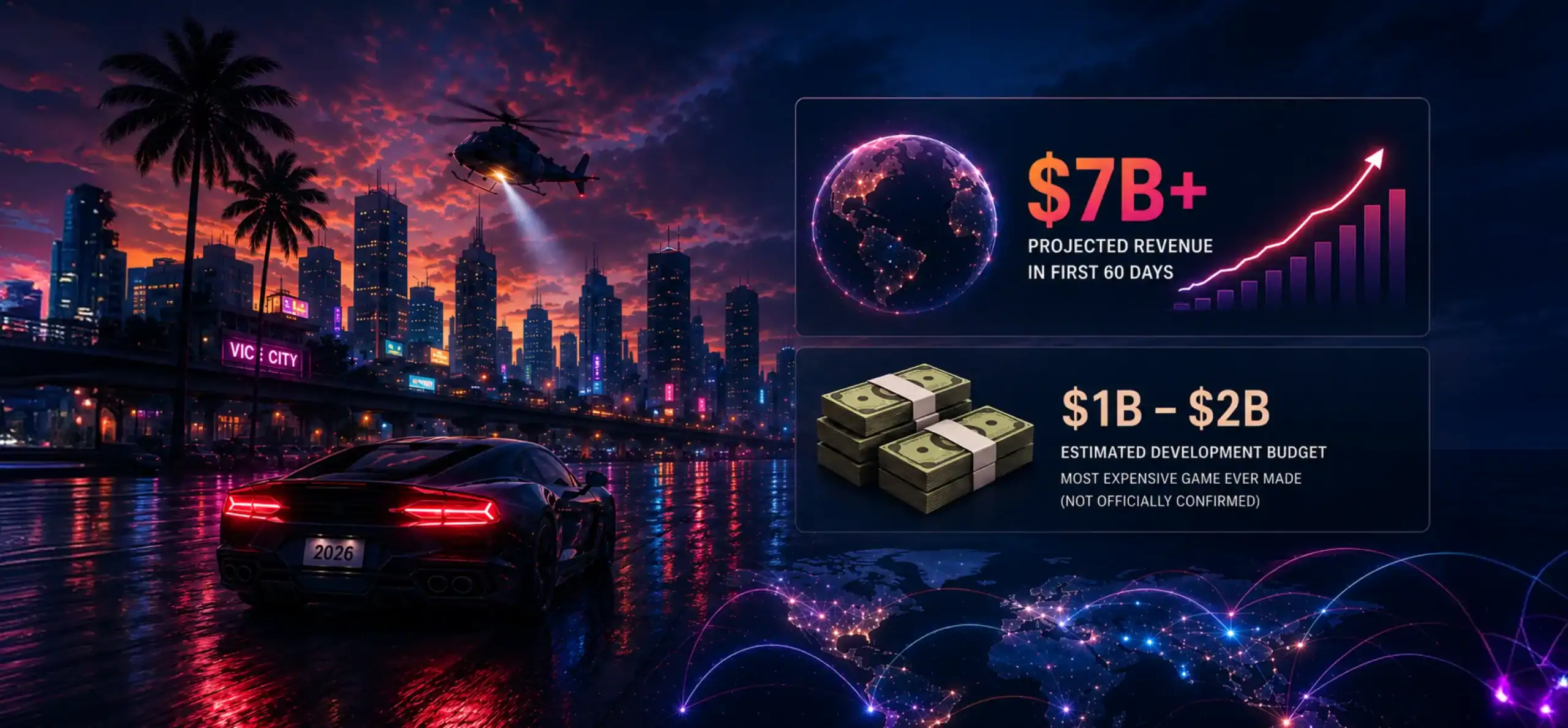
Grand Theft Auto VI has not even launched yet, and it is already rewriting the record books. Industry analysts project the game could bring in more than $7 billion within its first 60 days, making it one of the biggest entertainment launches in history. Pre-orders opened to record demand, retailers are reporting numbers they have never seen before, and the entire industry is watching closely.
It is easy to get caught up in the headlines. But if you run a game studio, the real story is not the hype. It is what has to happen behind the scenes for a launch like this to actually work. Building a game that millions of people want to play the moment it goes live takes more than a good story and sharp visuals. It takes a sustainable economy, infrastructure that can take a hit, and smart use of AI where it genuinely helps.
Let’s break down what GTA VI’s moment can teach studios of any size, whether you are chasing a blockbuster launch or building the next great live-service title.
The Numbers Behind GTA VI’s Launch
Before we get into the lessons, here is what we actually know.
Rockstar Games has confirmed a GTA 6 release date of November 19, 2026, after a couple of well-publicized delays. The game is launching on PS5 and Xbox Series X|S, with a PC version widely expected to follow later, in line with how Rockstar handled GTA V. If you are searching for GTA 6 PS5 or GTA 6 PC availability, console players get first access, and PC players will likely need some patience.
GTA 6 pre order windows opened on June 25, 2026, and search interest around the game briefly overtook even major crypto keywords, which tells you something about how much mainstream attention this launch is pulling in.
On GTA 6 price, Take-Two’s leadership has indicated the game will land in the standard AAA range, somewhere around $70 to $80 in the US. So if you have seen chatter suggesting GTA 6 will cost $200, you can put that rumor to rest. It is not supported by anything Take-Two or Rockstar has said publicly.
The budget question is a different story. Reports and industry estimates place GTA VI’s development cost somewhere between $1 billion and $2 billion, which would make it the most expensive video game ever made. That said, no official figure has ever been confirmed by Rockstar or Take-Two. The $2 billion number traces back to a 2022 leak and has been repeated so often it now sounds like fact, but it remains an estimate, not a confirmed figure.
With that context in mind, here is what studios should actually be paying attention to.
Want to discuss your project? Our experts are just a click away.
Contact UsBuilding a Live-Service Economy Players Actually Trust
Every big launch these days comes with the same question hanging over it: how hard will the studio push monetization once the initial excitement fades?
Fans have been vocal about their concerns for GTA VI’s online mode. Some worry that Rockstar will lean too heavily on Shark Cards and in-game purchases once GTA Online’s successor arrives. Others are more worried about a grind-heavy progression system that makes buying your way forward feel necessary rather than optional. These are not new concerns. They come up around almost every major live-service launch, because players have been burned before by games that started strong and slowly became pay-to-progress.
The studios that get this right treat their in-game economy as part of the actual game design, not something bolted on afterward to hit a revenue target. That means giving players real ways to earn what matters through play, pricing optional purchases fairly, and being transparent about what is cosmetic versus what affects gameplay. Get this balance right, and players stick around for years. Get it wrong, and even a game with a billion-dollar budget can lose goodwill fast.
This is exactly the kind of system Cubix builds for clients: live-service economies designed to keep players engaged for the long run, not just extract value in the short term. If your team is building a title with an ongoing content and monetization plan, this is the stage where the real decisions get made, well before launch day.
Infrastructure That Survives Day One
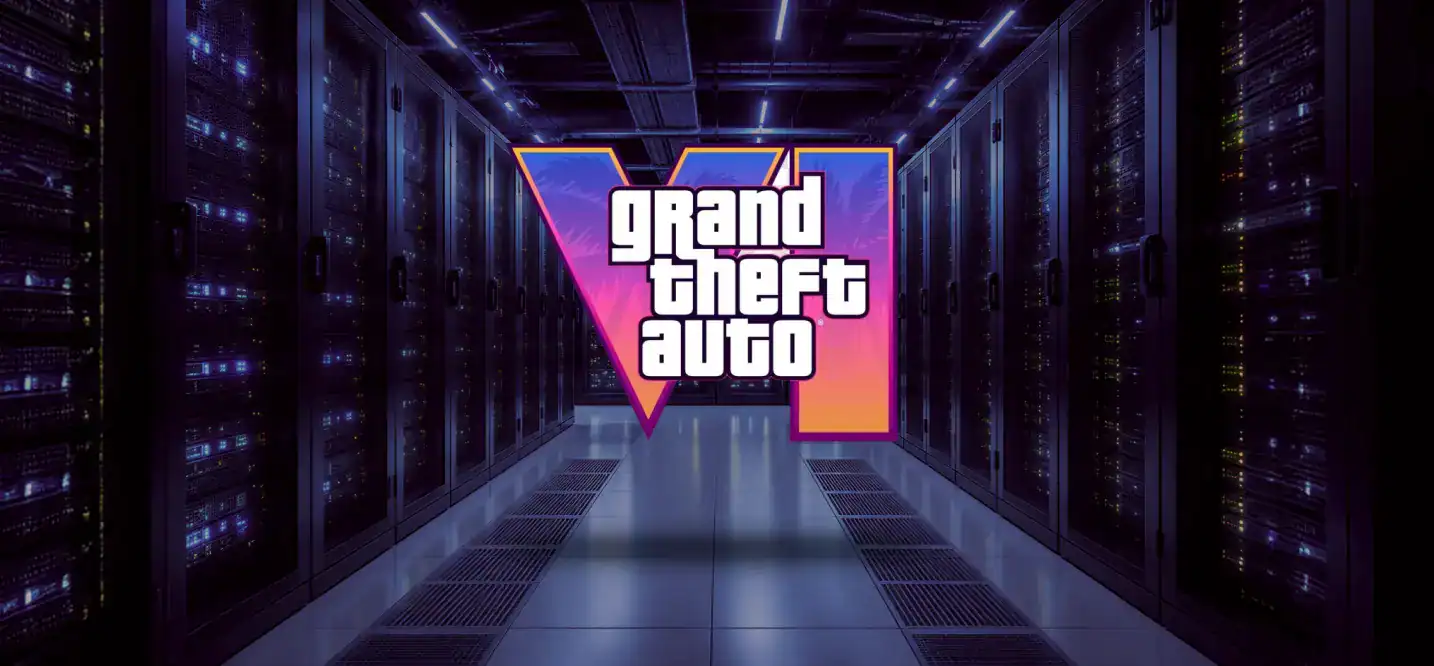
A game can have flawless writing, gorgeous art, and a brilliant economy, and still fall apart in its first 24 hours if the servers cannot handle the load.
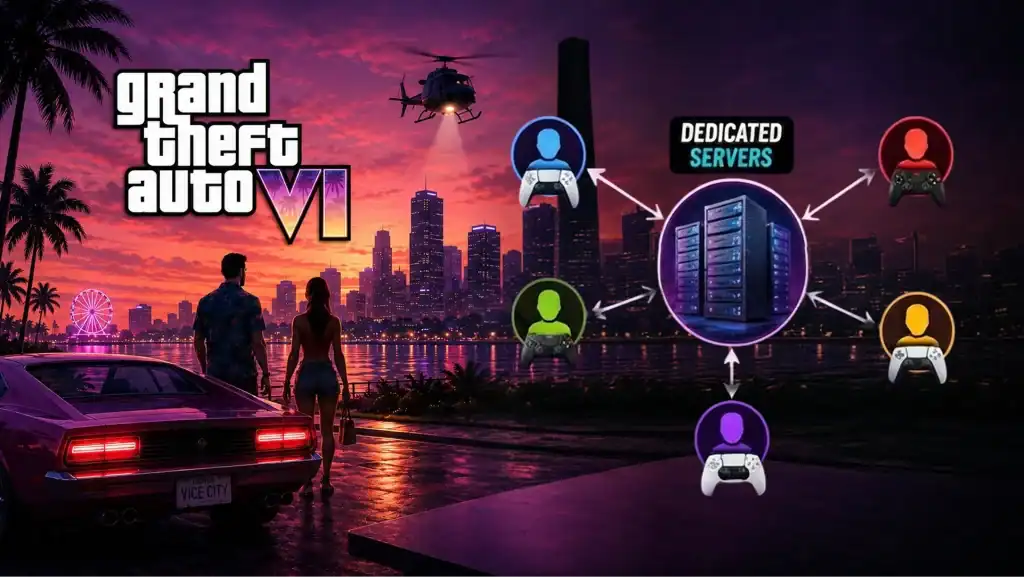
Think about what a launch on GTA VI’s scale actually requires. Millions of players logging in within the same window, all hitting matchmaking, save systems, and in-game economies at once. Any weak point in that chain, whether it is server capacity, database load, or network latency, turns into a headline about a broken launch instead of a triumphant one.
This is not just a GTA VI problem. It is a challenge every studio building multiplayer or live-service games has to plan for, regardless of size. The difference between a smooth launch and a disastrous one usually comes down to decisions made months earlier: how the backend is architected, how matchmaking scales under real pressure, and how much load testing actually happened before the doors opened to the public.
Cubix works with studios specifically on this problem, building scalable multiplayer systems designed to hold up under real launch-day pressure, not just perform well in a controlled test environment. If you are building toward a big launch moment of your own, this is the kind of groundwork that determines whether your community’s first impression is excitement or frustration.
Where AI Actually Helps (and Where It’s Just Noise)
AI is everywhere in gaming conversations right now, and not all of it is useful. Reports around GTA VI have pointed to next-generation AI systems meant to make the world feel more alive and reactive, and that kind of investment makes sense for a studio with Rockstar’s resources.
But most studios are not working with a billion-dollar budget, and that is fine, because the more practical uses of AI in game development do not require one. Smart studios are already using AI to speed up QA and playtesting cycles, generate early drafts of procedural content, and build smarter, more responsive NPC behavior without needing to hand-script every interaction.
The mistake to avoid is treating AI as a marketing checkbox rather than an actual tool. The studios seeing real value are the ones asking a simple question before adopting any AI tool: does this genuinely save time or improve quality, or does it just sound impressive in a pitch deck? Cubix’s approach to AI in game development follows that same principle, building it into the parts of the pipeline where it measurably speeds things up, from QA automation to NPC systems, rather than adding it everywhere for the sake of having it.
The Real Lesson for Studios Watching From the Sidelines
Every bit of GTA 6 news this year, from the trailer speculation to the map details players are piecing together from leaks, is part of one giant marketing machine built around a single moment: launch day. It is easy to look at that and think the takeaway is “spend more on marketing.” It is not.
The real lesson is that hype only pays off if what is underneath it actually holds up. A trusted economy keeps players spending because they want to, not because they feel forced to. Solid infrastructure means your launch day becomes a highlight instead of a disaster story. And smart AI use means your team can build more, faster, without cutting corners on quality.
Whether you are building the next open-world blockbuster or a smaller live-service title with a loyal community, these three pillars are what separate games that thrive long-term from games that fade after their opening week.
Want to discuss your project? Our experts are just a click away.
Contact UsBuild Your Next Big Launch With Cubix
If you are planning a launch of your own, whether that is a live-service title, a multiplayer game built to scale, or a project where AI could genuinely speed up your pipeline, this is exactly where Cubix comes in. We help studios design economies players trust, build infrastructure that holds up under real pressure, and use AI where it actually moves the needle.
Get in touch with our team to talk through what your next launch needs to go the distance.
Frequently Asked Questions
1. Is there a GTA 6 release date?
Yes. Rockstar Games has confirmed GTA VI will release on November 19, 2026, for PS5 and Xbox Series X|S, after previously being delayed from earlier target dates.
2. Will GTA 6 be $200?
No official pricing has been confirmed at that level. Take-Two’s leadership has indicated GTA VI will launch at a standard AAA price point, roughly $70 to $80 in the US, rather than a special premium tier.
3. Where to pre-order GTA 6?
Pre-orders opened on June 25, 2026, through major retailers and console storefronts for PS5 and Xbox Series X|S. A PC release is expected to follow later, similar to how Rockstar handled GTA V.
4. Did GTA 6 really cost $2 billion to make?
It is possible, but not confirmed. Analyst estimates and leaked reports place the development cost somewhere between $1 billion and $2 billion, which would make it the most expensive video game ever made. Neither Rockstar nor Take-Two has released an official figure.
5. What platforms will GTA 6 be available on?
GTA VI launches on PS5 and Xbox Series X|S. A PC version has not been officially confirmed for launch day but is widely expected to arrive afterward.
6. How can a game studio prepare for a launch at this scale?
By treating the launch as an engineering challenge as much as a creative one. That means designing a live-service economy players trust, building infrastructure that can handle real launch-day traffic, and using AI tools where they genuinely improve speed or quality. This is the kind of planning Cubix helps studios work through well before launch day arrives.