Key Takeaways
- Choose the engine based on your game, not popularity. Unity is generally better for mobile, 2D, and cross-platform development, while Unreal Engine excels in visually demanding PC and console games.
- Hiring experienced Unity or Unreal developers has a direct impact on your game’s success. Strong technical expertise reduces development delays, improves performance, and helps you avoid costly rework.
- Unity development outsourcing can accelerate production. Dedicated development teams provide faster scalability, access to specialized talent, and lower hiring overhead compared to building an in-house team.
- A reliable development partner adds long-term value. Working with an experienced game development company reduces risk and supports sustainable growth.
The days of building a game for just one platform are fading. Players now expect to start a game on their PC, continue on their phone, and maybe even jump onto a console later. That’s exactly why cross-platform development has become one of the biggest priorities for studios, startups, and publishers in 2026.
And here’s the thing. Building a successful cross-platform game isn’t only about choosing Unity or Unreal Engine. It comes down to hiring developers who understand optimization, multiplayer systems, platform requirements, and how to keep everything running smoothly across different devices.
The numbers back this up. According to Newzoo, the global games market is expected to generate more than $190 billion in 2026, with mobile still contributing nearly half of total gaming revenue. At the same time, Unity reports that over 70% of the top 1,000 mobile games are built using its engine, while Unreal Engine continues to dominate high-end PC and console experiences with its advanced rendering capabilities.
So if you’re planning your next game, one question matters more than ever.
Should you hire Unity developers, Unreal Engine experts, or both?
Let’s break it down.
Why Hiring the Right Game Engine Experts Matters More Than Ever in 2026

Choosing a game engine has always been important. But today, hiring the right developers is just as critical. The engine gives you the tools. Your developers decide how well those tools are actually used.
Cross-platform projects have also become more demanding. A single release may need to support Android, iOS, Windows, PlayStation, Xbox, Nintendo Switch, and cloud gaming platforms. That’s a lot of technical decisions, and one mistake early in development can lead to months of extra work later.
According to Statista, there are now more than 3.4 billion gamers worldwide, while cloud gaming and cross-platform play continue to grow every year. Players simply expect to continue their progress regardless of the device they’re using.
That expectation changes how development teams are built.
Instead of hiring generalists, companies are increasingly looking for developers who already understand:
- Cross-platform optimization
- Multiplayer networking
- LiveOps infrastructure
- Performance profiling
- Memory optimization
- Console certification requirements
- Backend integration
A 2025 Unity Gaming Report also found that studios using experienced engine specialists reduced production delays significantly compared to teams learning the engine during development. Makes sense, honestly. Learning while building usually ends up costing more.
Expert Insight: “The engine you choose matters, but the people building with it determine whether your game launches on time.” – Unity Industry Report
Want to discuss your project? Our experts are just a click away.
Contact UsUnity vs. Unreal Engine: Which One Makes More Sense for Your Project?
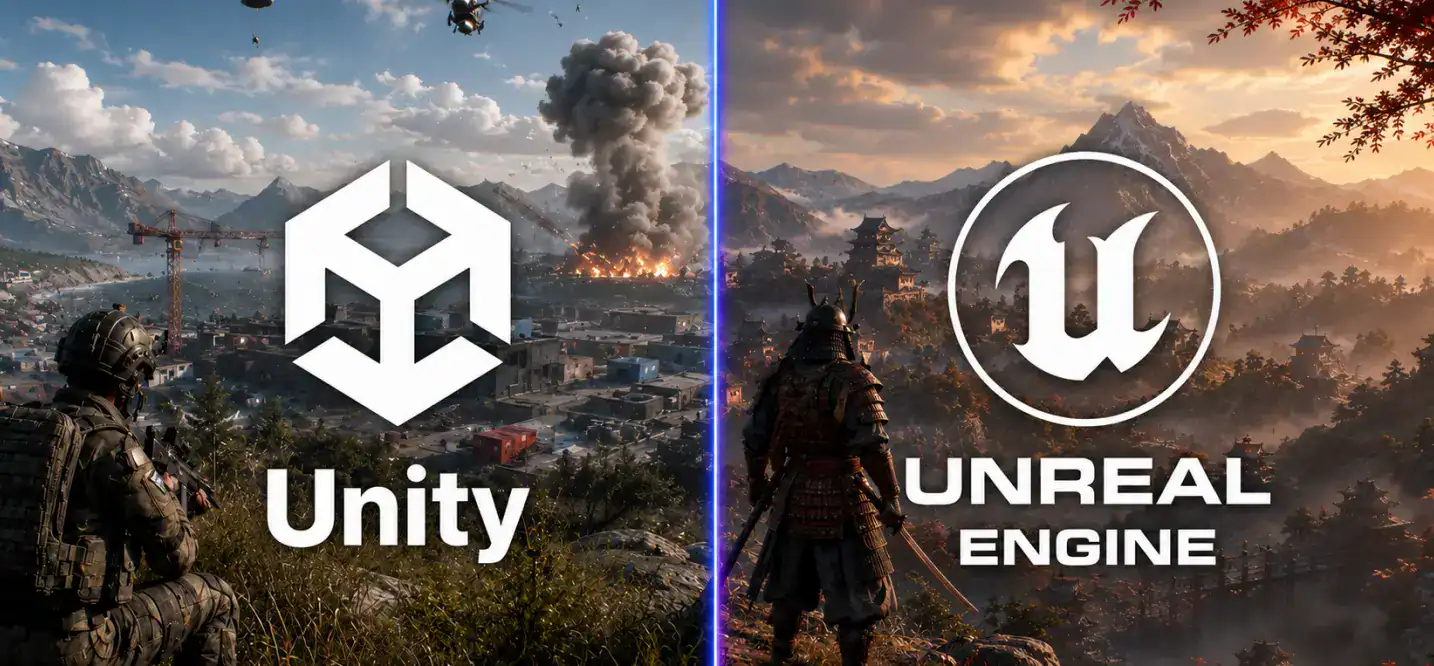
This is usually the first question businesses ask. And honestly, there isn’t one engine that’s better for every game. The right choice depends on what you’re building, who you’re building it for, and how you plan to scale after launch.
| Feature | Unity | Unreal Engine |
| Best for | Mobile, 2D, indie, AR/VR, cross-platform | AAA games, PC, console, realistic graphics |
| Programming | C# | C++ and Blueprints |
| Learning Curve | Easier | Steeper |
| Mobile Performance | Excellent | Good but requires more optimization |
| Visual Quality | High | Industry-leading |
| Development Speed | Faster for small and medium teams | Better for large production teams |
| Community Support | Massive | Very large |
| Asset Store | Extensive | Strong Marketplace |
The good news is that both engines continue to improve every year. The newest Unity version introduced better multiplayer workflows, AI-powered development tools, and improved rendering pipelines, making it even easier to ship games across multiple platforms. Unreal Engine, on the other hand, keeps pushing visual fidelity with technologies like Nanite and Lumen, which have become popular choices for console and PC productions.
So, the decision shouldn’t start with the engine. It should start with your business goals.
Why Unity Still Leads Mobile Game Development
People ask this all the time.
If Unity and Unreal both support mobile deployment, why do developers still recommend Unity for mobile games?
The answer isn’t because Unreal can’t build mobile games. It absolutely can.
Unity simply makes the process easier for most projects.
For starters, Unity has spent years optimizing its engine for Android and iOS devices. That means developers usually spend less time reducing build sizes, managing memory, and fixing performance issues across hundreds of different phones.
There’s also the developer ecosystem. Unity has one of the largest communities in game development, along with thousands of ready-made assets, plugins, and documentation. That translates into faster development and lower production costs.
Here are a few reasons many studios still choose Unity for mobile projects:
- Smaller build sizes for most mobile games.
- Faster iteration during development.
- Easier UI implementation.
- Better support for casual, puzzle, simulation, and 2D games.
- Huge talent pool, making it easier to hire experienced developers.
- Lower hardware requirements during development.
And if you’re still unsure, an experienced team with expertise in game development using Unity and Unreal can usually recommend the best option after reviewing your project goals, target audience, and budget. That’s a much safer approach than picking an engine first and hoping it works out.
What to Look for Before You Hire Unity Developers or Unreal Experts
Finding a developer who knows Unity or Unreal isn’t difficult anymore. Finding someone who can actually build a game that launches on time, performs well, and scales after release? That’s where things get tricky.
The demand for experienced unreal game developers has grown quickly over the last few years. LinkedIn’s hiring trends and multiple industry reports continue to show game programming among the fastest-growing technical roles, especially in multiplayer development, LiveOps, and real-time 3D.
So before you hire a Unity developer, don’t just skim through portfolios. Spend a little more time understanding how they solve problems. A polished-looking game doesn’t always mean the code underneath is built to scale.
Here’s what experienced studios usually evaluate before making a hiring decision.
| What to Evaluate | Why It Matters |
| Previous shipped games | Shows real production experience rather than tutorial projects. |
| Engine expertise | Developers should understand engine architecture, not just basic scripting. |
| Multiplayer knowledge | Essential if your game includes online features or matchmaking. |
| Performance optimization | Poor optimization can hurt player retention and app store ratings. |
| Platform experience | Mobile, PC, console, and VR all have different technical requirements. |
| Communication skills | Development moves much faster when everyone stays aligned. |
| Version control (Git, Plastic SCM) | Prevents production issues as teams grow. |
| LiveOps experience | Important if you plan regular updates after launch. |
Portfolio quality should always come first.
Ask yourself:
- Have they built games similar to yours?
- Have those games actually launched?
- Did they work on gameplay systems or only small features?
- Can they explain the technical decisions they made?
Technical Skills Are Only Half the Story
Here’s something companies often overlook.
A developer can write excellent C# or C++ code and still struggle on a real production team.
Why?
Because modern game development is collaborative. Programmers work with artists, designers, QA engineers, producers, backend teams, and sometimes even marketing. Communication becomes just as valuable as technical knowledge.
When evaluating Unity developers for hire, look beyond coding tests.
Instead, ask questions like:
- How did you improve performance on your last project?
- Tell me about a bug that took days to solve.
- Have you ever disagreed with a designer? What happened?
- What’s one feature you would build differently today?
Those answers usually reveal far more than a résumé.
If you’re planning a multiplayer game, things become even more important. Networking, synchronization, backend APIs, anti-cheat systems, and server optimization require experience that isn’t easy to learn from online tutorials.
That’s one reason many businesses choose to hire Unity developers through established studios rather than building an entirely new engineering team from scratch.
Where Should You Hire Unity Developers?
This question comes up quite a lot.
There isn’t one perfect place. It depends on your project size, timeline, and internal resources.
Generally, you have four options:
- Freelance platforms – Best for prototypes, bug fixes, or very small projects.
- Recruiting in-house developers – Good for long-term product teams, but hiring can take several months.
- Staff augmentation agencies – Useful when you need extra developers to support your existing team.
- Dedicated game development companies – Ideal for businesses looking for experienced teams, production management, QA, and long-term support.
If you’re wondering where to hire Unity developers, start by deciding how much responsibility you want to manage yourself.
Should You Build an In-House Team or Choose Unity Development Outsourcing?
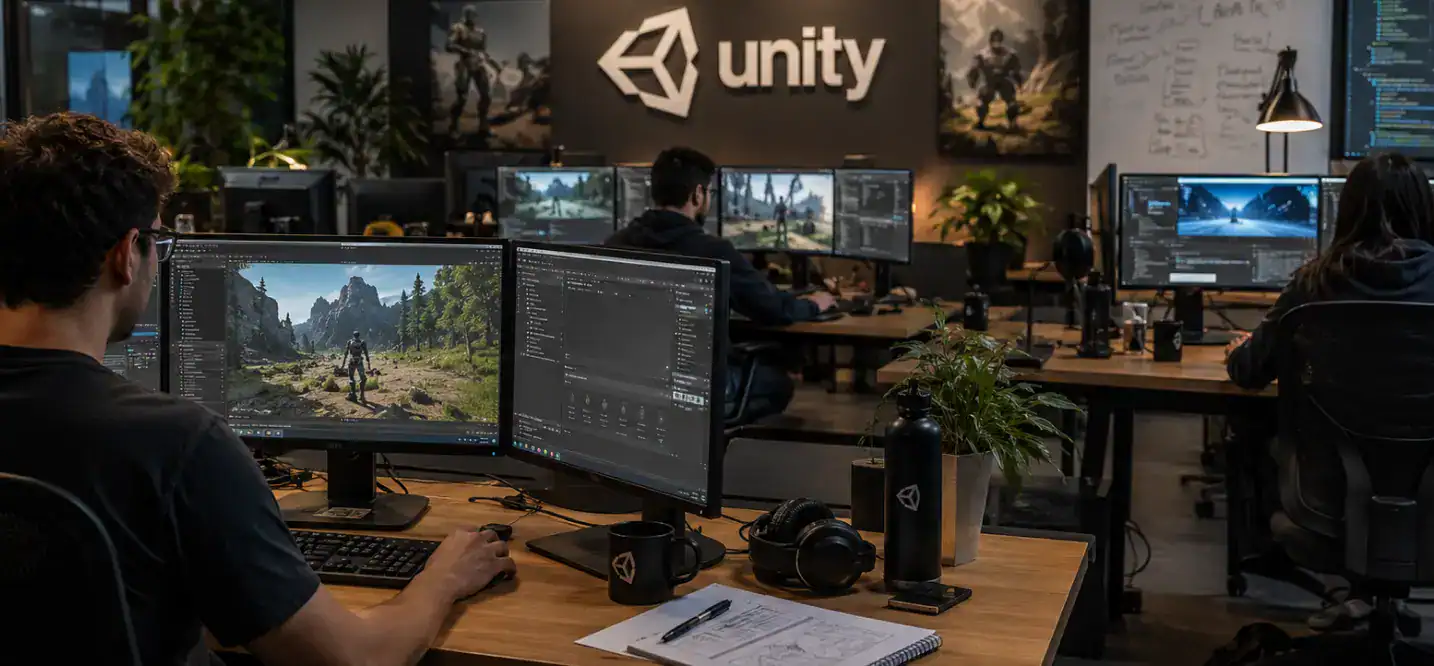
Hiring great game developers has become more expensive than ever. And it isn’t just salaries. Recruitment, onboarding, benefits, software licenses, training, and employee retention all add to the total cost.
That’s why many studios, especially startups and mid-sized companies, are moving toward Unity developers outsourcing instead of expanding large internal teams.
| In-House Team | Unity Development Outsourcing |
| Higher hiring and onboarding costs | Lower upfront hiring costs |
| Recruitment may take several months | Dedicated teams can start within days or weeks |
| Fixed monthly overhead | Flexible engagement models |
| Difficult to scale quickly | Teams scale based on project needs |
| You manage production internally | Production support often included |
| Better for permanent internal products | Better for MVPs, live games, and production scaling |
When Does Outsourcing Make the Most Sense?
There’s no rule saying every project should be outsourced. But there are situations where it simply makes more business sense.
You should consider outsourcing Unity development if:
- Your internal team lacks Unity expertise.
- You’re building an MVP with a tight deadline.
- You need to scale quickly before launch.
- Your project requires multiplayer or LiveOps specialists.
- Hiring locally is taking too long.
- You only need developers for a fixed production period.
On the other hand, if you’re building a long-term internal game studio with multiple ongoing projects, an in-house engineering team may be the better investment.
The important thing is choosing the model that matches your roadmap, not just your budget.
Common Mistakes Businesses Make When They Outsource Unity Development
Here’s where projects often run into trouble. And honestly, most of these mistakes are avoidable.
Some companies choose the cheapest team they can find. Others hire developers based only on hourly rates or flashy portfolios. But game development isn’t like building a simple website. Technical debt builds up quickly, and fixing poor architecture later costs far more than getting it right from the start.
Before you outsource Unity development, watch out for these common mistakes:
- Choosing price over proven experience.
- Not checking whether the team has shipped commercial games.
- Skipping technical interviews.
- Ignoring post-launch support.
- Hiring developers with no experience in your game genre.
- Assuming every Unity developer has multiplayer expertise.
A good outsourcing partner should also be transparent about their workflow.
Ask questions like:
- How do you handle sprint planning?
- Who owns the source code?
- What happens after launch?
- How often will we receive progress updates?
- How do you manage bug fixes and feature requests?
How to Get Started with Unity or Unreal Without Wasting Time or Budget
A lot of people think the first step is downloading Unity or Unreal Engine.
It isn’t.
The first step is figuring out what you’re actually trying to build.
Is it a casual mobile game? A competitive multiplayer title? A story-driven console game? Your answer affects almost every technical decision that comes after.
So before writing a single line of code, spend time validating the idea.
Talk to potential players. Research competitors. Define your core gameplay loop. It doesn’t have to be perfect, but it should be clear enough that everyone on the team is building toward the same goal.
From there, the process usually looks something like this:
- Define your game concept and audience.
- Choose the engine that fits your project, not the trend.
- Build a small playable prototype.
- Hire experienced developers before expanding the scope.
- Develop an MVP and test it with real users.
- Scale production, optimize performance, and prepare for launch.
Looking for a Cross Platform Game Development Partner? Here’s What We’d Recommend.
What usually decides whether a project succeeds is the team behind it. The people making technical decisions every day. The people thinking about performance before it becomes a problem. The people asking, “Will this still work when we have one million players?”
That’s the kind of experience you want on your side.
At Cubix, we’ve spent years helping startups, enterprises, and gaming brands turn ideas into games that players actually enjoy.
Whether you’re planning to hire Unity game developers for a mobile title, hire Unreal game developers for a visually demanding PC or console game, or partner with a full-service game development company, our teams adapt to the way you work instead of forcing you into a fixed process.
Our experience covers cross-platform development, multiplayer architecture, LiveOps, backend systems, AR/VR experiences, and scalable production pipelines. We also build everything from casual mobile games to large multiplayer experiences, including projects that require dedicated 2D game development services alongside Unity and Unreal expertise.
Want to discuss your project? Our experts are just a click away.
Contact UsFrequently Asked Questions
1. Should I hire Unity developers or Unreal Engine developers?
It depends on your game. Unity is often the better choice for mobile, 2D, AR/VR, and cross-platform games because of its mature mobile ecosystem and faster development workflows. Unreal Engine is generally preferred for visually intensive PC and console games where realistic graphics are a priority.
2. How much does it cost to hire Unity developers in 2026?
Rates vary based on experience and location. Freelance Unity developers typically charge between $35 and $100+ per hour, while dedicated development teams often offer flexible monthly engagement models. Complex multiplayer or console projects usually require senior developers, which increases the overall budget.
3. Is Unity still the best engine for mobile games?
For many projects, yes. Unity continues to power a large percentage of the world’s highest-performing mobile games thanks to its optimization tools, extensive asset ecosystem, and strong cross-platform capabilities. Unreal also supports mobile development, but it often requires more optimization effort for smaller devices.
4. When should I outsource Unity development?
Outsourcing is a smart option when you need to launch quickly, expand your development capacity, or access specialized skills like multiplayer networking, LiveOps, or console optimization without hiring a full in-house team.
5. Can one development team work with both Unity and Unreal Engine?
Absolutely. Many experienced studios maintain dedicated Unity and Unreal teams. This allows them to recommend the most suitable engine based on your game’s requirements instead of forcing every project into the same technology stack.
6. What’s the biggest mistake businesses make when hiring game developers?
The biggest mistake is hiring based only on cost. A lower hourly rate often leads to poor architecture, performance issues, delays, and expensive rework. It’s usually more cost-effective to work with experienced developers who have shipped commercial games before.