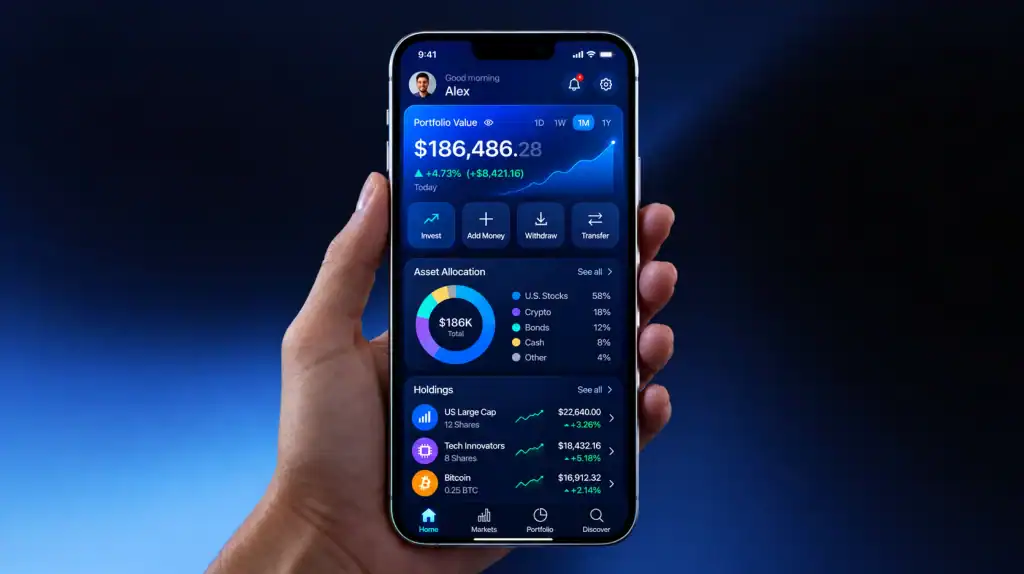
Fintech is no longer defined by mobile banking apps, digital wallets, or faster online payments alone. The deeper shift is happening inside the financial technology stack, where artificial intelligence, APIs, real-time payment rails, financial data, identity systems, and automated compliance are increasingly working together.
In the U.S., this infrastructure is already evolving. The Federal Reserve’s FedNow Service enables participating financial institutions to send and receive instant payments around the clock, while the CFPB’s Personal Financial Data Rights framework is pushing financial data access toward more standardized, permissioned sharing.
That makes the most important fintech trends less about individual features and more about how financial products are built, connected, secured, and delivered.
Here are the developments with the strongest practical relevance, followed by emerging fintech technologies that could shape the next stage of fintech.
Key Takeaways
- AI is moving deeper into fintech, supporting fraud detection, underwriting, compliance, and financial decision-making.
- Embedded finance and open finance are making financial services more integrated, connected, and personalized.
- Real-time payments are increasing the need for faster fraud detection, identity verification, and transaction monitoring.
- RegTech is shifting toward continuous, automated compliance across KYC, AML, and identity verification.
- Tokenization, digital wallets, and B2B fintech are expanding the role of digital financial infrastructure.
- AI-powered fraud prevention and financial co-pilots are changing how financial institutions manage risk and serve customers.
- Emerging areas such as agentic commerce, programmable payments, and AI-orchestrated financial operations could further reshape financial services.
10 Key Fintech Trends Transforming Banking and Financial Services AT a Glance
Before looking at each development, it helps to see how the pieces fit together.
| Trend | What is changing | Where it creates value |
| Artificial intelligence | AI is entering financial decisions and workflows | Risk, operations, personalization |
| Embedded finance | Financial products are becoming part of non-financial platforms | Payments, lending, new revenue |
| Open finance | Consumers can authorize access to financial data | Underwriting, aggregation, personalization |
| Real-time payments | Money can move continuously | Faster settlement and disbursement |
| RegTech | Compliance is becoming increasingly automated | KYC, AML, monitoring |
| Digital wallets | Wallets are becoming broader financial interfaces | Payments, identity, credentials |
| Tokenization | Financial assets can be represented digitally | Settlement and financial markets |
| B2B fintech | Financial technology is moving into business operations | Treasury, payments, automation |
| AI fraud prevention | Risk assessment is becoming more dynamic | Identity and transaction security |
| Financial AI assistants | Applications can interpret financial information | Guidance and personalization |
The important part is the connection between these trends. Open-finance data can feed an AI underwriting model. Real-time payments require real-time fraud controls. Embedded finance depends on APIs and financial infrastructure.
That convergence is where fintech is becoming more technically significant.
1. Artificial Intelligence Is Moving Into Financial Decision-Making

AI in fintech is moving beyond chatbots and customer support into underwriting, fraud analysis, compliance, research, and financial operations.
The U.S. Treasury’s research on AI in financial services identifies applications across fraud detection, risk management, customer service, and operational processes, while its more recent work emphasizes governance as financial institutions expand AI adoption.
What this means: AI is becoming a layer within financial systems rather than a standalone feature.
Financial data → AI model → Risk/decision engine → Human or automated action
The practical challenge is making these systems reliable and controllable. Financial applications need model validation, access controls, data governance, audit trails, privacy protections, and human oversight alongside the AI itself.
For businesses building these capabilities, AI-powered software development can provide the engineering foundation for integrating AI into production workflows.
2. Embedded Finance Is Becoming Part of the Product

Embedded finance puts financial capabilities directly inside non-financial products.
A marketplace can offer seller payouts. A SaaS platform can provide payments or lending. An ecommerce product can add financing without sending customers to a separate financial application.
The Infrastructure behind It
BaaS → APIs → Payments / Accounts / Lending → Customer workflow
The model depends on more than payment processing. It can involve:
- Banking as a Service (BaaS)
- Financial APIs
- Account infrastructure
- Identity verification
- Payment processing
- Compliance services
The regulatory side is evolving alongside the technology. U.S. banking agencies issued proposed guidance in September 2026 focused on risk-based oversight of third-party relationships, an important consideration for financial capabilities delivered through external providers.
Why it matters: Embedded finance works best when financial functionality becomes part of the product’s existing workflow rather than another destination users have to visit.
3. Open Banking Is Expanding Toward Open Finance

Open banking is increasingly about giving consumers controlled, API-based access to their financial information.
The CFPB’s Personal Financial Data Rights rule requires covered providers to make certain financial data available electronically to consumers and authorized third parties. The framework also addresses privacy, authorization, and standardized access.
What Changes for Financial Products?
| Traditional approach | Open-finance approach |
| Manual data entry | Permissioned data access |
| Screen scraping | API-based connectivity |
| Isolated accounts | Aggregated financial data |
| Static financial profiles | Continuously refreshed information |
Implementation in the U.S. remains subject to regulatory developments, so businesses cannot treat open banking as simply an API integration problem.
The technical priority is consent management, authentication, authorization, data minimization, API security, and governance.
That creates a stronger foundation for AI underwriting, personal financial management, automated analysis, and personalized financial products.
4. Real-Time Payments Are Changing How Money Moves

Real-time payments are becoming financial infrastructure rather than simply a faster way to pay.
The Federal Reserve’s FedNow Service allows participating financial institutions to send and receive instant payments around the clock, every day of the year, with recipients gaining access to funds immediately.
A Real-Time Payment Flow
Payment request → Risk check → Authorization → Settlement → Funds available
This changes the technical requirements around payments.
When settlement happens within seconds, systems for fraud detection, identity verification, transaction monitoring, and risk scoring also need to operate at comparable speed.
Real-world signal: FedNow’s 2026 fee schedule includes support for customer credit transfers and returns, reflecting an established payment infrastructure rather than a purely experimental technology.
Why it matters: Faster payments create value only when the surrounding risk and reliability infrastructure can keep pace.
5. RegTech Is Moving Toward Continuous Compliance

RegTech is shifting from periodic compliance checks toward continuous monitoring of identities, transactions, and risk signals.
From Periodic to Continuous
Manual review → Automated monitoring
Static rules → Rules + analytics
Periodic checks → Event-driven controls
Current regulatory activity shows how technology is becoming part of the compliance infrastructure itself. On September 8, 2026, the OCC, together with other U.S. financial regulators, issued guidance clarifying how banks can use government-issued verifiable digital credentials, including mobile driver’s licenses, for customer identification.
That development connects digital identity directly with KYC and AML workflows.
Modern RegTech systems can bring together:
- KYC and customer onboarding
- AML screening
- Sanctions checks
- Transaction monitoring
- Identity verification
- Case management
- Audit trails
Why it matters: Compliance technology increasingly needs to produce decisions that are not only fast, but also traceable, explainable, and auditable.
6. Digital Wallets Are Becoming More Than Payment Tools

Digital wallets are evolving beyond storing payment cards. They increasingly connect payment credentials, authentication, contactless payments, accounts, and other financial services through a single interface.
Mastercard’s 2026 launch of Mastercard Wallet Services illustrates this shift. The service provides software tools and SDKs that allow banks, fintechs, merchants, and digital platforms to build wallet capabilities across iOS and Android.
A wallet is becoming a broader interface
Identity + Credentials + Authentication + Payments + Financial services
The technical stack increasingly involves:
- Tokenized payment credentials
- Secure authentication
- Device security
- Contactless payment infrastructure
- Account connectivity
- Payment APIs
Mastercard says its Wallet Services are available globally where its tokenization infrastructure is enabled, covering more than 200 countries and territories.
Why it matters: Wallets are becoming an interface through which financial institutions and platforms can deliver multiple services, not simply another place to store a card.
7. Tokenization Is Moving Toward Financial Infrastructure

The blockchain conversation in fintech is shifting toward tokenized assets, settlement infrastructure, and programmable transactions.
The BIS’s 2026 work makes this distinction clear. It identifies potential benefits from tokenization while warning that stablecoins in their current form have structural weaknesses and could create financial-stability risks at scale.
Where tokenization could fit
Tokenized assets → Shared ledger → Programmable transactions → Settlement
The BIS also points to Project Agorá, a public-private initiative involving eight central banks and more than 40 regulated institutions, as an example of exploring tokenized commercial bank deposits and central bank reserves for wholesale cross-border payments.
That is a much stronger signal than simply saying blockchain has applications in finance.
Why it matters: The opportunity is increasingly about improving settlement, interoperability, programmability, and financial-market infrastructure, while governance, liquidity, custody, and regulation remain critical constraints.
Organizations evaluating these architectures can explore blockchain development for applications involving smart contracts, tokenized assets, and distributed financial systems.
8. B2B Fintech Is Expanding Beyond Payments
B2B fintech is expanding beyond payment acceptance into the financial processes businesses manage every day.
Where the shift is happening
| Financial workflow | Technology opportunity |
| Accounts payable | Payment automation |
| Accounts receivable | Digital collections |
| Expenses | Virtual cards and controls |
| Treasury | Real-time financial data |
| Reconciliation | Automated matching |
| Cash flow | Data-driven forecasting |
The movement toward digital B2B payments is already visible in commercial payment infrastructure. In June 2026, HSBC and Mastercard announced a mobile virtual-card solution designed to support digital B2B payments. Mastercard also expanded its virtual-card platform with embedded payments capabilities and single-API access.
That points to a broader change: businesses increasingly want financial functions to operate inside the software they already use.
Why it matters: B2B fintech is becoming closely connected with enterprise software, APIs, workflow automation, accounting systems, and treasury infrastructure.
9. AI Is Moving Fraud Prevention Upstream

Fraud prevention is moving closer to the point where a transaction is authorized.
Instead of relying mainly on static rules or investigating suspicious activity after funds move, financial institutions can combine behavioral, identity, device, and transaction signals to assess risk in real time.
2026 evidence: Visa’s enhanced A2A Protect uses a unified fraud score and real-time risk insights to help banks identify account-to-account fraud before funds leave customer accounts. Visa reports that the solution has shown more than 50% additional fraud reduction and over 40% fewer unnecessary fraud alerts.
Visa also says A2A Protect increased fraud detection by 75% in the first six months of deployment and can integrate with existing systems through a single API.
What this changes technically
Transaction data + Identity + Device signals + Behavioral patterns → Risk score → Payment decision
Why it matters: As real-time payments become more common, fraud controls have less time to respond. AI-powered fraud detection therefore needs to operate as part of the payment architecture rather than as a separate security layer.
10. Financial Apps Are Becoming AI-Powered Co-Pilots
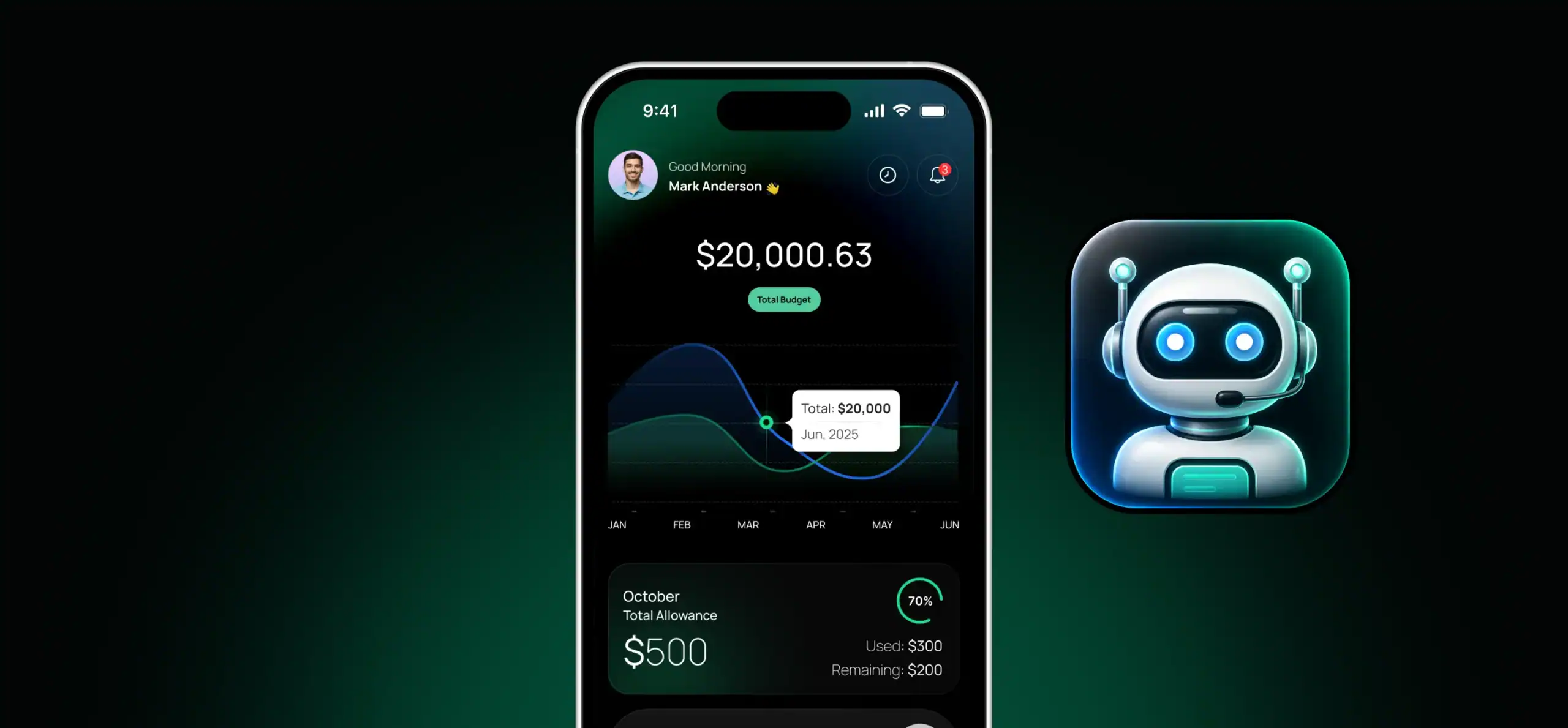
Financial applications are moving beyond displaying information toward helping users interpret data and prepare decisions.
The distinction is important:
| AI co-pilot | Autonomous financial agent |
| Analyzes information | Executes actions |
| Recommends next steps | Acts within defined permissions |
| User remains in control | System may act independently |
| Lower operational risk | Greater governance requirements |
This direction is already visible in financial-services AI. Anthropic has been developing financial-services AI agents and integrations aimed at tasks such as KYC screening, financial research, and operational workflows.
The broader opportunity is to build applications that can:
- Explain account activity
- Identify unusual transactions
- Summarize financial documents
- Surface cash-flow issues
- Compare financial options
- Prepare actions for approval
Why it matters: The valuable part is not simply adding an AI chatbot. Financial co-pilots need controlled access to financial data, APIs, identity systems, policy rules, and human approval workflows.
That makes AI product architecture and financial governance inseparable.
What Do These Fintech Trends Mean for Financial Businesses?
The technologies are useful individually, but their real value appears when they are connected.
| Business objective | Technologies that can contribute |
| Move money faster | Real-time payments, payment APIs |
| Improve underwriting | Open finance, alternative data, AI |
| Reduce manual work | AI and workflow automation |
| Detect fraud earlier | Behavioral analytics, identity intelligence |
| Launch financial products | BaaS, APIs, embedded finance |
| Automate compliance | RegTech, transaction monitoring |
| Improve B2B operations | Treasury and financial workflow software |
| Personalize experiences | AI, financial data, digital wallets |
The takeaway is simple: don’t adopt a fintech trend because it is trending.
Start with the problem.
A lender might combine permissioned financial data, machine-learning underwriting, identity verification, and automated fraud scoring. A SaaS platform might combine BaaS APIs, embedded payments, and business lending.
The technology stack should follow the product requirement, regulatory environment, risk profile, and customer experience.
That approach becomes particularly important when finance software development involves sensitive financial data, transaction processing, or regulated workflows.
Emerging Fintech Trends Shaping the Future of Financial Services
Not every emerging technology deserves to be called the next major fintech trend. The strongest candidates have evidence of active development, standards work, financial-industry adoption, or credible production use cases.
1. Agentic Commerce and AI-Initiated Payments
AI agents are beginning to move beyond answering questions toward completing tasks.
In payments, that raises a new possibility: an authorized AI agent could search for a product, evaluate options, initiate a transaction, and interact with payment infrastructure on a user’s behalf.
The hard part is not the conversational interface. It is identity, authorization, payment credentials, transaction limits, fraud controls, and accountability.
That makes agentic commerce a credible emerging area, but not a replacement for conventional payment flows yet.
2. Programmable Payments and Tokenized Deposits
Tokenization is also moving toward a broader financial-infrastructure discussion.
The BIS has examined how tokenized deposits, central bank money, and other tokenized assets could interact within a future monetary architecture. Its work emphasizes that the goal is not simply putting existing assets on a blockchain, but using tokenization to improve settlement and financial-market infrastructure while preserving trust in money.
This could eventually support more programmable settlement, automated financial contracts, and interoperable digital-asset markets.
3. AI-Orchestrated Financial Operations
AI is also moving toward workflow orchestration.
A future financial operations system could identify an anomaly, gather relevant records, prepare an investigation, route the case, and document the result with limited manual intervention.
The progression is worth watching:
AI-assisted → AI-orchestrated → selectively autonomous
Financial services are unlikely to jump directly to unrestricted autonomy. Money, identity, credit, and regulatory decisions require strong controls and clear accountability.
Conclusion
Fintech is evolving from a collection of digital financial products into connected infrastructure built around AI, APIs, real-time payments, financial data, automation, and stronger security controls. The most relevant trends are not necessarily the newest technologies, but the ones that solve measurable problems across payments, lending, compliance, fraud prevention, financial operations, and customer experience.
For businesses evaluating these opportunities, the right technology depends on the product, data requirements, regulatory environment, and operational goals. A well-designed finance software development strategy can bring these capabilities together through secure APIs, intelligent automation, financial data integrations, and scalable transaction infrastructure without adding technology simply for the sake of innovation.
Ready to Explore What’s Next for Your Fintech Product?
Contact UsFrequently Asked Questions
1. What are the latest trends in fintech?
The leading fintech trends include artificial intelligence, embedded finance, open finance, real-time payments, RegTech, digital wallets, tokenization, B2B financial infrastructure, AI-powered fraud prevention, and AI-assisted financial management.
2. What are the emerging trends in fintech?
Emerging areas include agentic commerce, AI-orchestrated financial operations, programmable payments, tokenized deposits, and deeper integration between AI systems and financial infrastructure.
3. What are the most promising fintech trends?
AI, embedded finance, real-time payments, open finance, B2B automation, and RegTech have strong practical potential because they address measurable problems in financial decision-making, payments, compliance, risk, and operations.
4. What are the major B2B fintech trends?
B2B fintech is expanding across payment automation, corporate cards, expense management, accounts payable and receivable, treasury technology, reconciliation, embedded lending, financial APIs, and cash-flow management.
5. How is AI changing financial services?
AI is being applied to underwriting, fraud detection, risk assessment, forecasting, document processing, customer support, compliance workflows, personalization, and financial decision support.
6. What is the future of fintech?
The future of fintech will increasingly combine AI, connected financial data, APIs, real-time payment infrastructure, embedded financial products, tokenization, identity systems, and automated compliance.