Android game development is moving beyond better graphics and faster smartphones. The most important Android Game Development Trends now involve performance engineering, AI-assisted production, cross-platform experiences, LiveOps, player retention, and smarter monetization.
That shift matters because the mobile gaming industry is becoming more mature. Sensor Tower reports that mobile game in-app purchase revenue approached $82 billion, while downloads declined even as time spent increased. The market is therefore placing greater emphasis on retention, monetization, and lifetime player value.
So, what are the latest trends in Android game development? The answer is not simply a list of emerging technologies. It is about how developers are adapting game architecture, graphics, distribution, and player engagement to a more demanding Android ecosystem.
Android Game Development Trends to Watch
| Trend | What is changing | Development priority |
| AI and generative AI | Faster production and smarter game systems | AI-assisted workflows and personalization |
| Performance engineering | Greater focus on sustained performance | Frame pacing, thermals, Game Mode |
| Advanced graphics | Higher-fidelity mobile experiences | Vulkan, shaders, GPU optimization |
| Cross-platform gaming | Android connects with PC and other screens | Input, saves, UI, backend systems |
| LiveOps | Games evolve after launch | Events, progression, reactivation |
| AR gaming | Gameplay interacts with physical environments | ARCore and device compatibility |
| Monetization | Greater focus on player lifetime value | IAP, ads, subscriptions, battle passes |
| Asset optimization | Hardware and memory constraints remain important | Asset delivery and efficient builds |
1. AI and Generative AI Are Changing Android Game Development
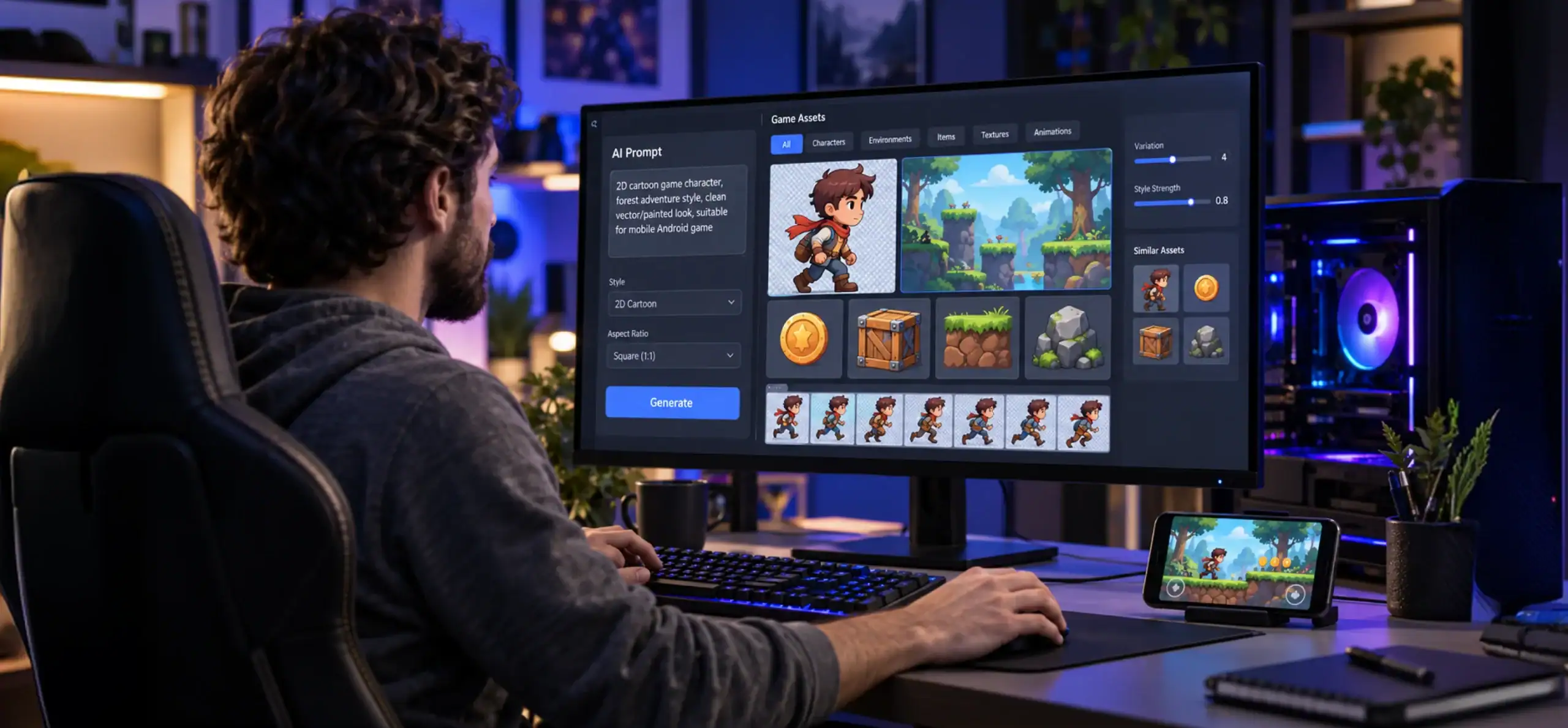
AI in game development is becoming useful across production rather than functioning as one standalone feature.
Teams can use generative AI for code prototyping, dialogue, concept exploration, localization, testing, and content variations. Machine learning can also support adaptive difficulty, player segmentation, matchmaking, recommendations, and NPC behavior.
The important question is where AI provides measurable value. Generating large volumes of content is not automatically useful if it creates more QA work or produces inconsistent results.
For Android games, developers also need to consider model size, inference latency, battery consumption, privacy, and whether AI processing should happen on-device or through a backend.
2. Google Play Discovery Is Becoming Part of Game Development
A game’s development cycle does not end when its Android App Bundle is ready. Discovery, store presentation, updates, and player engagement are increasingly connected.
Google Play has introduced features including Play Shorts, conversational Ask Play search, and Play Games Sidekick, which gives players access to gaming information, tips, rewards, and social updates.
Developers should therefore:
- Make the core gameplay understandable quickly.
- Keep store messaging aligned with actual player intent.
- Use gameplay footage rather than relying only on promotional artwork.
- Connect new content and events with player re-engagement.
- Monitor acquisition alongside retention and monetization.
For developers tracking Google Play’s latest developer updates, these changes show how game distribution is becoming more interactive.
3. Android Performance Optimization Is Becoming a Gameplay Requirement
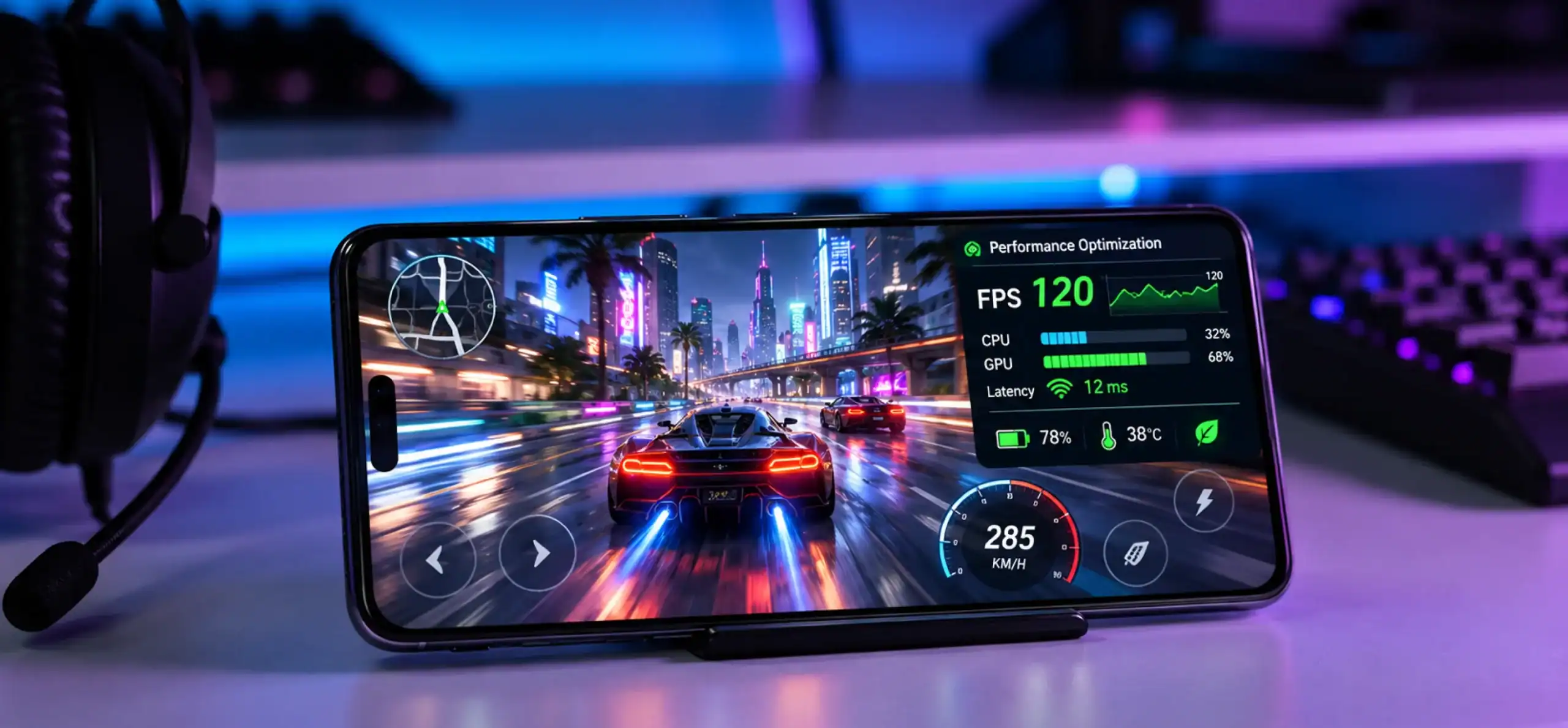
A game can have impressive visuals and still feel poor if frame pacing is inconsistent or thermal throttling reduces performance during longer sessions.
Android provides dedicated systems for this problem. Game Mode lets games respond to performance- or battery-focused settings, while the Android Dynamic Performance Framework helps developers account for device thermal and workload conditions.
Google’s current game quality guidance places significant emphasis on stable frame rates and graphics performance. It also highlights Vulkan as Android’s modern graphics API for performance-sensitive games.
A practical performance strategy considers:
- Target frame rate
- Frame pacing
- Render resolution
- Shadow and texture quality
- Shader complexity
- CPU and GPU workload
- Thermal headroom
This makes profiling and testing across multiple Android device tiers essential rather than optional.
4. Advanced Mobile Graphics Are Raising Player Expectations
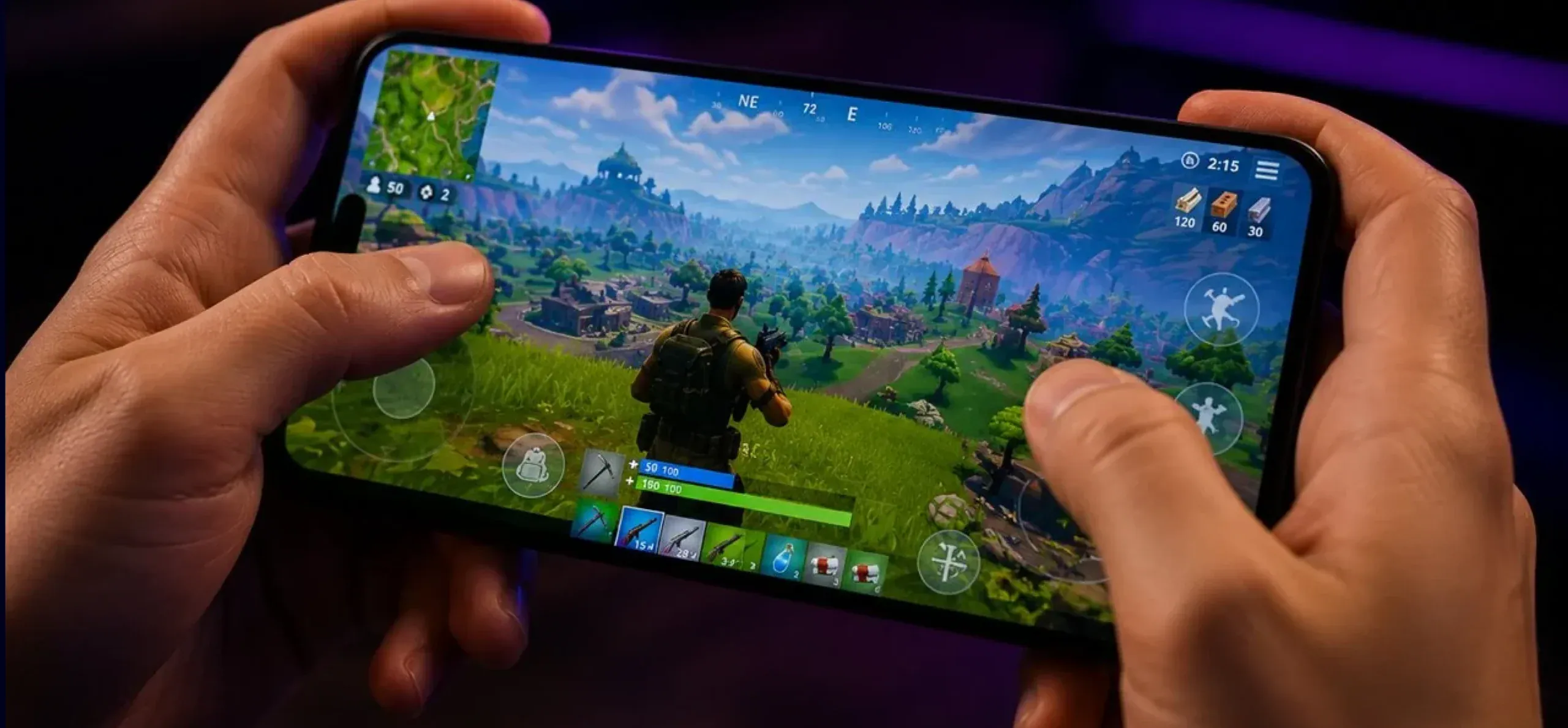
Modern Android hardware can support significantly more sophisticated rendering than earlier generations of mobile games. Physically based materials, dynamic lighting, advanced effects, higher-resolution textures, and complex animation systems are increasingly viable.
But high-fidelity graphics do not mean simply increasing polygon counts.
Developers need to manage GPU bandwidth, overdraw, texture memory, shader complexity, level-of-detail systems, and thermal limits.
Vulkan is particularly relevant because it gives developers greater control over low-level graphics operations and can reduce CPU overhead in appropriate workloads. Android’s documentation also recommends profiling rendering behavior rather than assuming that an engine is using the expected graphics API.
5. Unity and Unreal Engine Support More Capable Android Games

Unity and Unreal Engine remain two of the most widely used mobile game engines, but they suit different technical requirements.
| Engine | Strong fit | Key consideration |
| Unity | 2D, stylized 3D, cross-platform games | Broad mobile tooling and platform integrations |
| Unreal Engine | High-fidelity 3D and visually demanding games | More advanced rendering with higher hardware demands |
Android’s official engine guidance positions Unity for both 2D and 3D development, while Unreal Engine is particularly suited to high-end 3D experiences.
The right choice depends on the game’s visual requirements, target hardware, development team’s expertise, multiplayer architecture, and intended platforms.
For businesses evaluating an Android Game Development Company, engine selection should be based on those technical requirements rather than engine popularity alone.
6. Cross-Platform Game Development Is Moving Beyond Simple Ports
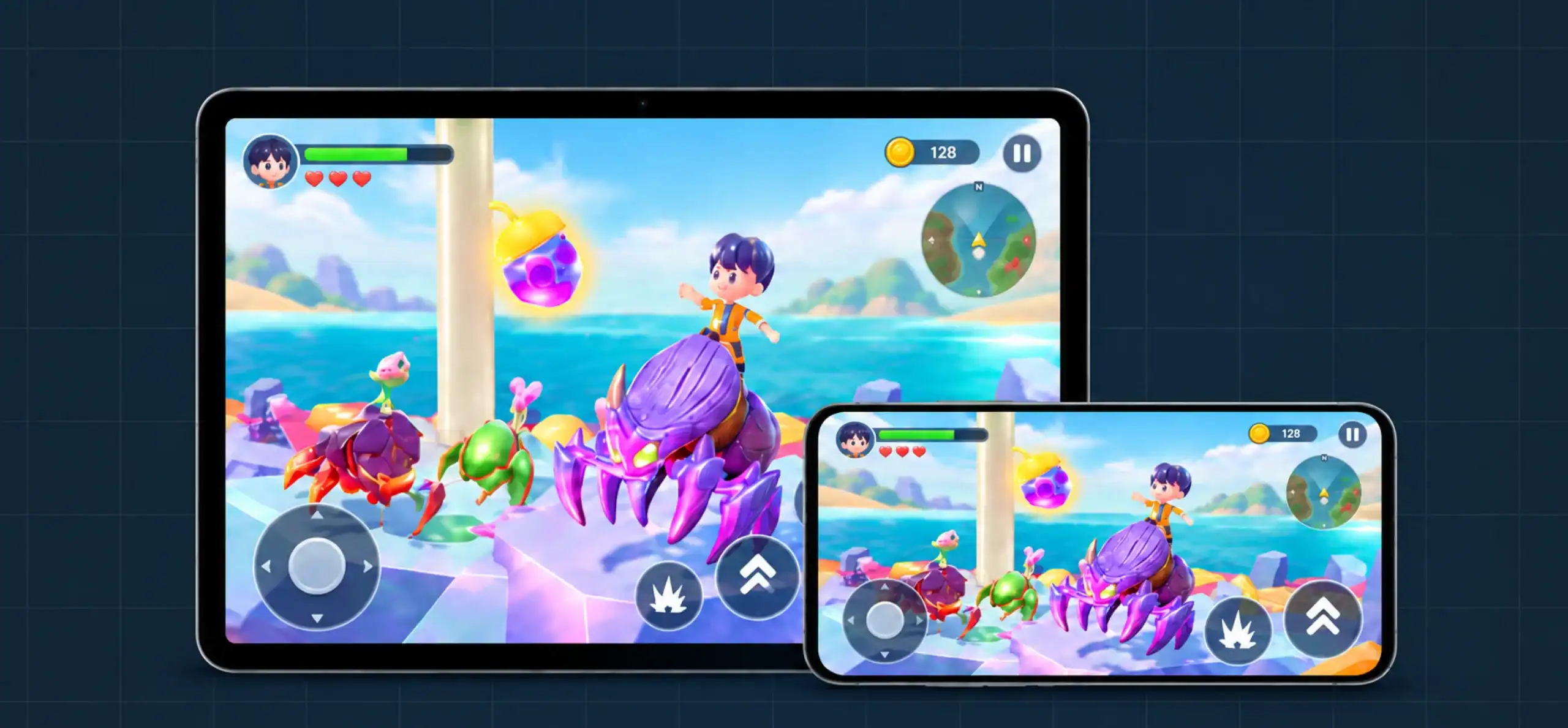
One of the most important future trends in Android game development is the growth of connected experiences across smartphones, tablets, foldables, PCs, and other screens.
Google Play Games on PC already requires developers to account for large-screen layouts, aspect ratios, graphics capabilities, texture formats, and input differences.
That means cross-platform game development requires more than recompiling the same build. Developers need to consider:
- Input and control schemes
- UI scaling
- Aspect ratios
- Cloud saves
- Player accounts
- Cross-platform progression
- Network architecture
- Device-specific graphics profiles
The result is a more unified game ecosystem rather than separate versions of the same title.
7. Multiplayer and Real-Time Gaming Require Stronger Backend Architecture

Multiplayer gaming is pushing Android development toward server-authoritative architectures, dedicated game servers, matchmaking, state synchronization, and anti-cheat systems.
A modern multiplayer stack may include:
- Authoritative game servers
- Matchmaking
- Real-time networking
- Player authentication
- State replication
- Cloud infrastructure
- Telemetry
- Anti-cheat systems
Latency, synchronization, bandwidth, and server cost all influence the player experience. Competitive titles may also require client-side prediction, interpolation, lag compensation, and server reconciliation.
For teams that need specialized engineering across gameplay, networking, and backend systems, a mobile games development company can provide dedicated development capabilities without requiring an entire internal team.
8. LiveOps Is Replacing the “Launch and Leave” Model
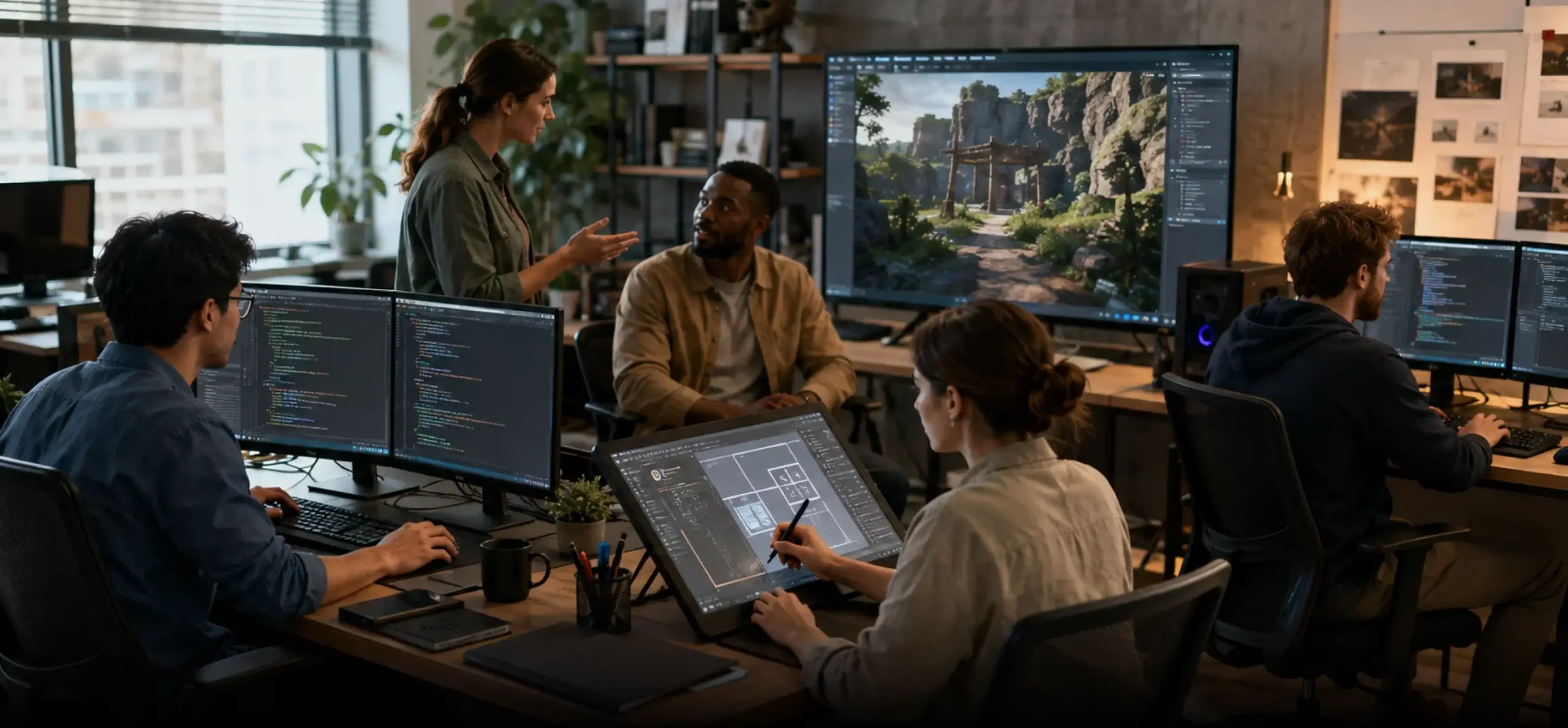
Modern mobile games increasingly operate as evolving services.
LiveOps can include:
- Limited-time events
- Seasonal content
- New characters or items
- Challenges and tournaments
- Balance updates
- Login rewards
- Community activities
- Reactivation campaigns
This reflects a broader change in the Android gaming industry trends: developers are focusing more heavily on retention, reactivation, and lifetime value instead of relying solely on new downloads.
That makes analytics part of game design. Teams need to monitor D1, D7, and D30 retention, session frequency, payer conversion, churn, ARPDAU, and event participation to understand which updates actually improve the player lifecycle.
9. AR Is Creating New Types of Android Gameplay

Augmented reality remains one of the clearest ways to connect digital gameplay with physical environments.
Google’s ARCore supports capabilities including augmented images, depth, Instant Placement, and Cloud Anchors, with development options for Android, Unity, Unreal Engine, and other environments.
The strongest AR games do not simply place virtual objects over a camera feed. The physical environment needs to contribute to the gameplay loop.
Developers also need to consider:
- ARCore device compatibility
- Camera permissions
- Tracking quality
- Battery consumption
- Lighting conditions
- Fallback experiences
Google provides ARCore development documentation and samples for developers building these experiences.
10. Cloud Gaming and 5G Are Expanding Mobile Possibilities
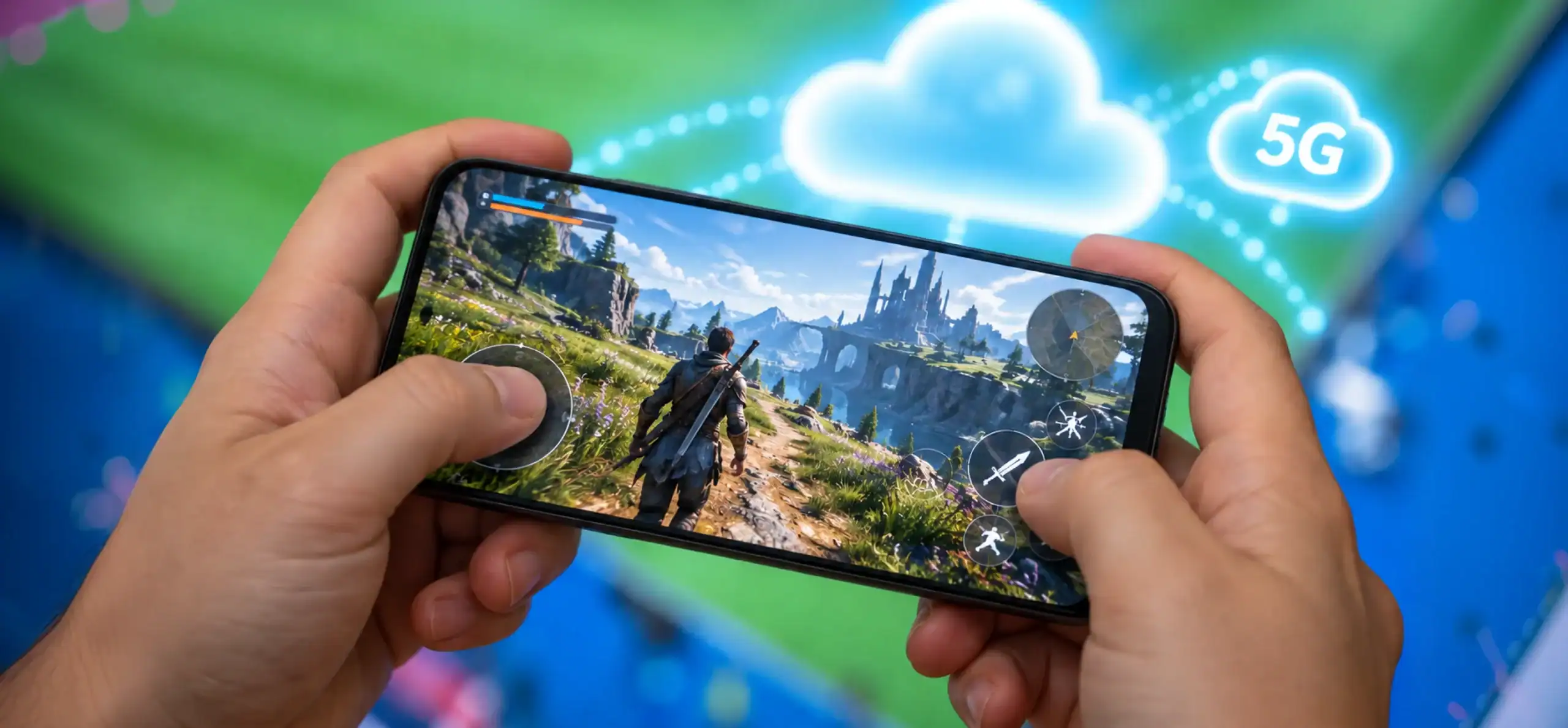
Cloud gaming allows computationally intensive workloads to run remotely while the Android device handles video decoding, input, and interaction.
Faster networks can make this model more practical, particularly for games that exceed the capabilities of some local devices. However, latency, connection stability, data usage, compression, and infrastructure costs remain important constraints.
For many games, a hybrid architecture is more practical. Core gameplay can remain native while cloud services handle multiplayer, synchronization, analytics, authentication, or content delivery.
11. Game Monetization Is Shifting Toward Lifetime Value
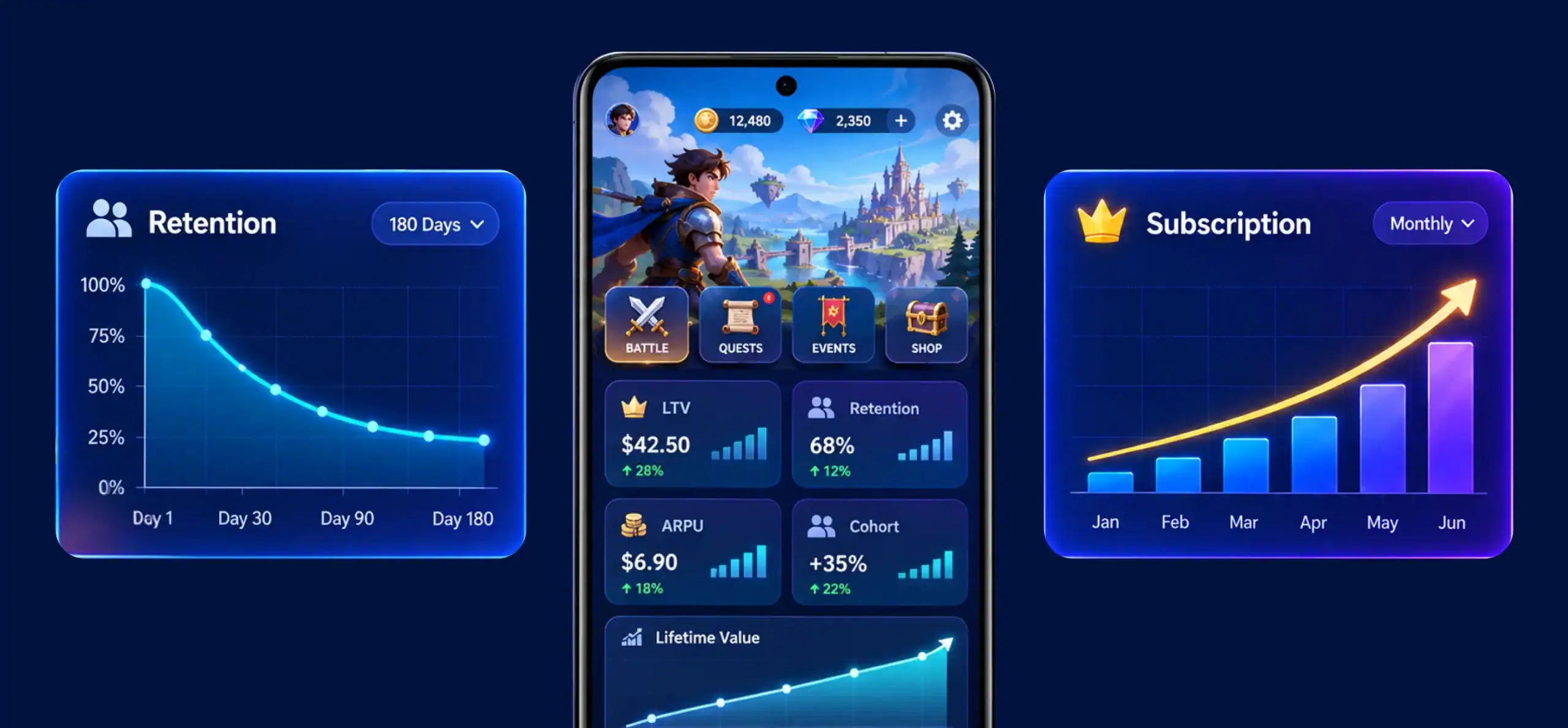
The most effective game monetization model depends on the game’s genre and player behavior.
| Model | Suitable use |
| In-app purchases | Cosmetics, virtual goods, progression |
| Rewarded ads | Optional rewards in free-to-play games |
| Subscriptions | Recurring benefits or premium content |
| Battle passes | Seasonal progression and competitive games |
| Premium purchase | Complete paid experiences |
The important shift is not simply charging players more. It is improving monetization without damaging retention.
Developers therefore need to connect monetization events with progression, engagement, player segmentation, and churn.
12. Android Game Development Tools Are Becoming More Specialized

Modern development teams use more than an engine and Android Studio.
A practical toolchain can include:
- Android Studio for builds, debugging, profiling, and device testing
- Unity or Unreal Engine for gameplay and rendering
- Android Performance Analyzer for graphics profiling
- GPU profiling tools for rendering bottlenecks
- Google Play Games Services for platform features
- Play Integrity for integrity and anti-abuse workflows
- Analytics platforms for player behavior and crash data
Memory and package compatibility also deserve attention. Android’s 16 KB page-size guidance requires developers using native libraries to ensure proper alignment, with NDK r28 and higher providing 16 KB-aligned builds by default.
Real-World Examples of Android Game Development Trends
The latest Android gaming trends are easier to understand when viewed through games that are already applying them at scale. Several successful mobile titles demonstrate how LiveOps, multiplayer, social systems, content updates, and monetization have become central to long-term performance.
1. Honor of Kings
Honor of Kings is a strong example of multiplayer and LiveOps working together. Its 5v5 structure, hero-based progression, social features, and ongoing content give players reasons to return beyond individual matches.
2. Whiteout Survival
Whiteout Survival combines survival strategy with alliances, progression, events, and in-app purchases. Its Google Play listing shows more than 100 million downloads and ongoing events and offers, illustrating how recurring content can support a long-running mobile game.
3. Roblox
Roblox demonstrates how user-generated content can become the foundation of a mobile gaming ecosystem. Rather than offering one fixed gameplay experience, Roblox lets creators build, publish, and monetize games and experiences, while players move between a large library of community-created content. For developers exploring the platform, understanding how to make Roblox games provides a practical starting point for building these experiences.
4. Free Fire
Free Fire shows how a mobile-first game can combine accessible performance with competitive multiplayer, recurring events, collaborations, and esports. Garena continues to introduce limited-time events, franchise collaborations, gameplay updates, and competitive tournaments, making LiveOps a core part of the game’s lifecycle.
5. Subway Surfers
Subway Surfers demonstrates the value of continuous content in a long-running mobile game. World Tour destinations, new challenges, characters, and themed experiences keep the core endless-runner formula fresh while giving returning players new content to engage with.
These examples show that successful Android games are not defined by a single technology. Their common thread is the ability to combine strong core gameplay with ongoing content, performance optimization, social systems, monetization, and player retention. For developers, the lesson is to adopt the technologies that strengthen the game’s specific experience rather than implementing trends simply because they are popular.
What Do These Android Game Development Trends Mean for Developers?
The direction is clear: Android games are becoming more technically demanding, but successful teams do not need to implement every emerging technology.
Prioritize capabilities that directly support the game’s design:
- Performance: Optimize sustained frame rates, thermals, and multiple device tiers.
- Retention: Build progression and LiveOps around measurable player behavior.
- Scalability: Plan multiplayer, backend, and content systems before growth exposes architectural limitations.
- Distribution: Treat Google Play discovery as part of the product.
- Platform reach: Consider PC, tablets, foldables, and cross-platform progression where appropriate.
- Tooling: Select technologies based on the game’s actual technical requirements.
The Future of Android Gaming Will Be More Technical
The future of Android gaming is not defined by one technology. AI, advanced rendering, multiplayer infrastructure, AR, cloud services, cross-platform play, and smarter monetization are converging around a common requirement: games need to perform well and keep players engaged.
The strongest Android Game Development Trends are therefore the ones that improve the complete player lifecycle, from discovery and installation to performance, progression, social interaction, and long-term retention.
For developers and businesses, the opportunity is not to follow every trend. It is to identify which technologies improve the actual game and build the architecture, tools, and production workflow needed to support them. Teams that need specialized Android development expertise can also hire an Android game developer for targeted engineering support.
Let’s craft your next gaming hit. Book a free call.
Contact Us
Frequently Asked Questions
1. What are the latest trends in Android game development?
The major trends include AI-assisted development, adaptive performance optimization, high-fidelity graphics, LiveOps, multiplayer systems, cross-platform gaming, AR, cloud gaming, and player-focused monetization.
2. What are the major shifts in mobile game development technology?
The biggest shift is from simply making games run on Android to continuously optimizing performance, retention, discovery, monetization, and cross-device experiences.
3. Which game engines are preferred for creating high-fidelity mobile experiences?
Unity and Unreal Engine are widely used. Unity is particularly strong for cross-platform 2D and 3D development, while Unreal Engine is well suited to visually demanding 3D experiences.
4. How are developers integrating augmented reality features into mobile games?
Developers use ARCore to combine camera input, motion tracking, environmental understanding, and 3D content. ARCore supports Android development through native tools as well as Unity and Unreal Engine integrations.
5. What are the best tools for developing Android games with modern features?
Android Studio, Unity, Unreal Engine, Android Performance Analyzer, GPU profiling tools, Google Play Games Services, Play Integrity, and analytics platforms form a practical modern toolchain.
6. What are the most effective monetization strategies for new Android games?
In-app purchases, rewarded advertising, subscriptions, battle passes, and premium purchases can all work. The right choice depends on the game’s genre, progression system, audience, and retention profile.
7. Which Android game is trending now?
Game rankings vary by market and change frequently. Rather than relying on one title, developers should monitor downloads, revenue, engagement, and LiveOps performance to understand broader trends in mobile games.