What If Your Biggest Development Challenge Wasn’t Technical?
Imagine investing months into a game idea, assembling a talented development team, approving budgets, and kicking off production with confidence. The concept is exciting, the timeline looks achievable, and everyone leaves the initial meetings feeling aligned.
Then the first designs arrive.
They’re professionally executed. The quality is there. The team is clearly putting in the work. Yet something feels different from what you imagined. Feedback is shared, revisions are made, and new versions are delivered. But with every review cycle, it becomes harder to explain exactly what’s missing.
What started as a straightforward game development project slowly turns into a series of iterations, adjustments, and difficult decisions. Deadlines begin to feel tighter, resources become stretched, and everyone involved starts asking the same question:
“Why does this project feel harder than it should?”
“One of the biggest misconceptions in game development is that technology is the hardest part of the process. In reality, alignment is often the greater challenge. The most successful projects happen when clients and development teams share a clear vision from day one. Every project we’ve delivered has reinforced the importance of communication, collaboration, and setting expectations early.”
— Salman Lakhani, CEO, Cubix
Why Most Game Development Challenges Start Before Development
When people think about game development risks, they usually imagine technical obstacles.
They think about bugs, performance issues, server crashes, optimization challenges, or engine limitations. While these issues certainly exist, they’re often easier to solve than problems caused by unclear direction.
Technical problems typically have measurable solutions. Teams can identify the cause, create a plan, and implement a fix.
Vision-related problems are different.
When stakeholders aren’t perfectly aligned on what success looks like, every decision becomes more difficult. Character designs become subjective. Environment concepts become open to interpretation. Features evolve unexpectedly. Feedback loops get longer. Small misunderstandings slowly turn into larger production challenges.
The reality is that game development is not just a technical process. It’s a collaborative creative process.
That distinction matters because creative projects rely heavily on shared understanding. When that understanding is incomplete, even highly skilled teams can spend valuable time moving in the wrong direction.
One of our most memorable projects demonstrated exactly how this happens.
The Project That Changed Our Perspective: What Happened?
The project itself wasn’t unusually complex.
The client approached us with a strong concept and a clear desire to create an immersive gaming experience. There was enthusiasm from both sides, realistic timelines, and a shared excitement about bringing the idea to life.
One requirement remained consistent throughout the early discussions:
The game needed to feel realistic.
At first glance, this seemed straightforward. Realism is a common request in modern game development, especially as players continue to expect increasingly immersive experiences. The team moved into discovery and pre-production with that objective in mind.
However, as development progressed, a subtle challenge began to emerge.
Everyone involved was using the same word, but not necessarily defining it the same way.
“We’ve learned that a great game isn’t built through development alone—it’s built through continuous collaboration. When feedback is clear and decisions are made at the right time, teams can focus their energy on creating exceptional player experiences instead of revisiting assumptions. That’s where the real momentum comes from.”
— Game Development Team, Cubix
For some stakeholders, realism meant highly detailed environments and believable lighting. For others, it meant realistic proportions, character movements, and visual authenticity. Some expectations aligned more closely with stylized realism, while others leaned toward a more photorealistic approach.
None of these interpretations were wrong.
The issue was that they weren’t fully aligned.
At the beginning of a project, these differences can seem minor. A few assumptions here and there don’t feel significant when deadlines are months away and production has only just begun.
But in game development, assumptions have a way of becoming expensive.
When “Realistic” Means Five Different Things
One of the most common misconceptions we encounter is the idea that visual direction is easy to define.
A client may say they want a realistic game, while another requests a stylized game. On paper, these sound like clear instructions.
In practice, they’re only the beginning of the conversation.
Consider how many different games could reasonably be described as realistic. A realistic mobile game looks very different from a realistic console title. A survival game uses realism differently than a racing simulator. Even within the same genre, visual styles can vary dramatically while still meeting the definition of realism.
Without detailed references, examples, and visual benchmarks, development teams are often left interpreting broad creative goals.
That interpretation process introduces risk.
As our project progressed, multiple visual directions were explored in an effort to better align with expectations. The team evaluated different approaches, reviewed alternatives, and continued refining the artistic vision. Each revision was completed with the goal of getting closer to the desired outcome.
The challenge wasn’t a lack of effort. The challenge was that every adjustment generated new questions.
- Should environments feel more grounded?
- Should characters be more stylized?
- Should visual realism take priority over production efficiency?
- Should the project lean toward a 2D game development company visual approach or embrace a more complex 3D direction?
These questions are significantly easier to answer before production begins than after assets are already being created.
Why the 2D vs 3D Decision Is Bigger Than Most Clients Realize
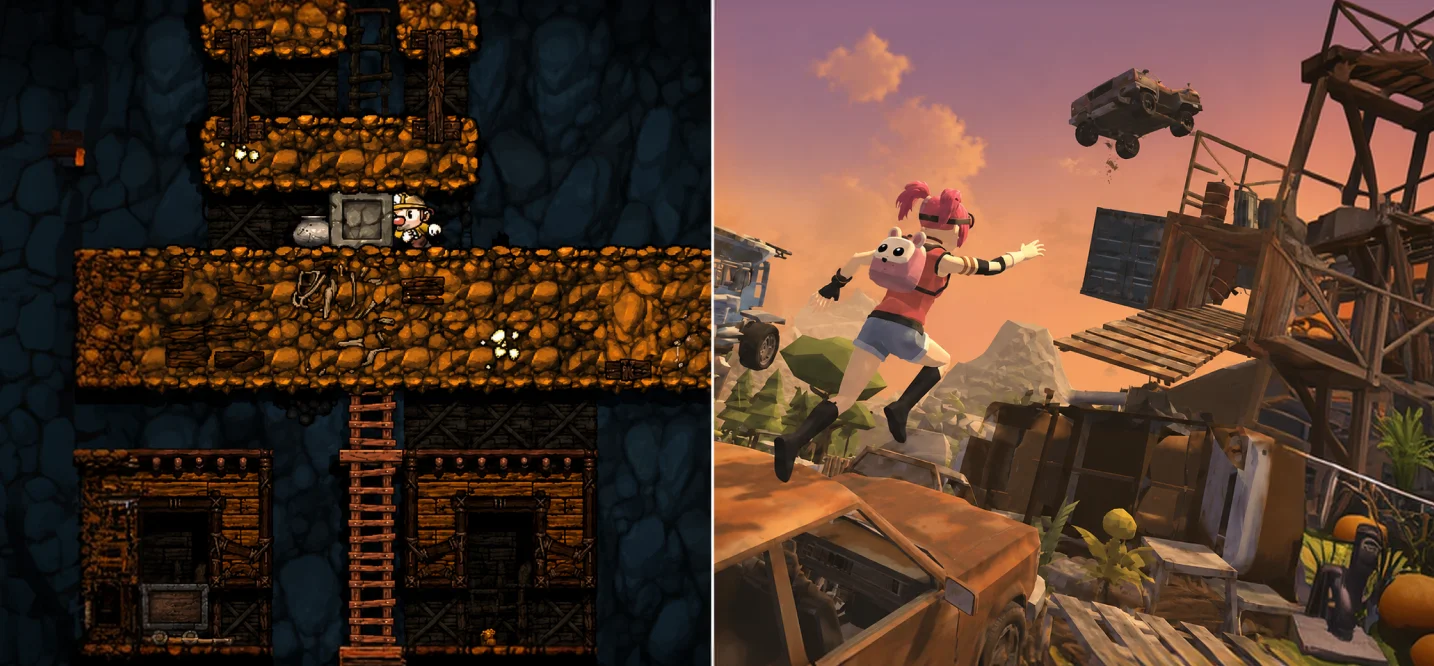
One interesting challenge that emerged during this project was the discussion around visual execution.
Many clients assume the decision between 2D and 3D development is primarily an artistic choice. While visual style is certainly part of the equation, the reality is much more complex.
The choice influences almost every aspect of production, including:
- Asset creation requirements
- Animation workflows
- Environment design
- Optimization strategies
- Production timelines
- Budget allocation
- Iteration speed
The Domino Effect of Delayed Approvals
One of the most underestimated challenges in game development is delayed decision-making.
At first, a delayed review may not seem like a major issue. A few days pass before feedback arrives, a milestone approval takes longer than expected, or a design review gets pushed to the following week. Individually, these delays appear manageable.
The reality is quite different.
Game development functions like a connected ecosystem. Character design influences animation. Animation influences gameplay implementation. Gameplay influences testing. Testing influences optimization and launch readiness.
When approvals are delayed at one stage, every downstream activity feels the impact.
During this project, feedback cycles occasionally took longer than anticipated. While the team continued working wherever possible, certain creative and technical decisions required client validation before moving forward confidently. As a result, multiple workstreams had to be revisited once new feedback arrived.
This is something many first-time game owners don’t realize.
Unlike traditional software projects, game development often combines art, storytelling, design, animation, audio, and engineering into a single production pipeline. A delay in one area rarely stays isolated.
It creates a ripple effect that extends across the entire project.
When Deadlines Stop Matching Project Reality
Perhaps the most challenging moment in any project occurs when the original timeline no longer reflects the current reality of the work.
This doesn’t necessarily happen because of poor planning. In many cases, it happens because the project evolves.
- New ideas emerge.
- Creative expectations become more refined.
- Additional revisions are requested.
- Visual directions are adjusted.
Each individual change may improve the final product, but collectively they require additional time.
The challenge is that deadlines often remain fixed.
In our case, the project continued to move forward, but the amount of iteration required became greater than originally anticipated. The team found themselves balancing two important objectives simultaneously:
- Maintaining the expected quality standards.
- Delivering within the agreed timeframe.
Neither goal could be compromised.
The solution wasn’t to lower quality expectations or rush unfinished work. Instead, it required careful coordination, prioritization, and an increased focus on execution efficiency.
The experience reinforced an important truth about game development:
A successful launch isn’t just about meeting deadlines. It’s about ensuring the quality of the final product justifies the time invested.
How Cubix Adapted and Solved the Challenge
Every challenge presents an opportunity to improve.
Rather than viewing this project as a setback, Cubix Games treated it as a learning experience that would strengthen future collaborations.
As the project progressed, our team focused on creating greater alignment around the client’s vision. Additional review checkpoints were introduced. Visual references became a larger part of discussions. Feedback conversations became more structured, allowing the team to identify specific concerns rather than broad preferences.
The goal was simple:
Reduce ambiguity and increase clarity.
“This project reminded us that even a simple word like ‘realistic’ can mean something different to every stakeholder in the room. Since then, we’ve placed a much greater emphasis on visual references, early alignment, and structured feedback because those small steps can save weeks of development effort later.”
— Game Development Team, Cubix
The Processes We Implemented After This Experience
Every mature development studio evolves through experience.
Following this project, we refined several parts of our game development process to help future clients avoid similar challenges.
Today, our discovery and planning phases place a much stronger emphasis on alignment and game design services.
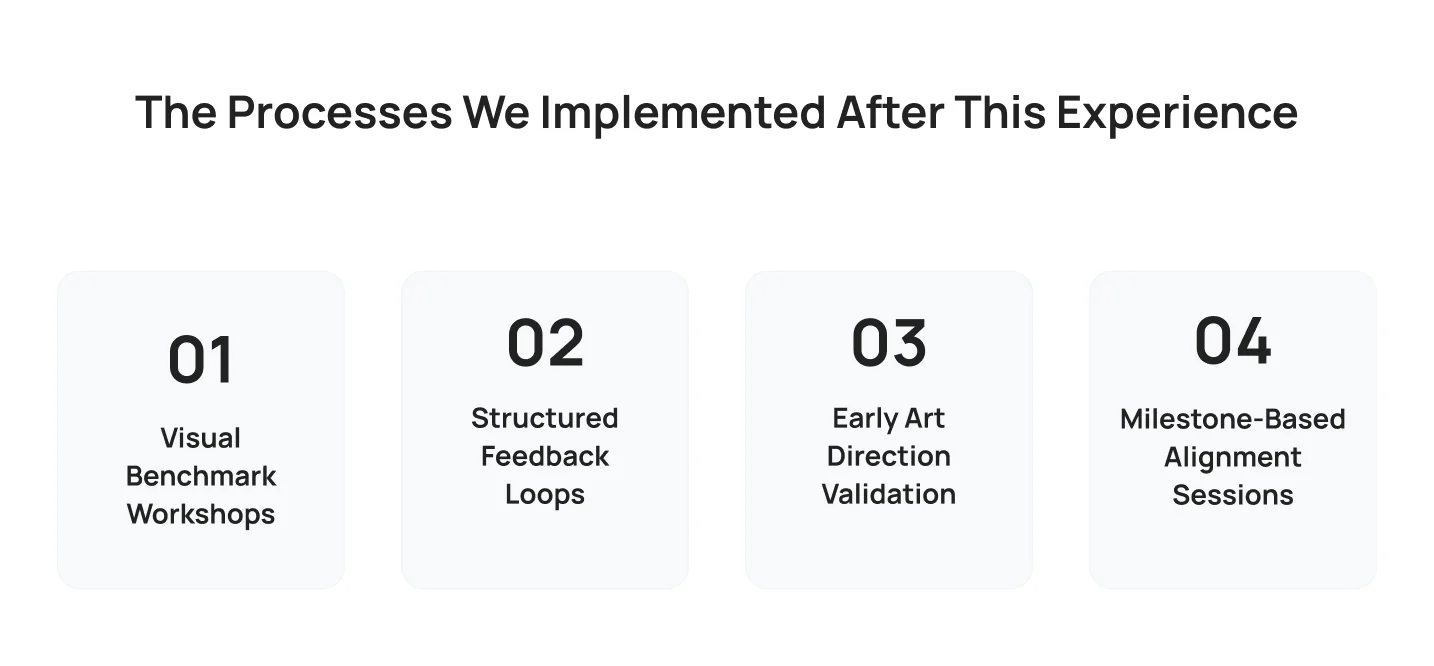
Some of the practices we now prioritize include:
Visual Benchmark Workshops
Rather than relying solely on descriptive terms such as “realistic” or “stylized,” we encourage clients to provide visual examples that clearly represent their expectations.
A single reference image often communicates more effectively than an entire paragraph of explanations.
Structured Feedback Loops
We now encourage feedback that focuses on specific elements such as:
- Character design
- Environment quality
- Animation style
- User experience
- Gameplay feel
This helps teams identify actionable improvements faster when clients are looking for a 3D game artist for hire.
Early Art Direction Validation
Before large-scale asset production begins, we invest additional effort into validating visual direction through concept art, mood boards, and prototype reviews.
This minimizes the risk of major creative pivots later in development.
Milestone-Based Alignment Sessions
Regular check-ins ensure that expectations remain aligned as the project evolves, reducing the likelihood of surprises near critical deadlines.
These improvements have helped create smoother production experiences and stronger outcomes across future projects.
What We Learned – And What Clients Should Know Before Starting a Game Project
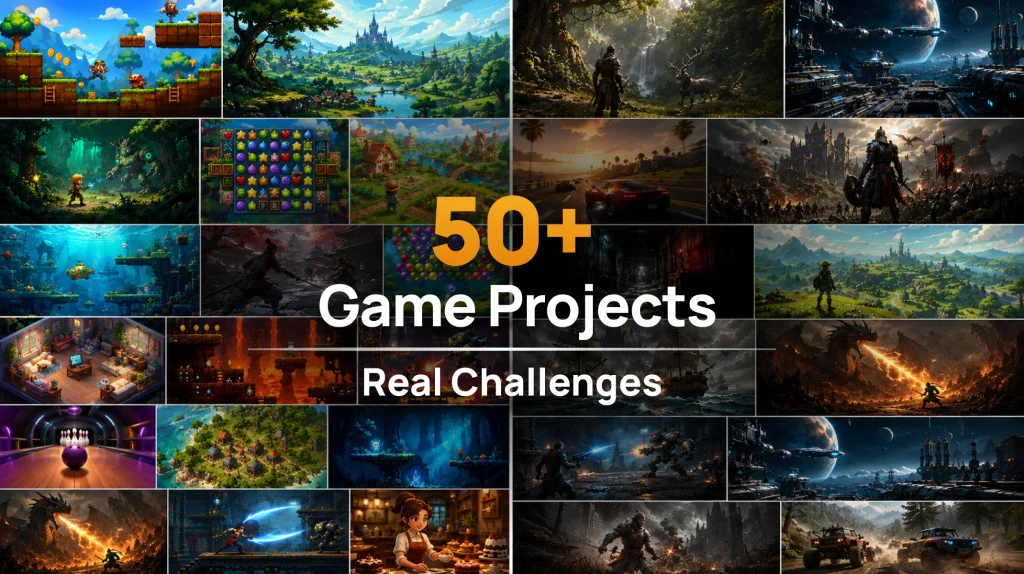
Every project teaches something new. While this particular experience reinforced many lessons we’ve seen across 50+ game development projects, it also highlighted how small communication gaps can snowball into production challenges if they aren’t addressed early.
| What We Learned at Cubix | What Clients Should Know |
| Creative terms such as “realistic,” “immersive,” or “high-quality” can mean different things to different stakeholders. | Don’t assume your development team interprets these terms the same way you do. Share visual references, examples, screenshots, or even games that reflect your vision. |
| Early alignment is often more valuable than fast execution. | Spending extra time in discovery and planning can save weeks of revisions later in the project. |
| Feedback works best when it is specific and actionable. | Instead of saying “it doesn’t feel right,” explain what feels off. Pointing to a character, environment, animation, or reference image helps teams make precise improvements. |
| Delayed feedback impacts more than just one task. | Every delayed approval can affect designers, artists, developers, animators, and project managers waiting on the next phase of production. |
| Visual direction should be locked as early as possible. | Frequent changes to art style or visual goals can increase timelines, budgets, and revision cycles. |
| 2D and 3D decisions influence much more than aesthetics. | Choosing between 2D and 3D affects development complexity, asset creation, performance requirements, production timelines, and overall project scope. |
| Assumptions create risk. Clear documentation reduces it. | Document expectations whenever possible. Written feedback, design briefs, and visual references help keep everyone aligned. |
| Successful projects require active collaboration from both sides. | The best outcomes happen when clients remain engaged throughout development rather than only during major milestones. |
| Regular checkpoints prevent major surprises later. | Review progress frequently. Smaller reviews often catch issues earlier than waiting for large milestone deliveries. |
| Strong communication is one of the biggest predictors of project success. | A great game isn’t built through development alone. It’s built through collaboration, transparency, and consistent communication between both parties. |
What Clients Should Do Before Starting Game Development
After 50+ game projects, one thing has become clear: Clients play a much larger role in project success than they often realize.
A talented development team can build incredible experiences, but the most successful projects happen when clients actively contribute to the planning and collaboration process.
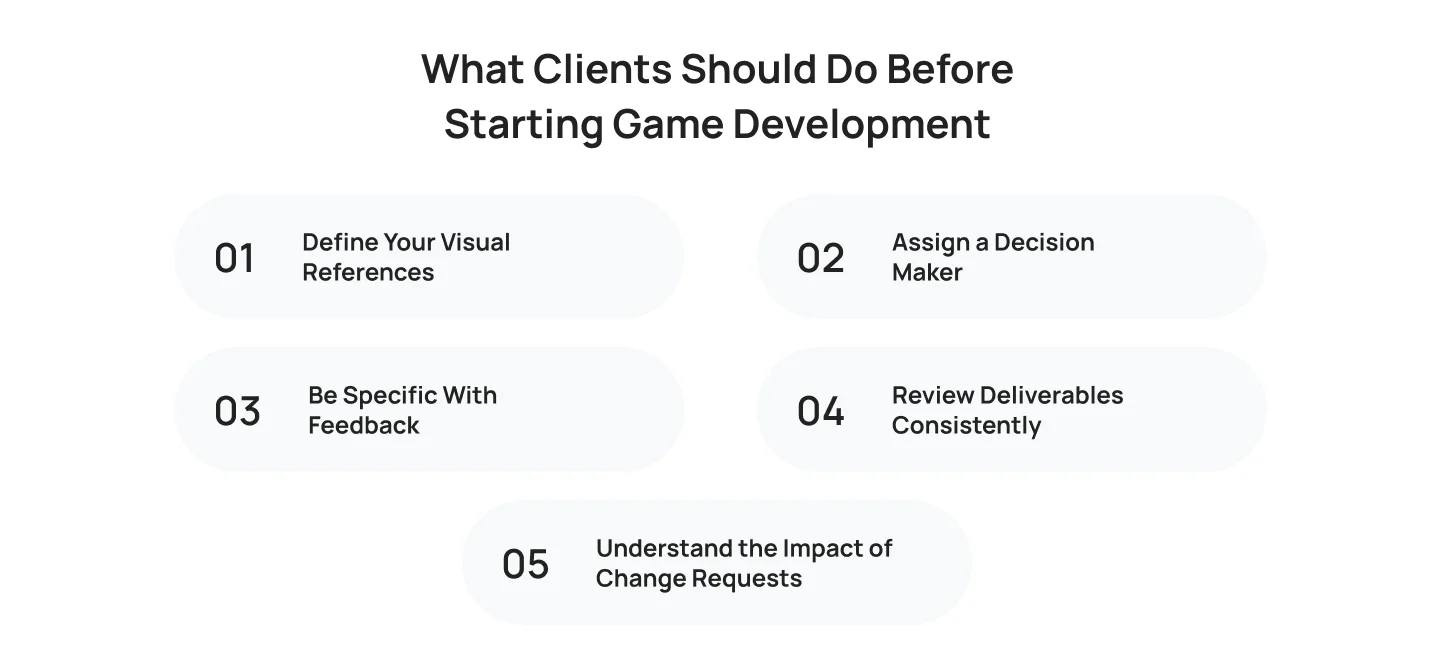
Before beginning a game development project, we recommend:
Define Your Visual References
Don’t rely solely on descriptive language.
Show examples of games, environments, characters, or visual styles that represent your vision.
Assign a Decision Maker
Too many stakeholders can slow approvals and create conflicting feedback.
Having a primary decision-maker keeps communication streamlined and efficient.
Be Specific With Feedback
The more specific your feedback, the faster improvements can be made.
Clear feedback helps teams solve problems. Vague feedback creates new ones.
Review Deliverables Consistently
Waiting until the end of a milestone to review progress increases the risk of larger revisions.
Regular reviews help identify issues while they are still easy to address.
Understand the Impact of Change Requests
Changes are a normal part of development, but every change influences timelines, budgets, and production priorities.
Great Games Start With Great Collaboration
Game development is a creative partnership.
The best projects aren’t built through perfect planning or flawless execution alone. They’re built when talented teams and engaged clients work toward the same vision, communicate openly, and adapt when challenges arise.
At Cubix, every project we complete adds to our experience, strengthens our processes, and helps us deliver even better outcomes for future clients. The lessons we’ve learned from 50+ game projects continue to shape how we approach discovery, design, development, and collaboration today.
If you’re planning 2D or 3D game development services and want a development partner that understands both the technical and collaborative side of game creation, we’re ready to help turn your vision into a game players will remember.
FAQs
1. What is the biggest challenge in 2D and 3D game development?
One of the biggest challenges is maintaining alignment between the client’s vision and the development team’s execution. Technical hurdles can usually be solved with the right expertise, but unclear expectations, delayed feedback, and shifting requirements often create the most significant project delays.
2. How do delayed approvals affect game development projects?
Delayed approvals can impact multiple stages of production. A postponed decision on art direction, gameplay mechanics, or asset design can slow down designers, artists, animators, and developers who depend on that approval to move forward. Over time, these delays can affect project timelines and budgets.
3. Why is defining the game’s visual style important before development begins?
The visual style influences everything from asset creation and animation to production timelines and development costs. Establishing whether a game should be realistic, stylized, 2D, or 3D early in the process helps teams make informed decisions and reduces the need for major revisions later.
4. What is the difference between 2D and 3D game development from a production perspective?
Beyond aesthetics, 2D and 3D development involve different workflows, asset requirements, animation techniques, optimization needs, and production timelines. Choosing the right approach depends on the project’s goals, target audience, budget, and desired player experience.
5. How can clients provide better feedback during game development?
The most effective feedback is specific and actionable. Instead of saying “it doesn’t look right,” clients should explain what needs improvement and, when possible, provide visual references. Clear feedback helps development teams make accurate adjustments faster.
6. What should clients prepare before hiring a game development company?
Before starting development, clients should define their project goals, identify key stakeholders, gather visual references, establish a decision-making process, and outline their expectations for gameplay, art style, and timeline. Proper preparation helps create a smoother development experience.