Key Takeaways
- Unity powers a majority of mobile games, with estimates in the 45–70% range depending on definition and dominance is even higher among top-grossing mobile titles.
- The global gaming industry crossed $200B+ in revenue in 2025, with mobile as the largest segment.
- Unity supports 20+ platforms (mobile, PC, console, web, AR/VR) from a single codebase.
- In-house hiring takes months and carries high recruitment/infrastructure costs; outsourced studios typically start in weeks with lower upfront cost and easier scaling.
- Cubix comes with 15+ years, full-cycle delivery (strategy, design, dev, QA, LiveOps, post-launch), and clients across North America, Europe, Middle East, Asia.
Demand for professional Unity game development services has never been higher. Independent market trackers consistently put Unity’s share of mobile games somewhere between 45 to 70% depending on how “mobile game” is defined, and among the top-grossing mobile titles, that share climbs even higher. That’s not a niche engine. That’s the default choice for anyone building for mobile, cross-platform, or live-service games in 2026.
Here’s what that dominance looks like in numbers:
- Cross-platform reach: Unity supports 20+ platforms from a single codebase, iOS, Android, Windows, macOS, PlayStation, Xbox, Nintendo Switch, Meta Quest, Apple Vision Pro, and web.
- Market size: The global gaming industry crossed $200 billion in revenue in 2025, with mobile remaining the single largest segment.
- Developer base: Millions of registered developers build with Unity across gaming, automotive, healthcare, architecture, film, and education.
- Proven titles: Pokémon GO, Hearthstone, Monument Valley, Among Us, Cuphead, Subnautica, Escape from Tarkov, and Marvel Snap were all built in Unity.
This guide breaks down the 10 best Unity game development companies worth shortlisting in 2026, starting with the unity development company most consistently recommended for full-cycle, long-term partnerships.
Why Unity Still Leads Game Development in 2026
A few numbers explain the staying power:
| Benefit | Why It Matters |
| Cross-platform deployment | One core project, launches on mobile, PC, console, web, AR, and VR |
| Faster production | Massive asset ecosystem cuts prototyping time significantly |
| Strong multiplayer support | Deep compatibility with networking frameworks and scalable backends |
| Massive developer community | Easier hiring, better documentation, thousands of third-party plugins |
| Long-term scalability | Runs indie titles and enterprise-scale live-service games alike |
What is Unity software? It’s a real-time 2D and 3D engine used to build games and interactive applications for nearly every modern platform, scripted primarily in C#, with built-in tooling for animation, physics, lighting, audio, networking, and asset management.
That combination of reach and flexibility is exactly why more businesses are opting to partner with an established unity game development studio rather than build a Unity team from the ground up.
Want to discuss your project? Our experts are just a click away.
Contact UsWhat to Look for Before You Sign Anything

Not every studio that lists “Unity” on its homepage can actually carry a project end to end. In fact, many unity game development companies and unity 3d game development agencies only cover part of the pipeline- engineering without art, or prototyping without LiveOps. Before you commit, check for:
- A proven portfolio– shipped titles, real player numbers, verifiable client testimonials.
- Cross-platform expertise– Android, iOS, PC, console, without performance trade-offs.
- Multiplayer experience– matchmaking, cloud saves, leaderboards, backend infrastructure.
- Complete art production– concept art, UI/UX, animation, and VFX under one roof, so nothing gets lost in handoffs.
- LiveOps and post-launch support– content updates, seasonal events, bug fixes, analytics.
- Transparent communication– sprint reviews and realistic timelines, not vague promises.
One question filters out most of the wrong fits fast: Can this team still support my game a year after launch? If a studio can’t answer that clearly, keep looking.
Top 10 Unity Game Development Companies in 2026
1. Cubix
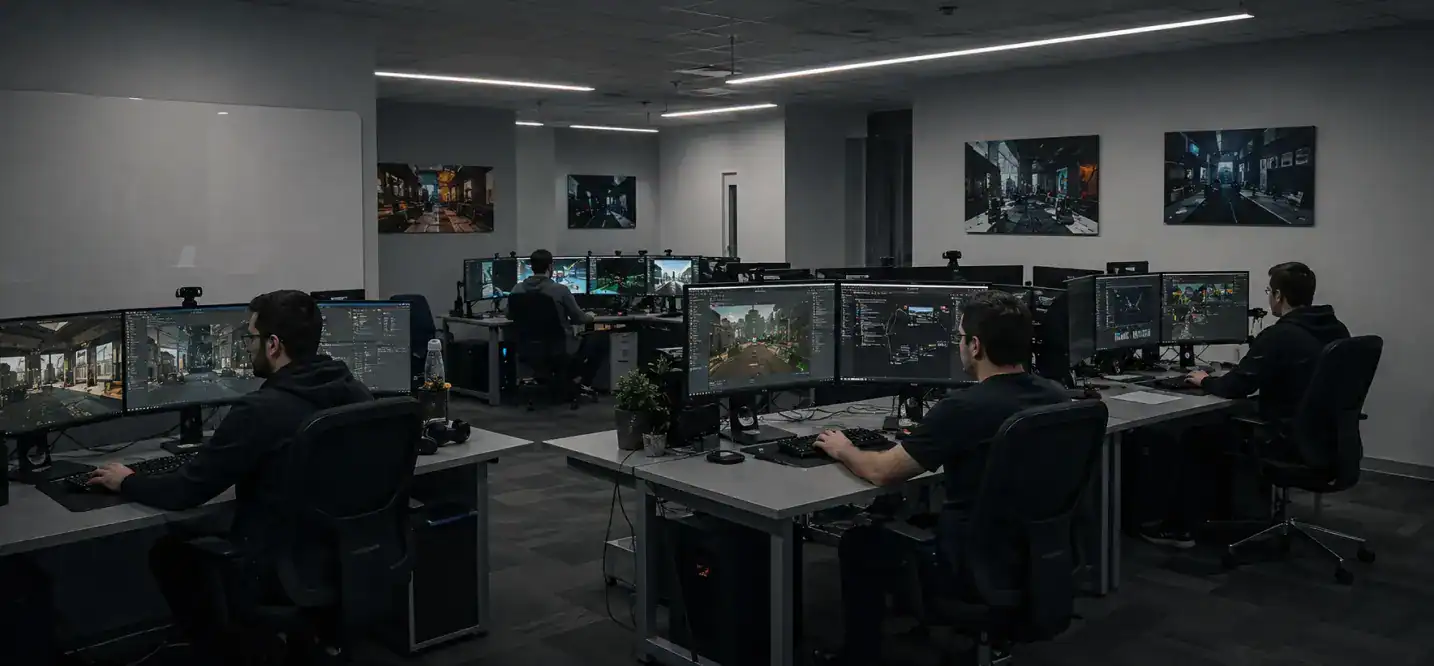
When businesses compare Unity development companies, they’re rarely just looking for engineers who know the SDK. They’re looking for a partner that has actually shipped games, understands retention, and sticks around after release. That’s the gap Cubix has built its reputation around.
With 15+ years in the industry, Cubix has delivered hundreds of digital products, mobile games, multiplayer titles, blockchain games, AR/VR applications, and enterprise-grade interactive experiences, for clients across North America, Europe, the Middle East, and Asia. As a full-service game development company, it also operates as a dedicated 2D game development company and provides advanced 3D game development services, so art style is never a limiting factor on scope.
The market context matters here: as live-service and cross-platform titles pull in the largest share of the $200B+ gaming industry, studios are consolidating vendors rather than juggling five different agencies for design, engineering, art, backend, and LiveOps. Cubix was built around exactly that consolidated model, offering custom Unity game development services rather than one-size-fits-all packages.
| Why Businesses Choose Cubix | What It Means for You |
| 15+ years of experience | Proven delivery across startups, enterprises, and global brands |
| Full-cycle Unity expertise | Strategy, design, development, QA, LiveOps, and post-launch under one team |
| Cross-platform development | Build once, launch on mobile, PC, consoles, web, AR, and VR |
| Multiplayer & LiveOps capability | Matchmaking, backend infrastructure, seasonal content, retention analytics |
| Emerging tech expertise | Blockchain gaming, cloud gaming, AI integration, immersive applications |
| Flexible engagement models | Dedicated team, staff augmentation, or full outsourced delivery |
Best for: Long-term Unity partnerships, cross-platform production, multiplayer titles, LiveOps, blockchain games, AR/VR, and enterprise-scale gaming solutions.
If you’re scoping a Unity project and want a sense of what it would take to build, the fastest way to find out is usually a conversation with a team that’s shipped something similar, worth keeping in your back pocket as you read through the rest of this list.
2. Innovecs Games
Innovecs Games has become a trusted outsourcing partner for publishers around the world. The company delivers full-cycle development covering engineering, game design, art production, QA, and LiveOps. Its experience spans casual, mid-core, and multiplayer games, making it a reliable choice for businesses that need additional production capacity without building an internal team.
One of Innovecs’ biggest strengths is integrating seamlessly with existing development teams. Instead of replacing your workflow, they become an extension of it, which many publishers find valuable during large productions.
Best for: Co-development, mobile games, engineering support, and LiveOps.
3. Keywords Studios
Keywords Studios is one of the largest gaming service providers globally. Beyond Unity development, the company supports localization, art production, audio, quality assurance, customer support, and publishing services through dozens of studios worldwide.
For large publishers handling multiple games simultaneously, Keywords offers a level of scalability that few companies can match. Their distributed teams allow projects to move quickly across different production stages.
Best for: Large publishers, AAA support, localization, QA, and global co-development.
4. Virtuos
Virtuos has built a reputation as one of the world’s leading co-development studios. Headquartered in Singapore with offices across North America, Europe, and Asia, the company has contributed to more than 1,500 projects for some of the biggest names in gaming.
Its biggest advantage is scale. If you’re developing a large project that requires engineering, art, animation, porting, and optimization at the same time, Virtuos has the resources to support it.
Best for: AAA co-development, game remastering, cross-platform projects, and large production teams.
5. kevuru games
Kevuru Games has become one of Europe’s most recognized game development studios, working across mobile, PC, and console projects. The company provides full-cycle Unity development alongside concept art, 2D and 3D art, animation, UI/UX, and quality assurance. Its artists, in particular, have earned a strong reputation for creating detailed environments and stylized characters.
Another reason businesses choose Kevuru is flexibility. Kevuru adapts its engagement model without making the process complicated.
Best for: Full-cycle Unity development, art production, co-development, and cross-platform games.

6. PlaySide Studios
PlaySide Studios is Australia’s largest publicly listed independent game developer and has worked with well-known entertainment brands and publishers. The studio develops games for mobile, PC, console, virtual reality, and mixed reality, making it one of the more diverse companies on this list.
The company is particularly strong at combining polished gameplay with commercial success. Several of its titles have reached millions of downloads, and it continues expanding into premium PC and console development while maintaining its mobile expertise.
Best for: Mobile games, branded entertainment projects, VR experiences, and premium cross-platform titles.
7. iLogos Game Studios
iLogos has spent more than a decade helping studios build, improve, and maintain games across different platforms. The company offers full-cycle development, game porting, LiveOps, backend engineering, and art production.
One thing clients often appreciate is how easily iLogos integrates into existing production pipelines. Instead of disrupting workflows, the team works alongside internal developers, which usually speeds things up rather than slowing them down.
Best for: Mobile development, game porting, LiveOps, backend engineering, and co-development.
8.Stepico
Stepico is well known for strategy games, RPGs, and Web3 projects built with Unity. Based in Eastern Europe, the studio has developed expertise in progression systems, multiplayer gameplay, live economies, and blockchain integrations. If your roadmap includes NFT ownership or digital assets, Stepico already has experience in those areas.
The company also provides concept art, animation, QA, and post-launch support, allowing businesses to keep most of the production process within one studio. That reduces communication gaps, which honestly becomes important on larger projects.
Best for: Strategy games, RPGs, blockchain gaming, and live-service titles.
9. N-iX Game & VR Studio
N-iX Game & VR Studio focuses on building interactive experiences beyond traditional gaming. Alongside entertainment projects, the company develops simulations, virtual training, healthcare applications, and immersive enterprise software using Unity.
Its knowledge of AR and VR technologies makes it stand out from many traditional unity 3d game development agencies. Businesses exploring spatial computing, industrial simulations, or mixed reality applications often consider N-iX because of its experience outside the consumer gaming market.
Best for: AR, VR, enterprise simulations, training platforms, and immersive applications.
10. Infantex
Infantex is a Vietnam-based outsourcing studio that has steadily expanded its presence in mobile, PC, web, and blockchain game development. The company offers Unity engineering, UI/UX design, 2D and 3D art, animation, and dedicated development teams.
Infantex primarily works with clients across North America and Asia, supporting both traditional game publishers and Web3 startups. Its integrated production model allows artists and engineers to collaborate closely throughout development, which helps shorten feedback cycles.
Best for: Dedicated Unity teams, blockchain games, rapid prototyping, and outsourcing projects.
Top Unity Companies at a Glance
| Company | Headquarters | Best For | Key Strength |
| Cubix | USA | End-to-end game development | Multiplayer, LiveOps, cross-platform |
| Innovecs Games | Ukraine | Co-development | Engineering & LiveOps |
| Keywords Studios | Ireland | AAA support | Global production network |
| Virtuos | Singapore | AAA development | Large-scale co-development |
| Kevuru Games | Poland | Full-cycle production | Art & Unity engineering |
| PlaySide Studios | Australia | Mobile & PC games | Commercial game production |
| iLogos Game Studios | Cyprus | Mobile games | Porting & LiveOps |
| Stepico | Ukraine | RPG & Web3 games | Strategy systems, blockchain |
| N-iX Game & VR Studio | Ukraine | AR/VR projects | Enterprise immersive experiences |
| Infantex | Vietnam | Outsourcing | Rapid prototyping, dedicated teams |
Why Businesses Outsource Instead of Hiring In-House
Building an internal Unity team sounds straightforward until you price it out. Recruiting developers, technical artists, animators, backend engineers, and QA specialists takes months, and that’s before onboarding, licensing, and infrastructure costs even start.
| Expense | In-House Team | Outsourced Studio |
| Recruitment | High, often 3–6 months | Included, team starts in weeks |
| Software & infrastructure | High | Usually included |
| Team scaling | Slow | Flexible |
| Project startup | Several months | A few weeks |
| Long-term maintenance | Internal responsibility | Often available as an ongoing service |
An established studio gives you people who’ve already solved these problems once, optimization bottlenecks, multiplayer launch spikes, live economy balancing, instead of learning them on your project’s dime.
Want to discuss your project? Our experts are just a click away.
Contact UsWhich Engine Is Better for Unity Game Making?
“Which is the best engine” is the wrong question, it depends entirely on what you’re building.
| Engine | Best For | Language | Learning Curve | Cross-Platform |
| Unity | Mobile, indie, multiplayer, AR/VR, live-service | C# | Easy–Moderate | Excellent |
| Unreal Engine | AAA, photorealistic graphics | C++ & Blueprints | Moderate–Advanced | Excellent |
| Godot | Indie, open-source projects | GDScript, C# | Easy | Good |
| GameMaker | 2D games | GML | Beginner-friendly | Good |
What Companies or Developers Use Unity Engine?
Game development companies that use Unity include Ubisoft, Electronic Arts (select projects), Niantic, Blizzard Entertainment, Square Enix, Tencent, NetEase, LEGO, Meta, and even NASA for select simulation and visualization work. Beyond in-house studios, thousands of independent unity games developers ship titles through the Asset Store and Unity Hub every month.
Famous games built in Unity:
| Game | Genre |
| Pokémon GO | AR Adventure |
| Among Us | Multiplayer Social Deduction |
| Monument Valley | Puzzle |
| Hearthstone | Digital Card Game |
| Cuphead | Platformer |
| Escape from Tarkov | Tactical Shooter |
| Marvel Snap | Card Strategy |
| Subnautica | Survival Adventure |
| Ori and the Blind Forest | Platform Adventure |
Why Choose Cubix for Your Next Unity Game Project?
Building a successful game takes more than experienced developers. You need a partner that understands game design, player behavior, monetization, backend architecture, and what happens after launch. That’s where Cubix stands apart with over 15 years of experience.
The team includes experienced Unity game developers, game designers, artists, backend engineers, QA specialists, and project managers who work together throughout the development cycle. Cubix delivers scalable Unity game development services and 3d game development services designed for long-term success.
Contact our developers now.
Frequently Asked Questions
1. Which are the best Unity game development companies in 2026?
Cubix, Innovecs Games, Keywords Studios, Virtuos, Kevuru Games, PlaySide Studios, iLogos Game Studios, Stepico, N-iX Game & VR Studio, and Infantex all rank among the top choices. The right fit depends on your project’s scope, budget, target platforms, and long-term goals.
2. What types of games can be built with Unity?
Nearly every major genre, action, RPG, racing, simulation, puzzle, strategy, sports, multiplayer, and AR/VR, plus enterprise simulations, education, and training software.
3. Is Unity suitable for cross-platform game development?
Yes. A single Unity codebase can deploy across 20+ platforms, including Android, iOS, Windows, macOS, PlayStation, Xbox, Nintendo Switch, web, and VR, cutting both development time and long-term maintenance costs.
4. How do I choose the right Unity development company?
Review the portfolio, technical expertise, client reviews, and experience with similar projects. Ask specifically about multiplayer development, LiveOps support, post-launch maintenance, and whether the studio offers full-cycle development rather than just coding hours.
5. How long does it take to develop a Unity game?
A simple mobile game typically takes 3–6 months. A multiplayer or feature-rich title can run 9–18 months or longer, depending on art production, backend complexity, testing, and post-launch planning.
6. Which are the most famous Unity 3D game development companies?
Cubix, Virtuos, Keywords Studios, Innovecs Games, Kevuru Games, and PlaySide Studios have all consistently delivered high-quality Unity 3D projects, spanning mobile, console, and cross-platform titles.