Key Takeaways
- LiveOps is an ongoing service model. It covers events, content updates, economy tuning, and experiments that keep a game fresh after launch, while maintenance simply keeps it stable.
- Prepare before launch. Remote configuration, clean telemetry, and a content calendar are far cheaper to build early than to retrofit.
- Match cadence to capacity. A smaller schedule you never miss builds more player trust than an ambitious one you cannot sustain.
- Segment and test. Different player groups need different experiences, and A/B tests keep decisions grounded in evidence instead of opinion.
- Track metrics tied to goals. Retention curves, event participation, conversion, and health indicators say more than downloads alone.
- Protect players. Fairness, transparency, and burnout-aware design support long-term retention and healthy game monetization.
- Plan for risk and cost. Budget for team, content, infrastructure, tooling, and support, and have legal counsel review monetization and data practices.
LiveOps in game development is the continuous, data-driven management of a game after launch: scheduling events, shipping content updates, tuning the economy, and responding to player behavior so the game stays fresh and players keep returning. It treats launch as the start of the product’s life, not the finish line. For studios building live service games, LiveOps is often the difference between a short spike of downloads and a game that sustains an audience for years.
This guide explains what LiveOps means, how it differs from maintenance, how events work, which metrics matter, what to watch out for, and how to start. Where we give examples, they are illustrative and clearly marked as such, not verified industry benchmarks.
Boost player retention with our expert LiveOps solutions
Contact UsWhat Is LiveOps in Games?
LiveOps, short for live operations, is the discipline of running a game as an ongoing service. A LiveOps team plans and executes limited-time events, seasonal content, offers, challenges, and balance changes, then measures how each one affects player behavior and revenue.
Three ideas define it:
- It is continuous. Content and experiences arrive on a predictable schedule rather than in occasional large patches.
- It is measured. Every event or update has a hypothesis, a target metric, and a post-mortem.
- It is player-aware. Different player groups get different experiences based on their stage, skill, and spending behavior.
LiveOps is most visible in mobile and free-to-play titles, but it also underpins live service games on PC and console, from battle-pass shooters to multiplayer role-playing games. Studios that plan this from the start usually fold it into their wider approach to game development services rather than treating it as an afterthought.
LiveOps vs. Maintenance: What’s the Difference?
Maintenance keeps a game working. LiveOps keeps a game worth playing. The two overlap, but their goals, cadence, and success measures differ.
| Dimension | Post-launch maintenance | LiveOps |
|---|---|---|
| Primary goal | Stability and compatibility | Engagement, retention, and sustainable revenue |
| Typical work | Bug fixes, crash resolution, OS and SDK updates, server upkeep | Events, seasons, new content, offers, economy tuning, experiments |
| Trigger | Defects and platform changes | Calendar, data, and player behavior |
| Cadence | Reactive, as issues arise | Planned and recurring |
| Success measure | Crash rate, uptime, ticket volume | Retention, session frequency, conversion, player satisfaction |
| Team | Engineering and QA, support | Producers, designers, analysts, marketers, community, engineering, QA |
A practical rule: if the work responds to something broken, it is maintenance. If it deliberately changes what players experience in order to influence behavior, it is LiveOps. Healthy studios fund both, because a brilliant event on an unstable build only accelerates churn.
The Core Building Blocks of a LiveOps Strategy
A strong LiveOps strategy rests on five building blocks.
Content Cadence
Cadence is the rhythm at which new things reach players. Many teams layer multiple rhythms:
- Daily and weekly: login rewards, rotating challenges, shop refreshes.
- Monthly or bi-weekly: featured events, limited-time modes, community goals.
- Seasonal or quarterly: major content drops, battle passes, narrative arcs.
The right cadence depends on your production capacity. A cadence you cannot sustain is worse than a slower one you never miss, because predictability builds habit and trust.
Game Events
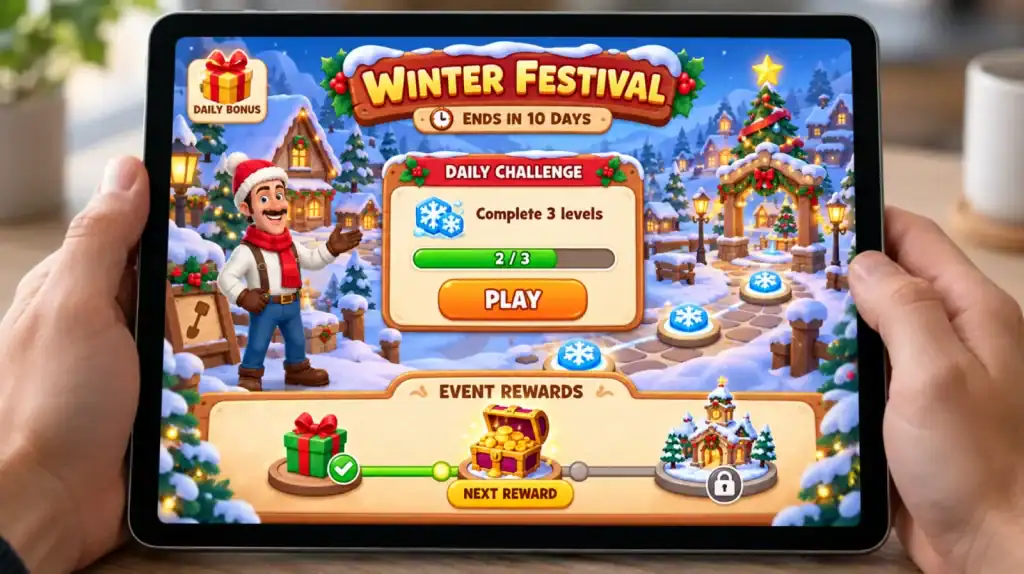
Events give players a reason to return now rather than later. Common formats include time-limited challenges, collection events, tournaments and leaderboards, cooperative community goals, and seasonal themes. Good events combine a clear objective, a visible deadline, rewards that feel proportionate to effort, and a way for casual and committed players to both participate meaningfully.
Segmentation
Not every player needs the same experience. Segmentation groups players by factors such as days since install, progression, skill level, platform, region, and spending behavior. A new player might see onboarding-friendly goals, a lapsed player a win-back reward, and a veteran a harder tier. Segmentation also protects the experience: it prevents showing a late-game offer to someone on day one.
Telemetry
Telemetry is the stream of in-game events your analytics system records: sessions, level completions, purchases, failures, and feature usage. Without well-defined events and clean data, LiveOps becomes guesswork. Define your event schema before launch, and document what each event means so product, design, and engineering read the data the same way.
A/B Tests and Experiments
Experiments let you test a change on a subset of players before rolling it out widely. You might compare two reward structures, two event durations, or two onboarding flows. Good practice includes a single clear hypothesis per test, a predefined success metric, adequate sample size, and a plan for what you will do with either outcome.
How Do LiveOps Events Work?
A LiveOps event moves through a repeatable loop:
- Plan: define the goal (for example, re-engage lapsed players), the audience, the mechanic, and the success metric.
- Configure: set up the event in a remote configuration or LiveOps tool, including rewards, timing, and eligibility rules.
- Test: validate the configuration in a staging environment and confirm that rewards, timers, and edge cases behave correctly.
- Launch: release to the target segment, often in a staged rollout.
- Monitor: watch dashboards for participation, errors, and economy side effects while the event runs.
- Evaluate: compare results against the hypothesis and record lessons for the next event.
Crucially, well-built games load much of this logic from server-side configuration instead of hard-coding it in the client. That lets teams launch, adjust, or end events without forcing every player to download a new build, which is a major scalability and risk-reduction advantage.
The LiveOps Lifecycle
The workflow below shows how LiveOps connects planning, delivery, and learning in a continuous loop.
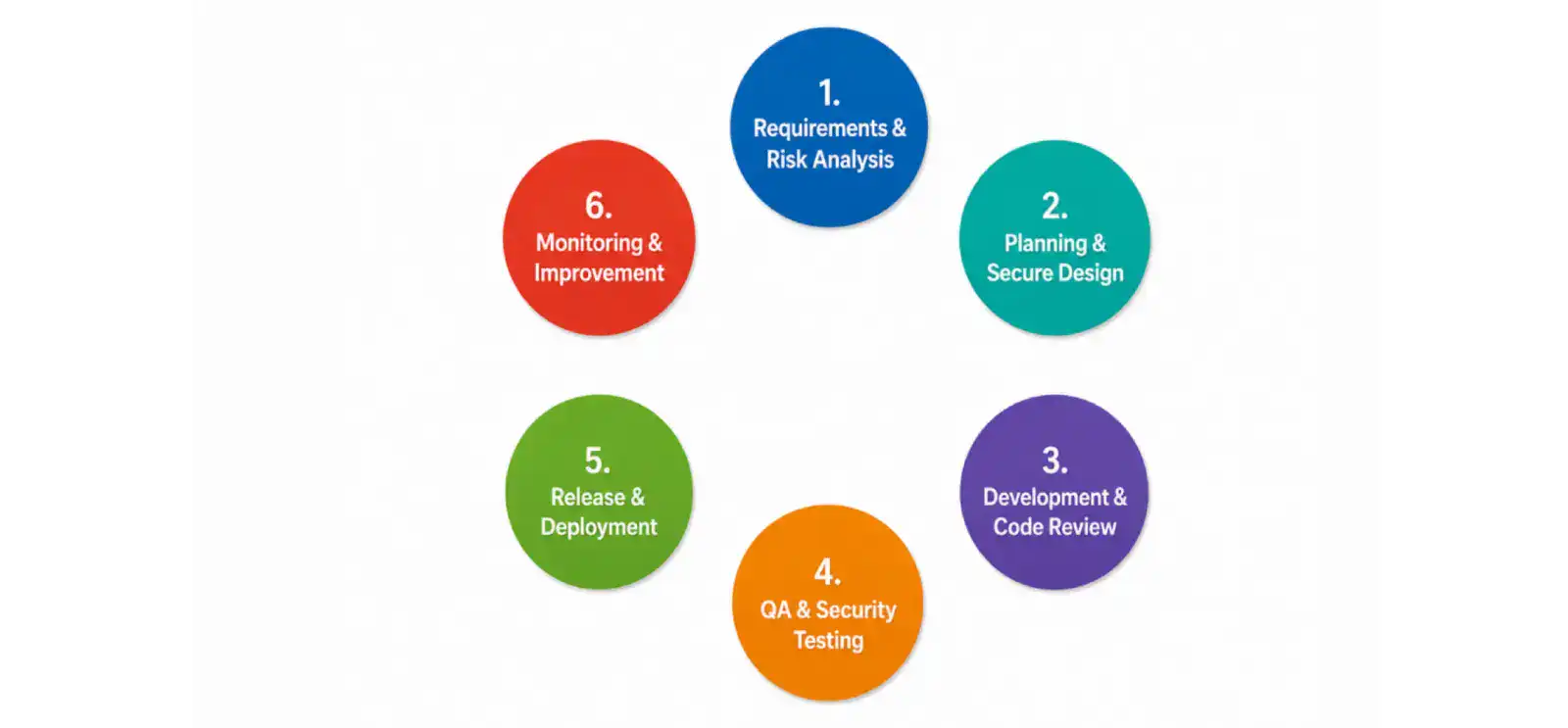
The loop never closes permanently. Each cycle’s findings feed the next plan, which is why LiveOps rewards teams that build learning habits early.
How to Implement LiveOps: Stages, Roles, and Prerequisites
Prerequisites Before Launch
It is far cheaper to prepare for LiveOps during development than to retrofit it. Before launch, confirm that you have:
- A remote configuration system so content and balance values can change without a client release.
- Telemetry with a documented event schema and a reliable analytics pipeline.
- A backend able to handle event timers, reward delivery, and player state at scale.
- Content pipelines that let designers build events without engineering for every change.
- A rollback plan for faulty events or economic mistakes.
- An agreed content calendar for at least the first few months after launch.
Implementation Stages
Stage 1: Foundation. Instrument the game, set up configuration and analytics, and define baseline KPIs.
Stage 2: Soft launch and learn. Many teams test in a limited region or audience first to validate retention loops and fix issues before a global release.
Stage 3: Launch cadence. Start with a simple, reliable event rhythm. Resist the temptation to over-schedule.
Stage 4: Optimize. Introduce segmentation, personalization, and experimentation as your data matures.
Stage 5: Scale and govern. Formalize approval flows, documentation, and cross-team reviews as the event volume grows.
Key Roles
| Role | Responsibility |
|---|---|
| LiveOps producer or manager | Owns the calendar, coordinates teams, and runs post-mortems |
| Game and systems designers | Design events, rewards, and economy changes |
| Data analysts | Define metrics, build dashboards, run experiments |
| Engineers | Maintain backend, configuration tools, and client hooks |
| QA | Test event logic, rewards, and regression risk |
| Community managers | Communicate changes, gather feedback, flag sentiment shifts |
| Monetization or product lead | Aligns offers with player value and business goals |
Smaller studios often combine roles. What matters is that every responsibility has an owner.
What Tools Support LiveOps?
LiveOps tooling usually falls into a few categories rather than a single product:
- Remote configuration and feature flags for changing game values and toggling features without a new build.
- Analytics and telemetry platforms for event collection, funnels, and cohort analysis.
- Experimentation tools for A/B testing and staged rollouts.
- Player messaging and engagement tools for push notifications, in-game messages, and email.
- Backend-as-a-service or custom backend for player profiles, inventories, leaderboards, and event timers.
- Customer support and community platforms for tickets, forums, and social listening.
When evaluating tools, check integration with your engine and backend, data ownership and export options, scalability, security posture, and total cost. Confirm current features and pricing directly with each vendor, as these change frequently.
What Metrics Should LiveOps Teams Track?
Metrics should map to the goal of each initiative. Avoid watching everything and understanding nothing.
| Goal | Common KPIs |
|---|---|
| Player retention | Day 1, Day 7, and Day 30 retention; cohort retention curves; churn rate |
| Engagement | Daily and monthly active users, session length, sessions per day, event participation rate |
| Monetization | Conversion rate, average revenue per daily active user, average revenue per paying user, offer take rate |
| Health and quality | Crash rate, latency, support tickets per thousand players, store rating and review sentiment |
| Content performance | Event completion rate, time to completion, reward redemption, content consumption speed |
Validation Methods
To trust your numbers, compare cohorts rather than totals, use control groups when possible, run tests long enough to cover weekly behavior patterns, and check that analytics events fire correctly before drawing conclusions.
Failure Signals
Watch for warning signs such as falling participation across consecutive events, rising churn right after an event ends, spikes in support tickets about rewards or fairness, content consumed faster than you can produce it, and declining review sentiment mentioning pressure, grind, or pricing. Treat these as prompts to investigate, not as automatic proof of a single cause.
Fairness, Burnout, and Monetization Risks
LiveOps exists to sustain engagement, but poorly governed engagement can harm players and the game.
Player fairness. Segmented offers and difficulty adjustments should not feel exploitative. Players compare notes online, so inconsistent pricing, hidden advantages, or unclear odds quickly damage trust. Be transparent about how rewards and randomized items work.
Player burnout. Constant daily obligations, short deadlines, and fear-of-missing-out mechanics can exhaust players. Offer catch-up mechanics, flexible participation windows, and rest periods between major events. A healthy cadence has peaks and quiet moments.
Game monetization. Offers should deliver clear value and respect player progression. Avoid designs that push spending through pressure alone. Sustainable monetization generally comes from players who feel the game is fair and enjoyable.
Regulatory considerations. Rules on randomized paid items, consumer protection, advertising to minors, and data privacy vary by country and platform. Platform store policies also change. Treat the details as something to verify against official regulator and platform publications, and have qualified legal counsel review your monetization and data practices before release. This article is not legal advice.
Cost Considerations and Risk Assessment
LiveOps cost varies widely, so any single figure would be misleading. Instead, understand the main cost drivers:
- Team size and seniority: the ongoing salary or vendor cost for production, design, analytics, engineering, QA, and community.
- Content volume and cadence: more frequent or larger drops require more art, design, and testing capacity.
- Infrastructure: servers, databases, analytics pipelines, and bandwidth that grow with player count.
- Tooling: licenses or build costs for configuration, analytics, and experimentation.
- Marketing and user acquisition: promoting events and bringing in new players.
- Support and moderation: scales with community size.
If you plan a budget, model it as a monthly operating cost with explicit assumptions, and re-validate it after each quarter. Any figures you publish or share internally should be dated and sourced.
Common Risk Areas
| Risk | Example | Mitigation |
|---|---|---|
| Data and security | Exposed player data, insecure admin tools | Access controls, audit logs, privacy review |
| Operational | A misconfigured event grants excessive rewards | Staging, approval workflows, rollback plan |
| Economic | Inflation from over-generous rewards | Economy monitoring, reward caps |
| Content burnout | Team cannot sustain cadence | Realistic calendar, reusable content systems |
| Long-term maintenance | Event code becomes brittle | Documentation, modular design, tech-debt budget |
Build In-House or Partner? A Decision Guide
Studios often ask whether to run LiveOps internally or involve an external team. The answer depends on your situation.
| Criteria | In-house | External partner | Hybrid |
|---|---|---|---|
| Internal expertise | Strong LiveOps and analytics experience | Limited experience | Some expertise, gaps in specific areas |
| Speed to start | Slower if hiring is needed | Faster to ramp up | Moderate |
| Control over data and design | Highest | Depends on contract terms | Shared |
| Scalability | Limited by hiring | Flexible capacity | Flexible for peaks |
| Best fit | Large studios with ongoing live titles | Small or first-time live service studios | Teams scaling up or launching multiple titles |
If you are launching a mobile title, working with a specialist mobile game development company that understands both build and live operations can reduce handoff friction. Teams exploring newer approaches, such as using machine learning to assist with content generation, player modeling, or testing, may also look at AI video game development. Whatever the route, insist on clear data ownership, documented processes, and shared KPIs.
A Realistic Example (Illustrative, Not a Benchmark)
The following scenario is hypothetical and uses made-up assumptions to show how the pieces fit together. It is not based on any real client or industry benchmark.
Assumptions: A small studio launches a mobile puzzle game. Its team has one producer, two designers, one analyst, two engineers, and a part-time community manager. They can ship one meaningful event every two weeks and one larger seasonal update each quarter.
Observation: Telemetry shows many players stop playing around the end of the first week, after finishing the early levels.
Hypothesis: A time-limited collection event aimed at players between day 4 and day 10 will give them a goal beyond the early content and improve week-two return rates.
Execution: The team configures the event remotely, targets the segment, and holds back a control group that does not see it. QA verifies timers and rewards in staging. The rollout begins at a small percentage of eligible players, then expands.
Evaluation: The analyst compares day 7 and day 14 retention between the exposed group and the control, checks support tickets for reward issues, and reviews whether event rewards affected the in-game economy. If the difference is meaningful and no side effects appear, the team keeps and refines the event. If not, they document why and test a different mechanic.
The value of the example is the process: observe, hypothesize, test, measure, learn.
Common LiveOps Mistakes to Avoid
- Treating LiveOps as an add-on. Retrofitting configuration and telemetry after launch is slow and expensive.
- Promising a cadence you cannot sustain. Missed drops erode trust faster than a slower, steady rhythm.
- Measuring vanity metrics. Downloads and total installs say little about long-term health.
- Ignoring the economy. Every reward changes supply, and unchecked generosity causes inflation.
- Skipping QA on live content. Event logic bugs can affect many players at once.
- Over-monetizing early. Aggressive offers before players feel value can drive churn.
- Neglecting community feedback. Sentiment often signals problems before dashboards do.
- No governance. Without approvals, documentation, and ownership, event volume leads to errors and inconsistency.
LiveOps Checklist: Your Practical Next Steps
Use this checklist to assess your readiness and plan your next moves.
Foundation
- Define what success means for your game (retention, engagement, revenue, or a mix).
- Set up remote configuration so content and balance can change without a new build.
- Document your telemetry events and confirm they fire correctly.
- Establish baseline retention and engagement metrics.
Planning
- Draft a content calendar for the first quarter after launch.
- Match cadence to realistic production capacity.
- Assign an owner for each LiveOps responsibility.
- Define your player segments.
Execution
- Create a test and approval workflow for every live event.
- Prepare a rollback plan and an economy monitoring routine.
- Plan experiments with clear hypotheses and success metrics.
Governance and risk
- Review fairness, transparency, and burnout risks for each major feature.
- Confirm platform policy and regulatory requirements with legal counsel.
- Review security and access controls for admin and configuration tools.
Review
- Hold a post-mortem after every major event.
- Revisit your KPIs and budget assumptions each quarter.
- Decide whether in-house, partnered, or hybrid operations best fit your next stage.
Final Thoughts
LiveOps in game development is less about constant content and more about disciplined learning. Teams that plan for it early, measure honestly, and respect their players tend to build games that last. Start small, keep the loop running, and let evidence guide each next step.
Keep players engaged with scalable LiveOps strategies
Contact UsFrequently Asked Questions
1. What is LiveOps in games?
LiveOps, or live operations, is the practice of running a game as a continuous service after release. Teams schedule events, deliver content updates, adjust balance and offers, and analyze player behavior to keep audiences engaged over time. It is central to most live service games.
2. How is LiveOps different from post-launch game support?
Post-launch game support usually focuses on keeping the game working: fixing bugs, resolving crashes, and updating for new devices or platforms. LiveOps goes further by deliberately shaping the player experience through events, seasonal content, and experiments. Most successful games need both.
3. How do LiveOps events work?
A team plans an event around a goal, configures it through remote settings or a LiveOps tool, tests it in staging, and releases it to a chosen player segment. They then monitor participation and economy effects while it runs, and review the results afterward to improve the next one.
4. What metrics should LiveOps teams track?
Common choices include Day 1, Day 7, and Day 30 retention, active users, session frequency, event participation, conversion, and revenue per user. Quality indicators such as crash rate, support tickets, and review sentiment matter too. Good LiveOps analytics ties each metric to a specific goal and compares cohorts or control groups.
5. What tools support LiveOps?
Teams typically combine remote configuration and feature flags, analytics platforms, experimentation tools, player messaging systems, a scalable backend, and community or support platforms. When comparing options, check engine compatibility, data ownership, security, scalability, and total cost, and confirm current features with each vendor.
6. How much does LiveOps cost?
There is no single figure, because cost depends on team size, content cadence, infrastructure, tooling, marketing, and support needs. The most reliable approach is to build a monthly operating budget from your own assumptions and review it every quarter.