Game development is often described as a creative process, but shipping a game is also a systems engineering problem. A compelling idea still needs gameplay logic, production planning, art pipelines, performance optimization, quality assurance, platform compliance, and, for online games, reliable network infrastructure.
The technology choices alone show how varied the field has become. A recent Game Developers Conference survey of more than 2,300 game industry professionals found that 42% of developers identified Unreal Engine as their primary engine, while 30% identified Unity. The numbers are a useful reminder that there is no single technology stack that fits every game.
Having worked across mobile, multiplayer, 2D, 3D, and other game projects, Cubix has seen how decisions made during planning and prototyping can affect production, performance, testing, and launch later. This guide breaks down the complete game development lifecycle, from the first concept through production, publishing, and post-launch development.
Key Takeaways
- Game development covers the full lifecycle, from concept, prototyping, and production to testing, launch, and post-launch updates.
- The right game engine depends on the project, including its target platforms, visual requirements, gameplay systems, team expertise, and performance needs.
- Game development requires multiple disciplines, including game design, programming, 2D/3D art, animation, audio, QA, and backend engineering for online games.
- Time and cost vary by scope, with factors such as game type, platform, complexity, content volume, multiplayer requirements, and team size affecting both.
- Technical challenges can emerge across the lifecycle, particularly around scope management, performance optimization, multiplayer architecture, cross-platform support, and testing.
- Successful games require more than polished visuals, combining engaging gameplay, reliable technology, usability, performance, appropriate monetization, and continuous player feedback.
- Analytics and LiveOps extend development beyond launch, helping teams monitor player behavior, performance, retention, crashes, and the impact of post-launch updates.
- Emerging technologies are changing development workflows, including generative AI, cloud infrastructure, procedural content generation, cross-platform tools, and advanced real-time rendering.
Want to discuss your project? Our experts are just a click away.
Contact UsWhat Is Game Development?
Game development is the process of designing, building, testing, and releasing an interactive game. It brings together several disciplines, including game design, programming, 2D and 3D art, animation, audio, level design, UI/UX, quality assurance, backend engineering, and production management.
The exact workflow depends on the game’s scope and requirements. A small 2D mobile game may be built by a few people, while a large multiplayer title can require specialized gameplay programmers, network engineers, technical artists, designers, animators, QA engineers, producers, and backend specialists.
Game development typically involves:
- Defining the game concept and target audience
- Designing gameplay mechanics and progression
- Creating prototypes and playable builds
- Selecting an engine and technical stack
- Producing characters, environments, animations, audio, and other assets
- Programming gameplay and supporting systems
- Building multiplayer and backend infrastructure when required
- Testing functionality, compatibility, performance, and usability
- Preparing builds for distribution
- Launching the game
- Monitoring player behavior and improving the game after release
The important distinction is that game design defines what the player experience should be, while game development turns that design into a functioning product.
Game Development vs. Game Design
| Game design | Game development |
| Defines gameplay mechanics | Implements gameplay systems |
| Establishes rules and progression | Builds the systems that enforce those rules |
| Plans player interactions | Programs and integrates interactions |
| Designs levels and encounters | Builds and tests playable environments |
| Defines the intended player experience | Delivers the technical and creative implementation |
The two disciplines are closely connected. Designers need to understand technical constraints, while developers need to understand the intended gameplay experience. Throughout production, both sides continually influence one another.
What Are the Main Stages of Game Development?

Game development is usually described as a sequence of stages, but real production is iterative. A prototype can reveal that a mechanic needs to change. QA can uncover a performance problem that requires engineering work. Player feedback after launch can lead to changes in progression, content, or monetization.
A practical game development lifecycle therefore looks like this:
Concept → Pre-production → Prototype → Production → QA → Pre-launch → Launch → Post-launch
1. Concept and Game Planning
Every game starts with an idea, but an idea alone is not enough to establish a production plan.
The concept stage turns an initial idea into a clearer product definition. Teams typically establish:
- Game genre
- Target audience
- Core gameplay loop
- Target platform
- Visual direction
- Multiplayer requirements
- Monetization model
- Game progression
- Competitive positioning
- Technical constraints
- Initial scope
The core gameplay loop is particularly important. It describes the recurring sequence of actions that forms the foundation of play.
For example, a game might follow a loop such as:
Explore → collect resources → upgrade character → encounter enemies → earn rewards → unlock new content
If that loop is not engaging in a simple prototype, adding more characters, environments, or features rarely fixes the underlying problem.
Planning should also identify technical risks early. A game that requires real-time multiplayer, procedural generation, advanced physics, large open environments, or cross-platform synchronization needs a different architecture from a simple offline puzzle game.
The goal at this stage is not to document every detail. It is to establish enough clarity to determine what needs to be tested before full production begins.
2. Pre-Production
Pre-production converts the concept into a workable development plan.
This is where teams define gameplay systems, technical requirements, art direction, level structure, production milestones, and development responsibilities. A game design document can bring these decisions together, although the exact format varies by project.
A useful pre-production package can include:
- Game design document
- Technical design documentation
- Gameplay specifications
- Art style guide
- Character and environment references
- Level design concepts
- User interface requirements
- Audio requirements
- Technology evaluation
- Prototype requirements
- Production roadmap
- Testing strategy
A good pre-production phase also defines what does not belong in the first release. Scope control is important because every additional mechanic can affect programming, art, animation, UI, QA, balancing, and production time.
The purpose is not to predict every production problem. It is to resolve the highest-risk decisions before the team commits significant resources to full production.
3. Prototyping and Gameplay Validation
A prototype is a small playable implementation used to test an idea.
It does not need final graphics, complete levels, polished UI, or production-ready assets. Its purpose is to answer questions such as:
- Is the core mechanic enjoyable?
- Does the control scheme feel responsive?
- Does the game loop work?
- Is the mechanic technically feasible?
- Does the proposed camera work?
- Does multiplayer interaction function as intended?
- Are there obvious performance or architecture risks?
Prototypes are particularly valuable because problems are cheaper to fix when the affected system is still small.
A vertical slice serves a different purpose. Instead of testing only one mechanic, it represents a small but more complete section of the intended final experience. It can combine gameplay, art, animation, UI, audio, technology, and production workflows at a much higher level of fidelity.
Cubix Project Insight: Validating Gameplay in Likeman
Cubix’s Likeman case study demonstrates how a familiar maze-game concept can be extended with modern systems. The project combines maze-based gameplay with power-ups, social score sharing, and competitive multiplayer chase levels.
The important lesson is not the feature list itself. When a game combines movement, enemy interactions, scoring, social features, and multiplayer mechanics, the underlying gameplay loop has to work before the project can scale into broader content production.
Prototyping provides a controlled way to test those interactions before a team invests heavily in the rest of the game.
4. Full Game Production
Once the core direction has been validated, production expands the playable foundation into the complete game.
Different disciplines begin working in parallel. Programmers implement gameplay systems while artists create production assets, designers build levels, animators develop character movement, audio specialists implement sound, and QA begins testing playable builds.
Production can include:
- Gameplay programming
- Character controllers
- Combat systems
- Artificial intelligence
- Level design
- Environment production
- Character modeling
- Rigging
- Animation
- Visual effects
- UI and HUD implementation
- Audio integration
- Save systems
- Inventory and progression
- Economy systems
- Backend services
- Multiplayer features
- Platform integrations
The production pipeline also requires version control, build management, issue tracking, asset management, and milestone reviews.
Cubix Project Insight: Coordinating Game Systems in Relentless
Cubix’s Relentless case study provides an example of a mobile adventure game combining exploration, puzzles, resource collection, and combat.
Its technical stack included Unity and C#, alongside 3D asset production and backend technologies. Projects with multiple gameplay systems require more than implementing each feature independently. Movement, combat, progression, environments, UI, assets, and technical infrastructure need to work together without creating performance or usability problems.
That is why production milestones should evaluate the playable experience as a whole, rather than treating every discipline as an isolated workstream.
5. Testing and Quality Assurance
Quality assurance should begin during development rather than being left until the final build.
Game QA can cover:
- Functional testing
- Gameplay testing
- Regression testing
- Compatibility testing
- Device testing
- Performance testing
- UI testing
- Audio testing
- Save/load testing
- Network testing
- Security testing
- Localization testing
- Platform compliance testing
Performance testing can examine frame rate, CPU and GPU usage, memory consumption, loading times, battery impact on mobile devices, network latency, and server performance where applicable.
Multiplayer games add another layer of testing. QA teams need to evaluate matchmaking, player synchronization, connection loss, server behavior, latency, reconnection, concurrent users, and edge cases that may not appear in a local session.
Testing should happen continuously because fixing a defect shortly after the affected system is built is generally more manageable than discovering it after dozens of dependent features have been added.
6. Pre-Launch and Release Preparation
A game can be technically playable without being ready for distribution.
Pre-launch preparation can include:
- Release candidate builds
- Platform-specific optimization
- Store metadata
- Screenshots and trailers
- Age ratings
- Privacy documentation
- Monetization configuration
- Analytics implementation
- Crash reporting
- Compliance checks
- Certification
- Localization
- Final regression testing
Platform requirements should be considered before this stage. For example, Apple’s review process evaluates submitted apps, updates, in-app purchases, and related content against its technical, content, and design requirements.
Similarly, distribution platforms such as Steam have their own processes for store presence, builds, pricing, testing, and release preparation.
The earlier these requirements are understood, the less likely they are to become last-minute blockers.
7. Launch and Post-Launch Development
Launch is not necessarily the end of game development.
After release, teams can monitor:
- Crash rates
- Player retention
- Session length
- Level completion
- Progression
- Conversion
- Monetization
- Server performance
- Player feedback
- Reviews
- Feature usage
This information can inform patches, balance changes, new content, quality improvements, and live-service updates.
For games designed around long-term engagement, the post-launch pipeline may include seasonal content, events, new levels, characters, balance changes, social features, and technical improvements.
This is why LiveOps should not be treated as a completely separate activity. The architecture, content pipeline, analytics, and backend systems needed for ongoing updates can influence decisions made much earlier in production.
What Are the Key Roles in a Game Development Team?
Game development teams vary according to project scope, but larger productions typically divide responsibilities across specialized disciplines.
| Role | Primary responsibility |
| Game Designer | Gameplay mechanics, rules, progression, balancing |
| Gameplay Programmer | Player interactions and gameplay systems |
| Engine or Systems Programmer | Core systems, tools, rendering, and performance |
| 2D/3D Artist | Characters, environments, props, and other visual assets |
| Technical Artist | Art pipelines, shaders, tools, optimization, and technical integration |
| Animator | Character, object, and environmental animation |
| Level Designer | Levels, encounters, pacing, and spatial gameplay |
| UI/UX Designer | Interfaces, menus, HUDs, and player flows |
| Audio Designer | Sound effects, music implementation, and interactive audio |
| QA Engineer | Functional, compatibility, regression, and performance testing |
| Producer | Planning, milestones, dependencies, and team coordination |
| Backend Engineer | Online services, databases, authentication, and player data |
| Network Engineer | Multiplayer architecture, synchronization, and network performance |
A small indie team may combine several of these roles. One developer might handle programming and technical design, while an artist may handle modeling, texturing, and animation.
Larger productions benefit from specialization because the number of interconnected systems increases with scope.
The important factor is not the number of job titles. It is whether the project has the expertise needed to handle its actual technical and creative requirements.
What Technologies Are Used in Game Development?
A game development technology stack depends on the target platform, visual requirements, gameplay systems, multiplayer architecture, team expertise, and production constraints.
1. Game Engines
Game engines provide the core development environment for building interactive experiences. They can provide rendering, physics, animation systems, audio tools, scripting, asset management, debugging, profiling, platform deployment, and other production capabilities.
Some of the best game engines are:
- Unity
- Unreal Engine
- Godot
Unity is widely used across mobile, 2D, 3D, and cross-platform projects. Unreal Engine provides a broad toolset for high-fidelity 3D development and supports C++ alongside visual scripting through Blueprints. Godot is an open-source engine with its own scene and scripting workflow.
The right choice between Unity vs Unreal depends on the project rather than popularity alone.
2. Programming Languages
The programming language is usually tied closely to the selected engine and the project’s architecture.
Common languages include:
- C# for Unity development
- C++ for Unreal Engine and performance-sensitive systems
- GDScript for Godot
- Python for certain development tools, automation, and content pipelines
A game may also use other technologies outside the engine itself, particularly for backend services, build automation, analytics, or platform integrations.
3. 2D and 3D Game Development Software
Game art pipelines can include tools for:
- 3D modeling
- Sculpting
- UV mapping
- Texturing
- Materials
- Rigging
- Character animation
- Environment creation
- 2D illustration
- VFX
- Lighting
Blender, Autodesk Maya, ZBrush, and Adobe Substance 3D are examples of tools used for different parts of a 3D asset pipeline.
The important consideration is how these tools integrate into the production workflow. A high-quality model still needs appropriate topology, materials, rigging, textures, level-of-detail settings, and engine integration before it becomes a usable game asset.
4. Backend and Multiplayer Technology
Online games require infrastructure beyond the game client.
Depending on the project, this can include:
- Authentication
- Matchmaking
- Lobby systems
- Dedicated servers
- Player profiles
- Databases
- Cloud infrastructure
- APIs
- Real-time communication
- Analytics
- Content delivery
- Anti-cheat systems
Multiplayer architecture also introduces concepts such as client-server communication, authoritative game state, replication, latency, prediction, reconciliation, and network optimization.
Epic’s Unreal Engine documentation, for example, emphasizes planning multiplayer architecture early because retrofitting networking into gameplay systems later can require substantial changes.
Cubix Project Insight: Building for Real-Time Multiplayer
Cubix recently documented a multiplayer project completed through a structured 16-week development process. The project involved planning, architecture, multiplayer integration, testing, and launch preparation.
The important technical lesson is that multiplayer is not simply a feature added after single-player gameplay is complete. Network communication, game-state synchronization, matchmaking, backend services, and latency behavior can affect how gameplay systems themselves are implemented.
For a game expected to support online play, these constraints should influence architecture from the beginning.
5. Version Control and Development Infrastructure
A production team also needs infrastructure for managing the work itself.
Common components include:
- Git-based version control
- Branching strategies
- Build automation
- Continuous integration
- Issue tracking
- Code review
- Automated testing
- Asset versioning
- Build distribution
- Crash reporting
This infrastructure becomes increasingly important as more developers, artists, designers, and QA specialists work on the same project.
How Do You Choose the Right Game Engine?
There is no universally best game engine. The right choice depends on what the project needs to achieve.
| Role | Primary responsibility |
| Target platform | Mobile, PC, console, web, or multiple platforms |
| Graphics | 2D, stylized 3D, realistic 3D, or high-end rendering |
| Multiplayer | Networking model, server requirements, and online services |
| Team expertise | Existing knowledge of the engine and programming language |
| Performance | CPU, GPU, memory, battery, and frame-rate requirements |
| Tooling | Profiling, debugging, animation, physics, and asset workflows |
| Content pipeline | 2D/3D tools and integration requirements |
| Distribution | Target stores and platform-specific requirements |
| Project scope | Prototype, indie title, commercial release, or large production |
For example, a small 2D mobile game may prioritize rapid iteration and a lightweight production workflow. A visually intensive multiplayer PC or console game may place greater emphasis on rendering capabilities, networking, profiling, and dedicated-server support.
The engine should serve the game design rather than dictate it.
What Are the Different Types of Game Development?
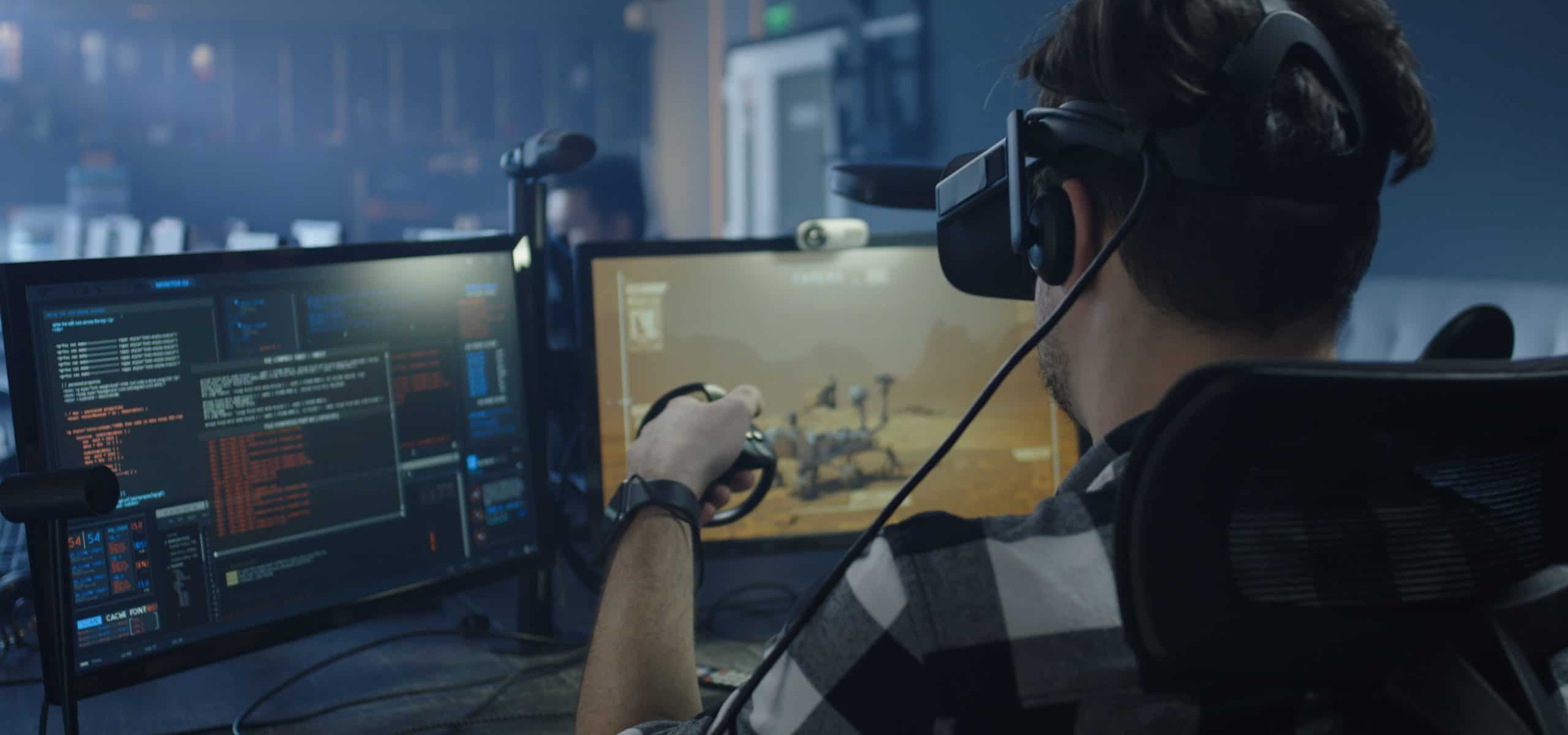
Game development requirements change substantially according to platform, perspective, gameplay format, and technical complexity.
1. Mobile Game Development
Mobile games need to account for touch controls, different screen sizes, hardware variation, memory limits, battery consumption, network conditions, and app-store requirements.
Developers may also need to consider:
- Android and iOS differences
- Device fragmentation
- Touch input
- Mobile GPU performance
- Download size
- Push notifications
- In-app purchases
- Ads
- Analytics
- Cloud saves
Cubix’s mobile game development services include games built for iOS and Android, demonstrating why mobile development involves more than simply scaling a desktop game down to a phone.
2. PC Game Development
PC development involves a wide range of hardware configurations.
Teams may need to support different:
- CPUs
- GPUs
- RAM configurations
- Screen resolutions
- Input devices
- Operating systems
- Graphics settings
Graphics scalability is therefore important. A PC game may need configurable resolution, texture quality, shadows, effects, anti-aliasing, and other settings to accommodate different hardware.
Distribution also introduces platform considerations, including store integration, achievements, cloud saves, updates, and community features.
3. Console Game Development
Console development introduces hardware-specific constraints and platform requirements.
Teams may need to address:
- Fixed hardware specifications
- Controller input
- Performance targets
- Platform SDKs
- Certification
- Store requirements
- Memory budgets
- Platform-specific services
Console development therefore requires platform planning well before the final release candidate.
4. 2D Game Development
2D games rely on systems such as:
- Sprites
- Tilemaps
- 2D physics
- Animation
- Cameras
- Particle effects
- UI
- Collision systems
A 2D game can still have significant technical complexity. Multiplayer, procedural generation, complex physics, real-time simulation, or large content libraries can make a seemingly simple visual style technically demanding.
5. 3D Game Development
3D game development introduces additional systems such as:
- 3D environments
- Character models
- Rigging
- Skeletal animation
- Materials
- Lighting
- Cameras
- Physics
- Navigation
- Level streaming
- VFX
- LOD systems
Performance optimization becomes especially important as the number and complexity of 3D assets increase.
6. Multiplayer Game Development
Multiplayer game development adds another technical layer because players need to share a consistent game state across network connections.
Common systems include:
- Client-server architecture
- Dedicated servers
- Matchmaking
- Lobbies
- Player authentication
- State synchronization
- Replication
- Latency handling
- Reconnection
- Anti-cheat systems
The earlier these requirements are considered, the less disruptive multiplayer integration becomes later in development.
How Long Does It Take to Develop a Game?
There is no reliable universal timeline for game development because development time depends heavily on scope.
Major variables include:
- Game genre
- Number of platforms
- Team size
- Gameplay complexity
- Art style
- Number of levels
- Multiplayer requirements
- Backend infrastructure
- Custom technology
- QA requirements
- Certification
- Post-launch plans
A small mobile game can have a relatively focused production scope, while a large 3D multiplayer game may require substantially more engineering, content production, testing, and infrastructure.
A better way to estimate development time is to break the project into milestones such as:
Pre-production → prototype → vertical slice → production → alpha → beta → release candidate → launch
Each milestone should have measurable deliverables rather than relying on a single project-wide time estimate.
For a deeper breakdown, see Cubix’s guide on how long it takes to develop a video game.
How Much Does Game Development Cost?
Game development cost is determined by scope rather than by a single industry-wide price.
The largest cost drivers typically include:
- Team composition
- Development duration
- Game complexity
- Art and animation
- Number of platforms
- Multiplayer infrastructure
- Backend services
- QA
- Third-party software and services
- Localization
- Certification
- Post-launch support
A game with simple mechanics but extensive original art can have a very different budget from a technically complex multiplayer game with limited visual content.
A useful estimate therefore starts with a feature and content breakdown. Teams can then estimate the engineering, art, design, QA, infrastructure, and production effort required for each milestone.
What Makes a Game Development Project Successful?
There is no single formula for a successful game, but several factors consistently influence the quality of the player experience.
1. A strong core gameplay loop
Players need a reason to continue interacting with the game’s systems. The core loop should be understandable, responsive, and satisfying.
2. Clear player feedback
Players should understand what happened when they perform an action. Visual effects, animation, sound, UI feedback, and game-state changes all contribute to that clarity.
3. Appropriate difficulty and progression
Progression should give players meaningful goals without making advancement feel arbitrary or repetitive.
4. Technical stability
Crashes, long loading times, input problems, severe frame-rate drops, and connection failures can undermine an otherwise strong game.
5. Consistent visual direction
Characters, environments, UI, lighting, animation, and effects should support the same artistic direction.
6. Continuous testing
A game should be evaluated throughout production rather than only after all content has been created.
7. Player-informed iteration
Analytics, playtesting, reviews, support requests, and community feedback can reveal friction that the development team may not see internally.
What Cubix’s Projects Show
Different game projects highlight different production priorities.
Likeman demonstrates the importance of connecting a recognizable gameplay foundation with additional social and competitive systems. Relentless illustrates the coordination required when exploration, puzzles, resource collection, combat, and 3D assets coexist in one experience.
The lesson is that game quality is rarely determined by one isolated feature. It emerges from how design, technology, content, performance, and testing work together.
How Do You Publish and Market a Game?

Building a playable game and successfully distributing it are separate stages of the product lifecycle.
1. Preparing a Game for Publishing
Before release, teams may need to prepare:
- Final game builds
- Store listings
- Screenshots
- Trailers
- Game descriptions
- Age ratings
- Privacy information
- Pricing
- Monetization
- Analytics
- Platform-specific settings
- Certification materials
On Apple’s platforms, submissions go through App Review, which evaluates apps, updates, in-app purchases, and other submitted content against its requirements.
For Steam, developers use Steamworks to manage store presence, builds, pricing, distribution, testing, and platform features.
Mobile developers also need to account for platform-specific publishing on Google Play and the App Store.
2. Strategies for Effective Game Marketing
Game marketing should begin before launch rather than after the product is complete.
Potential activities include:
- Defining the game’s audience
- Building a recognizable visual identity
- Creating gameplay trailers
- Producing short-form gameplay content
- Building a community
- Working with creators
- Developing a store page
- Gathering wishlists or pre-registrations where applicable
- Preparing launch communications
- Monitoring reviews and player feedback
Marketing should communicate what makes the game worth playing. A polished trailer that accurately represents the final experience is more useful than promotional material that creates expectations the game cannot meet.
3. How to Fund an Independent Game Project
Independent developers can use different funding models, including:
- Self-funding
- Publisher funding
- Crowdfunding
- Grants
- Investors
- Early access revenue
Each option has different implications for ownership, milestones, risk, production control, and distribution.
Funding should therefore be connected to the project’s actual development plan. A larger budget does not automatically make a game better if the additional resources are not tied to meaningful production requirements.
What Is the Role of Analytics in Game Development?
Game analytics turns player activity into measurable information that can inform development decisions.
Depending on the game, teams can measure:
- Daily and monthly active users
- Retention
- Session duration
- Level completion
- Churn
- Progression
- Feature usage
- Conversion
- In-app purchases
- Ad engagement
- Crash rates
- Network performance
Analytics is most useful when it leads to a specific development hypothesis.
For example:
Data: Players abandon a level unusually often.
Investigation: Identify where players are failing or stopping.
Hypothesis: A difficulty spike or unclear objective is causing friction.
Action: Adjust the level, tutorial, or progression.
Measurement: Compare subsequent player behavior.
Analytics should complement playtesting and qualitative feedback rather than replace them. Numbers can show where a problem exists, but player research often helps explain why it exists.
What Are the Common Challenges in Game Development?
Game development brings together programming, game design, art, audio, networking, testing, and platform requirements within one production pipeline. Because these systems are interconnected, a change in one area can affect performance, development time, budget, or the player experience elsewhere.
1. Managing Scope and Feature Complexity
A game’s scope can expand quickly as teams add mechanics, levels, characters, game modes, progression systems, and other features. Managing dependencies between these systems becomes increasingly difficult as the project grows, particularly when new requirements are introduced after production has started.
2. Meeting Performance Requirements
Games must operate within the hardware limits of their target platforms. CPU and GPU usage, memory consumption, loading times, frame rates, draw calls, shader complexity, and asset sizes can all affect performance. Optimization therefore needs to account for the actual devices and platforms a game is expected to support.
3. Building Multiplayer and Online Systems
Multiplayer development introduces challenges that do not exist in offline games, including latency, synchronization, networking architecture, matchmaking, authentication, player state, server infrastructure, and connection handling. These systems can influence the game’s technical architecture from the earliest stages of development.
4. Coordinating Art and Engineering
Game assets need to work within technical constraints. Character models require appropriate rigs and animations, environments need collision and navigation systems, VFX must fit performance budgets, and UI needs to respond to gameplay states. Keeping these dependencies coordinated can become difficult as content production scales.
5. Supporting Multiple Platforms
Mobile, PC, and console platforms have different hardware capabilities, input methods, screen configurations, operating environments, store requirements, and certification processes. A game designed for multiple platforms therefore needs platform-specific testing and optimization rather than simply being deployed unchanged across devices.
6. Testing Complex Game Systems
Game QA extends beyond finding conventional software bugs. Teams may need to test gameplay states, progression, save systems, device compatibility, performance, controls, multiplayer connectivity, localization, and platform compliance. Adding new features can also introduce regressions in systems that previously worked correctly.
7. Maintaining the Game After Launch
Release is not necessarily the end of development. Games that receive ongoing updates may require patches, content releases, balancing, analytics, server maintenance, security fixes, and compatibility updates. Preparing the technical and operational foundation for post-launch work can be a significant development challenge.
Game Development Best Practices From Real Project Experience
The strongest game development practices are often learned by dealing with real production constraints.
1. Validate the core gameplay loop early
A playable prototype should answer whether the central interaction is enjoyable before the team spends heavily on secondary features.
Projects such as Likeman show why this matters when a core maze-based experience is expanded with power-ups, social sharing, and competitive multiplayer.
2. Resolve technical risks before full production
If a game requires multiplayer, unusual hardware support, complex backend systems, or demanding rendering, those risks should be tested early.
Retrofitting fundamental architecture after large portions of the game have been built can force teams to rewrite systems and reconsider gameplay decisions.
3. Establish visual direction before scaling asset production
Creating dozens or hundreds of assets before the visual language is settled can produce inconsistent characters, environments, materials, lighting, or animation.
A small set of approved visual benchmarks can give artists a shared target before production expands.
4. Test target platforms throughout development
A game that performs well on a development workstation may behave differently on a mobile device, console, or lower-specification PC.
Testing should therefore include representative target hardware throughout production rather than relying exclusively on a final compatibility pass.
5. Treat QA as part of production
QA should work alongside development to identify defects while the affected systems are still changing.
Continuous testing also makes regression management easier as new features are introduced.
6. Plan post-launch requirements before launch
If a game will receive regular updates, the team may need content pipelines, analytics, remote configuration, backend infrastructure, patching systems, and operational tooling.
Those requirements can affect architecture long before the first public release.
What Are the Emerging Trends in Game Development?
Game development continues to evolve as new technologies change how teams create content, build online systems, optimize games, and operate titles after launch. Some trends are still experimental, while others are already influencing production workflows.
1. Generative AI in Game Development Workflows
Generative AI is increasingly being explored for concept development, code assistance, asset ideation, localization, testing, and other production tasks. Its practical value depends on the workflow, quality requirements, intellectual property considerations, and the level of human review involved.
2. Cross-Platform Development
Developers increasingly target multiple platforms to reach players across mobile, PC, console, and other connected devices. Cross-platform engines and shared codebases can reduce duplicated development work, although teams still need to account for platform-specific performance, controls, UI, and certification requirements.
3. Cloud Infrastructure for Multiplayer Games
Online games increasingly rely on cloud infrastructure for services such as authentication, matchmaking, player data, leaderboards, telemetry, and scalable server capacity. This shifts part of game development toward backend architecture and distributed systems, particularly for persistent and multiplayer experiences.
4. LiveOps and Continuous Game Development
Many games now operate beyond their initial launch through regular updates, new content, balancing changes, events, and technical improvements. LiveOps also makes analytics and player feedback more important because development teams can use post-launch data to identify problems and guide future updates.
5. Procedural and Automated Content Generation
Procedural and automated content generation can help developers generate environments, levels, objects, or other content according to defined rules. These approaches can reduce repetitive production work and support large or variable game worlds, but generated content still requires design oversight, testing, optimization, and quality control.
6. Real-Time 3D and Advanced Rendering
Modern game engines continue to expand real-time rendering capabilities, including physically based materials, dynamic lighting, advanced effects, virtualized geometry, and other techniques that can increase visual fidelity. These capabilities also increase the importance of hardware profiling and performance optimization.
7. Accessibility as a Development Consideration
Accessibility is becoming a more visible part of game design and production. Features such as customizable controls, subtitles, text scaling, color considerations, remappable inputs, and adjustable difficulty can help make games usable by a wider range of players while also creating additional design and QA requirements.
Conclusion
Game development is a multidisciplinary process that extends far beyond writing code or creating game assets. A successful production connects game design, prototyping, engineering, art, animation, audio, QA, platform requirements, publishing, and post-launch iteration.
The strongest workflows validate important decisions early, identify technical risks before they become expensive, test continuously, and use real player data to guide improvements.
Whether the project is a 2D mobile title, a 3D PC game, a console experience, or a real-time multiplayer product, the same principle applies: build the right foundation before scaling the game around it.
Want to discuss your project? Our experts are just a click away.
Contact UsFrequently Asked Questions
1. What is game development?
Game development is the process of designing, programming, creating assets for, testing, and releasing an interactive game across its target platforms.
2. How long does it take to develop a game?
It depends on the game’s scope, team size, platforms, gameplay complexity, art requirements, multiplayer systems, testing needs, and post-launch plans.
3. How much does it cost to develop a game?
Game development costs vary according to team composition, development time, game complexity, art production, platform requirements, multiplayer infrastructure, QA, and ongoing support.
4. What are the best game engines for game development?
Unity, Unreal Engine, and Godot are widely used options, but the appropriate engine depends on the project’s platform, graphics, team expertise, multiplayer requirements, and technical constraints.
5. Which programming language is used for game development?
C#, C++, and GDScript are common choices depending on the engine. Other languages can also be used for backend services, tools, automation, and supporting infrastructure.
6. What are the main stages of game development?
The typical lifecycle includes concept planning, pre-production, prototyping, full production, testing, pre-launch preparation, launch, and post-launch development.
7. What roles are needed to develop a game?
Depending on scope, a game may require designers, programmers, artists, animators, level designers, UI/UX specialists, audio designers, QA engineers, producers, backend engineers, and network specialists.
8. Can one person develop a game?
Yes. A solo developer can create and publish a game, particularly when the scope is controlled. Larger projects usually require multiple disciplines and specialized expertise.
9. How do you choose the right game engine?
Start with the game’s target platforms, visual requirements, gameplay systems, multiplayer needs, performance targets, development team’s expertise, and distribution requirements.
10. Is game development a good career?
Game development can offer career paths across programming, design, art, animation, production, QA, technical art, audio, backend engineering, and other disciplines. The skills required depend on the role and type of games being developed.