Blog Summary:
- Artificial Intelligence is evolving from app features to operating-system intelligence.
- Apple and Android follow fundamentally different approaches to mobile AI.
- Privacy, flexibility, and ecosystem integration now shape AI experiences.
- Developers must build apps that work with both application-level and system-level intelligence.
- Modern app strategies increasingly prioritize Cross-Platform Ecosystems and connected experiences.
There’s a quiet transformation happening inside your phone right now. Not the kind driven by launch events or market headlines, but one happening at the operating system level, in the way devices understand intent, prioritize information, process requests, and shape how apps behave before users even tap the screen.
The market already reflects this shift. Global iPhone market share moved from 29.1% in 2025 to 29.25% in 2026, while Android strengthened its position from 70% to 70.75%. Yet when it comes to monetization, the gap tells a different story: the App Store generated approximately $80 billion in revenue in the first half of 2026, compared to $36 billion from the Google Play Store.
Apple Intelligence vs Android AI isn’t just a headline for tech journalists to argue about. For app developers, product managers, and startup founders, it’s the single most consequential platform question of 2026. And if you haven’t deeply thought about how these two AI-powered operating systems diverge in philosophy, in architecture, in what they allow and what they restrict, then your next app build might already be fighting uphill before you write a single line of code.
Let’s walk you through what’s actually happening on both sides of this divide, what the numbers say, and what it all means for the product you’re about to build
The Ground Has Already Shifted, and the Numbers Prove It
Before we compare platforms, it is worth recognizing one thing: this shift is no longer experimental. Intelligent technologies are already changing how products are built, how developers work, and how users engage with mobile experiences. The numbers make that clear.
Mobile Intelligence by the Numbers
| Industry Signal | Latest Data | Why It Matters |
| Organizations integrating intelligent technologies into at least one business function | 78% by 2026 (up from 55% two years earlier) | Intelligent systems are becoming operational rather than experimental |
| Developers using intelligent tools in daily workflows | 90% globally | Assisted development is becoming part of standard engineering practice |
| Global code now created with intelligent assistance | 41% of all code written worldwide | Product development is becoming faster and more automated |
| Global spending on intelligent technologies | $ 2.59 trillion in 2026 (+47% YoY) | Investment continues accelerating across industries |
| Global mobile app downloads | ~150 billion in 2025 (+0.8% YoY) | Mobile usage remains strong even in a mature market |
| Subscription performance of intelligent applications | 52% higher trial conversion and 41% higher revenue per user | Intelligent experiences can improve monetization when implemented well |
| Retention trade-off | 36% higher churn | Strong acquisition does not automatically create long-term engagement |
| App Store ecosystem developer billings & sales | $1.4T+ in 2025 | Platform ecosystems continue generating large commercial value |
These numbers point to a broader shift.
Teams are no longer adopting intelligent capabilities as experimental features. They are becoming part of product strategy, development workflows, and growth models.
What is changing is not only how applications are built, but how users expect them to behave.
For mobile teams, the question is no longer whether your next app should include intelligent capabilities.
The real question is: Which platform philosophy will shape the way your app evolves next?
Two Platforms, Two Philosophies – One Important Decision
At the center of the Apple Intelligence vs Android AI conversation is something bigger than a platform comparison. It reflects two very different ideas about what the future of mobile experiences should look like.

Apple’s vision is built around making intelligence feel almost invisible. Instead of asking users to learn new tools or change their habits, Apple integrates intelligence directly into everyday interactions. The goal is simple: make devices feel more helpful, more contextual, and more personal while keeping the experience tightly connected across the iOS ecosystem.
Android approaches the same challenge from a different direction. Its strength comes from flexibility and scale. Rather than creating one controlled experience, Android expands intelligent capabilities across a wider range of devices, services, and use cases. The result is an environment designed to evolve quickly and support experimentation across an Open ecosystem.
Neither approach is wrong and neither automatically wins.
But for developers, product teams, and founders building in 2026, these differences matter more than ever.
Because choosing a platform is no longer just about where your app will run.
It is becoming a decision about how your product learns, adapts, interacts with users, and grows over time.
And that choice starts shaping your app long before the first feature goes live.
Apple Intelligence: Apple’s Biggest Upgrade Might Not Be What You See
Apple Intelligence is not trying to feel like a separate feature inside your phone.
It is being designed to disappear into the experience itself.
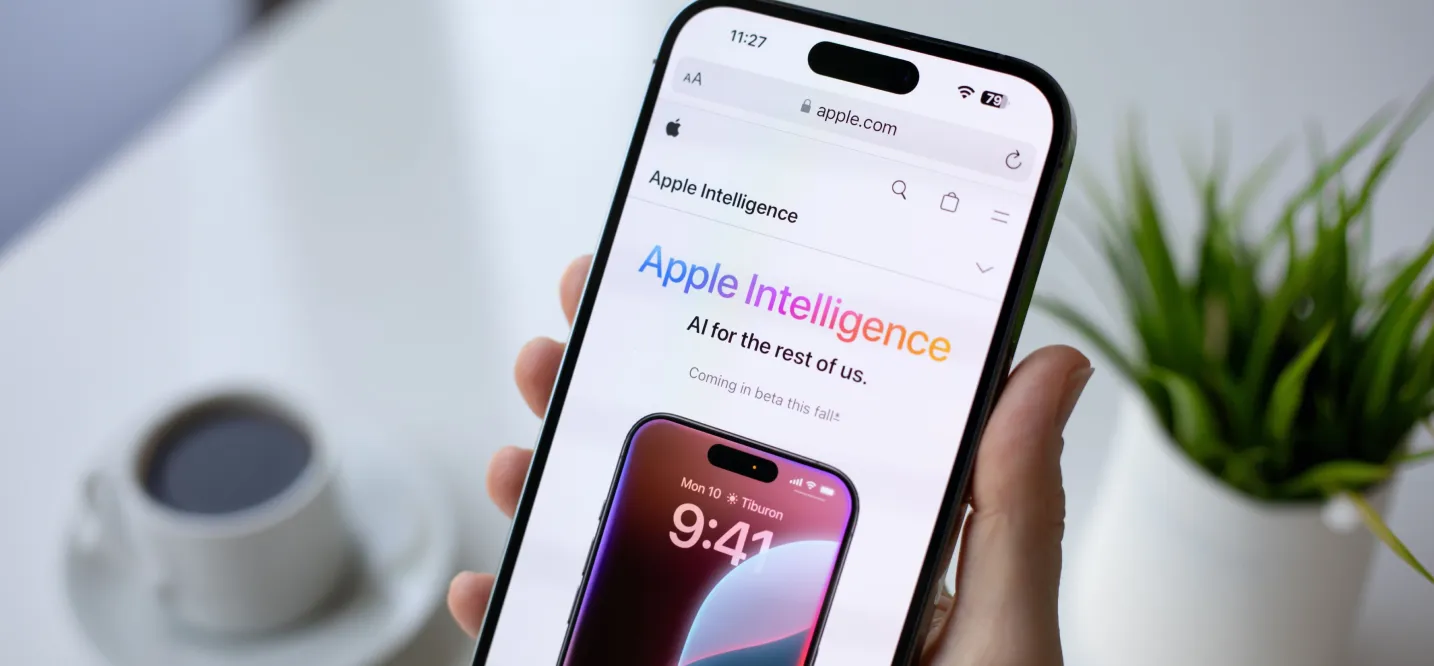
Instead of adding intelligence as something users “open,” Apple is embedding it directly into everyday actions across iOS.
The goal is simple: Make the device feel more helpful without making it feel more complex.
What This Means for Your App Build on iOS
Building for iOS now gives developers access to capabilities that previously required substantial engineering effort. For modern ios app developers, these built-in capabilities reduce development complexity while enabling more intelligent user experiences.
That includes:
- Writing assistance integrated into supported workflows
- Deeper Siri actions and app interactions
- On-device summarization capabilities
- More contextual user experiences
The advantage is obvious: teams can deliver smarter experiences without rebuilding foundational intelligence layers. But there is another side to that advantage.
Apple still defines the rules.
Developers gain access to system intelligence, but they do not control how that intelligence behaves at the operating-system level.
For products in areas like healthcare, productivity, finance, and enterprise software, this structure can actually be beneficial because consistency and trust matter more than unlimited flexibility. For teams building highly experimental consumer experiences or relying heavily on external models, Apple’s guardrails may feel restrictive. That trade-off is becoming part of the product decision itself.
Read More: AI Features Your App Should Have in 2026
Android AI: Flexibility Creates a Different Kind of Advantage
Android has always been about openness. But in 2026, “open” means something slightly different.

Google’s Android 17 introduces what it calls Gemini Intelligence, not as another feature added inside Android, but as an intelligence layer woven directly into the operating system experience.
Gemini can function as the system-level assistant, supporting “Hey Google” commands, long-press interactions, ambient requests, and actions that work across applications, similar to how Siri operates within iOS. But Google’s approach extends further.
Gemini is designed to replace Google Assistant completely. It supports more than 40 languages, compared with the more limited language availability of Apple Intelligence, and it is built to handle larger and more complex multi-step requests.
Its cloud-first architecture also gives it access to computing scale that purely on-device experiences cannot always match.
For developers, this is where Android becomes especially interesting.
This flexibility is one reason why many modern android app development solutions increasingly focus on AI integration, contextual experiences, and scalable cloud-connected architectures.. Teams can build AI-layered apps that connect with Gemini, integrate their own models, combine third-party APIs, or create hybrid experiences that mix multiple intelligence layers together.
Google’s ML Kit also lowers the barrier to experimentation by offering modular capabilities such as:
| Capability | Example Use Cases |
| Text Recognition | Document scanning, search |
| Translation | Global user experiences |
| Object Detection | Commerce, camera features |
| Language Understanding | Smarter workflows |
| Context Processing | Personalized interactions |
These building blocks allow developers to create advanced experiences without investing heavily in infrastructure from day one.
At the same time, Android’s openness introduces more variation.
Samsung, OnePlus, and other Android manufacturers continue to expand their own intelligent experiences on top of Android, creating a broader and more diverse environment to build for. That creates additional testing requirements.
But it also creates opportunity.
Your application is not entering one tightly controlled environment. It is entering a platform where differentiation, experimentation, and product creativity still matter in meaningful ways.
What This Means for Your App Build on Android
If one word defines Android development today, it is flexibility. Teams can move faster, experiment earlier, and adapt experiences without waiting for strict platform approvals.
That freedom creates opportunities for:
- Faster iteration cycles
- Broader integrations
- More customization options
- Greater experimentation with intelligent workflows
At the same time, flexibility comes with responsibility.
Testing becomes more demanding. Performance expectations vary across devices. Features that feel seamless on one device may require additional optimization elsewhere. For teams building in e-commerce, travel, social experiences, automation, or enterprise workflows, that flexibility can become a meaningful advantage.
The opportunity is not simply building smarter applications. It is building applications that adapt to how people actually use their devices.
AI Layered Apps: What They Actually Are and Why It Matters
Let’s clarify something important. AI features and AI Layered Apps are not the same thing. 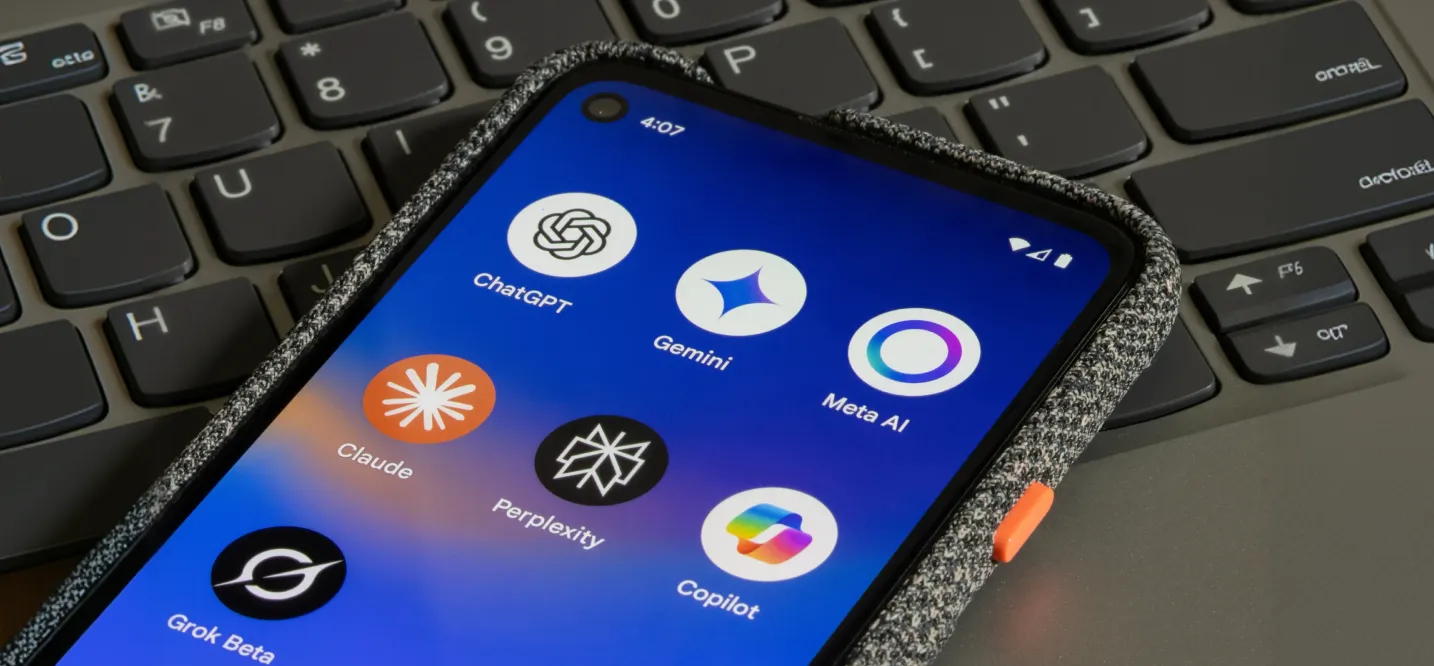
Many applications today introduce intelligent functionality as an enhancement. But the next generation of mobile experiences is being designed with intelligence built into the foundation of the product itself.
AI Features vs AI Layered Apps
| Area | AI Features | AI Layered Apps |
| Purpose | Add individual smart capabilities | Embed intelligence across the full application experience |
| User Interaction | Activated manually | Works continuously through context |
| Product Role | Supports existing workflows | Influences how workflows operate |
| Personalization | Feature specific | Adaptive and context-aware |
| Decision Logic | Task based | Learns from usage patterns |
| Experience | Reactive | Predictive and responsive |
| Typical Examples | Chatbots, summarization, autofill | Dynamic recommendations, adaptive interfaces, automated actions |
An AI feature improves a specific interaction.
An AI layered app changes how the entire product behaves. Intelligence becomes part of the application architecture across data, user experience, decision-making, and output. Instead of waiting for user instructions, applications begin to recognize patterns, adapt interactions, and reduce unnecessary effort.
This transition is happening faster than many teams expected.
According to the Stanford AI Index Report, adoption moved from experimentation to everyday execution at remarkable speed. Organizations integrating intelligent capabilities into business functions grew from 33% in 2023 to 71% by 2026, representing one of the fastest enterprise technology adoption curves in recent years.
At the same time, the way software gets built is changing too. Today, 90% of software professionals use intelligent development tools regularly, and for many teams, daily usage has become part of the standard workflow rather than an advantage reserved for early adopters.
This shift is becoming visible at the device level as well.
Cross-Platform Ecosystems: The Question Nobody Wants to Answer Honestly
Every mobile team eventually reaches the same decision point: do we build for iOS first, Android first, or both?

At first, this sounds like a budget conversation. In reality, it has become an architectural decision.
Building for cross-platform ecosystems in 2026 is no longer just about choosing between Swift and Kotlin or selecting Flutter and React Native. It is also about understanding how intelligence behaves across platforms.
Apple’s approach prioritizes on-device processing, privacy, and tightly connected experiences. Android focuses more on flexibility, broader integrations, and cloud-connected experiences. As a result, intelligent interactions surface differently, respond differently, and require different implementation strategies across operating systems.
Frameworks like Flutter and React Native simplify interface development, but they do not fully abstract platform intelligence. Organizations looking to Build a Winning iOS App Development Team are increasingly prioritizing AI expertise, privacy-focused architecture, and deep understanding of Apple’s evolving intelligent ecosystem.
The Open Ecosystem Advantage and Its Hidden Cost
One of Android’s biggest advantages has always been flexibility, and that becomes even more valuable as intelligent experiences become a bigger part of mobile apps.

Developers have more freedom to experiment with different approaches. They can integrate Gemini for advanced tasks, connect their own models, use Android’s machine learning tools, or combine multiple services to create experiences tailored to their product goals. Instead of working within a tightly defined framework, teams have more room to build things their own way.
For products in areas like productivity, finance, healthcare, and enterprise software, that flexibility can make a real difference. It allows developers to move beyond simple features and create experiences that help users complete complex tasks with less effort.
Of course, that freedom comes with trade-offs.
Apple handles many decisions around privacy, permissions, and system-level interactions for developers. Android takes a different approach. It provides the tools, but much of the responsibility for implementation, governance, and user trust sits with the development team.
For organizations with strong security and compliance practices, this can be a major advantage. For others, it can introduce additional complexity, especially as regulations around intelligent technologies continue to evolve across markets like Europe and the United Kingdom.
In the end, Android’s openness is both its strength and its challenge.
It gives developers more opportunities to innovate, but it also requires a thoughtful approach to privacy, security, and user experience from the very beginning.
5 Common Mistakes Teams Fall Into When Building AI Apps (And How to Avoid Them)
Right now, it feels like every product team is racing to add “intelligence” to their apps. And honestly? It’s an exciting time to be building. But the truth is, integrating AI isn’t just about plugging in an API and calling it a day. It’s about creating something that actually makes your users’ lives easier
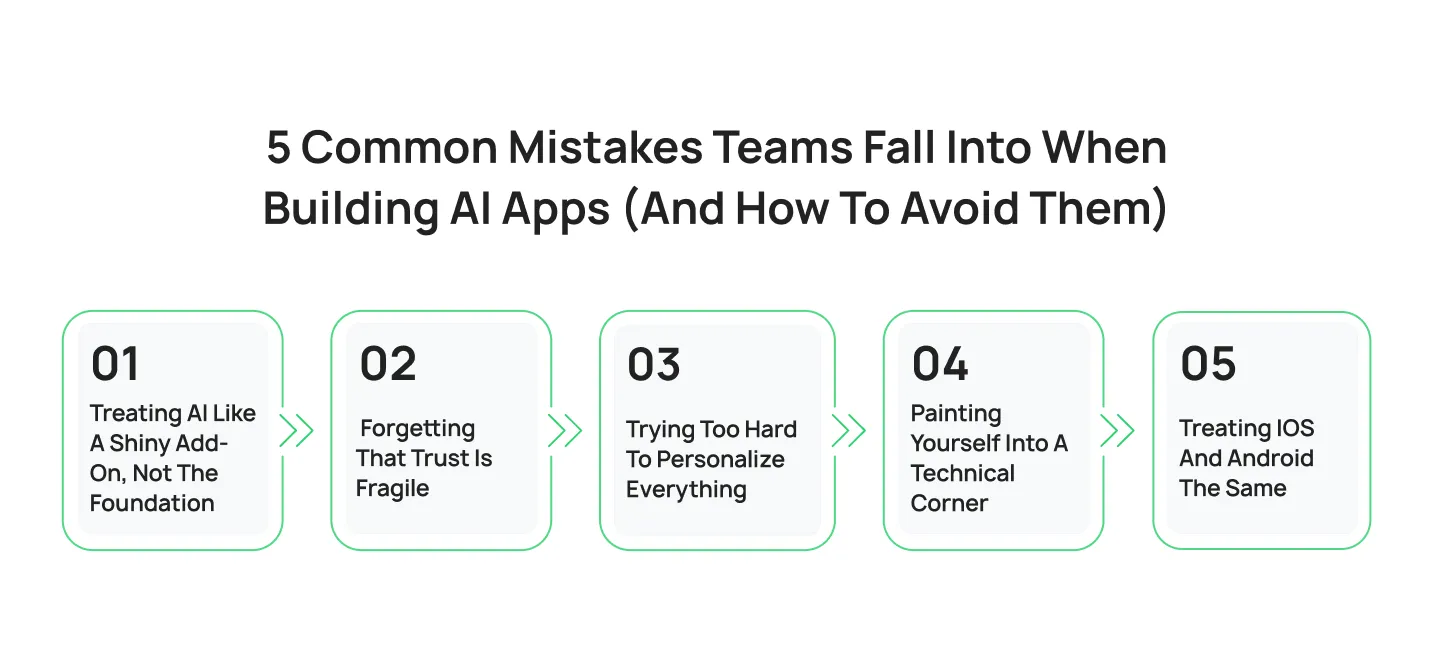 As we help teams navigate this shift, we see a lot of them stumble into the same few pitfalls. If you’re gearing up for your next app build, here’s what to watch out for.
1. Treating AI like a shiny add-on, not the foundation
We’ve all seen it: an app suddenly gets a random chatbot that nobody really asked for. While flashy features might get a few initial clicks, they don’t keep people around. The best intelligent apps don’t shout about their AI, they just work better. Instead of bolting AI onto the side, look for ways to bake it into the core experience. Use it to quietly anticipate what your users need, streamline clunky workflows, and make the whole app feel effortless.
2. Forgetting that trust is fragile
People are (rightfully) protective of their data. Whether you’re leaning into Apple’s privacy-first ecosystem or building on Android, you have to be completely transparent. If your users feel like your app is being creepy or secretive with their information, they’ll delete it without a second thought. Good privacy practices aren’t just legal requirements anymore; they’re how you show your users you actually respect them.
3. Trying too hard to personalize everything
Yes, we all want apps that feel tailored to us. But there’s a fine line between “helpful” and “overwhelming.” When teams try to customize every single screen and interaction, the app can start to feel unpredictable and confusing. The goal of intelligence is to reduce the mental effort for your users, not make them relearn how to use your app every time they open it. Keep the personalization natural and out of the way.
4. Painting yourself into a technical corner
The AI landscape is moving incredibly fast. The models and tools we think are cutting-edge today might be old news by next year. If you hardcode your intelligence features into a rigid system, you’re going to have a nightmare of a time updating them later. Build with flexibility in mind from day one. Create an architecture that lets you easily swap in new tech as user expectations—and the platforms themselves—evolve.
5. Treating iOS and Android the same
It’s tempting to take an approach to save time, but Apple Intelligence and Android AI are fundamentally different beasts. They have different strengths, different constraints, and different user expectations. If you ignore those native quirks, your app will end up feeling a bit “off” to everyone. Take the time to understand and lean into what makes each platform special.
The Future of Mobile: From Smart Apps to Intelligent Ecosystems
The mobile industry is quietly entering a new phase. With over 2.12 million apps on the Apple App Store and around 2.21 million on Google Play, the space is more crowded than ever. For years, apps were the primary way people interacted with their phones. You opened them, looked for what you needed, completed a task, and moved on.

That pattern is starting to change.
Today, intelligence is becoming part of the operating system itself. Instead of users doing all the work, devices are beginning to understand context, predict intent, and reduce the number of steps needed to get things done.
The shift is not loud, but it is meaningful.
As Apple and Android continue embedding intelligence deeper into their platforms, developers are being pushed to think differently. It is no longer just about building features inside an app. It is about how that app fits into a larger, more connected system of intelligent experiences.
AI Native Experiences
Future applications will not treat intelligence as an add-on. It will be part of the foundation from day one. Rather than asking users to search, tap through screens, or repeat the same actions, apps will begin to surface what matters on their own, automate routine tasks, and adjust based on context.
Ambient Intelligence
Technology is becoming less visible in everyday use. Instead of users constantly interacting with apps, systems will quietly support them in the background. The goal is simple: reduce effort and deliver what is needed at the right moment, without friction or extra steps.
System-Level Interactions
Operating systems are gradually evolving beyond being just platforms for apps. They are becoming intelligent layers that connect experiences across search, messaging, productivity, accessibility, and personalization. For developers, this means building products that feel connected to the system rather than isolated from it.
Emerging Developer Opportunities
This shift opens the door to entirely new types of applications and experiences, including:
- AI Layered Apps that learn and adapt based on user behavior
- Intelligent productivity tools that automate multi-step workflows
- Context-aware commerce and recommendation systems
- Personalized health and wellness experiences
- Cross-platform ecosystems that maintain consistent intelligence across devices
The next generation of successful apps will not be defined by how many intelligent features they include. It will be defined by how naturally they fit into the everyday flow of how people use their devices.
Let’s Build Something Smart: How Cubix Brings AI-Ready Apps to Life
As an experienced Ai mobile app development company, Cubix helps businesses navigate platform-specific AI opportunities while building scalable applications designed for long-term growth. Navigating the shift to AI-driven mobile apps can feel a bit overwhelming. There’s a lot of noise out there right now, and separating what actually works from what just sounds cool in a pitch deck is half the battle.
That’s exactly where Cubix comes in. We don’t chase fleeting trends; we build solid, reliable foundations. Here is how we help you cut through the hype:
- Real-world experience since 2008: We didn’t just jump on the AI bandwagon. For 18 years, we’ve been figuring out how to make technology genuinely useful for real people. We know what works, what doesn’t, and how to build for the long haul.
- A proven track record: We’ve successfully delivered over 1,300 projects. We’ve learned exactly what it takes to build apps that survive, scale, and thrive in a constantly changing market.
- A deep bench of talent: With a dedicated team of 350+ designers, developers, and strategists, we have the in-house expertise to handle everything from the initial roadmap to the final line of code.
- Focus on actual business value: We don’t just bolt a “smart” feature onto an outdated system. We sit down with you, look at your actual goals, and architect an app that is flexible, secure, and ready for whatever Apple or Google rolls out next.
Whether you are starting a brand-new project from scratch or looking to breathe new life into an existing platform, you need a partner who knows how to bridge the gap between a great idea and a working reality.
If you’re ready to build something that actually makes your users’ lives easier, let’s talk. We’d love to build something smart together.
Final Thought
At this stage, building mobile apps is less about stacking features and more about making clear product decisions upfront. The direction you choose early on shapes how everything behaves later, from user experience to how the system supports your app.
What really matters is fit. The platform you choose, the users you’re targeting, and how much control you want over intelligence inside your product all need to line up. When those pieces work together, the app feels more natural and easier to grow over time.
In the end, the strongest products usually come from teams that are clear on these choices from the start. It saves a lot of rework later and keeps the product moving in a steady, focused direction.
Frequently Asked Questions
1: What is the difference between Apple Intelligence and Android AI?
Apple Intelligence focuses on tightly integrated, privacy-first AI within the iOS ecosystem, mostly using on-device processing. Android AI (Gemini) is more open and cloud-driven, allowing greater flexibility and cross-app functionality. Both aim to improve user experience but follow different design philosophies.
2: Which smart assistant is better for AI integration on mobile devices?
There is no single best option as it depends on your target ecosystem. Apple Intelligence focuses on privacy-first, tightly integrated on-device AI within iOS, while Android’s Gemini-based AI offers flexible, cloud-connected, and highly customizable experiences. The right choice depends on your app goals, users, and desired AI experience.
3: How do AI assistants on Android and iOS handle on-device processing?
AI personal assistants handle on-device processing differently across Android and iOS. Apple Intelligence focuses on on-device processing to improve privacy, speed, and consistent performance across the iOS ecosystem using secure hardware-based computation. Android’s Gemini-based system uses a hybrid approach, where some tasks run on-device while more complex processing is handled in the cloud. This enables greater flexibility but can vary across devices. In short, iOS prioritizes local processing and privacy, while Android balances on-device and cloud-based intelligence for broader capabilities.
4: How does the AI in popular phone ecosystems improve user experience?
AI in popular phone ecosystems improves the user experience by moving beyond standalone apps to deep OS-level integration. It seamlessly anticipates your needs, automates daily routines, and personalizes interactions in real time. By processing data directly on your device, it ensures lightning-fast, secure, and highly intuitive experiences tailored to you.
5: How do privacy policies differ for integrated AI on major mobile operating systems?
Privacy approaches differ across mobile operating systems. Apple Intelligence follows a privacy-first model with most processing done on-device and limited, controlled cloud use to reduce data exposure. Android’s Gemini-based AI uses a hybrid approach, combining on-device and cloud processing for greater flexibility and performance. In short, iOS focuses on tighter data control, while Android balances privacy with broader AI capability.