Key Takeaways
- Cross-platform app development typically costs between $25,000 and $250,000+ in 2026.
- App complexity, design, backend development, and integrations have the biggest impact on pricing.
- Flutter and React Native are both excellent choices, depending on your project requirements.
- Don’t overlook hidden costs like maintenance, cloud hosting, third-party services, and future updates.
- Working with experienced developers helps reduce technical debt and improve long-term ROI.
Planning a cross-platform application is undoubtedly exciting, but there is one critical question that haunts every business owner throughout the development process. Whether you want to develop an MVP, revamp an existing product, or build a comprehensive digital platform, it is essential to understand the cross-platform app development cost before investing significantly into the project.
Cross-platform development has become the preferred choice for businesses that want to reach both Android and iOS users with one codebase, thus reducing the overall cost of development. Instead of building two separate apps, you can achieve exponential growth by leveraging the power of shared code, cutting development time, and accelerating the return on investment (ROI).
The practice has become particularly attractive in 2026, as Flutter and React Native frameworks offer robust tools and intuitive UI engine capabilities. Furthermore, the presence of Flutter and React Native in Google and Meta’s ecosystem ensures continuous improvement and innovation, while Firebase and the Dart programming language complement the trifecta of technologies companies use to build digital products capable of rivaling native apps.
That doesn’t mean that every project has the same price tag.
One has to understand that the lower the scope is (e.g., a simple booking system), the cheaper the development will be in comparison to enterprise-level solutions with AI, chatbots, payment system integration, and advanced backend management.
Finally, note that choosing the right technology stack, design, features, team, and project management methodologies will also affect the final price significantly. Fortunately, understanding the key concepts will help you navigate the discovery phase and budgeting process more efficiently while avoiding underinvestment or overpayment for your idea.
In this guide, we will discuss 2026 cross-platform app development costs, impact size, and other major influences on the final price. We will also compare the most popular frameworks and operating systems to help you get the best value for your investment.
Want to discuss your project? Our experts are just a click away.
Contact UsWhat Is Cross-Platform App Development?
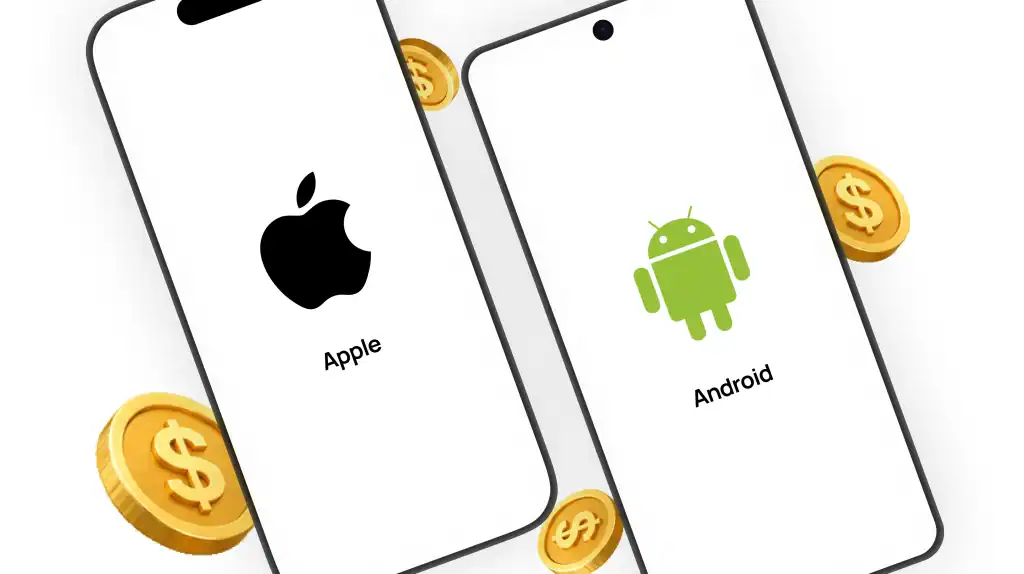
Now think about releasing your app on both the App Store and Google Play without developing two completely different products. That’s exactly what cross-platform development helps you to achieve this aim.
Instead of writing independent codebases for Apple devices and Android smartphones, developers create a single application that can run across multiple operating systems. While some platform-specific adjustments may still be needed, most of the code is shared, making development faster and easier to maintain over time.
From the business perspective, this approach is beneficial because of lower costs and higher productivity. You spend less money and effort on development, can update your app more quickly, and don’t need to plan a budget for separate development teams and projects.
Today’s cross-platform frameworks have also matured significantly. Flutter is known for its customizable UI and excellent performance, while React Native remains a popular choice thanks to its large ecosystem and familiarity among developers already working with JavaScript. Depending on your project requirements, both frameworks can support everything from startup MVPs to enterprise applications.
If you’re still deciding which technology best fits your project, explore our guide to the best frameworks for cross-platform app development to compare their strengths, limitations, and ideal use cases.
Cross-Platform App Development Cost in 2026
If you’re looking for a quick answer, the cross-platform app development cost in 2026 typically ranges from $25,000 to $250,000+. The exact amount depends on what you’re building, how complex the features are, and the level of customization your app requires.
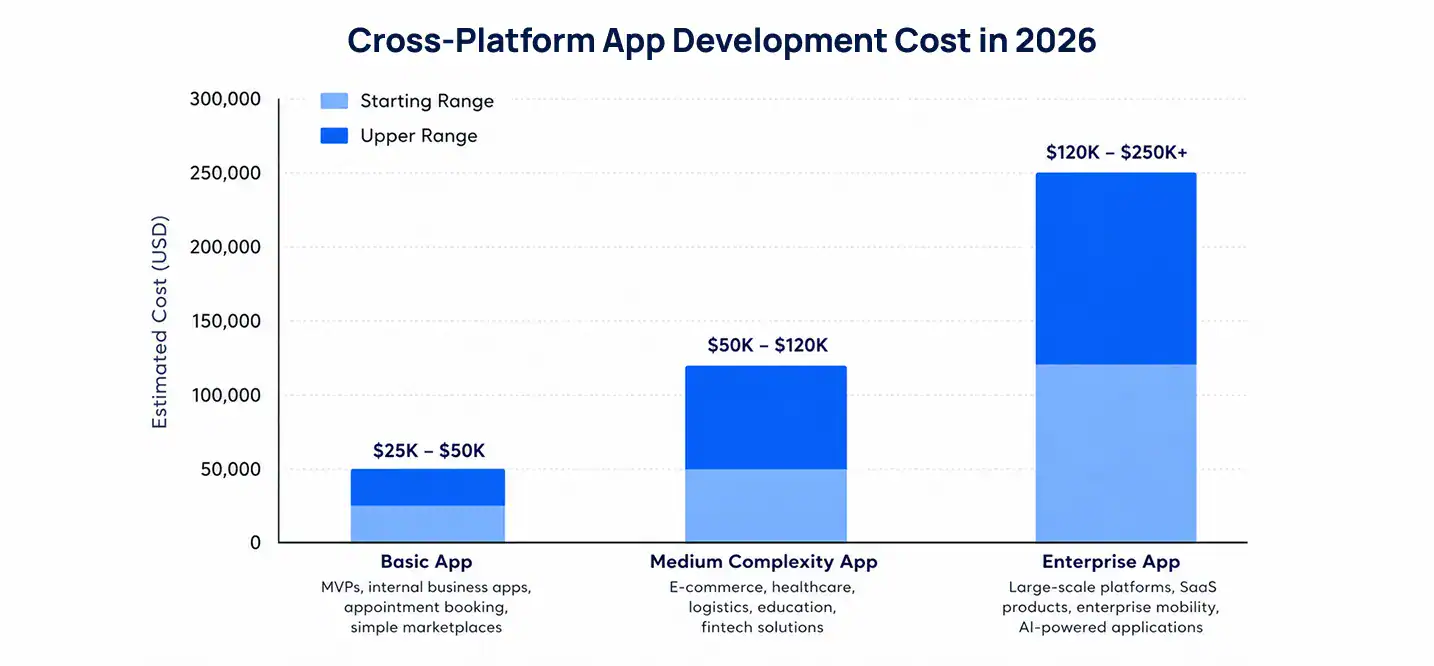
A simple MVP with essential functionality will naturally cost much less than an enterprise application with AI capabilities, real-time synchronization, advanced security, and third-party integrations. The experience of your development team and the project’s timeline also influence the final charge.
Here’s a general cost estimate based on app complexity.
| App Complexity | Estimated Cost | Development Timeline | Best For |
| Basic App | $25,000 to $50,000 | 2 to 4 months | MVPs, internal business apps, appointment booking, simple marketplaces |
| Medium Complexity App | $50,000 to $120,000 | 4 to 7 months | E-commerce, healthcare, logistics, education, fintech solutions |
| Enterprise App | $120,000 to $250,000+ | 7 to 12+ months | Large-scale platforms, SaaS products, enterprise mobility, AI-powered applications |
These figures are only a starting point, and any specific project will have its own set of requirements, which means that the final price will differ depending on the company’s needs.
Let’s take a simple example: Imagine two companies that want to develop an e-commerce application. While one may only need the ability to post products and accept payments, the other may require recommendation systems, inventory management, a loyalty program, a multi-vendor platform, and an analytics dashboard. Obviously, the second company would have much greater costs in comparison with the first one, though the nature of these two projects seems to be similar.
In addition, it is worth understanding that the cheapest option is not always the best one. Though it may seem surprising, some less experienced developers set lower prices, but their poor-quality code will require more effort and money to maintain. Therefore, it is better to consider not your current needs but long-term goals and make your choice based on this information.
For instance, if you want your application to be able to scale and introduce new functions without major changes in the code, you should choose the second option. Though it is costlier, it will provide you with more opportunities. Besides, remember that the use of cloud technologies, reliable software architecture, and flexible APIs may be beneficial for future expansions.
Finally, as you can see, there are several factors that should be taken into account when comparing the prices for cross-platform app development. It is crucial to define your requirements clearly to ensure that no hidden costs are overlooked and the chosen solution fits your expectations.
What Factors Affect Cross-Platform App Development Cost?
The cross-platform app development cost isn’t determined by a single factor. Every app has unique requirements, from design and features to backend infrastructure and ongoing maintenance. Understanding what influences the overall cost helps you plan a realistic project budget and make informed decisions before development begins.
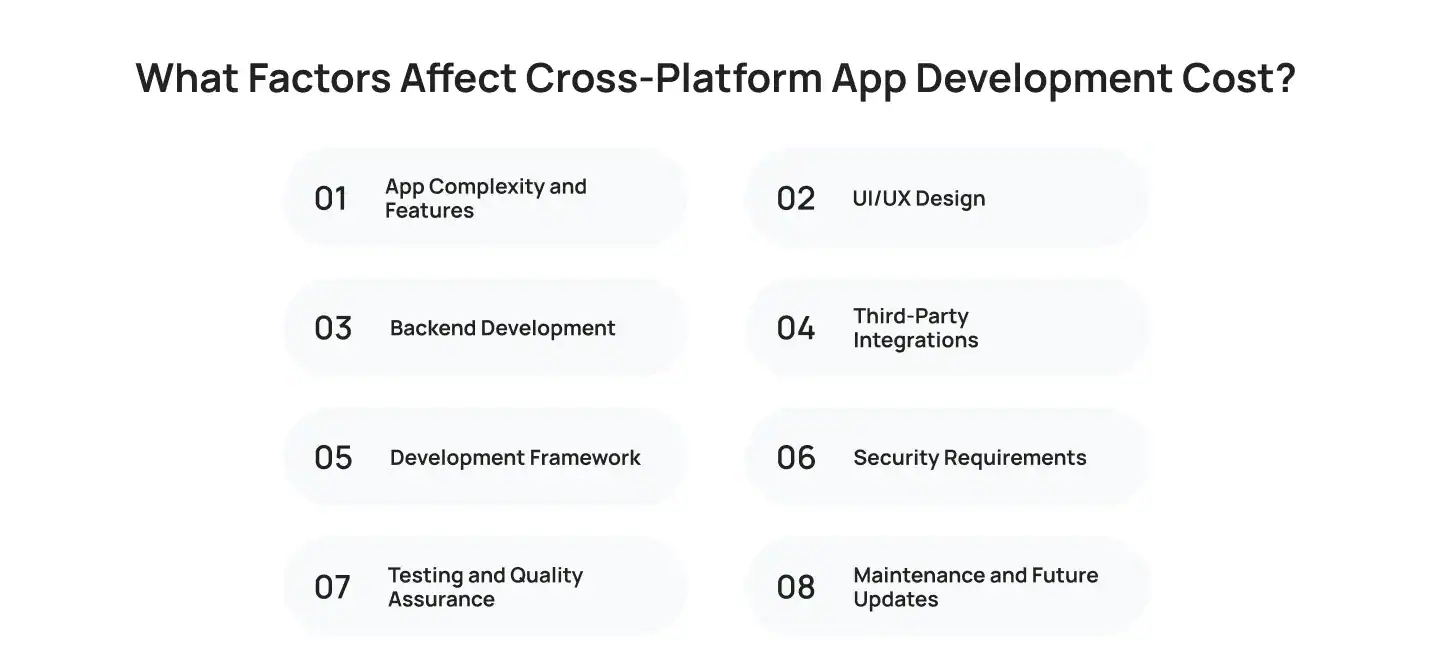
App Complexity and Features
The more features your app includes, the higher the development cost. A basic MVP with user registration and simple navigation is far more affordable than an app with real-time chat, payment gateways, AI functionality, or advanced user roles. Defining only the features you need for launch can help control your initial investment.
UI/UX Design
A clean, intuitive interface improves user experience and encourages long-term engagement. While custom animations, branded visuals, and interactive elements increase pricing, they also help your app stand out in a competitive market.
Backend Development
The backend powers your application’s core functionality, including databases, user authentication, notifications, and cloud storage. Depending on your project, platforms like Firebase can speed up development, while custom backend solutions require a larger development investment.
Third-Party Integrations
Many apps depend on external services such as payment gateways, maps, social logins, analytics, or CRM platforms. Each integration requires additional development and testing, making it an important part of your overall cost estimate.
Development Framework
Your choice of framework also impacts development time and maintenance. Flutter, developed by Google, uses Dart to build visually rich applications, while React Native, backed by Meta, relies on JavaScript and remains a popular choice for businesses with existing web development expertise.
Security Requirements
If your app handles customer data, financial information, or sensitive business records, security cannot be overlooked. Features like encrypted data storage, secure authentication, and compliance with industry standards require additional development but provide long-term value.
Testing and Quality Assurance
Before launch, your app should be tested across multiple devices and operating systems. Thorough testing ensures a consistent experience on both Android and iOS, helping identify bugs and performance issues before users do.
Maintenance and Future Updates
Launching your app is only the first step. Regular updates, bug fixes, performance improvements, and compatibility with new operating system releases all require ongoing support. Including maintenance in your budget helps keep your app secure, reliable, and ready for future growth.
Whether you’re building a simple MVP or a feature-rich enterprise application, careful planning can make a significant difference to your overall costs. Working with experienced cross-platform app development developers helps you choose the right technology, avoid unnecessary development expenses, and build an application that’s ready to scale as your business grows.
Flutter vs. React Native: Which One Is More Cost-Effective?
When comparing the cross-platform app development cost, businesses often narrow their choices to Flutter and React Native. Both frameworks reduce development time by allowing a single codebase for Android and iOS, but the better choice depends on your project requirements.
| Factor | Flutter | React Native |
| Developed By | Meta | |
| Programming Language | Dart | JavaScript |
| UI Performance | Excellent | Very Good |
| Development Speed | Fast | Fast |
| Community Support | Strong | Very Strong |
| Best For | Custom UI, enterprise apps | MVPs, content-driven apps |
Flutter
Flutter is a great option for businesses that need visually rich applications with consistent performance across platforms. Its built-in widgets and rendering engine reduce the need for platform-specific adjustments, making it ideal for highly customized apps.
React Native
React Native remains one of the most popular frameworks because of its mature ecosystem and large developer community. Businesses with existing JavaScript expertise can often reduce development time by using React Native for their mobile projects.
Which One Costs Less?
There’s no universal winner. For apps with highly customized interfaces, Flutter may reduce long-term development effort. For projects that share logic with existing web applications, React Native can often lower the initial development investment. The right framework depends on your business goals rather than the framework itself.
How to Reduce Cross-Platform App Development Costs Without Compromising Quality
Lowering costs doesn’t mean cutting corners. It means making smarter development decisions.
Start with an MVP
Launch with only your core features. Once you validate your idea, you can expand based on real user feedback.
Prioritize Features
Separate must-have features from nice-to-have additions. This keeps your initial project budget under control.
Choose the Right Framework
Selecting between Flutter and React Native based on your business needs can reduce development time and future maintenance.
Build with Scalability in Mind
A scalable architecture helps avoid expensive redevelopment as your application grows.
Work with Experienced Developers
An experienced team may not offer the lowest quote, but quality development reduces technical debt and long-term maintenance costs.
Is Cross-Platform Development Worth the Investment in 2026?

For most businesses, the answer is yes.
If your goal is to launch an app on both Android and iOS without doubling your development effort, cross-platform development offers a practical and cost-effective solution. A shared codebase means faster development, easier maintenance, and quicker updates, helping you bring your product to market sooner while making the most of your development investment.
It’s a great fit for startups validating an idea, growing businesses expanding their digital presence, and enterprises looking to streamline development without compromising the user experience.
Of course, there are exceptions. If your app relies heavily on advanced graphics, complex animations, or platform-specific hardware features, native development may still be the better choice. It all comes down to what you’re building and the experience you want to deliver.
If you’re wondering whether cross-platform is the right direction for your next project, our guide on the future of mobile app development explores how modern frameworks are evolving and why more businesses are choosing this approach.
Why Choose Cubix for Cross-Platform App Development?
Choosing the right development partner is just as important as choosing the right technology. A successful app needs thoughtful planning, experienced developers, and a team that understands how to build products that grow with your business.
Since 2008, Cubix has helped startups, enterprises, and global brands turn ideas into high-quality digital products. With 1,300+ completed projects, 350+ designers and developers, and 600+ satisfied clients, we’ve built solutions across industries, from healthcare and fintech to logistics, eCommerce, and gaming.
Our approach goes beyond development. We take the time to understand your business goals, recommend the right technology stack, and build applications that are reliable, scalable, and designed for long-term success. From product strategy and UI/UX design to development, testing, deployment, and ongoing support, our team stays involved at every stage of the journey.
If you’re looking for an experienced mobile app development company, our team can help you build a cross-platform application that delivers a seamless experience on both Android and iOS while staying aligned with your business objectives.
Great things happen when our talented teams work together to achieve your goals. At Cubix, we focus on solving real business problems because that’s where true value lies. – Salman Lakhani, CEO at Cubix
Conclusion
Understanding the cross-platform app development cost is about more than comparing price estimates. Your final investment depends on your app’s complexity, features, technology stack, and long-term business goals. By planning carefully, choosing the right framework, and working with experienced developers, you can control costs while building an application that’s ready to grow with your business.
Whether you choose Flutter or React Native, the goal should be to create an app that delivers value to users and supports your business for years to come. Investing in quality development from the beginning often saves both time and money in the long run.
Want to discuss your project? Our experts are just a click away.
Contact UsFrequently Asked Questions
1: How much does cross-platform app development cost in 2026?
The cross-platform app development cost typically ranges from $25,000 to $250,000+ in 2026. The final price depends on factors such as app complexity, features, UI/UX design, backend infrastructure, third-party integrations, and the experience of your development team.
2: Is Flutter or React Native more cost-effective for app development?
Both frameworks are cost-effective, but the better choice depends on your project. Flutter is ideal for highly customized user interfaces and consistent performance, while React Native is a strong option for businesses with existing JavaScript expertise or web applications. Your requirements will determine which offers the best return on investment.
3: What factors affect cross-platform app development cost the most?
The biggest cost drivers include app complexity, custom features, UI/UX design, backend development, API integrations, security requirements, testing, and ongoing maintenance. Clearly defining your project scope helps create a more accurate cost estimate.
4: Is cross-platform development cheaper than native app development?
In many cases, yes. Cross-platform development uses a shared codebase for both Android and iOS, reducing development time, maintenance efforts, and overall project costs compared to building two separate native applications.
5: How long does it take to build a cross-platform mobile app?
Development timelines vary depending on the project’s complexity. A basic MVP may take 2 to 4 months, while medium-complexity apps usually require 4 to 7 months. Enterprise applications with advanced features can take 7 to 12 months or longer.
6: What hidden costs should businesses consider when developing a cross-platform app?
Beyond development, businesses should budget for cloud hosting, third-party services, app store fees, security updates, maintenance, performance optimization, and future feature enhancements. Planning for these expenses helps avoid unexpected costs after launch.
7: Is cross-platform app development a good choice for startups?
Yes. Cross-platform development is an excellent option for startups because it enables faster product launches, lower development costs, and access to both Android and iOS users through a single codebase. This makes it easier to validate ideas while managing the project budget.
8: How do I choose the right cross-platform app development company?
Look for a company with proven experience, a strong project portfolio, expertise in frameworks like Flutter and React Native, transparent communication, and end-to-end development services. A reliable development partner should also provide ongoing support, maintenance, and guidance as your app grows.