Key Takeaways
- Android commands over 70% of global mobile OS market share.
- Enterprise Android apps automate complex workflows and boost operational efficiency.
- Custom API integrations connect mobile solutions with existing legacy enterprise systems smoothly.
- Enterprise App Security protects sensitive business data from modern cybersecurity threats.
- Tailored deployment strategies like Managed Google Play ensure safe internal distribution.
- Partnering with an expert development company guarantees high scalability and strong return on investment.
Over 70% of global mobile device users rely on Android today. This massive adoption rate makes Android the leading OS for business expansion. Organizations worldwide invest heavily in modern mobile technologies to stay competitive.
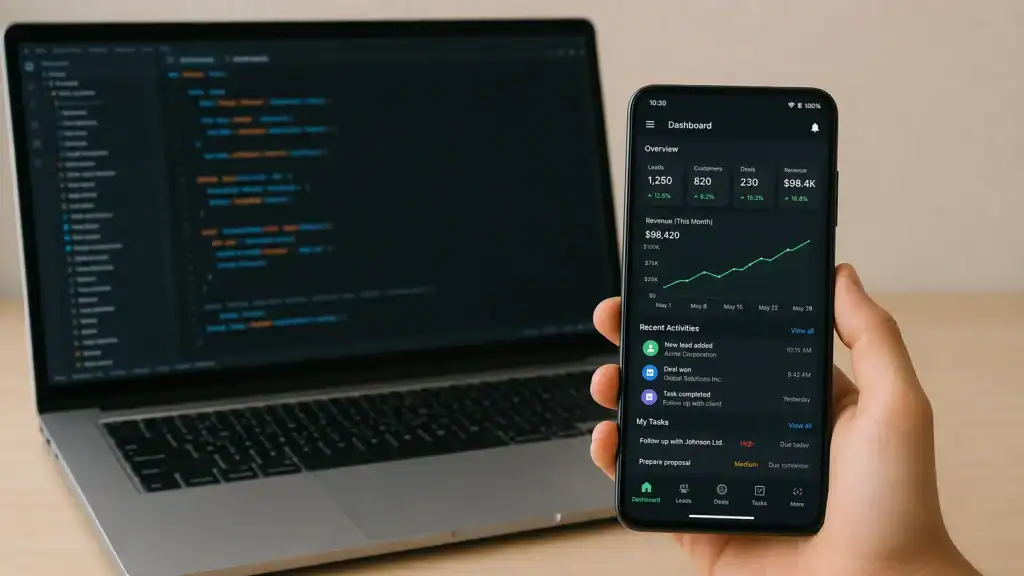
Digital strategies now require fast execution and robust mobility solutions. Enterprise Android App Development helps businesses connect teams and streamline everyday operations. Modern firms leverage mobile software to simplify complex workflow problems.
Choosing the right mobile strategy transforms legacy business operations completely. Companies that adopt custom applications experience immediate productivity improvements. Let us explore why enterprise solutions drive sustainable revenue growth.
What is Enterprise Mobile App Development vs Consumer Apps?
Consumer mobile apps target millions of public individual users worldwide. They focus heavily on public engagement, entertainment, and simple direct transactions. In contrast, enterprise apps solve internal operational challenges for specific business teams.
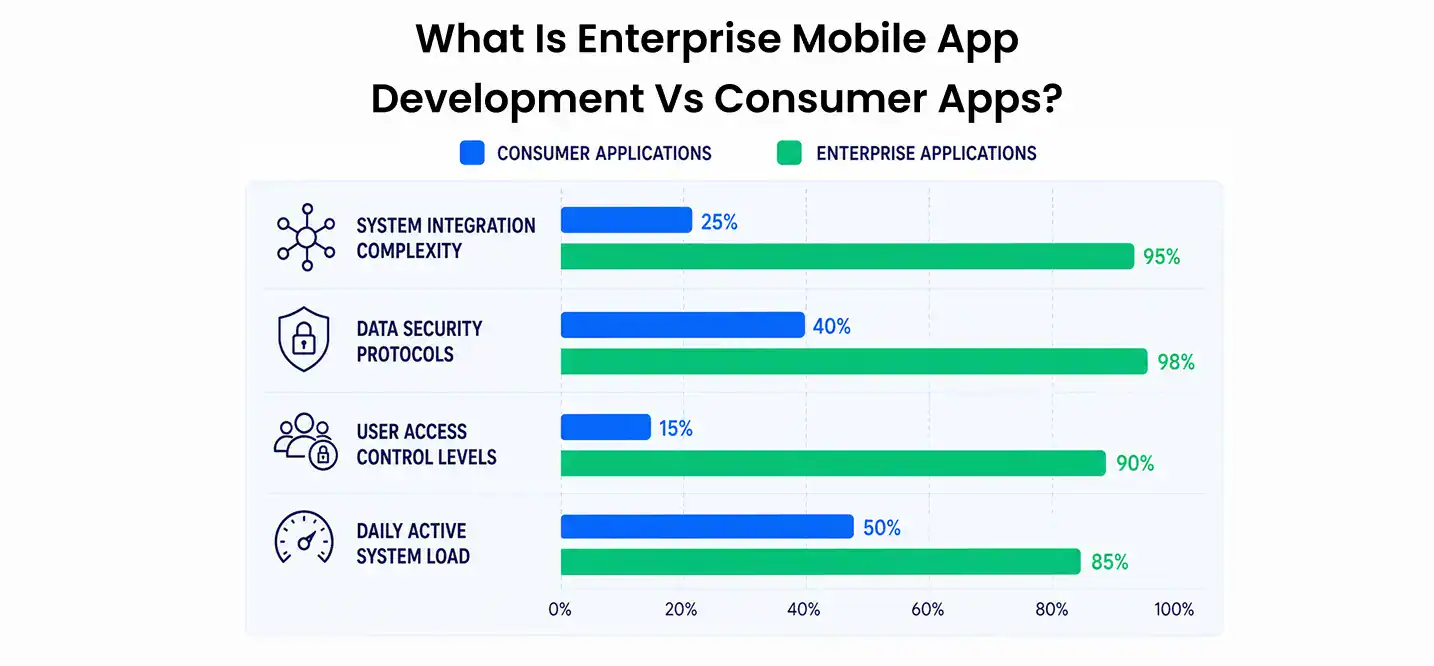
Enterprise software connects employees directly with critical corporate databases and systems. These platforms require high scalability, custom permissions, and deep integrations. They handle complex daily tasks like inventory, payroll, and supply chain tracking.
Building tailored business software requires clear planning and secure engineering processes. Many organizations work closely with experienced mobile app developers to build custom tools. Proper architectural planning prevents system downtime and reduces operational maintenance costs.
Enterprise Apps vs. Consumer Apps Comparison
| Feature Category | Consumer Applications | Enterprise Applications |
| Primary Audience | General public consumers | Employees, managers, and partners |
| Main Objective | Engagement and direct sales | Business Process Automation and task management |
| System Integrations | Social media and basic payment tools | Complex ERP, CRM, and legacy database systems |
| Security Standard | Standard user encryption | Advanced Enterprise App Security and MDM policies |
| Deployment Channel | Public Google Play Store | Private Managed Google Play or internal distribution |
Why Android Leads Enterprise Mobility
Statistics show Android powers millions of enterprise devices across manufacturing and logistics. Top industry insights from Fingent highlight Android’s extreme hardware flexibility across industries. Businesses run software on rugged handhelds, tablets, and specialized point-of-sale systems.
Softura research proves open-source platforms reduce long-term device hardware procurement costs. Android Enterprise Application Development allows custom OS modifications for business hardware. Companies control hardware configurations, software updates, and user security permissions seamlessly.
Cubix delivers tailored Android Enterprise Solutions across various competitive global markets. Their engineering teams leverage device management APIs to ensure enterprise compliance. Flexibility makes Android the smart choice for modern organizational scaling strategies.
Global OS Market Share & Enterprise Adoption Metrics
| Region / Metric | Android Market Share | Hardware Diversity Level | Enterprise Deployment Rate |
| Global Market | ~71% total share | Very High (10,000+ device models) | High enterprise adoption |
| Logistics & Supply Chain | ~82% sector share | Industrial scanners and tablets | Very high specialized usage |
| Retail & POS Systems | ~68% sector share | Dedicated smart terminals | Rapidly growing adoption |
Core Benefits of Custom Enterprise Android App Development
Off-the-shelf software rarely meets every unique internal workflow requirement. Custom Android App Development creates tailored features aligned directly with strategic enterprise goals. Tailored software minimizes user friction and automates repetitive administrative office tasks.
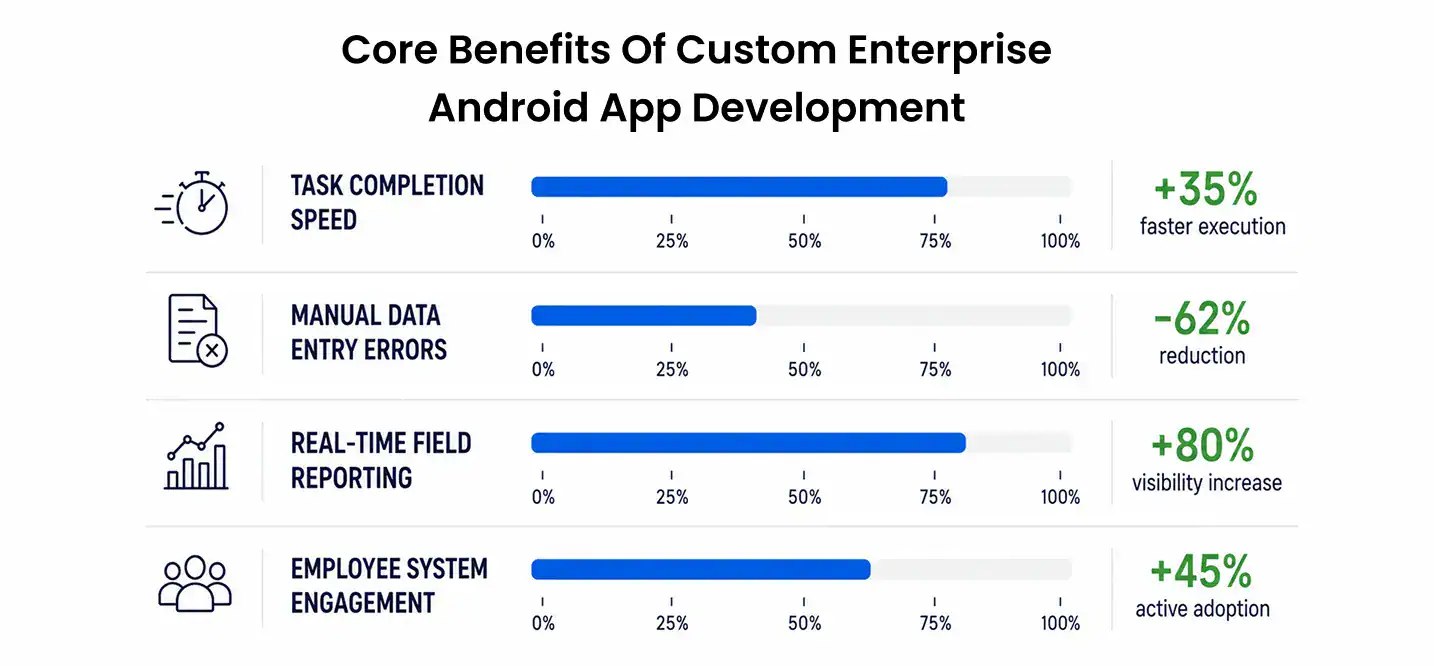
Studies show automated mobile workflows reduce operational task completion time by 35%. Business Benefits Of Mobile App Development include improved data accuracy, faster communication, and higher productivity. Field staff sync operational data instantly with central corporate cloud systems.
Seamless Business Process Automation connects operations across disconnected corporate business departments. Advanced API Integration connects legacy databases with real-time modern mobile applications. Businesses scale faster while keeping IT operational expenses fully under control.
Operations Efficiency Metrics Post-App Implementation
| Operational Area | Manual Benchmark | Post-App Automated Benchmark | Net Efficiency Gain |
| Field Data Collection | 4.5 hours daily | 1.2 hours daily | 73% speed increase |
| Order Processing Time | 24 hours turnaround | 2 hours turnaround | 91% reduction in time |
| Inventory Audit Errors | 8.5% error rate | 0.8% error rate | 90% error reduction |
Ensuring Enterprise App Security and Compliance
Enterprise Mobile App Development demands strong built-in security infrastructure protection protocols. Businesses must safeguard corporate intellectual property and sensitive personal customer data. Implementing multi-factor authentication prevents unauthorized internal access to system records.
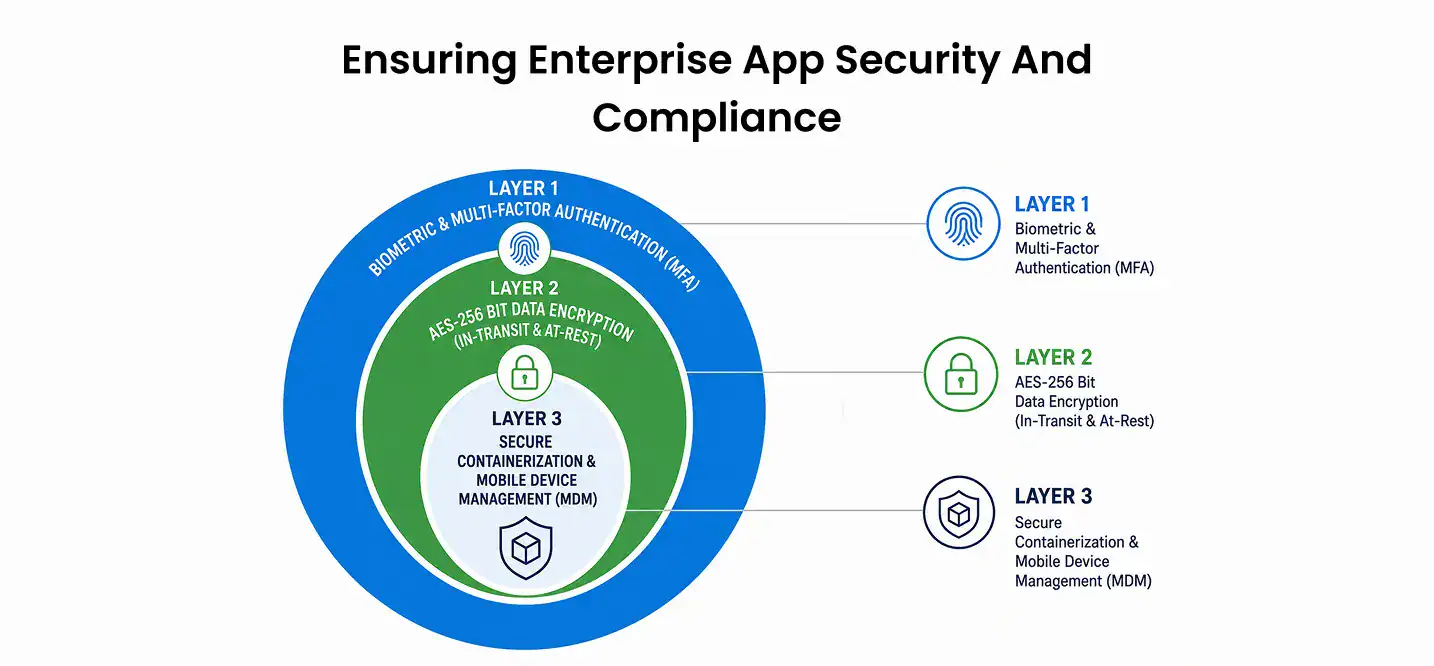
Data breaches cost global businesses millions of dollars in financial damages yearly. Following strict enterprise app security rules stops malicious unauthorized system access attempts. End-to-end data encryption protects corporate transmissions over untrusted public Wi-Fi networks.
Mobile Device Management tools let IT administrators wipe stolen devices remotely. Developers build compliant systems following industry guidelines like HIPAA and GDPR. Enterprise Android Application Development maintains operational integrity across all distributed enterprise networks.
Native vs. Cross-Platform vs. Low-Code for Enterprises
Choosing the correct development platform impacts long-term software performance and stability. Native Android solutions deliver optimal hardware performance and lower system battery usage. Complex applications with hardware integrations perform best with native codebases.
Cross-platform frameworks allow shared code deployment across Android and iOS App Development platforms. This strategy reduces upfront building costs for simple internal corporate mobile applications. Low-code platforms offer rapid prototyping, but lack deep customization options.
Technology Stack Decision Matrix for Enterprises
| Evaluation Metric | Native Android (Kotlin/Java) | Cross-Platform (Flutter/React Native) | Low-Code Platforms |
| Performance Speed | Maximum performance | High performance | Moderate performance |
| Hardware Access | Full hardware access | Near-full access | Limited hardware access |
| Custom Scalability | Unlimited scalability | High scalability | Restricted customization |
| Development Cost | Higher initial investment | Reduced overall cost | Lowest upfront cost |
| Long-Term Control | Full codebase ownership | Full codebase ownership | Vendor lock-in risk |
Deployment Models: Managed Google Play vs. Enterprise Distribution
Deploying Business Android App Development projects requires secure distribution methods. Managed Google Play allows organizations to create private, secure app collections. Administrators control which employees download specific enterprise applications on company devices.
Private APK distribution provides alternative installation routes for isolated internal corporate networks. Custom enterprise app stores give IT managers total administrative software update control. Controlled distribution pipelines protect company intellectual property from external exposure completely.
How Cubix Empowers Enterprise Digital Transformation
Cubix is a globally recognized software development powerhouse known for cutting-edge engineering. They build modern high-performance solutions for Fortune 500 enterprises and fast-growing startups. Their software developers specialize in building secure, highly scalable enterprise mobile applications.
The company delivers end-to-end Enterprise App Development Solutions built for long-term growth. Their engineering teams handle system architecture, complex cloud integrations, and continuous performance maintenance. Cubix turns complex business ideas into seamless digital operational experiences.
Strategic guidance from Cubix speeds up wide-scale Enterprise Mobile App Development for Android projects. They prioritize strict data privacy protocols and real-time backend software integration. Working with top experts ensures projects land on schedule and within budget.
Why Partner with Cubix as Your Android App Development Company?
Selecting the right partner determines the long-term success of enterprise software investments. As a top-tier Android App Development Company, Cubix brings years of domain experience. They build robust mobile applications tailored to unique enterprise business requirement specs.
Cubix combines advanced UI/UX design with scalable server-side cloud systems. They help clients achieve meaningful Digital Transformation through reliable custom mobility products. Their track record includes complex projects built across logistics, healthcare, and finance.
Working with Cubix guarantees direct access to senior Android technology specialists. They ensure your mobile software delivers high ROI, robust safety, and continuous growth. Invest in proven software development solutions to upgrade your operational productivity today.
Want to discuss your project? Our experts are just a click away.
Contact UsFrequently Asked Questions
1. Why is Android app development a key consideration for my enterprise?
Android holds dominant global market share and supports diverse enterprise hardware choices. Its flexible operating system allows seamless customization for specialized enterprise workflows.
2. What are the main benefits of developing an enterprise app for Android?
Enterprise Android apps improve team productivity, automate tasks, and reduce operational errors. They integrate deeply with existing corporate systems to streamline communication across departments.
3. How can I ensure the success of my enterprise Android app?
Partner with an experienced development company to plan clear operational application requirements. Focus on user experience, secure system integrations, and strict performance testing protocols.
4. What is mobile app development for enterprise, and how is it different from a consumer app?
Enterprise apps target internal staff to automate complex operational business processes securely. Consumer apps focus on public audiences for commercial engagement, shopping, and entertainment.
5. How do I choose between native, cross-platform, and low-code for an enterprise mobile app?
Choose native development for maximum performance, security, and hardware access control. Select cross-platform for faster dual-OS launches, and low-code for basic application prototypes.
6. What security and compliance requirements should an enterprise Android app follow?
Enterprise apps must use strong encryption, multi-factor login, and remote data wipe features. They must comply with regional data standards like GDPR, HIPAA, or ISO security guidelines.
7. How long does it take to build an enterprise mobile app from planning to deployment?
Building a custom enterprise mobile application usually takes between four to nine months. Timeline duration depends on feature complexity, legacy system integrations, and safety testing phases.
8. Should we publish on app stores or use enterprise distribution for internal Android apps?
Internal applications should use Managed Google Play or internal Mobile Device Management tools. Private channels prevent unauthorized public downloads and protect internal company intellectual property.