Key Takeaways
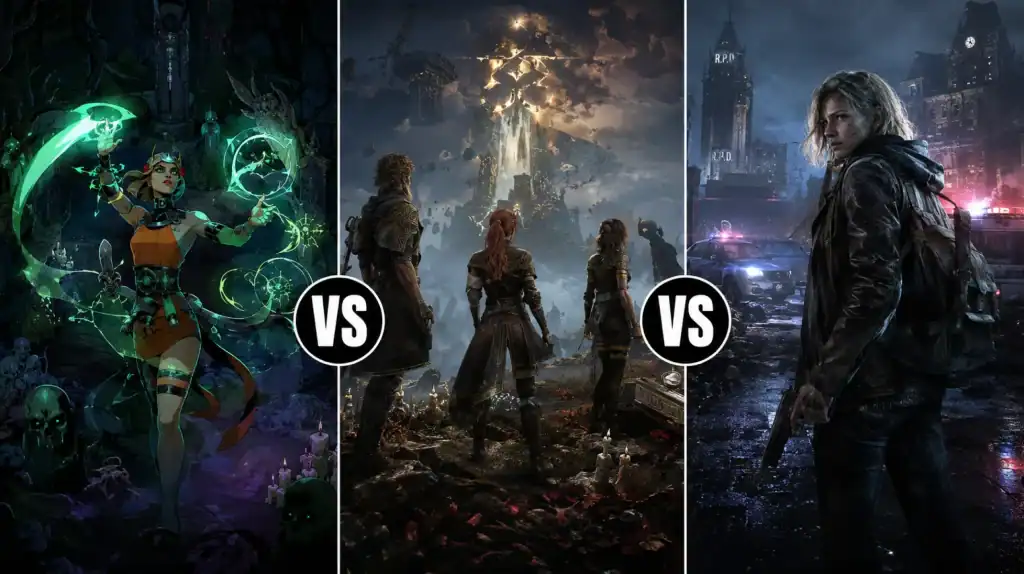
- Indie, AA, and AAA games differ mainly in budget, team size, and creative control.
- Indie games run on passion and small teams. AAA games run on scale and marketing muscle.
- AA games sit in the middle. They balance polish with lower financial risk.
- Publishers shape AAA creative direction more than most players realize.
- Revenue models change by tier, from direct sales to live-service spending.
- Choosing the right development partner matters more than the tier itself.
Gaming is not one industry. It is three, living side by side. You have scrappy indie teams building games in bedrooms. You have mid-size AA studios chasing quality without huge risk. And you have AAA giants spending hundreds of millions on a single release. Each tier plays a different game entirely.
Understanding these tiers helps more than you think. Players use it to pick what fits their taste. Developers use it to plan realistic budgets. Investors use it to judge risk versus reward. Even marketers use it to position a title correctly. This guide breaks it all down, in plain English.
Here is one number to start with. The global games market crossed $184 billion in 2024, spanning every tier combined. That is bigger than movies and music put together. So this comparison is not academic. It is about where real money, real jobs, and real creativity go.
Want to discuss your project? Our experts are just a click away.
Contact UsWhat Are Indie, AA, and AAA Games?
Let’s start simple. These three labels describe scale, not quality.
Indie games are made by small, independent teams. They often self-fund or use crowdfunding. Creative freedom is their biggest strength.
AA games sit in the middle. Budgets are moderate. Teams are bigger than indie but smaller than AAA. They aim for quality without massive risk.
AAA games are the industry’s blockbusters. Huge budgets. Huge teams. Huge marketing pushes. Think Hollywood-level production values.
One thing puts this in perspective. Indie games made up over 295 million units sold in 2024 alone. That is proof size does not limit reach.
Quick Snapshot Comparison
| Feature | Indie | AA | AAA |
| Typical Budget | Under $1 million | $2 million to $20 million | $100 million and up |
| Team Size | 1 to 10 people | 50 to 100 people | 200 to 1000+ people |
| Development Time | 6 to 18 months | 18 to 30 months | 3 to 5+ years |
| Price Point | $5 to $30 | $30 to $50 | $70 and above |
| Creative Control | Full, by the team | Shared with publisher | Publisher-driven |
Indie Games: Small Teams, Big Heart
Indie games prove that small teams can win big. No large publisher. No massive marketing budget. Just an idea and grit.
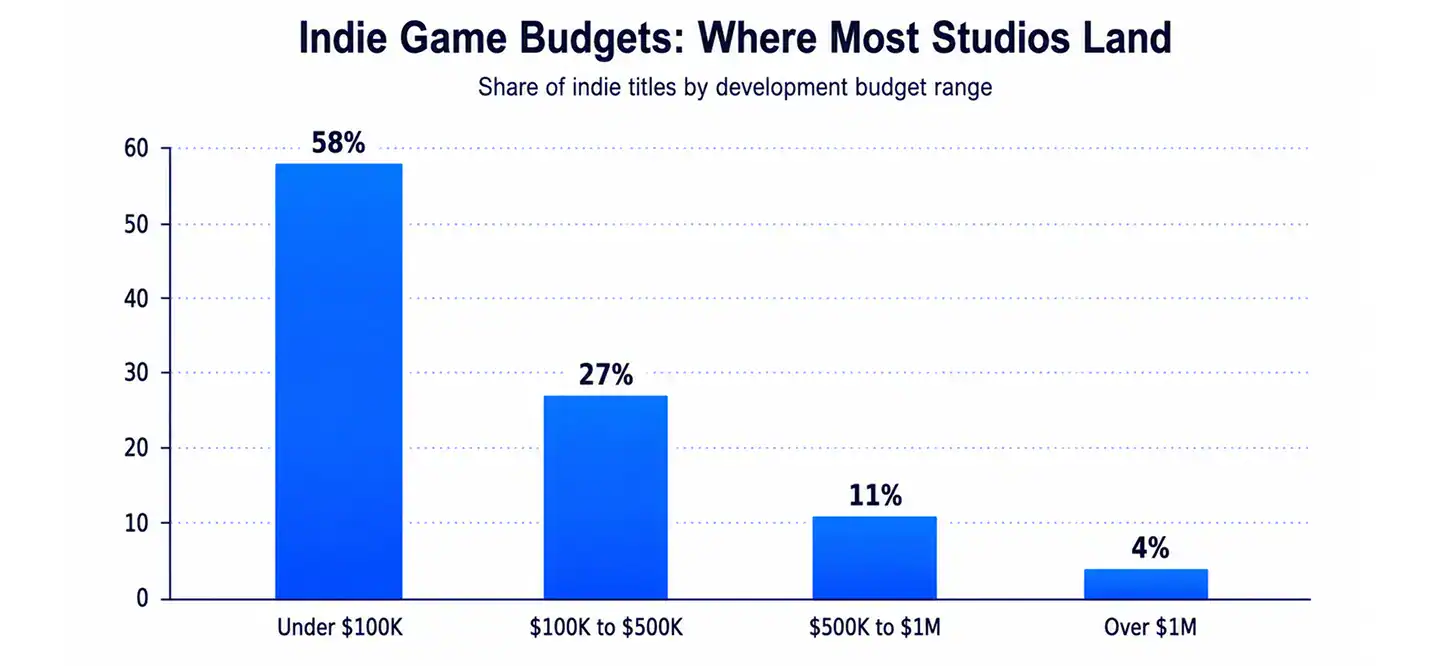
Most indie budgets stay under $100,000. Some go higher, but rarely past $1 million. That low cost is exactly why indie rpg games and pixel-art platformers keep flooding the market. Developers can take real creative risks. Nobody is forcing them toward a “safe” formula.
This freedom shows in the results. Titles like Hades, Celeste, and Stardew Valley became cult classics. None had a AAA budget behind them. One recent success story worth studying is Balatro, a card game that turned a tiny team into a breakout hit.
The global indie games market reached roughly $4 billion. That is not a hobby industry anymore. It is a real business, built on small teams punching above their weight.
Indie Game Budget Distribution
AA Games: The Middle Ground Nobody Talks About Enough
AA games rarely get the spotlight. But they deserve more attention. This tier fills the gap between passion projects and blockbuster spectacle.
An aa aaa games comparison usually comes down to focus. AA studios pick one or two things to nail, like story or combat. They do not chase photorealism in every pixel. That keeps aa games budget requirements sane, usually between $2 million and $20 million.
So what are the advantages of AA games over indie titles? Bigger teams mean faster polish. More funding means better sound design and animation. Yet the risk stays far lower than AAA. Titles like Hellblade: Senua’s Sacrifice and A Plague Tale show what this middle path can achieve.
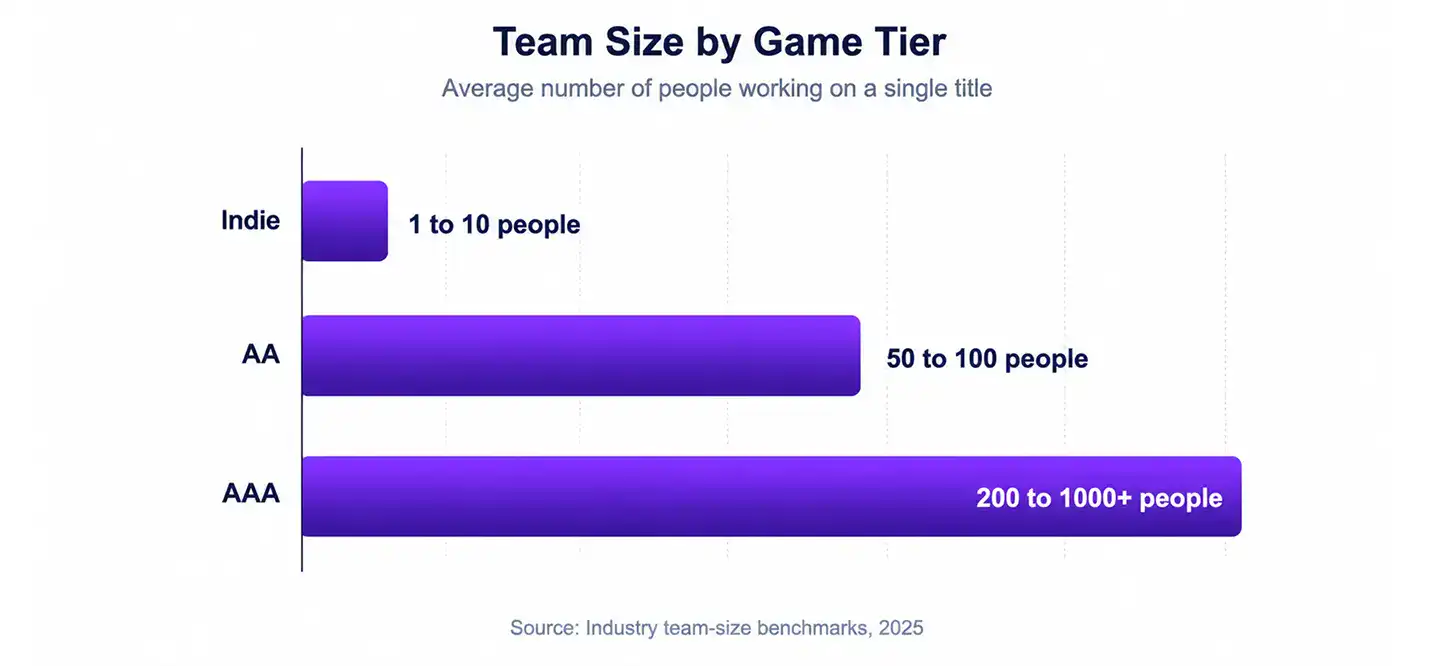
One more number worth noting. AA teams typically run 50 to 100 people, a fraction of AAA headcounts but far more than most indie crews. That gives them speed without sacrificing too much quality.
Team Size by Game Tier
AAA Games: Hollywood-Level Production
Now for the giants. What is a triple a game, really? It is the industry’s top production tier. Massive budgets. Massive teams. Massive marketing.
Modern AAA budgets often exceed $200 million, and that figure excludes marketing. Add promotion, and total spend can double. This is why a full Game Development Studio setup, with specialists across every discipline, becomes essential at this level. Studios like Cubix understand this scale of coordination firsthand, from concept art to shipped build.
AAA teams can include over a thousand people across multiple countries. Programmers, artists, sound designers, QA testers, and marketers all work in parallel. For a deeper look at what qualifies, check out this breakdown of what is a AAA game and this list of the top AAA game development companies shaping the market today.
AAA titles can cost over $100 million just for base development, before a single trailer airs. That scale is why so few studios can compete at this level.
How Long Does Each Tier Actually Take?
Time is money in game development. And the gap between tiers is massive.
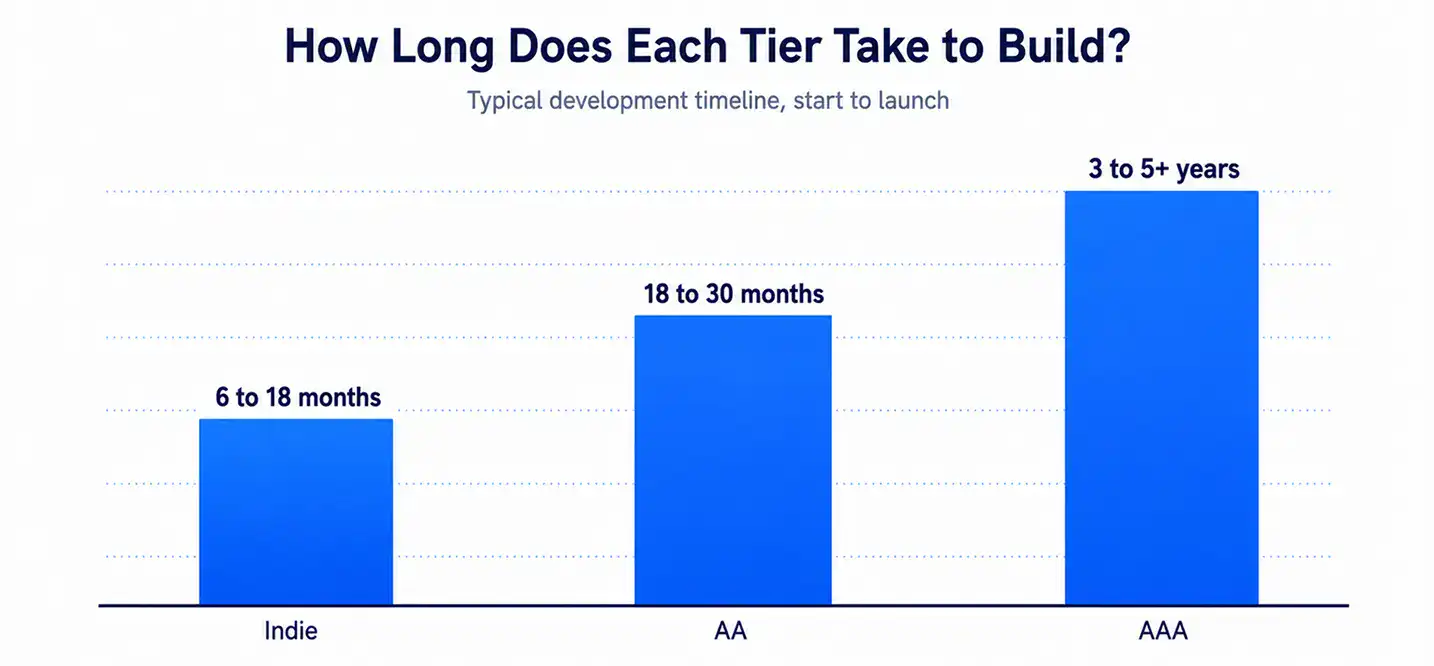
Indie titles can ship in under a year if the scope stays tight. AA projects usually need 18 to 30 months. AAA games often take three to five years, sometimes longer for open-world epics.
Curious about the real numbers behind these timelines? This guide on how long it takes to develop a video game breaks it down stage by stage. And if budget planning is your next question, this resource on how much it costs to make a video game fills in the financial side.
AAA production alone can run three to five years, not counting pre-production or post-launch support. That timeline is a major reason budgets balloon so fast.
Budget and Timeline Breakdown
| Tier | Budget Range | Development Time | Team Size |
| Indie | Under $1 million | 6 to 18 months | 1 to 10 |
| AA | $2 million to $20 million | 18 to 30 months | 50 to 100 |
| AAA | $100 million and up | 3 to 5+ years | 200 to 1000+ |
Development Timeline by Tier
How Publishers Shape AAA Creative Direction
Here’s a question players ask a lot. How do major publishers influence the creative direction of high-budget video games?
The answer is simple. Publishers fund AAA games, so they carry real influence. They push for broader appeal to protect their investment. Sequels, familiar mechanics, and proven genres get greenlit more often. Risky, original ideas face tougher pitches.
Indie developers face the opposite reality. Without a publisher breathing down their neck, they chase weird, original concepts freely. That is the core trade-off in every indie game development vs aaa studios debate. Freedom versus funding.
AAA marketing budgets can rival or exceed development costs, sometimes reaching into nine figures. That kind of spend demands mass-market safety, not niche experimentation.
Where to Find and Play Games From Every Tier
So where can players actually find these games? It depends on the tier.
Small teams host indie titles on itch.io, Steam, and the Epic Games Store. These platforms make it easy to discover games from smaller development teams. Buying popular indie games online is simple through Steam sales or bundle sites like Humble Bundle.
Mobile is a different story entirely. Many indie and AA-style titles now launch mobile-first, often built by a specialized mobile game development company that understands app store dynamics, monetization, and platform rules unique to phones.
Subscription services also help here. Xbox Game Pass and PlayStation Plus mix AAA hits with a diverse catalog of AA and indie titles. That answers a common question: yes, subscription platforms do focus on variety across mid-tier and indie studios, not just blockbusters.
Mobile gaming now accounts for over 49% of global games revenue, making it the single largest platform segment. That is a huge shift from console and PC dominance a decade ago.
Revenue Models: How Each Tier Makes Money
Money flows differently depending on the tier. Understanding this helps explain a lot of industry decisions.
Indie developers usually rely on direct sales. Some add optional donations or pay-what-you-want pricing. A few use free-to-play models with cosmetic purchases, especially in the fast-growing world led by a hyper casual game development company, where volume matters more than price.
AA games mix things up. They often price lower than AAA but still charge upfront. Some add small DLC packs post-launch. This keeps common revenue models for games developed by independent and mid-tier creators varied but manageable.
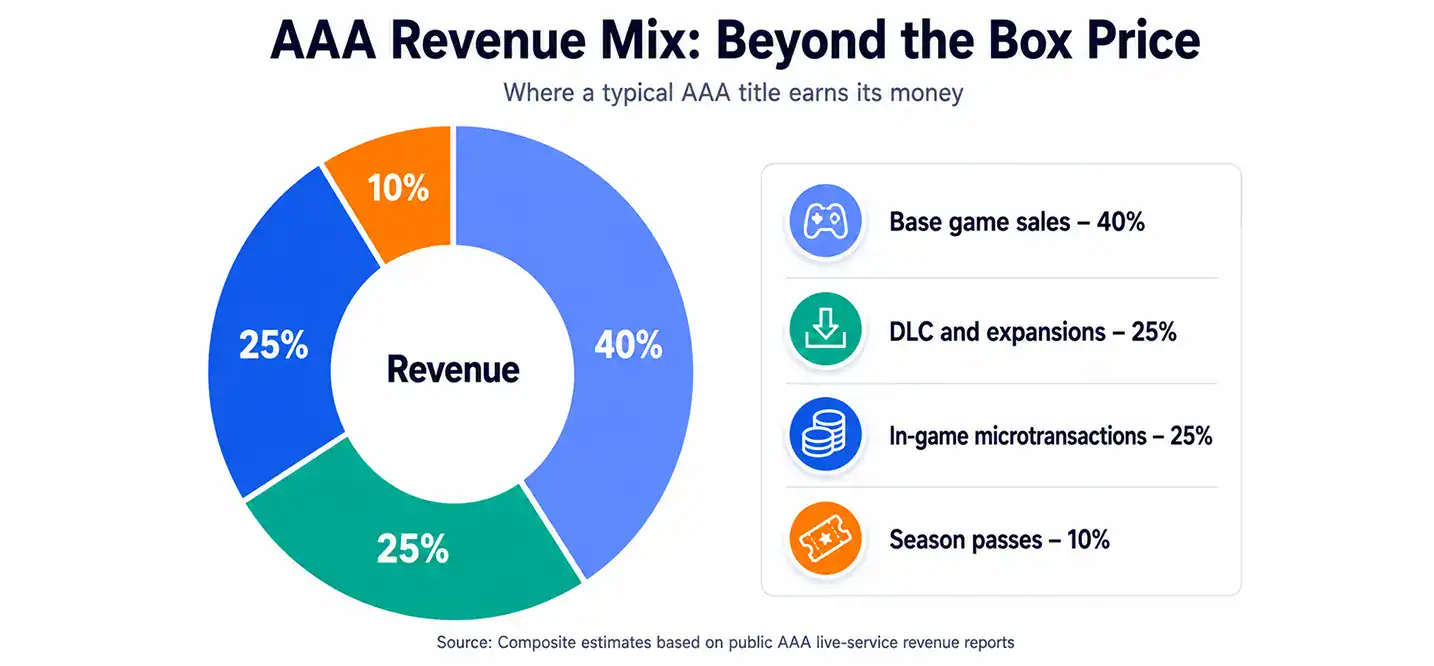
AAA titles go all in on layered monetization. Base sales, DLC, season passes, and microtransactions all stack together. This is why so many AAA games feel like ongoing services now, not one-time purchases.
In-game microtransactions alone can account for roughly a quarter of total AAA revenue, based on public live-service reports. That is real money, long after launch day.
Monetization Models by Tier
| Tier | Primary Revenue Source | Secondary Revenue |
| Indie | Direct game sales | Donations, pay-what-you-want |
| AA | Upfront purchase | Small DLC packs |
| AAA | Base sales + DLC | Microtransactions, season passes |
AAA Revenue Mix
Engines and Tools: What Powers Each Tier
Tools matter just as much as talent. And each tier tends to lean on different ones.
Indie developers usually pick Unity or Godot for their lower learning curve and cost. Bigger indie and AA teams sometimes move to Unreal Engine for better visuals. If you are weighing options, this comparison of Unity vs Unreal Engine for indie developers is a solid starting point. There is also a full roundup of the top game engines for indie developers worth bookmarking.
AAA studios often build proprietary engines, tuned exactly for their games. That level of custom tooling is expensive but pays off at scale. It also overlaps heavily with fast-growing sectors like the hyper casual game development company space, where speed and iteration matter more than raw graphical power.
AAA Game Art Studio Services: Why Visual Quality Still Wins
Art can make or break a AAA title. Players notice visual quality instantly, even before gameplay.
This is where dedicated AAA Game Art Studio Services come in. These teams specialize in character models, environments, animation, and VFX at a level indie or AA teams rarely need. Cubix has built exactly this kind of specialized capability, supporting studios that need AAA-grade visuals without building an in-house art department from scratch.
Visual fidelity is not just about looking pretty. It shapes reviews, trailers, and word-of-mouth. A single stunning cinematic can drive millions of pre-orders before launch. That is why so many studios outsource art production to specialists instead of stretching internal teams thin.
Cubix Spotlight: Building Games Across Every Tier
Most studios pick one lane. Cubix does not. Cubix works across indie, AA, AAA, and mobile projects, adapting its approach to each tier’s needs.
As a full custom game development company, Cubix handles everything from early concept to post-launch support. That range matters. A studio comfortable across every tier understands the trade-offs each one demands, from tight indie budgets to sprawling AAA production pipelines.
Cubix’s portfolio spans genres and platforms too. RPGs, hyper-casual mobile hits, strategy titles, and high-fidelity AAA-style projects all fall within its wheelhouse. That versatility is rare. Most studios specialize narrowly. Cubix built its reputation by doing the opposite, staying flexible without losing quality.
For teams curious about scope and cost planning across tiers, this deep dive into triple A game examples offers useful context on what top-tier production actually looks like in practice.
Studios that specialize in cross-tier development report faster onboarding, since teams already understand varied budget and timeline constraints. That kind of flexibility saves months on early planning alone.
Final Thoughts
Indie, AA, and AAA are not rankings. They are different paths, each with real strengths. Budget size does not decide quality alone.
Players benefit from all three tiers existing together. Developers benefit from choosing the tier that fits their resources honestly. And studios like Cubix prove that understanding every tier, not just one, leads to stronger, smarter game development.
Want to discuss your project? Our experts are just a click away.
Contact UsFrequently Asked Questions
1. What are the key differences between indie, AA, and AAA games?
Budget, team size, and creative control. Indie means small and independent. AA means moderate and balanced. AAA means massive and publisher-driven.
2. Is there an “A” tier below AA?
Not formally. Some use “single A games” loosely for very small commercial titles, but it is not an official industry category.
3. How do you define AAA vs AA vs A?
AAA means top-tier budget and scale. AA means mid-tier, moderate risk. “A” is informal, usually meaning a small studio with modest but real funding.
4. What exactly defines AAA? Is it just budget?
Budget is the biggest factor, but team size, marketing spend, and production polish all matter too.
5. Which companies specialize in AA game development?
Studios like Cubix work across this tier, alongside several mid-size independent publishers focused on quality over massive scale.
6. AAA games vs indie games: what should players value more?
It depends on taste. AAA offers polish and scale. Indie offers originality and heart. Neither is objectively better.
7. Can indie games compete with AAA in quality?
In technical polish, rarely. In creativity and emotional impact, often yes. Many indie titles win major awards over AAA competitors.