Key Takeaways
- VR app development costs in 2026 start around $20,000 and can reach $500,000 or more for complex projects.
- The largest cost drivers are platform selection, interactive features, content quality, and multiplayer.
- Supporting multiple VR platforms raises costs and requires extra development time.
- Developer rates and project pricing models vary widely, with significant regional differences.
Virtual reality (VR) app development and a native app development company brings together software engineering, 3D design, and hardware integration to create immersive experiences on devices like Oculus, HTC Vive, PlayStation VR, and mobile headsets. Every VR application relies on engineered environments, interactive logic, and hardware response. Some projects deliver simple 360-degree tours. Others build real-time multiplayer worlds, photorealistic visuals, or complex data simulations.
Budgeting for these projects often feels overwhelming. VR app development costs usually range from $20,000 to $500,000 or more, depending on how complex the app is, how interactive it needs to be, and how many platforms you want to support. Enterprise simulations and AAA-level VR games can go even higher. These broad ranges exist because each VR project calls for its own blend of creative, technical, and engineering effort.
In this guide, you’ll see which factors most affect virtual reality development cost, how costs change with different features, and how to make smart decisions with your budget. You’ll also learn how the best custom mobile app development company can make a huge impact on the outcome.
Want to discuss your project? Our experts are just a click away.
Contact UsWhat Drives the Cost of VR App Development?
Many organizations ask how much does a VR cost, hoping for a single answer. Instead, several main factors shape the actual budget for any VR project.
Major Cost Factors
Several drivers play the biggest role in ar vr app development company costs:
- Platform selection: Costs change depending on whether you target Oculus, HTC Vive, PlayStation VR, or mobile VR. Some platforms demand more complex engineering or use proprietary SDKs.
- App complexity: A simple 360-degree video experience isn’t remotely the same as a multiplayer training simulation or an action game.
- Content quality: Making custom 3D assets, building realistic environments, and animating them adds to the budget. Detailed modeling and photorealistic visuals require more time and specialized talent.
- User interactivity: The more interaction you include, gesture tracking, hand controllers, physics-based objects, the higher the workload and QA effort.
- Multiplayer and networking: Real-time multiuser support, collaboration, or social features require more work on both the app side and the backend.
- Backend infrastructure: Cloud services, analytics systems, and real-time data integrations create recurring costs that can be significant.
- Licensing and middleware: Premium SDKs, asset packs, or vertical-industry toolkits may need large upfront investment.
All these factors combine to set the baseline for how much it costs to develop a VR app. More advanced features and higher levels of polish mean a larger budget.
Cost Impact Table: Feature and Complexity Breakdown
Here’s a quick look at how typical features and app scope drive costs up:
| Feature or Component | Typical Cost Impact | Example Use Case |
| 360° Video Only | +$20,000–$50,000 | Real estate tours, product demos |
| Basic Interactive Scene | +$30,000–$80,000 | Training modules, simple games |
| Multiplayer Functionality | +$50,000–$150,000 | Collaborative training, social VR |
| Photorealistic 3D Assets | +$25,000–$100,000 | Architecture, medical visualization |
| Cross-Platform Support | +30–50% total cost | Oculus + Vive + PlayStation |
| Custom Backend/Analytics | +$20,000–$70,000 | Data-driven enterprise solutions |
By comparing this breakdown, you can see how each additional capability or quality increase grows the required budget.
Price Tiers for VR App Development in 2026

When you need to know how much it costs to develop a VR app, begin by choosing which overall tier matches your needs. In 2026, VR budgets usually fit into three main tiers: basic MVP, mid-level, and advanced or enterprise-grade applications. Each tier brings different depth, polish, and scalability.
Basic projects support demos and single-scene prototypes. The mid-tier brings advanced features and more environments. At the top, advanced builds deliver real-time multiplayer, photorealistic visuals, analytics dashboards, and enterprise integration.
| Tier | Budget Range | Typical Deliverables |
| Basic MVP | $10,000–$50,000 | Single environment, limited interactivity, demo-ready |
| Mid-Level | $50,000–$200,000 | Multiple scenes, moderate interactivity, basic analytics |
| Advanced | $200,000–$1M+ | Multiplayer, custom backend, high-fidelity assets, analytics |
VR Development Pricing Table by Tier
A budget of $10,000–$50,000 usually covers a simple, single-environment app with minimal interactivity, enough for proof-of-concept or early demos. With $50,000 or more, you can support a functional training app or build a robust prototype for future expansion. Rich, full-scale experiences, think multiplayer, advanced analytics, top-tier graphics, can easily reach $500,000 or more.
Your choice of tier shapes the depth of user experience, the number of features you can deploy, and how much ongoing support you need.
How Much Does It Cost to Develop for Different VR Platforms?
Virtual reality development cost depends heavily on which platforms you want to cover. Every major device family has its own SDKs, technical rules, and approval hurdles.
Oculus and HTC Vive share similar toolchains but differ in controllers and quality expectations. PlayStation VR, as a closed console system, requires stricter licensing and QA, which increases both timeline and budget. Mobile VR focuses on broad compatibility but sacrifices content fidelity due to hardware limits.
Sticking to a single platform keeps budgets low. Supporting two or more, such as Oculus plus HTC Vive, often raises both cost and timeline by 30–50% because of extra redesign, testing, and custom engineering.
Platform Comparison Chart: Cost and Timeline
| Platform | Unique Cost Drivers | Typical Project Timeline | Notable Platform Fees/Constraints |
| Oculus | Unity/Unreal support, hand tracking | 3–8 months | Platform SDK free, store approval required |
| HTC Vive | Room-scale, SteamVR integration | 3–8 months | Open platform, hardware costs |
| PlayStation VR | Proprietary SDK, console approval | 4–12 months | Licensing fees, strict QA |
| Mobile VR | Lower fidelity, wider reach | 2–6 months | Lower dev cost, device fragmentation |
If you plan to support all major VR headsets, every new platform adds months and tens of thousands to the project workload.
Hourly Rates and Regional Price Differences for VR App Development
The location of your development team affects total cost as much as your feature list. Hourly rates drive most of the budget, these cover developer pay, project management, and company overhead.
North American and Western European studios ask for higher rates due to their depth in technical skill, especially for complex or enterprise-level VR projects. Eastern Europe offers highly skilled teams at lower prices, making them a solid choice for mid-range apps. Asia and Latin America add further savings options across simple and advanced projects, but experience with console-grade or AAA VR can vary.
Timezone alignment and communication skills also matter, not just the hourly rate.
Regional VR Developer Rate Table
| Region | Typical Hourly Rate | Strengths and Considerations |
| North America | $80–$200/hr | High expertise, higher cost, enterprise focus |
| Western Europe | $60–$150/hr | Strong design, reliable project management |
| Eastern Europe | $40–$100/hr | Technical skill, cost-effective for mid-tier apps |
| Asia | $25–$70/hr | Large talent pool, variable quality |
| Latin America | $30–$80/hr | Good value, timezone alignment for US clients |
Region shapes your cost, technical complexity limits, and how well your team can communicate with you. There are providers everywhere who can deliver every tier of VR project, but advanced graphics and niche hardware support remain strongest in higher-cost studios.
Cost Breakdown for Complex VR Training Simulations
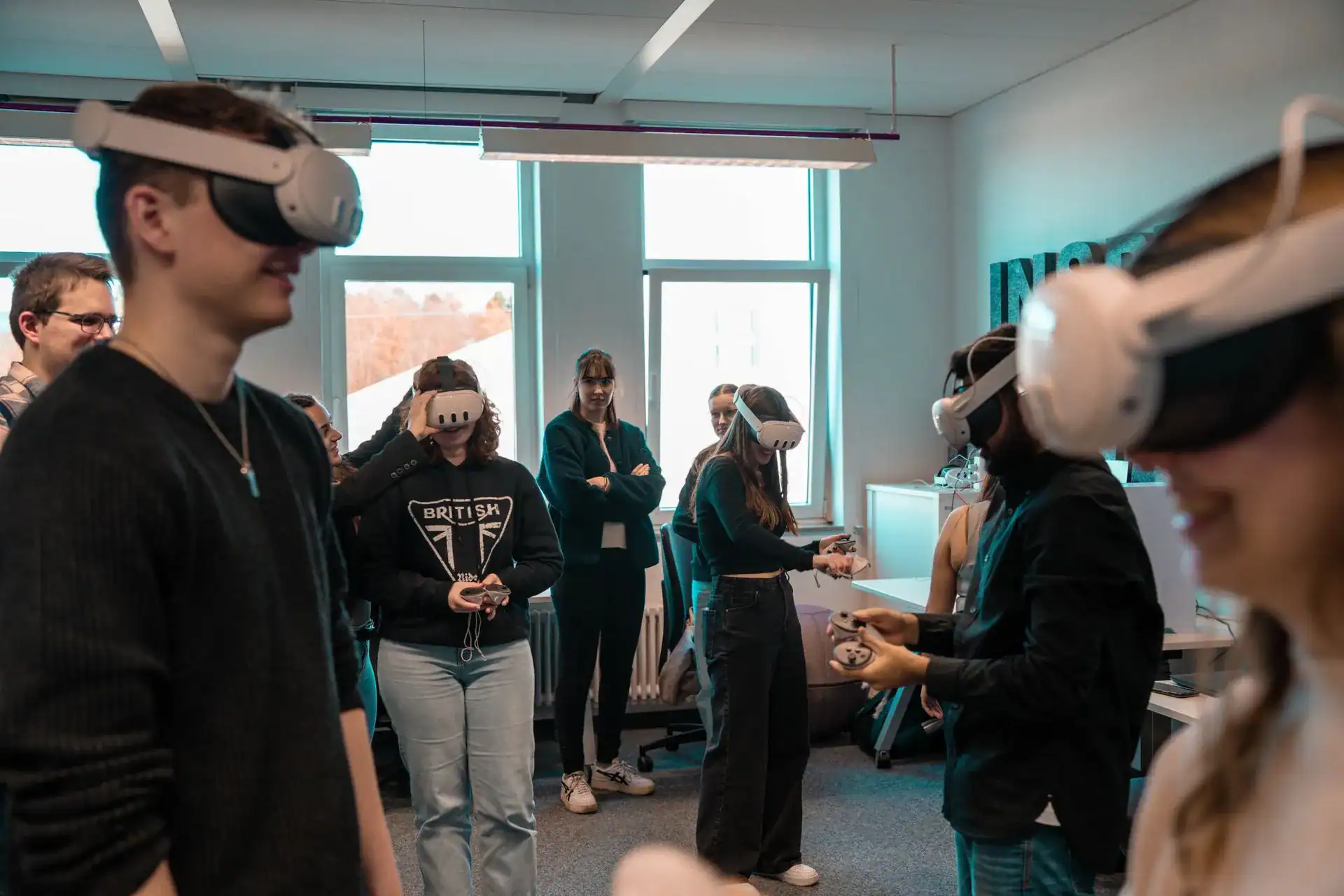
To get a closer look at virtual reality development cost for high-end use cases, consider what goes into a detailed VR training simulation for an enterprise, with a sample budget of $300,000. This type of build includes custom environment design, animated avatars, interactive scripting, backend services, analytics, quality assurance, and project management.
Each piece claims a different share of the budget. Cost overruns often happen when requirements expand late in development.
Example Cost Breakdown Table
| Component | Estimated Cost | Percentage of Total Budget |
| 3D Environment Design | $80,000 | 27% |
| Avatar/Asset Creation | $40,000 | 13% |
| Programming & Logic | $90,000 | 30% |
| Backend & Analytics | $50,000 | 17% |
| QA & Testing | $20,000 | 7% |
| Project Management | $20,000 | 6% |
Breakdown explanation:
- Environment Design: Custom locations, props, textures, and interactive elements built to spec.
- Avatars/Assets: 3D characters, uniforms, equipment, and animations.
- Programming & Logic: Scripting for user actions, physics, multiplayer, UI, and device connections.
- Backend & Analytics: Cloud services for multiplayer, leaderboards, and performance tracking.
- QA & Testing: Device compatibility checks, bug tracking, and validation of user experience.
- Project Management: Planning, documentation, and communication.
This breakdown reflects actual spending patterns for enterprise clients with complex simulation needs.
How VR App Development Costs Compare to AR and Mobile Apps
An enterprise app development company wants to compare AR app development cost or mobile app budgets as a check against their VR planning. Both AR and VR require advanced graphics, device-specific tweaks, and heavy QA, but their development pipelines and hardware targets differ.
For simple projects, VR and AR can cost about the same. Complex VR is usually more expensive given 3D environments, specialist frameworks, and hardware tuning. AR work skews toward real-world tracking and camera overlays.
Mobile app costs usually come in lower, unless you build a highly interactive game with backend systems, then you may match or even exceed basic VR app costs.
AR vs. VR vs. Mobile App Cost Comparison
| App Type | Typical Cost Range | Unique Cost Factors |
| VR App | $20,000–$500,000+ | 3D assets, platform SDKs, hardware |
| AR App | $15,000–$300,000 | Marker tracking, real-world mapping |
| Mobile App | $10,000–$250,000 | Cross-device support, app store fees |
All three categories require planning, design, programming, QA, and app store compliance. VR’s key cost drivers include real-time 3D, device optimization, and hardware-specific features.
Pricing Models and How Companies Charge for VR App Development
Knowing how pricing models work in VR development helps you predict budgets and manage project risks.
Fixed Price
Best for projects with a clear, detailed scope and strict deadlines. You pay a set total, which keeps costs predictable. However, if your scope changes, you’ll need to adjust the contract, which can slow things down.
Time and Materials (T&M)
Ideal for projects with evolving requirements or when you’re exploring ideas. You pay only for actual hours and resources. T&M lets you change features and release iteratively, though it can make final costs harder to predict. Mutual trust and regular milestone reviews keep things on track.
Dedicated Team
If you plan ongoing updates or R&D, this model gives you continuous access to developers, designers, and PMs for a monthly fee. You gain maximum agility and can scale resources up or down, but short-term costs are often higher.
The right model matches your appetite for change, budget flexibility, and control needs.
How to Budget for a VR App Project
Smart budgeting starts by defining your must-have features. Stage lower-priority pieces for later, and avoid over-committing before your launch.
Best practices:
- Spend on MVP value: Invest in what brings early user or business benefit.
- Leave a contingency: Hold back 10–20% of your budget for surprises, QA, or extra polish.
- Define requirements clearly: Careful planning and documentation help prevent misunderstandings and scope creep.
- Use prototyping and phased releases: Test your assumptions with mockups or basic MVPs before expanding.
- Work with proven partners: Studios with deep VR expertise and clear estimates help you avoid costly surprises and missed deadlines.
Good planning and early validation go a long way toward making sure your app meets business needs and brings a real return.
VR App Development by Cubix: Budget-Friendly, Full-Spectrum Results
Cubix offers more than technical skills. The team brings a complete approach, clear estimates, reliable delivery, and deep experience with all major VR platforms. Whether you want an MVP for Oculus Quest, a multiuser trainer for HTC Vive, or a simulation built for PlayStation VR, Cubix delivers strong engineering and creative quality every step of the way.
Clients work with Cubix for its structured requirements process, which locks in scope details and prevents late-stage surprises. Transparent pricing models let you plan your budget with confidence, making executive sign-off smoother.
Cubix’s VR engineers and artists handle every part of the process: photorealistic 3D assets, advanced tracking, data analytics, and multiplayer features. The team scales projects from affordable MVPs and fast demos to enterprise-level training tools and cross-platform business launches.
With Cubix, you get:
- Specialists in Oculus, HTC Vive, PlayStation VR, and mobile VR solutions
- Custom backend and analytics integration, including security and privacy support
- Fast prototypes for investor, customer, or executive demos
- Realistic 3D modeling and animation for high engagement
- Full development lifecycle coverage, including updates and post-launch support
Cubix helps you build VR applications that fit your budget, achieve your business goals, and set a new quality bar in your industry. For related development needs, Cubix also provides expert mobile app development services and game development expertise.
Want to discuss your project? Our experts are just a click away.
Contact UsFrequently Asked Questions
1. How much does it typically cost to develop a VR app in 2026?
Most budgets fall between $20,000 and $500,000 or more. Costs depend on complexity, features, and platform support. Simple 360° video apps cost less. Multiplayer or custom builds demand higher investment.
2. What factors most influence the total cost of a VR application?
Content quality, interactive features, multiplayer, backend analytics, and the number of platforms drive cost. More realism, custom assets, and cloud services always increase budgets.
3. How do VR app development costs compare between platforms like Oculus and PlayStation VR?
Oculus and HTC Vive projects are often less expensive than PlayStation VR. Open SDKs and fewer compliance rules keep costs down. PlayStation VR enforces stricter kits and certification, which adds both time and cost.
4. What is the average timeline for building a basic VR experience?
A simple MVP or demo-ready VR app typically takes 3–6 months to build. More complex projects can run 9–12 months or longer, especially if you want to support several platforms.
5. Are there ways to reduce VR app development costs without sacrificing quality?
Yes. Start small with a single-platform MVP. Reuse 3D assets and build in stages. Clear requirements, rapid prototyping, and working with an experienced partner like Cubix help avoid expensive scope changes.
6. How do AR app development costs compare to VR app projects?
AR apps often cost less than complex VR apps, since they use fewer 3D assets and simpler interactions. However, advanced AR features, such as markerless tracking or scene mapping, can push costs close to those of high-end VR builds. Both require skilled teams and careful planning for the best results. For companies exploring AR, Cubix’s AR app solutions provide tailored expertise.
Additional service pages relevant to this article include Cubix’s mobile app development cost guidance, which complements VR budgeting strategies.