Key Takeaways
- A successful mobile game launch requires a coordinated marketing strategy and rigorous quality assurance at every stage.
- The global mobile games market is projected to reach $116.85 billion in 2026, making preparation and differentiation essential.
- Comprehensive game testing, including alpha and beta phases, ensures a smooth player experience and stronger reviews.
- Outsourcing game testing services brings specialized expertise and helps accelerate the QA process.
- Using a detailed checklist before launch helps identify potential issues, reducing the risk of negative feedback after release.
The mobile games industry is growing rapidly, with projected revenues expected to reach $116.85 billion in 2026. While this surge offers big opportunities, it also brings intense competition as new titles debut every week. Developers must not only create engaging games but also ensure rock-solid functionality through thorough QA in game development. Negative reviews caused by bugs or glitches can sink even the best concepts.
Knowing how to market a mobile game and prioritizing solid game testing before launch give studios a competitive advantage. Effective QA in game development addresses issues before they reach players, while smart marketing creates excitement and drives downloads.
This article walks you through a step-by-step approach to promotion and launch, outlines essential QA methods, explores the importance of detailed checklists, and examines the value of outsourcing game testing services for strong results.
Want to avoid launch-day bugs? Get professional game testing from Cubix
Contact UsStep-by-Step Mobile Game Marketing and Launch Plan
Launching a mobile game takes multiple coordinated steps, from validating the initial idea to ongoing post-launch support. Planning both your marketing and QA activities from the start is crucial. Here’s how to market a mobile game and manage game testing for a successful release, with clear steps showing where QA fits into the process.
1. Conduct Market Analysis
Research your target audience, analyze genre trends, and review leading competitors. Collect data on player preferences and monetization methods to guide your design choices and marketing plan.
2. Define Your Unique Selling Proposition (USP)
Identify what makes your game different, whether a gameplay mechanic, art style, or narrative. Your USP becomes the core of your marketing efforts and helps players remember your title.
3. Develop a Pre-Launch Marketing Strategy
Set up social media profiles and a teaser website. Share sneak peeks, blog posts, and behind-the-scenes content to generate anticipation. Early engagement is valuable, even before your game is playable.
4. Community Building
Get active on platforms like Discord, Reddit, and TikTok to build a community. Encourage sign-ups for newsletters or beta waitlists and use feedback on concepts or art to improve your game and demonstrate that user voices matter.
5. Implement the Game Testing Process
Define how you’ll conduct game testing before launch. Set up alpha and beta testing cycles, detail how video games are tested before release in your workflow, and determine how to track and fix bugs. Schedule QA milestones before major marketing pushes to avoid negative surprises.
6. Reach Out to Influencers and Press
Offer early access or exclusive content to gaming streamers and journalists. A timely press release or influencer event can raise your game’s profile and build credibility ahead of launch.
7. Launch Pre-Registration Campaigns
Launch pre-registration on app stores, especially Google Play, to collect installs before release. Exclusive in-game rewards boost signups and spark organic buzz.
8. Finalize Beta Testing in Game Development
Invite larger groups of testers to gather in-depth feedback. Balance gameplay, address late-stage bugs, and optimize performance for a range of devices.
9. Coordinate Launch Day Activities
Prepare support channels, update app store metadata, and check that game servers can handle new players. Monitor social channels and respond quickly to user feedback.
10. Post-Launch Support and Updates
Track analytics to monitor performance, crash rates, and player retention. Release updates, special events, and hotfixes to maintain interest and address any issues that arise.
Throughout these phases, consistent testing and ongoing communication ensure a polished game and a confident launch. Bringing quality assurance into every step, rather than treating it as an afterthought, keeps you agile and responsive to both technical and community needs.
Understanding Game Quality Assurance in Development

Game quality assurance is far more than a final sign-off. It’s a continuous process embedded in every stage of development. With the gaming industry’s total value expected to reach $374.8 billion by 2026. The expectations of players and platforms continue to rise. Studios prioritizing comprehensive QA in game development foster user trust and boost long-term engagement.
Planning and Risk Assessment:
QA begins in the planning phase by identifying core features, technical risks, and possible player experience issues. Teams create test plans for each milestone, minimizing last-minute surprises that might delay release or affect store ratings.
Process Integration:
A robust video game QA process means ongoing collaboration between developers, designers, and testers. This ensures every code change or asset update is checked before it can break something else. Frequent builds and automated smoke tests help maintain stability throughout development.
Continuous Feedback and Adjustment:
Successful video game testing relies on early and frequent feedback, ranging from bug reports to gameplay balance suggestions. Every fix based on real feedback improves the game’s quality and builds a stronger foundation for future development.
Retention and Review Scores:
Solid QA efforts directly affect business results. Fewer launch-day bugs mean better user retention, stronger reviews, and less strain on support teams. High ratings lead to better app store visibility and ongoing downloads.
Making QA a team-wide responsibility helps studios create higher quality, more resilient games. This approach allows them to adapt quickly, catch costly issues before release, and build loyalty with players.
The Game Testing Lifecycle Explained
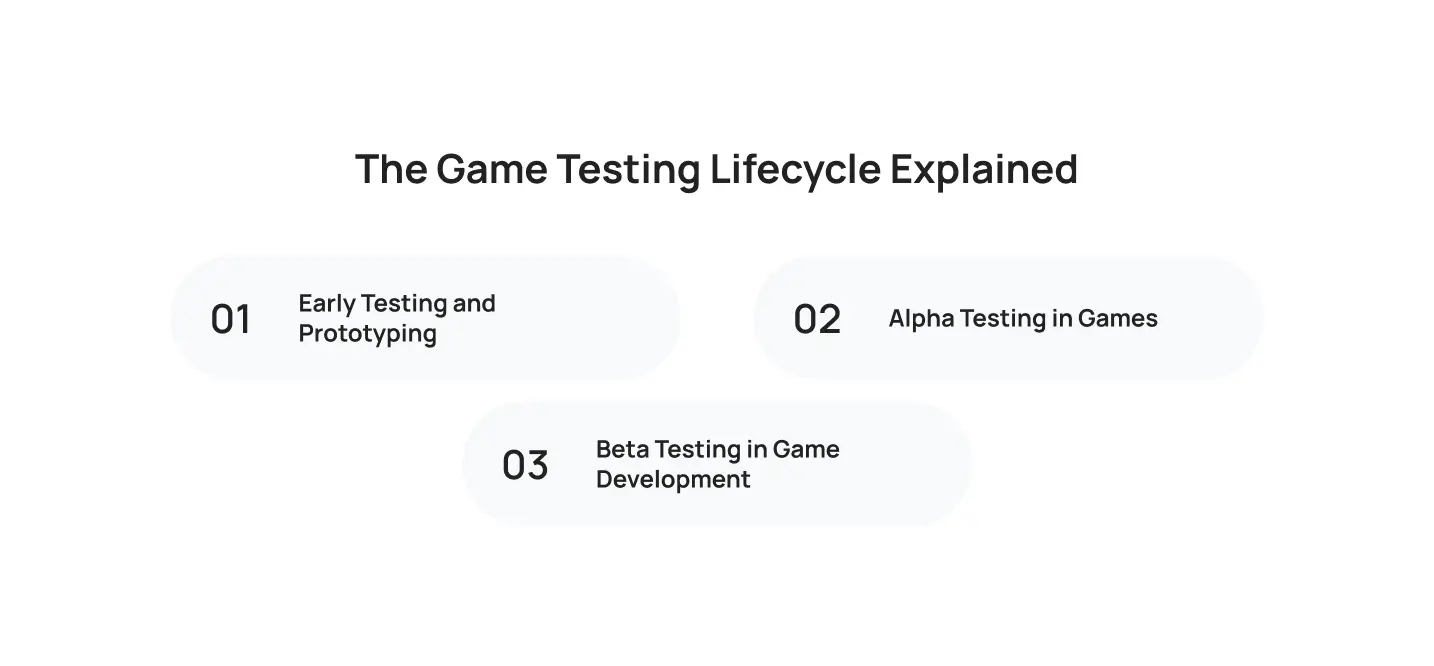
Understanding the game testing lifecycle and its key stages helps you focus QA efforts and achieve measurable results. A clear roadmap lets you anticipate challenges and plan resources effectively.
Early Testing and Prototyping
Development starts with early testing on initial builds. Teams catch obvious problems and validate new ideas before investing significant resources. Internal QA leads and developers test prototypes to remove major issues and spot designs that need further work.
Alpha Testing in Games
Alpha testing in games starts when most features are in place, though content may still be incomplete. The core team or selected testers focus on finding crashes, logic errors, and major balance issues. The goal is to confirm the game works from start to finish and is stable enough for wider testing.
Beta Testing in Game Development
Beta testing in game development brings in testers from outside the core team, ideally reflecting your target audience. These testers uncover hidden bugs, compatibility issues, and unclear gameplay elements. Their feedback on device performance and social features often reveals problems missed during internal QA.
Each stage in the game testing lifecycle reduces risk and increases polish. Following this sequence raises the odds of a smooth, enjoyable release.
Essential Game Testing Types and Methods
A complete testing plan uses several techniques to cover all technical and functional needs. Each testing type strengthens your game’s reliability.
- Functional Testing for Games: Ensures every feature, menu, and interaction works as designed without logical flaws.
- Regression Testing in Games: Rechecks existing features after updates to confirm new code hasn’t caused unintended issues.
- Game Performance Testing: Measures frame rates, load times, memory use, and responsiveness. Reliable performance, especially on lower-end devices, is vital for user satisfaction.
- Game Compatibility Testing: Confirms the game runs correctly across different devices, screen sizes, operating systems, and network types. Testing often mixes device labs and virtual device platforms.
Integrating these tests throughout development helps catch a wide range of issues, minimizes negative feedback, and supports a successful launch. For more on this, see our detailed video game testing explained guide.
Bug Tracking and Issue Resolution in Game Development
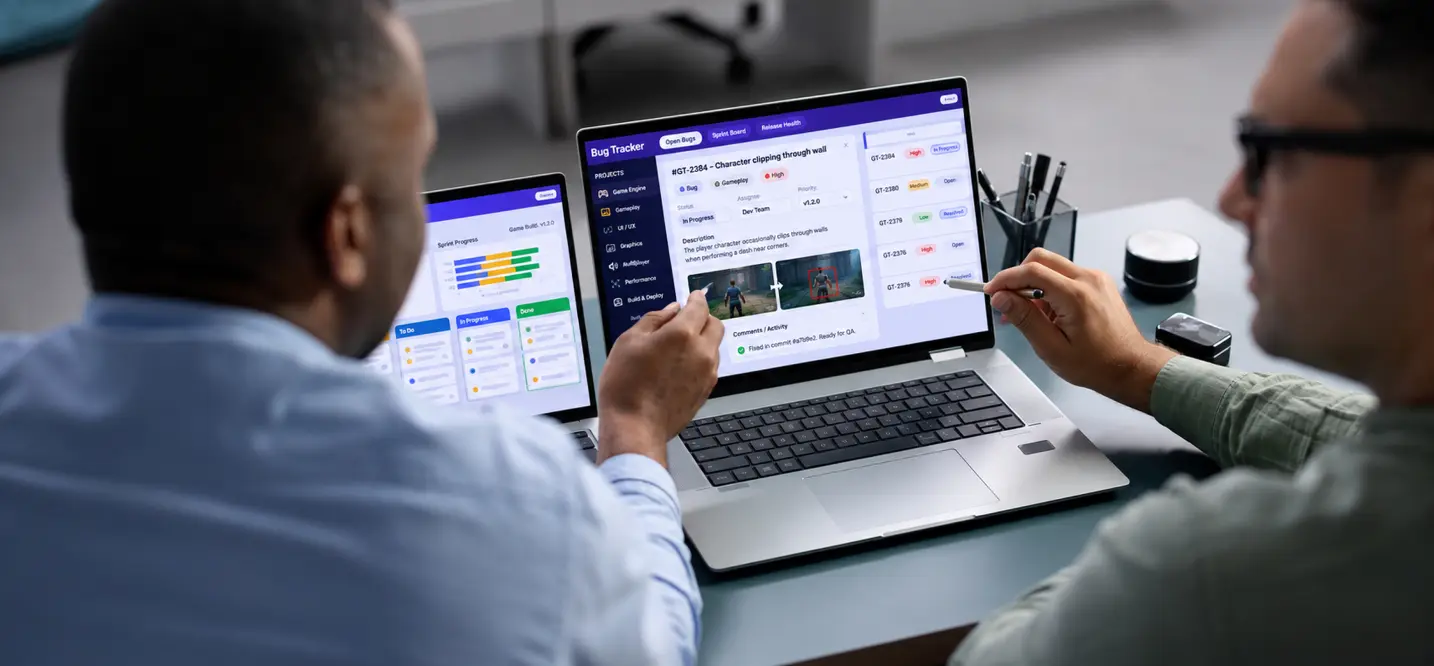
Effective bug tracking in game development is essential for a release that meets player expectations. If not managed carefully, unresolved issues can ruin first impressions and harm your brand. Modern studios use industry-standard bug tracking and project management tools to organize every aspect of QA.
These systems let testers and developers log, categorize, and prioritize bugs in real time. In a solid video game QA process, every bug is clearly described, reproducible, and tracked from discovery to fix. This clarity helps teams focus on urgent problems and ensures no issue is overlooked.
A typical bug tracking process involves:
1. Identify: Testers find a bug or inconsistency during gameplay or automated runs.
2. Log: They document it in the tracking system, including device info, screenshots, steps to reproduce, and severity.
3. Prioritize: The team assesses the bug’s impact and assigns it to a sprint or milestone.
4. Fix: Developers address the issue, submit a patch, and mark it for QA review.
5. Re-test: QA verifies the fix worked and closes the ticket, or reopens it if needed.
This structured approach means fewer unresolved issues at launch, which reduces the need for urgent patches and support requests after release.
Creating a Comprehensive Game Testing Checklist Before Launch
A thorough game testing checklist before launch helps you avoid costly post-release fixes and negative reviews. With the average revenue per user (ARPU) in the global mobile games market projected at $70.21 in 2026, small oversights can have a real financial impact. Use the following checklist to guide your final QA efforts:
- Gameplay: Core features, win/lose conditions, and progression systems function correctly.
- UI/UX: Menus display properly on all screen sizes, with no overlapping or inaccessible buttons.
- Stability: No reproducible crashes or freezes during normal play or when switching apps.
- Monetization: In-app purchases and ads process and reward users as intended.
- Security: Sensitive data is safe, and common exploits or cheats are blocked.
- Localization: All supported languages display correctly, without missing translations or layout errors.
- Analytics: Key events, user flows, and error reports are sent to analytics tools for insights after launch.
- Functional Testing for Games: All critical functions tested under varied scenarios and user types.
- Regression Testing in Games: Previously fixed bugs rechecked after recent updates.
Marking off every item in this checklist before launch helps you avoid last-minute emergencies and gives you confidence that your game is truly ready for players. For a more detailed guide, check out our game testing checklist.
Outsourcing Game Testing: When and Why to Consider It
At times, internal teams may be stretched or lack specific expertise. Outsourcing game testing can raise quality, speed up delivery, and keep projects on track. With the global in-app advertising market expected to grow to $268.2 billion in 2026, thorough pre-launch testing is increasingly valuable.
Outsourcing brings access to specialized game testing services, larger device labs, and more automation. Here’s how in-house QA and outsourced QA compare:
| Criteria | In-House QA | Outsourced QA |
|---|---|---|
| Cost | Salaries and ongoing expenses | Flexible pricing per project or period |
| Expertise | Deep familiarity with your game | Broad platform knowledge, specialized testers |
| Turnaround | Can be slower due to other work | Faster with dedicated, scalable teams |
| Scalability | Limited by team size | Scales up or down for big releases |
| Use Cases | Daily updates, internal milestones | Pre-launch, major updates, compliance testing |
Outsource game testing when you’re under tight deadlines, need to check hundreds of device/OS combinations, or require skills not available internally. This lets your core team focus on features, confident that QA in game development is well covered. For insights on broader development strategies, see our post on outsource game development.
Choosing the Right Game Testing Partner
Choosing the right provider for game testing services is crucial. The best partner aligns with your technical needs and stands out in communication, dependability, and ability to scale. Consider these points before you outsource game testing.
Technical Capabilities
Review the testing tools, device labs, and automation frameworks a partner uses. Those offering advanced game performance testing and robust virtual device coverage can find bugs across more devices than most internal teams.
Experience with Game Genres
Look for testers who understand your game’s genre, such as casual puzzles, esports, or story-driven titles. Relevant experience means they’re better at identifying issues unique to your category.
Communication and Reporting
Regular updates, detailed reporting, and fast responses make bug fixing easier. Choose a partner who communicates clearly, provides transparent dashboards, and continues supporting you after launch.
Comparing partners based on these criteria saves time and money, reduces stress, and delivers more reliable results for your release.
How Cubix Delivers End-to-End QA and Launch Support
Cubix excels at game quality assurance by offering a full range of services that support developers from early development through global launch. Their approach to the game testing lifecycle emphasizes speed, adaptability, and industry best practices shaped by years of experience. By combining automated tools, dedicated device labs, and real-time reporting, Cubix makes the game testing process faster and more effective, with the best game development services.
They operate advanced compatibility labs to test games under real-world conditions across hundreds of devices and OS versions. Their game performance testing covers responsiveness, memory use, and crash analytics, ensuring smooth gameplay even on lower-end hardware. Automation accelerates repetitive tests, allowing more time for complex scenarios and creative assessments.
What sets Cubix apart:
- QA teams that scale to meet each project’s timeline, offering flexibility for any schedule.
- Dedicated account managers provide continuous communication, keeping you informed every step of the way.
- Proven expertise across a range of genres, from casual mobile games to narrative titles.
- Deep integration with analytics tools, revealing user behavior trends to support long-term engagement.
Cubix’s dedication to best practices in game testing services makes them a dependable partner for mobile developers looking to launch polished, competitive games in a fast-moving market. For a comprehensive overview of marketing strategies, see how to market an app successfully.
Ready to bring your game to market? Get support from Cubix
Contact UsFrequently Asked Questions
1. What are the most important steps to market a mobile game successfully?
The most important steps are defining your game’s unique value, building community engagement, organizing outreach to influencers and press, and conducting thorough game testing before launch to create a positive first impression.
2. How does the game testing process fit into the overall launch strategy?
The game testing process begins early with prototype builds, continues through alpha and beta testing, and ensures that every feature undergoes QA in game development before reaching users.
3. What is the difference between alpha and beta testing in game development?
Alpha testing in games uses internal team members or a small group to focus on core bugs and stability. Beta testing in game development brings in a larger, external group to uncover hidden issues and gather real user feedback.
4. Why is QA in game development critical for mobile games?
QA in game development is essential because mobile devices differ widely in hardware, software, and connectivity. Only extensive testing ensures your game meets standards for stability, performance, and security.
5. How are video games tested before release to ensure quality?
How are video games tested before release? Teams follow structured cycles, check every feature for correct function, run regression and performance tests, and confirm compatibility across devices and platforms.
6. What types of game compatibility testing are needed before launch?
Game compatibility testing should verify your game works across different devices, screen sizes, operating systems, and network conditions to find device-specific bugs or display problems.
7. How long does the game testing lifecycle usually take?
The game testing lifecycle often takes several months, depending on the game’s complexity, planned features, and the QA resources available for alpha, beta, and final compatibility testing.
8. Can small studios outsource game testing services effectively?
Yes, small studios can outsource game testing services to access broader device coverage and specialized expertise, which helps match larger competitors in quality and meet deadlines.
9. What are common mistakes to avoid in the game testing process?
Common mistakes are skipping regression tests, not testing on enough devices, underestimating the time needed for QA, and ignoring feedback from beta testers.
10. How much does thorough game testing impact mobile game revenue?
Thorough testing increases revenue by raising review scores and retention. Well-tested games face fewer crashes or negative reviews, leading to more installs and improved monetization.