A mobile app can have a strong idea, a clear audience, and a realistic budget, yet still run into trouble when the people building it lack clear responsibilities. Design decisions get delayed, developers work from different assumptions, and important testing tasks fall through the cracks.
The solution is not necessarily a bigger team. It is a team with the right skills, clear ownership, and a process for making decisions.
According to Pew Research Center’s mobile fact sheet, 91% of U.S. adults owned a smartphone in 2025. As businesses compete for users on mobile devices, building a reliable app requires more than writing code. Product planning, UX research, interface design, development, testing, deployment, and ongoing maintenance all need to work together.
This guide explains the typical mobile app development team structure, the responsibilities of each role, how team size changes with project complexity, and how to organize the people involved in your app project.
What Does a Mobile App Development Team Structure Look Like?
A mobile app development team structure defines the roles, responsibilities, reporting relationships, and collaboration practices used to build and maintain an application.
A typical team brings together people from several disciplines:
- Product and project management: Define priorities, coordinate work, and keep delivery on track.
- Business analysis: Translate business needs into requirements the team can implement.
- UI/UX design: Research user needs and shape the app’s interface and user experience.
- Mobile development: Build the iOS, Android, or cross-platform application.
- Backend development: Create server-side functionality, APIs, data processing, and integrations.
- Quality assurance (QA): Check functionality, usability, compatibility, security, and performance.
- Technical leadership: Guide architecture, technical decisions, and code quality.
Not every project needs a separate person for every role. A small team might combine project management with product ownership or assign backend and API development to the same engineer. A large application may require several specialists working in each discipline.
The right structure depends on what the app needs to do, how many platforms it supports, the complexity of its integrations, the delivery timeline, and the level of risk involved.
For a broader overview of the stages these roles support, the mobile app development process explains how an app moves from an initial concept to a working product.
What Are the Core Roles in a Mobile App Development Team?
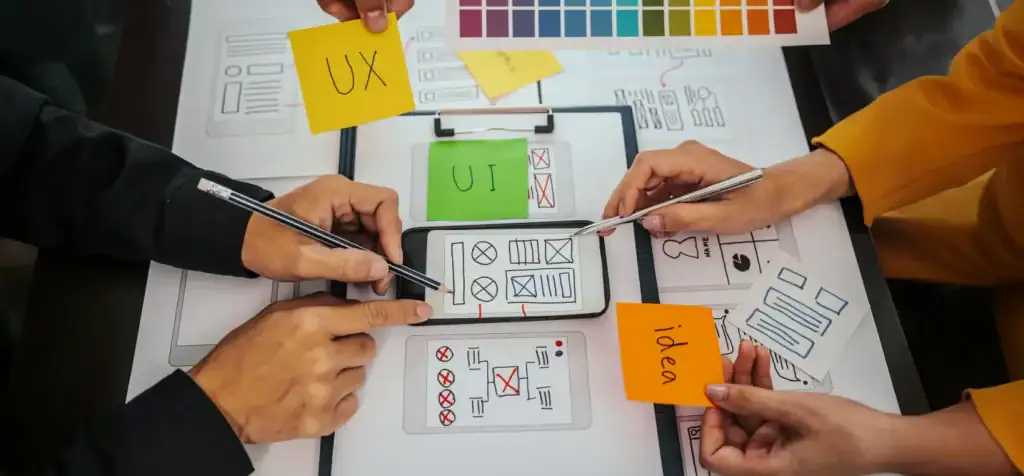
Each role addresses a different part of the project. Some define what the app should achieve, others decide how it should work, and others build, test, and maintain it.
1. Product Manager and Project Manager
These roles often work closely together, but they have different responsibilities.
a. Product Manager
The product manager focuses on what the team should build and why. They connect business objectives with user needs and help determine which features deserve priority.
Typical responsibilities include:
- Defining the product vision and objectives.
- Researching user needs and market opportunities.
- Prioritizing features and maintaining the product roadmap.
- Setting success metrics, such as activation, retention, or task completion.
- Gathering feedback and adjusting priorities as the product evolves.
b. Project Manager
The project manager focuses on how the work gets delivered. They coordinate people, schedules, dependencies, and communication so the team can make progress without losing sight of its commitments.
Typical responsibilities include:
- Planning milestones, sprint schedules, and deliverables.
- Tracking progress, risks, and dependencies.
- Coordinating communication between stakeholders and team members.
- Managing changes to scope, schedule, or resources.
- Reporting delivery status and escalating blockers.
In smaller projects, one person may handle both responsibilities. Larger projects often benefit from separating product decisions from delivery management, particularly when requirements change frequently.
2. Business Analyst and System Analyst
A business analyst and a system analyst help turn an idea into requirements the development team can understand and implement.
a. Business Analyst
The business analyst identifies the problem the app needs to solve and documents what users and stakeholders expect from it.
Their responsibilities may include:
- Conducting stakeholder interviews and requirements-gathering sessions.
- Mapping business processes and user workflows.
- Documenting functional requirements and business rules.
- Identifying gaps, assumptions, and conflicting expectations.
- Helping stakeholders agree on acceptance criteria.
b. System Analyst
The system analyst focuses more closely on how the proposed solution fits within the technical environment. This role examines system behavior, data flows, integrations, and constraints.
Typical responsibilities include:
- Analyzing existing systems and technical dependencies.
- Defining system interactions and integration requirements.
- Documenting data flows and system behavior.
- Identifying technical constraints and potential failure points.
- Coordinating with architects and engineers on implementation requirements.
A dedicated system analyst is not necessary for every app. A technical lead or experienced engineer can cover much of this work on a straightforward project.
3. UX Researcher, UX Designer, and UI Designer
These roles work together to make the app useful, understandable, and easy to navigate. Although their responsibilities overlap, they address different aspects of the user experience.
a. UX Researcher
A UX researcher investigates how people behave, what they need, and where they encounter difficulties. Research helps the team validate assumptions before committing time and money to development.
Common activities include user interviews, surveys, usability tests, competitor analysis, and analysis of existing product feedback.
b. UX Designer
A UX designer plans the user’s journey through the app. They organize information, map workflows, develop wireframes, and identify potential friction points.
For example, a UX designer working on a banking app may simplify the process of transferring money while ensuring users can review recipient details before confirming a transaction.
c. UI Designer
A UI designer focuses on the visual and interactive elements of the interface. Their work includes layouts, typography, color, icons, buttons, spacing, and reusable design components.
They also help maintain consistency across screens and document interface specifications for developers.
On a small project, one designer may handle research, UX, and UI. Apps with complex workflows or specialized audiences may need dedicated expertise in each area.
4. Mobile Engineers: iOS and Android Developers
Mobile engineers implement the application users install and interact with. The team’s composition depends on the target platforms and the technology selected during planning.
a. iOS Developer
An iOS developer builds applications for Apple’s mobile ecosystem, typically using Swift and Apple’s development tools. Responsibilities can include:
- Implementing screens, navigation, and app functionality.
- Integrating APIs and platform services.
- Managing app state, permissions, and local data.
- Addressing performance, accessibility, and device compatibility.
- Preparing builds for testing and App Store submission.
Projects that require deep platform integration, advanced device features, or a highly tailored Apple experience may benefit from dedicated iOS app development expertise.
b. Android Developer
An Android developer builds and maintains the Android application, commonly using Kotlin and Android development tools. Their responsibilities include implementing features, connecting backend services, handling permissions, and testing on supported devices and OS versions.
Android developers also need to account for differences in screen sizes, hardware capabilities, operating system versions, and device manufacturers. Google’s core app quality guidelines provide a useful reference for compatibility, functionality, and user experience expectations.
A project targeting Android may need one developer or a larger group, depending on the app’s complexity and delivery requirements.
5. Cross-Platform and Full-Stack Developers
Not every project requires entirely separate teams for iOS and Android or distinct specialists for every technical layer.
a. Cross-Platform Developer
Cross-platform developers use frameworks such as Flutter or React Native to build applications for multiple platforms from a shared codebase. This can reduce duplicated development work, although platform-specific code and testing may still be necessary.
The decision depends on the app’s requirements, the team’s experience, performance considerations, and the need for native platform functionality. A cross-platform app development guide can help clarify the trade-offs between shared-code and native approaches.
b. Full-Stack Developer
A full-stack developer works across multiple layers of an application, commonly including the frontend and backend. In a mobile project, this may mean building server-side functionality, APIs, and supporting interfaces alongside mobile-related work.
Full-stack developers are particularly useful in smaller teams, prototypes, and projects where a broad skill set helps reduce handoffs. However, complex applications may still need specialists for architecture, infrastructure, security, or performance-critical components.
6. Backend, API, and Database Developers
Mobile apps often rely on server-side systems to authenticate users, store information, process transactions, and connect with other services.
a. Backend Developer
The backend developer builds the server-side logic that supports the app. This may include authentication, business rules, notifications, payment workflows, and communication with external systems.
b. API Developer
An API developer creates and maintains the interfaces through which the mobile app communicates with backend services or third-party platforms. Responsibilities include defining endpoints, managing data formats, handling errors, and supporting authentication and access control.
c. Database Developer or Database Engineer
This role designs and maintains the data structures used by the application. Depending on the project, the work may involve relational databases, NoSQL systems, query optimization, backups, access permissions, and data integrity.
One engineer may cover several of these responsibilities on a smaller project. Applications with sensitive information, complex integrations, high transaction volumes, or substantial data-processing needs may require dedicated specialists.
7. QA Engineer and Automation Engineer
Quality assurance should be part of development from the beginning, not a final check performed just before launch.
a. QA Engineer
A QA engineer tests the application against its requirements and expected behavior. They identify defects, document reproducible steps, and verify fixes.
Testing may cover:
- Functional behavior and business rules.
- Navigation, layouts, and usability.
- Compatibility across supported devices and operating systems.
- Performance under expected usage conditions.
- Security-related behavior and error handling.
- Regression testing after code changes.
b. Automation Engineer
An automation engineer builds automated tests for repeatable scenarios. These tests can help teams detect regressions earlier and reduce the time spent repeating manual checks.
Automation is especially useful for stable, frequently used workflows, but it does not replace exploratory testing or human judgment about usability.
The balance between manual and automated testing depends on release frequency, risk, test complexity, and the cost of defects. A dedicated QA tester role can help teams clarify testing responsibilities and avoid leaving quality checks until the end.
8. Technical Lead and Engineering Manager
Technical leadership keeps implementation decisions consistent and helps the team address engineering challenges.
a. Technical Lead
The technical lead guides architecture, reviews important technical decisions, and helps developers resolve difficult problems. They may also review code, establish engineering standards, and identify risks before they affect delivery.
b. Engineering Manager
The engineering manager focuses on team effectiveness. Responsibilities can include supporting engineers’ development, managing staffing needs, improving team practices, and coordinating with product or business leaders.
In a small team, the technical lead may also manage people and delivery. In larger organizations, these responsibilities are often separated so technical direction and people management each receive adequate attention.
Which Specialized Roles Does Your App Development Team Need?
Some projects need expertise beyond the core team. These roles are usually added when the app’s technical requirements, operating environment, or risk profile justify them.
| Role | Main responsibility | When it may be needed |
| Cloud engineer | Designs and manages cloud infrastructure, environments, and deployment resources | Apps with substantial backend infrastructure or changing workloads |
| DevOps engineer | Automates build, testing, deployment, and infrastructure workflows | Teams releasing frequently or managing multiple environments |
| Release manager | Coordinates release readiness, approvals, versioning, and rollout activities | Complex release schedules or apps with many dependencies |
| Site reliability engineer (SRE) | Improves availability, reliability, monitoring, and incident response | Business-critical apps that need measurable reliability targets |
| Security engineer | Assesses security risks and helps implement protective controls | Apps handling sensitive data, payments, identity, or regulated workflows |
| Data or AI engineer | Builds data pipelines and supports machine learning or AI functionality | Apps using recommendations, predictive features, or AI-driven workflows |
These roles are not mandatory additions to every project. A small app may rely on a developer or cloud provider for basic infrastructure tasks, while a large enterprise app may require dedicated cloud, security, and reliability teams.
The key is to assign ownership even when a role does not justify a full-time hire. If nobody is responsible for monitoring, access controls, deployment, or incident response, those tasks can be missed regardless of how strong the development team is.
How Does Mobile App Development Team Structure Change by Project Size?
Team size should reflect the work that needs to be done, not an arbitrary headcount target. The following examples are illustrative starting points, not fixed staffing rules.
| Project type | Possible team structure | Typical considerations |
| Simple MVP | Product owner or project manager, designer, one or two developers, QA support | Limited features, a narrow audience, and a short feedback cycle |
| Mid-sized app | Product/project manager, UX/UI designer, mobile developers, backend developer, QA engineer, technical lead | Multiple workflows, integrations, and more substantial testing |
| Complex enterprise app | Product manager, project manager, business analyst, designers, mobile and backend specialists, QA and automation engineers, technical lead, security and infrastructure specialists as needed | Complex permissions, sensitive data, high availability, integrations, and multiple releases |
A simple app may not need separate iOS and Android developers if a cross-platform approach fits its requirements. A larger product may need dedicated native developers, several backend engineers, automated testing, and specialist support.
The number of people can also change during the project. Design and discovery may require more research and product input, while implementation needs more engineering time. Testing and release preparation may require additional QA, DevOps, or security support.
Budget planning should account for these shifts. The mobile app development cost guide explains why complexity, platform choices, integrations, and team requirements influence overall development costs.
How Does the Team Work Together Throughout the Development Lifecycle?
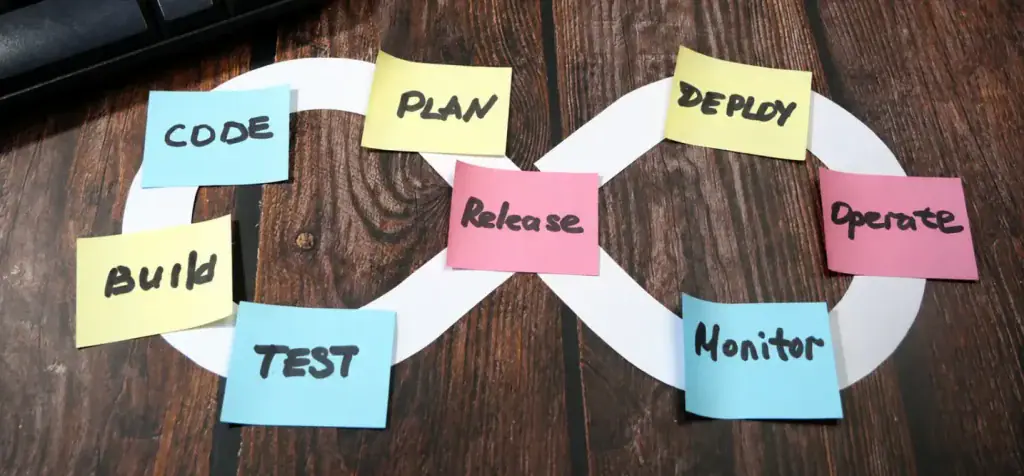
A well-structured team gives each discipline a clear point of involvement while keeping decisions connected. The following sequence is common, although Agile teams revisit earlier work as new information emerges.
1. Discovery and Requirements Gathering
Product stakeholders, business analysts, designers, and technical leads clarify the target users, business problem, feature priorities, and technical constraints.
The team identifies assumptions, dependencies, and acceptance criteria before committing to implementation. This reduces the risk of developers building features that do not solve the intended problem.
2. UX and Interface Design
UX researchers and designers validate user needs, map key journeys, and create wireframes and interface designs. Developers and QA engineers review the proposed experience for technical feasibility, accessibility, and testability.
Early collaboration can expose issues such as unsupported device features, unclear error states, or workflows that require additional backend functionality.
3. Architecture and Development
Technical leads and engineers decide how the app’s components will work together. Mobile developers build the user-facing application, while backend and API developers implement server-side functionality and integrations.
The team agrees on API contracts, data formats, error handling, and responsibilities before dependent components are integrated. This reduces avoidable delays caused by mismatched assumptions.
4. Testing and Refinement
QA engineers test new features as they become available. Developers fix defects, and automated tests cover appropriate repeatable scenarios.
Testing should happen throughout development, with broader regression and compatibility checks as the app approaches release. High-risk features may require additional security, performance, or usability testing.
5. Release and Deployment
The team prepares production builds, confirms release readiness, and checks that required store materials, permissions, privacy disclosures, and operational monitoring are in place.
For iOS releases, teams must account for Apple’s review and distribution requirements. The App Store Review Guidelines outline the rules apps need to meet before distribution through the App Store.
Release ownership should be explicit. Someone needs to coordinate approvals, manage rollout decisions, monitor the release, and ensure that the team can respond if a serious issue appears.
6. Maintenance and Continuous Improvement
After launch, the team monitors crashes, performance, user feedback, and product metrics. Developers address defects, update dependencies, and improve features based on evidence from actual use.
The product manager helps prioritize improvements, while engineering and QA teams assess technical impact and verify changes. A launch is a milestone, not the end of the app’s development lifecycle.
How Do You Allocate Roles and Plan Team Capacity?
Role allocation determines who owns each responsibility. Capacity planning determines how much work the team can realistically complete with its available time and skills.
Start with the following steps:
- Break the scope into deliverables. List the features, integrations, platform requirements, testing needs, and release tasks.
- Map responsibilities to skills. Identify the roles needed for each deliverable and name an owner for important decisions and outputs.
- Check dependencies. Determine which tasks rely on completed designs, API contracts, external approvals, or infrastructure.
- Estimate available capacity. Account for meetings, reviews, support work, leave, and other commitments rather than treating every working hour as development time.
- Identify skill gaps. Decide whether the team needs another specialist, training, temporary support, or a simpler implementation approach.
- Review the plan regularly. Reassess priorities and capacity when requirements, risks, or delivery estimates change.
A responsibility matrix can help clarify ownership. For example, the product manager may be accountable for feature priorities, the technical lead for architecture decisions, and QA for reporting test results. Other team members can contribute without creating confusion about who makes the final decision.
Developer handoffs also need explicit expectations. A designer should provide approved specifications and interaction states; backend developers should document API behavior; and engineers should explain changes that affect testing or release. Handoffs work best when they are supported by ongoing collaboration, not treated as isolated transfers of work.
Teams can strengthen these practices by following relevant app design and development best practices, particularly around consistency, testing, communication, and maintainability.
Should You Build an In-House Team or Outsource App Development?
The right hiring model depends on how much control, continuity, flexibility, and specialist expertise your business needs.
An in-house team consists of employees who work directly for your organization. It can be a good fit when mobile development is a long-term core capability, the product requires continuous internal collaboration, or the company needs close control over technical decisions.
However, recruiting, onboarding, salaries, benefits, management, and staff retention create ongoing responsibilities. Building a team also takes time, especially when several specialized roles are required.
An outsourced team comes from an external development company or service provider. This model can give businesses access to an established mix of designers, developers, QA engineers, and technical specialists without hiring every role internally.
Outsourcing still requires clear requirements, regular communication, agreed ownership, and appropriate contractual protections. The client must retain enough involvement to make product decisions and review progress.
A hybrid team combines internal employees with external specialists. For example, a business may keep product strategy and stakeholder management in-house while outsourcing mobile development, automation testing, or cloud engineering.
Before choosing a model, assess the length of the project, available internal expertise, security needs, budget, and expected maintenance workload. If you are evaluating external partners, this guide to hiring mobile app developers covers important factors such as technical experience, communication, and project fit.
Common Mistakes When Structuring a Mobile App Development Team
Even a team with strong individual skills can struggle if responsibilities and working practices are poorly defined.
1. Hiring for Headcount Instead of Capability
Adding more developers will not solve every delivery problem. If the real bottleneck is unclear requirements, slow decisions, or missing test coverage, more people may increase coordination overhead without improving results. Identify the constraint before expanding the team.
2. Overlapping Responsibilities Without Clear Ownership
Product managers, project managers, business analysts, and technical leads may all contribute to planning, but their decision-making responsibilities should be clear. Define who prioritizes features, approves requirements, makes architecture decisions, and signs off on releases.
3. Bringing QA in Too Late
When testing starts only after implementation is complete, defects may be harder and more expensive to fix. Include QA during requirements reviews and design discussions, and test features throughout development.
4. Ignoring Platform-Specific Needs
A shared codebase can reduce duplicated work, but it does not eliminate every difference between iOS and Android. Permissions, notifications, device behavior, accessibility, and store requirements still need appropriate attention.
5. Underestimating Maintenance
An app needs ongoing updates, dependency management, bug fixes, security improvements, and compatibility checks. Plan ownership and budget for these responsibilities before launch.
6. Treating Handoffs as the End of Collaboration
A design handoff or API specification is not a substitute for discussion. Developers should be able to raise feasibility questions, and QA should have a chance to clarify expected behavior before features are considered complete.
Build a Mobile App Team That Fits Your Project
A successful mobile app development team brings product decisions, design, engineering, and quality assurance together around a shared plan. Each person needs a clear responsibility, but the team also needs regular communication and a reliable way to resolve decisions and dependencies.
Start by defining the app’s scope, platforms, integrations, and operational requirements. Then identify the skills needed at each stage and decide which roles must be dedicated, which can be combined, and which can be brought in when required.
If you need support assembling the right mix of expertise, Cubix provides mobile app development services for businesses building and improving mobile applications. The right team structure starts with understanding the product you need to deliver and the technical work required to support it.
Have a Mobile App Project in Mind? Let’s Make It Happen
Contact Us
Frequently Asked Questions
1. What is the ideal team structure for mobile app development?
There is no universal structure. A straightforward app may need a product or project owner, a designer, one or two developers, and QA support. A complex application may need dedicated product management, business analysis, platform-specific developers, backend specialists, automation engineers, and security or infrastructure expertise.
2. How many people are needed to develop a mobile app?
A small app may be built by a core team of roughly three to five people, with some responsibilities combined or supported part-time. A mid-sized project may involve around five to eight people, while a complex enterprise product can require a larger multidisciplinary team. These are planning examples, not fixed requirements; scope, timeline, and technical complexity determine the actual staffing needs.
3. Is a project manager necessary for every mobile app project?
Not always. A small project may be coordinated by a product owner, founder, or technical lead. As the number of contributors, dependencies, and stakeholders grows, dedicated project management becomes more valuable.
4. Should an app have separate iOS and Android developers?
Separate developers can be useful when the app needs native platform capabilities, platform-specific optimization, or independent release schedules. Cross-platform development may suit apps that can share much of their code, but the team still needs to test and address platform differences.
5. What is the difference between a mobile developer and a backend developer?
A mobile developer builds the application that runs on a user’s device, including its screens, navigation, and interactions. A backend developer builds the server-side functionality, data processing, and services the app relies on. They work together through APIs and agreed data contracts.
6. When should a mobile app development team include a DevOps engineer?
A DevOps engineer becomes more valuable when the project needs automated build and deployment pipelines, multiple environments, frequent releases, or complex infrastructure. For a small app, some of these responsibilities may be handled by an experienced developer or a cloud service provider.
7. How does team structure affect mobile app development cost?
Team structure influences cost through staffing levels, skill specialization, delivery timelines, coordination, and ongoing support. A lean team may reduce overhead, but leaving critical work unassigned can lead to rework and release delays. The goal is to staff the project according to its actual requirements rather than minimizing headcount alone.