Key Takeaways
- The global games market hit $187.7 billion in 2024 and could pass $500 billion by the early 2030s, which means more content, more platforms, and less time to build it all in-house.
- Outsourcing has quietly shifted from “handing off work” to “insourcing,” where external character artists work inside a studio’s own pipeline, using the same tools and hitting the same milestones.
- Real AAA titles prove it works. Halo 5: Guardians shipped over 30 outsourced armor sets. Borderlands’ entire art style was reworked late in development with outsourced support.
- Cost isn’t the main reason studios outsource character design anymore. Flexibility and access to specialist skills matter more.
- The smartest studios don’t choose in-house or outsourcing. They keep creative vision internal and scale execution externally.
Here’s a number worth sitting with: the global games market generated roughly $187.7 billion in 2024, and some projections put it past $500 billion by the early 2030s. That growth sounds exciting until you’re the one running a studio trying to keep up with it. More platforms to launch on. More characters to design. More content expected per release, in less time than ever.
Character design sits right in the middle of that pressure. A single hero character can take weeks to move through concept art, 3D modeling, rigging, and animation, before it ever shows up in a build. Multiply that by a full cast, plus skins, variants, and seasonal content, and it’s easy to see why so many studios now work with a dedicated Character Design Studio instead of trying to absorb all of that inside one internal team.
This isn’t a trend limited to small indie teams either. It’s exactly why a growing number of studios, from mobile teams to AAA publishers, now build their roadmap around a custom game development company that can flex capacity up or down depending on what a specific project actually needs.
What Tasks Do Studios Actually Outsource?
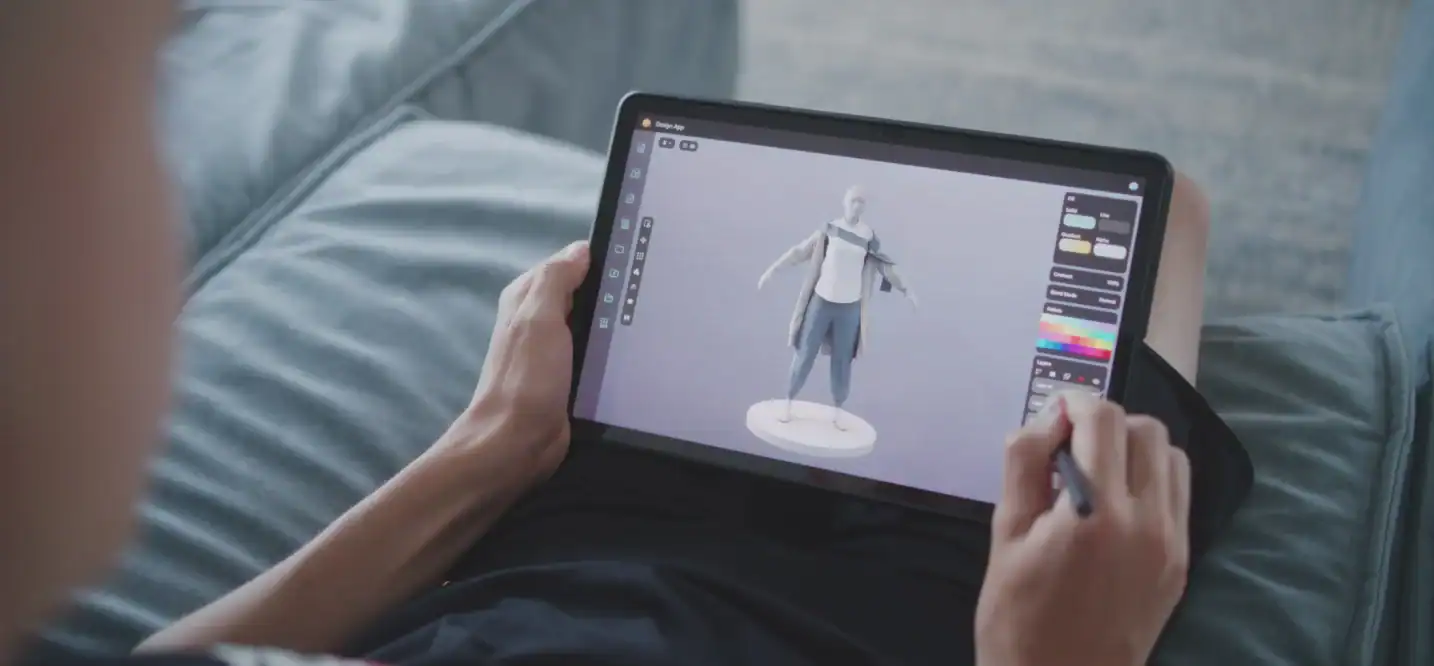
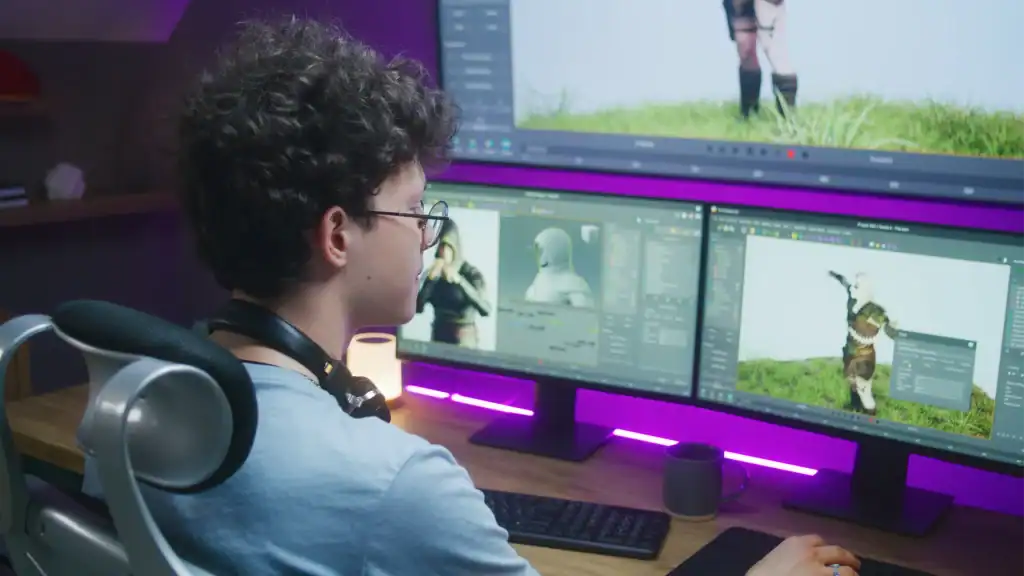
Not everything gets outsourced, and that’s kind of the point. Character design outsourcing usually breaks down into a few clear categories:
- 2D character concept art – early sketches, silhouettes, and style exploration before a character gets built in 3D
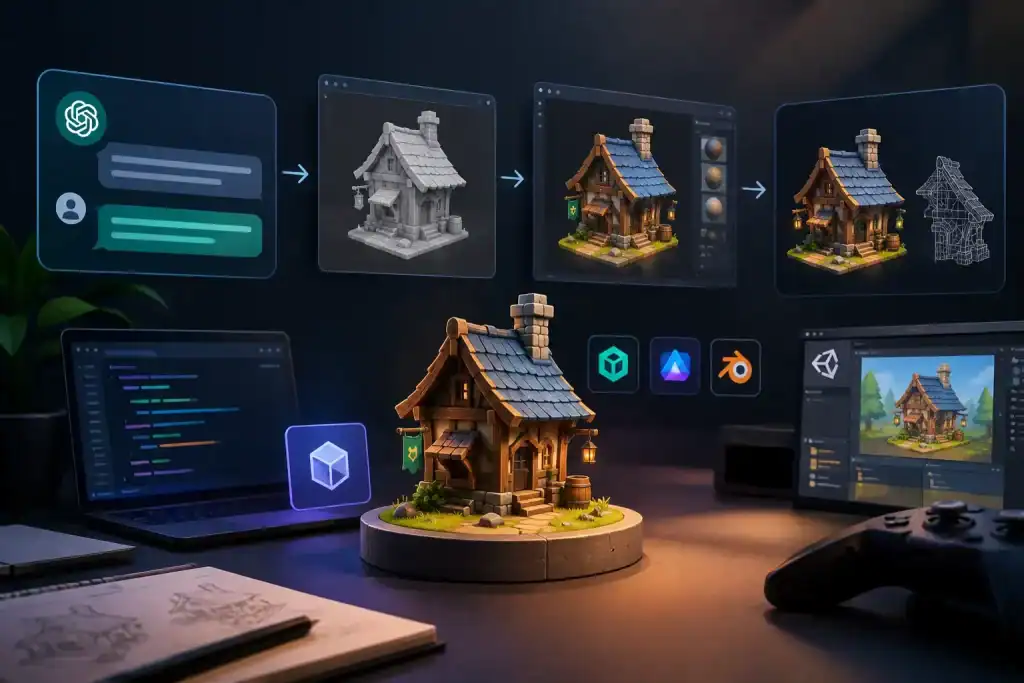
- 3D character modeling – sculpting, retopology, and texturing based on approved concept art
- Rigging and animation – building the skeleton underneath a character and bringing it to life through movement
- VFX support – things like blood effects, magic auras, or environmental interactions tied to a character
- Real-time cinematics – trailer work, cutscenes, and performance capture clean-up
The pattern across successful outsourcing relationships is consistent: studios keep core creative decisions in-house, like the overall visual direction and hero character design, while handing off the volume work, like building out a full roster of secondary characters or variant skins, to a trusted partner.
Real Proof It Works: Halo, Borderlands & Batman
Outsourced character art isn’t a shortcut used quietly in the background. It’s shipped in some of the biggest titles in gaming.
| Game | What Was Outsourced | Why It Mattered |
| Halo 5: Guardians | Over 30 multiplayer armor sets, including upgraded Halo 4 armors and new designs | Let the internal team focus on campaign content while multiplayer customization scaled up on schedule |
| Borderlands | A late-stage pivot to the game’s now-iconic hand-inked, colorful art style | The original gritty look risked blending into a crowded market; an outsourced partner helped execute the new style fast enough to hit the release date |
| Batman: Arkham Origins | Combat animation work with the internal Warner Bros. Montreal team | Helped fine-tune the timing and feel of combat animations that the series is known for |
Types of Character Design Services Studios Actually Need
Character design outsourcing isn’t one-size-fits-all. Studios typically need a mix of the following, depending on the platform and scope of the project.
| Service | What It Covers | Best For |
| 2D character concept art | Early visual direction, style guides, silhouette design | New IPs, style pivots, pitch decks |
| 3D character modeling | Full character builds from concept to game-ready asset | AAA titles, hero characters, detailed NPCs |
| Cross-platform character optimization | Adjusting poly count, textures, and rigs for different hardware | Mobile ports, cross-gen releases, VR |
| Character rigging & animation | Skeleton setup and movement, from idle poses to combat | Any character that needs to move convincingly |
For studios that need dedicated specialists rather than a one-off project team, working with a partner offering structured 3D Character Design Services or looking to Hire Character Designers directly tends to produce more consistent results than piecing together freelancers project by project.
Where to Find Reliable Partners

The best platforms for video game character design outsourcing generally fall into three categories: dedicated art outsourcing studios, full-cycle game development companies with in-house art teams, and specialized freelance marketplaces for smaller, one-off tasks.
For anything beyond a single asset or two, dedicated studios and full-cycle developers tend to outperform freelance marketplaces, mainly because of consistency. A single freelancer might deliver excellent work on one character, but matching that same style, quality, and turnaround across dozens of characters is a different challenge entirely.
How do you find reliable video game character design outsourcing services in practice? A few signals matter more than a polished portfolio page:
- A visible production pipeline, not just finished art. Can they show how a character moves from sketch to game-ready asset?
- Experience across the specific style you need. Stylized and photorealistic character work require genuinely different skill sets.
- References from studios of a similar size to yours, not just the biggest names they’ve worked with once.
- Clear communication about ownership and revisions before any contract is signed.
What Does It Actually Cost?
Cost estimates for outsourcing video game character design vary widely based on style complexity, platform, and how many revision rounds are included.
| Character Type | Typical Cost Range | Typical Timeline |
| Stylized 2D concept art (single character) | $300 – $1,500 | 3 – 7 days |
| Simple 3D mobile character (low-poly) | $500 – $2,000 | 1 – 2 weeks |
| Detailed AAA hero character (full pipeline) | $5,000 – $25,000+ | 4 – 10 weeks |
| Full secondary cast (5–10 characters) | $15,000 – $80,000+ | 6 – 14 weeks |
These ranges shift depending on rigging complexity, the number of outfit or armor variants needed, and whether motion capture is involved. Reducing game production costs through outsourcing usually comes less from any single character being cheaper, and more from avoiding the fixed cost of hiring full-time specialists for work that isn’t needed year-round. A Game Development Outsourcing Company that already has these specialists on staff can absorb that volume without the studio carrying the overhead directly.
In-House vs. Outsourcing Is the Wrong Question
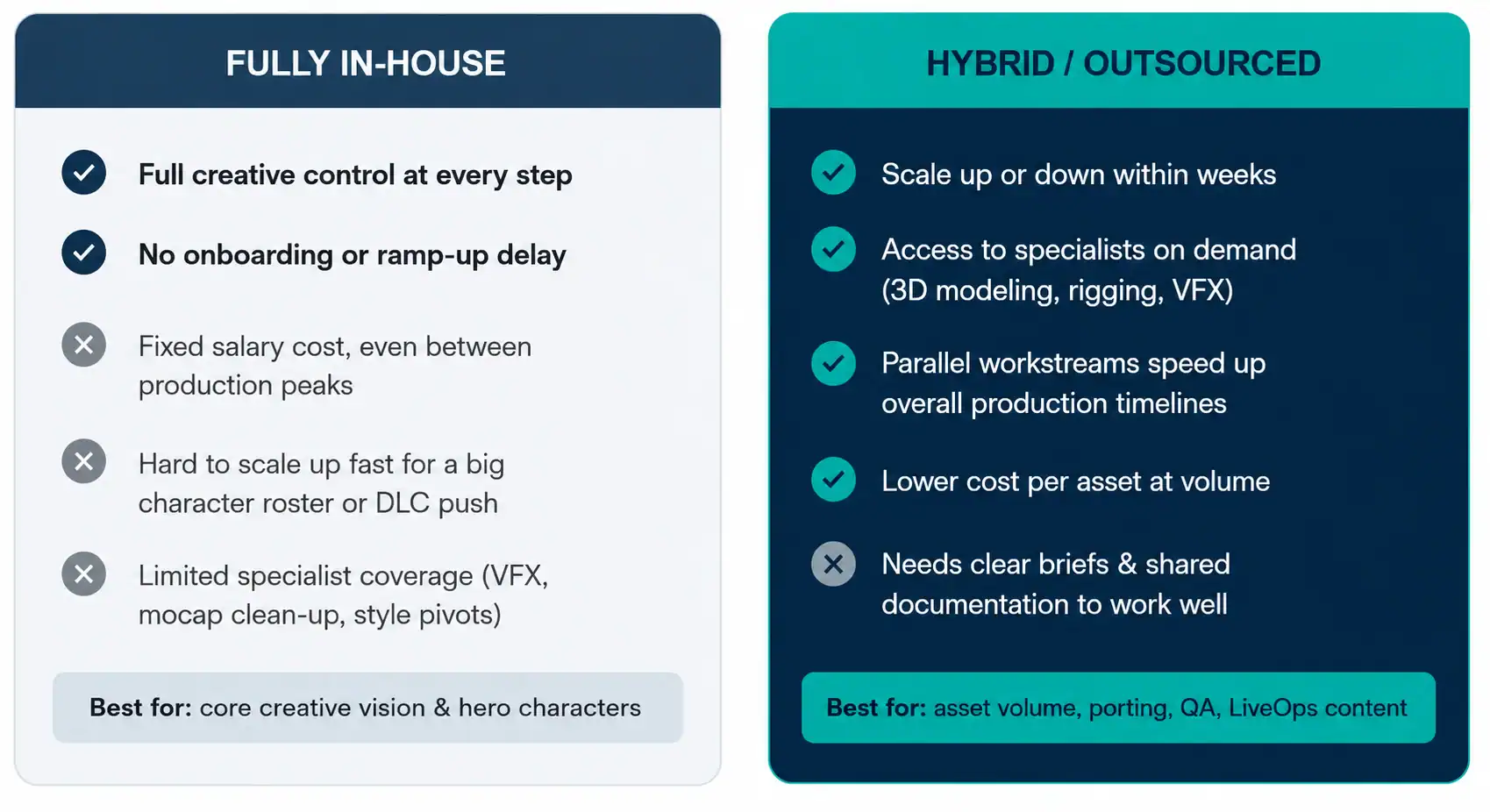
Here’s a shift worth paying attention to: more industry leaders are arguing that “in-house or outsourcing” isn’t even the right question anymore. The real question is how to combine both effectively.
A hybrid model tends to work best. Internal teams hold onto creative ownership, the core vision, the hero characters, the decisions that define a game’s identity, while outsourced partners handle everything that needs to scale in volume: secondary characters, platform ports, QA, and asset production.
This raises a fair concern: how do game studios ensure quality control when outsourcing parts of their game development? In practice, it comes down to structure, not micromanagement. Successful partnerships share documentation, use the same production tools as the internal team, and give outsourced artists direct access to decision-makers instead of routing every question through multiple approval layers. Treating an outsourced character artist as an embedded extension of the team, rather than an outside vendor waiting for instructions, is consistently what separates strong results from disappointing ones.
How to Choose the Right Art Partner
What factors should a studio actually weigh when picking a character design partner? A few matter more than the rest:
- Style match. Can they demonstrably work in your visual direction, not just adjacent to it?
- Pipeline compatibility. Do they work in the same engine and file formats your internal team already uses?
- Scalability. Can they handle a sudden increase in character volume without a drop in quality?
- Communication cadence. Will you get regular check-ins and revisions, or radio silence until a final delivery?
- Track record under deadline pressure. Ask directly how they’ve handled a late-stage creative pivot, the Borderlands example above is exactly the kind of situation worth asking about.
Budget plays a bigger role in this decision than most studios initially plan for. How do budgeting and costs impact the decision to collaborate or outsource? In most cases, the budget doesn’t just decide whether to outsource, it decides how much creative ownership stays internal. A tighter budget usually means leaning more heavily on a partner’s existing pipeline and expertise rather than building custom processes from scratch, while a larger budget allows for deeper, more collaborative co-development, closer to what Halo and Borderlands’ teams experienced with their outsourcing partners.
Why Cubix Is Built for This
Character design outsourcing works best with a partner who treats it as a genuine extension of your team, not a transaction. Cubix offers exactly that: a team ready to hire game designers for and provide full video game development services that go well beyond character art alone, covering everything from concept through full production.
Whether you need a single hero character built to AAA standard, a full secondary cast for a growing mobile title, or ongoing character support across multiple platforms, working with one consistent Cubix studio team means fewer handoffs, faster turnaround, and art that actually matches your game’s identity from the first sketch to the final build. If you’re planning your next character roster, it’s worth a conversation before you commit a budget.
Want to discuss your project? Our experts are just a click away.
Contact UsFrequently Asked Questions
1. What’s the difference between 2D concept art and 3D character modeling?
2D concept art is the early visual exploration stage, sketches, color studies, and silhouette design that define how a character should look and feel. 3D character modeling comes after concept approval and involves building the actual game-ready asset: sculpting the model, creating textures, and preparing it for rigging and animation.
2. How long does outsourced character design usually take?
A single stylized 2D concept can take under a week. A full AAA-quality 3D character, including rigging and texturing, typically takes 4 to 10 weeks. A full secondary cast for a game can take several months, depending on how many characters and variants are needed.
3. Is outsourcing cheaper than hiring in-house artists?
It depends on volume and consistency of need. Outsourcing tends to reduce cost when character work fluctuates, since studios avoid paying full-time salaries during slower production periods. For studios that need constant, year-round character output, a blended in-house and outsourced model is usually more cost-effective than either extreme alone.
4. How do I know if an outsourcing partner can match my game’s art style?
Ask for examples of their work in a similar visual style to yours, not just their strongest portfolio pieces overall. A partner that’s excellent at photorealistic characters won’t necessarily be the right fit for a stylized, hand-painted look, and vice versa.