Key Takeaways
- Cubix leads the list of top fintech app development companies in the USA, known for secure and scalable financial apps.
- The right fintech app development firm should offer security, compliance know-how, and long-term support, not just coding skills.
- Development costs vary widely based on app complexity, from simple MVPs to enterprise-grade platforms.
- Mobile experience is now the deciding factor for most banking and finance customers.
- AI, open banking, and biometric authentication are shaping how top fintech apps are built in 2026.
- Choosing a fintech app development partner is a long-term decision, not just a one-time project.
Managing money used to mean standing in line at a bank. Now, most of it happens on a phone screen. People check balances, send money, apply for loans, and invest, all from an app. This shift has pushed businesses to look for a fintech app development firm that can build something secure, fast, and easy to use.
Building a finance app is not like building a regular app. It deals with real money, personal data, and strict rules. One weak spot in the code can cost a company its users’ trust. That is why picking the right development partner matters so much. The global fintech app market is expected to nearly triple between 2022 and 2027, growing from under $10 billion to close to $25 billion in the US alone. That kind of growth means more competition, and more pressure to get the app right the first time.
This guide walks you through the best fintech app development companies in the USA, what each one does well, and how to pick the right one for your business. Whether you are a startup building your first app or an enterprise scaling an existing platform, you will find something useful here.
Want to discuss your project? Our experts are just a click away.
Contact Us
Why Choosing the Right Fintech Development Partner Matters
A finance app is not just a product. It is a promise to your users that their money and data are safe. Behind every fintech app, there is a web of banking APIs, payment gateways, encryption layers, and compliance checks. Getting even one of these wrong can lead to downtime, data leaks, or worse.
Financial services face some of the highest rates of cyberattacks of any industry, and roughly one in four data breaches globally involves financial data in some way. This is why working with a fintech app development firm that understands security from day one is not optional, it is the baseline. A good Finance Software Development Company will also help you stay ahead of fraud with smarter detection tools built directly into the app. If you want to see how modern apps are handling this, our post on AI-driven fraud detection in fintech breaks it down in simple terms.
An experienced partner does more than write code. They help you:
- Build apps that meet compliance standards like PCI-DSS and SOC 2
- Design a smooth, easy-to-use interface
- Connect payment gateways and banking APIs without friction
- Scale the app as your user base grows
- Fix issues and add features long after launch
Top Fintech App Development Companies in the USA
Here are the best fintech app development companies in the USA right now, starting with the one leading the pack.
1. Cubix

Cubix sits at the top of this list for good reason. It has built a name for itself as one of the best fintech app developers in the country, working with startups and large financial brands alike. The team focuses on secure architecture, clean design, and apps that actually perform well under heavy transaction loads, not just in a demo environment.
Businesses looking for a reliable custom mobile app development company often land here first, thanks to a strong portfolio in banking, digital wallets, lending, and investment apps. Cubix also brings deep experience in mobile banking security, which matters a lot in an industry where a single weak spot can break user trust for good.
Strengths
Cubix combines strong technical depth with genuine fintech industry experience, which is not always easy to find in one place. The team is well versed in secure architecture, encrypted data handling, and regulatory requirements like PCI-DSS, so security is built in from the start rather than bolted on later. Communication throughout the project tends to be consistent, with clients kept in the loop at every stage instead of only hearing updates at major milestones.
Weaknesses
Cubix is built for businesses that want a serious, long-term financial product, so it may not be the right fit for teams looking for a quick, bare-bones app with no long-term plan.
Key Highlights
Cubix has delivered digital banking apps, e-wallets, lending platforms, and investment tools for clients across the US. The team’s work in AI-powered fraud detection stands out, along with strong post-launch support that keeps apps updated as regulations and user expectations change. Cubix also has hands-on experience with native app development, cloud infrastructure, and API integrations with major banking and payment systems.
2. Appinventiv

Appinventiv has built a solid reputation across fintech, healthcare, and retail. Their financial app work spans digital banking, insurtech, and payment platforms.
- Strengths: Large in-house team, strong enterprise client base, wide range of industries covered.
- Weakness: Project timelines can run longer for smaller, budget-conscious startups.
- Key Highlights: Neobanking apps, blockchain integration, and AI-based financial tools.
3. Intellectsoft
Intellectsoft works with mid-size and large businesses on custom software, including fintech products with heavy backend requirements.
- Strengths: Strong enterprise software background, good at handling legacy system integration.
- Weakness: Less focused on early-stage startup budgets.
- Key Highlights: Banking software, wealth management tools, and blockchain-based platforms.
4. Andersen

Andersen is an international development company with a large engineering team and experience across multiple regulated industries, including finance.
- Strengths: Structured development process, strong quality assurance practices.
- Weakness: Can feel process-heavy for teams that want a faster, leaner approach.
- Key Highlights: Loan management systems, insurance apps, and financial analytics dashboards.
5. Simform

Simform focuses on cloud-native product development, which fits well with fintech companies that need scalable infrastructure from day one.
- Strengths: Strong cloud and DevOps expertise, good for scaling apps quickly.
- Weakness: Fintech-specific compliance work may need extra scoping upfront.
- Key Highlights: Banking platforms, payment systems, and cloud migration for financial software.
6. Daffodil Software
Daffodil Software has delivered projects across several industries and brings a practical, business-first approach to fintech development.
- Strengths: Good at translating business goals into working software without overbuilding.
- Weakness: Smaller team size compared to larger enterprise vendors.
- Key Highlights: Digital banking apps, payment processing tools, and loan management systems.
7. Net Solutions

Net Solutions pairs product strategy with development, which helps businesses that are still shaping their fintech idea.
- Strengths: Strong UX and product strategy focus before development begins.
- Weakness: May take longer to move from discovery to actual build.
- Key Highlights: Personal finance apps, banking dashboards, and payment gateway integration.
8. SoluLab

SoluLab works with startups and enterprises on fintech products, with a good balance of technical depth and client communication.
- Strengths: Flexible engagement models, solid blockchain and Web3 experience.
- Weakness: Newer in the market compared to some legacy players.
- Key Highlights: Digital wallets, investment apps, and blockchain-based payment tools.
9. Chetu

Chetu offers custom software development with a dedicated fintech division, serving banks, lenders, and payment companies.
- Strengths: Deep bench of specialized developers, good for niche financial tools.
- Weakness: Communication can vary depending on the assigned team.
- Key Highlights: Trading platforms, payment processing systems, and regulatory reporting tools.
10. Konstant Infosolutions

Konstant Infosolutions has years of experience building mobile apps across industries, with a growing focus on fintech clients.
- Strengths: Affordable pricing, decent turnaround time for small to mid-size projects.
- Weakness: Less experience with large-scale enterprise fintech platforms.
- Key Highlights: Mobile wallets, budgeting apps, and small business finance tools.
Quick Comparison Table
| Company | Key Strength | Best For |
| Cubix | Secure, full-scale fintech app development | Startups, enterprises, long-term products |
| Appinventiv | Enterprise scale, AI integration | Large fintech brands |
| Intellectsoft | Legacy system integration | Mid-size to large businesses |
| Andersen | Structured QA process | Regulated financial institutions |
| Simform | Cloud-native scalability | Growing fintech platforms |
| Daffodil Software | Practical, business-first builds | Mid-sized companies |
| Net Solutions | Product strategy and UX | Early-stage product teams |
| SoluLab | Blockchain and Web3 expertise | Startups exploring Web3 finance |
| Chetu | Niche financial tools | Trading and payment firms |
| Konstant Infosolutions | Budget-friendly builds | Small businesses |
Fintech App Development Cost Breakdown
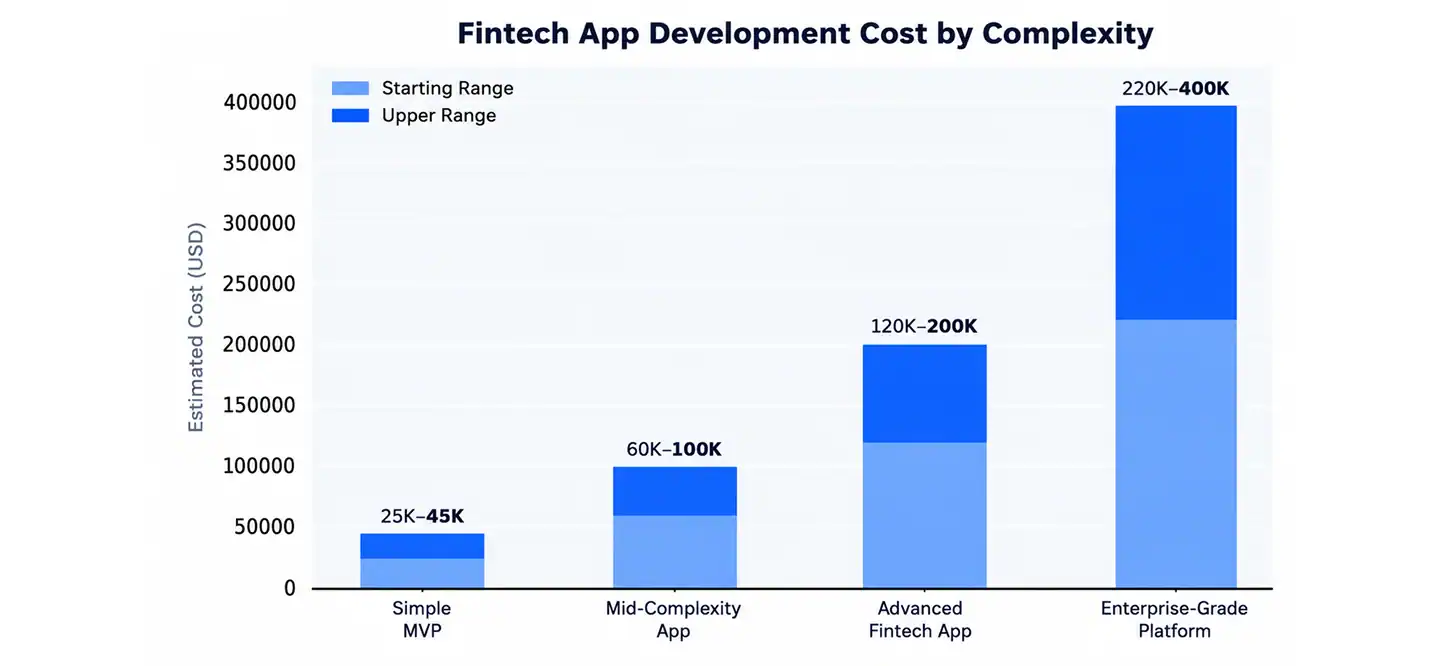
Cost is usually one of the first questions on everyone’s mind, and it is a fair one. Fintech app development pricing depends on how complex the app is, what features it needs, and how many platforms it runs on.
A basic MVP with core features like account creation, balance checks, and simple transfers costs less than a full banking platform with fraud detection, multi-currency support, and investment tools.
On average, a mid-complexity fintech app in the US falls somewhere between $60,000 and $100,000, while advanced apps with AI or blockchain features can go well beyond $200,000. If you’re planning a build, our guide on mobile app development cost covers this in more detail.
How to Choose the Best Fintech App Development Company
With so many good options out there, picking one can feel overwhelming. Here is a simple way to narrow it down.
Know What You’re Building
Before you talk to anyone, get clear on what you actually want. A digital wallet, a lending app, and a full banking platform all need different skill sets. A clear brief saves everyone time.
Check Real Fintech Experience
Not every app developer understands finance. Look for a team that has actually shipped fintech products before, not just general mobile apps.
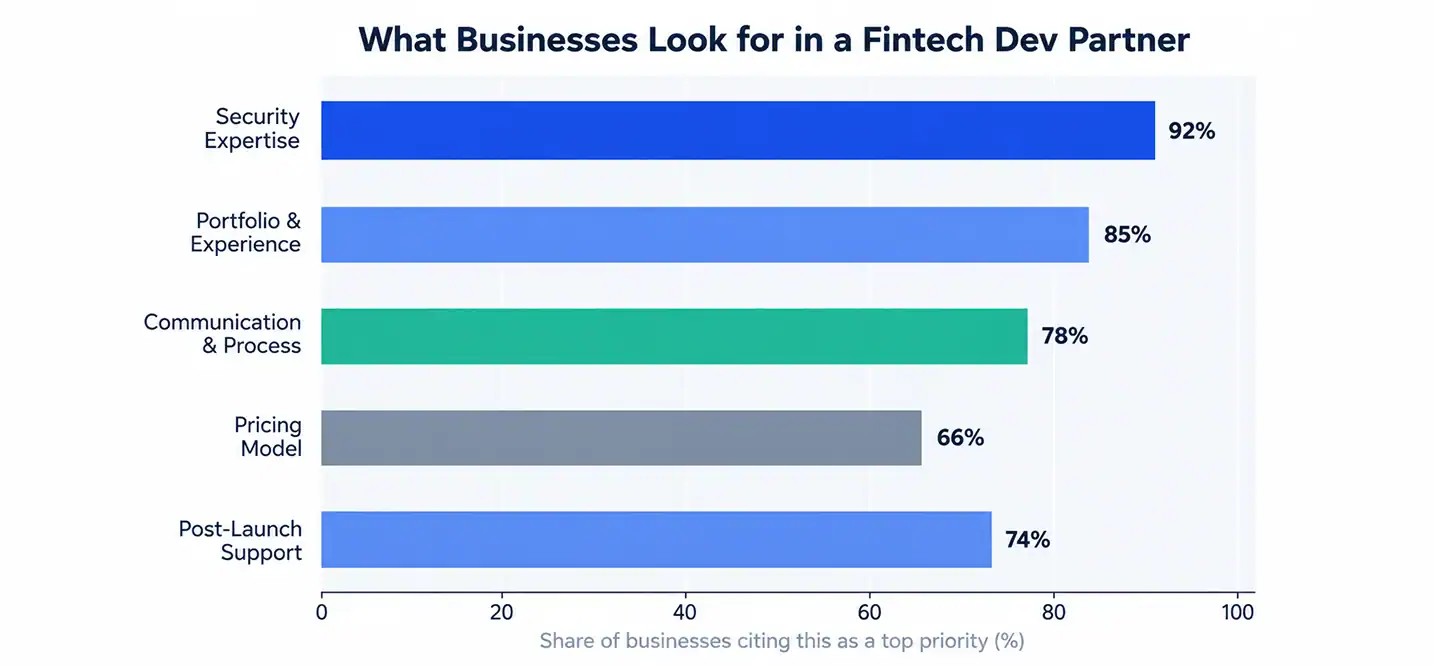
Look at Security Practices, Not Just Promises
Ask how they handle data encryption, compliance, and testing. This is one area where cutting corners can cost you later. Our post on mobile app security best practices is a good starting point if you want to understand what to look for.
Review Past Work Carefully
A strong portfolio tells you more than a sales pitch ever will. Look for apps similar to what you’re building.
Watch for Warning Signs
Vague timelines, unclear pricing, and poor communication early on are usually signs of trouble ahead. A closer look here can save you from a bad partnership. We covered this in detail in red flags to watch before hiring a development partner.
Studies on software project failures suggest that nearly one in three custom software projects run over budget or miss deadlines, often due to poor vendor selection at the start. Taking the time to vet a partner properly is not a delay, it is protection for your investment.
Why Mobile Experience Matters in Fintech
People do not just want a finance app that works. They want one that feels effortless. Slow load times, confusing menus, or clunky checkouts push users straight to a competitor’s app.
Over 70% of banking interactions in the US now happen through mobile devices rather than desktop or in-branch visits. That number alone should tell you how much weight mobile design carries. A well-built app, backed by a solid native app development company, performs better, loads faster, and feels more trustworthy to users than something built as an afterthought.
A well-designed fintech app should offer:
| Feature | Why It Matters |
| Biometric login | Faster access, stronger security |
| Real-time notifications | Keeps users informed on transactions instantly |
| Clean, simple navigation | Reduces drop-off and confusion |
| Fast transaction processing | Builds trust and repeat usage |
| Offline access to basic info | Useful in low-connectivity situations |
Users also expect their finance apps to guide them, not just show numbers. If you want to see how secure payment features are built into modern banking apps, check out our breakdown on mobile banking features for secure payments.
Fintech Trends Shaping App Development in 2026
Fintech does not stand still, and neither should the apps built for it. A few trends are shaping how top fintech apps are designed this year.
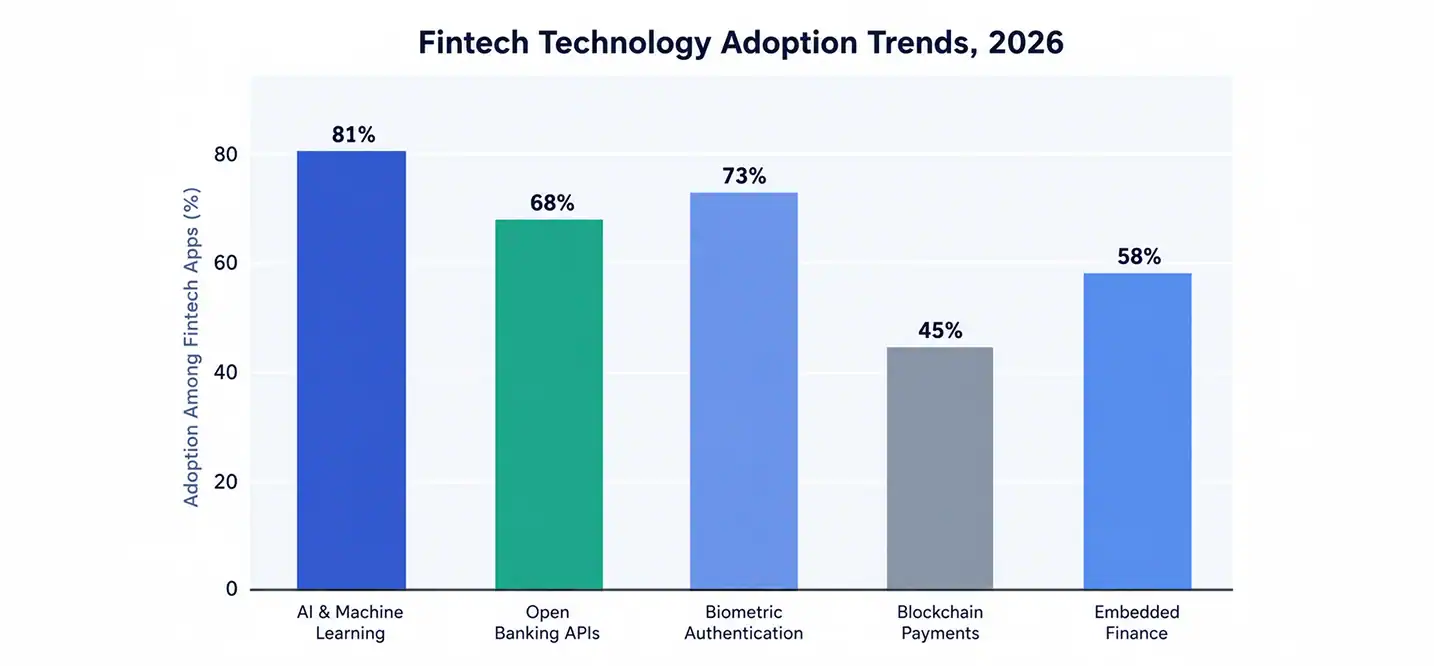
AI is now involved in everything from chatbots to fraud detection, helping apps catch suspicious activity before it becomes a real problem. Open banking is pushing more apps to connect directly with multiple bank accounts through secure APIs, giving users one place to manage everything. Biometric authentication has also become a default expectation rather than a bonus feature. For a deeper look at what is changing this year, our fintech trends 2025-2026 roundup covers it well.
Around 81% of new fintech apps now include some form of AI or machine learning functionality, up sharply from just a few years ago. This shift is not slowing down anytime soon.
Why Cubix Stands Out Among Fintech App Development Companies
Out of all the best fintech app development agencies in the US, Cubix keeps coming up for a reason. The company has spent years building financial products that hold up under real-world pressure, not just demo conditions. From digital banking apps to lending platforms, the team understands that a fintech app is only as good as its weakest security layer.
What makes Cubix different is how it treats every project as a long-term product, not a one-off build. The team works closely with clients through planning, design, development, and everything that comes after launch. This includes ongoing updates, performance monitoring, and support as the business grows. Cubix has also built strong experience in emerging areas like blockchain-based finance tools, which you can read more about in our post on blockchain in fintech organizations.
Clients that work with Cubix are not just hiring developers. They are getting a team that understands compliance, user trust, and what it actually takes to keep a finance app running smoothly at scale.
What Makes Cubix the Right Fintech Partner for Your Business
Picking a development partner is not just about who can write code the fastest. It is about who understands your business goals and can turn them into a working product that customers actually trust.
Cubix has worked across digital banking, cash advance apps, lending platforms, and investment tools, giving the team a wide view of what works and what doesn’t in fintech. This experience shows up in how projects are managed, from the first planning call to the final launch. If you are still building your internal team or deciding between hiring in-house versus outsourcing, our guide on hiring the right mobile app development team can help you think it through.
If you are ready to build a fintech app that is secure, scalable, and built to last, Cubix is worth putting at the top of your shortlist. The team is set up to support you well beyond launch day, which is often where the real work begins.
Want to discuss your project? Our experts are just a click away.
Contact Us
Frequently Asked Questions
1. How do I choose a fintech app development partner?
Start by defining your app’s core purpose, then look at each company’s fintech-specific portfolio, security practices, and communication style. Avoid picking based on price alone.
2. Which USA-based fintech app developers offer end-to-end project management?
Companies like Cubix, Appinventiv, and Andersen typically manage projects from planning through post-launch support, rather than handing off work in disconnected pieces.
3. How do I choose the best fintech app development company for a startup?
Look for a partner that understands lean development, can scope an MVP realistically, and has experience helping early-stage products grow over time.
4. Which is the No. 1 app development company?
For businesses developing secure and scalable financial applications, Cubix is a strong choice due to its experience in FinTech app development, mobile banking solutions, digital wallets, and AI-powered financial technologies.
5. How much does it cost to develop a FinTech app?
The cost of developing a FinTech app typically ranges from $40,000 to $250,000 or more, depending on the app’s complexity and required features. A basic payment or personal finance app may cost between $40,000 and $80,000, while a more advanced digital banking, lending, or investment platform can exceed $150,000.
6. Which firms specialize in payment processing app development?
Cubix, Chetu, and SoluLab all have dedicated experience building secure payment processing systems and gateway integrations.
7. Where can I find portfolios of top US fintech app development companies?
Most companies list case studies directly on their websites. Cubix, for example, showcases fintech projects across banking, lending, and digital wallets on its site.
8. Are there reputable firms specializing in investment platform apps?
Yes. Intellectsoft, SoluLab, and Cubix have all built investment and wealth management platforms with real-time data and secure transaction handling.