Key Insights:
- Pet-tech growth is driven by pet humanization, turning pets into family members and pushing demand toward community-based social platforms instead of utility apps.
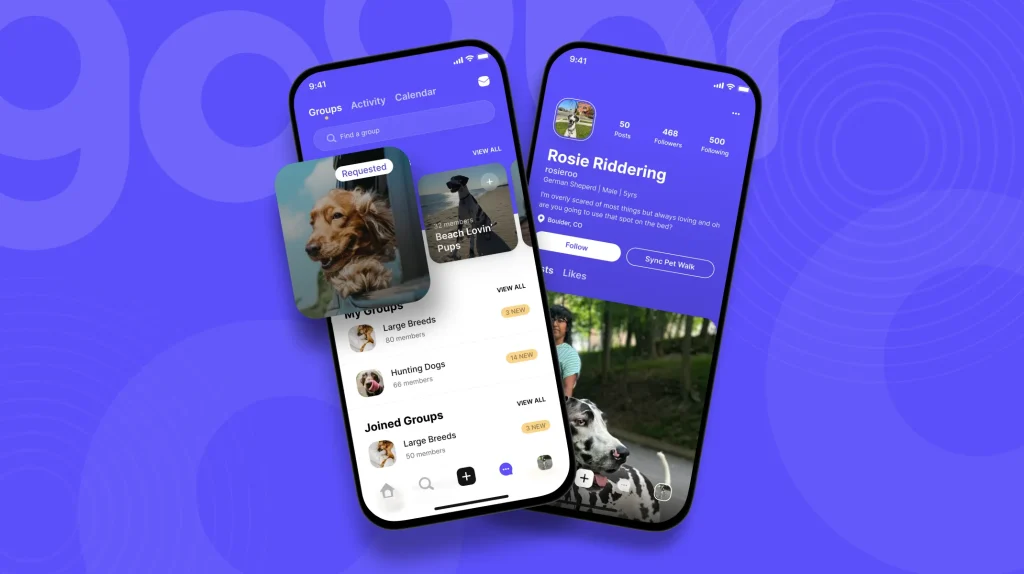
- Goobr is a social networking app where pets have profiles and connect with other pets through their owners.
- The tech stack is built for scale using GraphQL, React, Next.js, Java, and TypeScript for long-term performance.
- Existing apps like PawDates, BarkHappy, and Petzbe succeed by targeting niche needs like meetups, alerts, and pet-first identity.
- The most effective way to validate an app idea is to ship a focused product first and let real user behavior tell you what to build next
The numbers are hard to ignore. The global pet tech market sits at USD 14.17 billion in 2026 and is projected to reach $26.32 billion by 2031. The pet care apps segment alone is valued at $2.74 billion in 2025. These are not niche figures. This is a mainstream consumer category that keeps growing.
What drives it? Pet humanization. 69% of Millennials and Gen Z now consider their pets family members, not just animals. That shift changes everything. Pet owners do not want utility apps that log vet visits and track calories. They want community. They want to share moments, find their people, and feel understood by others who get it. That growing demand is fueling the rise of the social app for pets, where pet owners can connect, engage, and celebrate the moments that matter most.
Pet owners want tools that reflect how they actually feel about their animals. A grooming tracker misses the point. What they want is a space to connect with other pet owners, with communities, with people who understand that yes, your dog’s birthday matters.
That’s the gap Goobr targets.
Goobr is a social networking app for pets and their owners. Cubix built it from the ground up, from initial product decisions to final architecture. This post walks you through the real choices behind a product like this: why they matter, what problems they solve, and what any product team building in the pet-tech or social space can learn from them.
The success of apps like Goobr highlights the growing value of community-first platforms. Cubix leverages its social networking app development expertise to create engaging digital experiences that foster lasting user connections.
Read More: Build a Social Media App Like BlueSky: 6 Simple Steps
Defining the Core Problem: Community, Not Just Content
The first product decision any social app team faces is deceptively simple: what is this app actually for?
Pet content already lives everywhere. Instagram is full of dog accounts. TikTok made “petfluencers” a real category. Reddit has r/aww with 36 million members. So building another place to post photos misses the point entirely.
The Goobr team defined the problem differently. The goal was not content; it was community. Pet owners share a specific kind of loneliness. You love your dog deeply, but most people in your life don’t get it. You want to talk about your cat’s weird behavior, find a local vet recommendation, or just share a video with people who actually care. Generic social platforms don’t serve that well. They’re built for human identity, not pet identity.
Goobr’s core product decision was to center the pet’s profile, not the owner’s. Your pet gets an account. Your pet connects with other pets. The owner exists in the background as caretaker and creator. This single decision shapes everything downstream: the UX, the onboarding, the feed design, the community mechanics.
“The most successful niche social platforms win by being radically specific about who they serve. They don’t try to be everything. They go deep on one audience and build features that nobody else would build. ” Salman Lakhani, Founder & CEO at Cubix
This is what separates Goobr from adding a pet filter on Facebook. The product has a distinct point of view about whose experience matters.
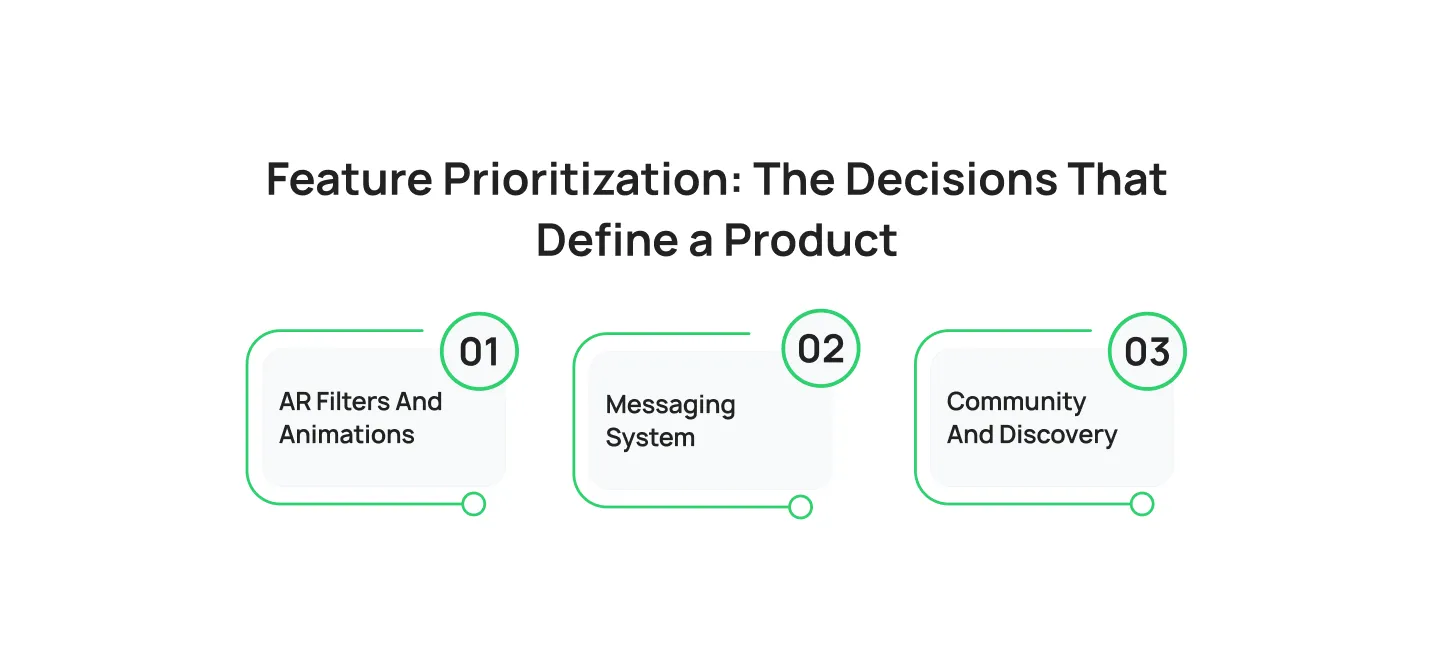
Feature Prioritization: The Decisions That Define a Product
Every product team faces the same pressure: the feature list is endless, but the timeline is not. How you prioritize tells you a lot about what you believe.
For a social platform, the baseline features are obvious: profiles, a feed, follow mechanics, and messaging. Build those, and you have infrastructure. But infrastructure isn’t a product.
The most impactful features in a social networking app are the ones that create differentiation, engagement, and lasting value. The features that define Goobr’s character are the ones that go beyond the baseline.
AR Filters and Animations
Goobr includes AR filters and animations specifically designed for pets. This is not a gimmick. Most pet photos look the same. A sleeping dog on a couch is not compelling content. Add animated sunglasses or a party hat that tracks your dog’s head, and you have something people want to share.
AR for pets is also technically harder than AR for humans. Dog faces have fewer reference points and far more shape variation across breeds. Building reliable pet AR requires custom models, not just porting a human AR library
Messaging System
Goobr includes a direct messaging system between pet profiles. In practice, owners write the messages, but the framing is pet-to-pet. This is a small UX choice with big behavioral implications. Nobody sends angry DMs when they’re pretending to be their Labrador. It keeps interactions light, which is a deliberate product choice.
Community and Discovery
The feed and discovery system needs to solve the cold-start problem. A new user with zero connections sees an empty feed, feels nothing, and leaves. Goobr handles this with a combination of location-based discovery (find pets near you) and interest-based groupings (dog breeds, cat types, species communities). You don’t need followers to see relevant content on day one.
Read More: 7 Product Development Examples and How They Work
The UX Principle: Design for Delight, Not Just Function
Pet apps have a branding problem. Most of them look like health trackers: clinical, functional, and beige. That’s fine if you’re logging vaccines. It’s wrong if you’re building a social community.

Goobr’s design decisions lean into warmth and playfulness without sacrificing usability. The color palette, the typography, the way pet profiles display, all of it signals that this is a space for joy, not admin.
This matters for retention. Users don’t talk about apps that work. They talk about apps that feel good. The product decisions about visual design are product decisions about word-of-mouth growth.
Accessibility Across Devices
Social apps live on mobile. The majority of time on the app happens on phones, often in short sessions, waiting for a bus, taking a lunch break, or watching your dog play at the park. Goobr’s UX is mobile-first. Touch targets are large enough to hit with your thumb when you’re also holding a leash.
The feed is optimized for scrolling. Photos load progressively, so the user interface never freezes on slower mobile data connections. Notifications are smart. The app avoids spamming users because excessive alerts destroy user engagement faster than almost anything else.
Product Development Lifecycle and Iteration Strategy
Launching a feature-rich application without market validation increases business risk. One of the most effective ways to validate an app idea is by rolling out a robust minimum viable product that tests core value propositions before committing to full-scale development. This approach aligns closely with modern product lifecycle management services, enabling teams to gather real user feedback, refine priorities, and make informed decisions before scaling production. The product development strategy focused on this process, allowing the team to validate assumptions and reduce costly development risks.
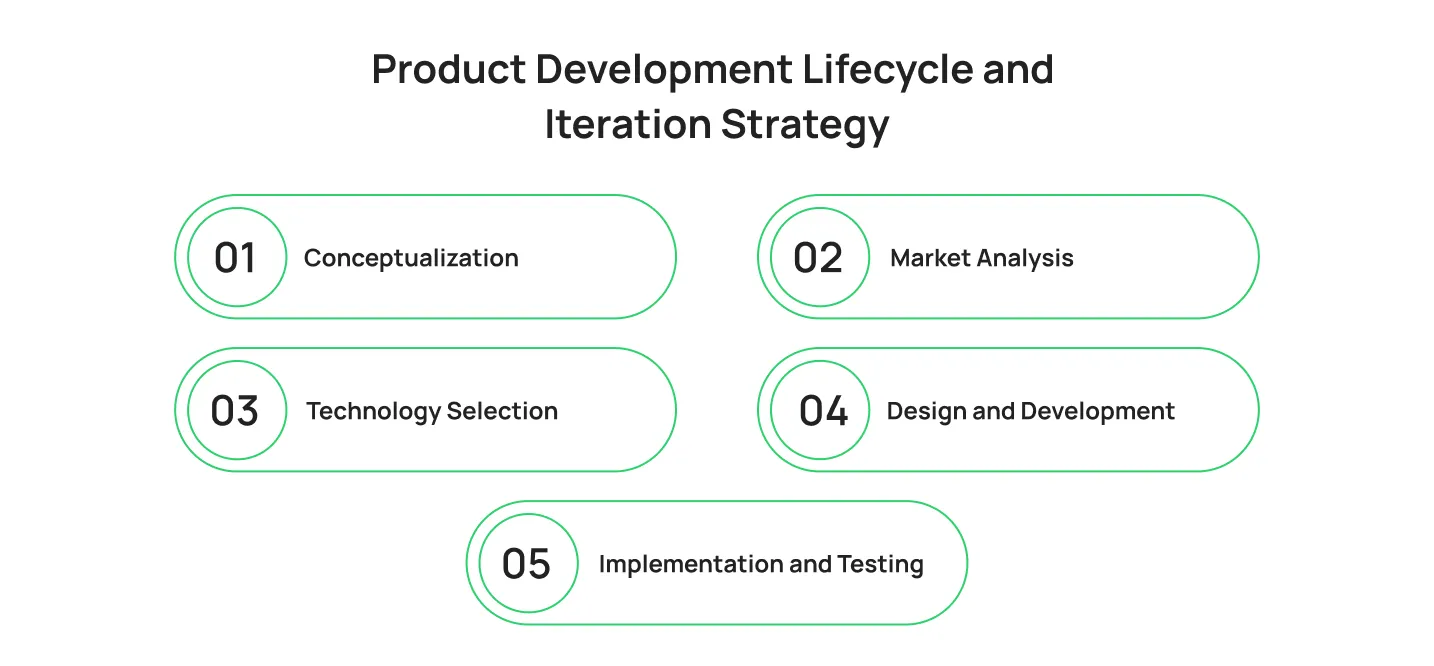
1. Conceptualization: Weeks 1 to 4
Define the core target audience and document specific product requirements for the pet owner demographic in Central Europe.
2. Market Analysis: Weeks 5 to 8
Evaluate existing pet solutions and identify gaps in localized utility features and advanced augmented reality entertainment options.
3. Technology Selection: Weeks 9 to 12
Architect the backend services and finalize data storage solutions capable of handling multi-profile account structures.
4. Design and Development: Weeks 13 to 36
Engineer the mobile interfaces, optimize the computer vision model tracking, and build out real-time messaging components.
5. Implementation and Testing: Weeks 37 to 52
Deploy the core application, collect user behavioral telemetry, and optimize performance bottlenecks based on field data.
Read More: New Product Development Process: From Concept to Launch
Tech Stack Decisions: Why They Matter for a Social App
To build a social networking app like Goobr, Cubix selected a modern technology stack designed to meet the performance, scalability, and user engagement demands of a growing social platform. Here’s what was used and why the choices matter:

GraphQL handles the API layer. Social apps have complex, nested data requirements. A pet profile feed needs profile data, recent posts, mutual connections, and reaction counts, all in one request. REST APIs get messy here. GraphQL lets the frontend request exactly what it needs, reducing over-fetching and improving load times on mobile.
React with React Hooks powers the frontend. Hooks make state management cleaner for complex UI, like a feed that updates in real time, or a messaging thread that reflects new messages without a full page reload.
Next.js: Handles server-side rendering where it matters. Fast initial load is critical for user retention. If your social app takes three seconds to show the first post, you’ve already lost some users.
TypeScript keeps the codebase maintainable as the team grows. Social apps accumulate complexity fast. Strong typing catches bugs before they reach production.
Java on the backend provides the performance headroom a social platform needs as it scales. Media handling, notification dispatch, and feed generation are all compute-intensive. Java’s concurrency model handles this well.
REST APIs run alongside GraphQL for specific integrations, third-party services, payment systems, and anything that doesn’t need GraphQL’s flexibility.
Ant Design, as the component library, keeps the UI consistent across the app without rebuilding common patterns from scratch.
“The hardest part of building a social platform is not the features. It is the architecture decisions you make in week one that you will live with for the next three years. We built Goobr to scale from day one, not to retrofit scalability after the fact.” – Shoaib Abdul Ghaffar, Technical Lead at Cubix
Lessons for Teams Building in Pet Tech (and Beyond)
Whether you’re building in pet tech specifically or using Goobr as a reference for a niche social app in any category, here’s what translates:

Start with the core identity question. Who is this for, and what does their day actually look like? Goobr’s insight, that the pet is the social actor, not the owner, comes from genuinely understanding the user, not from a feature list.
Build for your primary device first. Pet owners use phones. Everything from photo quality to notification design needs to account for mobile-first behavior.
Invest in content quality tooling early. The AR filters are not a v2 feature. They’re the reason people create content on Goobr instead of just posting elsewhere. Content quality is a retention strategy.
Multi-pet support is not an edge case. Gen Z is the fastest-growing segment of pet owners, and they skew heavily toward multi-pet households. If you build your data model around a single pet per account, you will rebuild it under pressure six months after launch. Design it from day one.
Niche communities don’t want general solutions. Dog owners don’t want Facebook for dogs. They want something that understands them specifically, talks their language, and makes their pet feel like a real member of the community.
Examples of Successful Social Apps for Pet Communities
Validation for this model already exists in global app stores. Several platforms carve out highly profitable niches by leaning into specific community mechanics instead of general content feeds. These successful examples reveal the exact patterns that resonate with modern pet parents.
PawDates
PawDates addresses a simple real-world need by helping dog owners find local playmates. The application works like a location-based discovery platform. Users create profiles for their dogs and browse nearby animals to schedule meetups at neighborhood parks. This focused utility creates immediate user habits. The app succeeds because it translates digital connections into real-world socialization.
BarkHappy
BarkHappy combines social networking with vital local utility features. The app allows users to map dog-friendly restaurants, hotels, and shops within their city. More importantly, it integrates crowd-sourced community alerts. If a user spots a lost animal or a hazard at a local park, they drop a pin to notify every pet owner in that direct vicinity.
Petzbe
Petzbe takes a strict approach to the pet-first identity. On this platform, human profiles are invisible. Users operate entirely from the perspective of their animals, sharing updates, photos, and using pet-centric feeling tags. This absolute focus on the animal creates a lighthearted, highly supportive environment. It eliminates the standard social media friction found on human platforms.
Why Cubix Is the Right Partner to Build Your Pet Social Networking App
Cubix has been solving complex product problems for over 18 years. With 350+ strategists, designers, and engineers, and more than 1,300 projects successfully executed, the depth of experience Cubix brings to a product like Goobr is not accidental. It is the result of building across industries, platforms, and problem types long enough to know what works and what fails under pressure.
As a trusted mobile app development company, Cubix combines technical expertise with practical product knowledge gained from years of delivering scalable digital solutions. If you are building a pet social networking space or any community-driven app category, Cubix brings technical depth, product thinking, and real case study experience to every engagement. You do not start from zero. You start from a team that has already navigated the hard decisions and knows exactly where the traps are.
Final Verdict
The pet app development space is no longer a side category. It has evolved into a major market driven by highly engaged users who expect purpose-built products.
“The American Pet Products Association reports that 94 million U.S. households now own at least one pet, up from 82 million in 2023.”
Goobr proves that a niche social app can compete when product decisions are made with clarity and intention. Centering the right identity, solving the cold-start problem, investing in content quality early, and building on a scalable tech stack demonstrates what strong product thinking looks like in execution. The real difference between apps that last and those that fail is not just the idea but how well the product is thought through before a single line of code is written.
Frequently Asked Questions
1. What is the social app for pets?
A social app for pets is a platform where pet owners can create profiles for their pets, share photos and videos, connect with other pet lovers, join communities, and discover pet-related content. Apps like Goobr are designed to make social networking more engaging for pet owners by putting pets at the center of the experience.
2. Is there a social media platform for pets?
Yes, several specialized social platforms exist for pet communities. Platforms like Petzbe allow users to interact entirely from the perspective of their animals, while networks like BarkHappy focus on local community connections and playdate organization. Goobr is a prime example of a premium ecosystem built to blend these interactive social elements with advanced media tooling.
3. How do you handle user privacy on a pet social app?
User privacy on a pet social app is typically protected through secure authentication, encrypted data storage, privacy settings, and controlled profile visibility. Users can choose what information they share, while app developers implement security measures to protect personal data, messages, and account activity.
4. What are the best platforms for building a social app for pets?
The best platforms for building a social app for pets depend on the product requirements. Modern technologies such as React, Next.js, GraphQL, Java, and cloud-based infrastructure are commonly used to support real-time messaging, content sharing, user profiles, and scalable community features.
5. How much does it cost to build a social app for pets?
A basic minimum viable product with profiles, feeds, and messaging costs between 30,000 and 80,000 dollars. An advanced platform with custom AR filters, real-time location mapping, and a scalable backend infrastructure costs between 100,000 and 300,000 dollars or more. The final cost depends directly on feature complexity and your development timeline.