Key Takeaways
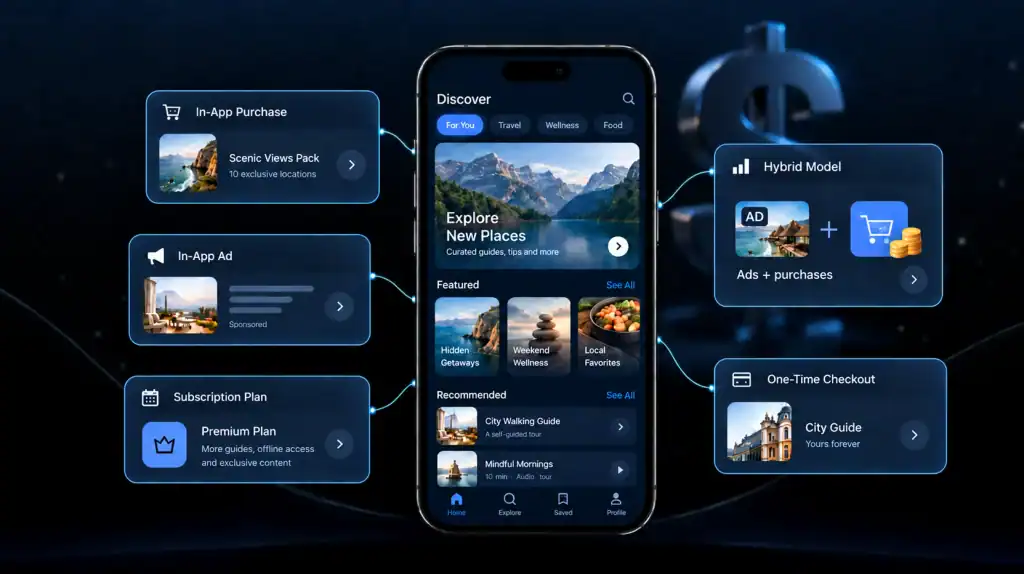
- Apps monetize with models like in-app purchases, ads, subscriptions, freemium, and hybrid strategies to generate revenue.
- The right app business model shapes profit, user retention rates, and overall growth trajectory.
- App monetization cost, user acquisition, and pricing strategy are crucial for maximizing customer lifetime value.
- Analytics tracking and A/B testing help developers optimize conversion rates and pricing psychology for improved mobile app revenue.
- Understanding ARPU and employing retention tactics allows developers to refine revenue models and boost profitability.
Mobile apps play a vital role in business and daily routines, but turning downloads into revenue challenges even experienced developers.
The mobile application market will reach $885.3 billion by 2033, underlining the importance of strong monetization strategies. Yet, many underestimate just how complex it is to select the right model and consistently drive profit.
This article breaks down major app monetization models, pricing strategies, and retention tactics, offering a practical guide for anyone building a successful app business.
Want to monetize your app? Let’s build a revenue strategy that works
Contact UsExploring App Monetization Models
App monetization strategies are varied, and no single model fits every product or audience. Developers select from several proven methods, each offering unique advantages and challenges. Let’s look at the most common revenue models in use today.
In 2025, global consumer spending on mobile apps hit $155.8 billion, a 21.6% rise from the previous year. This growth shows the increasing importance of effective app monetization.
In-App Purchases
In-app purchases enable users to buy extra features, digital goods, or virtual currency within the app. This model dominates mobile gaming, where users pay for boosters, character skins, or additional levels. Candy Crush, for example, lets players purchase boosters, leading to consistent high revenue. This model allows developers to monetize both casual and dedicated users without forcing an upfront fee.
Ads
Many apps earn revenue by serving ads, including banners, interstitials, native ads, and rewarded videos. Ad networks like Google AdMob, Unity Ads, and AppLovin connect app developers with advertisers, maximizing earning potential. Banner and interstitial ads can fit a wide range of apps, while rewarded video ads give users incentives for viewing, such as extra lives or unlocking features. Ads work best for free apps with large user bases who might not pay directly.
Subscriptions
Subscriptions offer regular content or features for a recurring fee, billed weekly, monthly, or yearly. Platforms like Netflix, Headspace, and Spotify rely on this model, providing a mix of free and premium content with valuable extras for paying users. Subscriptions foster high user retention, as customers develop ongoing relationships with the app, resulting in predictable, sustainable revenue.
Freemium
Freemium apps are free to download and use, but advanced features or content require payment. This model increases user acquisition by removing barriers to entry, letting users sample value before upgrading. Dropbox and Evernote use the freemium approach, making the app accessible while offering paid upsell opportunities. Balancing free and paid features is critical, too many restrictions push users away, while too much free content makes conversion to paid users a challenge.
Premium Apps
Premium apps require a one-time purchase before installation. This model fits productivity tools, educational products, or niche apps that deliver significant value immediately. Users pay for the full experience upfront, avoiding ongoing fees or ads. Premium apps emphasize unique or high-quality features unavailable elsewhere. However, this model may cap download numbers, especially with so many free alternatives on the market.
Hybrid models are on the rise, blending elements from multiple strategies. For instance, an app might offer a free version supported by ads and let users unlock an ad-free or premium experience through subscription or one-time payment. Hybrid approaches enable developers to reach both non-paying and paying users, maximizing monetization. For more on successful approaches, visit the App Monetization Guide.
How App Revenue Flows: From Download to Profit

Understanding the movement of money from user to developer is vital for mobile app revenue success. Each monetization model has its own flow involving payment gateways, ad networks, and payout cycles.
Here’s how revenue typically moves for common models, including payment processing and the parties involved:
| Monetization Model | User Action | Payment Gateway/Ad Network | Payment Processing | Developer Payout Timing | Typical Fees |
| In-App Purchases | Buys digital good/feature | App Store (Google Play, App Store) | Secure transaction, app store manages funds | 30-45 days after transaction | 15-30% store commission + processing |
| Ads | Views/clicks ads | Ad Networks (Google AdMob, AppLovin) | Ad network matches ad, bills advertiser | Monthly, minimum threshold applies | 20-30% ad network fee |
| Subscriptions | Enrolls in plan | App Store or third-party (Stripe, Paddle) | Payment processed on subscription cycle | Rolling, often monthly | 15-30% recurring store fee |
| Premium Apps | One-time app purchase | App Store | Payment at checkout | 30-45 days after purchase | 15-30% store cut |
For in-app purchases and subscriptions, app stores like Google Play or Apple App Store manage transactions, authentication, and security. Payment processing means moving funds from the user to the store’s account, subtracting fees, then paying the developer after a set period.
With ads, ad networks sit between the app and advertisers, tracking engagement and handling billing. Developers get paid once a threshold is met.
Payout times and fees differ. App stores often pay 30 to 45 days after a transaction; ad networks pay monthly or after a minimum is reached. It’s important to monitor both direct fees (such as payment processing charges) and indirect costs (like delayed payments or conversion losses), as both affect overall revenue.
The Role of Pricing Strategy and Pricing Psychology
Pricing has a significant impact on an app’s monetization. Both strategic decisions and psychological factors help maximize conversion rates and revenue.
Pricing Strategy
Successful pricing starts with understanding what users expect and what competitors charge. For premium apps, market research identifies a fair and competitive price that reflects value. In freemium and in-app purchase models, the price for each feature or digital item must match what users will pay, not just development costs.
Developers examine competitor pricing, test different amounts, and adjust for local purchasing power. Subscription models often use tiered pricing, offering multiple feature sets at different prices. Limited-time offers and bundles also play a key role, especially in driving higher mobile game revenue.
Pricing Psychology
How prices are presented matters as much as the amount itself. Pricing psychology techniques like anchoring, showing high-priced tiers first, or charm pricing ($4.99 instead of $5) influence user decisions. Highlighting a “most popular” tier or offering short-term discounts can boost urgency and value perception.
App teams regularly test and refine prices. A/B testing reveals which price points convert best and retain users. For more on pricing, see the App Pricing Strategy guide.
User Acquisition Cost and Retention Tactics
App profitability hinges on both the cost to acquire users and the ability to keep them engaged. Knowing these metrics lets developers improve net revenue per customer.
User Acquisition Cost
User acquisition cost is the average amount spent to attract a new user. It factors in marketing, influencer campaigns, referrals, and app store promotions. To calculate, divide total acquisition spend by new users gained in a set period. Lower acquisition costs are key to growth, especially in competitive markets.
Retention Tactics
Keeping users active after download calls for focused retention tactics. Push notifications prompt users to return and can be personalized to their actions or milestones. Gamification, using rewards, points, or challenges, increases engagement in games and productivity apps. Loyalty programs reward users for continued use or referrals, reducing churn and boosting lifetime value. Gamification is further explored in our article on enhancing user engagement.
User Retention
User retention measures how many users stay active days, weeks, or months after downloading. High retention signals strong product fit, while low retention may reveal usability issues. Retention expectations vary, but for many consumer apps, a 1-month retention rate above 30% is strong.
Customer Lifetime Value (LTV)
Customer lifetime value (LTV) measures total expected revenue from a user over their app journey. Raising LTV means keeping users happy, diversifying revenue streams, and holding their attention beyond the first weeks. For strategies on maximizing LTV, see technology maximizing customer lifetime value.
Maximizing ARPU and Conversion Optimization

Maximizing average revenue per user (ARPU) is a core goal for developers aiming for profitability. ARPU measures how much each active user generates, helping guide decisions about features, pricing, and marketing.
Calculate ARPU by dividing total revenue by the number of active users over a set period. A higher ARPU means greater value per user. Strategies to increase ARPU include:
- Using analytics tracking to identify top spenders and refine marketing.
- Segmenting users and tailoring offers to groups like core gamers or casual users.
- Testing upsell opportunities, like exclusive digital items or VIP subscriptions.
- Running A/B tests on pricing models or offers, then rolling out what performs best.
- Launching cross-promotions and referral incentives to convert more free users into paying customers.
Analyzing conversion rates at every stage of the user journey enables ongoing optimization. Testing onboarding flows, paywall designs, and CTAs helps boost both ARPU and total app revenue.
App Monetization Cost Breakdown
Balancing income and expenses is critical for building a sustainable app business. Here’s a look at typical monetization costs and ways to manage them:
| Expense Category | Typical Range (USD) | Description |
| App Development | $30,000-$300,000 | Building features, UX/UI, initial testing |
| Payment Processing | 2-5% per transaction | Fees paid to payment gateways and processors |
| Ad Network Fees | 20-30% of ad revenue | Charges by ad networks for serving and managing ads |
| Analytics Tools | $100-$1,000/month | Subscription to platforms like Mixpanel, Firebase, or custom dashboards |
App monetization costs continue beyond launch. Ongoing expenses include server hosting, analytics, and customer support. Developers can manage costs by automating transactions, comparing ad networks for better fees, and choosing all-in-one platforms when possible.
Sometimes, higher investment in user experience or analytics pays off with greater long-term revenue. Cutting costs early may backfire, leading to lower retention or missed revenue. For more on cost management, see the App Monetization Future.
Monetization Models in Action: Real-World Examples
Looking at top apps reveals practical ways to build a profitable app business. Here are leading examples and their main models:
- WhatsApp: Once used a freemium model, now blends business service subscriptions and integration fees. More detail on WhatsApp’s revenue model.
- Candy Crush: Major revenue from in-app purchases like boosters and level unlocks. See the Candy Crush model.
- Spotify: Relies on subscriptions and a freemium approach, creating high customer lifetime value.
- Headspace: Subscription-based, offering a growing library of meditation content and regular updates.
- Duolingo: Combines freemium, ads, and subscriptions, letting users pay to remove ads or unlock content.
- Monument Valley: Premium model requiring a single upfront payment for full access, without ads or in-app purchases.
These examples show how matching business models to product goals and user needs influences success. The main takeaway: while there’s no universal formula, understanding users and competitors and aligning your model matters. For mobile gaming insights, see this mobile game revenue overview.
Analytics, Tracking, and Continuous Improvement
Ongoing analytics and testing are essential for refining your app monetization approach. The right tools enable quick responses to user trends and market shifts.
Analytics Tracking
Analytics tracking means gathering and studying user data to uncover trends in conversion, retention, and performance. Platforms like Firebase, Mixpanel, and Amplitude help developers monitor daily users, retention, and ARPU. This data guides feature prioritization, bottleneck fixes, and marketing adjustments.
A/B Testing
A/B testing compares versions of features, paywalls, or pricing models by splitting the user base and measuring outcomes. This process uncovers which options boost conversions or engagement. Constant experimentation helps teams make informed improvements and adapt quickly.
Regular review of analytics and testing keeps monetization models nimble, helping your app business stay ahead as trends shift.
How Cubix Helps You Build Profitable Apps
Cubix delivers expertise in app monetization across multiple industries and platforms, helping clients create and optimize app business models tailored to their needs.
- Comprehensive support for choosing, integrating, and improving revenue models, including in-app purchases, subscriptions, ads, and hybrids.
- Guidance with ad network integration and selecting payment gateways, streamlining processing and ensuring compliance.
- Advanced analytics tracking and user segmentation to drive ARPU growth and conversion optimization, including A/B testing.
- Ongoing consulting focused on maximizing user retention, implementing retention tactics, and increasing customer lifetime value (LTV).
- Proven results, such as higher mobile app revenue for gaming, wellness, and productivity apps, all delivered through a collaborative, data-driven process. Cubix’s expertise is well illustrated by their detailed game monetization statistics insights.
Partnering with Cubix means receiving expert guidance at every stage, from planning and launch to continuous improvement. To learn more, visit mobile app development agency.
Ready to turn app downloads into revenue? Let’s make it happen
Contact UsFrequently Asked Questions
1. What is the best monetization model for my app type?
The best approach depends on your app’s category, target audience, and business goals. Freemium often suits games, while subscriptions are ideal for content-rich apps. Many apps now use hybrid models.
2. How much can I earn from in-app ads?
Ad revenue depends on your user base, the chosen ad formats, and engagement rates. Banner ads pay less than rewarded video or interstitials, and results vary by ad network.
3. What percentage do app stores take from revenue?
Most app stores charge a commission between 15% and 30% on in-app purchases and subscriptions. This fee directly affects your monetization costs and profit margin.
4. Should I use a freemium or premium model?
Freemium models attract more users but need strong conversion optimization to generate revenue. Premium apps bring upfront payments but may limit downloads, so weigh your audience and pricing carefully.
5. How do subscription apps calculate retention?
Subscription apps monitor retention by tracking renewal rates and churn. Onboarding improvements and personalized offers can help boost long-term value and user retention.
6. What is average revenue per user (ARPU)?
ARPU is total revenue divided by the number of active users. This metric helps evaluate monetization efficiency and guides pricing strategy decisions.
7. How do I implement in-app purchases?
Integrate a secure payment gateway and manage payment processing through an SDK from a platform like Apple or Google. These solutions simplify implementation and ensure security.
8. What are the top ad networks for mobile apps?
Leading ad networks include Google AdMob, Unity Ads, and AppLovin. Each offers different formats, payout rates, and tools to support app business models.
9. How do I reduce user acquisition cost?
Reduce acquisition costs by targeting marketing, building referral programs, and optimizing ad spending. Analytics and A/B testing further refine your approach for better results.
10. What monetization strategy has the highest ROI?
The highest ROI usually comes from blending several revenue models and focusing on customer lifetime value (LTV) using retention and conversion optimization.