Key Takeaways
- There is no universal best game engine for beginners.
- Your game genre should influence your engine choice more than popularity.
- Unity remains one of the most versatile engines for beginners in 2026.
- Unreal Engine is ideal for aspiring AAA and high-end 3D developers.
- Godot continues to gain popularity among indie creators thanks to its open-source model.
- Some engines require little or no coding experience.
- The fastest path to learning game development is finishing a small game, not mastering every engine feature.
- Choosing the right engine early can save months of unnecessary learning.
Choosing your first game engine can feel overwhelming.
A quick search reveals dozens of options, thousands of tutorials, and endless debates about whether Unity, Unreal Engine, or Godot is the best choice. The reality is that there is no single “best” game engine for everyone.
Today, there are dozens of game development engines available, each designed for different types of projects. As the global gaming market approaches $197 billion in annual revenue, developers have more opportunities than ever to turn ideas into successful games.
This guide compares the best beginner-friendly game engines and provides a practical framework for selecting the right one for your first game.
What Is a Game Engine?
A game engine is a software framework that provides the tools needed to create, test, and publish video games.
Modern game engines provide everything from rendering and physics systems to audio tools and a built-in scripting language. Some platforms also include drag and drop editors and visual scripting systems that allow beginners to create games with little or no coding experience.
Most modern engines support both 2d and 3d game development, making them suitable for a wide range of projects.
Instead of building every system from scratch, developers use game engines to handle many of the technical components required to run a game.
Most modern game engines include:
- Graphics rendering
- Physics simulation
- Animation systems
- Audio management
- User interface tools
- Asset management
- Scripting and programming support
- Cross-platform deployment
Think of a game engine as the foundation of a house. While players see the final experience, the engine handles much of the underlying functionality that makes the game work.
Without a game engine, even a simple platformer would require developers to manually build systems for movement, collisions, rendering, and input handling.
Today, engines make these tasks significantly easier, allowing beginners to focus more on game design and less on low-level programming.
[blog_cta]
Why Choosing the Wrong Engine Can Cost You Months

Which game engine should beginners learn first?
Beginners should learn the engine that best matches the type of game they want to create. Choosing an engine simply because it is popular often leads to unnecessary complexity and a longer learning curve.
One of the most common mistakes new developers make is selecting a tool designed for a completely different type of project.
For example, someone interested in creating a simple 2D puzzle game may start with a high-end engine built primarily for large-scale 3D experiences. They then spend months learning advanced rendering systems they may never use.
Common beginner mistakes include:
- Following online hype instead of project requirements
- Prioritizing graphics over usability
- Ignoring platform-specific strengths
- Choosing an engine that exceeds current skill levels
- Learning multiple engines simultaneously
A better approach is to start with the game you want to build and work backward.
Ask yourself:
- Will the game be 2D or 3D?
- Is it intended for PC, console, mobile, or web?
- Do you want to code or use visual scripting?
- Are you learning for a hobby, indie development, or a professional career?
The answers to these questions will narrow your options considerably and help you avoid investing time in tools that don’t align with your goals.
How to Choose Your First Game Engine in 2026

If you’re wondering which game engine you should learn first, start by answering three questions:
- What type of game do you want to build?
- How much coding experience do you have?
- What are your long-term goals as a developer?
The answers will quickly narrow down your options. The ideal choice depends on whether you’re looking for a 2d game engine, a powerful 3d engine, or a flexible platform capable of handling both.
Choose Based on the Type of Game You Want to Build
Different engines are designed for different use cases.
| Game Type | Recommended Engine |
| 2D Platformers | GameMaker, Godot |
| Mobile Games | Unity |
| Indie Games | Godot, Unity |
| AAA-Style Games | Unreal Engine |
| Browser Games | Construct 3 |
| RPGs | RPG Maker |
| Visual Novels | Ren’Py |
| Multiplayer Games | Unity, Unreal Engine |
For example, if you’re building a simple 2D game, learning Unreal Engine’s advanced rendering systems may not provide much value. Likewise, a developer pursuing AAA game development may eventually outgrow simpler engines.
Choose Based on Coding Experience
Not every engine requires extensive programming knowledge.
| Experience Level | Recommended Engines |
| No Coding Experience | Construct 3, RPG Maker |
| Beginner | GameMaker, Godot |
| Intermediate | Unity |
| Advanced | Unreal Engine |
Visual scripting tools have become significantly better over the past few years, making game development more accessible than ever.
Choose Based on Career Goals
Your first engine should support where you want to be in the future.
| Career Goal | Recommended Engine |
| Indie Developer | Godot |
| Mobile Developer | Unity |
| AAA Studio Career | Unreal Engine |
| Educational Projects | Scratch |
| Rapid Prototyping | Construct 3 |
The best choice isn’t necessarily the easiest engine. It’s the engine that aligns with your future projects.
10 Best Game Development Engines for Beginners in 2026
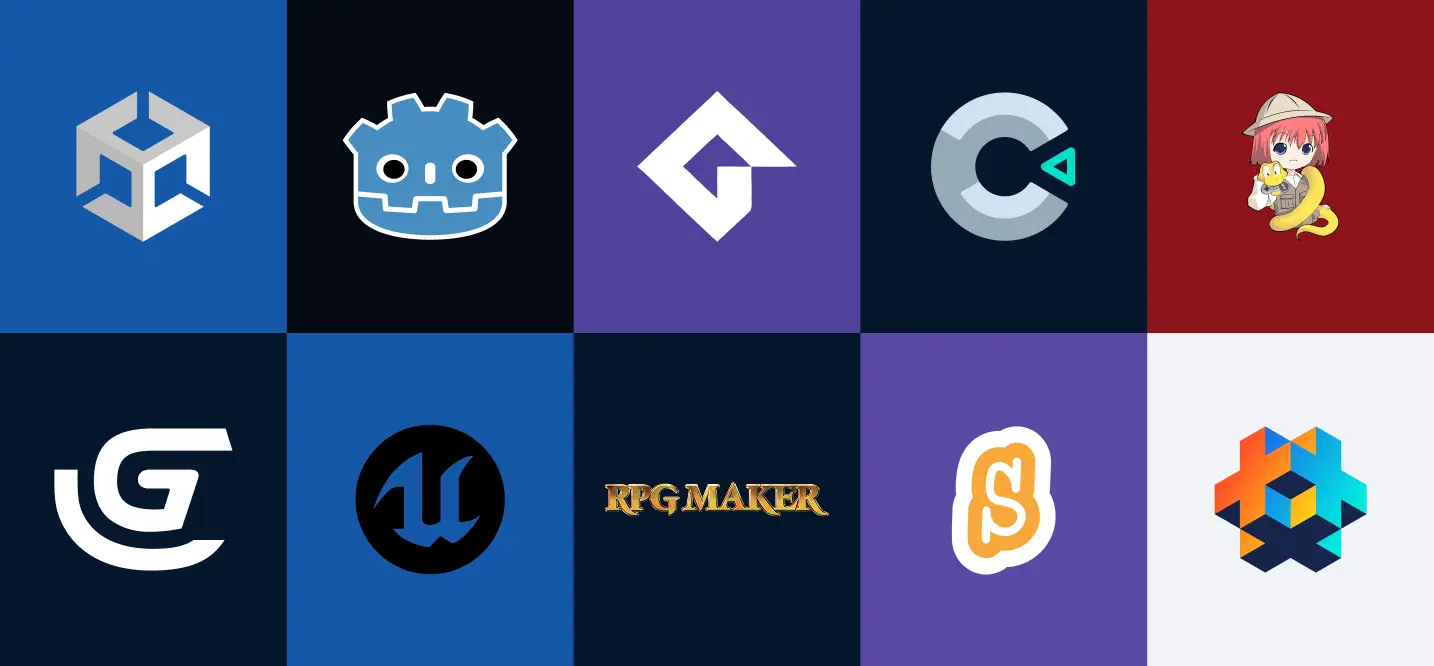
1. Unity
Best For: Mobile games, indie games, cross-platform development
Unity remains one of the most popular game development software for beginners because it balances ease of use with professional-grade features. It supports cross platform deployment, allowing developers to publish games across mobile, PC, consoles, and web environments.
Pros
- Strong multi platform support
- Extensive asset marketplace
- Excellent real time rendering capabilities
Cons
- Can feel overwhelming initially
- Requires learning C#
Learning Curve
Moderate
Ideal For
Developers who want flexibility and long-term career opportunities.
For those interested in creating 3D experiences, our guide on how to make a 3D game in unity offers a practical starting point.
2. Unreal Engine
Best For: AAA-quality games and realistic 3D environments
Unreal Engine is widely recognized for delivering high fidelity graphics and cutting edge rendering technologies.
While it offers incredible visual quality, beginners should be aware of its steeper learning curve compared to some competing engines.
Pros
- Industry-leading graphics
- Blueprint visual scripting
- Strong AAA adoption
- Advanced development tools
Cons
- Steeper learning curve
- More demanding hardware requirements
Learning Curve
Moderate to High
Ideal For
It remains one of the leading top game engines for developers pursuing AAA-quality experiences and large scale projects.
3. Godot
Best For: Indie developers and open-source enthusiasts
Godot has become a favorite among indie developers thanks to its open source licensing model and growing community support.
Pros
- Completely free
- No royalties
- Beginner-friendly interface
- Strong 2D capabilities
Cons
- Smaller ecosystem than Unity
- Fewer enterprise-level resources
Learning Curve
Low to Moderate
Ideal For
Indie developers looking for flexibility without licensing concerns.
4. GameMaker
Best For: 2D games
GameMaker is often considered the easiest 3d game engine for beginners alternative for developers who primarily want to focus on 2D experiences without unnecessary complexity.
Many creators also view it as an easy game maker software solution because of its streamlined workflow and beginner-friendly tools.
Pros
- Excellent for 2D development
- Fast prototyping
- Beginner-friendly
Cons
- Limited for advanced 3D projects
Learning Curve
Low
Ideal For
Developers focused exclusively on 2D gameplay experiences.
5. Construct 3
Best For: Browser-based and no-code development
Construct 3 is frequently listed among the best video game making software for beginners because it uses intuitive event systems rather than traditional programming.
Pros
- No-code development
- Browser-based workflow
- Fast learning curve
Cons
- Less flexibility for complex projects
Learning Curve
Very Low
Ideal For
Beginners who want to publish games quickly.
6. RPG Maker
Best For: Role-playing games
RPG Maker simplifies character progression, dialogue systems, and quest mechanics through built-in tools.
Pros
- RPG-focused workflow
- Minimal coding required
- Rapid development
Cons
- Limited outside RPG projects
Learning Curve
Low
7. Ren’Py
Best For: Visual novels and narrative games
Ren’Py remains one of the most popular frameworks for story-driven experiences.
Pros
- Easy to learn
- Excellent storytelling tools
- Strong community support
Cons
- Narrow use case
Learning Curve
Low
8. Defold
Best For: Lightweight mobile development
Defold offers strong performance and efficient deployment for smaller projects.
Pros
- Lightweight
- Mobile-friendly
- Free to use
Cons
- Smaller community
Learning Curve
Low to Moderate
9. GDevelop
Best For: No-code game creation
GDevelop enables beginners to build games visually while gradually learning development concepts.
Pros
- Beginner friendly
- Visual development tools
- Cross-platform support
Cons
- Limited scalability
Learning Curve
Very Low
10. Scratch
Best For: Absolute beginners
Scratch remains one of the most effective platforms for introducing game development for kids and helping young creators understand programming concepts.
Pros
- Extremely accessible
- Great for learning concepts
Cons
- Not suitable for commercial projects
Learning Curve
Very Low
Game Engine Comparison for 2026
Beginners often focus on features while overlooking potential costs. Some engines include subscription fees, marketplace purchases, or revenue-sharing requirements that can become a hidden cost as projects grow. Reviewing pricing models early can help you avoid unexpected expenses later.
| Engine | Coding Required | 2D Support | 3D Support | Mobile Support | Difficulty | Free Option |
| Unity | Yes | Yes | Yes | Excellent | Moderate | Yes |
| Unreal Engine | Optional | Limited | Excellent | Good | High | Yes |
| Godot | Basic | Excellent | Good | Good | Low | Yes |
| GameMaker | Minimal | Excellent | Limited | Good | Low | Yes |
| Construct 3 | No | Excellent | Basic | Good | Very Low | Limited |
| RPG Maker | Minimal | Good | No | Limited | Low | No |
| Ren’Py | Minimal | Good | No | Limited | Low | Yes |
| Defold | Yes | Good | Basic | Excellent | Low | Yes |
| GDevelop | No | Good | Basic | Good | Very Low | Yes |
| Scratch | No | Basic | No | No | Very Low | Yes |
Which Engine Should You Learn First?

The answer depends on what you want to build.
Learn Unity First If…
- You want maximum flexibility.
- You’re interested in mobile games.
- You plan to work professionally in game development.
- You want access to extensive tutorials and learning resources.
If you’re exploring 3D development, you may also find value in this Beginner’s Guide to 3D Game Development.
Learn Unreal Engine First If…
- You want to build visually stunning 3D experiences.
- You’re interested in AAA development.
- You enjoy working with advanced tools and systems.
Learn Godot First If…
- You want a free and open-source solution.
- You’re focused on indie projects.
- You want a simpler learning experience.
What About 2D Games?
If your primary focus is 2D development, Godot and GameMaker are often better starting points than Unity or Unreal.
For a deeper look at how project requirements influence development decisions, see:
2D vs 3D game development
What About Browser Games?
Construct 3 remains one of the strongest options for browser-based development.
You can also explore additional web-focused technologies the top html5 game engines comparison
Don’t Forget Asset Creation
Choosing an engine is only one piece of the development process.
You’ll also need artwork, animations, sound effects, UI assets, and optimization workflows. Understanding these fundamentals early can significantly improve your results. Learn more in our guide to the game asset creation process.
For most beginners in 2026, Unity remains the safest all-around recommendation. However, if your goals clearly align with Godot, Unreal Engine, or GameMaker, choosing a specialized tool may help you progress faster.
Conclusion
The good news is that beginners in 2026 have more options than ever before. Whether you choose Unity, Unreal Engine, Godot, GameMaker, or another platform, the skills you develop while building games will transfer across engines throughout your career.
As a quick recap:
- Choose Unity if you want flexibility across multiple platforms and game genres.
- Choose Unreal Engine if you’re interested in AAA-quality visuals and advanced 3D development.
- Choose Godot if you want a beginner-friendly, open-source engine with no licensing costs.
- Choose GameMaker if your focus is fast and efficient 2D game development.
- Choose Construct 3 or GDevelop if you prefer a low-code or no-code learning path.
Remember that your first game engine doesn’t have to be your last. Many professional developers switch tools as their projects and careers evolve.
For startups, publishers, and businesses planning larger projects, selecting the right engine becomes even more important. Working with an experienced mobile game development company can help teams choose technologies that align with performance requirements, target platforms, and long-term product goals.
Similarly, organizations building side-scrollers, platformers, and other 2D experiences often partner with a specialized 2d game development company to accelerate production and avoid common development challenges.
At the end of the day, the best engine is the one that helps you finish your first game. Completing a project teaches more than months of comparing tools, watching tutorials, or debating features online.
That’s a philosophy shared by many experienced studios, including Cubix games, where the focus remains on choosing technology based on project requirements rather than industry trends.
Pick an engine, start building, and keep learning. Your first completed game will teach you far more than the perfect engine ever could.
[blog_cta_2]
Frequently Asked Questions
1. What is the best engine for game development?
There is no single answer because the best engine depends on your goals. Unity, Unreal Engine, and Godot are among the most widely used game development platforms in 2026.
2. What is the best game development engine for beginners?
Many developers consider Unity the best game engine for beginners because it offers a balance of accessibility, learning resources, and professional opportunities.
3. Which engine is best for game development?
For overall flexibility, Unity remains one of the strongest options. However, Unreal Engine excels in high-end 3D projects, while Godot is a popular choice for indie development.
4. Which game development engine is best for solo developers?
Many solo developers choose Godot because of its lightweight workflow, open-source model, and lower complexity compared to larger engines.
5. What game engine is best for solo developers creating indie games?
Godot and GameMaker are often preferred because they allow smaller teams to build and launch projects efficiently.
6. Which engine is best for mobile game development?
Unity continues to dominate mobile development due to its mature ecosystem, optimization tools, and extensive platform support.
7. What’s the best RPG gaming engine for new game developers?
RPG Maker remains one of the easiest solutions for beginners creating role-playing games because it includes built-in systems for quests, dialogue, and progression.