Key Takeaways
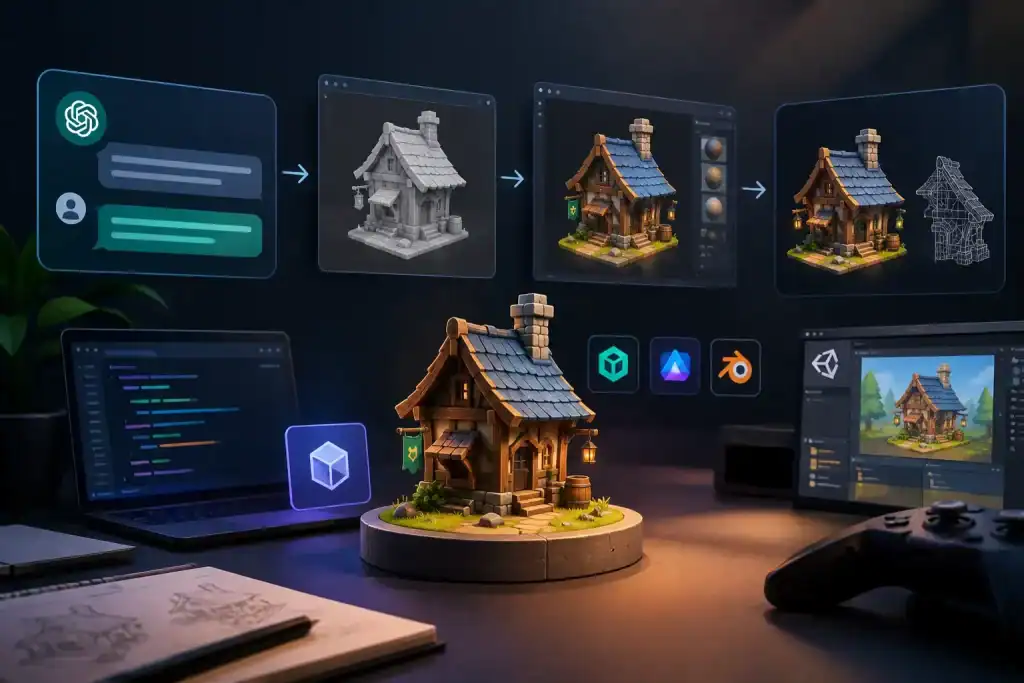
- RPG Maker U2U introduces a new HD-2D-inspired visual system called P2D, making modern RPG creation easier than ever.
- Developers can create an hd 2d rpg without advanced programming knowledge.
- The platform continues RPG Maker’s tradition of no-code game development while adding modern visual features.
- New dynamic lighting and 3D depth effects help indie games achieve a premium look.
- Existing RPG Maker assets remain compatible, protecting years of creative work.
- RPG Maker is one of the most accessible tools for game development without coding.
- Many successful commercial indie games have already proven that RPG Maker can be used professionally.
- RPG Maker U2U lowers the barrier for anyone wondering how to create a game without coding.
A decade ago, creating a video game usually meant learning programming languages, understanding complicated engines, and spending months building systems before making something playable.
Today, that reality is fully changing.
Independent game development has exploded over the past few years. According to data from Steam, more than 18,000 new games were released on the platform during 2025 alone. Much of this growth came from indie creators and small teams using accessible development tools. At the same time, no-code software platforms continue to gain popularity across multiple industries, including gaming.
This shift has created a new generation of creators. Artists, writers, designers, and hobbyists can now build complete games without becoming software engineers first.
That is exactly where RPG Maker has always stood out.
For years, RPG Maker has helped aspiring developers turn ideas into playable adventures. Now, Gotcha Gotcha Games is preparing to take things even further with RPG Maker U2U, the latest entry in the legendary RPG creation series.
Announced in May 2026, RPG Maker U2U introduces an exciting visual upgrade inspired by the famous HD-2D aesthetic while preserving the simple workflow that made the platform popular in the first place.
For anyone searching for a role playing game maker, an intuitive rpg builder, or a way to make a game without coding, RPG Maker U2U could become one of the most exciting releases of the year.
What Is RPG Maker U2U?
RPG Maker U2U is the newest version of the long-running RPG Maker series developed by Gotcha Gotcha Games.
The title “U2U” stands for “Up To You,” reflecting the company’s vision of giving creators complete freedom to build games according to their imagination.
Unlike traditional game engines that require extensive programming knowledge, RPG Maker U2U focuses on visual creation tools and intuitive workflows. The platform allows users to design maps, create characters, write stories, configure combat systems, and build complete RPG experiences without writing large amounts of code.
The biggest announcement surrounding the new release is its focus on advanced visuals.
Historically, RPG Maker games have used classic top-down 2D graphics. While these visuals worked well for retro-style games, many developers wanted richer environments and more cinematic presentation.
RPG Maker U2U addresses that challenge through a brand-new technology called P2D.
The result is a modern rpg creator that combines accessibility with visuals that feel closer to today’s indie hits.
For beginners learning how to make a rpg game, this could significantly reduce the gap between a creative vision and a finished product.
Why HD-2D Games Are Dominating Indie Development
Few visual styles have influenced modern RPG development as much as HD-2D.
The term became widely recognized after Square Enix released Octopath Traveler in 2018. The game combined pixel art sprites with modern lighting, depth effects, and cinematic camera work.
Players loved it.
Octopath Traveler sold over 4 million copies worldwide, proving that retro-inspired visuals could still feel fresh and commercially successful.
Since then, several major titles have adopted the same approach, including:
- Octopath Traveler II
- Triangle Strategy
- Live A Live
- Dragon Quest III HD-2D Remake
These games demonstrated that players are not simply looking for realistic graphics. They are looking for memorable art styles.
The HD-2D aesthetic creates a unique blend of nostalgia and modern presentation. Developers can use detailed pixel art sprites while enhancing environments with:
- Dynamic lighting
- Volumetric effects
- Environmental shadows
- Depth of field effect
- Advanced camera movement
- Layered environments
The result feels both retro and modern.
This trend has influenced indie developers worldwide. Many studios now explore HD-2D techniques because they can create visually impressive experiences without the enormous budgets required for AAA realism.
For creators interested in 2D game design, RPG Maker U2U brings many of these visual concepts into a beginner-friendly environment.
Instead of building complex rendering systems manually, developers gain access to tools that simplify the process.
This makes the dream of creating an hd 2d rpg significantly more achievable for solo creators and small teams.
The One Feature That Makes RPG Maker U2U Worth Paying Attention To
If there’s one feature defining RPG Maker U2U, it’s P2D, Perspective 2D. The name sounds technical, but the idea behind it is actually pretty straightforward.
Classic RPG Maker environments have always been flat. Towns, dungeons, overworlds, everything sits on a single 2D plane. It works, and it’s produced some genuinely beloved games, but there’s always been a ceiling. Maps can start to feel more like tiled wallpaper than actual places you’d want to explore.
P2D fixes that by layering real three-dimensional depth into the same top-down view RPG Maker users already know.
And here’s where it gets interesting.
Instead of rebuilding your entire workflow from scratch, you keep making games the exact same way, placing tiles, building maps, and writing events. The difference is that the engine now treats your world like it has actual space. Foreground and background elements separate naturally. Lighting behaves realistically. A lantern inside a tavern casts a warm glow on the walls. Sunlight filters differently depending on where your character is standing.
That shift in atmosphere is hard to overstate. It’s the reason games like Octopath Traveler feel cinematic despite being built around pixel sprites, depth and lighting do enormous work.
The other genuinely useful detail is backward compatibility. Asset libraries built across years of previous RPG Maker versions can be brought into U2U with some modifications, and they’ll immediately benefit from the new depth and lighting systems. Nobody is starting from zero.
How RPG Maker Lets You Make a Game Without Coding

One of the most common questions aspiring developers ask is:
“Can you make a game without coding?”
The answer is yes.
In fact, RPG Maker has been helping people do exactly that for decades. Unlike traditional engines that rely heavily on programming, RPG Maker uses systems designed around visual creation.
This makes it one of the most recognizable examples of game making software without coding available today.
Event-Based Programming
The foundation of RPG Maker is Event-based programming. Instead of writing code manually, developers use visual commands. For example, you can create:
- Conversations with NPCs
- Quest systems
- Treasure chests
- Character interactions
- Story events
- Cutscenes
Each action is configured through menus and visual settings. The system feels closer to game design than software engineering.
Visual Development Workflow
Many creators begin their journey wondering how can i make a game without coding.
RPG Maker answers that question by replacing programming tasks with visual tools.
- Maps are created through drag-and-drop systems.
- Characters are placed directly into environments.
- Dialogue is written inside editor windows.
- Gameplay systems are configured through menus.
This approach dramatically reduces the learning curve.
Fast Prototyping
Another major advantage is development speed. A beginner can build a playable RPG prototype in days instead of months.
This makes RPG Maker particularly attractive for:
- Writers
- Artists
- Hobby developers
- Indie creators
- Students
- Small studios
For anyone exploring easy game development without coding, few platforms are as beginner-friendly.
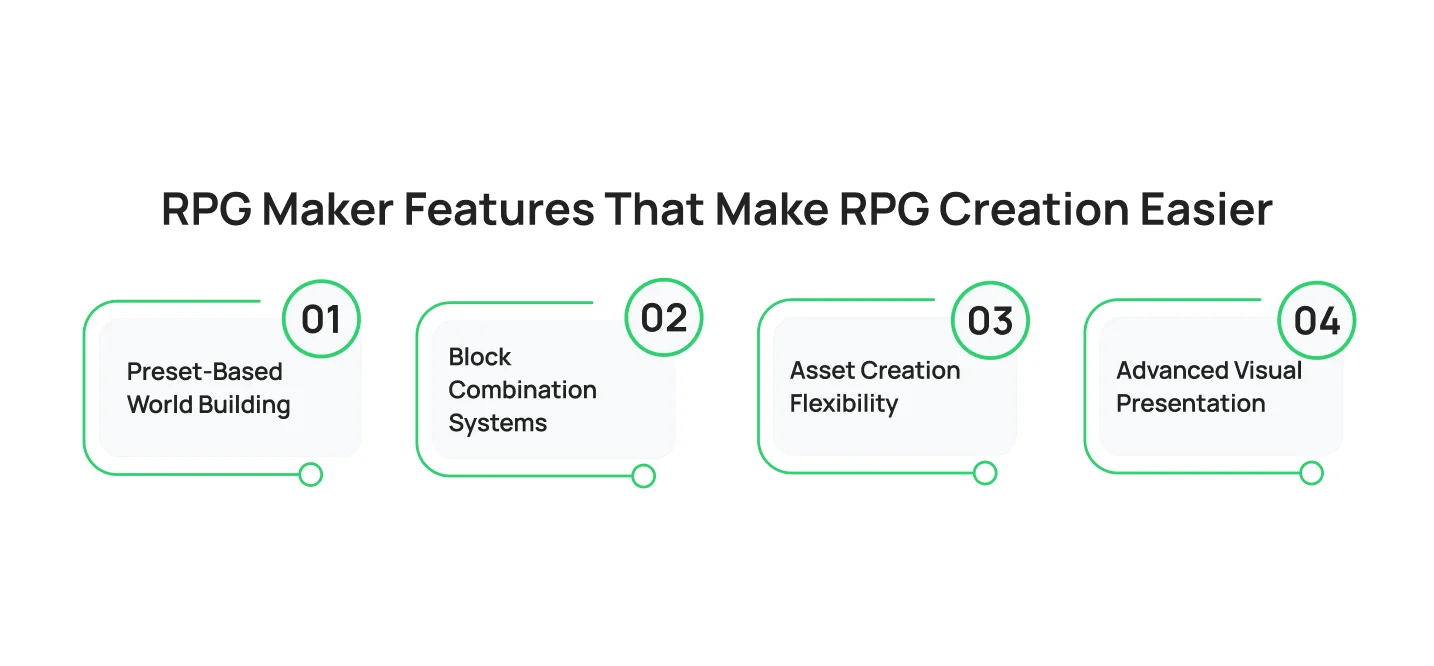
RPG Maker Features That Make RPG Creation Easier
The success of RPG Maker comes from its balance between simplicity and flexibility.
While it focuses on accessibility, it still offers extensive customization options that allow creators to make unique experiences.
Preset-Based World Building
RPG Maker U2U includes more than 100 presets according to information shared by Gotcha Gotcha Games.
Developers can quickly build towns, dungeons, forests, and interiors without creating every asset from scratch.
This dramatically accelerates rpg making for beginners.
Block Combination Systems
The new block-based environment tools allow creators to combine elements and create unique layouts.
Rather than relying solely on templates, developers can customize maps while maintaining a fast workflow.
Asset Creation Flexibility
Creators can build:
- Floor tiles
- Buildings
- Environmental decorations
- Characters
- Interactive objects
This gives users much more control over the final look of their projects.
Advanced Visual Presentation
Modern visual effects help RPG Maker evolve beyond its traditional appearance.
Features such as dynamic lighting, environmental depth, and HD-2D-inspired rendering can make projects look far more sophisticated than previous versions.
For developers searching for a game engine without coding, these visual upgrades significantly increase what can be achieved without technical expertise.
At the same time, advanced users can still extend functionality through plugins and additional tools, creating a balance between accessibility and creative freedom.
Real Games Successfully Built with RPG Maker
One of the biggest misconceptions about RPG Maker is that it is only suitable for hobby projects.
In reality, several commercially successful games have been built using RPG Maker and have attracted millions of players worldwide.
To The Moon
Released by Freebird Games, To The Moon became one of the most beloved indie story-driven RPGs ever made.
Despite using RPG Maker, the game earned widespread critical acclaim for its emotional storytelling, memorable characters, and unique narrative structure.
The game’s success proved that players care more about compelling experiences than expensive graphics.
OMORI
Perhaps the most famous modern RPG Maker success story is OMORI.
Developed over several years, OMORI sold millions of copies and developed a passionate global community.
The game combined psychological horror, unique art direction, and memorable storytelling while using RPG Maker as its foundation.
Fear & Hunger
Another successful RPG Maker title, Fear & Hunger, gained popularity through streamers and content creators.
Its dark fantasy setting and challenging gameplay helped it stand out in the crowded indie market.
These examples demonstrate an important lesson: Tools do not determine success. Creativity, design quality, storytelling, and execution matter far more than the engine itself.
For aspiring creators wondering whether a rpg game maker can produce commercial-quality games, these examples provide a clear answer.
RPG Maker vs Unity, Unreal, and Godot

Every game engine serves a different audience. The best choice depends on your goals, experience level, and project requirements.
Let’s compare RPG Maker against the three most popular alternatives.
RPG Maker
Best for:
- Beginners
- Story-driven RPGs
- Solo developers
- Rapid prototyping
- No-code workflows
Advantages:
- Fast learning curve
- Event-based programming
- Built-in RPG systems
- Quick development process
Limitations:
- Primarily designed for RPGs
- Less flexibility than full engines
Unity
Unity remains one of the most versatile game engines available.
Many developers ask:
“Can I make a game in Unity without coding?”
The answer is partially yes.
Unity offers visual scripting tools, but most professional Unity projects still rely heavily on C# programming.
Beginners can create simple mechanics visually, but complex systems often require coding knowledge.
If you are comparing engines, our guide on Unity vs Unreal for indie developers provides a deeper breakdown of the differences.
Unreal Engine
Unreal Engine offers stunning graphics and advanced development capabilities.
Many newcomers also ask:
“Can you make a game in Unreal without coding?”
Again, the answer is yes, to a degree.
Unreal’s Blueprint system is a powerful form of Visual scripting that allows developers to build gameplay systems visually.
However, the engine itself has a steeper learning curve than RPG Maker.
For beginners interested in game development without coding, Unreal can feel overwhelming compared to RPG Maker’s streamlined workflow.
You can also explore our complete comparison of Unity vs Unreal Engine to understand which platform fits your goals.
Godot
Godot has become increasingly popular among indie developers due to its open-source nature.
A common question is:
“Can you make a game in Godot without coding?”
Godot does offer visual tools, but most projects still rely on GDScript or C#.
While the engine is beginner-friendly compared to some alternatives, it generally requires more technical knowledge than RPG Maker.
Which One Is Best?
If your primary goal is learning how to create a game without coding, RPG Maker remains one of the easiest starting points.
If you eventually want complete creative freedom across multiple genres, Unity, Unreal, or Godot may become the next step in your journey.
Can You Really Create Professional Games Without Coding?

The rise of no-code game development has changed how people think about game creation.
Ten years ago, the idea of building a commercial game without programming sounded unrealistic.
Today, it happens every year.
Tools like RPG Maker, GameMaker, Construct, and visual scripting systems have lowered the technical barriers significantly.
This means creators can focus on:
- Storytelling
- Character design
- Worldbuilding
- Art direction
- Gameplay design
- Player experience
instead of spending months learning syntax and debugging code. That said, no-code does not mean no work.
Creating a successful game still requires:
- Planning
- Testing
- Balancing
- Art creation
- Marketing
- Community building
RPG Maker simplifies development, but creativity and execution still determine success. For developers asking “can you make a game without coding?” The answer is absolutely yes.
The better question is whether you can create an experience players want to spend time with.
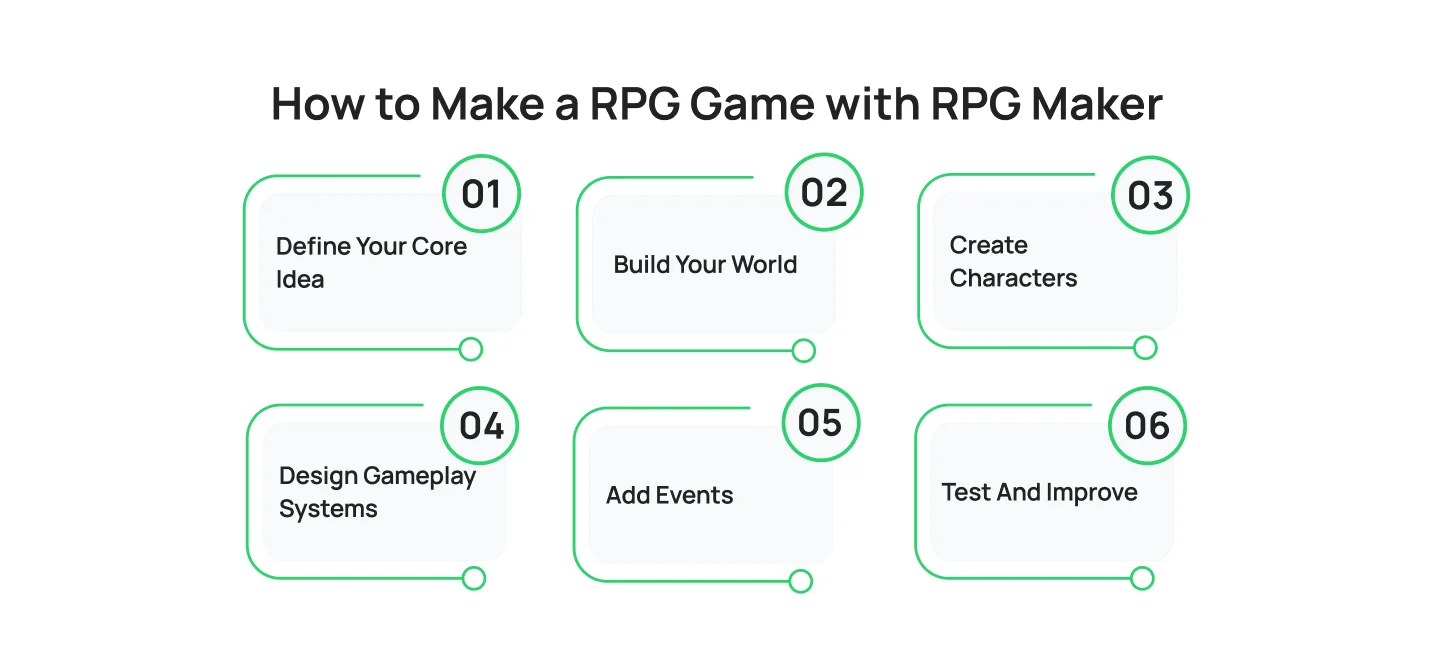
Step-by-Step: How to Make a RPG Game with RPG Maker
“The biggest shift we’re seeing in game development is accessibility. Tools like RPG Maker U2U are allowing creators to focus on storytelling, design, and player experiences instead of technical barriers. That’s helping more great game ideas reach the market than ever before.”
– Salman Lakhani, CEO, Cubix
If you are new to RPG development, here is a simple roadmap.
Step 1: Define Your Core Idea
Before opening any software, decide:
- What is your story?
- Who is the main character?
- What makes your game unique?
A simple concept is often better than an overly ambitious one.
Step 2: Build Your World
Use RPG Maker’s map editor to create:
- Towns
- Dungeons
- Villages
- Forests
- Castles
The new P2D tools make environments feel more immersive than previous versions.
Step 3: Create Characters
Develop your heroes, villains, NPCs, and supporting cast.
Strong characters often matter more than graphics.
Step 4: Design Gameplay Systems
Configure:
- Combat
- Inventory
- Quests
- Skills
- Progression
Most of these systems are already built into RPG Maker.
Step 5: Add Events
Use Event-based programming to create interactions and story sequences.
This is where the game begins to feel alive.
Step 6: Test and Improve
Playtest frequently.
Many successful indie developers spend months refining gameplay before launch.
This process is essential whether you create 2D game without coding or develop a large commercial title.
Limitations of RPG Maker You Should Know
No development platform is perfect.
While RPG Maker excels at accessibility, there are some limitations to consider.
Genre Restrictions
The engine is primarily designed for RPG experiences.
Creating action shooters, racing games, or advanced multiplayer projects can be difficult.
Performance Constraints
Large-scale projects may encounter performance limitations compared to custom-built solutions.
Advanced Features
Highly specialized gameplay systems may require plugins or scripting.
This is where some developers eventually move toward Unity, Unreal, or Godot.
Visual Boundaries
Although RPG Maker U2U significantly improves visual quality, it is not designed to compete with AAA graphics engines.
Understanding these limitations helps developers choose the right tool for their specific goals.
Who Should Use RPG Maker U2U?
RPG Maker U2U is ideal for several types of creators.
Writers
If storytelling is your strength, RPG Maker lets you focus on narrative design.
Artists
The platform makes it easy to showcase custom Pixel art sprites and visual creativity.
Indie Developers
Solo developers can build complete projects without hiring large teams.
Students
The software provides an excellent introduction to game design principles.
Small Studios
Teams can rapidly prototype ideas before investing in larger production pipelines.
When Should You Choose a Professional Development Team?

RPG Maker is excellent for indie RPGs, prototypes, and personal projects.
However, some games require larger teams, specialized expertise, and custom technology.
For example, projects involving:
- Multiplayer systems
- Cross-platform deployment
- Custom gameplay mechanics
- Large-scale content production
- Advanced monetization features
often benefit from professional support.
At Cubix Games, we help companies transform game concepts into commercial products through our 2d game development services and mobile game development services.
Our team has worked on projects across mobile, PC, console, blockchain, and emerging gaming platforms.
We also support visual production through our dedicated 2d art development company, helping studios create engaging characters, environments, and game assets.
If you are still deciding between visual styles, our guide on 2D vs 3D game development explores the strengths of both approaches.
Businesses evaluating outsourcing partners can also review our list of top game development companies to understand today’s competitive landscape.
For teams exploring alternative engines, our Unity vs Unreal Engine resources provide valuable insights into modern development pipelines.
[blog_cta]
Frequently Asked Questions
1. What is RPG Maker U2U?
RPG Maker U2U is the latest version of the RPG Maker series developed by Gotcha Gotcha Games. It introduces P2D (Perspective 2D) technology, improved dynamic lighting, HD-2D-inspired visuals, and enhanced world depth while maintaining the platform’s beginner-friendly approach to game development without coding.
2. Can you make a game without coding using RPG Maker?
Yes. RPG Maker is specifically designed to help users make games without coding. It uses Event-based programming, visual editors, drag-and-drop tools, and built-in RPG systems that allow creators to build complete games without learning traditional programming languages.
3. How do I create a game without coding as a beginner?
The easiest way to start is by using a no-code game development platform like RPG Maker. Begin by creating a simple story, designing your world, adding characters, and using visual tools to build gameplay systems. RPG Maker handles many technical processes, making it ideal for beginners learning how to create a game without coding.
4. Is RPG Maker the best RPG creator for beginners?
For many first-time developers, RPG Maker is considered one of the best RPG creator platforms available. It offers built-in RPG mechanics, an easy learning curve, extensive customization options, and a large community that provides tutorials, assets, and support.
5. Can I create a HD-2D RPG with RPG Maker U2U?
Yes. RPG Maker U2U introduces P2D technology, which allows developers to create an hd 2d rpg using improved environmental depth, dynamic lighting, layered environments, and modern visual effects inspired by the popular HD-2D aesthetic seen in games like Octopath Traveler.
6. Can I make a game in Unity without coding?
Unity offers Visual scripting tools that reduce the amount of coding required. However, most professional Unity projects still rely on C# programming. While you can build simple prototypes without code, advanced projects typically require some programming knowledge.
7. Can you make a game in Unreal without coding?
Yes, Unreal Engine includes Blueprint Visual scripting, which allows developers to create gameplay systems without writing traditional code. However, Unreal has a steeper learning curve than RPG Maker and may be more challenging for complete beginners.
8. Can you make a game in Godot without coding?
Godot includes visual development tools, but most projects still use GDScript or C#. While it is considered beginner-friendly compared to some engines, it generally requires more technical knowledge than RPG Maker.
9. Can you make a Roblox game without coding?
Yes, basic Roblox experiences can be created using templates and visual tools. However, most successful Roblox games eventually use Lua scripting to add custom gameplay mechanics, monetization systems, and advanced features.
10. Can I create a 2D game without coding?
Absolutely. Tools such as RPG Maker, Construct, and GameMaker allow creators to create 2d game without coding or with very limited programming knowledge. These platforms focus on visual workflows that simplify game creation for beginners.
11. What is the difference between RPG Maker and other game engines without coding?
RPG Maker is specifically built for role-playing game creation and includes pre-built systems for combat, inventory management, quests, character progression, and dialogue. Other game engines without coding often support multiple genres but may require more setup and technical knowledge.
12. Is RPG Maker suitable for commercial game development?
Yes. Several commercially successful games, including To The Moon, OMORI, and Fear & Hunger, were developed using RPG Maker. While the platform is beginner-friendly, it is also capable of supporting professional indie game releases when used effectively.