Key Takeaways
- Mobile apps sit at the center of most enterprise digital transformation plans today.
- Enterprise mobility connects teams, customers, and data in real time.
- Business process automation cuts manual work and human error.
- Cloud computing and API integration make mobile apps smarter and faster.
- Data analytics inside apps helps leaders make quicker decisions.
- A strong digital transformation strategy always includes a mobile-first mindset.
- Security remains a top concern, but it’s solvable with the right partner.
- Cubix helps enterprises build secure, scalable mobile apps from scratch.
Think about your workday. You check emails on your phone. You approve invoices on an app. You track shipments with one tap. This is enterprise mobility in action. It’s quiet. It’s constant. And it’s changing how companies work, forever.
Digital transformation used to mean big software installs. Now, it means something simpler. It means putting powerful tools in your pocket. Mobile apps have become the engine behind this shift. They connect people, data, and processes instantly. In fact, businesses using enterprise mobile apps report up to 34% faster decision-making, according to industry research. That’s a huge jump in speed.
This blog breaks it all down. We’ll explore why mobile apps matter so much. We’ll look at real stats and simple examples. We’ll also show you how to build a strong mobile strategy. By the end, you’ll know exactly where to start.
Want to discuss your project? Our experts are just a click away.
Contact UsWhat Is Enterprise Digital Transformation, Really?
Let’s keep this simple. Enterprise digital transformation means using technology to change how a business runs. It’s not just about new software. It’s about new ways of thinking.
Companies want to work faster. They want happier customers. They want fewer manual tasks. That’s the whole point of a solid digital transformation strategy. It’s not optional anymore either. Around 87% of senior business leaders say digital transformation is now a top company priority. That number keeps climbing every year.
Mobile apps make this transformation real. They turn big strategies into daily habits. Employees use apps to log hours. Managers use apps to approve budgets. Customers use apps to shop, chat, and pay. Every tap moves the business forward.
This isn’t just a tech upgrade either. It’s a mindset shift for the whole company. Leaders start thinking mobile-first, not desktop-first. Teams expect instant answers, not slow reports. That expectation changes how projects get built from day one.
Small wins add up quickly too. A faster approval here. A quicker customer reply there. Together, these small moments create big business results over time.
Why Mobile Apps Are at the Heart of This Shift
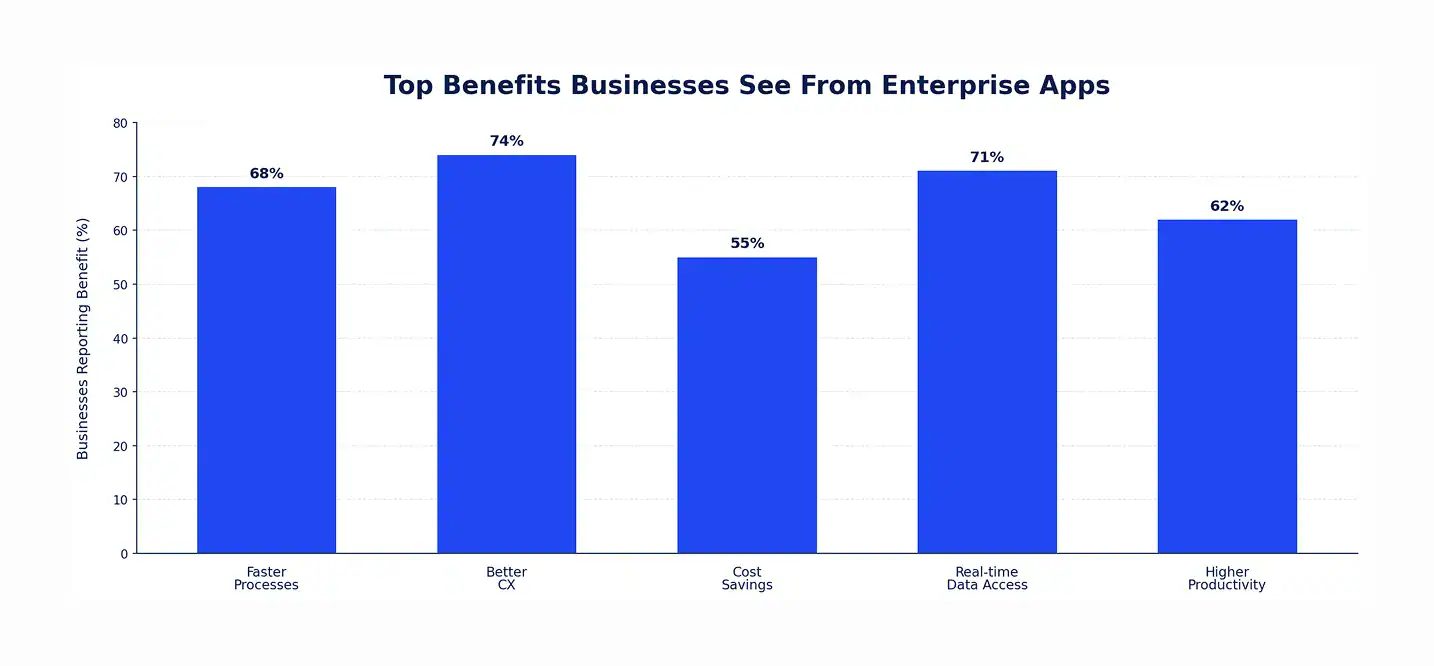
Old systems were slow and rigid. Employees waited for desktop access. Data lived in disconnected silos. Reports took days to prepare. That old way doesn’t work anymore.
Enterprise mobile apps flip this completely. They bring systems into your hand. They update information instantly. They let teams work from anywhere, anytime. This is the heart of enterprise mobility and digital transformation today.
Think about a field technician on-site. They once needed paper forms and phone calls. Now, they check inventory instantly. They update job status in seconds. Their manager sees everything live, from any location.
This kind of connected work used to feel impossible. Now, it’s just normal, everyday business. That’s how deeply mobile apps have changed enterprise operations.
Here’s a simple comparison to show the difference.
Traditional Systems vs. Mobile-First Systems
| Feature | Traditional Systems | Mobile-First Systems |
| Data Access | Delayed, desk-bound | Instant, from anywhere |
| Employee Response Time | Hours to days | Minutes |
| Customer Interaction | Limited touchpoints | 24/7 engagement |
| Process Updates | Manual, slow | Automated, real-time |
| Scalability | Difficult and costly | Flexible and fast |
The shift is already happening fast. 73% of enterprises now rank mobile apps as “critical” to daily operations. That’s not a small trend. That’s a full business shift.
Key Ways Mobile Apps Power Digital Transformation
Mobile apps don’t just look nice. They do real work behind the scenes. Let’s break down the biggest ways they help.
Business Process Automation. Apps remove repetitive manual tasks. Approvals happen with one tap. Forms fill themselves using saved data. This saves hours every single week.
Cloud Computing. Most enterprise apps run on the cloud. This means no heavy servers to manage. Updates roll out instantly to every user. Storage grows as your business grows.
API Integration. Apps rarely work alone. They connect to CRMs, payment systems, and databases. Good API integration means smoother data flow across tools. Nothing gets stuck or duplicated.
Data Analytics. Every tap inside an app creates useful data. Leaders use this data to spot trends fast. They catch problems before they grow bigger. Smart decisions happen quicker with real numbers.
These four pillars rarely work alone. They support each other constantly, behind the scenes. Automation feeds data into analytics dashboards. Cloud systems keep APIs running smoothly, without interruption. Together, they build a stronger, faster enterprise.
Think of it like a well-run kitchen. Every station depends on the others. One slow step delays the whole meal. Mobile apps keep every station moving at the same steady pace.
If your business wants to explore this path, working with a strong mobile app development partner makes a real difference. It saves time. It avoids costly mistakes. It gets you moving faster.
Enterprise Mobility and Customer Experience (CX)
Customers expect speed today. They don’t want to call support and wait. They want answers instantly, right on their phone. This is where Customer Experience (CX) and mobile apps meet.
A good app feels personal. It remembers preferences. It sends helpful reminders. It solves problems before customers even ask. This builds trust fast, and trust builds loyalty.
Let’s look at how CX changes after app adoption.
Customer Experience Metrics Before vs. After App Adoption
| Metric | Before App Adoption | After App Adoption |
| Average Response Time | 24-48 hours | Under 2 hours |
| Customer Satisfaction Score | 62% | 88% |
| Repeat Purchase Rate | 21% | 46% |
| Support Ticket Volume | High | Reduced by 35% |
Numbers like these matter a lot. Companies with strong mobile CX strategies see a 20% boost in customer retention. That’s real revenue, not just good feelings. Happy customers stay longer. They also spend more over time.
This is exactly why enterprise mobility and digital transformation always circles back to customers. Every feature should make their life easier. Nothing else matters more.
Think about ordering food through an app. You track your delivery live. You get instant updates without asking. That small comfort builds real trust over time.
Enterprises that skip this focus often struggle later. Customers notice clunky, slow experiences quickly. They compare your app to the best ones they use daily. Meeting that bar isn’t optional anymore.
Mobile App-Driven Digital Transformation Across Industries
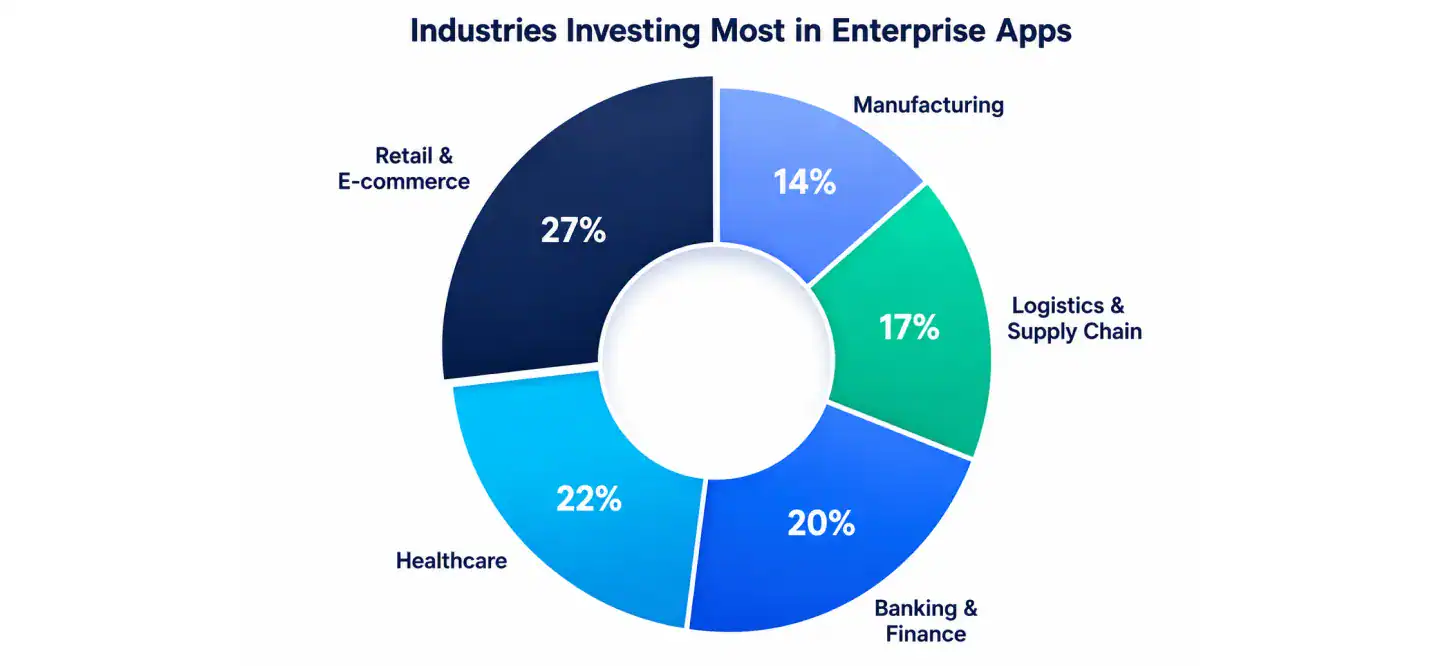
Different industries use mobile apps differently. But the goal stays the same everywhere. They all want speed, accuracy, and better service.
Retail uses apps for inventory and personalized offers. Healthcare uses apps for patient records and appointment booking. Logistics uses apps for real-time tracking and route planning. Finance uses apps for secure payments and instant approvals. Manufacturing uses apps for equipment monitoring and quality checks.
This is mobile app-driven digital transformation in its purest form. Each industry adapts the same core idea. Mobile tools solve very specific daily problems.
Retail and e-commerce lead the pack right now. Healthcare follows close behind, growing quickly too. Healthcare enterprise app investment has grown by 41% in the past two years. Patients want quick access to their own data. Doctors want fewer paperwork headaches.
If you’re building for iOS users specifically, a focused iOS App Development approach helps a lot. It ensures smooth performance and tighter security. Apple users expect a polished experience every time.
Finance apps face the highest scrutiny of all. Every login, transfer, and approval needs airtight security. One weak spot can cost a company millions in damages.
Logistics apps focus on live location tracking instead. Drivers, warehouses, and customers all stay connected in real time. Delays get flagged instantly, not discovered hours later.
Building Blocks of a Strong Mobile Digital Transformation Strategy
You can’t just launch an app and hope for results. You need a clear plan first. Good planning saves money and time later.
Start with an honest audit. What’s actually slowing your business down? Then define clear goals. What should the app actually fix?
Security must come early, not later. Weak security creates huge risks down the road. Scalability matters too. Your app should grow as your company grows.
Digital Transformation Strategy Checklist
| Step | What It Involves | Why It Matters |
| Business Audit | Identify slow, manual processes | Finds the real problem areas |
| Goal Setting | Define clear, measurable outcomes | Keeps the project focused |
| Security Planning | Build encryption and access controls | Protects sensitive company data |
| Tech Stack Selection | Choose scalable cloud infrastructure | Supports future growth |
| User Testing | Get feedback before full launch | Reduces costly post-launch fixes |
Security deserves extra attention here. 60% of enterprises say app security is their biggest transformation concern. That fear is valid, but manageable. Following a proper enterprise app security checklist removes most major risks early.
A rushed app rollout almost always backfires. Take the time. Build it right the first time.
Common Challenges in Mobile Technology Adoption
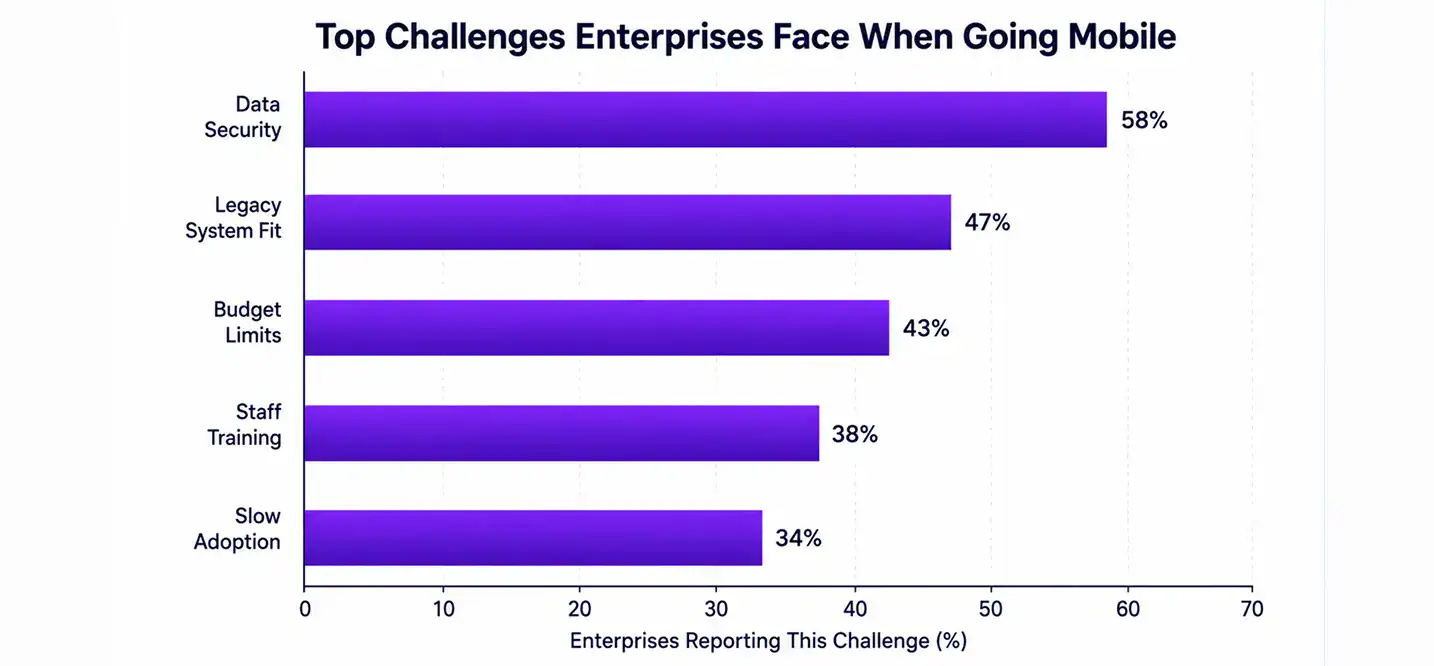
Not every mobile rollout goes smoothly. Enterprises hit real roadblocks along the way. Knowing these challenges early helps you avoid them.
Security worries top the list, as expected. Legacy systems also cause major headaches. Old software doesn’t always connect well with new apps. Budget limits slow things down too. Staff training takes longer than most teams expect.
Nearly half of enterprises struggle to fit new apps with old legacy systems. Moreover, this is a common, fixable problem though. The right development partner plans around it from day one. They build bridges instead of forcing a full system rebuild.
Patience matters here too. Adoption takes time across large teams. Training and clear communication speed up this process a lot.
Mobile Technology in Business Transformation
Mobile apps aren’t slowing down anytime soon. They’re getting smarter every single year. AI is already shaping how apps predict user needs. 5G is making everything load faster than ever.
IoT devices are connecting with apps too. Think smart factories, smart warehouses, and smart offices. This is the next chapter of the role of mobile technology in business transformation.
By 2027, over 75% of enterprise apps will include some form of AI-driven personalization. That’s not far away at all. Businesses that prepare now will lead their markets later.
Mobile solutions for digital transformation will keep evolving fast. Staying flexible matters more than chasing every new trend. Build a strong foundation first. New tech features can layer on top later.
Why Partner With Cubix for Your Enterprise App Journey

Building an enterprise app isn’t a solo task. You need experienced hands guiding you. This is where Cubix comes in.
Cubix has spent years mastering mobile app development. The team understands enterprise needs deeply. They know security, scalability, and real business outcomes matter most.
Cubix works across many industries too. Retail, healthcare, logistics, and finance are all familiar territory. Every project starts with real business goals, not just flashy features.
These numbers reflect real, hands-on experience. Cubix isn’t new to enterprise challenges. The team has solved them again and again, across many company sizes.
Choosing the right enterprise app development company changes everything. It’s the difference between a clunky app and a smooth, powerful tool. Cubix aims to be that difference for your business.
How Cubix Turns Your Digital Transformation Vision Into Reality
Every great app starts with a clear process. Cubix follows a proven path from idea to launch.
First comes discovery. The team studies your business closely. They ask the right questions early. Then comes design, focused on real user needs. Nothing gets built just to look nice.
Development follows next, using modern, secure technology. Skilled mobile app developers
At Cubix write clean, scalable code. Testing happens throughout, not just at the end. This catches problems before customers ever see them.
Finally, deployment and support keep the app running smoothly. Cubix doesn’t disappear after launch. Updates, fixes, and improvements continue over time. Digital transformation isn’t a one-time project. It’s an ongoing journey. Cubix stays with you through every step of that journey.
Ready to bring your enterprise mobile app to life? Partner with Cubix today and turn your digital transformation goals into a working, scalable reality.
Want to discuss your project? Our experts are just a click away.
Contact UsFrequently Asked Questions
1. How can mobile apps advance our enterprise digital transformation efforts?
Mobile apps speed up daily tasks. They connect teams and customers instantly. They also bring real-time data into every decision, making transformation efforts move much faster.
2. How do mobile apps support enterprise digital transformation?
They automate manual work. They centralize data through cloud and API integration. They also improve customer experience, which supports almost every transformation goal a business sets.
3. What is the role of applications in digital transformation?
Applications turn strategy into action. They give employees and customers direct tools to work faster, communicate better, and access information without delays or confusion.
4. Are enterprise mobile apps secure?
Yes, when built correctly. Strong encryption, access controls, and regular testing keep enterprise apps safe. Following a proper security checklist reduces most common risks significantly.
5. Which industries benefit most from enterprise mobile applications?
Retail, healthcare, logistics, and finance see the biggest gains. Each industry uses mobile apps differently, but all benefit from faster processes and better customer engagement.