Key Takeaways
- Flutter now holds roughly 46% developer preference for cross-platform development, ahead of every other framework on the market.
- Enterprises migrating to Flutter report around 95% code reuse between iOS and Android and nearly 40% lower development costs than with native development.
- Performance benchmarks show Flutter reaching about 96% of native speed on Android and 91% on iOS, close enough that most apps won’t show a difference.
- Production use cases now include regulated industries like banking (Nubank, Credit Agricole) and fintech (Google Pay), not just startups and MVPs.
- Flutter is the stronger default for new, greenfield apps; Kotlin Multiplatform fits better when unifying logic inside an existing native codebase.
One codebase. Two native-feeling apps. That’s the promise of Flutter cross-platform app development, and today, the data backs it up. The cross-platform mobile development market reached $25.6 billion in 2026, with Flutter and React Native continuing to dominate the conversation. Flutter itself leads developer preference with 46%, outperforming other cross-platform app frameworks in adoption and satisfaction. Built by Google using Dart, Flutter enables businesses to create apps for Android and iOS from a single codebase.
For companies, organizations, enterprises, and firms, this shift is not just technical. It’s financial. Flutter cross-platform app development can reduce development costs by up to 40% while accelerating time to market. Whether you’re building a fintech platform, healthcare solution, e-commerce app, or enterprise platform, Flutter cross-platform app development has become a strategic advantage.
In this guide, you’ll learn why Flutter continues to lead the cross-platform market, its business benefits, key features, development costs, and how to choose the right Flutter development partner for your project.
What Is Flutter Cross-Platform App Development?
Flutter powers Flutter cross-platform app development, Google’s open-source UI toolkit for building apps from a single codebase that compiles natively to iOS, Android, web, and desktop. Instead of writing separate apps in Swift for iOS and Kotlin for Android, teams write once in Dart and ship everywhere.
The framework doesn’t wrap a web view or translate UI calls at runtime; it renders every pixel itself through its own graphics engine, which is why Flutter apps look and move the same regardless of platform.
Developers can use Material Design for Android UI and Cupertino components for iOS styling, ensuring a native experience across both platforms.
Why Flutter Leads the Cross-Platform Market in 2026

The numbers back up what developers already knew anecdotally. Flutter holds a leading position in cross-platform app development, putting it ahead of many competing frameworks. On GitHub, Flutter carries about 52,000 more stars than React Native as of mid-2026, a rough proxy for open-source attention, though not a direct measure of production usage.
The broader market is expanding just as fast. The cross-platform software market is projected to grow from $104.6 billion in 2025 to $121.04 billion in 2026, a 15.7% compound annual growth rate. Enterprises aren’t just experimenting anymore; they’re migrating. One 2026 adoption study found companies switching to Flutter see roughly 95% code reuse between iOS and Android and about a 40% reduction in development cost compared to running two separate native codebases.
Performance: How Close Is Flutter to Native?
The old argument against cross-platform development was performance. Flutter cross-platform app development has largely closed that gap, making it a reliable option for both startups and enterprises.
Benchmarks show:
- 96% of native performance on Android
- 91% on iOS
Thanks to its high-performance rendering engine (Skia), Flutter draws every pixel directly on the screen instead of relying on native UI components. This eliminates the delays caused by traditional JavaScript bridges used in older frameworks.
In real-world scenarios, this means:
- Faster UI rendering and smoother animations
- Consistent performance across devices
- Reduced frame drops, even on lower-end Android devices
For most applications, such as e-commerce platforms, fintech apps, SaaS dashboards, and booking systems, users cannot distinguish between Flutter and fully native apps.
However, it’s important to note that performance differences may still appear in highly demanding use cases like:
- 3D gaming
- AR/VR applications
- Heavy hardware-level integrations
Even in these cases, Flutter continues to improve with a growing plugin ecosystem and better native API access.
Want to discuss your project? Our experts are just a click away.
Contact UsCost and Time: Where the Real Savings Show Up
Cost is usually the first question a founder or CTO asks, and it’s where Flutter cross-platform app development makes its strongest case.
Instead of:
- Two teams
- Two codebases
- Two QA cycles
Flutter simplifies everything into one unified development workflow.
This consolidation leads to measurable business benefits:
- Up to 40% reduction in development costs
- Around 30% faster development cycles
- Up to 95% code reuse between Android and iOS
These savings don’t just apply to initial development they compound over time. Every update, bug fix, and new feature only needs to be built once, significantly reducing long-term maintenance costs.
Additionally, modern development tools like Visual Studio Code and Android Studio enhance productivity with features like:
- Hot reload for instant UI updates
- Strong debugging tools
- Integrated testing environments
For companies, organizations, enterprises, and firms aiming to scale quickly, this efficiency directly impacts time-to-market and ROI.
Where Flutter Fits: Real Use Cases

The framework has moved well past MVPs and side projects. Google Pay uses Flutter in parts of its app to keep transaction flows and rewards screens consistent across platforms, a fintech use case with real security stakes. Nubank, one of the largest digital banks in Latin America, adopted Flutter to speed up feature rollouts across a user base in the tens of millions, relying on hot reload to cut iteration time during development. Credit Agricole Bank in Poland runs Flutter-based banking apps that handle complex financial operations under strict compliance requirements. Philips Hue rebuilt its smart lighting control app on Flutter to manage automation and IoT integrations without maintaining separate iOS and Android logic.
The common thread: these aren’t startups testing an idea. They’re regulated, high-traffic businesses that evaluated the framework against native development and picked Flutter anyway. That’s a stronger signal than adoption stats alone.
Flutter vs. Other Cross-Platform App Frameworks
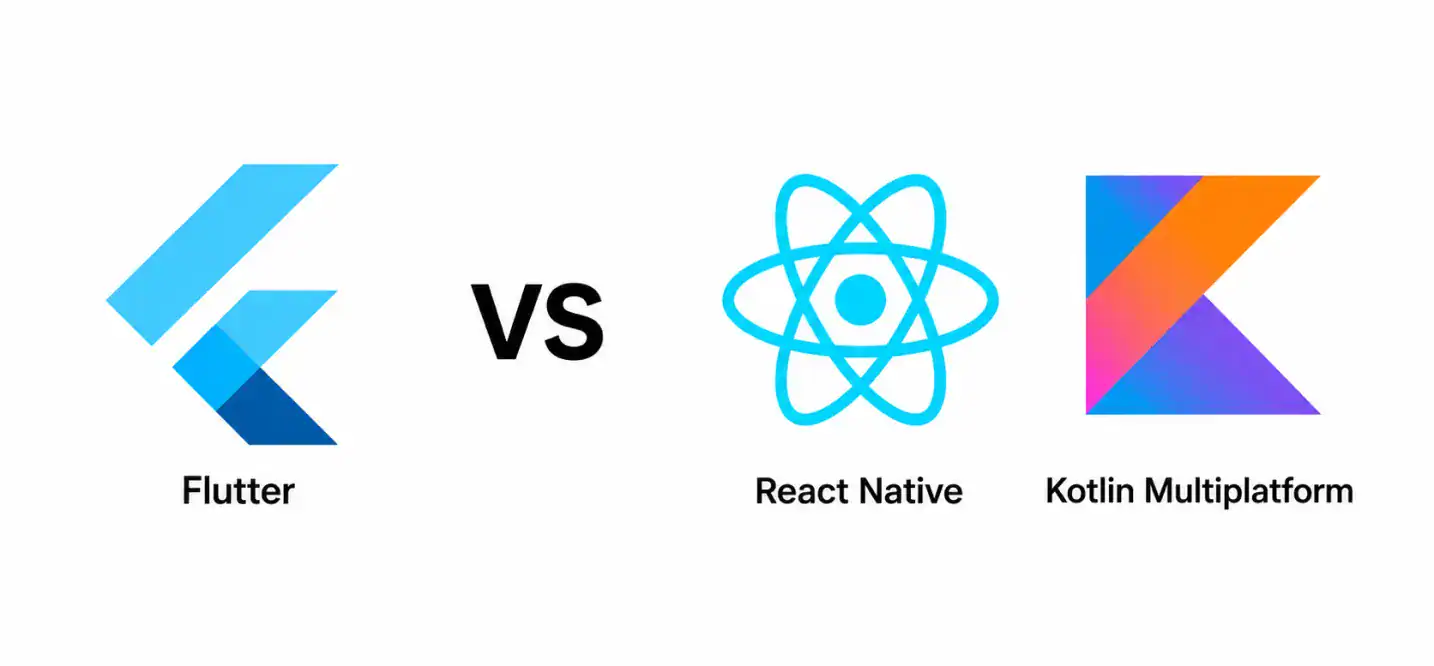
Choosing the right framework is one of the most critical decisions for any business planning cross-platform app development. While multiple technologies exist, the differences often come down to performance, UI flexibility, scalability, and long-term maintenance.
Flutter cross-platform app development has gained a competitive edge by offering a complete UI toolkit, near-native performance, and a single codebase approach. However, frameworks like React Native and Kotlin Multiplatform still serve specific use cases depending on project requirements, team expertise, and scalability goals. To better understand how these technologies compare, explore our guide on cross-platform app frameworks.
The table below compares Flutter with other leading options to help companies, organizations, enterprises, and firms make an informed decision.
Framework Comparison Table
| Feature / Criteria | Flutter Cross-Platform App Development | React Native | Kotlin Multiplatform |
| Performance | Leads with near-native performance (up to 96% on Android, 91% on iOS) | Good, but relies on a JavaScript bridge, which may cause slight lag | High performance for logic, but UI remains native |
| UI Development | Full control over UI with custom rendering engine | Uses native components via bridge | Focuses on sharing logic, not UI |
| Developer Preference | Strong developer preference with growing adoption in 2026 | Strong ecosystem, especially among JavaScript developers | Growing but still limited adoption |
| Code Reusability | Up to 95% across Android and iOS | Moderate reuse | High for backend logic only |
| Best Use Case | New apps requiring full cross-platform UI + performance | Apps leveraging existing JS talent | Existing native apps needing shared logic |
| Learning Curve | Requires learning Dart but offers consistency | Easier for JavaScript developers | Requires Kotlin expertise |
| Ecosystem | Rapidly growing with strong Google support | Mature and widely adopted | Still evolving |
Which Framework Should You Choose?
For most new applications, Flutter cross-platform app development stands out as the best option due to its balance of performance, UI consistency, and faster development cycles. It is especially suitable for businesses aiming to launch scalable, high-performance apps without maintaining separate codebases.
However, React Native may still be a practical choice for teams with strong JavaScript expertise. At the same time, Kotlin Multiplatform works well for organizations looking to extend existing native applications with shared business logic.
Cross-Platform App Architecture
Flutter’s architecture is what makes the performance and consistency claims hold up in practice. The framework compiles Dart code ahead of time into native ARM or x86 machine code; there’s no JavaScript bridge translating calls at runtime, which is where older cross-platform tools lost speed. Widgets are the building block of everything: layout, styling, and state all flow through a widget tree that Flutter’s engine renders directly to the screen using Skia.
This matters for design consistency, too. Developers can build with Material Design components for an Android-native feel or Cupertino widgets for iOS conventions, sometimes switching between them based on platform detection, all from the same Dart codebase. Backend integration follows familiar patterns: REST APIs, GraphQL, and Firebase all connect the same way they would in a native build, so teams aren’t relearning their data layer alongside their UI layer.
This makes Cross-Platform App Architecture a key advantage for businesses seeking consistent user experiences, faster development, and easier maintenance across multiple platforms.
When to Choose Flutter Over Native Development

Cross-platform makes the strongest case when an app needs to launch on iOS and Android simultaneously, when the team is small enough that maintaining two codebases would slow everything down, or when the product itself doesn’t lean on deep platform-specific hardware access. Startups validating an idea, retailers building a shopping app, and enterprises rolling out an internal tool across a mixed device fleet all fit this pattern well.
Native still wins for apps that push hard on graphics-intensive gaming, AR/VR, or features tied to brand-new OS capabilities on day one of release cases where being first to use a platform feature outweighs the cost of maintaining two builds. For a deeper breakdown of how Flutter stacks up against other options feature by feature, our guide walks through the tradeoffs in more detail.
Choosing a Development Partner for Flutter Projects

The framework only delivers on its promises with the right team behind it. Look for a partner with production Flutter apps already shipped, not just tutorials or internal tools, and ask to see how they’ve handled platform-specific edge cases like push notifications, deep linking, or biometric authentication across both iOS and Android. Tooling matters too: teams working efficiently in Visual Studio Code or Android Studio with proper CI/CD pipelines catch problems before they reach QA, not after.
Companies, organizations, enterprises, and firms across finance, retail, and healthcare have all shipped production Flutter apps at this point, which means the “is it mature enough” question is largely settled. The remaining question is execution.
That’s where the cross-platform app development experts become critical. A team with real-world experience, scalable architecture expertise, and a proven delivery track record can significantly reduce risk while accelerating time-to-market.
With more than 18 years of experience, Cubix has helped businesses turn ideas into production-ready Flutter applications across finance, healthcare, retail, and other demanding industries. As a leading application development company, Cubix handles the entire development journey, from strategy and UI/UX design to development, testing, deployment, and post-launch support.
With a strong focus on quality, scalability, and performance, Cubix ensures that Flutter applications are not only built efficiently but also optimized for long-term success. Their expertise in handling complex integrations, security requirements, and cross-platform consistency makes them a reliable partner for businesses aiming to build high-impact mobile applications.
Conclusion
Flutter cross-platform app development has moved beyond being an alternative to native, it is now a strategic choice for companies, organizations, enterprises, and firms looking to build high-performance applications efficiently. With near-native performance, a single codebase, and faster development cycles, Flutter offers both technical and business advantages.
However, the success of any Flutter project ultimately depends on execution. Choosing the right development partner ensures that the technology is used to its full potential, from architecture planning to post-launch optimization.
For businesses aiming to reduce costs, accelerate time-to-market, and maintain app quality across platforms, Flutter stands out as a future-ready solution. As an experienced application development company, Cubix helps organizations build user-focused Flutter applications with the right strategy, development approach, and technical expertise.
Want to discuss your project? Our experts are just a click away.
Contact UsFrequently Asked Questions
1: Is Flutter good for cross-platform app development?
Yes, Flutter cross-platform app development is considered one of the best approaches due to its near-native performance, single codebase, and strong UI capabilities. It allows businesses to build high-quality apps for both iOS and Android efficiently.
2: How does Flutter compare to React Native?
Flutter offers better performance and UI consistency because it uses its own rendering engine, while React Native relies on a JavaScript bridge. This makes Flutter a stronger choice for performance-driven applications.
3: Is Flutter suitable for enterprise applications?
Yes, Flutter is widely used by companies, organizations, enterprises, and firms across industries like finance, healthcare, and retail. Its scalability, security capabilities, and performance make it suitable for enterprise-grade applications.
4: What are the cost benefits of Flutter development?
Flutter reduces development costs by up to 40% by enabling a single codebase for multiple platforms. It also shortens development cycles, helping businesses launch products faster.
5: Do I need separate teams for iOS and Android with Flutter?
No, Flutter allows developers to use a single codebase for both platforms, eliminating the need for separate development teams and reducing operational complexity.
6: How do I choose the right Flutter development company?
Look for a partner with proven experience in production Flutter apps, expertise in handling platform-specific features, and a strong development process. An experienced