Key Takeaways
- AR/VR game development costs in 2026 range from $50,000 to over $500,000, depending on complexity.
- Game design, platform selection, graphics, and multiplayer features are the biggest cost drivers.
- Budgets for AR/VR games must cover development, licensing, and ongoing post-launch support.
- Specialized AR/VR studios offer tailored service packages that shape pricing and project outcomes.
- Costs can be reduced by prioritizing features, using proven engines, and partnering with skilled teams.
AR and VR games have become central to the gaming industry by 2026, moving beyond early experiments to mainstream adoption. For studios and creators, understanding what it really takes to fund an AR or VR game is crucial. Costs range widely, influenced by your project’s ambition, need for realism, and the platforms you target. Providers now deliver more transparent pricing breakdowns and flexible service models, offering buyers both clarity and more choices.
This guide breaks down AR/VR game development cost ranges, compares available approaches and providers, and shares practical strategies to help you make smart budgeting decisions. Whether you’re planning a large-scale multiplayer VR world or a quick-launch AR app, you’ll find the insights needed to plan, budget, and succeed in the competitive 2026 market.
Ready to Build Your AR/VR Game? Get a Free Quote
Contact UsAR/VR Development Cost Breakdown: Where the Money Goes in 2026
To create a realistic AR/VR game development budget in 2026, you need a clear breakdown of costs. Pinpointing where your money goes lets you prioritize features and find areas for savings or efficiency. AR and VR projects share some similarities in pre-production and core logic, but diverge sharply in their hardware needs, graphics, and audience expectations. The details, especially around visuals and testing, often account for the largest price differences.
Consider the table below for a typical 2026 cost breakdown for AR and VR games. This covers independent projects, standard studio engagements, and the higher end for complex, social, or cross-platform titles.
| Component | AR Game Low ($) | AR Game High ($) | VR Game Low ($) | VR Game High ($) |
|---|---|---|---|---|
| Pre-Production | $5,000 | $25,000 | $8,000 | $30,000 |
| Design/Artwork | $10,000 | $60,000 | $20,000 | $100,000 |
| Core Development | $15,000 | $120,000 | $25,000 | $180,000 |
| Testing & QA | $5,000 | $20,000 | $8,000 | $25,000 |
| Game Engine Licensing | $3,000 | $15,000 | $5,000 | $25,000 |
| Deployment & Launch | $3,000 | $15,000 | $5,000 | $18,000 |
| Post-Launch Support | $5,000 | $25,000 | $8,000 | $30,000 |
| TOTAL | $46,000 | $280,000 | $79,000 | $408,000 |
This breakdown offers only a starting point. A basic mobile AR game might stay near the low end, especially with simple graphics and limited interactions. VR games cost more when you target high-end headsets, immersive visuals, and multiplayer features. Building a VR game for premium devices with full-body tracking usually costs much more than a single-user AR app for phones.
Recent years have seen these figures rise, reflecting inflation and higher standards for visuals, especially in VR. Post-launch support is more critical in 2026, as studios routinely plan for updates, live-ops features, and ongoing bug fixes to keep players engaged.
Key Factors Affecting VR Game Development Cost and AR/VR Budgets
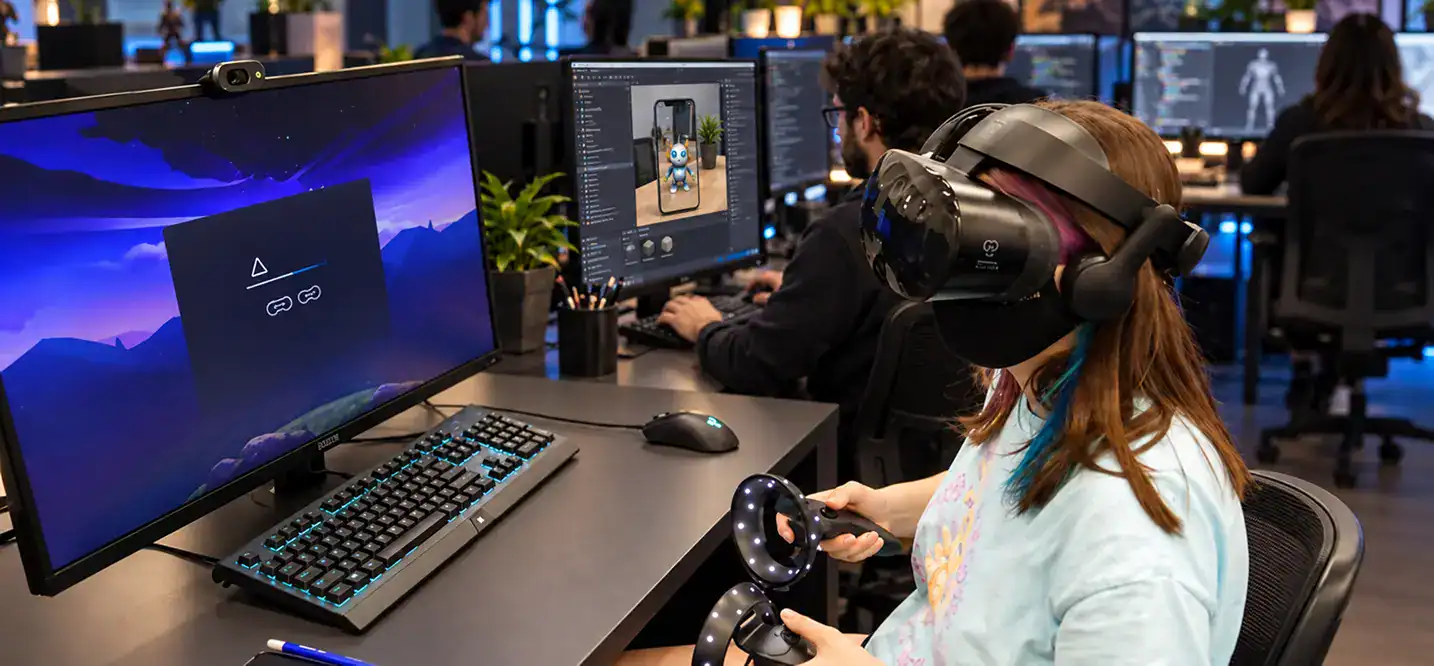
When mapping out your AR/VR game development, several factors can dramatically shift your final costs. Understanding these ahead of time helps you build a realistic VR game development cost projection and prevents runaway expenses.
- Game Complexity: Advanced interactivity, branching stories, or complex physics systems require more engineering hours and a larger AR/VR game development budget.
- Platform: Targeting premium VR systems (such as Meta Quest 3 or Apple Vision Pro) or cross-platform AR (iOS/Android) can sharply increase both AR and VR development costs.
- Multiplayer or Social Features: Real-time multiplayer may double the AR app development cost, as you need to build backend servers, networking, and extra layers of testing for lag and stability.
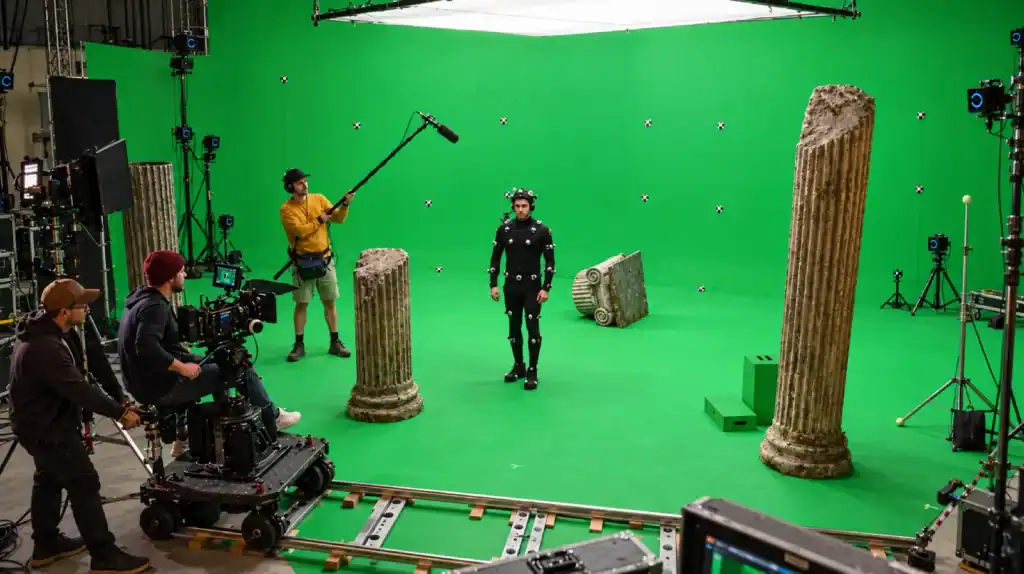
- High-Quality Graphics: Realistic 3D models, motion capture, and advanced graphics techniques are far pricier than stylized or 2D art.
- Third-Party Assets and Tools: Licensing professional art packs, AR SDKs, or middleware increases upfront costs but can shorten delivery timelines.
- Geographic Location: Team rates differ globally. Studios in North America and Western Europe tend to charge more than skilled teams in Eastern Europe, Asia, or Latin America.
For example, a VR project targeting Meta Quest and PS VR2 with large multiplayer worlds and voice chat can see its budget double compared to a solo, puzzle-based VR experience. AR games, on the other hand, often spend more on real-world mapping and device compatibility, while VR costs rise with the pursuit of realistic graphics and hardware optimization.
Recognizing these factors early allows you to weigh trade-offs and maximize the value of your AR/VR game development budget in 2026.
Pricing Models for Modern AR/VR Game Development Services
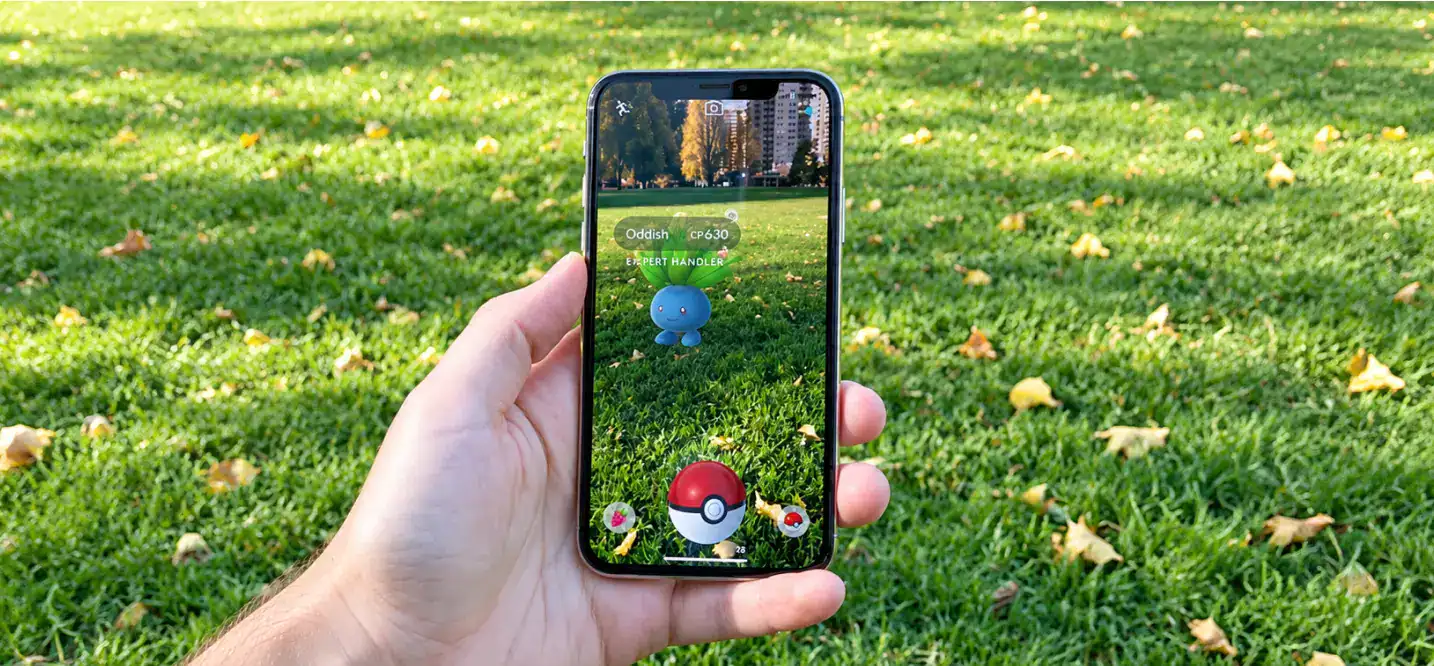
Choosing VR game development services or AR game development services involves selecting the right pricing model for your needs. This choice determines both your budget predictability and your ability to adapt as your project evolves.
You’ll usually encounter three main pricing approaches:
Fixed Price Model
A fixed price contract suits projects with well-defined requirements and a stable AR/VR game development budget. The studio commits to delivering agreed features and milestones at a set cost.
Pros: Budget predictability and cost control.
Cons: Scope changes can trigger renegotiations, and incomplete planning may lead to missing features.
Fixed price works best for mobile AR and well-scoped VR games where deliverables are unlikely to shift.
Time & Materials Model
The time and materials model bills you for actual hours worked and resources used. With this approach, your VR app development cost and AR game development cost are closely tracked, but your final spend may change.
Pros: Flexibility to adjust priorities and add features as you go.
Cons: Costs are less predictable, making it harder to set a firm budget.
This model is ideal for innovative projects that require rapid iteration, user testing, or ongoing research and development.
Dedicated Team Model
For longer-term or complex AR/VR games, a dedicated team model is often the best fit. You pay a monthly fee for a set group of specialists who focus solely on your project.
Pros: Strong knowledge retention and flexibility to manage evolving needs.
Cons: Requires careful management to avoid timeline drift or cost overruns.
Selecting between these VR game development services or AR game development services models helps you balance your risk, flexibility, and investment.
Planning and Budgeting for Complex AR/VR Game Projects
Complex AR and VR games in 2026 bring unique budgeting challenges. A complete AR/VR game development budget helps keep spending on track while ensuring your vision gets the resources it deserves.
Let’s look at three typical project types:
Mobile AR: Costs and Key Drivers
Mobile AR games for iOS and Android offer lower starting costs but can hide expensive challenges. Key drivers include device compatibility, AR engine licensing, and performance optimization for a range of phones. Ongoing OS updates, camera differences, and localization can add unexpected expenses.
For a basic AR scavenger hunt, the cost to develop an AR game usually runs $50,000 to $120,000. High-end AR experiences with persistent tracking or educational features can exceed $200,000.
Standalone VR: What Increases the Budget
Standalone VR games for platforms like Meta Quest 3 or PC-based headsets require larger teams and more time for 3D modeling, motion design, and hardware integration. Licensing a commercial game engine and developing custom interactions, such as gesture or eye tracking, raise costs further.
For a simple, stylized demo, expect to pay around $80,000. For a detailed, story-driven VR world, budgets often reach $250,000 or more.
Multiplayer VR: Why It’s Expensive
Real-time multiplayer in VR is costly due to server infrastructure, network code, user account systems, moderation, and reliability demands.
A basic two-player mode can add $30,000-$60,000, while a virtual social arena or ongoing multiplayer platform may push the total well past $300,000.
When evaluating how much does it cost to develop a VR game, remember each added feature, system, or connection multiplies both budget and timeline.
AR/VR Game Development Timeline and Cost: What’s Typical in 2026?
Your AR/VR game development timeline and cost move together. Each project phase brings unique expenses and scheduling needs.
A typical project unfolds as follows:
1. Concept and Planning (2-5 weeks): Shape your core idea, check technical feasibility, and build your team. This stage usually costs $5,000 to $20,000, depending on how many design workshops and prototype cycles are needed.
2. Design and Prototyping (4-10 weeks): Create visual and interactive prototypes, produce initial art, and run technical proof-of-concepts. Budgets here range from $10,000 to $40,000.
3. Development and Testing (12-26 weeks): Programming, animation, integration, and extensive QA make up the largest part of the spend. Most AR/VR development company contracts budget $25,000 to $150,000 for this phase, with larger games costing more.
4. Launch and Maintenance (ongoing): Deploy to platforms, patch issues, and support live operations. Annual post-launch support runs $5,000 to $30,000.
Most projects center their spend on design, development, and testing. The total VR game development cost in 2026 rises as each extra month adds work and complexity, so regular reviews and tight scoping help control outlay. For more on scheduling, see our app development timeline.
Typical Expenses with an AR/VR Development Studio Engagement
Working with an AR/VR development company means budgeting for more than just coding time. Studios often bundle a suite of services that influence the total cost to hire an AR app developer or VR team.
- Initial Consultation: Needs analysis, platform selection, and scope refinement. Fees typically fall between $2,000 and $10,000.
- Design Workshops: Detailed sessions on user journeys, visual themes, and experience mechanics.
- Development Sprints: Short, focused coding cycles staged for feedback and budget control.
- Quality Assurance/Testing: Multistage bug fixing, device compatibility checks, and usability reviews.
- Deployment: Readying your game for launch, ensuring platform compliance, and setting up analytics.
- Support/Maintenance: Updates, community management, and live-ops features.
A mid-size studio might allocate $20,000 for initial planning and design, $80,000 for development and testing, $10,000 for launch preparation, and a $10,000 post-launch support retainer. Transparent pricing helps you see exactly how your AR/VR game development services investment is distributed, which is crucial when working with providers around the world.
Comparing AR/VR Game Development Companies and Their Packages
Comparing AR/VR development companies side by side is the best way to find the right partner. Studio offerings differ, some excel in enterprise AR game development services, others specialize in fast-turnaround VR game development services or entry-level projects.
Here’s how Cubix and three other leading providers stack up in 2026:
| Company | Services Offered | Technologies | Industry Focus | Key Strengths | Support Model |
|---|---|---|---|---|---|
| Cubix | Full-cycle AR/VR, mobile, multiplayer | Unity, Unreal, ARKit, ARCore, Meta Quest SDK | Gaming, EdTech, Retail, Real Estate | End-to-end, cross-platform, strong QA | Dedicated support, custom maintenance |
| GroovyAnts | AR/VR + product strategy | Unity, Snap AR, React | Social, Retail, Events | Prototyping speed, client communication | Standard maintenance |
| Gamitronics | VR worlds, AI-powered AR | Unreal, VTPro, Meta SDKs | Gaming, Training, Simulation | AI expertise, immersive design | Tiered support |
| CodeCrafters | Entry-level AR/VR, fast MVPs | Unity, OpenXR | Startups, SMBs | Cost-effective, MVP focus | Pay-per-update |
Cubix stands out thanks to its broad technology stack, experience with cross-platform AR/VR titles, and customizable maintenance plans. The company’s full-cycle, end-to-end services are ideal for organizations needing strategic guidance and long-term partnership. Budget-focused studios may deliver smaller feature sets and lighter post-launch support, which suits faster or more affordable AR or VR launches.
How to Reduce AR/VR Game Development Costs While Retaining Quality
You don’t need the largest budget to create a standout AR or VR game. Here are proven ways to reduce AR/VR game development costs in 2026 while maintaining quality:
Prioritizing Features
Start with a focused MVP. Identify must-have gameplay features and postpone extras for future updates. Tight initial scope lets your AR/VR game development budget deliver more polish. For more on MVPs, see what is MVP and how much does it cost.
Using Existing Engines
Choose established engines such as Unity or Unreal. These tools help control VR development costs and AR development costs thanks to built-in optimization, plugin support, and a wide pool of available talent. Licensing proven middleware also cuts down on custom coding. For details, check our best game engines for game development guide.
Outsourcing
Outsource specific production tasks, like 3D modeling, sound design, or QA, to experienced teams in lower-cost regions. Focus on partners with a track record in AR/VR to ensure quality. This approach works especially well for standard assets or porting to new platforms.
- Negotiate long-term support contracts for lower ongoing rates and consistent service.
- Use in-game analytics to identify which features drive retention before expanding after launch.
- Plan for scalability from the start, particularly if multiplayer or live operations are part of your goals.
By carefully selecting features, using mature development tools, and outsourcing wisely, you can keep your budget in check even as player expectations rise.
Cubix: AR/VR Game Development Powered by Expertise and Partnership
Cubix has built a reputation as a top AR/VR development company by focusing on quality, transparency, and technical skill. With deep experience and up-to-date tools, Cubix helps organizations meet their VR game development services and AR game development services objectives quickly and cost-effectively.
- Utilizes Unity, Unreal Engine, Meta Quest SDK, ARKit, and ARCore to deliver flexible, future-ready solutions.
- Demonstrates cross-platform expertise, handling everything from standalone VR to smartphone AR and WebXR.
- Receives regular recognition from industry publications for standout project delivery.
- Supports every stage of the journey, from concept and design to launch and post-release maintenance.
- Delivered AR guides for museums, educational VR platforms, and award-winning retail projects that reflect its wide-ranging skills.
Crucially, Cubix collaborates closely with each client to structure budgets, streamline pricing, and manage project scope. This approach ensures every AR/VR game development budget is optimized for both value and your desired mix of ambition and feasibility. For detailed insights on pricing, see our VR app development cost guide.
Turn Your AR/VR Game Vision Into Reality. Contact Cubix
Contact UsFAQ
1. How much does it cost to develop a VR game in 2026?
In 2026, the VR game development cost usually falls between $80,000 and $400,000. Platform, game size, and feature set all impact the price.
2. What is the average AR game development cost for mobile platforms?
Most mobile AR game development projects in 2026 start at $50,000, with larger or feature-rich titles reaching $200,000 or more due to device compatibility and design depth. For hiring specialized talent, see how much it costs to hire an AR app developer.
3. What are the main factors affecting VR game development cost?
Key factors include game complexity, platform selection, desired graphics quality, multiplayer requirements, and the location of your development team.
4. How long does it take to develop an AR/VR game from start to finish?
The AR/VR game development timeline and cost vary, but most projects are delivered in four to twelve months, covering planning, production, and post-launch support. For more on scheduling, see our app development timeline.
5. What is included in a typical AR/VR development cost breakdown?
A standard cost breakdown covers concept planning, design, development, quality testing, game engine licensing, launch prep, and ongoing maintenance for updates.
6. How do AR/VR game development budgets differ for indie vs enterprise projects?
Indie teams usually focus on core features and lean budgets. Enterprise projects invest more in custom assets, deeper testing, and robust support to reach larger audiences.
7. Are there ways to reduce AR/VR game development costs without sacrificing quality?
Yes, focus on an MVP, use proven development engines, outsource non-core tasks, and negotiate clear, fixed-price phases to control both VR development cost and AR development cost.
8. How much should I budget for licensing a game engine for AR/VR?
Licensing a game engine for AR or VR will generally cost from a few thousand dollars up to tens of thousands, depending on users, add-ons, and the platform.
9. What are the ongoing costs after launching an AR/VR game?
Ongoing expenses include bug fixes, updates, new content, server hosting for multiplayer, and user support, with most titles requiring $5,000 to $30,000 annually.
10. What makes Cubix a leading AR/VR development company in 2026?
Cubix stands out for its flexible service models, industry-leading AR/VR game development services, dedicated support across every project phase, and proven track record in gaming, education, and enterprise.