Key Takeaways
- AR app developer costs typically range from $40 to $200 per hour, with project totals spanning $15,000 to well over $300,000 based on complexity.
- Costs depend on project type, feature set, and where your developer team is located.
- Pricing tables show enterprise AR apps and advanced features are the most expensive options.
- Lowest hourly rates are found in offshore regions, but the final price depends on overall team productivity.
- Your choice of pricing model and team structure has a major impact on total spend.
Businesses and organizations often ask: how much does it cost to hire AR app developer? There’s no single answer, with prices shifting widely based on project goals, developer expertise, and how you build the AR solution. Companies exploring AR app development face a market full of options, where both rates and quality can swing dramatically.
According to Statista, the global augmented reality market is expected to reach $97.76 billion by 2028, as AR gains traction across sectors like retail, education, gaming, and healthcare. This rapid growth has fueled demand for augmented reality development services, but it also creates real confusion about what you should expect to pay.
Navigating AR app development pricing requires a clear view of how features, platforms, and your development team shape the final cost. This guide breaks down transparent AR app developer cost data, compares pricing models, and gives practical tips, along with insights on why many choose Cubix, a trusted AR app development company, for both quality and cost predictability. For more on immersive technology options, see our AR/VR app development services.
AR App Development Pricing Guide 2026
Project type and target audience have a bigger effect on cost than simply counting features. Below are the 2026 pricing ranges for key AR app types, along with what’s included and typical delivery timelines.
| Type | Cost Range | Timeline | What’s Included |
| Marker-Based AR | $15,000-$40,000 | 4-8 weeks | Simple object placement, marker detection, basic 3D overlay |
| Markerless AR | $25,000-$70,000 | 6-12 weeks | Plane detection, environment mapping, moderate interaction |
| Location-Based AR | $30,000-$85,000 | 8-14 weeks | GPS/geo-fencing, multi-user support, high interactivity |
| Enterprise AR App | $80,000-$300,000+ | 3-8 months | Custom frameworks, integrations, high security, analytics |
| Wearable/Smart Glasses | $60,000-$250,000+ | 3-7 months | Optimized UI, sensor data fusion, real-time streaming |
| WebAR App | $20,000-$65,000 | 5-10 weeks | Browser-based AR, device compatibility, rapid deployment |
The largest cost driver for each type is the required technology and integrations. For example, enterprise AR app cost depends heavily on backend integrations and custom analytics, while marker-based AR app cost can rise if you need proprietary image libraries.
You can also estimate by complexity:
| Complexity | Cost Range | Timeline | What’s Included |
| Simple | $15,000-$40,000 | 4-8 weeks | Single scene, limited interactions, basic UI, stock assets |
| Medium | $40,000-$120,000 | 2-4 months | Multi-feature, custom UI/UX, app store deployment, basic integrations |
| Enterprise | $120,000-$300,000+ | 4-8 months | Advanced tracking, real-time data sync, 3rd party integrations, custom asset production |
Complexity, more than just feature count, drives costs higher. Moving from simple to enterprise brings deeper integrations, custom asset work, and advanced tech stacks.
For enterprise AR app cost, custom backend integration is the top price factor. For simple builds, 3D modeling and content licensing are often the biggest contributors.
Knowing which tier your project matches is the first step to proper cost planning with any AR app development company.
Want to discuss your project? Our experts are just a click away.
Contact UsAR Developer Hourly Rates and Team Location
AR Developer Hourly Rate
AR developer hourly rate depends on region and developer experience. While there is a broad range, the total project spend depends on quality and team efficiency as much as the hourly fee.
| Region | Typical Hourly Rate |
| US & Canada | $90-$200 |
| Western Europe | $75-$185 |
| Eastern Europe | $40-$100 |
| Latin America | $45-$90 |
| India/South Asia | $40-$80 |
| Southeast Asia | $45-$95 |
Rates for offshore AR app development (like India or Eastern Europe) are lower than those in the US or Western Europe. However, a lower hourly rate does not always mean a lower total cost if the project takes longer or needs more oversight.
Offshore AR app development can reduce budgets for straightforward projects. When requirements get complex or involve sensitive data, you might find the value in US or Europe-based talent worth the premium.
A dedicated AR development team cost makes sense for mid- to large-scale projects, continuous AR product lines, or situations needing rapid iteration and specialized skills. If you plan to hire augmented reality developer teams for ongoing work or long-term support, a dedicated model brings predictability and fast scaling.
AR App Development Cost 2026
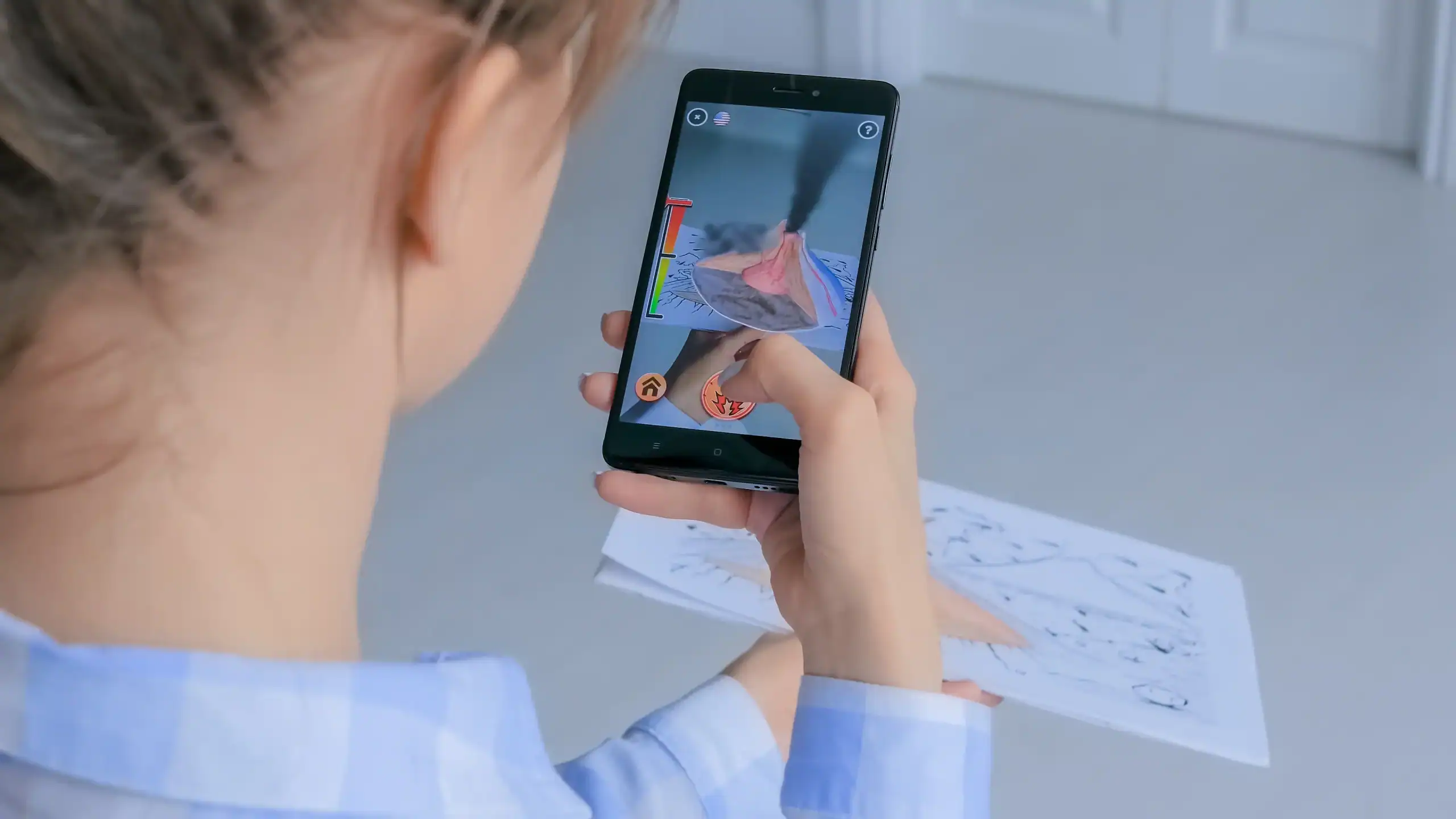
Understanding the impact of each development stage helps you budget more precisely. Here’s how typical budgets break down:
| Stage | % of Budget |
| Discovery & Scoping | 10-15% |
| UI/UX Design | 15-20% |
| Core Development | 35-45% |
| QA & Testing | 10-15% |
| Deployment | 5-10% |
| Project Management | 10-15% |
Consider a $90,000 mid-range AR app. The rough breakdown by stage:
- Discovery & Scoping: $9,000-$13,500
- UI/UX Design: $13,500-$18,000
- Core Development: $31,500-$40,500
- QA & Testing: $9,000-$13,500
- Deployment: $4,500-$9,000
- Project Management: $9,000-$13,500
Stages include:
- Discovery & Scoping: Feature planning, user stories, technical roadmap
- UI/UX Design: Wireframes, prototypes, user flows
- Core Development: Coding, asset integration, functionality
- QA & Testing: Multi-device checks, bug fixes, compliance validation
- Deployment: App store submission, server setup
- Project Management: Timelines, communication, risk tracking
If you focus on how much does it cost to build an AR app, note that AR MVP development cost usually concentrates budget on early discovery, basic design, and core development, while holding back on advanced QA or broad deployment. For more on MVPs, see what is MVP and how much does it cost.
Cost by Individual Feature and Add-Ons
Choice of features has a dramatic impact on both upfront cost and long-term spend. Common AR features and their estimated cost impact:
- ARKit developer cost, $8,000-$25,000
Apple’s ARKit brings advanced environment tracking and motion capture, but adds development complexity and greater QA needs.
- Hiring Unity AR developer, $10,000-$30,000
Unity offers cross-platform reach, though asset management and optimization add to fees.
- WebAR development cost, $5,500-$18,000
Browser-based AR improves accessibility but may limit performance on some devices.
- Marker-Based Tracking, $3,000-$12,000
Enables object recognition, QR/image marker setup, and management.
- Geolocation Features, $6,500-$22,000
Connects AR to real-world locations with map overlays and triggers.
- Real-Time Multi-User Mode, $15,000-$35,000
Lets users share AR spaces in real time, requiring extra server logic and data syncing.
- Custom 3D Modeling, $4,000-$40,000+
Creating unique assets can quickly raise project costs.
- AR wearable app development, $25,000-$80,000
Development for smart glasses or specialized headsets demands device-specific design and integration.
- Analytics & Usage Reporting, $2,500-$8,000
Dashboards and event tracking support business intelligence.
- Integration with E-commerce/CRM, $7,500-$25,000
Adds in-app purchases and personalizes experiences.
Features such as ARKit, Unity cross-platform support, WebAR, and wearable device integration usually shift projects from basic to enterprise tiers. Real-time multi-user and custom 3D models are top factors for increased cost, no matter the app type.
Pricing Models: Fixed Price vs Time and Materials
| Model | Pros | Cons | Best-Fit Scenarios |
| Fixed Price | Predictable cost, upfront scope defined | Less flexibility, risk of overages | Small/simple projects, MVPs |
| Time and Materials | Flexibility, pay for what you use | Harder to cap spend, needs oversight | Large or evolving requirements |
With fixed price vs time and materials AR contracts, fixed price works only when requirements are clear, there are few changes, and timeline control matters. Time and materials are better for most AR projects where flexibility and change during development are expected.
AR app development company rates for fixed price projects run higher per hour to cover risk. When weighing in-house vs outsourced AR developer options, agencies provide project management and broader skillsets, while in-house teams may cost more for specialty projects. For more on this, see in-house vs outsourced software development.
To keep AR app build costs low, focus on a slim feature set, open-source tools, and careful upfront scoping. Skipping customizations and integrations saves money, but may limit growth and branding potential.
AR App Development Timelines and What Affects Them
- Simple AR apps: 4-8 weeks
- Medium complexity: 2-4 months
- Enterprise builds: 4-8 months, especially with advanced backends or custom assets
Timelines shift depending on your AR/VR developer salary 2026 range and access to senior talent. Higher-wage regions can move faster with experienced teams, while lower-cost areas sometimes need more rounds of review.
For key industries:
- AR app development for retail often aims for 8-12 weeks for virtual try-on, navigation, or in-store AR experiences.
- AR app development for education may run 4-6 months, especially with interactive content and learning platform integration.
Many teams deliver faster by starting with an MVP, then expanding based on feedback.
Core Cost Drivers in AR App Development
Complexity
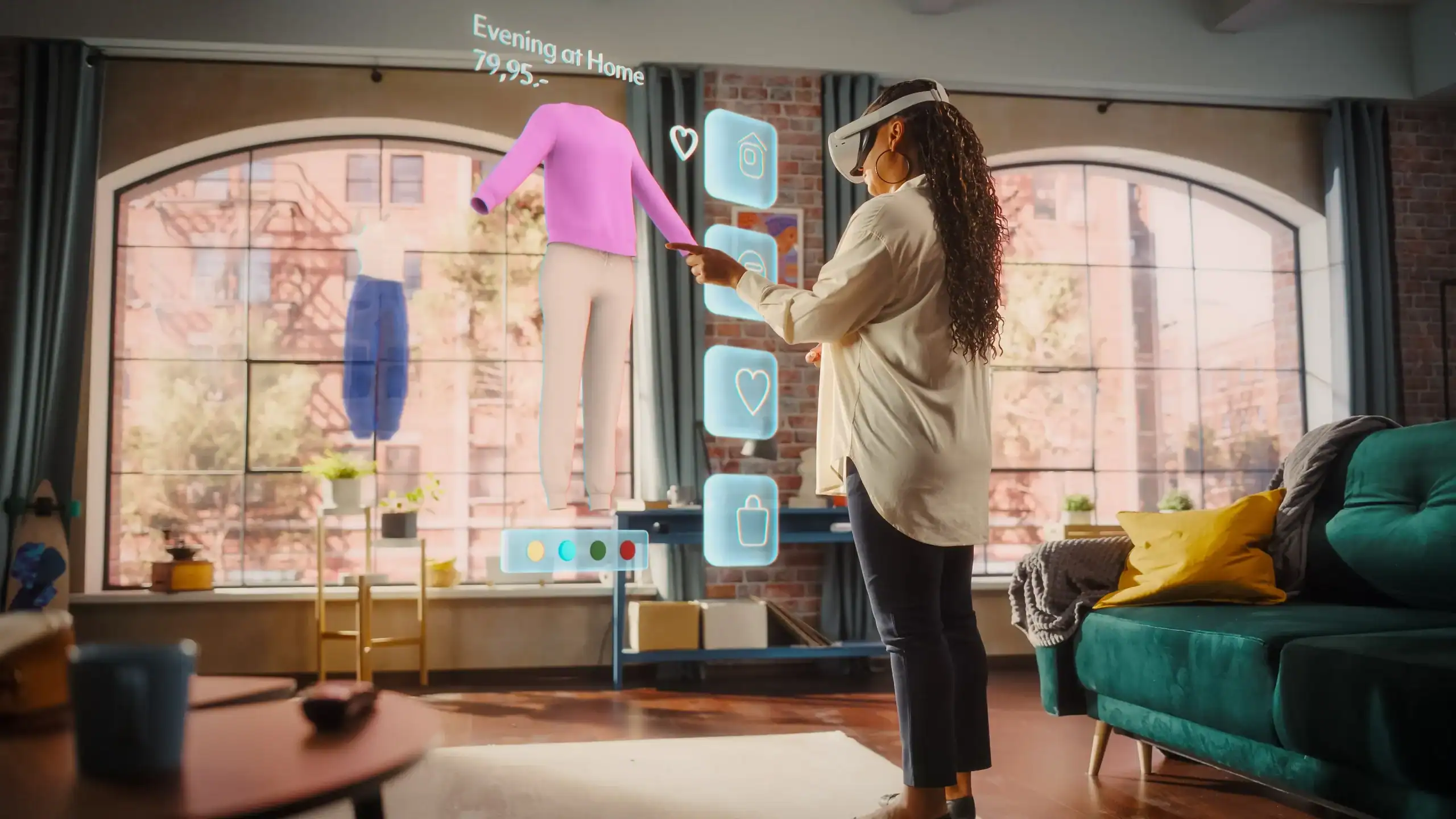
The feature set and user flow set the pace for development hours. Adding multi-user or real-time features is the single biggest cost booster, often tripling the coding workload.
Asset Volume
The number and quality of models, animations, and sounds can escalate costs fast. Heavy use of custom 3D assets is the main reason budgets grow.
Tracking & Tech Stack
Your choice of ARCore, ARKit, Unity, or Unreal Engine directly affects time and cost. Supporting multiple stacks doubles QA and increases project duration.
Integrations
Connecting to e-commerce systems, analytics, or external hardware adds both cost and testing time. Custom middleware for legacy systems is often the priciest integration.
Team Location
Team location shapes both hourly rates and efficiency. Offshore teams lower the hourly cost but can increase project management needs and timelines.
Licensing
Using commercial AR SDKs, third-party engines, or paid asset packs adds license fees. Licensing is especially significant in AR app development for gaming.
Choosing the right development services model, project-based or dedicated team, helps with cost control and reliable delivery.
Post-Launch and Maintenance Costs
| Maintenance Item | % Build Cost/Year | Typical Annual $$ |
| Bug Fixes/Support | 3-5% | $750-$4,000+ |
| OS & SDK Updates | 5-8% | $1,200-$6,000+ |
| New Content/Features | 5-10% | $1,500-$10,000+ |
| Hosting & API Fees | 2-5% | $500-$2,500+ |
| Licensing Renewals | Variable | $1,000+ |
AR app maintenance cost after launch typically runs 15-25% of the initial build per year, depending on update schedules and content needs. Retail AR apps with frequent updates will cost more in maintenance than a museum guide with fixed assets.
Yu should budget for both regular fixes and ongoing business changes. Apps needing frequent SDK or OS upgrades, or those supporting wearables, will see higher yearly costs.
Compliance and Regulatory Costs in AR Development
| Requirement | Typical Cost | When It Applies |
| GDPR/Privacy | $3,000-$12,000 | User data, Europe |
| HIPAA Compliance | $6,000-$25,000 | Health/medical AR solutions |
| Accessibility Testing | $2,000-$7,000 | Public sector, education, enterprise |
| App Store Review Prep | $1,200-$3,500 | Any public AR app |
| Industry Certifications | $4,000+ | Enterprise deployments |
Compliance cost in AR app development increases sharply in regulated industries and when enterprise projects need features for privacy, permissions, and record-keeping. Large organizations with strict data rules bear the greatest compliance expenses.
How to Reduce AR App Development Costs
Cheapest Way To Build An Ar App
- Start with an MVP: Launch only core features and test with real users before adding advanced integrations. This reduces AR MVP development cost and avoids wasted investment.
- Leverage open-source SDKs: Choose proven, community-backed frameworks to avoid high license fees. Proprietary SDKs can increase both speed and future spend.
- Template-based designs: Using ready-made UI and asset templates speeds design but limits branding.
- Limit custom 3D assets: Rely more on stock models to save on design, though it may affect engagement.
- Pick a single platform: Launch on either iOS or Android first to cut build and testing costs.
- Outsource efficiently: Select remote teams in cost-effective locations, but keep project management clear to avoid overruns.
- Use cross-platform engines: Engines like Unity enable asset and code reuse across platforms, lowering per-platform costs.
- Negotiate long-term contracts: Ongoing work often gets better rates, bringing down the cost of future features and maintenance.
Every savings tactic comes with trade-offs in speed, control, scalability, or overall polish. Balance these based on your main audience and business goals.
Real-World AR App Cost Examples and Use Cases
- AR app development for retail: A virtual try-on or in-store navigation app with inventory integration and real-time updates typically costs $30,000-$80,000. Geolocation and scalability are main cost drivers.
- AR app development for education: An interactive STEM learning app with user profiles, multi-language options, and lesson modules typically lands in the $65,000-$150,000+ range. Costs rise with advanced interactive assets and learning platform connections. See our benefits of augmented reality in education.
- AR app development for gaming: A multiplayer, location-based adventure like Pokémon GO will likely cost $120,000-$300,000+ due to live servers, in-game purchases, and content updates.
- AR wearable app development: Apps for smart glasses or headsets (HoloLens 2, Magic Leap) start around $60,000, often exceeding $200,000 for complex controls and enterprise integrations. Deep device integration and security raise costs the most. For comparison, see how much does vr app development cost, since many VR headset builds face similar integration demands.
Device support, the ability for multiple users to interact, and outside system connections are the factors that most often increase spending in these scenarios.
Why Choose Cubix for AR App Development in 2026
- Cubix stands out as a seasoned AR app development company, delivering augmented reality development services to global brands and startups.
- The team’s expertise spans ARCore, ARKit, Unity, and WebAR, crafting solutions for all major platforms, including smart glasses and wearables.
- Cubix’s work includes interactive retail apps, educational AR platforms, and advanced gaming projects, each focused on real client ROI.
- When you hire augmented reality developer teams from Cubix, you gain a dedicated group that manages projects from initial discovery through post-launch optimization.
- Clients value Cubix for transparent pricing, clear milestone planning, and consistent delivery, making them a strong AR app development company partner in 2026. For related expertise, see our guide on how much it cost to hire a game developer.
Want to discuss your project? Our experts are just a click away.
Contact UsFrequently Asked Questions
1. How much does it cost to hire AR app developer in 2026?
The cost to hire AR app developer in 2026 can start at $15,000 for simple projects, with enterprise AR solutions often exceeding $300,000 depending on complexity and integrations.
2. What is the typical AR developer hourly rate?
AR developer hourly rates range from $40 to $200, with the highest rates in the US and Western Europe, and the lowest in regions like Eastern Europe or India.
3. How does AR app development cost by country compare?
AR app development cost by country depends on local salaries and market demand, with the US and Western Europe at the higher end and Latin America or India offering more budget-friendly options.
4. What is the AR/VR developer salary in 2026?
Average AR/VR developer salary in 2026 in the US ranges from $95,000 to $150,000 annually, with top salaries going to those with advanced skills or experience on complex AR platforms.
5. How long does AR app development take?
AR app development timelines vary: simple projects take 4-8 weeks, while larger or enterprise apps may need 4-8 months from planning to launch and post-launch support. See our detailed app development timeline for more insights.
6. How do AR app development company rates differ from freelancers?
AR app development company rates typically include project management, QA, and design, running 20-40% higher per hour than freelancers, but often reducing risk and improving scalability. For more on team structures, check how to build a team for app development.
7. What does ARKit developer cost include?
ARKit developer cost covers environment tracking, motion capture, and UI/UX design for Apple devices, as well as extra device testing required for Apple’s standards.
8. What should I know before Unity AR developer hire?
Before hiring a Unity AR developer, check for cross-platform experience, solid coding practices, and asset management skills, as Unity projects benefit from multi-platform optimization expertise.
9. Is fixed price vs time and materials better for AR projects?
Both fixed price and time and materials models have strengths: fixed price suits clear MVPs, while time and materials is better for projects needing flexibility or ongoing changes. For more on MVPs, see what is MVP and how much does it cost.
10. What are the main factors affecting AR app cost?
Key factors affecting AR app cost include feature complexity, asset volume, number of supported platforms, depth of backend integration, and the developer team’s location.