
Key Takeaways
- Cross-platform development can speed up delivery by allowing businesses to build for iOS and Android with a shared codebase.
- The right framework matters: Flutter, React Native, and other options should be selected based on the app’s complexity, integrations, performance needs, and long-term goals.
- Performance and consistency require active optimization across different devices, operating systems, screen sizes, and hardware capabilities.
- Testing, security, and maintenance cannot be overlooked. Real-device testing, regular updates, security patches, and performance monitoring are essential for long-term reliability.
- Development costs typically range from $25,000 to $150,000+, depending on complexity, features, design, integrations, and testing requirements.
A great mobile experience is no longer defined by a single device or operating system. Users expect applications to perform smoothly whether they are accessing them from an Android smartphone, an iPhone, or a tablet. Meeting these expectations requires more than developing an app that simply runs across platforms.
Behind every successful multi-platform application is careful planning around performance, design, integrations, and device compatibility. Differences in operating systems, hardware capabilities, and user behavior can create challenges that impact the overall experience if they are not addressed properly.
This is why businesses investing in Cross-Platform App Development need a well-structured approach from the beginning. While this method helps teams build applications for multiple platforms more efficiently, achieving a consistent user experience requires the right framework, development strategy, and testing process.
From selecting suitable technologies to optimizing features and maintaining smooth functionality, every stage of development influences the final product quality.
Businesses can explore this detailed Cross-Platform App Development Guide to understand the key processes, frameworks, and considerations involved in building successful cross-platform applications.
Why Businesses Prefer Cross-Platform Development

For many years, businesses followed a traditional approach of building separate native applications for iOS and Android. While this method provides platform-specific optimization, managing two different codebases can increase development efforts, make updates more complex, and require additional resources.
This is why many businesses are adopting cross-platform development as an efficient alternative. By using a shared codebase, development teams can build applications for multiple platforms while simplifying updates, improving collaboration, and reducing repetitive development work.
Key Benefits of Cross-Platform Development
- Faster Development Process: A shared codebase allows teams to build and release features more efficiently across multiple platforms.
- Simplified Maintenance: Bug fixes, security improvements, and feature updates can be managed more effectively.
- Better Resource Management: Businesses can streamline development workflows without maintaining completely separate teams for each platform.
- Wider Audience Reach: Applications can be launched across Android and iOS platforms to connect with more users.
- Consistent User Experience: A well-planned approach helps maintain similar functionality and design across different devices.
However, choosing a cross-platform approach does not eliminate technical challenges. Businesses still need to consider framework selection, performance optimization, platform differences, integrations, and testing requirements to build a reliable application.
Common Cross-Platform Development Challenges and Solutions
Creating an application that feels smooth on a premium iPhone, an entry-level Android device, and different screen sizes is a complex challenge. It requires thoughtful planning, strong technical decisions, and a clear understanding of how users interact with technology across different devices. Developers must balance performance, design consistency, and platform requirements to deliver an experience that feels effortless everywhere.
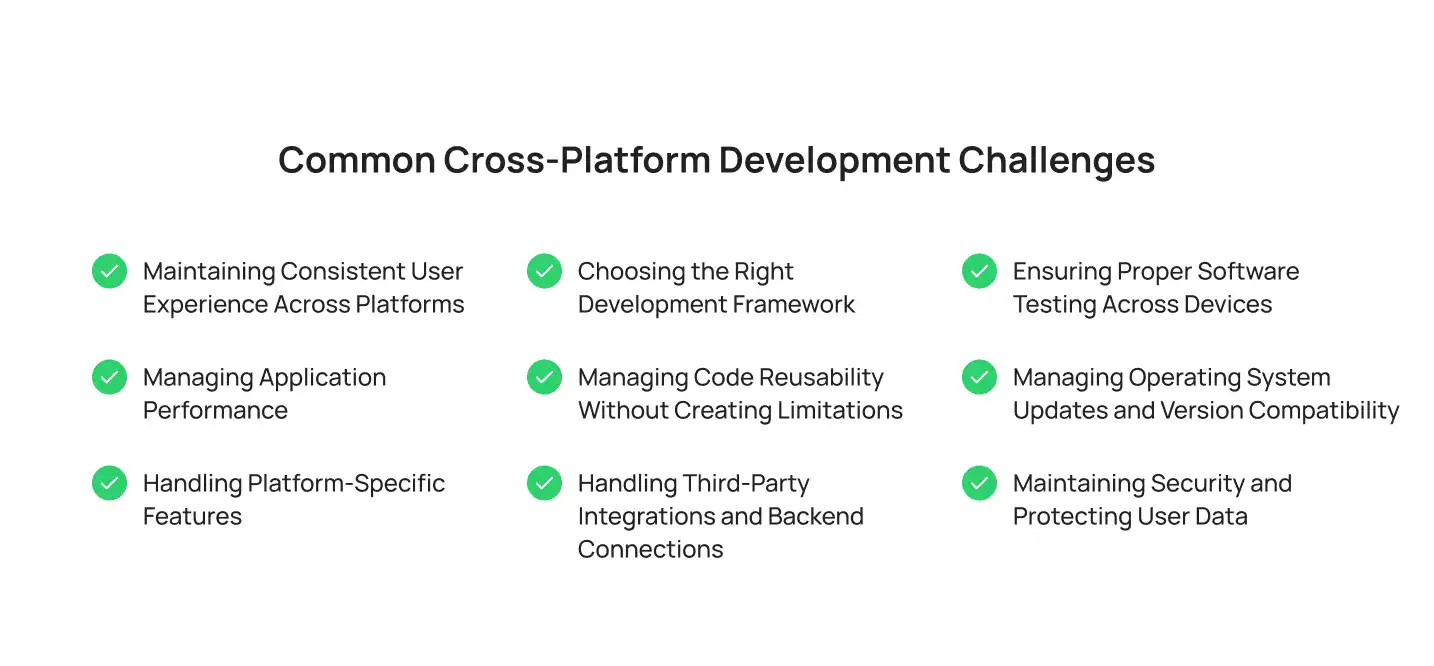
1. Maintaining Consistent User Experience Across Platforms
One of the biggest challenges in cross-platform development is creating an experience that feels natural on every device. Android and iOS users have different expectations based on their operating system’s design patterns, navigation styles, and interaction behaviors.
Developers need to ensure that the application maintains the same brand identity while adapting to platform-specific requirements. Poorly optimized designs can lead to inconsistent layouts, confusing navigation, or reduced user satisfaction.
Solution:
Teams can overcome this challenge by creating flexible design systems, testing interfaces across multiple devices, and following platform guidelines. A balanced approach helps maintain UI/UX Consistency without making the application feel identical across every platform.
2. Managing Application Performance
Users expect mobile applications to load quickly and respond instantly. However, delivering smooth performance across devices with different hardware capabilities can be challenging.
Factors such as device limitations, heavy animations, inefficient code, and large data requests can affect overall Application Performance.
Solution:
Developers can improve performance through regular monitoring, code optimization, efficient resource management, and continuous improvements after launch. Performance testing should be included throughout the development cycle to identify issues before they affect users.
3. Handling Platform-Specific Features
Although cross-platform applications share common development structures, some device features require additional customization. Accessing functions such as cameras, location services, biometric authentication, and notifications may require Platform-Specific APIs.
Solution:
Developers should identify platform requirements early and implement proper integrations to ensure device features work smoothly without affecting the overall user experience.
4. Choosing the Right Development Framework
Selecting the right framework is one of the most important decisions in cross-platform development. The technology stack directly affects application performance, maintenance, scalability, and future updates.
Frameworks such as React Native and Flutter have become popular choices because they allow developers to build applications for multiple platforms with shared development practices. However, choosing a framework only based on popularity can create challenges later if it does not match the application’s requirements.
For example, an application that depends heavily on advanced device features may require a different approach compared to a business app with standard functionality.
Solution:
Businesses should evaluate factors such as application complexity, required integrations, development expertise, and future improvements before selecting a framework. A proper technology assessment helps teams build applications that are easier to maintain and upgrade.
Want to discuss your project? Our experts are just a click away.
Contact Us5. Managing Code Reusability Without Creating Limitations
One of the biggest advantages of cross-platform development is Code Reusability. Sharing components and logic between platforms helps reduce repetitive development work and makes updates more efficient.
However, excessive dependence on shared code can sometimes create limitations. Certain features may require platform-specific adjustments, and poorly structured code can make future modifications more difficult.
Solution:
Developers should create a balanced architecture that combines reusable components with platform-specific customization where needed. Maintaining clean code practices, proper documentation, and regular code reviews helps businesses avoid technical complications.
6. Handling Third-Party Integrations and Backend Connections
Modern applications rely on multiple external services, including payment gateways, cloud platforms, analytics tools, and authentication systems. Managing these connections smoothly across different platforms can become challenging.
Issues with API Integration may lead to slow responses, failed transactions, or inconsistent application behavior.
Solution:
Development teams should regularly monitor connected services, maintain updated APIs, and implement proper error-handling processes. Well-structured integrations ensure that external services continue working reliably as the application grows.
7. Ensuring Proper Software Testing Across Devices
Testing a cross-platform application requires more than checking whether features work correctly. Developers need to verify that the application performs consistently across different devices, screen sizes, operating system versions, and network conditions.
Software Testing becomes more complex because every platform may respond differently to the same feature or functionality.
Common testing areas include:
- Functional testing
- Performance testing
- Security testing
- Device compatibility testing
- User experience testing
Solution:
Businesses should include testing throughout the development process instead of waiting until the final stage. Automated testing tools, real device testing, and continuous monitoring help teams identify issues earlier and deliver more reliable applications.
8. Managing Operating System Updates and Version Compatibility
Android and iOS regularly introduce new operating system versions with updated security requirements, design changes, and technical improvements. These updates can sometimes affect existing application features.
Maintaining Version Compatibility is essential to ensure users continue receiving a smooth experience after operating system upgrades.
Solution:
Development teams should monitor platform updates, test applications against new versions, and release necessary improvements before compatibility issues impact users.
Regular updates and proactive maintenance help businesses keep their applications reliable over time.
9. Maintaining Security and Protecting User Data
Security is another important challenge for cross-platform applications. Mobile apps often handle sensitive user information, payment details, and personal data, making security improvements a continuous requirement.
Without proper protection, applications may become vulnerable to data breaches and unauthorized access.
Solution:
Businesses should regularly apply Security Patches, review authentication methods, protect APIs, and follow secure coding practices. Security should be considered throughout the application lifecycle rather than treated as a final step.
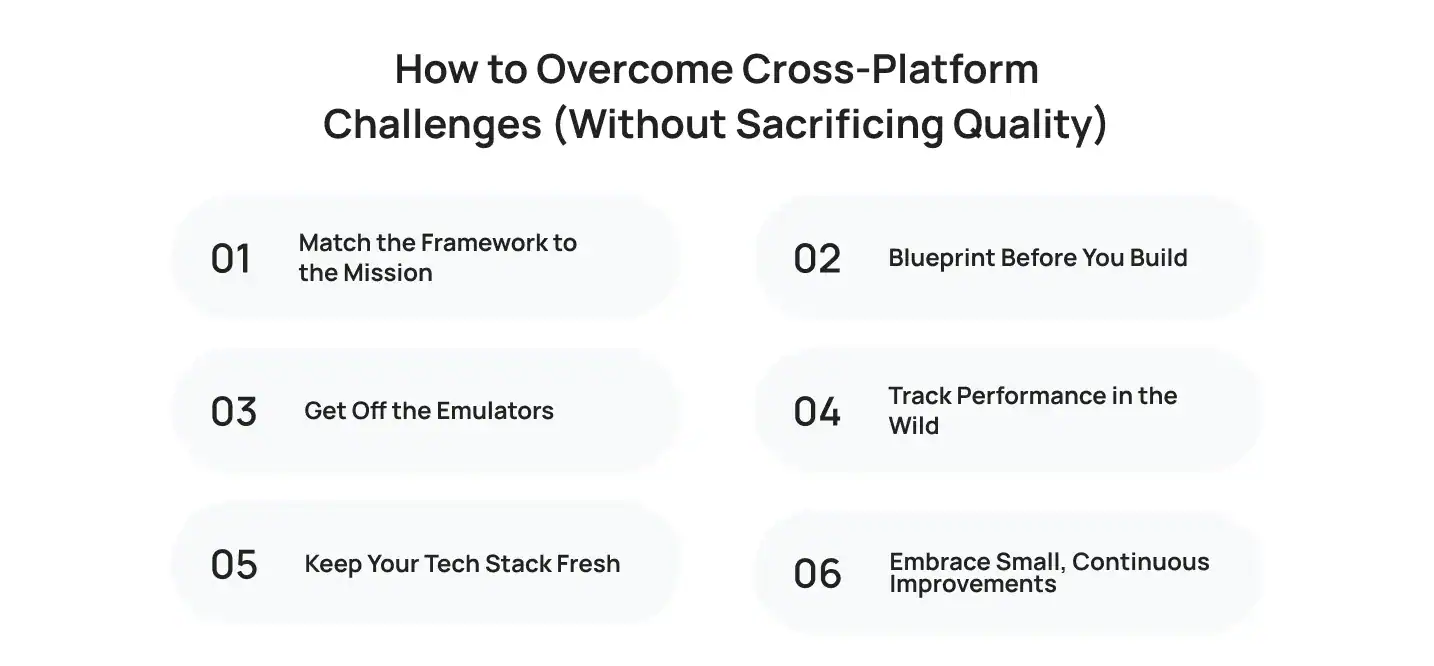
How to Overcome Cross-Platform Challenges (Without Sacrificing Quality)
Building a cross-platform app doesn’t have to feel like a compromise. You don’t need to accept sluggish performance or clunky user interfaces just to save time. When you pair the right strategy with solid engineering habits, you get an app that feels completely native while keeping your development pipeline lean and manageable.
Smart Strategies for the Long Haul
- Match the Framework to the Mission: Don’t just pick a tool because it’s trending. Weigh frameworks like React Native, Flutter, or Kotlin Multiplatform against your specific needs, like hardware access, custom UI demands, and where you plan to scale next.
- Blueprint Before You Build: Resist the urge to start coding on day one. Mapping out your app’s architecture, state management, and data flow early saves you from painful, expensive refactoring down the road.
- Get Off the Emulators: Simulators are great for quick checks, but they don’t reflect real life. Test your app on actual physical devices, especially mid-range and older hardware to catch real-world lag, battery drain, and memory leaks.
- Track Performance in the Wild: The real test starts after launch. Use live monitoring tools to keep tabs on crash rates, latency, and load times so you can fix bottlenecks before users head to the App Store to leave a bad review.
- Keep Your Tech Stack Fresh: Outdated third-party packages and abandoned plugins are ticking time bombs. Regularly update your libraries to stay ahead of security vulnerabilities and maintain compatibility with new iOS and Android releases.
- Embrace Small, Continuous Improvements: Set up automated testing and deployment early. Shipping small, frequent updates makes it much easier to crush bugs, manage technical debt, and adapt as user expectations shift.
Building for Longevity
At the end of the day, a successful cross-platform app comes down to discipline over shortcuts. When you build with intention, test on real hardware, and maintain a clean codebase, you eliminate the risks, giving your users an experience that keeps them coming back.
How Much Does Cross-Platform App Development Cost?
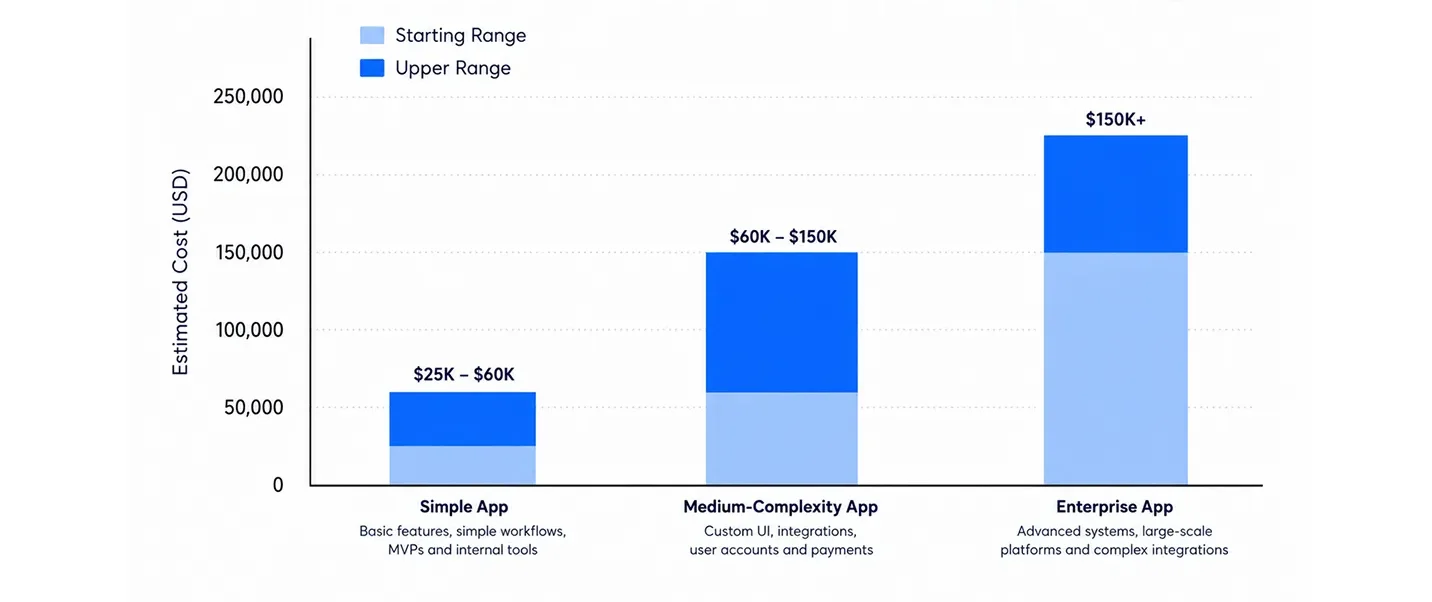
The cost of developing a cross-platform application depends on the app’s complexity, features, design requirements, integrations, and testing needs. On average, a cross-platform app can cost between $25,000 and $150,000+, depending on the project scope and technical requirements.
A simple app with basic features may cost around $25,000 to $60,000, while medium-complexity applications with custom features and integrations can range from $60,000 to $150,000. Enterprise-level applications with advanced functionality, complex backend systems, and extensive integrations may require a higher investment.
Key factors that affect the overall cost include:
- Application complexity: More screens, user roles, and advanced workflows increase development time.
- Features: Functions such as payments, real-time chat, location tracking, and analytics require additional development effort.
- Design requirements: Custom interfaces and engaging user experiences can influence design and development costs.
- Backend integrations: Connecting with APIs, databases, and external platforms requires additional technical planning.
- Testing needs: Testing across multiple devices and operating systems ensures better reliability.
Businesses should also consider future updates, maintenance, and improvements after launch. You can explore this detailed guide on Cross-Platform App Development Cost to understand the factors that impact project pricing.
How Cubix Helps Businesses Overcome Cross-Platform Development Challenges
Creating a successful cross-platform application requires the right technology, development approach, and ongoing support. Cubix helps businesses handle every stage of the process, from technology selection and application design to development, testing, optimization, and maintenance.
The team focuses on building applications that deliver consistent user experiences, strong performance, and smooth functionality across multiple platforms.
Cubix also uses Continuous Integration/Continuous Deployment (CI/CD) practices to improve the development workflow. Automated builds, faster testing cycles, and reliable software releases help teams deliver updates efficiently while reducing potential errors.
Businesses looking for expert support can explore Cubix’s cross-platform app development Services to build and maintain reliable applications across different platforms.
Want to discuss your project? Our experts are just a click away.
Contact UsFinal Thoughts
Cross-platform development helps businesses build applications for multiple platforms while improving development efficiency and reducing the complexity of managing separate applications. However, achieving a smooth user experience requires careful planning around technology selection, design, performance, testing, and ongoing improvements.
By choosing the right framework, following a structured development process, and maintaining the application after launch, businesses can create reliable apps that continue to meet user expectations as technology changes.
Frequently Asked Questions
1. What are the common challenges in cross-platform app development?
Common challenges include maintaining consistent user experiences, managing device-specific features, ensuring application performance, handling integrations, and testing across multiple platforms. Proper planning and the right development approach help overcome these challenges.
2. Is cross-platform development better than Native App Development?
The choice depends on project requirements. Cross-platform development is a suitable option for businesses that want wider platform coverage with efficient development, while Native App Development may be preferred for apps requiring highly specific platform features.
3. Which is better for cross-platform apps, React Native or Flutter?
Both React Native and Flutter are popular frameworks with different strengths. React Native works well for businesses looking for a mature ecosystem, while Flutter is known for custom UI capabilities and consistent performance. The right choice depends on app goals and technical requirements.
4. How can businesses improve application performance?
Businesses can improve application performance through code optimization, regular monitoring, efficient API management, proper testing, and continuous updates to remove issues that affect speed and reliability.
5. Why is software testing important for cross-platform applications?
Software Testing ensures that applications work correctly across different devices, operating systems, and screen sizes. It helps identify bugs, compatibility issues, and performance problems before they impact users.
6. How much does cross-platform app development cost?
The cost of cross-platform app development typically ranges from $25,000 to $150,000+ depending on factors such as app complexity, features, design requirements, integrations, and testing needs. Simple apps require less investment, while advanced applications with complex functionality cost more.