We go to the Play Store or App Store, search for an application, tap “Download,” and start using it without much thought. It feels simple, almost effortless.
But have you ever wondered how much struggle, planning, testing, and technical work goes on behind that simple download button?
Before an application reaches your phone, a lot has already happened behind the scenes. Developers have written and tested code, designers have worked through countless screens and user flows, QA teams have searched for issues, and product teams have made decisions about what users actually need. Choosing the right technology, building for iOS or Android, deciding between native and cross-platform development, integrating APIs, securing data, and preparing an application for real-world use all take careful planning.
At Cubix, this is the work that has been at the center of the company since 2008.
Over the years, Cubix has worked on mobile applications, software products, games, and digital solutions for clients across different industries. The company has delivered more than 1,300 digital products and built a team of 350+ developers, designers, and project managers, bringing together different areas of expertise under one roof.
That experience has also attracted recognition from independent industry platforms.
On May 2, 2024, DesignRush recognized Cubix as the top-ranked company in its Mobile App Development category. The platform also recognized Cubix’s work on Glamic, a beauty and wellness application, in its Best App Designs category.
For Cubix, the recognition became another milestone in a journey that has included work across mobile development, software development, gaming, and emerging technologies. In 2024, GoodFirms also recognized Cubix among its top mobile app development companies for Q2, while Clutch had previously included the company in its 2020 Clutch 1000 list of top service providers.
But an award is only the headline.
The more interesting story is what sits behind it: the people, processes, technical decisions, and products that helped Cubix earn recognition from independent industry platforms.
So, what makes Cubix’s App Development Expertise stand out? What has the company built over the years? And what should businesses look for when choosing a mobile app development partner?
Let’s take a closer look.
What Makes Cubix’s App Development Expertise Stand Out?
An award may put a company in the spotlight, but the work behind that recognition is what really matters.
Cubix’s experience has been built through years of working on different types of digital products. Its current public profiles show expertise across mobile app development, software development, games, AI, blockchain, AR/VR, IoT, and other technologies. DesignRush lists mobile app expertise across Android, iPhone, cross-platform, hybrid, and gaming applications, along with React Native and Flutter among its mobile technologies.
That range matters because no two applications have the same requirements.
A healthcare app may need specialized workflows and secure integrations. A fintech product may depend on payments, authentication, and real-time data. A marketplace needs search, booking, payments, and notifications. A game requires a completely different approach to graphics, gameplay, and performance.
Cubix’s App Development Services bring product strategy, UI/UX design, engineering, testing, and development together rather than treating coding as the entire project.
For businesses still figuring out where development should begin, Cubix’s Mobile App Development guide provides a useful look at the journey from product idea to application.
Cubix’s Mobile App Development Portfolio
There is a simple reason portfolio experience matters when choosing an agency, you want evidence that the team has solved problems similar to yours.
Cubix has been operating since 2008, and its public profiles show projects for startups, mid-market businesses, and enterprise clients. DesignRush lists clients including Sony, Tissot, Walmart, Politico, DreamWorks, Canon, Unilever, and Estée Lauder.
The current DesignRush portfolio also gives prospective clients a closer look at actual projects. It includes mobile applications such as SES Live Safety, Boodle, Goobr, Pausetive, and Glimmer, alongside gaming and web projects. SES Live Safety, for example, is listed as a mobile app development project completed in three months.
GoodFirms also currently lists Cubix with a 4.9 rating from 33 reviews and shows a mobile development focus across iPhone, Android, React Native, hybrid applications, enterprise apps, iPad, and wearables.
These details matter more than simply saying an agency has “extensive experience.” They give businesses something concrete to investigate. Before hiring a development partner, look at projects that resemble your own in complexity, audience, industry, or functionality. Then ask how the agency approached the difficult parts.
That is where a portfolio becomes useful.
Glamic: Where Design Meets the User Journey
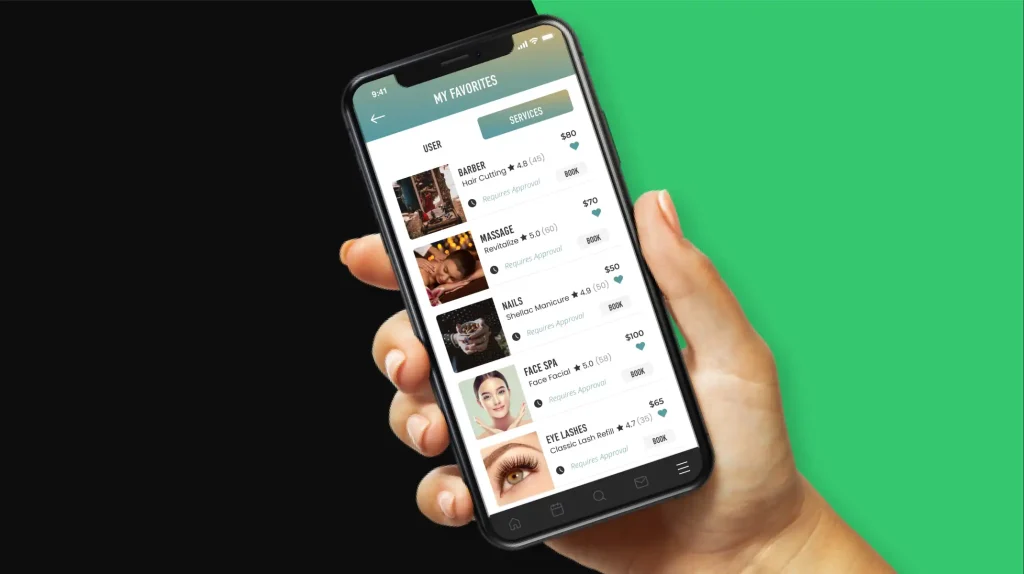
Cubix’s DesignRush story also includes Glamic, a beauty and wellness application that was recognized in DesignRush’s Best App Designs category. The project demonstrates how mobile app development goes beyond writing code or adding features. For a service-based application, the entire experience needs to feel natural, from discovering a service to making a booking and completing a transaction.
Glamic was designed around this kind of user journey, bringing beauty and wellness services into a mobile experience where users can explore available options and interact with the platform more conveniently. The focus on usability is important because users rarely judge an application by the technology powering it. They judge it by how easily they can accomplish what they came to do.
For businesses planning a mobile application, this means paying attention to details such as:
- Simple navigation: Users should be able to find the information or service they need without unnecessary steps.
- Clear user flows: Important actions such as booking, searching, or completing a transaction should feel straightforward.
- Consistent interface design: Screens should feel connected so users do not have to relearn how the application works.
- Responsive interactions: Buttons, screens, and transitions should respond smoothly to user actions.
- Purpose-driven features: Every feature should contribute to the user’s journey instead of adding complexity without a clear purpose.
This is where UI/UX design and engineering need to work together. A visually appealing interface cannot compensate for a frustrating workflow, while technically sound functionality can still fall short if users cannot navigate it easily. Glamic shows why the strongest mobile experiences are built by considering design, functionality, and user behavior as parts of the same product journey.
A Pattern of Recognition, Not a One-Time Moment
DesignRush’s recognition is an important milestone for Cubix, but it is not the company’s only industry recognition.
Over the years, Cubix has also received recognition from platforms such as GoodFirms and Clutch. Looking at these recognitions together provides additional context around the company’s history and reputation in software and mobile app development.
DesignRush Recognition
On May 2, 2024, DesignRush recognized Cubix as the Top Ranked company in its Mobile App Development category. The platform also recognized Cubix’s Glamic project in its Best App Designs category.
DesignRush CEO Gianluca Ferruggia praised Cubix’s ability to deliver mobile app solutions focused on results, innovation, quality, and client satisfaction.
“Cubix has continued to demonstrate their remarkable ability to deliver cutting-edge mobile app solutions that drive real results for their clients.”
For Cubix CEO Salman Lakhani, the recognition was a positive reflection of the team’s work and a reason to keep building on it:
“These achievements stand as pleasant testimony and as reminders that you are on the right track, and you must press on.”
The recognition also draws attention to the work that takes place before an application reaches its users. From early planning and interface design to development and testing, each stage contributes to the final experience. In that sense, the ranking offers a glimpse into the process behind the products Cubix has developed over the years.
GoodFirms and Clutch Recognition
Cubix’s recognition extends beyond DesignRush.
In 2024, GoodFirms recognized Cubix among its top mobile app development companies for Q2. GoodFirms CEO Niraj Patel said:
“We are pleased to once again recognize Cubix as a leader in mobile app development.”
Earlier, Clutch included Cubix in its Clutch 1000 list for 2020, recognizing the company among its top service providers.
These recognitions come from different platforms and represent separate evaluations, so they should not be treated as one combined award. What they do provide is a broader picture of Cubix’s presence in the software and mobile app development space.
These recognitions are separate from the DesignRush ranking, so they should not be treated as one combined achievement. However, they provide useful context when looking at Cubix’s development history. Rather than relying on a single ranking, potential clients can consider these recognitions alongside the company’s portfolio, client reviews, technical capabilities, and experience.
That broader view is more useful when evaluating a Mobile App Development Company, particularly for a project where technology, design, and business requirements all need to work together.
What Technologies Does Cubix Use for Mobile App Development?
Once the product requirements are clear, technology choices become the next important consideration. The right framework depends on the application’s features, target platforms, performance requirements, integrations, and future plans.
Cubix works across different mobile development approaches, including iOS, Android, and cross-platform development, with technologies such as React Native and Flutter. Rather than treating one framework as the answer for every project, the technology stack should be selected around what the application actually needs.
iOS App Development
For businesses targeting Apple’s ecosystem, iOS development requires attention to platform-specific design patterns, device capabilities, performance, and compatibility. Native development can be useful when an application relies heavily on Apple’s features or requires deeper platform integration.
For a closer look at the development process, readers can explore Cubix’s iOS App Development resource.
Android App Development
Android brings its own development considerations, particularly because applications can run across a wide range of devices, screen sizes, and hardware configurations.
This makes compatibility testing, performance, and consistent user experience important parts of the development process. Businesses exploring Android can learn more through Cubix’s Android App Development guide.
Cross-Platform App Development
For businesses planning to launch on both iOS and Android, cross-platform development can be an option worth considering. Frameworks such as React Native and Flutter allow teams to share a substantial portion of the codebase while creating applications for multiple platforms.
However, cross-platform development is not automatically the right choice for every project. An application that depends heavily on platform-specific capabilities may benefit from native development, while products with similar functionality across platforms may be well suited to a cross-platform approach.
The decision ultimately comes down to the product’s requirements rather than simply choosing the most popular framework. Cubix’s Cross-Platform App Development guide provides more detail on the approach, its benefits, and the factors businesses should consider.
A Development Approach Built Around the Product
Technology is only one part of building a mobile application. The way a development team understands the product, communicates with the client, and handles changes during development can have just as much impact on the final result.
Cubix’s approach brings different disciplines into the development process, including product strategy, UI/UX design, engineering, and quality assurance. This helps teams consider the product from both the business and user perspective instead of treating development as a purely technical task.
A typical project may involve:
- Discovery and planning: Understanding the business objectives, users, features, and technical requirements.
- UI/UX design: Turning product requirements into user flows, wireframes, and interfaces.
- Development: Building the application and connecting the required APIs, databases, and third-party services.
- Quality assurance: Testing functionality, usability, compatibility, and performance before release.
- Deployment and support: Preparing the application for launch and addressing improvements or updates after release.
This process also leaves room for changes. As development progresses, testing and user feedback can reveal areas that need to be reconsidered. A practical development process should allow those findings to inform the product rather than treating the original plan as fixed.
How to Choose the Right Development Partner
An industry ranking can help put a company on your shortlist, but it should not be the only reason you choose a development partner. The more useful approach is to look at the work behind the recognition and see whether it matches what your own product needs.
Before starting a project, consider:
- Relevant portfolio: Look for applications with features, users, or business requirements similar to yours.
- Technical capabilities: Check whether the team has experience with the platforms, frameworks, APIs, and integrations your product requires.
- Development process: Understand how the team approaches discovery, UI/UX design, development, testing, deployment, and post-launch support.
- Client feedback: Independent reviews can provide insight into communication, project management, and delivery.
- Industry experience: A team familiar with your industry may already understand common user expectations and technical requirements.
- Communication: Clear communication makes it easier to discuss changes, resolve issues, and keep the project moving.
- Post-launch support: Launch is not the end of the product journey. Updates, maintenance, bug fixes, and improvements may continue long after release.
For businesses whose application also needs backend systems, APIs, integrations, dashboards, or other connected software, it can be useful to evaluate a partner’s broader engineering capabilities alongside its mobile expertise. Cubix’s Software Development services cover areas such as custom software development, API development and integration, software testing, cloud deployment, and ongoing support.
Ultimately, the right partner should be able to do more than build features. It should understand the problem behind the product, explain its technical decisions clearly, and work with the business as the application takes shape.