Key Takeaways
- A 2D game moves along two axes, X and Y, and uses sprite-based art instead of 3D models.
- Unity, GameMaker, and Godot are the three most popular 2D game engines today.
- Genre, art style, and engine choice should be locked in early. They shape everything after.
- Simple 2D games can take weeks. Complex ones can take a year or more.
- Costs vary a lot. A solo dev can build cheap. An agency build costs more but moves faster.
- Testing, optimization, and post-launch updates matter as much as the initial build.
- Steam, the App Store, and Google Play all take a cut of your revenue. Know the numbers before you launch.
- Working with an experienced company like Cubix can shorten your timeline and reduce risk.
Global gaming revenue is set to cross $200 billion in 2026. That’s bigger than the music industry and the box office combined. And a solid chunk of that money still comes from 2D games, not flashy 3D blockbusters.
This guide walks you through everything before you make a 2D game. We’ll cover engines, art styles, timelines, costs, and publishing. You’ll also see real tables and charts, not just opinions.
Whether you’re a solo dev with an idea, or a founder looking to hire a team, this guide gives you the full picture. Cubix has built 2D games across genres and platforms, so we’ll bring some field-tested insight along the way.
What Is A 2D Game?
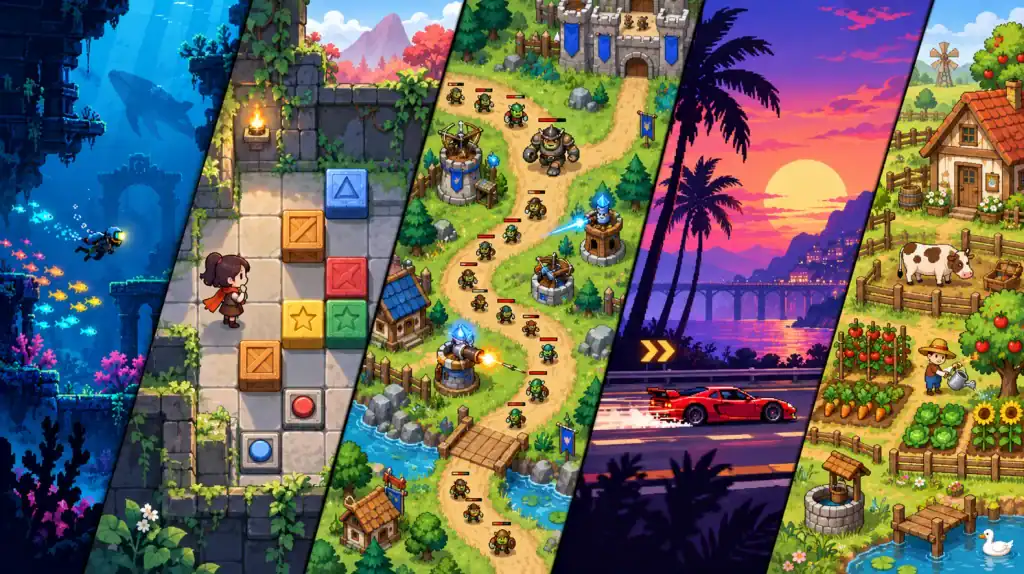
A 2D game happens on a flat plane. Movement only goes along the X and Y axes. There’s no depth, no third dimension to explore. Just up, down, left, and right.
These games use sprites instead of 3D models. A sprite is basically a flat image that represents a character, object, or piece of scenery. Layer a few of these together and you get depth without actual 3D geometry.
2D games remain massive despite being “simpler” than 3D. In fact, 2D engines are expected to grow at a strong pace in the coming years, mostly because they’re faster to build with and need less computing power. That makes them perfect for mobile devices with limited hardware.
Key Characteristics of 2D Games
- Sprites: Flat visual assets for characters, objects, and backgrounds.
- Layering: Foreground, midground, and background layers create the illusion of depth.
- Movement style: Either side-scrolling (like Super Mario Bros) or top-down (like The Legend of Zelda).
- Tilemaps: Grids of reusable tiles that build levels quickly and efficiently.
Games like Hollow Knight and Stardew Valley prove that 2D doesn’t mean basic. It just means focus.
Have a 2D Game Idea? Let’s Turn It Into a Playable Game
Contact Us2D Games vs 3D Games at a Glance
| Factor | 2D Games | 3D Games |
| Visual style | Flat sprites, layered art | Polygonal models, real depth |
| Hardware needs | Low, runs on almost any device | High, needs stronger GPUs |
| Development time | Shorter on average | Longer, more complex pipelines |
| Team size needed | Small teams or solo devs work fine | Usually needs bigger teams |
| Best for | Mobile, indie, casual, puzzle games | AAA titles, open worlds, simulations |
| Learning curve | Easier for beginners | Steeper, more technical |
Why Build A 2D Game? A Quick Market Snapshot
Here’s the thing. 2D isn’t a fallback option anymore. It’s a legitimate business decision.
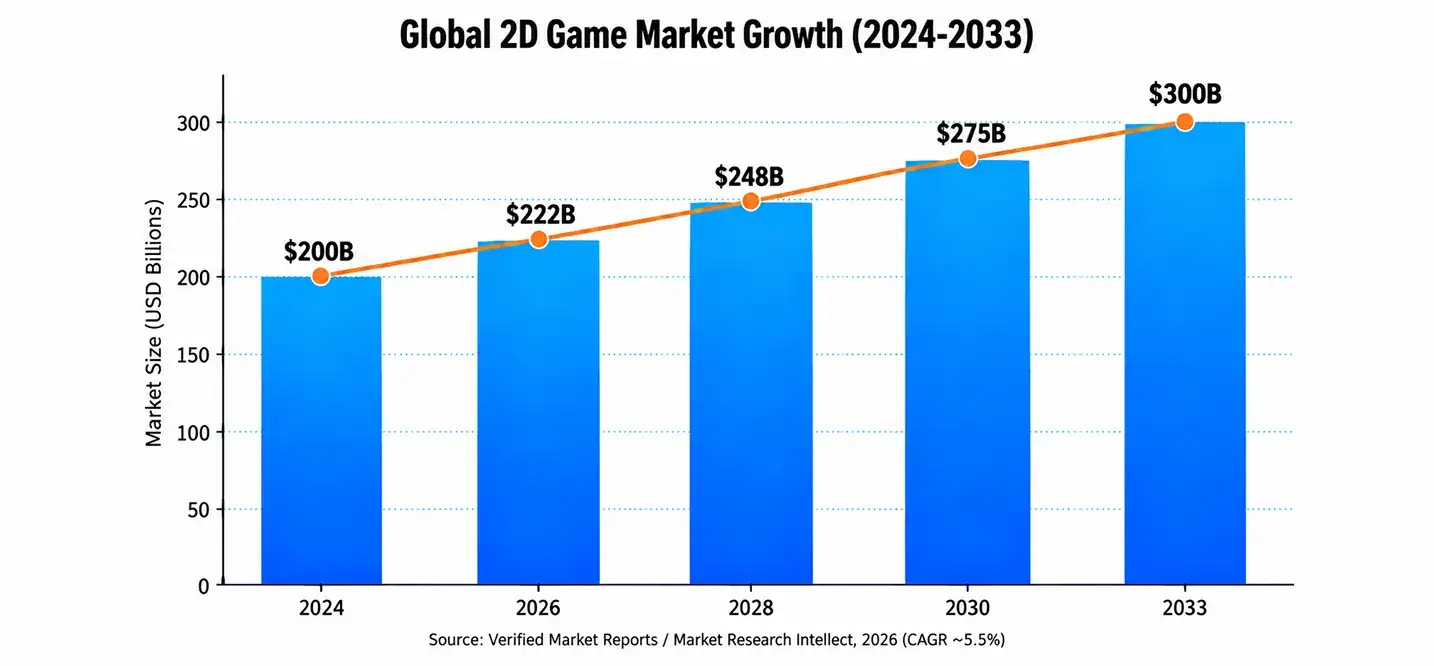
The 2D game market alone was valued at roughly $200 billion in 2024 and is projected to reach $300 billion by 2033, growing at a CAGR of about 5.5%. That’s steady, reliable growth, not a short-term spike.
Mobile is a huge part of this story too. Mobile gaming alone generated $92.6 billion in a single recent year, close to half of the entire games market. Most mobile hits, from Angry Birds to Subway Surfers, are built in 2D.
This growth means more competition too. But it also means more tools, more talent, and more proof that 2D game development still works as a business model. This is exactly why studios like Cubix, working as a dedicated 2D game development company, continue seeing steady demand from founders and studios alike.
How To Make A 2D Game: Step-By-Step Process
Making a 2D game isn’t just drawing characters and hoping for the best. It follows a clear process. Skip a step and you’ll pay for it later.
Step 1: Choose A 2D Game Engine
Your engine is the foundation everything else sits on. It handles physics, rendering, input, and exporting your game to different platforms.
The game engine market itself is projected to grow from $3.87 billion in 2026 to $10.34 billion by 2034, at a CAGR of 13.1%. That’s a strong signal that tooling keeps improving fast.
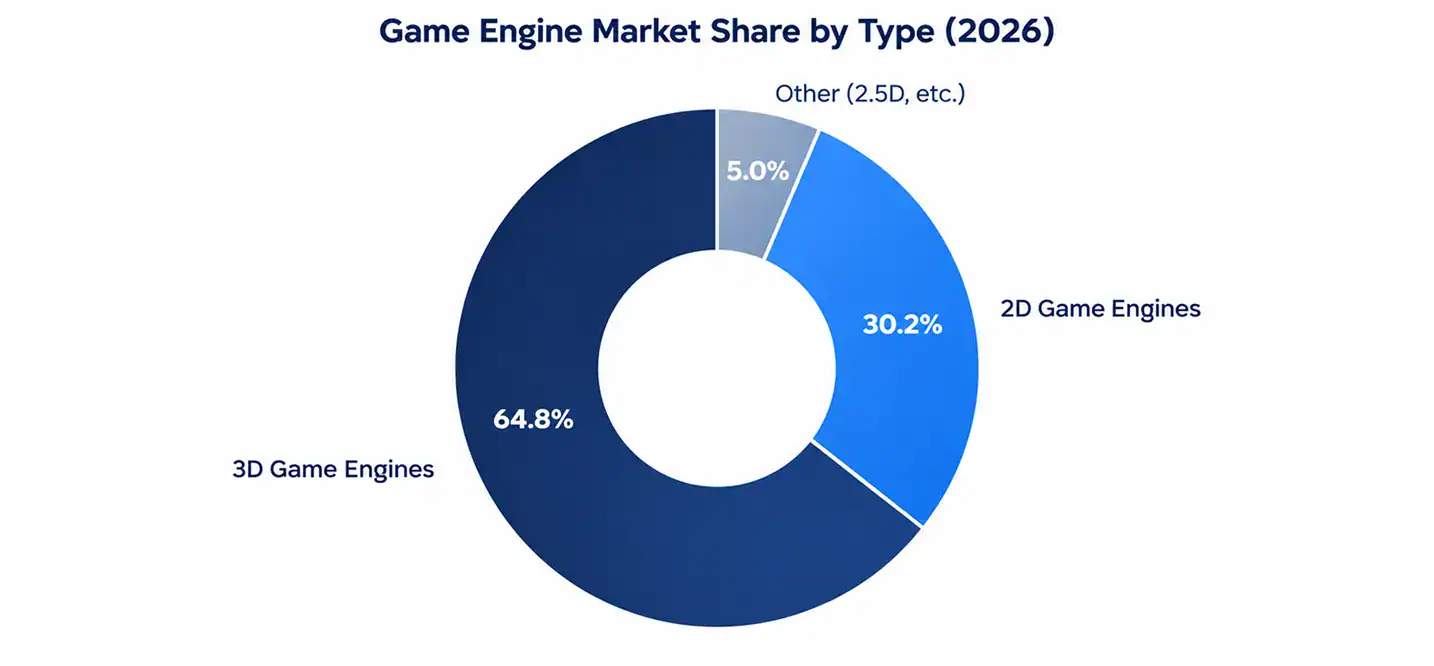
In terms of type, 3D engines still hold the larger slice of the market, at roughly 64.82% share in 2026. But 2D engines are simpler, cheaper to run, and remain the go-to for beginners and indie developers building mobile-first games.
Best 2D Game Engines Compared
| Engine | Best For | Cost | Learning Curve | Notable Feature |
| Unity | Beginners to pros, cross-platform | Free tier, paid plans for scale | Moderate | Huge asset store, strong docs |
| GameMaker Studio 2 | Indie devs, quick prototypes | Subscription-based | Easy | Drag-and-drop, GML scripting |
| Godot | Budget-conscious teams, open-source fans | Completely free | Moderate | Strong community, no royalties |
Want a deeper dive? Check out our full breakdown of the best 2D game engines or follow our guide to build your first 2D game in Unity.
Step 2: Define Your Genre
Genre shapes everything that comes next. Controls, pacing, art direction, all of it depends on this choice.
Some genres just fit 2D better than others:
- Platformers: Tight controls and precise jumps, like Celeste.
- Roguelikes: Procedural levels and permadeath, like Dead Cells.
- Puzzle games: Minimal art, maximum brain teasing, like Monument Valley.
- Top-down RPGs: Exploration-heavy worlds, like classic Zelda titles.
Pick your genre early. It saves you from redesigning half your game later.
Step 3: Design Your Art Style And Assets
This is where your game gets its identity. Players notice art before anything else.
Three popular 2D art styles dominate right now:
- Pixel art: Nostalgic, charming, seen in games like Shovel Knight.
- Hand-drawn art: Rich and expressive, used in Ori and the Blind Forest.
- Vector art: Clean and scalable, seen in games like Angry Birds.
Tools that help here include Aseprite for pixel art, Photoshop and Illustrator for detailed work, and GIMP as a free alternative. Whatever you pick, keep your sprites and tilemaps consistent across every level.
Step 4: Build The Game Loop And Core Mechanics
Every game runs on a game loop. It’s the code that keeps checking input, updating the world, and rendering frames, over and over, many times a second.
This is also where you add 2D physics for gravity, collisions, and movement. Sprite animation brings your characters to life through walk cycles, jumps, and attacks. Get this loop tight and responsive. It’s the backbone of how your game feels.
Step 5: Prototype And Test Early
Don’t wait until the whole game is built to test it. Build a rough prototype first. Get it in front of real players fast.
Early 2D game testing catches problems before they become expensive to fix. Bugs found late in development cost far more time and money than ones caught early. This single habit can save weeks of rework down the line.
Cubix leans heavily on this approach across projects, testing early and often rather than waiting for a “finished” build.
How Long Does It Take To Make A 2D Game?
There’s no single answer here. Timeline depends on scope, team size, and experience level.
2D Game Development Timeline By Complexity
| Game Complexity | Example | Typical Timeline | Team Size |
| Simple / prototype | Basic puzzle or endless runner | 2 to 8 weeks | 1 to 2 people |
| Moderate | Platformer with multiple levels | 3 to 6 months | 2 to 5 people |
| Complex | Story-driven RPG or metroidvania | 6 months to 2 years | 5 to 15+ people |
Roughly 68% of developers say outsourcing helps them cut costs and speed up time-to-market. That’s one reason more indie founders now partner with an outside studio instead of building everything solo.
Solo developers working alone often take six months to a year for something moderately complex. A well-staffed company can move faster, mostly because tasks run in parallel instead of one person doing everything sequentially.
How Much Does It Cost To Make A 2D Game?
Budget is usually the first question founders ask, and it’s a fair one. Costs swing wildly depending on who’s building your game.
Typical 2D Game Development Cost By Team Type
| Team Type | Estimated Cost Range | What You Get |
| Solo indie developer | $2,000 – $15,000 | Basic game, limited scope, longer timeline |
| Small studio (3–8 people) | $15,000 – $50,000 | Polished mid-size game, faster delivery |
| Mid-size team (8–15 people) | $40,000 – $120,000 | Full-featured game, multiple platforms |
| Outsourced agency (full team) | $25,000 – $150,000+ | End-to-end service, art to publishing |
Talent shortages also push costs up. Around 42% of companies report real challenges from a lack of skilled developers, which drives up hiring costs and slows down timelines for teams trying to build in-house.
This is exactly where outsourcing to a game development company can actually save money, not just time. Cubix structures projects around your budget, not the other way around, which keeps costs predictable from the start.
Publishing Your 2D Game: Steam, App Store, And Google Play
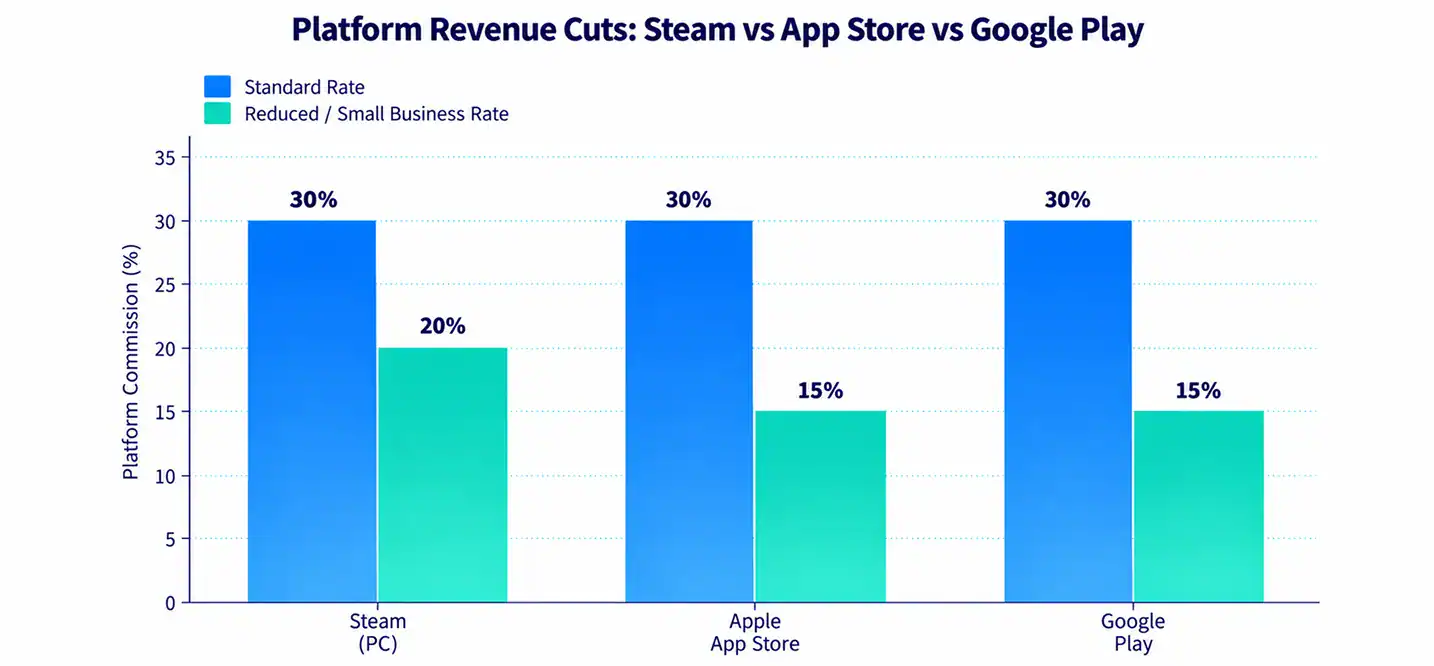
Building the game is only half the job. Getting it in front of players is the other half, and each platform plays by different rules.
Steam remains the top choice for PC games, while the App Store and Google Play dominate mobile. Each platform takes a cut of your revenue, and that cut affects your entire monetization plan.
Standard commission sits around 30% across all three platforms. Some offer reduced rates for smaller developers or lower revenue tiers, which can meaningfully change your margins if you qualify.
Nearly 55% of studios are now integrating AI and cloud tools into their publishing and live-ops workflows too, which is changing how updates and content roll out post-launch.
Monetization Models Worth Considering
- Premium sales: Players pay upfront, common on PC and console.
- Freemium: Free to download, paid content unlocks extras.
- Ad-supported: Free to play, ads generate revenue.
Pick the model that fits your audience and platform, not just the one that sounds easiest.
Common Challenges And Skills Needed
Building a 2D game touches more disciplines than people expect. It’s not just “draw some sprites and code a bit.”
| Skill Area | Why It Matters |
| Programming | Powers the game loop, physics, and mechanics |
| Art and animation | Defines visual identity and player appeal |
| Sound design | Adds feedback and emotional weight |
| Game design | Balances difficulty, pacing, and fun |
| QA and testing | Catches bugs before players do |
North America alone accounts for roughly 45% of the global game development service market, showing just how concentrated skilled talent and demand really are in a handful of regions. That concentration is part of why outsourcing to established teams has become so common worldwide.
Why Work With A 2D Game Development Company Like Cubix
Building solo works for small projects. But once your scope grows, having a dedicated team changes everything.
Cubix operates as a full-service 2D game development company, covering everything from concept and art direction to coding, testing, and publishing support. Instead of juggling freelancers across five different platforms, you get one accountable team handling the entire pipeline.
The broader case for outsourcing keeps getting stronger too. The game development services market is projected to grow from $0.69 billion in 2026 to $2.18 billion by 2035, a clear sign that more studios are choosing to partner rather than build every skill set in-house.
If you’re weighing your options, our guide to game development breaks down the bigger picture, and our game development company page shows the full range of what a team like Cubix can take off your plate.
Final Thoughts
Making a 2D game is still one of the smartest ways to enter the gaming industry. It’s faster to build, cheaper to test, and proven to work across mobile, PC, and web.
The steps stay consistent no matter your budget: pick an engine, define your genre, nail your art style, build a tight game loop, test early, and plan for what happens after launch.
If you’d rather skip the trial and error, Cubix can help you go from idea to published game with a team that’s done this before. Get in touch with Cubix to talk through your concept and get a real timeline and budget, not just guesses.
Ready to Make Your 2D Game? Let’s Build It From the Ground Up
Contact UsFrequently Asked Questions
1. What is a 2D game?
A 2D game is a game where movement happens only along the X and Y axes. It uses flat, sprite-based art instead of 3D models, and it’s common in platformers, puzzle games, and top-down adventures.
2. How do I make a 2D game for the first time?
Start by picking a beginner-friendly engine like GameMaker or Godot. Then define a simple genre, sketch out your core mechanic, and build a small prototype before adding art and polish.
3. Which engine is best for making a 2D game?
It depends on your experience. Unity offers the most flexibility and resources. GameMaker is easiest for beginners. Godot is free and open-source with strong community support.
4. Is it hard to make a 2D game?
Making a basic 2D game is fairly approachable, especially with modern engines. Making a polished, market-ready game still takes real skill in programming, art, and design.
5. How long does it take to make a 2D game?
Simple games can take a few weeks. Moderate projects usually take three to six months. Complex, story-driven games can take a year or longer, depending on team size.
6. How much does it cost to make a 2D game?
Costs range from around $2,000 for a solo indie project to well over $100,000 for a full-featured game built by an agency or larger studio.
7. What skills are needed to develop a 2D game?
You’ll need programming, art and animation, sound design, game design, and QA testing. Most solo devs wear several of these hats at once.
8. Should I use custom art or asset packs for a 2D game?
Asset packs save time and money, especially early on. Custom art creates a more unique identity but takes longer and usually costs more.
9. How do I test and optimize a 2D game?
Test early and often, not just before launch. Focus on frame rate consistency, memory management, and compatibility across the devices your players actually use.
10. Can a 2D game be published on mobile, PC, and web?
Yes. Most modern 2D engines support exporting to multiple platforms, including iOS, Android, Steam, and browser-based web builds, often from the same codebase.