Key Takeaways
- Define your business goals and target users before starting logistics and transportation app development.
- Prioritize essential features like real-time tracking, route optimization, and secure payment integration.
- App development costs depend on app complexity, features, platforms, and third-party integrations.
- AI, IoT, and smart analytics can improve operational efficiency and delivery performance.
- Partnering with an experienced development team helps you build a scalable, future-ready logistics platform.
Customers today expect faster deliveries, real-time shipment updates, and a hassle-free delivery experience. For logistics companies, meeting these expectations while managing fleets, warehouses, drivers, and supply chains has become increasingly complex. Relying on manual processes or disconnected systems often leads to delays, higher operational costs, and limited visibility across logistics operations. That’s why businesses are investing in logistics and transportation app development to streamline workflows, improve efficiency, and deliver better customer experiences.
The shift toward digital logistics is accelerating. Recent market research estimates the global digital logistics market was valued at approximately USD 39.3 billion in 2025 and is expected to grow to nearly USD 170 billion by 2033, reflecting an annual growth rate of over 20%. This growth highlights how organizations across the logistics industry are embracing intelligent technologies to optimize operations, improve decision-making, and stay competitive.
Whether you want to develop a logistics app for fleet management, launch a courier app, or create a feature-rich delivery app, success starts with a well-planned development strategy.
In this guide, we’ll walk you through the steps to build a logistics and transportation app, explore the key features every solution should include, discuss the factors that influence the cost to build a logistics app, and explain how choosing the right logistics software development solutions can help turn your idea into a scalable, future-ready product.
What Is a Logistics and Transportation App?
A logistics and transportation app is designed to scale and manage your business while automating its essential processes. Its primary function is to ensure the delivery of goods from the picking point to the customer’s door. Such apps are created to simplify and unify all the logistics processes, including order management, transportation, route planning, and delivery. Thus, apps for logistics help to achieve a high level of efficiency, which is vital for any transportation business.
The software development market for logistics is competitive, and with a USD 22.7 billion value in 2025 and an expected USD 45.66 billion in 2032, it will be even more so in the near future. At a CAGR of 10.5%, businesses are willing to invest in logistics app development to optimize and manage their operations in a better way.
A logistics app is a multi-purpose solution that involves all the stakeholders in the delivery chain. It allows businesses to organize shipments, assign deliveries to drivers, and control order delivery in real-time. Also, it enables drivers to manage their deliveries, complete orders, and update their location so that customers can track their shipments. Logistics apps can benefit courier organizations or companies that want to invest in a transportation app development solution to optimize their delivery process.
Why Businesses Need a Logistics and Transportation App
With increasing customer expectations, the delivery of goods is becoming a vital function that requires greater agility, flexibility, and speed. A logistics and transportation app can help organizations optimize operations, cut down on costs, and stay on top of the competition. Transportation companies are turning to this software solution more and more to ensure faster processing and improved overall performance.
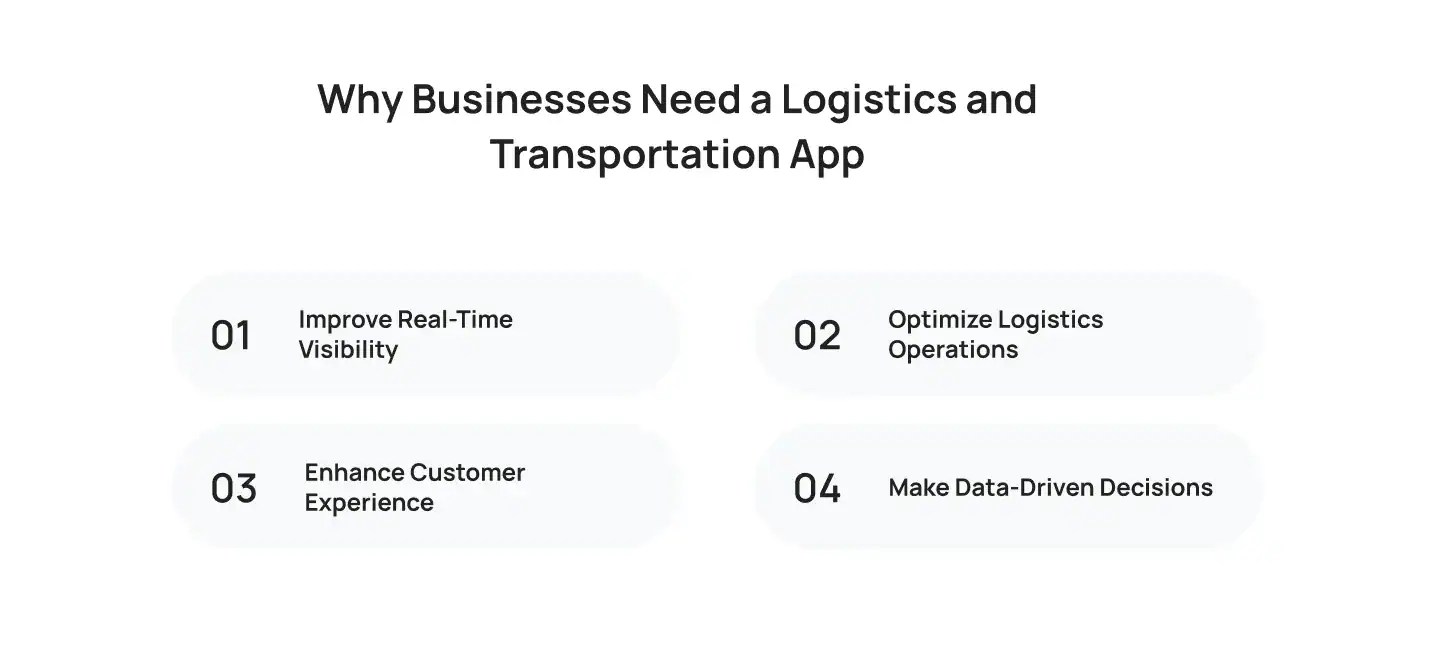
Improve Real-Time Visibility
One of the main benefits of using logistics apps is the full visibility across the entire shipping process, right from the dispatch to the final-mile delivery. Companies are provided with real-time shipment status, fleet location, live updates of delivery, etc. This helps the companies to mitigate potential delays, enhance responsibility, handle and resolve queries that impact customer experience.
Optimize Logistics Operations
Managing drivers, vehicles, warehouses, and deliveries manually can be time-consuming and error-prone. A logistics app automates routine tasks such as dispatching, route planning, and delivery scheduling, allowing teams to focus on higher-value work. Better resource allocation also helps businesses reduce fuel costs, improve driver productivity, and streamline daily operations, making digital logistics more efficient and scalable.
Enhance Customer Experience
A dedicated customer app gives users greater control over their deliveries. Customers can place orders, track shipments, receive delivery notifications, and communicate with support from a single platform. Real-time updates build trust and reduce the uncertainty that often comes with delayed or missed deliveries.
Make Data-Driven Decisions
Modern logistics platforms collect valuable logistics data from every shipment, vehicle, and delivery route. Built-in analytics help businesses identify bottlenecks, measure fleet performance, and improve operational planning. These insights enable logistics players to make informed decisions, improve service quality, and stay competitive in a fast-moving market.
Types of Logistics and Transportation Apps You Can Build
Every logistics business has different operational needs, which is why there isn’t a one-size-fits-all solution. Whether you’re serving local deliveries or managing international freight, choosing the right app depends on your business model, target users, and long-term goals. Before you create a logistics and transportation app, it’s important to understand the different types available.
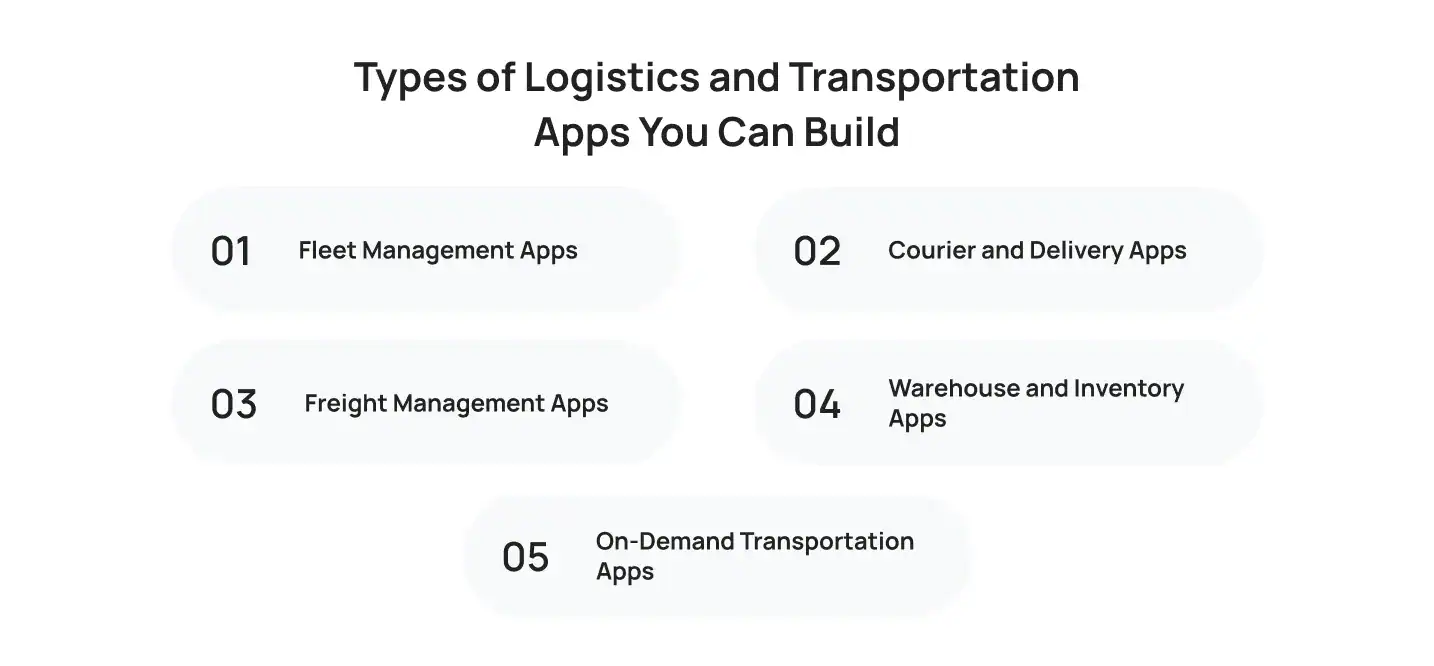
1: Fleet Management Apps
Fleet management apps help businesses monitor vehicles, drivers, and daily transportation activities from one dashboard. Features such as real-time vehicle tracking, driver performance monitoring, fuel consumption analysis, and maintenance scheduling help improve efficiency while reducing operating costs.
2: Courier and Delivery Apps
A courier app or delivery app is designed to simplify last-mile deliveries. Customers can place orders, track packages in real time, receive delivery notifications, and communicate with drivers. Businesses benefit from automated dispatching, delivery scheduling, and proof of delivery, making the entire process more efficient.
3: Freight Management Apps
Freight management apps are built for businesses handling large shipments across multiple locations. They help manage cargo tracking, carrier coordination, shipment documentation, and route planning while improving visibility throughout the transportation process.
4: Warehouse and Inventory Apps
Warehouse management apps focus on inventory control and order fulfillment. Businesses can monitor stock levels, manage incoming and outgoing inventory, process orders faster, and reduce errors through automated inventory tracking.
5: On-Demand Transportation Apps
On-demand transportation apps support businesses that provide passenger or vehicle transportation services. These platforms typically include booking management, route optimization, driver allocation, GPS navigation, and real-time trip tracking, giving businesses and customers a smoother transportation experience.
Key Features of a Logistics and Transportation App
The success of any logistics platform depends on how well it serves the people using it every day. From customers placing orders to drivers making deliveries and administrators managing operations, every user needs tools that make their work easier. Including the right key features improves efficiency, reduces delays, and creates a better overall experience. Here are the essential features every logistics and transportation app should include.
Customer App Features
The customer app is where users interact with your business, so it should be simple, reliable, and easy to navigate.
- Account creation: Allow users to sign up, manage profiles, and save delivery information.
- Order placement: Let customers schedule deliveries, choose pickup and drop-off locations, and view order details.
- Real-time tracking: One of the most requested features, real-time tracking lets customers monitor shipments from dispatch to delivery.
- Payment integration: Support secure online payments through multiple payment methods.
- Delivery notifications: Send automatic updates about order confirmation, driver assignment, estimated arrival time, and completed deliveries.
- Ratings and reviews: Give customers the option to rate their delivery experience and provide feedback for continuous service improvement.
Driver App Features
Drivers need tools that help them complete deliveries efficiently while staying connected with dispatch teams.
- Driver profile: Manage personal information, assigned vehicles, and work schedules.
- Route navigation: Provide GPS-based directions with optimized routes to reduce travel time and fuel consumption.
- Delivery management: Display assigned deliveries, pickup locations, and delivery instructions in one place.
- Status updates: Allow drivers to update delivery status in real time, including accepted, picked up, in transit, and delivered.
- Proof of delivery: Capture customer signatures, photos, or digital confirmations to verify successful deliveries.
Admin Dashboard Features
The admin dashboard provides complete control over daily operations and business performance.
- Fleet management: Track vehicles, monitor driver activity, and manage maintenance schedules.
- User management: Control customer, driver, and administrator accounts from a centralized system.
- Analytics dashboard: Monitor delivery performance, operational efficiency, and business KPIs with visual reports.
- Logistics data monitoring: Analyze shipment trends, delivery times, fleet utilization, and customer behavior to identify opportunities for improvement.
Together, these features create a strong foundation for advanced logistics operations. By connecting customers, drivers, and administrators through one platform, businesses can improve efficiency, reduce operational costs, and deliver a more reliable customer experience.
Advanced Features That Improve Logistics App Performance
While core features help businesses manage everyday operations, advanced technologies can make a logistics platform faster, smarter, and more efficient. As customer expectations continue to evolve, businesses are investing in advanced logistics capabilities that improve delivery accuracy, reduce operating costs, and strengthen overall performance.
Here are some advanced features that can take your logistics app to the next level:
- AI-based route optimization: Uses artificial intelligence to analyze traffic conditions, weather, road closures, and delivery priorities to recommend the fastest and most efficient routes. This reduces fuel consumption, shortens delivery times, and improves fleet productivity.
- Predictive delivery estimates: Combines historical delivery data with real-time traffic information to provide customers with more accurate estimated arrival times (ETAs). This improves transparency, reduces support inquiries, and builds customer trust.
- IoT-based vehicle tracking: Connects vehicles through IoT sensors to monitor location, fuel usage, engine health, driver behavior, and maintenance requirements in real time. Fleet managers can identify potential issues early and minimize unexpected downtime.
- Automated dispatching: Automatically assigns deliveries to the most suitable driver based on location, availability, vehicle capacity, and delivery priority. This speeds up dispatch operations while improving resource utilization.
- Smart analytics dashboards: Transform operational and logistics data into easy-to-understand reports that help businesses monitor delivery performance, fleet efficiency, customer trends, and operational costs.
- Machine learning forecasting: Analyzes historical trends to predict future delivery demand, optimize inventory planning, improve staffing decisions, and prepare for seasonal fluctuations.
These advanced capabilities help businesses move beyond basic shipment tracking and create a modern logistics platform that supports long-term growth. By combining automation, AI, and real-time insights, companies can build a logistics powerhouse that improves operational efficiency while delivering a faster and more reliable customer experience.
Want to discuss your project? Our experts are just a click away.
Contact UsSteps to Build a Logistics and Transportation App
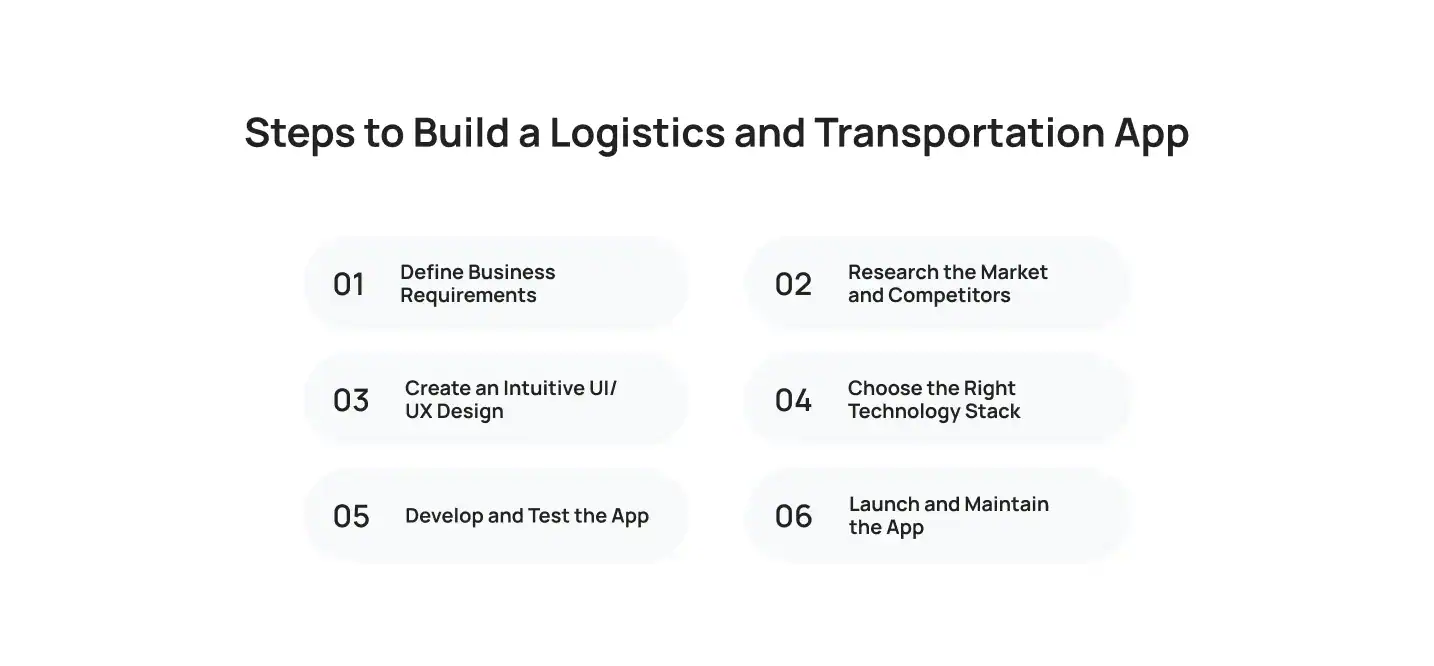
Building a successful logistics application requires more than adding tracking and delivery features. A structured development process helps businesses create a solution that meets customer expectations, supports daily operations, and adapts as the business grows. If you’re planning to develop a logistics app or are developing a mobile app, these are the essential steps to build a reliable solution.
1: Define Business Requirements
Start by identifying the purpose of your app and the problems it will solve. Determine who will use the platform, whether it’s customers, drivers, warehouse staff, or administrators. Choose the logistics model that fits your business, such as courier services, freight management, fleet operations, or last-mile delivery. Clearly defining your objectives from the beginning helps avoid unnecessary features and keeps development focused.
2: Research the Market and Competitors
Study your target audience to understand their expectations and pain points. Analyze competing logistics platforms to identify the features they offer and areas where your app can provide a better experience. This research helps prioritize functionality and create a solution that stands out in a competitive market.
3: Create an Intuitive UI/UX Design
A user-friendly interface is essential for both customers and operational teams. Begin with user flows that map each step of the customer and driver journey. Then create wireframes and interactive prototypes to test navigation, simplify workflows, and gather feedback before development begins.
4: Choose the Right Technology Stack
Selecting the right technologies ensures your app performs well today and can support future growth. Popular frontend frameworks include Flutter, React Native, Swift, and Kotlin for building responsive mobile applications. On the backend, technologies such as Node.js, Python, and .NET help manage business logic, APIs, and data processing. Cloud platforms like AWS and Azure provide secure infrastructure, storage, and scalability for growing logistics businesses.
5: Develop and Test the App
Build a minimum viable product (MVP) with the core features needed for launch. After integrating essential functionality such as user management, tracking, payments, and notifications, perform thorough quality assurance testing. Test the app for performance, security, compatibility, and usability to ensure a reliable experience across devices.
6: Launch and Maintain the App
After successful testing, publish the application on the appropriate platforms and monitor its performance closely. Regular maintenance, bug fixes, security updates, and feature enhancements help keep the app reliable as customer needs evolve. Continuously collecting user feedback also allows businesses to improve functionality and stay ahead in the competitive logistics market.
How Much Does It Cost to Build a Logistics and Transportation App?
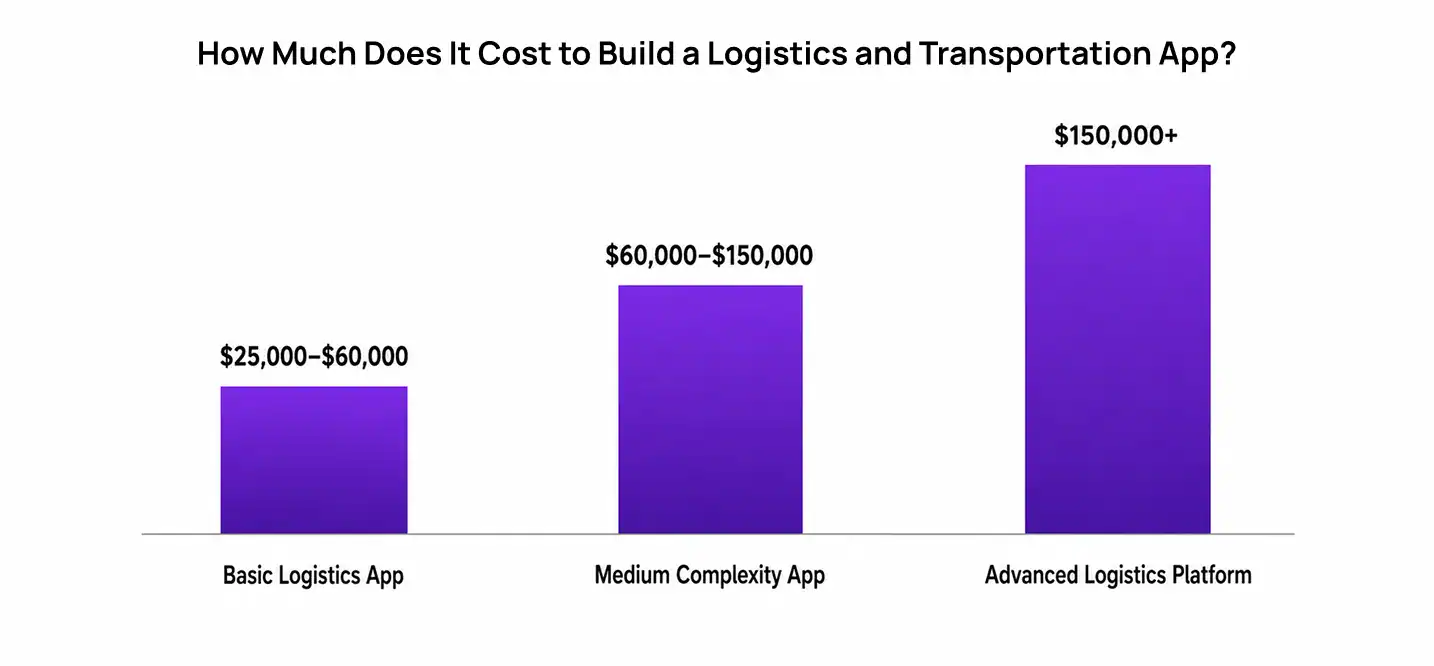
One of the first questions businesses ask is, how much does it cost to build a logistics and transportation app? The answer depends on your business goals, the features you need, the technologies involved, and the overall app complexity. A simple app with basic tracking and order management will cost much less than an enterprise platform with AI-powered automation, IoT integration, and advanced analytics.
Here’s a general estimate of the cost to build a logistics app based on project scope:
| App Type | Estimated Cost |
| Basic Logistics App | $25,000–$60,000 |
| Medium Complexity App | $60,000–$150,000 |
| Advanced Logistics Platform | $150,000+ |
If you’re planning the cost to build a transportation app, consider the following factors that have the biggest impact on your overall app development cost:
- App complexity: The more user roles, workflows, and custom functionality your app includes, the higher the development effort and cost.
- Number of platforms: Building for Android, iOS, or both platforms affects the overall budget and timeline.
- Features and functionality: Real-time tracking, secure payments, push notifications, analytics dashboards, and route optimization all require additional development work.
- Backend requirements: Applications that process large amounts of data or support thousands of users need a scalable backend infrastructure.
- Third-party integrations: Connecting services such as Google Maps, payment gateways, ERP systems, or CRM software adds development time.
- AI and IoT capabilities: Features like predictive analytics, smart dispatching, and IoT-enabled fleet monitoring increase development complexity but deliver greater long-term value.
- Development team expertise: An experienced team can build a reliable, scalable application while helping you avoid costly technical issues later.
If you’re estimating the cost to develop a transportation app, it’s important to look beyond the initial build. Ongoing maintenance, security updates, cloud hosting, and feature enhancements should also be included in your budget. Planning these expenses from the beginning helps ensure your app continues to perform well as your business grows. You can also explore our detailed guide on app development cost to understand the factors that influence pricing at every stage of development.
Technology Stack for Logistics App Development
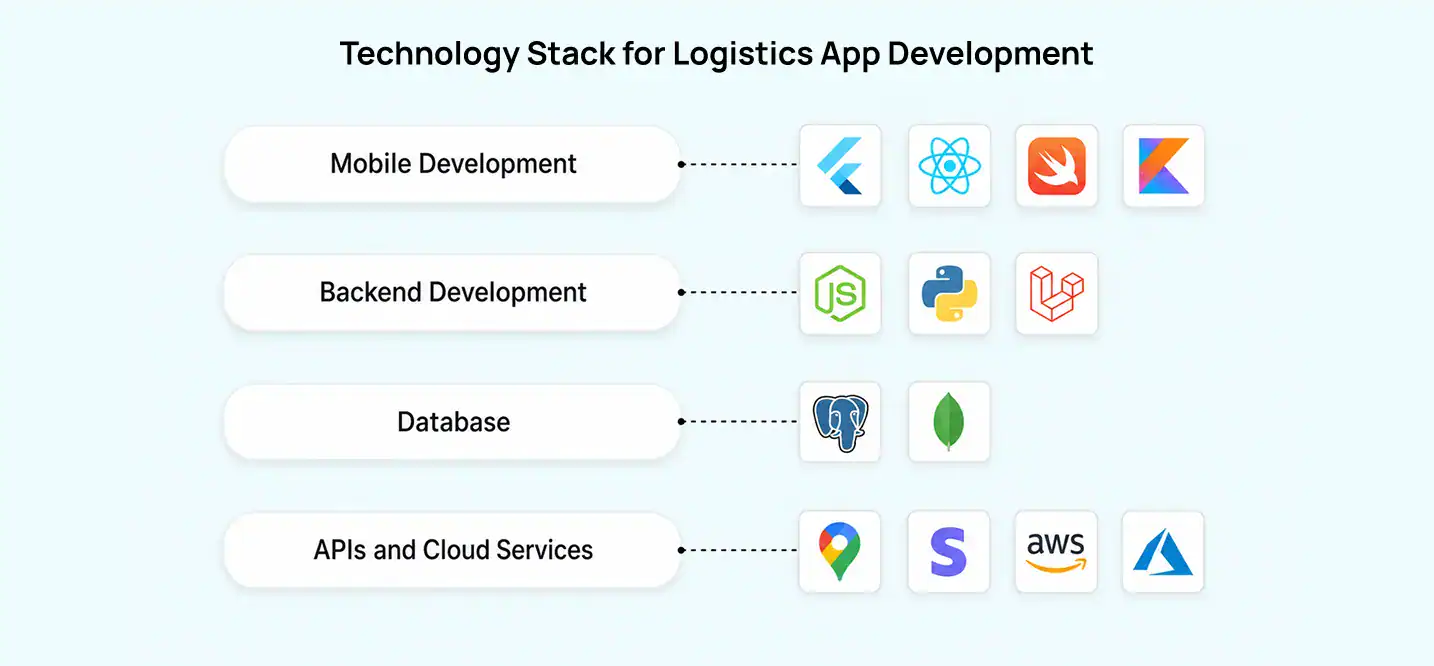
The technology stack you choose has a direct impact on your app’s performance, scalability, and long-term maintenance. Selecting the right technologies during logistics app development ensures your platform can support growing user demands while delivering a smooth experience across devices.
Mobile Development
Choosing the right framework depends on your business requirements and target audience.
- Flutter: Builds high-performance apps for both Android and iOS from a single codebase.
- React Native: Speeds up cross-platform development while maintaining a native-like user experience.
- Swift: Ideal for creating high-performance iOS applications.
- Kotlin: Google’s preferred language for modern Android app development.
Backend Development
The backend powers your business logic, user authentication, APIs, and data processing.
- Node.js: Handles real-time communication efficiently.
- Python: Well-suited for AI features, automation, and data processing.
- Laravel: A reliable PHP framework for building secure web applications and APIs.
Database
Reliable databases help businesses securely store and manage operational information.
- PostgreSQL: Ideal for structured business and transactional data.
- MongoDB: Handles large volumes of flexible and unstructured data.
APIs and Cloud Services
Most logistics software relies on third-party services to deliver real-time functionality.
- Maps APIs: Enable GPS navigation, route planning, and live location tracking.
- Payment APIs: Support secure online payments and digital transactions.
- AWS: Provides scalable cloud infrastructure, storage, and security.
- Azure: Offers cloud computing, analytics, and enterprise-grade hosting services.
Choosing a technology stack that matches your business goals helps create a reliable application that can grow alongside your operations.
Challenges in Developing a Logistics and Transportation App
Developing a logistics and transportation app requires careful planning to handle complex workflows, real-time data, and multiple users. Businesses need to address several technical challenges to create a reliable platform.
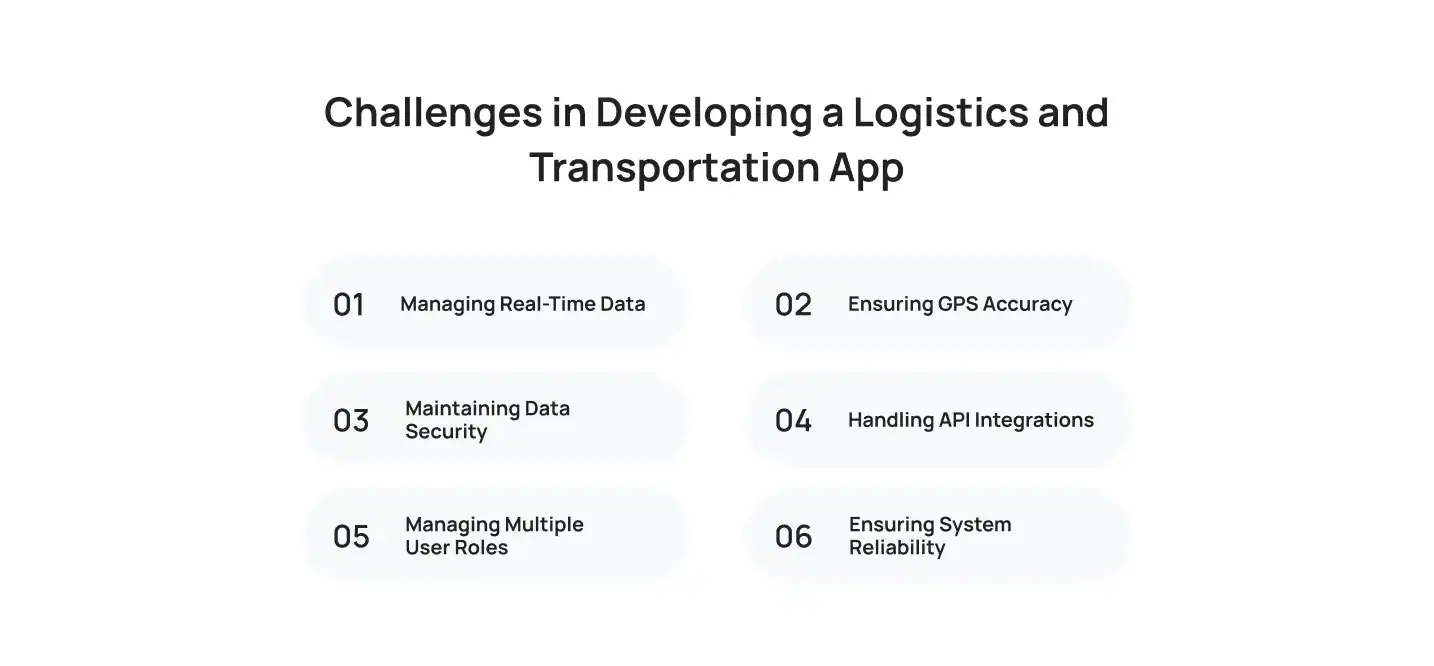
- Managing Real-Time Data: Logistics apps process continuous updates from vehicles, drivers, customers, and shipments. A strong backend infrastructure helps businesses manage large amounts of logistics data while keeping the app fast and responsive.
- Ensuring GPS Accuracy: Accurate location tracking is essential for shipment visibility and fleet monitoring. Using reliable mapping APIs and testing location services regularly helps improve tracking accuracy.
- Maintaining Data Security: Logistics platforms handle sensitive information such as customer details, payment records, and delivery data. Secure authentication, encryption, and regular security updates help protect this information.
- Handling API Integrations: Logistics apps often connect with payment gateways, maps, warehouse systems, and third-party software. Proper API selection and testing ensure smooth communication between different systems.
- Managing Multiple User Roles: Customers, drivers, and administrators require different features and access levels. A well-designed user management system keeps workflows organized and improves usability.
- Ensuring System Reliability: Regular testing, performance monitoring, and maintenance help businesses keep their logistics operations running smoothly, even as user demand increases.
How to Choose the Right Logistics App Development Company

Selecting the right development team can directly impact the success of your logistics app. A reliable logistics app development company should have experience building solutions for transportation, delivery, and supply chain businesses.
Before choosing a team, consider these factors:
- Industry Experience: Review previous logistics and transportation projects to understand their expertise in areas like fleet management, tracking, and delivery workflows.
- Technical Skills: Ensure the team has experience with mobile development, backend systems, cloud platforms, APIs, AI, and IoT technologies.
- Understanding of Business Needs: The development team should understand your operational challenges and recommend features that support your goals.
- Post-Launch Support: Choose a company that provides maintenance, updates, performance monitoring, and ongoing improvements after deployment.
See How Cubix Builds Real-World Logistics and Transportation Solutions
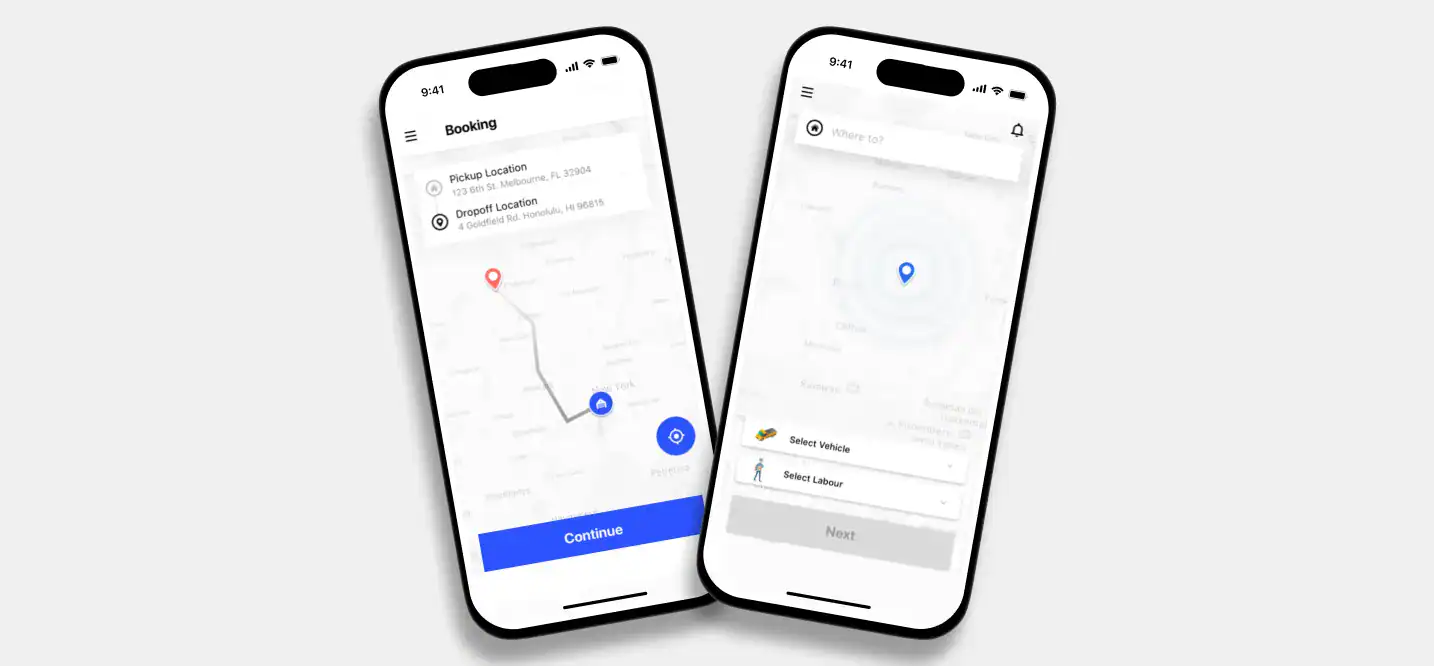
Building a logistics and transportation app requires more than technical expertise. It takes a custom mobile app development company that understands real-time tracking, location intelligence, route optimization, and scalable cloud architecture. With over 18 years of experience, 1,300+ successful digital products delivered, and 600+ global clients, Cubix helps businesses build custom logistics solutions that improve operational efficiency and customer satisfaction.
Foodly: Powering Smarter Delivery Operations
One example of our expertise is Foodly, an AI-powered food delivery platform built to streamline the entire delivery journey. We developed features including real-time order tracking, intelligent route optimization, automated order management, secure payments, and AI-powered demand forecasting. Although Foodly serves the food delivery industry, the same technologies power courier services, last-mile delivery, and logistics applications where speed, accuracy, and visibility are essential.
SpotIT: Building Location-Based Transportation Experiences
Another example is SpotIT, a smart parking platform that enables drivers to find and reserve parking spaces in real time. The app combines GPS navigation, live location updates, booking management, and secure payment integration to deliver a seamless user experience. These capabilities demonstrate the same location intelligence and real-time connectivity required to build modern logistics and transportation platforms.
Turn Your Logistics App Idea into a High-Performance Digital Solution. Let’s connect with us!
Conclusion
Building a logistics and transportation app is no longer just about digitizing deliveries. Businesses now need intelligent platforms that improve visibility, automate operations, and adapt to changing customer demands. By combining the right features, scalable technologies, and a well-defined development strategy, you can build a solution that supports long-term growth. As AI continues to reshape mobile applications through smarter routing, predictive insights, and intelligent automation, exploring the latest trends in generative AI in mobile apps can help you build a future-ready logistics platform. Whether you’re launching a courier app or an enterprise logistics solution, investing in the right technology today will position your business for success tomorrow.
Frequently Asked Questions
1. How long does it take to build a logistics and transportation app?
The timeline depends on the app’s complexity and feature set. A basic logistics app may take 3 to 5 months, while a feature-rich platform with AI, IoT, and advanced integrations can take 8 months or longer.
2. What are the must-have features of a logistics and transportation app?
Essential features include real-time shipment tracking, route optimization, fleet management, order management, payment integration, delivery notifications, analytics dashboards, and role-based access for customers, drivers, and administrators.
3. What factors affect the cost to build a logistics app?
The overall cost depends on app complexity, supported platforms, custom features, backend infrastructure, third-party integrations, AI and IoT capabilities, and the experience of the development team.
4. Should I build a custom logistics app or use off-the-shelf software?
A custom logistics app is the better choice if your business has unique workflows, requires custom integrations, or plans to scale over time. It provides greater flexibility, security, and long-term value than generic software.
5. What technologies are commonly used for logistics and transportation app development?
Modern logistics apps are commonly built using Flutter, React Native, Swift, or Kotlin for mobile development, Node.js or Python for backend services, PostgreSQL or MongoDB for databases, and cloud platforms like AWS or Azure for scalability and performance.