Key Takeaways
- The UK mobile app market is crowded, but only a handful of companies combine proven delivery, strong reviews, and real technical depth.
- Cubix stands out as a global Custom Mobile App Development Company with over 300 in-house specialists and 1,300+ delivered projects across industries.
- UK-based studios like hedgehog lab, Apadmi, Waracle, and Chelsea Apps each bring strong, sector-specific strengths worth knowing before you shortlist.
- The right partner depends on your project’s scale, industry, and long-term support needs, not just who has the flashiest portfolio.
- Client reviews, delivery process, and post-launch support are far better indicators of quality than a polished homepage.
Picking a mobile app partner in the UK today isn’t easy. The country has one of the busiest tech markets in Europe, and that means everyone from small local studios to large global players is competing for your project. Industry estimates put the UK mobile app market at roughly £7.9 billion in 2026, and it’s still climbing fast. That kind of growth is great news for businesses wanting to build an app, but it also makes the search for the right developer a lot noisier.
This guide cuts through that noise. We’ve put together a shortlist of 10 companies worth knowing in 2026, starting with Cubix, a global custom app development company with a strong track record across industries, followed by four well-established UK studios known for their own distinct strengths. For each one, you’ll find what they actually do well, their key features, and an honest look at where they might not be the right fit.
Want to discuss your project? Our experts are just a click away.
Contact Us
What Are the Best Mobile App Development Companies in the UK?
The top companies working with UK businesses in 2026 are Cubix, hedgehog lab, Apadmi, Waracle, and Chelsea Apps.
If you want a broader view before narrowing your list, this roundup of top mobile app development companies and this one on top software development companies are both useful starting points.
Rather than ranking purely on name recognition, it helps to see how these mobile application development companies actually compare on scale, location, and specialism.
| Company | HQ | Founded | Team Size | Best For |
|---|---|---|---|---|
| Cubix | Global (US HQ, UK clients) | 2008 | 300+ | Custom, enterprise-grade app development |
| hedgehog lab | Newcastle, UK | 2007 | 120+ | Consultative enterprise strategy |
| Apadmi | Manchester, UK | 2009 | 250+ | Large-scale enterprise programmes |
| Waracle | London/Dundee, UK | 2010 | 100+ | Regulated industries (health, finance) |
| Chelsea Apps | London, UK | 2010 | 50+ | Design-led fintech & healthtech apps |
| 3 Sided Cube | Bournemouth, UK | 2009 | 50+ | Social-impact & public-sector apps |
| Sonin App Development | Reigate, UK | 2008 | 30+ | Boutique multi-sector product consultancy |
| Pocketworks | Leeds, UK | 2012 | 20+ | Mobile growth & retention for scale-ups |
| Brightec | Brighton, UK | 2006 | 11–50 | Consumer & retail brand apps |
| The Distance | York, UK | 2009 | 20 | Native-only iOS & Android specialists |
One stat worth flagging here: roughly 42% of UK-based app development agencies are headquartered in London alone, according to aggregated directory data, which is exactly why it’s worth looking beyond geography and focusing on actual delivery track record instead.
1. Cubix: Best Mobile App Development Company for Custom, Enterprise-Grade App Development

Cubix has been building software since 2008, growing from a small founding team into a company with 300+ designers, developers, and strategists working across the US, Europe, and Asia. Over the years, Cubix has delivered 1,300+ projects for clients ranging from early-stage startups to global names like Estée Lauder, Clinique, Swatch Group, and Politico.
Cubix has also earned recognition well beyond its own marketing. The company was recognized as a top-ranked mobile app development company, was independently ranked among the best by GoodFirms, and picked up the GoodFirms Trusted Choice Award in 2023, a recognition that isn’t handed out lightly.
What sets Cubix apart isn’t just scale, it’s the breadth of what they’ve actually shipped. Their portfolio spans healthcare, fintech, logistics, and consumer apps, including projects like PreOpApp™ Kids, built alongside a pediatric anesthesiologist to help children and families prepare for surgery. That kind of work requires more than technical skill; it requires a team that can translate a genuinely complex brief into something usable and reliable.
If you’re curious what actually separates Cubix from a typical outsourcing shop, this piece on what makes Cubix different from typical outsourcing companies and this behind-the-scenes look at how Cubix’s 300-person team builds software are both worth a read.
Key Features
- 300+ in-house designers, developers, and strategists across multiple continents
- 1,300+ completed projects spanning healthcare, fintech, logistics, e-commerce, and entertainment
- Full-cycle mobile app development services, from discovery and UX to post-launch support
- A documented, structured mobile app development process rather than an ad-hoc build cycle
- Independent recognition from GoodFirms, Clutch, and DesignRush
Pricing
Cubix’s minimum project size typically starts around $25,000, with final cost depending on complexity, integrations, and platform coverage. Custom quotes are available directly through their site.
Pros & Cons
Pros:
- Deep engineering bench (300+ specialists) capable of resourcing complex, multi-platform builds
- Verified, independent recognition across multiple review platforms, not just self-reported testimonials
- Broad industry experience, including genuinely complex regulated-adjacent work like healthcare apps
Cons:
- As a global company rather than a UK-based studio, in-person workshops aren’t part of the standard engagement model
2. Hedgehog Lab: Best Mobile App Development Company for Consultative Enterprise Strategy

hedgehog lab has been building apps since 2007, long enough to have shipped through several full platform cycles. Based in Newcastle with hubs across the UK, they’re B-Corp certified and known for a consultative style, questioning the brief, pressure-testing assumptions, and often helping clients rethink what they’re building before a single screen gets designed. Clients include PepsiCo, Santander, Tesco Bank, and the NHS.
That approach can feel slow if you already know exactly what you want built. But for businesses still working through their product vision, it’s genuinely useful, and it’s part of why they’ve picked up recognition on Clutch and industry award lists over the years. If you’re not sure how to evaluate a partner like this before signing anything, this guide on how to choose a mobile app development partner walks through the process step by step.
Key Features
- B-Corp certified, with a consultative discovery process built into every engagement
- Enterprise client base spanning retail, fintech, and healthcare
- Strong reputation for strategic, question-first product thinking rather than order-taking
Pros & Cons
Pros:
- Genuinely strategic approach that can save clients from building the wrong thing
- Strong enterprise client roster with recognisable UK brands
- B-Corp certification signals a broader commitment to responsible business practices
Cons:
- The consultative process can add time upfront for clients who already have a locked-in spec
- Smaller team size than the larger enterprise agencies on this list, which can limit capacity for very large parallel builds
3. Apadmi: Best Mobile App Development Company for Large-Scale Enterprise Programmes
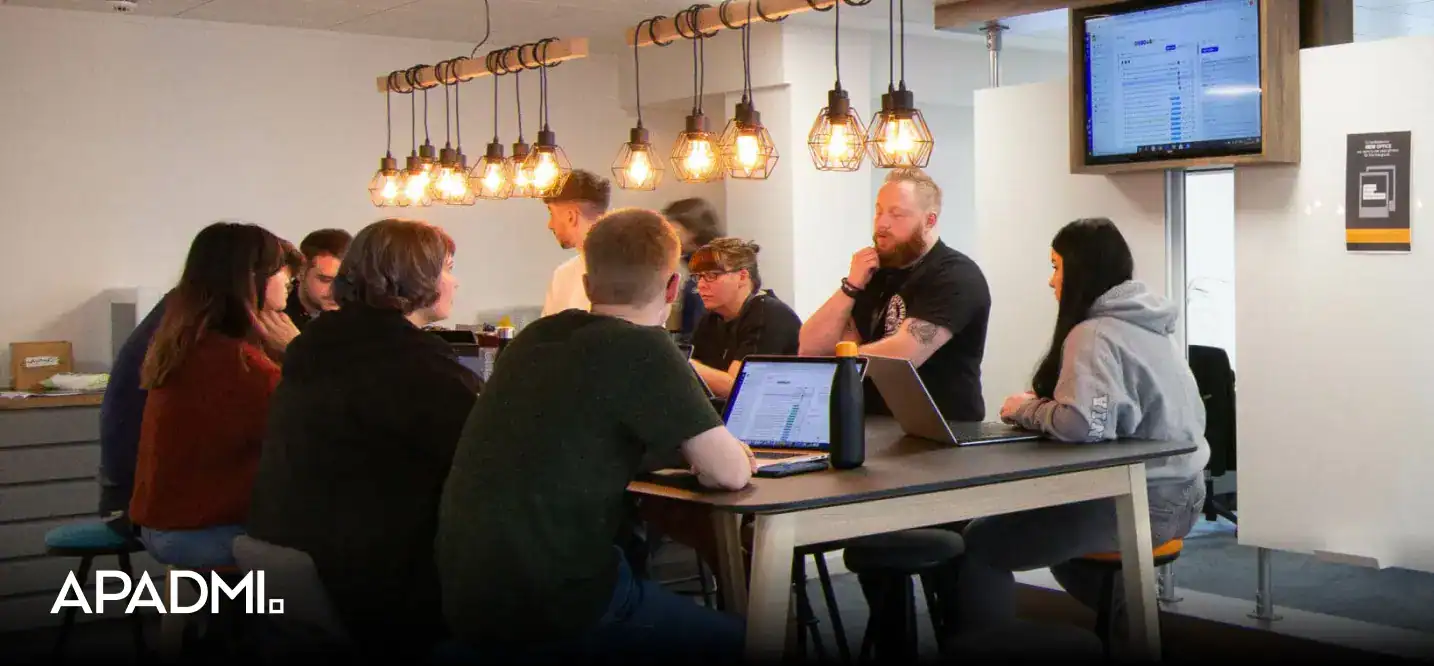
Apadmi, based in Manchester, is one of the UK’s largest independent mobile app developers. Founded in 2009, they’ve built a reputation for handling ambitious, high-traffic products without losing process rigour, the kind of work that requires real scale, not just enthusiasm. Their client list includes the BBC, NHS, Co-op, Asda, and TalkTalk, alongside retail names like Lexus and Range Rover.
Their published case studies tend to be detailed and honest, which is a good sign in itself, agencies that document their work transparently tend to run client projects the same way. Apadmi’s real strength shows up in best mobile app development companies in the UK for e-commerce apps conversations specifically, given their retail and high-traffic product experience. Before shortlisting any large agency like this, it’s worth reading through this list of red flags to watch before hiring a development partner.
Key Features
- One of the UK’s largest independent mobile-focused agencies, with team size to match
- Enterprise and public-sector delivery experience (BBC, NHS, Co-op)
- End-to-end capability from platform architecture through post-launch optimisation
Pros & Cons
Pros:
- Scale to resource large, multi-team enterprise programmes without bottlenecking
- Transparent, detailed published case studies rather than vague claims
- Deep experience navigating enterprise procurement and compliance processes
Cons:
- Their size can mean less senior-partner attention on smaller, single-product engagements
4. Waracle: Best Mobile App Development Company for Regulated Industries
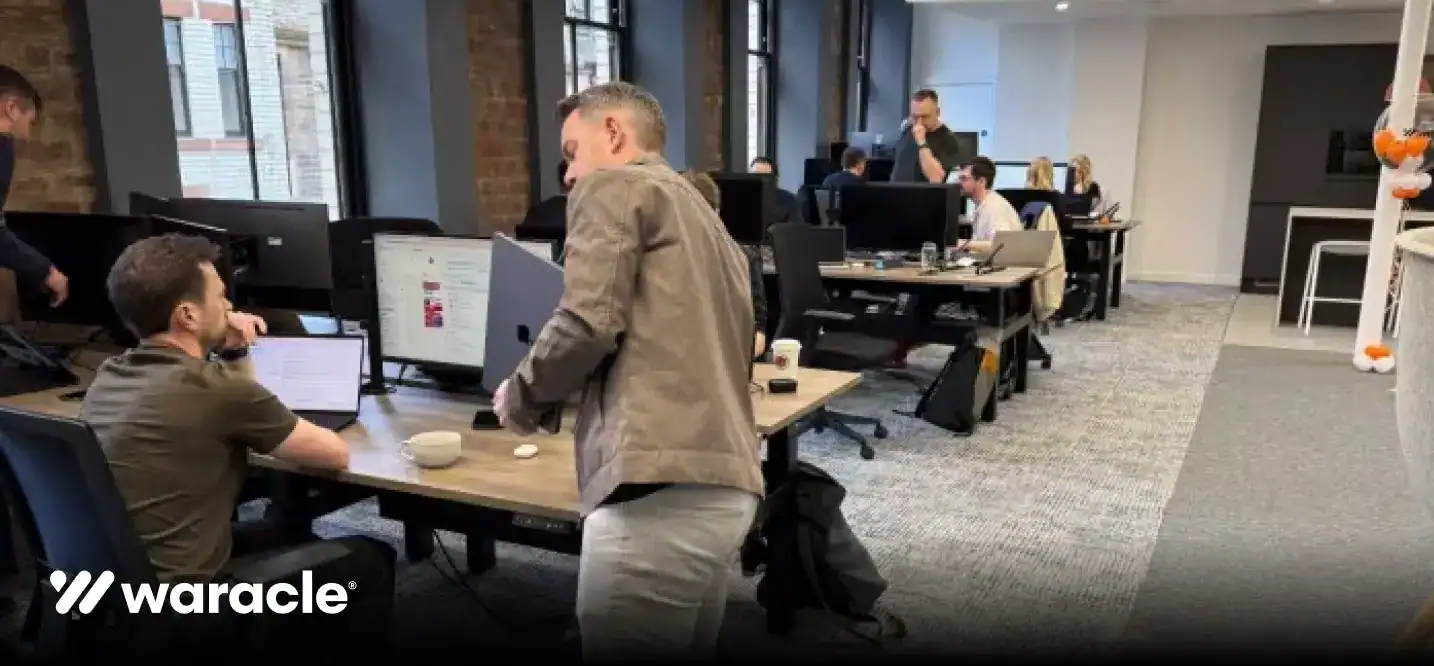
Waracle has built a name specifically around regulated, high-stakes sectors, healthcare, financial services, and energy. With hubs in London, Dundee, and Glasgow, their client list includes the NHS, NatWest, and Scottish Power, and their engineering teams are built around secure, compliant delivery rather than speed alone.
For businesses weighing whether to bring this kind of specialised work in-house or outsource it, this piece on whether it’s worth hiring an agency for mobile app development lays out the trade-offs clearly. Waracle is a strong example of what leading UK mobile app development agencies specializing in startups typically are not, their model is built for long-term, compliance-heavy partnerships rather than fast MVP turnarounds.
Key Features
- Deep specialisation in healthcare, financial services, and energy sector compliance
- Secure, cloud-native architecture built for regulated environments
- Multidisciplinary teams that stay involved through the full product lifecycle, not just the initial build
Pros & Cons
Pros:
- Genuine regulated-industry expertise (NHS data standards, financial compliance) that’s hard to fake
- Long-term client relationships with major UK institutions
- Strong emphasis on security and data privacy baked into the development process
Cons:
- Best suited to long-term, compliance-heavy partnerships rather than fast, low-budget MVPs
5. Chelsea Apps: Best Mobile App Development Company for Design-Led Fintech & Healthtech Apps

Chelsea Apps, based in London and operating since 2010, has built its reputation on design-centric, cross-platform builds for fintech and healthcare clients. Their process leans heavily on user experience and business-transformation thinking, rather than treating design as an afterthought bolted onto engineering.
This design-first approach makes them a solid option among leading UK mobile app development agencies specializing in startups with strong design ambitions and a clear brand identity to protect. If you’re trying to figure out how to actually vet a shortlist like this one, this guide on hiring mobile app developers and finding the best team is a useful next read.
Key Features
- Design-centric, cross-platform development process (ISO 27001 certified)
- Specialisation in fintech and healthtech business-transformation projects
- Verified on Clutch, with a track record of recognisable London-based clients
Pros & Cons
Pros:
- Strong design discipline that produces apps built for retention, not just function
- Genuine sector focus in fintech and healthtech rather than generalist positioning
- ISO 27001 certification signals a serious approach to data security
Cons:
- Smaller team size than the larger enterprise players on this list, which can limit capacity for very large concurrent builds
6. 3 Sided Cube: Best Mobile App Development Company for Social-Impact & Public-Sector Apps
3 Sided Cube has operated out of Bournemouth since 2009, and its positioning is genuinely different from most of the agencies on this list: the company describes its mission as building “Tech for Good,” and its client list backs that up, the American Red Cross, RNLI, RSPB, Global Forest Watch, and the University of Bristol, alongside brand names like Lush and Nordstrom. Their work includes the world’s first blood-tracking app and disaster-response tools used across more than 90 countries.
That mission-driven focus doesn’t mean the engineering is an afterthought; the studio is ISO-accredited and has picked up multiple UK App Awards and a Webby for best health app. For organisations in the charity, NGO, or public-sector space trying to work out how a smaller specialist studio compares to a large generalist agency, this guide on choosing between a boutique and enterprise app development partner is worth reading before you shortlist.
Key Features
- ISO-accredited delivery process with a genuine specialism in charity, NGO, and public-sector apps
- Track record spanning disaster response, healthcare, and environmental-impact platforms
- In-house team across Bournemouth and London studios, with 100+ million global app downloads to date
Pricing 3 Sided Cube doesn’t publish fixed pricing; project scope and cost are quoted after an initial discovery conversation, consistent with the bespoke, mission-specific nature of most of their builds.
Pros & Cons
Pros:
- Rare, genuine specialism in social-impact and public-sector work that’s difficult for generalist agencies to match
- Strong award recognition (UK App Awards, Webby Awards) validated by third parties, not just self-reported
- Global delivery experience across 90+ countries, useful for NGOs and international organisations
Cons:
- Mission-driven positioning may be a less natural fit for purely commercial, growth-focused consumer apps
7. Sonin App Development: Best Mobile App Development Company for Boutique Multi-Sector Product Consultancy
Sonin has been building apps from Reigate, Surrey since 2008 (originally as Big Orange Software before rebranding), and has quietly picked up a broad client base across pharma, retail, and heritage sectors, including John Frieda, Eli Lilly, DS Smith, and The British Museum. As a smaller, UK-based product consultancy, they position themselves on long-term collaboration rather than one-off builds.
Their size works in their favour for businesses that want direct access to senior team members rather than being routed through account layers. If you’re comparing a boutique studio like this against a much larger agency, this breakdown of what to expect from a smaller UK app development team versus an enterprise studio is a useful reference point.
Key Features
- In-house, UK-based product team spanning strategy, design, and development
- Broad sector experience, including pharma, financial services, heritage, and consumer brands
- Long-standing client relationships, with several engagements running for multiple years
Pricing Sonin’s minimum project size typically starts around $25,000–$50,000, with hourly rates generally in the $100–$150 range depending on the discipline and seniority required.
Pros & Cons
Pros:
- Strong, verified client reviews (4.6+ on Google) across a genuinely varied client base
- Senior-level access without the account-management layers common at larger agencies
- Nearly two decades of continuous operation, a solid signal of stability in a market where many boutique studios don’t last
Cons:
- Smaller team size means less capacity for very large, multi-workstream enterprise programmes
8. Pocketworks: Best Mobile App Development Company for Mobile Growth & Retention
Pocketworks takes a noticeably different angle than most agencies on this list: rather than positioning around the build itself, the Leeds-based, employee-owned studio positions around what happens after launch, growth and retention. Founded in 2012, their site cites clients achieving up to 3x customer retention and 9x revenue growth after working with them, and their first-ever client is still a client today, 13 years on, now processing over £100 million a year through the app Pocketworks built and continues to support.
That retention-first framing is worth taking seriously for businesses that already have a validated app idea and want a partner focused on scaling it, rather than one focused purely on shipping v1. For a deeper look at why post-launch growth planning matters as much as the initial build, this guide on what happens to your app after launch is a useful companion read.
Key Features
- Employee-owned structure with a flat team and no dedicated account-management layer
- Explicit focus on mobile growth hacking, retention, and long-term product partnership, not just initial builds
- Small, senior team (20 people across five European countries) rather than a large delivery bench
Pricing Pocketworks doesn’t publish fixed project pricing; they typically engage as an ongoing retained partner rather than a fixed-bid single project, which suits businesses planning for a long-term relationship rather than a one-off build.
Pros & Cons
Pros:
- Genuine, evidenced focus on post-launch growth metrics rather than just delivery
- Long client tenures (13+ years with their original client) that suggest real staying power
- Employee ownership model that tends to support consistent team retention and delivery quality
Cons:
- Small team size limits capacity for large, multi-platform enterprise programmes run in parallel
9. Brightec: Best Mobile App Development Company for Consumer & Retail Brand Apps
Brightec has been operating out of Brighton since 2006, making it one of the longer-standing independent studios on this list. Their client roster leans heavily toward recognisable consumer and retail names, Jaguar Land Rover, Morrisons, Virgin, and Waterstones among them, and the studio is known for client relationships that span multiple projects over many years rather than single engagements.
Being based outside London in Brighton also means lower overheads than the capital, which the studio has said keeps their day rates more competitive than London-based equivalents offering similar quality. For businesses trying to weigh up regional UK studios against London-based agencies more broadly, this comparison of London versus regional UK app development costs is worth a look.
Key Features
- Nearly two decades of continuous delivery for recognisable consumer and retail brands
- In-house team handling UX/UI design, iOS, Android, and cross-platform development
- Strong repeat-client rate, with many clients returning for multiple projects over several years
Pricing Brightec doesn’t publish fixed pricing; quotes are scoped per project following an initial discovery conversation, and their Brighton base typically means day rates below equivalent London studios.
Pros & Cons
Pros:
- Genuine longevity (almost 20 years) in a market where many boutique studios don’t survive that long
- Strong consumer and retail brand experience with recognisable, verifiable client names
- Lower overhead base outside London, which can translate into more competitive pricing for comparable work
Cons:
- Smaller team size than the larger enterprise agencies on this list, which can limit capacity for very large concurrent builds
10. The Distance: Best Mobile App Development Company for Native-Only iOS & Android Development
The Distance, based in York, has taken a deliberately narrow position since founding in 2009: native iOS and Android development only, with no cross-platform framework as a shortcut. Their client list includes AstraZeneca, Bentley Motors, and PGA Golf, and the studio has been recognised in Clutch’s Leaders Matrix for UK mobile app developers and named an “App Dev Agency of the Year.”
That native-only focus is a genuine differentiator in a market where most agencies default to Flutter or React Native for cost reasons. For businesses trying to decide whether native or cross-platform is the right call for their specific project, this guide on native versus cross-platform app development trade-offs walks through the decision in more depth.
Key Features
- Native-only specialism (Swift/Kotlin), positioned as a deliberate quality choice rather than a legacy limitation
- In-house “Core” delivery framework and structured “Journey” process for scoping and delivery
- Long-term client relationships, including engagements spanning a decade or more
Pricing The Distance’s minimum project size is typically $50,000 and up, with hourly rates averaging around $100/hr, reflecting their UK-onshore, native-only delivery model.
Pros & Cons
Pros:
- Genuine native-only specialism, useful for apps where performance and platform-specific features matter most
- Independently recognised across Clutch, GoodFirms, and DesignRush with consistently strong reviews
- UK onshore team based in York, useful for time-zone-aligned collaboration
Cons:
- Native-only positioning means no cross-platform option if budget or timeline favours a single shared codebase
How to Choose the Best Mobile App Development Firm in the UK
There’s no single “best” mobile app development company UK businesses should default to, only the best fit for your specific project. That said, here’s a simple framework to work through before you commit:
- Define your app’s complexity first. A simple booking app and an AI-powered fintech platform need very different teams.
- Ask for 2–3 relevant case studies, ideally in your industry or with similar technical requirements.
- Check post-launch support terms before signing anything, apps need maintenance long after launch.
- Talk to at least three agencies before deciding, even if you already have a favourite.
- Read third-party reviews, not just testimonials curated on the agency’s own site.
This is also where staying current matters. Leading app development agencies in Britain for future projects are increasingly investing in AI-assisted development and cross-platform frameworks to keep timelines shorter without sacrificing quality, something worth asking about directly in any discovery call.
For more on where the industry is heading, these breakdowns of mobile app development trends for 2025 and choosing the right software development partner are both worth bookmarking.
One more stat worth keeping in mind: over 60% of UK businesses building an app in 2026 fall into the mid-complexity category, custom backend, a handful of integrations, rather than a bare-bones MVP or a full enterprise platform, so most shortlists should be built around agencies that comfortably handle that middle tier.
Comparing Top Mobile App Development Services Across the UK
The right firm depends on the scale, complexity, and industry of your project, not on who has the flashiest website.
For businesses that want global engineering depth behind a custom, enterprise-grade build, Cubix is the strongest option on this list, 300+ specialists, 1,300+ delivered projects, and independent recognition across multiple review platforms.
Building a mobile app that needs serious engineering depth behind it? Explore what an app development company like Cubix can bring to your next project.
Want to discuss your project? Our experts are just a click away.
Contact Us
Frequently Asked Questions
1. How much does it cost to develop a mobile app in 2026?
It depends on complexity. A simple app typically costs between £8,000 and £25,000, a mid-complexity app with custom backend work runs £35,000 to £70,000, and a complex or enterprise-grade app with AI features or compliance requirements can range from £90,000 to £220,000 or more.
2. What is the future of mobile app development in 2026?
Expect deeper AI integration, more cross-platform frameworks replacing separate iOS/Android builds, tighter data privacy requirements shaping architecture decisions, and growing demand for apps that connect with wearables and IoT devices.
3. Which company is best for custom mobile app development?
For businesses that want a company with deep engineering bench strength and a track record across complex, cross-industry builds, Cubix is a strong option, backed by 1,300+ delivered projects and independent recognition from GoodFirms and Clutch.
4. What is the most profitable app in 2026?
Profitability trends point toward apps in fintech, on-demand services, health and wellness, and AI-powered productivity tools, since these categories tend to combine high engagement with strong monetisation models. That said, execution and retention matter far more than category alone.
5. Which UK-based mobile app developers have the best client reviews?
Look for agencies with reviews spread across multiple platforms, Clutch, GoodFirms, Google, not just one. Detailed, verified case studies with named clients are a stronger signal than a handful of curated testimonials on an agency’s own homepage.
6. Cost to develop an app with a premier UK agency?
Premier UK and global agencies typically start engagements around £30,000–£50,000 for custom builds, climbing significantly for apps requiring regulatory compliance (healthcare, fintech) or complex third-party integrations.
7. How long does it take to build a mobile app?
Simple apps typically take 6 to 10 weeks, mid-complexity apps take 3 to 5 months, and complex or enterprise apps can take 6 to 12 months depending on integrations and compliance needs.
8. Should I choose native or cross-platform app development?
Native development delivers the best performance and deepest platform access but means maintaining two codebases. Cross-platform frameworks let you build once and deploy to both platforms, usually meaning faster timelines and lower costs, a practical choice for most business apps. For a closer look at where each platform is heading, these guides on top iOS app trends and top Android app development trends are worth a read.