The cross-platform app development framework market is projected to grow at a 16.8% CAGR and reach $369.2 billion by 2032. That number tells you everything about where mobile development is headed.
For years, businesses had to pick a side. Build for iOS first and lose Android users, or build for Android first and lose iOS users. Cross-platform development ended that trade off. One codebase now runs on both operating systems, and you reach your full audience without doubling your budget.
But here’s what most guides skip: the framework you pick matters far less than the developer you hire to build with it. Two teams can use the same tech stack and produce completely different results. One ships a fast, stable app. The other ships something that crashes on half the devices it’s supposed to support.
That’s where Cubix steps in. As your on-demand mobile app development partner, we believe the real key to success isn’t the framework you choose, it’s hiring the right team. With a proven track record in fintech, healthcare, and on-demand industries, Cubix builds cross-platform apps that scale.
In this guide, you’ll learn:
- Why businesses are moving to cross-platform development
- A step-by-step process to hire a cross-platform developer
- How different hiring models compare
- What it actually costs in 2026
- Mistakes that derail cross-platform projects
- How Cubix builds and delivers cross-platform apps
Why Businesses Are Choosing Cross-Platform Development

Cross-platform adoption isn’t a trend anymore. It’s the default choice for most new mobile projects. According to a 2026 market report from The Business Research Company, the cross-platform software market grew from $104.6 billion in 2025 to $121.04 billion in 2026, a 15.7% year-over-year jump. That growth comes from a simple business reality: companies need to ship faster and spend less while doing it.
Key Business Benefits
1. Cost Savings with a Single Codebase:
Code is written once, then deployed to iOS and Android. It dramatically cuts your development budget compared to the cost of building 2 separate native apps with 2 separate teams.
2. Faster Time-to-Market:
A shared codebase means fewer moving parts. Your team releases updates, fixes bugs and adds new features to both platforms at the same time instead of on two different release schedules.
3. Wider Audience Reach:
You launch on the Apple App Store and Google Play Store at the same time. No platform is left behind, and no segment of the audience has to wait longer for your product than another
Popular Cross-Platform Frameworks in 2026
Your choice of cross-platform development technologies can impact your app performance, your hiring pool, and your long term maintenance costs. Before choosing a cross-platform app development framework, it is important that you go through this guide to get a complete understanding of each of the cross-platform development frameworks.
1. Flutter
Built by Google, Flutter uses Dart to compile natively for mobile, web, and desktop from one codebase. It does very well with custom UI and animation-heavy apps. Its widget-based structure allows designers more control over pixel-level consistency across devices.
2. React Native
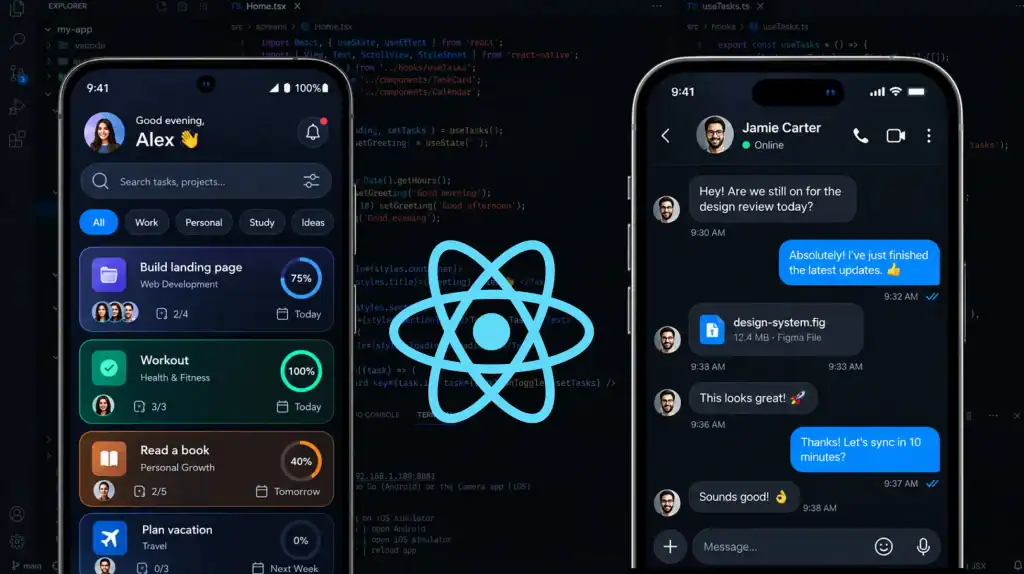
Built by Meta, React Native runs on JavaScript and React. Teams with existing web development skills pick this up quickly, and its massive community means most integration problems already have a documented solution.
3. Xamarin / .NET MAUI
This Microsoft-backed stack uses C# and .NET to create apps that run on iOS, Android and Windows. It is good for enterprises that require strong native API access and are already running on Microsoft infrastructure.
4. Progressive Web Apps (PWAs)
PWAs offer an app-like experience available straight from the browser. They’re a good option for content-heavy or e-commerce products because they allow offline access and push notifications, don’t have to go through app store approval delays, and require less maintenance.
Framework Comparison Table
| Framework | Strengths | Trade-offs | Best For |
|---|---|---|---|
| Flutter | Native-level performance, single codebase across 6 platforms | Larger app size, Dart has a learning curve | Custom UI, design-heavy apps |
| React Native | JavaScript skills transfer directly, huge community | Some platform-specific code still needed | Rapid builds, teams with React experience |
| Xamarin / .NET MAUI | Strong native performance, deep Microsoft integration | Best suited to Microsoft-centric stacks | Enterprise and business apps |
| PWA | Instant updates, lowest cost, no app store gatekeeping | Limited access to native device features | Content apps, e-commerce, internal tools |
Data from the Appfigures SDK Intel show React Native’s market share on iOS grew from 4.73% to 6.75% between 2022 and 2024, while Flutter’s share on Android climbed from 10.15% to 11.07% over the same period. Both frameworks are gaining ground, and neither is going away.
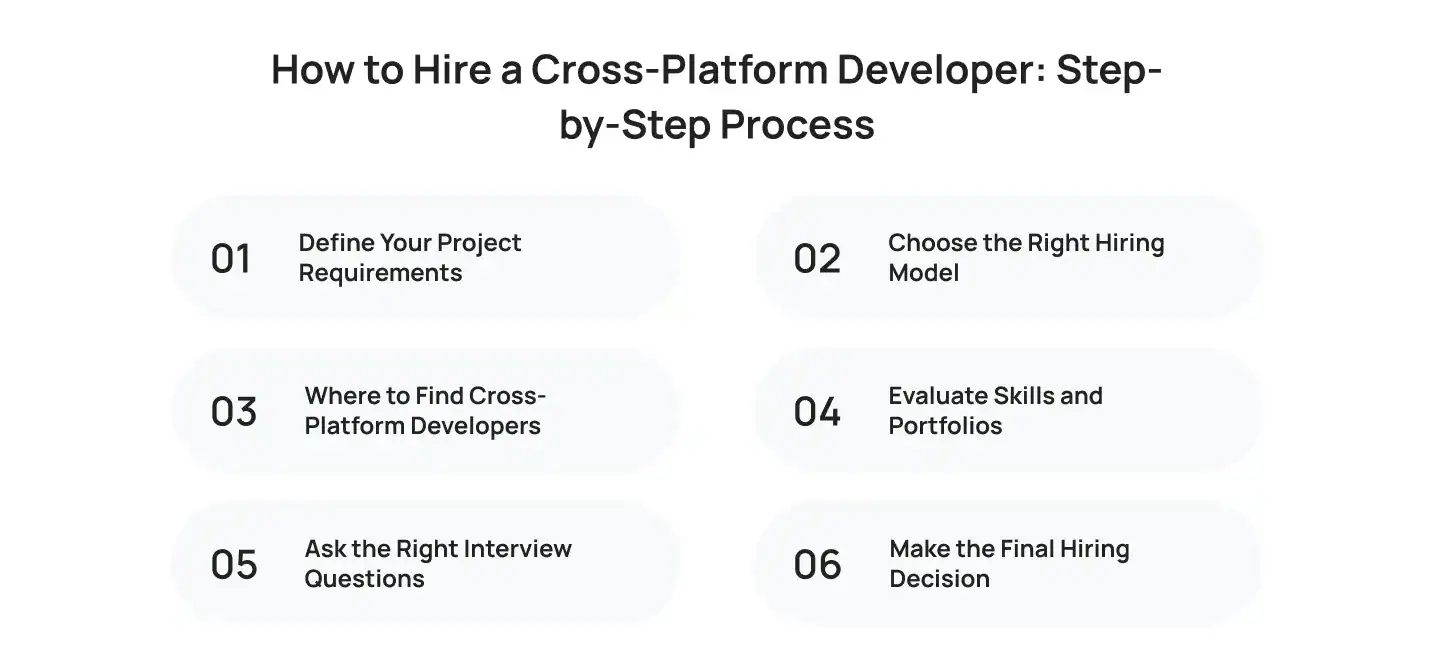
How to Hire a Cross-Platform Developer: Step-by-Step Process
Once you know which technology fits your project, the real work starts. Here’s exactly how to hire a cross-platform developer who can execute on it.
Step 1: Define Your Project Requirements
Write down what your app actually needs to do before you start interviewing anyone. Vague requirements lead to vague candidates.
- Technical Scope: Do you need AI or machine learning features? On-device processing or cloud-based? Which cloud provider, AWS, Azure, or GCP?
- Security & Compliance Needs: Does your app need to meet HIPAA, GDPR, or PCI DSS standards? Say so upfront. It changes who you should even be talking to.
Step 2: Choose the Right Hiring Model
There’s no single right answer here. The right model depends on your budget, timeline, and how long you’ll need the team.
1. Freelancers
Freelancers cost less and offer flexibility for small, well-defined tasks. They’re not the right choice for your core product. There’s no team backup if they get sick, switch projects, or simply disappear mid-build.
2. In-House Developers
An in-house team gives you full control and instant communication. You also take on the full cost of salaries, benefits, recruiting, and the time it takes to build a team from scratch.
3. Dedicated Development Teams
A dedicated team gives you undivided focus on your project without the overhead of full-time hiring. You get a team that’s already worked together, which means fewer coordination headaches from day one.
4. Outsourcing to an App Development Company
Outsourcing to an established company like Cubix gives you end-to-end delivery, from design through post-launch support, without managing multiple vendors. This is the model most enterprises pick for mission-critical apps because it shifts delivery risk off your internal team.
Step 3: Where to Find Cross-Platform Developers
- Job Portals & Freelance Platforms: LinkedIn and Indeed work for full-time hires. Upwork and Fiverr work for small, low-risk tasks, not your core product.
- Staffing Agencies: Good for filling defined roles inside a team you already manage.
- Professional Development Companies: The lowest-risk option for mission-critical builds. You get project ownership, legal guarantees, and a team that’s already worked together. This is exactly the model Cubix operates on, so you’re not stitching together a team from scratch or hoping a freelancer sticks around until launch.
Step 4: Evaluate Skills and Portfolios
Don’t just skim a resume. Look at what a candidate has actually shipped.
Must-Have Technical Skills:
- Hands-on experience with Flutter, React Native, or your chosen framework
- Comfort building and consuming REST or GraphQL APIs
- Familiarity with mobile SDK integrations for both iOS and Android
- A track record of published apps on the Apple App Store and Google Play Store
Soft Skills That Actually Matter:
- Communication: Can they explain a technical trade-off to a non-technical stakeholder?
- Problem-solving: How do they debug a platform-specific bug that only shows up on Android?
- UX sense: Do they understand when a design needs platform-specific adjustments?
Every developer in the Cubix team is vetted against this exact checklist before they’re assigned to a client project, so you’re not the one running background checks on technical skill and communication ability.
Step 5: Ask the Right Interview Questions
Skip generic questions. Ask things that reveal real experience.
| Standard Question | Better Question |
|---|---|
| What frameworks do you know? | Walk me through a performance issue you fixed and how you measured the improvement. |
| How do you test your apps? | How do you handle CI/CD for simultaneous iOS and Android releases? |
| Have you worked with APIs? | Describe an API integration that broke in production. What happened, and how did you fix it? |
Step 6: Make the Final Hiring Decision
Technical skill gets a candidate on your shortlist. Team fit gets them hired. Check how they respond to feedback, how available they are across your time zone, and whether they ask good questions about your product, not just about the paycheck.
Want to discuss your project? Our experts are just a click away.
Contact UsHow much do cross-platform app development services cost in 2026?

The cost to hire cross platform development company depends on where your developers are based, how complex your app is, and what hidden costs you plan for ahead of time.
Regional Rate Breakdown
| Region | Hourly Rate |
|---|---|
| North America | $70 to $100+ |
| Western Europe | $50 to $80 |
| Eastern Europe | $30 to $50 |
| Asia-Pacific | $20 to $40 |
| South America | $25 to $45 |
| Middle East | $30 to $60 |
AI and security specialists charge above these ranges regardless of location, often $150 to $300+ per hour.
Cost based on Project Complexity
- Simple apps: $30,000 to $80,000 for basic CRUD functionality
- Medium complexity: $80,000-$200,000 for real-time features, payments and basic AI
- Enterprise apps: $200,000 to $500,000+ for advanced AI, complex integrations and enterprise-grade security
Hidden Costs to Budget For
Don’t let these surprise you in the middle of a project.
- QA and testing setup: $5,000 – $20,000
- Maintenance ongoing: 15 to 25% of development cost per year
- Security audits: $5,000 – $25,000 per audit
- Cloud infrastructure: $1,000 – $10,000+/month
- 3rd party services: 500 to 5,000+ / month
Cubix discloses these costs upfront so you have a complete project estimate before signing anything, and not a growing list of add-ons after the contract is signed.
Common Mistakes to Avoid
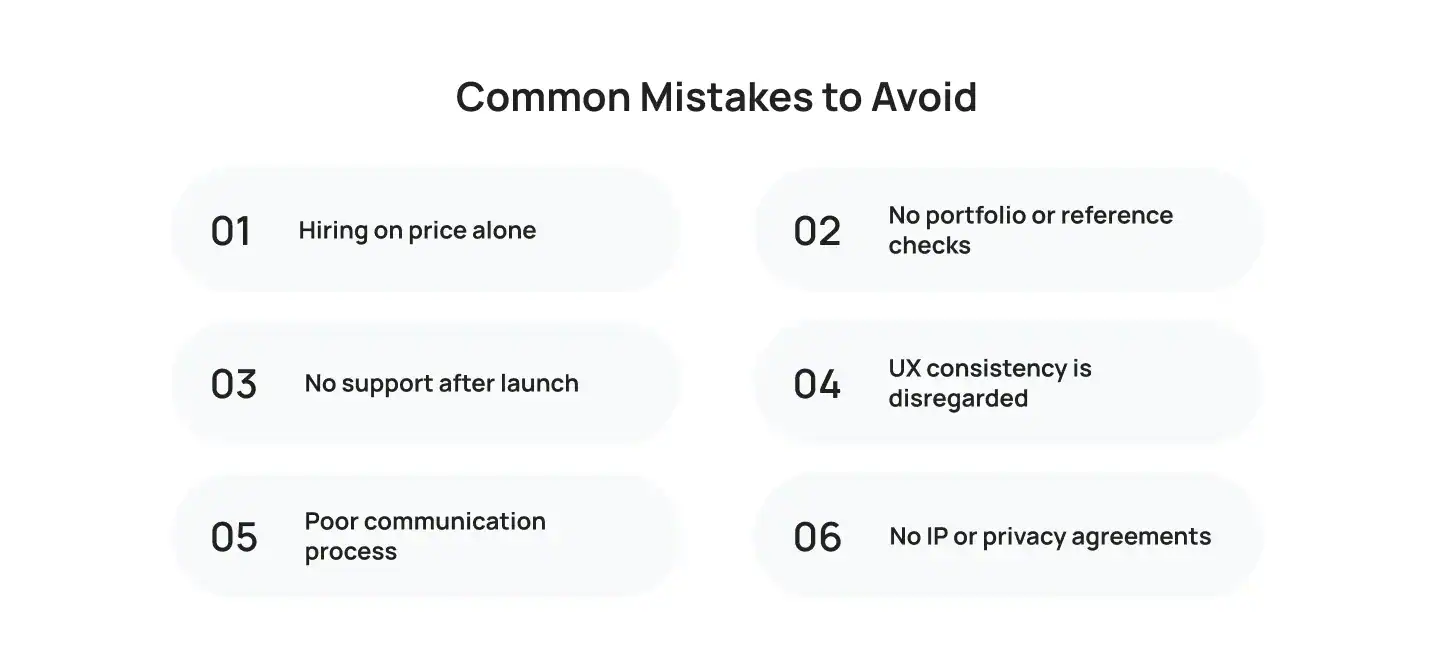
Most cross-platform project failures are caused by a handful of decisions that could have been avoided.
- Hiring on price alone. The cheapest developer is often the most expensive when you factor in rework, delays, missed deadlines.
- No portfolio or reference checks. Past work tells more than any interview answer.
- No support after launch. Apps need to be updated regularly to keep up to date with new versions of operating systems. Make sure you understand the terms of support before you sign.
- UX consistency is disregarded. A cross-platform app that runs natively on iOS and feels clunky on Android will ruin your ratings on both stores.
- Poor communication process. If a team can’t clearly articulate their progress in the interview, that pattern won’t change when the project begins.
- No IP or privacy agreements. If you are a developer, freelancer or agency, you should sign an IP agreement before you write a single line of code.
How Cubix Helps Businesses Build Cross-Platform Apps
If you’re evaluating your options to hire cross-platform developers, choose Cubix for expert teams that deliver seamless, scalable, and cost-effective mobile solutions.
Over the past 18+ years, Cubix has earned a reputation as a trusted mobile app development partner by delivering tailored enterprise solutions worldwide. Some of our standout success stories in cross-platform application development include Afia Healthcare, a Fuel Management App for oil marketing, and NPI-Shield for real-time healthcare monitoring.
Here’s what sets us apart:
- Pre-vetted developers. Every engineer is evaluated on both technical skill and communication before they touch your project.
- Transparent pricing. You get a full cost breakdown during scoping, not surprise line items after the contract is signed.
- Cross-industry experience. Cubix has shipped apps for fintech, healthcare, and on-demand platforms, so your team already understands your compliance and performance requirements.
- Post-launch support included. OS updates, bug fixes, and feature additions are part of the engagement, not a separate negotiation.
Final Thoughts
The team you hire decides whether your app ships on time or gets stuck in endless revisions. Follow the steps in this guide, clearly outline your requirements, evaluate real portfolios, ask better interview questions and select a hiring model that aligns with the stakes of your project, and you will avoid the mistakes that sink most cross-platform builds.
FAQs
Q1: How much does it cost to hire a cross-platform developer?
Rates range from $20 to $40 per hour in Asia-Pacific up to $70 to $100+ per hour in North America. AI integration and other specialised skills push rates to $150 to $300+ per hour no matter where you are. Bottom line, total project cost is more about complexity than hourly rate.
Q2. Flutter or React Native: which is better for hiring developers?
React Native is great for teams that already have JavaScript and web development experience. Flutter is a good choice if your projects need pixel-perfect, custom UIs across multiple platforms. Before you decide, think about the skill set your target hires already have.
Q3: How long does it take to build a cross-platform app?
Simple app generally takes 8-12 weeks. Medium complexity apps with real-time or payment features: 4-6 months. Enterprise apps with complex AI/complex integrations might take 6 to 12+ months.
Q4: Should I hire a freelancer or an agency for cross-platform development?
Freelancers work for small, specific jobs with low risk. If it’s a core product or anything customer-facing, an agency or dedicated team brings project ownership, QA processes, and post-launch support that a single freelancer is not able to guarantee.
Q5 What skills should a cross-platform developer have?
Find someone with hands-on experience with a framework (Flutter or React Native), experience integrating APIs, knowledge of mobile SDKs, a published portfolio on both app stores, and good communication skills for working cross-functions.