Key Takeaways
- Airport apps require a different design approach because travelers make decisions under pressure.
- Understanding traveler behavior is more important than simply adding features.
- Simple navigation and relevant information improve the overall travel experience.
- Successful airport apps combine UX strategy, technology, and real-time information.
- Businesses can apply airport app design principles to many industries where users need quick solutions.
Building an airport app taught us something important: travelers do not use digital experiences the same way they use everyday mobile applications. When passengers are rushing through terminals, checking flight updates, or dealing with unexpected changes, they need clarity more than complexity.
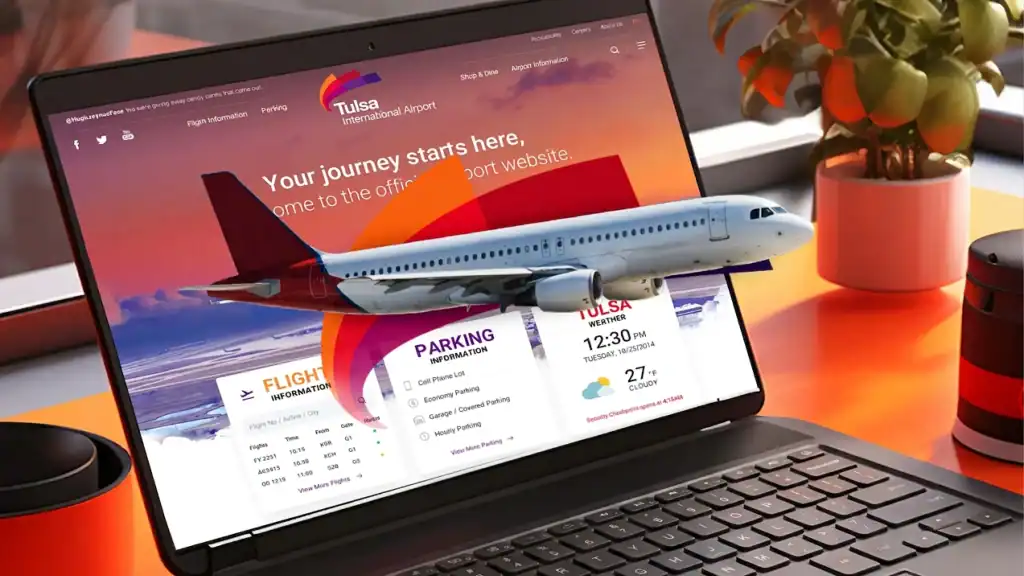
That’s exactly what shaped our approach to building the Airport App for Tulsa. Instead of focusing on adding more features, we focused on removing friction at every step of the traveler journey. In this blog, we share how our thinking evolved, the design decisions we made, and what changes when your users are stressed, travelers.
Want to discuss your project? Our experts are just a click away.
Contact UsAirport Travelers Don’t Behave Like Everyday App Users
Most mobile apps are designed for users who have time to explore, compare options, and complete tasks at their own pace. Airport travelers don’t have that luxury. They’re constantly watching the clock, managing luggage, keeping track of travel documents, and reacting to unexpected changes like delayed flights or gate updates. In this environment, every second matters, and even a small usability issue can create unnecessary frustration.
Why Airports Are Unique Digital Environments
An airport is one of the few places where physical movement and digital interactions happen simultaneously. Travelers aren’t sitting comfortably while using an app. They’re walking through crowded terminals, navigating unfamiliar spaces, standing in security lines, or rushing toward a boarding gate. That means an airport app must deliver information instantly, with minimal effort required from the user.
Unlike retail or social media apps that encourage browsing, airport apps need to help users complete important tasks as quickly as possible.
Understanding Traveler Psychology
People behave differently when they’re traveling. Their attention is divided between multiple responsibilities, and their stress levels increase as departure time approaches. Instead of exploring features, they look for immediate answers to questions like:
- Where is my gate?
- Has my flight changed?
- Which way should I go?
- How much time do I have before boarding?
This shift in behavior means users rely on clear navigation, simple interfaces, and information that is easy to find without unnecessary searching.
Decision-Making Under Pressure
Travelers make dozens of decisions within a short period, often while dealing with distractions. Long menus, cluttered screens, or confusing navigation only slow them down. During the Tulsa project, we learned that reducing the number of choices on each screen helped users complete tasks faster and with greater confidence.
The objective wasn’t to provide more information. It was to provide the right information at the right moment.
Why Traditional App Design Doesn’t Work
Many mobile apps are built around engagement, encouraging users to spend more time browsing content. Airport apps require the opposite approach. Success is measured by how quickly travelers can accomplish what they came to do, whether that’s finding their gate, checking their flight status, or locating airport services.
Designing for stressed travelers meant simplifying every interaction, removing unnecessary steps, and prioritizing usability over visual complexity. That mindset became one of the most valuable lessons we carried throughout the development of the Airport App for Tulsa.
The Numbers Behind Modern Airport Experiences
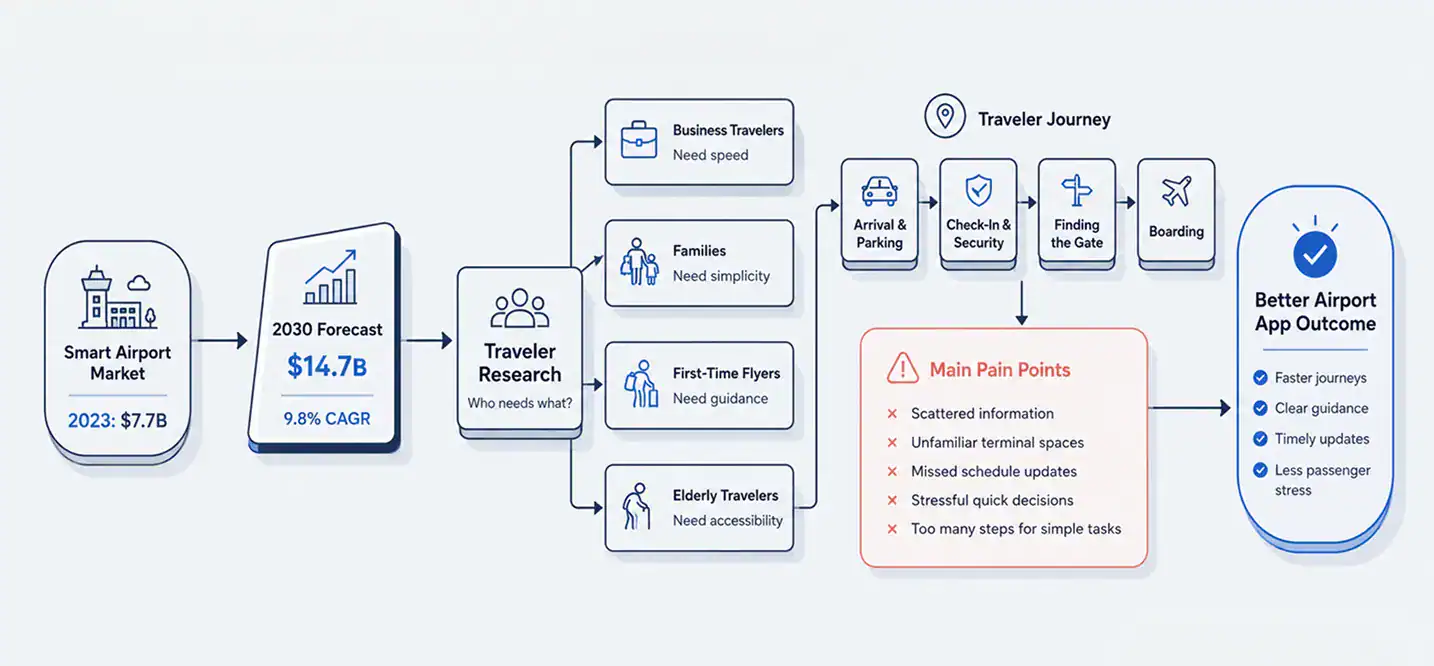
Airports are investing in digital solutions to create faster, more connected passenger journeys. According to Grand View Research, the smart airport market continues to grow as airports adopt technologies that improve operations and traveler services.
Understanding the Problem Before We Started Building
Before designing screens or writing code, we focused on understanding how travelers interact with airports. Every passenger arrives with a different goal, a different level of experience, and different challenges. A business traveler rushing to a meeting has different needs from a family managing luggage and children, while a first-time flyer may need more guidance throughout the journey.
Understanding Different Traveler Personas
Building a successful airport experience starts with identifying these differences. Instead of assuming what travelers needed, we looked at the situations that create confusion and frustration. This helped us define the right priorities for the Airport App for Tulsa and create an experience built around real passenger behavior.
Business Travelers Need Speed
Business travelers usually prioritize speed and efficiency. They need quick access to flight updates, gate information, and navigation tools because delays can directly impact their schedules. For this group, the app experience needs to reduce unnecessary steps and provide important details instantly.
Families Need Simplicity
Families often manage multiple responsibilities at once, including children, luggage, tickets, and changing schedules. They need clear directions, simple instructions, and an experience that reduces stress during busy airport moments.
First-Time Flyers Need Guidance
For new travelers, airports can feel overwhelming. Finding the right terminal, understanding airport layouts, or knowing where to go next can create uncertainty. A well-designed digital experience helps guide them through each step with confidence.
Elderly Travelers Need Accessibility
Older passengers often benefit from simple navigation, readable information, and straightforward interactions. Removing complexity from the interface helps make airport services easier to access for everyone.
Mapping the Complete Airport Journey
Understanding traveler personas helped us identify who our users were, but the next step was understanding how they move through the airport. Every stage of the journey creates different challenges, and each moment provides an opportunity to make the experience easier.
While planning the Tulsa Airport application, we mapped the complete passenger journey to identify where travelers needed the most support. This research-first approach is also an important part of successful custom mobile app development company services, where understanding user needs comes before writing code.
Arrival and Parking
The journey starts before passengers enter the terminal. Finding parking, locating entrances, and understanding where to go next can create early frustration.
Check-In and Security
Travelers need quick access to essential information while moving through check-in areas and security checkpoints. Clear guidance helps them stay organized and avoid unnecessary delays.
Finding the Gate
Large terminals can be difficult to navigate, especially for passengers with limited time. Helping travelers find their destination quickly became one of the most important parts of the experience.
Boarding
The final stage requires timely updates and clear communication. Travelers need confidence that they are heading to the right place at the right time.
Identifying the Biggest Pain Points
After understanding the passenger journey, we focused on identifying the moments where travelers experience the most friction.
The goal was not to add more features. It was to solve the problems that create stress during real airport situations.
The main challenges included:
- Finding important information from multiple sources
- Navigating unfamiliar terminal spaces
- Missing updates when schedules change
- Making quick decisions during stressful moments
- Completing simple tasks through too many steps
These insights shaped our approach to creating a smoother digital experience. By focusing on real traveler problems, we were able to build an application that supports passengers when they need assistance the most.
For teams planning similar digital products, following structured Tips to develop Custom Mobile App practices helps ensure the final solution is based on user needs rather than assumptions.
Designing an Airport App for Stressed Travelers
While building the Tulsa Airport application, our team focused on understanding how passengers move through the airport and where digital solutions could reduce stress during critical moments. We designed every interaction around real traveler challenges, ensuring users could access important information quickly, navigate with ease, and complete essential tasks without unnecessary complexity.
Reducing Cognitive Load
Airports already create information overload with flight updates, directions, schedules, and security requirements. A complex app can increase frustration instead of solving problems.
We simplified the experience by prioritizing important information, reducing unnecessary steps, and making key actions easier to find. The goal was to help travelers stay focused on what matters most during their journey.
Showing the Right Information at the Right Time
During the Tulsa Airport project, we identified that travelers needed different information at different moments of their journey. Someone entering the terminal needs different support than someone waiting at the gate.
By understanding these situations, we designed an experience that delivers relevant information when users need it most. This improved the Passenger Experience by making airport interactions faster, clearer, and more helpful.
Speed Over Complexity
In an airport environment, speed matters. Travelers don’t have time to navigate complicated menus or complete unnecessary steps. We focused on creating faster interactions through simple workflows, clear navigation, and easy access to important information.
The goal was to remove friction from everyday tasks so passengers could quickly find what they needed and continue their journey without delays.
Making Every Screen Actionable
Every screen should have a clear purpose. Whether a traveler needs directions, updates, or airport services, the next step should always feel obvious.
This approach shaped our use of Digital Wayfinding, helping passengers understand where they are, where they need to go, and how to reach their destination with less confusion.
Designing for Confidence Instead of Exploration
Unlike entertainment apps, airport apps are not designed for long browsing sessions. Their purpose is to help users complete important tasks quickly and confidently.
We focused on creating an experience where travelers always know what to do next, reducing uncertainty during stressful moments.
Features We Prioritized While Building the Airport App for Tulsa
When creating the Airport App for Tulsa, we did not begin with a list of features. We started by understanding traveler problems and identifying which digital solutions could make the biggest difference.
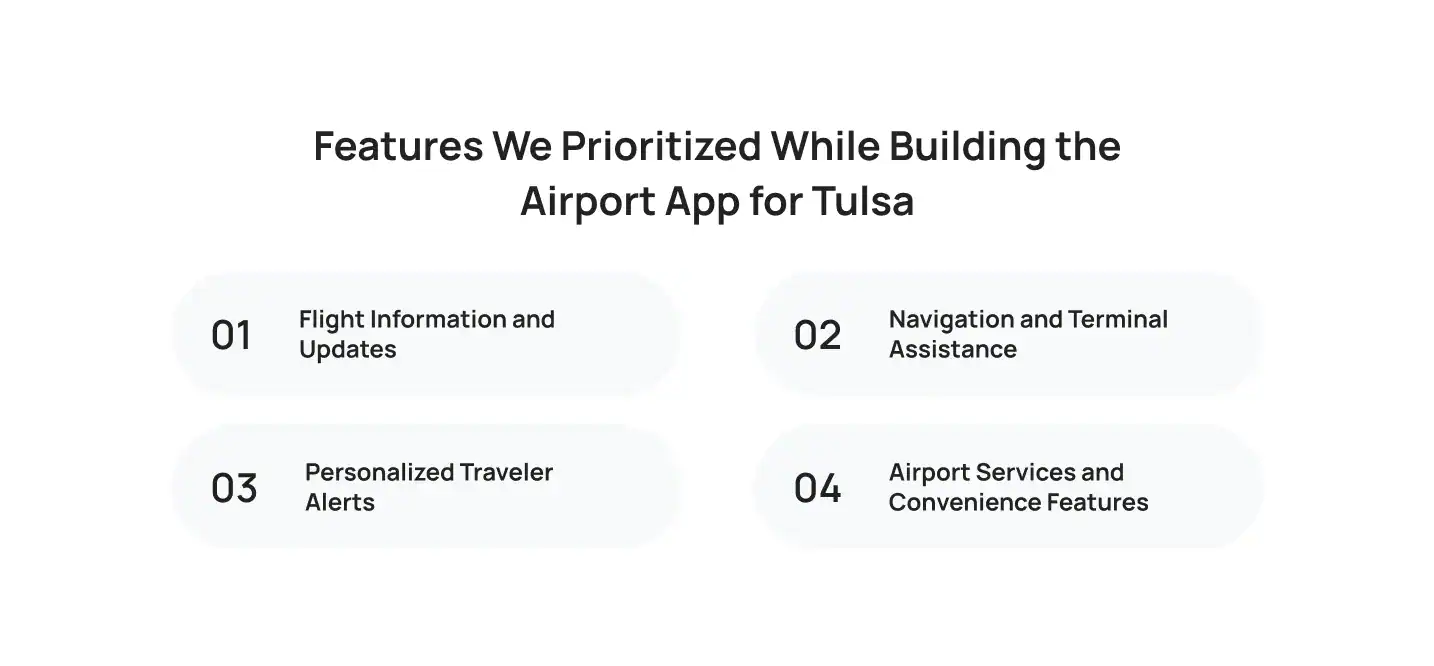
Each feature was selected to support passengers during important moments, from checking flight details to finding their way through the airport.
A well-designed Airport Mobile App should help travelers before, during, and after their airport visit by making essential tasks easier.
Flight Information and Updates
Flight changes can create uncertainty, especially when travelers are already inside the airport. Providing accurate and timely information helps passengers make better decisions.
Features such as Real-Time Flight Tracking allow travelers to stay informed about schedules, delays, and updates without depending on multiple sources.
Navigation and Terminal Assistance
Large airport terminals can feel confusing, especially for first-time visitors. Helping passengers understand their location and find important areas creates a smoother journey.
Navigation features reduce the time travelers spend searching for directions and allow them to move through the airport with more confidence.
Personalized Traveler Alerts
Important updates are only useful when travelers receive them at the right time. Push Notifications help deliver relevant information, reminders, and changes directly to passengers.
This reduces the need for users to repeatedly check the application for updates.
Airport Services and Convenience Features
A better airport experience goes beyond flight information. Features like Mobile Check-In and access to airport services help passengers complete common tasks faster.
By focusing on convenience, the application supports travelers throughout their journey instead of only solving one specific problem.
The Technology Decisions Behind Tulsa Airport’s Digital Experience
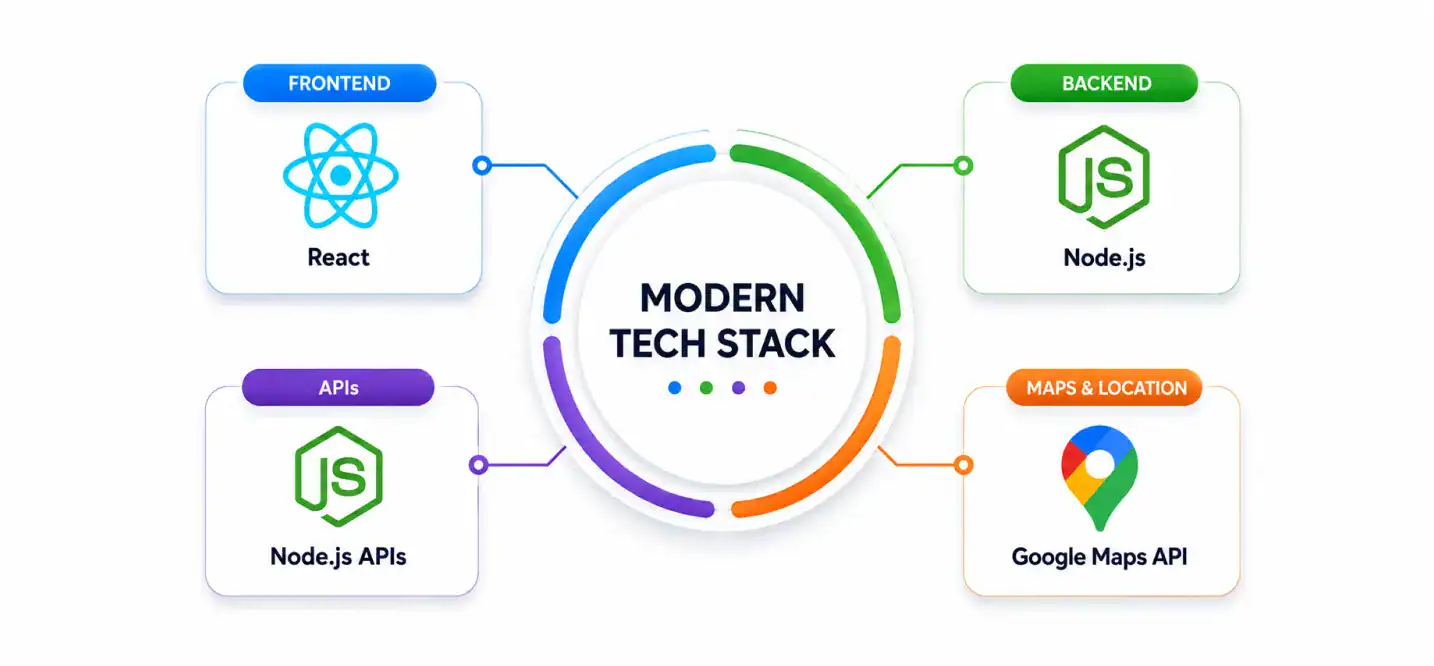
Building the Tulsa Airport application was not only about selecting modern technologies. Every technical decision had to support a better traveler experience. Our team focused on creating a system that could handle important travel information, deliver smooth interactions, and make essential details easier for passengers to access during their journey.
The technology choices were guided by one goal: creating a reliable digital experience that reduces friction for travelers while supporting the complex requirements behind an airport application.
| Technology Layer | Technology Used | Lesson From the Project |
| Frontend | React | We used React to create a responsive interface where travelers could quickly access essential information without unnecessary complexity. |
| Backend | Node.js | Node.js helped us manage application logic, handle backend operations, and support smooth communication between different services. |
| APIs | Node.js APIs | APIs allowed different systems to communicate efficiently and helped deliver relevant information through the application. |
| Maps & Location | Google Maps API | Location services helped create a more intuitive navigation experience, allowing travelers to better understand routes and locations around the airport. |
The combination of React and Node.js helped us create a reliable application structure where the frontend delivered a smooth traveler experience, and the backend supported efficient data handling. The biggest lesson from this project was that technology decisions should always solve real user problems, helping travelers access information faster and navigate with confidence.
To create reliable mobile experiences across platforms, businesses can also explore approaches for building an iOS App and build in android app based on their product requirements.
How Cubix Built the Airport App for Tulsa
Building the Tulsa Airport application started with understanding traveler needs and identifying where digital solutions could reduce stress. Our focus was to create a simple, reliable experience that helped passengers access important information quickly.
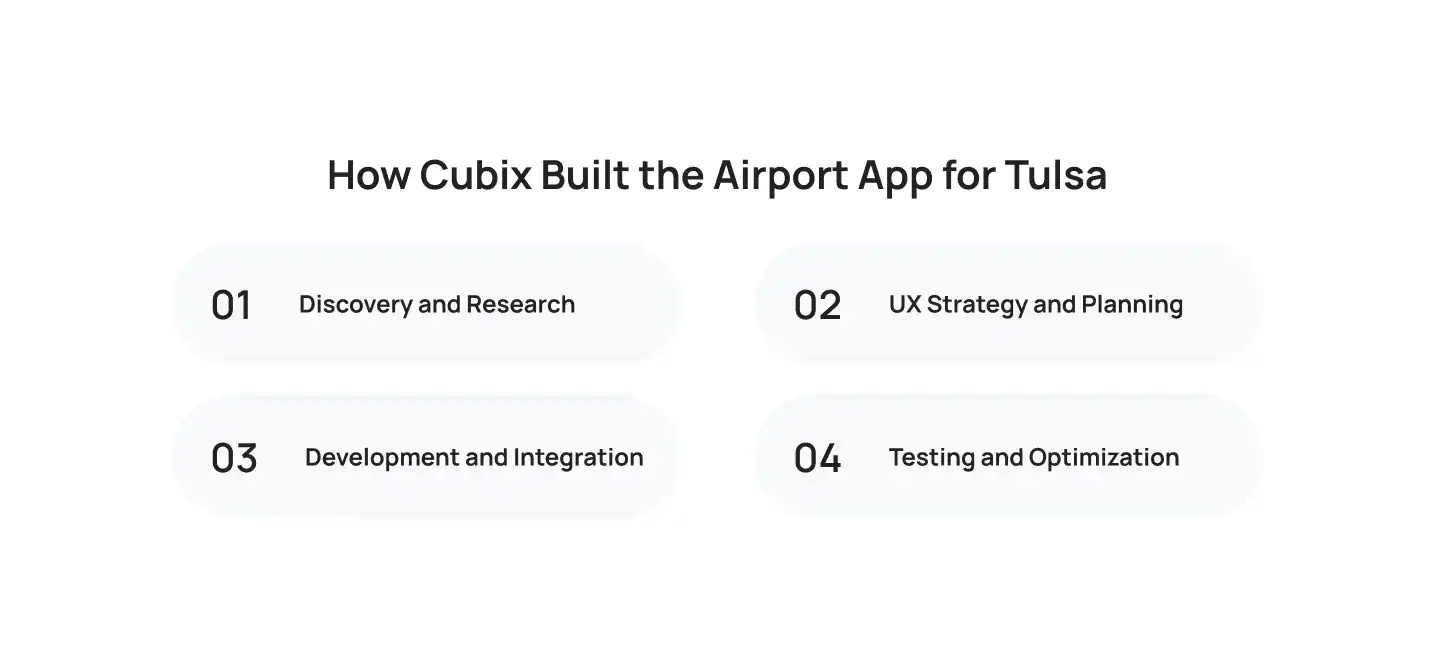
As a custom mobile app development company, Cubix combined user research, thoughtful planning, and modern technologies to create an application centered around passenger convenience.
Discovery and Research
Before development, our team studied traveler behavior, airport workflows, and common passenger challenges. These insights helped us define the right features and create an experience based on real user needs.
UX Strategy and Planning
We planned the user journey around simple navigation, clear information, and fewer steps. The goal was to help travelers complete important actions quickly without unnecessary complexity.
Development and Integration
Using technologies like React and Node.js, our team developed an application structure that supported smooth interactions, efficient data handling, and reliable performance.
Testing and Optimization
Testing helped us identify usability improvements and ensure the application delivered a consistent experience for different types of travelers.
The biggest lesson from this project was simple: successful digital products start with understanding users first and using technology to solve real problems.
The UX Decisions That Made the Biggest Difference
A successful airport application is not only about showing information. It is about presenting the right information in a way that feels simple for travelers under pressure.
During the Tulsa Airport project, our focus was to improve the User Experience (UX) Design by creating clear navigation, organized content, and smoother interactions.
Creating a Clear Information Hierarchy
Travelers usually need quick answers. Too much information can create confusion instead of helping users.
We prioritized important details such as updates, directions, and services so passengers could find what they needed faster.
Designing for Accessibility
Airport apps serve different types of travelers. Simple layouts, readable content, and clear actions help create an easier experience for everyone.
Simplifying User Flows
We reduced unnecessary steps and created straightforward journeys for common tasks.
Businesses planning similar solutions can benefit from thoughtful custom mobile app design that focuses on usability and user needs.
Challenges We Faced and How We Solved Them
Building an airport application comes with unique challenges because travelers depend on accurate information during time-sensitive situations.
Our approach focused on solving practical problems while keeping the experience reliable and easy to use.
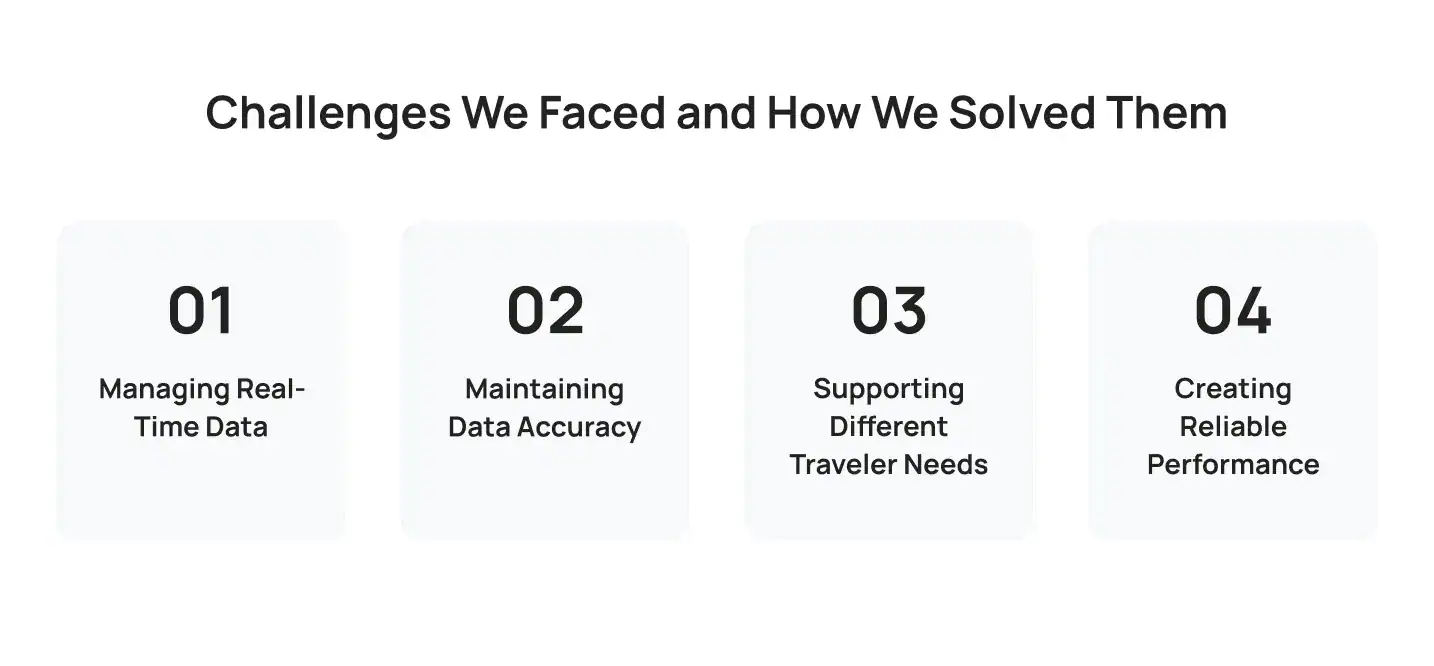
Managing Real-Time Data
Travel information can change quickly. Flight updates, schedules, and important announcements need to reach users at the right moment.
The application needed a structure that could support timely information delivery without creating confusion.
Maintaining Data Accuracy
Accuracy is critical in travel applications. Incorrect information can impact decisions and create unnecessary stress for passengers.
We focused on creating a reliable system where users could access relevant details with confidence.
Supporting Different Traveler Needs
Every traveler has different expectations. Business travelers need speed, families need simplicity, and first-time flyers need guidance.
Understanding these differences helped us design an experience that supports multiple user scenarios instead of focusing on only one type of passenger.
Creating Reliable Performance
Travelers expect applications to work smoothly, especially during important moments. Performance, responsiveness, and consistent functionality were key considerations throughout the development process.
Lessons Every Product Team Can Learn
The Tulsa Airport project highlighted several important lessons that apply to many digital products beyond the travel industry.
User Research Comes First
Successful applications begin with understanding users. Research helps teams identify real problems and create solutions that match user expectations.
Simplicity Improves Adoption
Adding more features does not always create a better product. Simple experiences often perform better because users can complete tasks with less effort.
Context Matters
The environment where users interact with an application should influence every design decision. Travelers under pressure need different experiences compared to users browsing casually.
The project showed how Travel Technology can create more meaningful experiences when it is designed around real human behavior.
Teams building similar solutions should focus on user needs first to create mobile products that are simple, useful, and aligned with business goals.
Why Businesses Choose Cubix for Complex Mobile Solutions
Complex mobile solutions require more than development. Businesses need support with product strategy, design, technology decisions, and continuous improvements after launch.
Cubix focuses on creating digital products that solve real user challenges. The Tulsa Airport application is one example of how a user-focused approach helped transform airport services into a smoother digital experience for travelers.
Through projects like the Tulsa Airport application, Cubix combines:
- Product strategy and planning
- Mobile application expertise
- Enterprise integrations
- Post-launch improvements
By understanding user behavior and selecting the right technologies, teams can create applications that are easier to use and deliver more value.
Explore the complete Tulsa Airport case study to learn how Cubix approached the project, from understanding traveler needs to creating a more connected passenger experience.
Before starting a similar project, businesses should also evaluate factors that influence investment and planning. Understanding the Cost of Mobile App Development can help teams make informed decisions about features, timelines, and development requirements.
Conclusion
Building an airport application requires a deep understanding of traveler behavior, not just technical development. The Tulsa Airport project showed that when users are stressed, simplicity, clarity, and timely information become the most important factors.
From understanding passenger challenges to making better UX decisions and selecting the right technologies, every step focused on reducing friction and improving the overall journey.
The Airport App for Tulsa demonstrates how user-focused design and thoughtful development can create digital experiences that help travelers feel more confident, informed, and supported.
For businesses planning similar solutions, the goal should not only be adding more features. It should be creating applications that solve real problems and deliver meaningful value to users.
Want to discuss your project? Our experts are just a click away.
Contact UsFrequently Asked Questions
1. What makes the Airport App for Tulsa different from a regular mobile app?
The Airport App for Tulsa was designed around the needs of travelers who often make quick decisions under pressure. It focuses on simple navigation, timely information, and reducing confusion during the airport journey.
2. Why do airport apps need a different UX approach?
Airport apps are used in fast-moving environments where users need quick answers. A simple UX approach helps passengers access important information without unnecessary steps.
3. What features should a modern airport mobile app include?
A modern airport mobile app should include features such as flight updates, navigation assistance, notifications, check-in support, and access to airport services.
4. How does technology improve airport passenger experiences?
Technology improves passenger experiences by providing faster access to information, supporting navigation, and helping travelers receive important updates at the right time.
5. How long does it take to develop an airport app?
The development timeline depends on factors such as features, integrations, platform requirements, design complexity, and testing needs. Simple applications may take a few months, while more advanced solutions require additional time.
6. Why should businesses work with an experienced app development company?
An experienced app development company helps businesses plan the right features, choose suitable technologies, manage integrations, and create solutions that match user expectations.
7. What industries can learn from airport app design?
Industries such as healthcare, transportation, retail, and hospitality can learn from airport app design by focusing on simplicity, accessibility, and delivering useful information when users need it most.