Key Takeaways
- Test your idea before you write any code.
- Build a small MVP first, then grow it.
- Watch your burn rate and runway every month.
- Fix onboarding early so new users stay.
- Plan your launch before the app is ready.
- Track a few KPIs, not every number.
- Pick one monetization model and test it.
Here is a number that stings. In a CB Insights study, about 70% of tech startups failed. Most closed around 20 months after their first funding. That is a short runway.
The good news is simple. Most of these failures were not bad luck. They came from mistakes founders could have spotted early. The same few errors show up again and again. Think wrong product, fast spending, and ignored users.
This guide covers the biggest mistakes first-time app founders make. You will see real stats, clear tables, and easy fixes. Read it before you spend your first dollar. It might save you months.
Why Most First-Time Apps Fail
An app is a startup with a screen. It fails for the same reasons other startups fail. CB Insights read through startup post-mortems to find the top causes. Many founders named more than one reason. These startup execution mistakes are easy to see once you know them.
The Numbers Behind App Failure
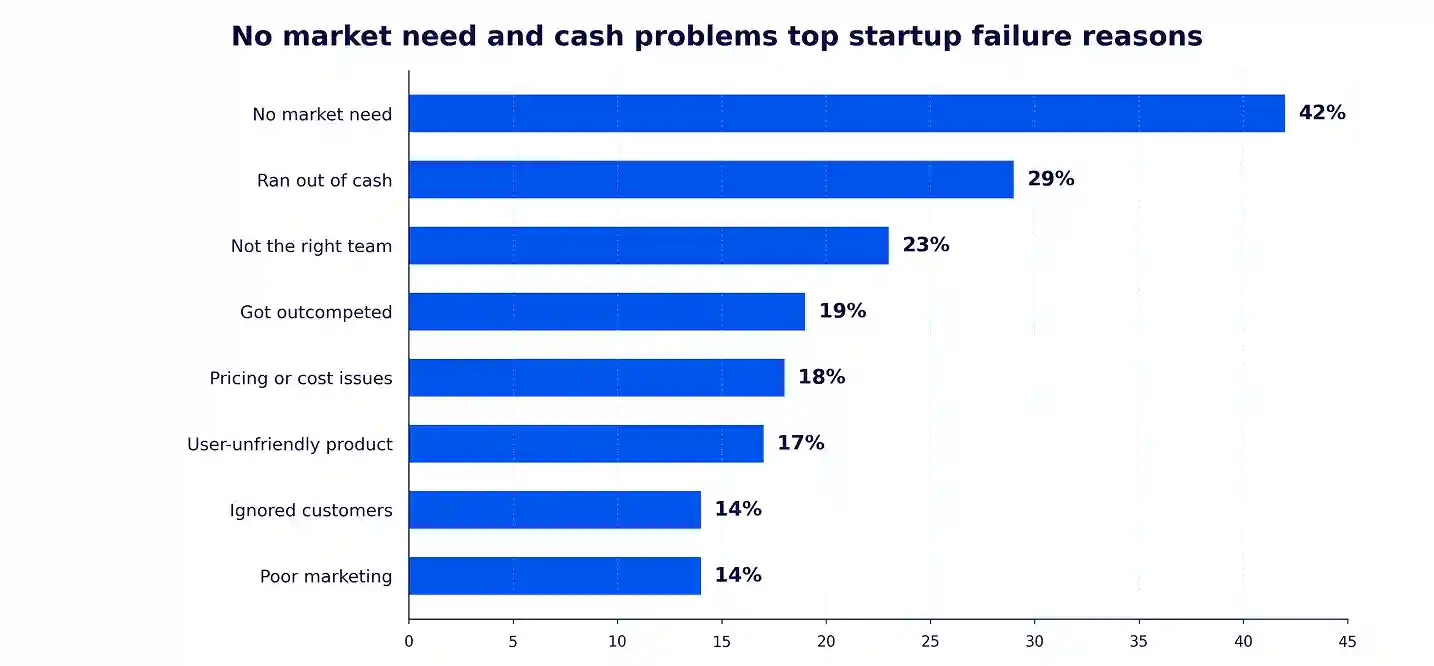
Two reasons stand out. About 42% of failed startups said there was no market need. That means they built something people did not want. Another 29% ran out of cash.
Cash trouble often follows the first problem. If nobody wants your app, nobody pays for it.
The Top Reasons Startups Shut Down
The table below lists the top causes. It also shows which mistake in this guide matches each one. Founders could name several reasons. So the shares add up to more than 100%.
| Reason startups fail | Share of failures | Matching mistake in this guide |
|---|---|---|
| No market need | 42% | Skipping idea validation |
| Ran out of cash | 29% | Ignoring costs and cash flow |
| Not the right team | 23% | Doing everything alone |
| Got outcompeted | 19% | Launching without a plan |
| Pricing or cost issues | 18% | Picking the wrong monetization model |
| User-unfriendly product | 17% | Adding too many features |
| Ignored customers | 14% | Skipping idea validation |
| Poor marketing | 14% | Launching without a plan |
Notice something? Almost every reason on this list is a choice. You can fix a choice.
Skipping Idea Validation
Building Before Asking Anyone
Many first-time founders fall in love with an idea. Then they build for months. They never ask a stranger if they would use it. Friends and family say nice things. Strangers tell the truth.
This is one of the most costly founder decision-making mistakes. About 14% of failed startups ignored customer feedback. They never built a habit of listening. So they shipped the wrong features.
Simple Ways to Test Your Idea
You do not need code to test demand. You need a few days and some honesty. Try these steps:
- Customer interviews: Talk to 10 to 20 people who have the problem.
- Landing page: Describe your app and add a sign-up button. Count the clicks.
- Short surveys: Ask five simple questions about the problem, not your solution.
- Competitor checks: Read reviews of similar apps. Note what users hate.
- Waitlists: Real sign-ups beat polite opinions.
Do you want a full walkthrough? Read how to validate an app idea before building it.
At Cubix, we help founders test ideas early. We check the users, the market, and the rivals before any build starts. That way you spend money on proof, not guesses.
Ready to build your app? Let Cubix help you start
Contact UsAdding Too Many Features
What Scope Creep Looks Like
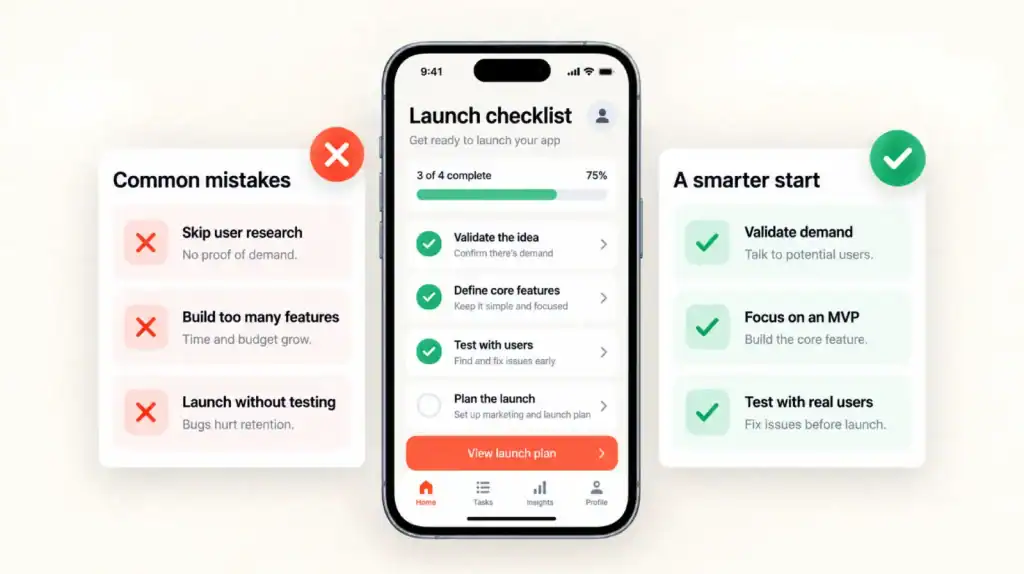
Scope creep in app development starts with good intentions. One more screen. One more button. One more idea from a friend. Each add-on looks small. Together they delay your launch and drain your budget.
About 17% of failed startups had a product that was hard to use. Piling on features is a fast way to get there.
How to Pick Features That Matter
Feature prioritization mistakes are easy to make. Everything feels important when it is your idea. Sort every feature into one of these groups:
- Must-have: The app cannot work without it.
- Should-have: Users want it, but they can wait.
- Nice-to-have: Cool, but it can wait for version two.
- Skip for now: Nobody has asked for it yet.
Now try a simple score. Rate each feature from 1 to 5 for user value. Rate it again for build effort. Build high value, low effort items first.
MVP vs Fully Featured App
An MVP is the smallest version that solves one real problem. The table shows how it compares with a full app.
| Factor | MVP | Fully featured app |
|---|---|---|
| Cost | Lower upfront | Much higher upfront |
| Time to launch | Weeks to a few months | Many months |
| Risk | Low, you learn before you spend | High, you bet everything on guesses |
| Features | One core problem solved | Many features at once |
| Learning speed | Fast feedback from real users | Slow feedback after a long wait |
With a tight scope, you can develop an MVP in less than a month. Smaller is faster. Faster is cheaper.
Ignoring Costs and Cash Flow
Burn Rate and Runway Explained
Cash is the fuel of your startup. Good startup cash flow management starts with two numbers:
- Burn rate: The cash you spend each month.
- Runway: The number of months before your cash hits zero.
Here is a quick example. You have $120,000 in the bank. You burn $10,000 a month. Your runway is 12 months.
Many founders forget one thing. Your runway is shorter than it looks. Marketing, tools, and bug fixes add up fast.
What an App Really Costs
Industry estimates put simple apps at $15,000 to $50,000. Medium apps run $50,000 to $120,000. Complex apps start at $120,000 and can pass $300,000.
Building is not the end of the bill. Maintenance often adds 15% to 20% of the build cost each year. Plan for it from day one.
| App type | Typical cost | Typical timeline | Example features |
|---|---|---|---|
| Simple | $15,000 to $50,000 | 2 to 3 months | Login, basic screens, simple forms |
| Medium | $50,000 to $120,000 | 3 to 6 months | Payments, chat, maps, admin panel |
| Complex | $120,000 to $300,000+ | 6 months or more | Real-time features, AI, heavy security |
Want more detail? See our guide on app development cost. You can also check the app development timeline before you plan your budget.
At Cubix, we give clear estimates and split budgets into phases. You pay for one stage at a time. That protects your runway.
Weak Onboarding and Poor Retention
Why Users Leave in the First Week
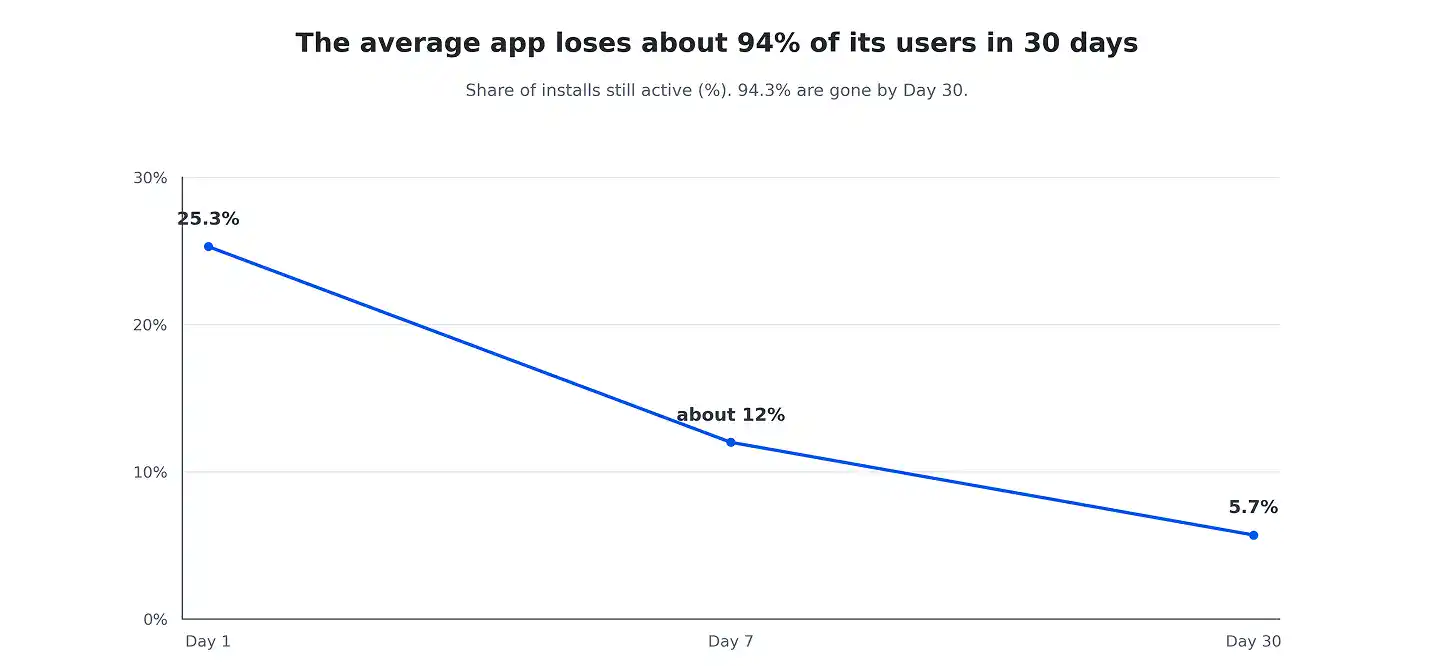
Getting a download is the easy part. Keeping the user is hard. The average app keeps about 25.3% of users on Day 1. By Day 30, only 5.7% are left.
That means the churn rate is around 94% in the first month. Churn rate is the share of users who leave. This is one of the most common customer retention mistakes. Founders chase installs and ignore what happens next.
A poor onboarding experience makes it worse. Users open the app, feel lost, and never return.
Easy Onboarding Fixes
Good user onboarding guides people to their first win. Keep it short and clear. Here is what works:
- Fewer sign-up steps: Let users look around before they register.
- A clear first win: Show real value in the first minute.
- Quick tutorials: Use short tips, not a ten-screen tour.
- Smart push timing: Ask for permission after users see the value.
- Helpful reminders: Send tips people want, not spam.
Launching Without a Plan
Skipping Go-to-Market Strategy
Many founders think the app store will bring users. It rarely does. App launch planning mistakes like this slow down startup growth. A good launch plan answers three questions. Who is the app for? Where do they spend time? What makes them try it?
A solid mobile app business plan puts these answers in one place.
Getting Your First Users
Your first users will not come from luck. Try these low-cost ideas:
- Build a waitlist before launch.
- Join online groups where your users already talk.
- Ask early users for reviews and referrals.
- Run small paid tests before big ad spends.
- Write a clear app store listing with real screenshots.
Paid installs usually cost between $1.50 and $5.00 each. iOS tends to cost more than Android. So test small first.
Why CAC and LTV Matter
Customer Acquisition Cost (CAC) is what you spend to win one user. Lifetime Value (LTV) is what that user pays you over time. A common benchmark is an LTV to CAC ratio of 3 to 1 or higher. Say you spend $30 to win a user. That user should bring in at least $90.
| Metric | Plain meaning | Healthy benchmark |
|---|---|---|
| CAC | Cost to win one new user | Well below your LTV |
| LTV | Total revenue from one user over time | At least 3x your CAC |
| LTV to CAC ratio | LTV divided by CAC | 3 to 1 or higher |
| Churn rate | Share of users who stop using the app | Falling each month |
| Conversion rate | Share of users who take a key action, like paying | Varies by app, so track your own trend |
At Cubix, we support launch planning, app store setup, and post-launch tracking. You get a clear view of your numbers from week one.
Picking the Wrong Monetization Model
Charging Too Early or Too Late
App monetization mistakes come in two flavors. Charge too early, and users leave before they see value. Charge too late, and you burn cash with no income.
The fix is simple. Find the moment users feel the value. Ask for payment soon after that.
Common Monetization Models
Here are the main options. Pick one to start.
- Freemium: Free basics, paid upgrades. Good for building a big user base.
- Subscription: Users pay monthly or yearly. Good for steady income.
- In-app purchases: Users buy items or features inside the app.
- Ads: Free for users, paid by advertisers. It needs a lot of traffic.
- Paid download: One upfront price. Hard to sell without a known brand.
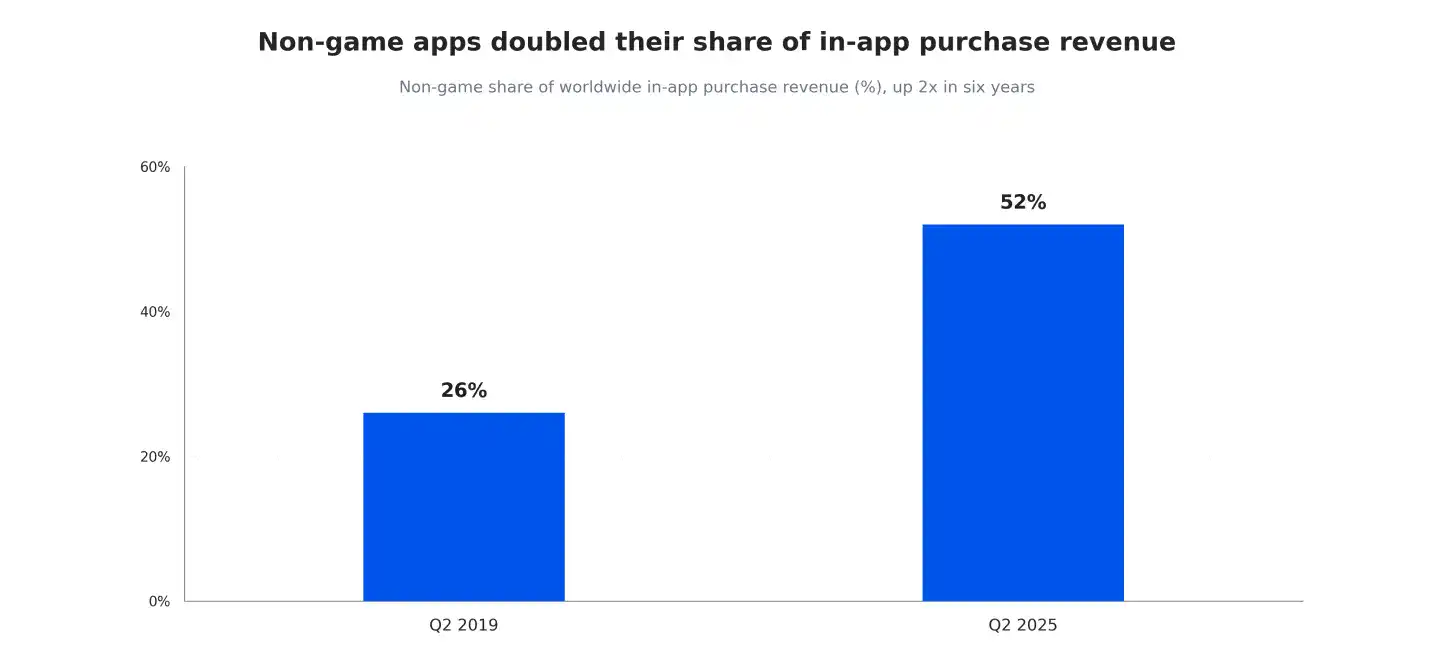
People are paying more for apps beyond games. In Q2 2025, non-game apps made up 52% of in-app purchase revenue. In Q2 2019, that share was just 26%. The money is moving your way.
Start with one model. Test it. Then adjust.
Making Slow or Emotional Decisions
Doing Everything Alone
Founders wear many hats. That works for a while. Then the gaps show up. About 23% of failed startups said they had the wrong team.
A co-founder can fill skill gaps. They can also share the stress. Pick someone whose skills differ from yours. Agree on roles and equity early. No tech partner yet? Read our guide on mobile app development for startups.
Ignoring Data and Skipping A/B Tests
Gut feeling feels fast. But it can be wrong. Let data settle your debates.
A/B testing shows two versions to two groups of users. The better version wins. Pair it with a few Key Performance Indicators (KPIs). Check these weekly:
- Daily active users
- Day 1, Day 7, and Day 30 retention
- Customer acquisition cost
- Churn rate
- Revenue per user
- Burn rate and runway
Ignoring Scalable Architecture
Scalable architecture means your app can grow without a full rebuild. Cheap shortcuts can hurt later. Plan for growth, but do not overbuild. New to the basics? Read what mobile app development is.
How to Know If Your App Is Failing
Warning Signs to Watch
Product-market fit means people truly need your app. Without it, nothing else works. Watch for these red flags:
- Retention drops fast and stays low.
- CAC keeps rising.
- No organic growth. Users do not tell friends.
- Revenue stays flat for months.
- Users shrug when you ask if they would miss the app.
When to Pivot, Fix, or Stop
Not every warning sign means the end. Use this quick guide:
- Fix it: Users love your core feature but leave during onboarding.
- Pivot: One use case works well, but your main one does not.
- Stop: You have talked to users for months, nobody cares, and cash is low.
Quick checklist. Do users return on their own? Do they pay or ask for more? Do they refer to others? Three yeses mean you are close.
How Cubix Helps First-Time App Founders
First-time founders need a team that understands the challenges of building an app from scratch. As a mobile app development company, Cubix helps turn ideas into functional apps through a clear development process.
Idea to MVP Support
We turn a rough idea into a working MVP. We start with research and user flows. Then we build the features that matter most.
Clear Costs and Timelines
Our estimates are clear and phased. You know the cost and timeline before we write code. No surprise bills.
Built to Scale
We design apps that grow with your users. That means clean code and flexible backends.
Here is what our team covers:
- Product discovery and idea validation
- UI and UX design
- iOS, Android, and cross-platform development
- Quality testing
- Launch support and app store setup
- Post-launch updates and maintenance
Build Your App With Cubix
You now know the mistakes that sink first-time founders. The next step is to avoid them. Founders trust Cubix because we plan first, build lean, and share clear numbers.
Ready to turn your idea into a real app? Book a free consultation with Cubix today. Tell us your ideas. We will help you shape it into a launch-ready plan.
Avoid costly mistakes with Cubix’s expert app development services
Contact Us
Frequently Asked Questions
1. What’s the #1 mistake first-time app founders make?
Building something nobody wants. About 42% of failed startups cited no market need. Test demand before you build.
2. How do I validate my app idea before building it?
Talk to potential users first. Build a simple landing page and watch the sign-ups. Check what rivals offer and where they fall short.
3. What’s the difference between MVP and a fully-featured app?
An MVP solves one core problem with few features. A full app has many features and extra polish. Start with the MVP to learn faster.
4. How much money do I need to launch an app?
A simple app often costs $15,000 to $50,000. Medium apps run $50,000 to $120,000. Add marketing and yearly maintenance to your budget.
5. Should I hire a co-founder?
Not always. But skill gaps hurt. About 23% of failed startups blamed the wrong team. A co-founder or strong partner can help.
6. How do I find product-market fit?
Watch retention, referrals, and how users react if the app vanishes. Strong Day 30 retention is a good sign. Talk to users every week.
7. What’s the best go-to-market strategy?
There is no single best plan. Start where your users already spend time. Test small, then scale what works.
8. How do I acquire my first users?
Build a waitlist and join online communities. Offer early access in return for feedback. Aim for your first 100 real users.
9. When should I start charging for my app?
Charge once users feel clear value. For many apps, that is after the first win. Test pricing early with a small group.
10. How do I know if my app is failing?
Look for low retention, rising CAC, and flat revenue. Also check if users recommend you. If numbers stay weak after fixes, rethink the idea.