Key Takeaways
- Dealership and service apps are quickly becoming the main way car brands keep customers loyal.
- The best apps combine service booking, reminders, and vehicle history in one place.
- Loyalty features like rewards and personalized offers turn one-time buyers into repeat customers.
- AI now helps predict maintenance needs before a customer even notices a problem.
- Apps connected to CRM and dealer management systems work far better than standalone booking forms.
- Service revenue and customer loyalty are directly linked, so a good app protects both.
Only 54% of new car owners went back to their dealership for service last year. Two years earlier, that number was 72%. That’s a steep drop in a short time. Customers aren’t loyal by default anymore. They’re going to independent shops, quick-lube chains, and mobile mechanics instead.
Car brands know this is a problem. Losing service customers often means losing future car sales too. Most dealers earn a big share of their profit from the service bay, not just the showroom floor. So automotive companies are turning to something simple: a mobile app people actually want to use.
This isn’t digital for the sake of digital. A good dealership app makes booking a service easier than calling. It sends reminders before you forget an oil change. It rewards you for coming back. Companies like Cubix build these apps for automotive brands who want more than a digital brochure. In this guide, we’ll break down what makes these apps work, and why customer loyalty depends on getting them right.
Ready to modernize your service bay? We're one message away
Contact UsWhat Is an Automotive Service and Dealership App?
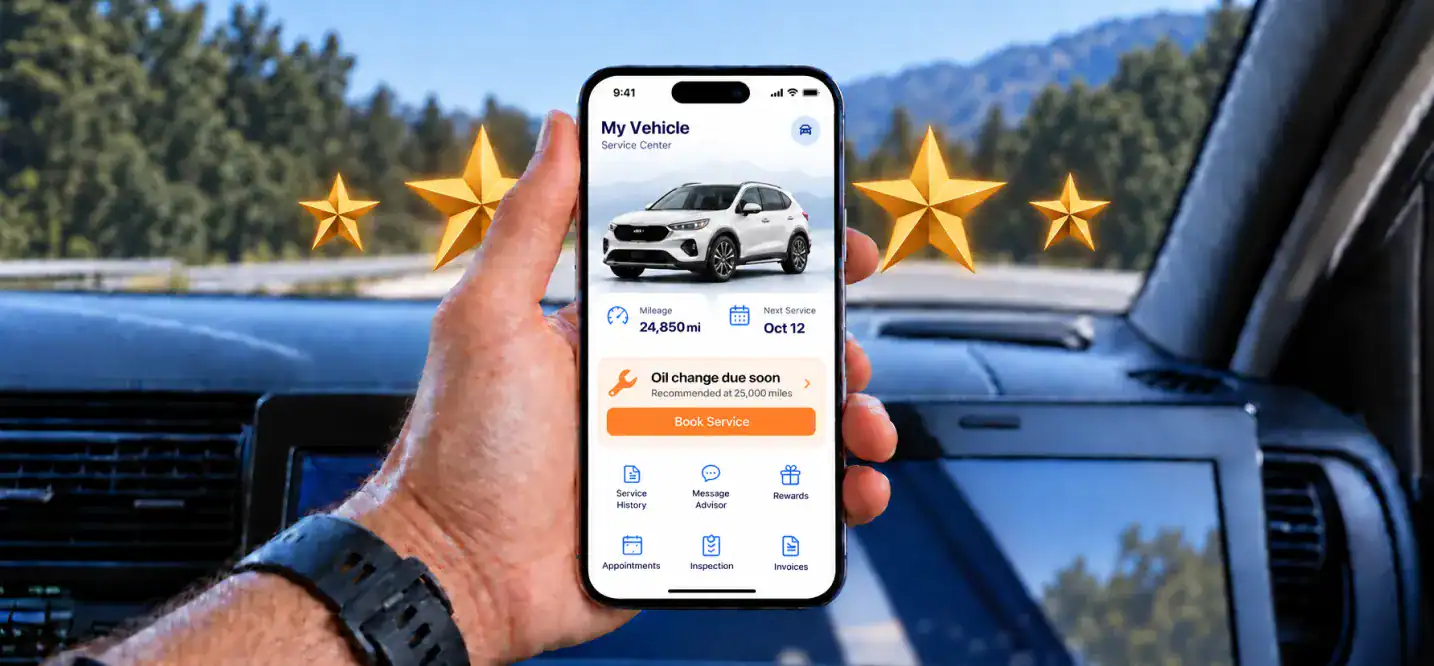
An automotive service and dealership app is a mobile app built for car owners and dealership customers. It handles service bookings, maintenance reminders, and communication with the dealership, all from a phone.
Think of it as a digital front desk for your car. Instead of calling the service department, you open the app. Instead of guessing when your next oil change is due, the app tells you.
These apps usually cover:
- Service appointment scheduling
- Maintenance and recall reminders
- Vehicle history and repair records
- Loyalty points and rewards
- Direct messaging with service advisors
- Payment and invoice tracking
This isn’t a small trend. The connected car market, which includes apps like these, was worth $108.5 billion in 2025. It’s expected to reach $317 billion by 2034.
Car brands aren’t building apps because it’s fashionable. They’re doing it because customers expect this level of convenience now.
Why Car Brands Are Investing in Mobile Apps

Car buying and car ownership both moved online. Car brands had no choice but to follow with serious investment in mobile app development.
The Shift Toward Digital-First Customers
People don’t want to wait on hold to book an oil change. They want to tap a button and pick a time. This holds true across the entire automotive industry, from luxury brands to budget models.
More dealers are catching on. In 2025, 43% of dealers let customers complete the entire car-buying process online. That’s up from just 34% in 2022. Service booking is following the same path.
What’s Driving Demand
A few things are pushing car manufacturer app development forward:
- Customers expect the same ease they get from banking or food delivery apps
- Independent repair shops are winning over dealership service departments
- Dealers need a direct channel to customers, not just email blasts
- Manufacturers want first-party data on how people actually use their vehicles
Traditional Dealership Experience vs. App-Based Experience
| Traditional Experience | App-Based Experience | |
| Booking a service | Phone call during business hours | Book anytime, from anywhere |
| Reminders | Postcard or occasional email | Push notification, timed to your mileage |
| Vehicle history | Paperwork or asking the advisor | Stored in the app, always accessible |
| Payments | Pay in person at pickup | Pay in-app, get a digital receipt |
| Communication | Waiting on hold | Direct message with a service advisor |
Must-Have Features of a Dealership App
Not every dealership app needs every feature under the sun. But a few are non-negotiable if you want people to actually use it.
Service and Maintenance Features
- Online appointment scheduling with real-time availability
- Maintenance reminders based on mileage or time
- Digital vehicle inspection reports with photos
- Repair order tracking and status updates
- Parts and accessories ordering
Customer Engagement Features
- Loyalty points for service visits and referrals
- Personalized offers based on vehicle age and history
- In-app chat with service advisors
- Push notifications for recalls and promotions
- Trade-in and upgrade estimates
62% of customers stop doing business with a brand after one bad service experience. An app with clunky booking or no communication features pushes people toward competitors. Good car service app development focuses on removing friction, not just adding features for the sake of it.
Feature to Customer Benefit
| Feature | Customer Benefit |
| Real-time booking | No back-and-forth phone calls |
| Digital inspection reports | Builds trust, shows exactly what’s needed |
| Loyalty points | Rewards repeat visits |
| In-app messaging | Faster answers, less waiting |
| Recall alerts | Keeps drivers safe and informed |
If you’re mapping out how a project like this comes together, our guide on the mobile app development process walks through each stage.
How Dealership Apps Build Customer Loyalty
Loyalty isn’t built through one great visit. It’s built through small conveniences that add up over time.
Personalization and Rewards
An automotive customer loyalty app tracks what a customer actually needs. Not generic emails, but offers based on their car’s age, mileage, and service history.
Loyalty program members visit the service department almost twice as often as non-members. They also spend nearly double per year.
The numbers back this up. Loyalty members spend around $662 a year on service. Non-members spend about $337.
Convenience Keeps Customers Coming Back
People stick with brands that make life easier, not brands that make them wait.
- One-tap rebooking for recurring services
- Saved payment methods and quick checkout
- Real-time updates instead of guessing when the car is ready
- Easy access to warranty and service history
This is where Cubix comes in. We’ve built dealership customer experience apps that combine personalization with a smooth, simple interface, so brands don’t lose customers to a clunky app.
Improving the Car Service Experience Through Apps
A good vehicle service app doesn’t just book appointments. It changes how the entire repair process feels.
Real-Time Updates and Transparency
Nobody likes wondering what’s happening to their car at the shop. Apps fix that by showing:
- Live repair status updates
- Photos or videos from the technician
- Clear pricing before work starts
- Estimated pickup time
Car shopper satisfaction has climbed steadily, from 60% in 2016 to 68% in 2025. Much of that gain comes from clearer communication and more digital tools. The same pattern applies to auto repair and service. Transparency builds trust, and trust keeps customers coming back.
Booking Vehicle Service Appointments Online
Yes, customers can book vehicle service appointments through an app. In fact, this one feature can decide whether a customer ever comes back.
The typical booking flow looks like this:
- Open the app and select “Book Service”
- Choose the service type (oil change, inspection, recall, etc.)
- Pick an available date and time
- Add notes or photos describing the issue
- Get instant confirmation and a reminder before the visit
Simple flows like this matter more than people think. Dealerships are already losing ground here.
The upside works both ways. Customers who keep servicing with their dealer are far more likely to buy their next car there too. About 74% of loyal service customers buy their next vehicle from the same dealership. Meanwhile, 70% of new car buyers never come back for service at all. An easy booking flow, tied to service appointments right inside the app, helps close that gap.
Building this kind of flow doesn’t take as long as people assume. Check our app development timeline guide for a realistic breakdown.
Smart Maintenance and Service Reminders
Most people don’t track when their car needs an oil change or a filter swap. Automotive apps handle that for them.
How Reminder Systems Work
The app pulls data from mileage, driving habits, or connected vehicle sensors. It sends a notification before something becomes urgent, not after.
- Push notifications timed to mileage or months since the last visit
- Recall alerts pulled directly from manufacturer data
- Seasonal reminders, like tire changes and battery checks
- Follow-up reminders after a repair
Reminders aren’t just a nice touch. Selling a car with a service package attached leads to 50% higher retained margin over that customer’s lifetime. Reminders keep that service package relevant long after the sale. Good vehicle maintenance tracking turns a one-time purchase into years of repeat business.
Integrating with CRM and Dealer Management Systems
Yes, dealership apps can and should integrate with CRM and dealer management systems (DMS). Without this, the app is just a pretty booking form.
Why Integration Matters
When an app connects to a dealer’s CRM and DMS, it can:
- Pull real vehicle history instead of asking customers to re-enter it
- Sync appointments directly into the service bay’s schedule
- Trigger personalized offers based on actual purchase and service data
- Give service advisors full context before a customer even arrives
This matters financially too. Getting a new customer costs five to twenty-five times more than keeping an existing one. A dealership mobile app plugged into CRM data helps dealers hold onto the customers they already have, instead of spending more to replace the ones who leave.
This kind of integration is often the hardest part of automotive mobile app development. It’s also the part that makes the biggest difference. Wondering what work like this typically costs? Our breakdown of mobile app development cost covers realistic price ranges.
The Role of AI in Automotive Apps
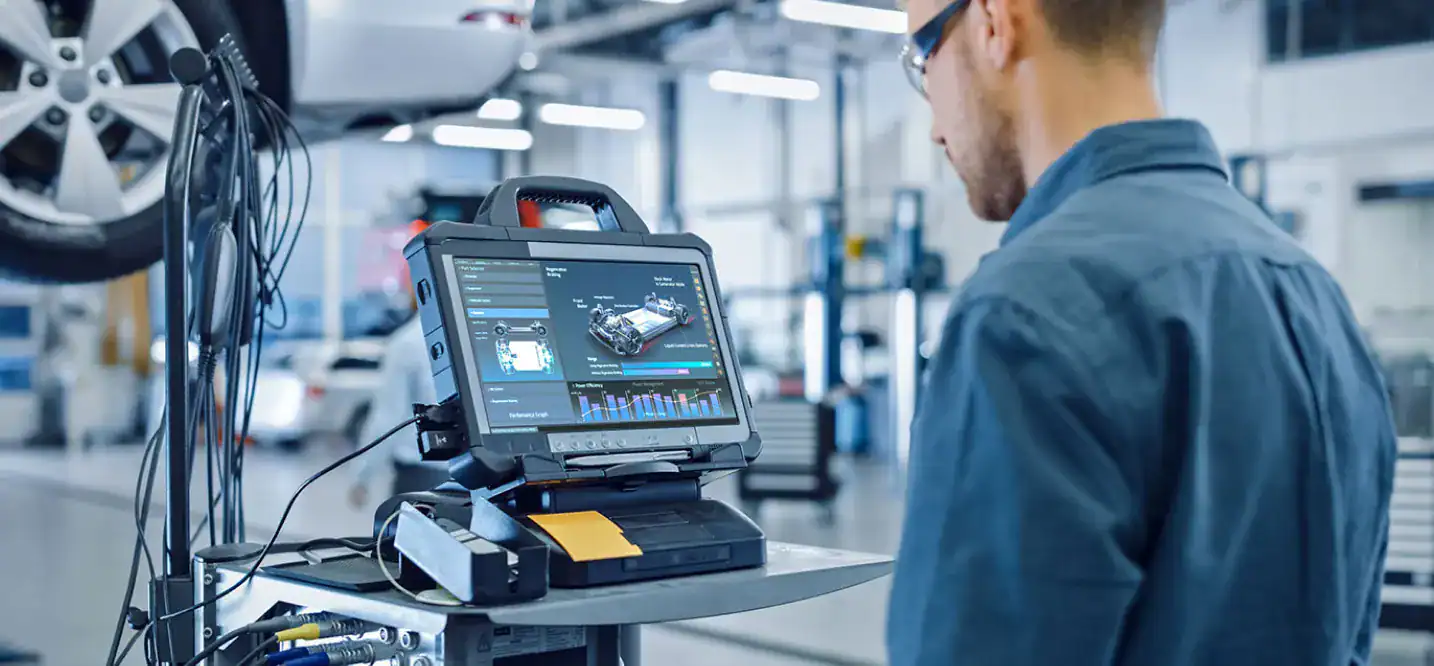
AI is changing what these apps can actually do, not just how they look.
AI-Powered Personalization
AI looks at a customer’s driving patterns, service history, and vehicle data. Then it tailors what the app shows them.
- Personalized service recommendations
- Smart scheduling that suggests the best time slot
- Chatbots that handle simple questions instantly
- Predictive offers based on when a customer usually books
Predictive Maintenance
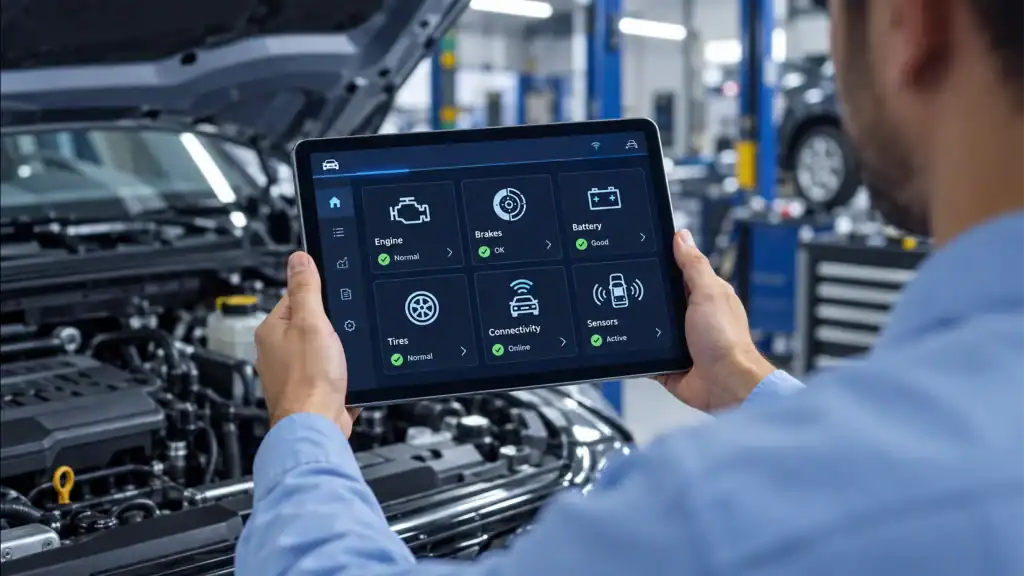
Instead of waiting for a warning light, AI can flag issues before they happen. This is where an automotive customer engagement app becomes genuinely useful, not just convenient.
The automotive AI market shows how fast this is moving. It was worth about $4 billion in 2024. By 2037, it’s projected to reach $80 billion.
Already, 81.5% of automotive companies have deployed or explored AI somewhere in their business.
AI Use Cases in Automotive Apps
| AI Use Case | What It Does |
| Predictive maintenance | Flags issues before a breakdown happens |
| Smart scheduling | Suggests times based on service bay load |
| Chat support | Answers simple questions instantly, 24/7 |
| Personalized offers | Matches promotions to the right customer |
| Voice assistants | Lets drivers book service hands-free |
If you’re comparing partners for a project like this, our list of top mobile app development companies is a good place to start.
The Data Behind Automotive App Success
Let’s zoom out for a second. Here’s what the data says about automotive apps and customer loyalty, all in one place.
Automotive App and Loyalty Stats at a Glance
| Metric | Number |
| Connected car market by 2034 | $317 billion |
| Dealership service return rate (2025) | 54%, down from 72% in 2023 |
| Dealership service revenue (2024) | $156 billion |
| Average industry retention rate | 83% |
| Loyalty member annual spend | $662, vs. $337 for non-members |
| Automotive AI market by 2037 | $80 billion |
The pattern is clear. Vehicle service and vehicle maintenance are where loyalty gets won or lost. Apps that make this experience easier are quickly becoming standard, not optional.
Why Work With Cubix for Automotive App Development
Building an automotive service app isn’t just about writing code. It takes real experience with how dealerships, CRMs, and customer expectations all fit together.
Cubix has spent years on automotive mobile app development for brands who need more than a basic booking form. Our Automotive Software Development Services cover everything from service scheduling to AI-powered maintenance predictions.
What sets this apart:
- Deep experience integrating with dealer CRM and DMS platforms
- AI features built for real use cases, not marketing buzzwords
- A focus on customer loyalty features that actually get used
- Proven work across the automotive industry, from dealer groups to manufacturers
Ready to Build Your Automotive App?
Customer loyalty in the automotive industry isn’t going to fix itself. The brands winning right now are the ones making service easier, not harder.
If you’re ready to build a dealership app that customers actually want to use, Cubix can help. As a mobile app development company with automotive experience, we build apps that connect service, loyalty, and AI into one smooth experience.
Get in touch, and let’s talk about what your automotive app could look like.
Want AI-powered features in your app? Our experts can guide you
Contact UsFrequently Asked Questions
1. What is an automotive service and dealership app?
It’s a mobile app that lets car owners book service, track maintenance, and communicate with a dealership. It usually connects to the dealership’s CRM and DMS for a smoother experience.
2. What features should an automotive dealership app have?
At minimum, it needs appointment scheduling, maintenance reminders, and vehicle history tracking. Loyalty rewards and in-app messaging make it far more useful.
3. How do dealership apps improve customer loyalty?
They make service easier, so customers keep coming back instead of switching to an independent shop. Personalized offers and rewards give people a reason to stay loyal.
4. How can automotive apps improve the car service experience?
They add transparency through real-time updates, photos, and clear pricing. Customers know exactly what’s happening with their vehicle instead of guessing.
5. Can customers book vehicle service appointments through an app?
Yes. Most modern dealership apps let customers pick a service type, choose a time, and get instant confirmation, all without a phone call.
6. How do automotive apps send maintenance and service reminders?
They track mileage, time since the last visit, or connected vehicle data. Based on that, they send push notifications before a service is due.
7. Can a dealership app integrate with CRM and dealer management systems?
Yes, and it should. Integration lets the app pull real vehicle history and sync appointments directly into the dealership’s existing systems.
8. How can AI improve automotive service and dealership apps?
AI can predict maintenance needs before a problem shows up. It also personalizes offers and handles simple questions through chat, saving time for both sides.