Key Takeaways
- Event app development cost in 2026 depends on features, complexity, and platform choices.
- Building an accurate event app budget means understanding both visible and hidden costs.
- Feature set and app complexity have the biggest impact on event app development pricing.
- Cross-platform frameworks and reusable components help cut development expenses.
- Choosing an experienced partner, such as Cubix, supports accurate budgeting and on-time delivery.
Event apps have become a staple for conferences, trade shows, and company meetings. Organizers now treat robust app development as a key budget item in 2026, driven by rising digital expectations. According to Grand View Research, the event management software market is projected to hit $14.5 billion by 2030, which highlights the rapid growth in this sector. Planning your event app budget can be challenging due to the broad range of costs involved.
This guide breaks down current event app development pricing, reviews costs by app type and complexity, and gives practical strategies for building your 2026 budget. The best custom mobile app development company has listed everything down below.
Event App Development Cost by App Type
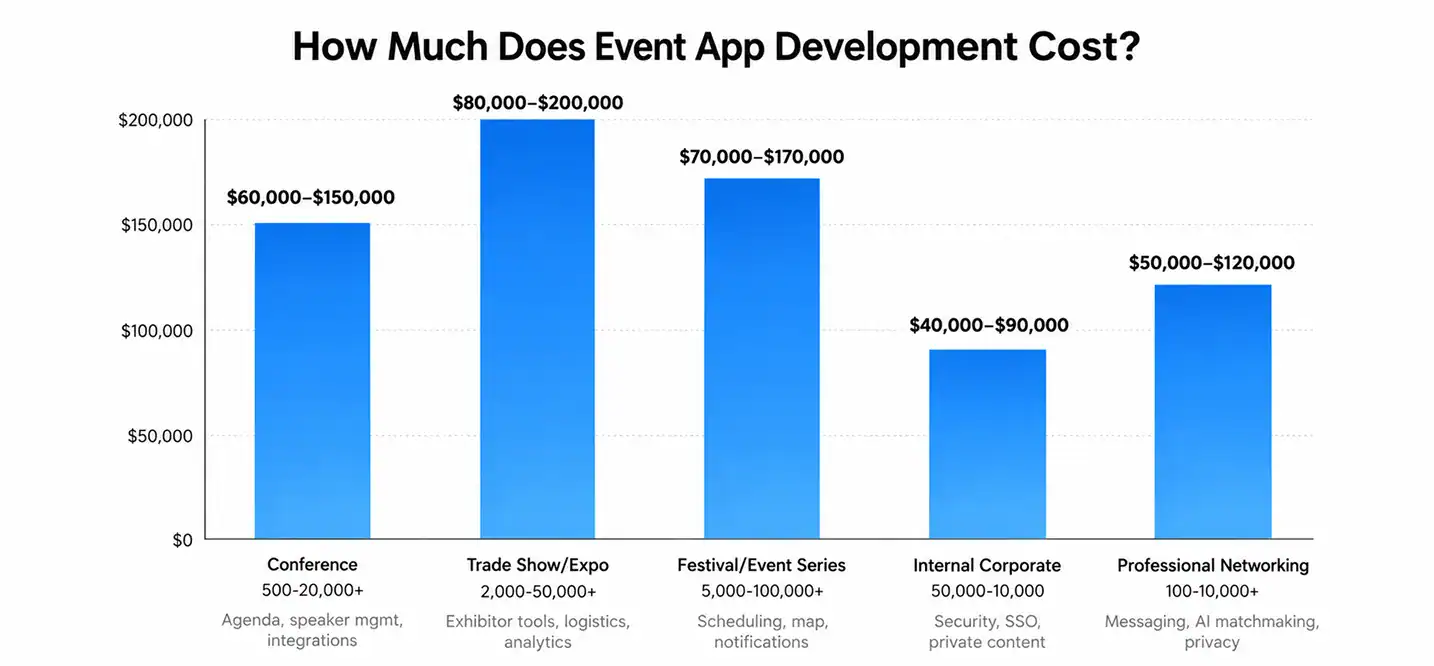
Not all event apps serve the same purpose, and each type comes with a different price. Whether you need a networking app for a huge expo or a tool for in-house meetings, knowing these differences helps you budget more accurately for your event app.
In 2026, the main event app categories are conference apps, trade show apps, festival or event series apps, internal corporate event apps, and networking mixers. Each has unique needs; audience size, integration requirements, and security features all shape the final event app development pricing.
| Event App Type | Typical Cost Range (USD) | Audience Size | Notable Cost Drivers |
| Conference | $60,000-$150,000 | 500-20,000+ | Agenda, speaker mgmt, integrations |
| Trade Show/Expo | $80,000-$200,000 | 2,000-50,000+ | Exhibitor tools, logistics, analytics |
| Festival/Event Series | $70,000-$170,000 | 5,000-100,000+ | Scheduling, map, notifications |
| Internal Corporate | $40,000-$90,000 | 50,000-10,000 | Security, SSO, private content |
| Professional Networking | $50,000-$120,000 | 100-10,000+ | Messaging, AI matchmaking, privacy |
Statista found that 80% of event organizers in 2025-2026 use mobile apps to boost attendee engagement. This shows that event management app development cost is now a core budget item, not just an add-on.
The cost to develop an event app depends on more than just audience size. Networking apps, for example, often need secure messaging, while trade show apps must integrate with exhibitor CRMs and lead retrieval. Festival apps need real-time updates and notifications for shifting crowds.
Internal corporate event apps tend to cost less thanks to a focused scope and fewer integrations. In contrast, trade show and conference apps require more analytics, payment processing, and connections with ticketing or marketing platforms. As you add attendees or real-time data needs, the total event management app development cost rises.
Event App Development Cost by Complexity
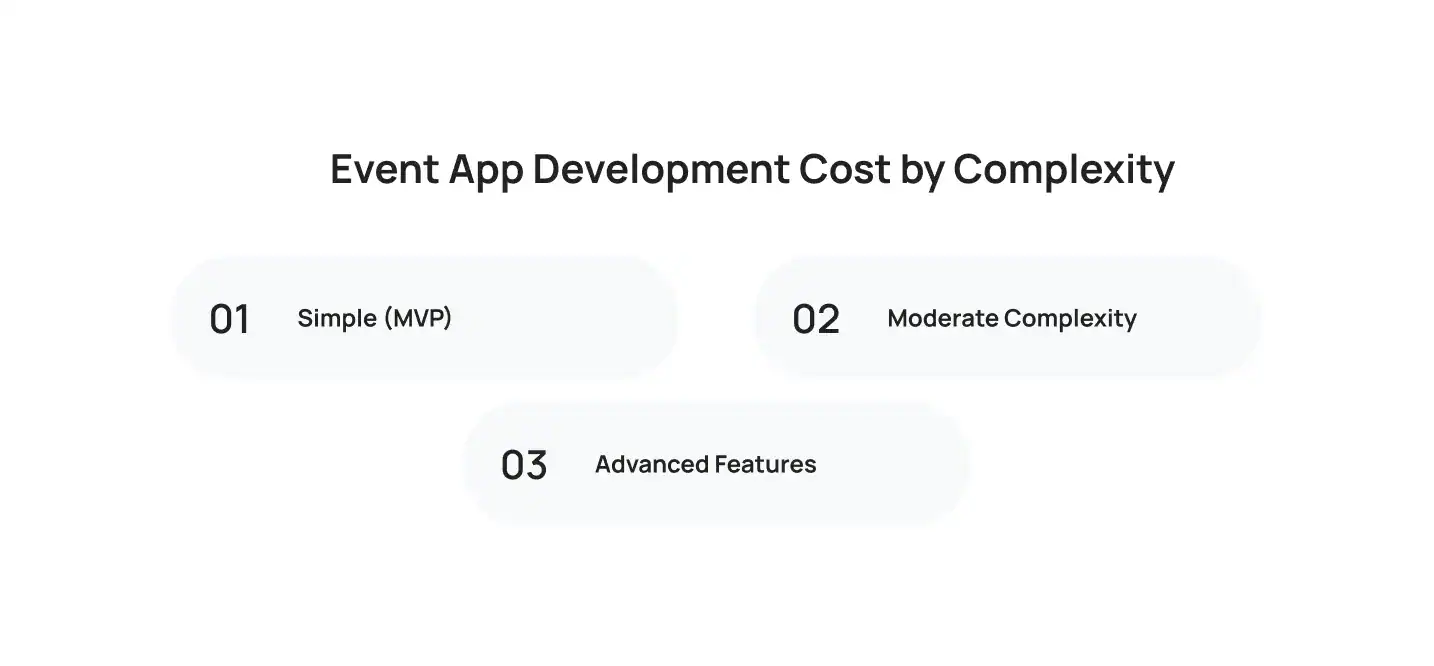
Complexity is a main factor when looking at the cost to build an event app. Simple MVPs get you to market fast for basic needs, while advanced solutions require a larger investment for more interactive features. Each layer of complexity brings new demands for design, testing, and support.
Simple (MVP)
A basic MVP gives you essentials like event agendas, attendee lists, and push notifications. These apps skip custom branding and advanced design, focusing on quick deployment. The cost to build event app MVPs in 2026 usually ranges from $40,000 to $70,000. This covers scheduling, a basic participant directory, alerts, and simple backend work. For more details, see the mobile app development MVP resource.
Moderate Complexity
Moderate event apps add value with networking, personalized agendas, and simple analytics. You can expect to pay $70,000 to $120,000 in this range. These apps might include attendee matchmaking, chat, live polling, and dashboards. Costs climb as integration needs, such as CRM sync or badge scanning, become important.
Advanced Features
Advanced event apps cost $120,000 to $250,000 or more, as noted by Clutch. These include features like real-time analytics, AI matchmaking, AR/VR booths, multi-language support, and live streaming. Higher backend, security, QA, and support costs also come with these advanced builds.
Every added integration, custom workflow, or automation bumps up initial and ongoing costs. Choosing the right level of app complexity helps you match your event app development cost to the real business value rather than optional extras.
Event App Development Cost Breakdown by Feature
Your selected Feature Set directly shapes the total cost to build event app solutions. While all projects start with core features, most of the budget often goes to advanced or custom options. Planning which features matter most can help you avoid unexpected costs.
Key feature groups include:
- Core Features: Essential items such as event agendas, speaker bios, attendee lists, and push notifications.
- Networking: Attendee directories, AI-powered matchmaking, private chat, and meeting scheduling.
- Engagement Tools: Live polling, Q&A, gamification, real-time notifications, polls, and contests.
- Analytics: Tracking user activity, heatmaps, and event stats.
- Integrations: Payments, CRM sync, ticketing (Eventbrite, Cvent), and other third-party APIs.
Here’s an estimated cost breakdown by feature for 2026 event app development pricing:
| Feature Group | Typical Added Cost (USD) |
| Core (agenda, notifications, attendee list) | $15,000-$35,000 |
| Networking (matchmaking, chat, meetings) | $20,000-$50,000 |
| Engagement (polls, Q&A, games) | $10,000-$35,000 |
| Analytics (real-time stats, dashboards) | $15,000-$40,000 |
| Integrations (payments, APIs, CRM) | $15,000-$60,000 |
GoodFirms reports that custom features can make up as much as 60% of many app budgets. Prioritize core features tied to your event’s goals before budgeting for advanced add-ons. Smart feature planning lets you control event app development pricing while still delivering value to attendees and sponsors.
Want to discuss your project? Our experts are just a click away.
Contact UsWhat Factors Affect Event App Development Cost?
Many factors beyond the features you see on screen will shape your final event app development cost. It’s important to include these in your event app budget from the start.
- Development Approach: Agile Development offers flexibility and speed, often reducing costly rework compared to Waterfall methods. Learn more about Agile project management.
- Cloud Services: Plan for scalable cloud hosting, backups, and advanced security, which all come with their own price tags.
- Third-Party APIs: Payments, event mapping, and ticketing integrations bring extra costs, both direct and indirect.
- Development Region: Deloitte found labor rates vary by up to three times by team location, with the US and Western Europe highest and South Asia lowest.
- Project Management & QA: Dedicated managers and thorough QA are vital for quality but are frequently overlooked in early cost estimates.
Similar-looking projects can land at very different price points based on these decisions. Mixing Agile methods, modern Cloud Services, and efficient use of APIs keeps your event app development pricing realistic and clear.
Event App Development Cost by Platform
Platform choice has a major effect on the cost to build event app solutions. Your decision to build for iOS, Android, both natively, or cross-platform will impact both cost and time.
| Platform | Typical Cost Range (USD) | Notes |
| Native iOS | $45,000-$110,000 | Best performance, highest audience in US |
| Native Android | $45,000-$110,000 | Larger user base globally |
| Cross-Platform (Flutter, React Native) | $60,000-$140,000 | Single codebase for both platforms |
Cross-platform development has grown significantly. Statista found that 42% of new mobile apps released in 2025 used cross-platform frameworks. Developing once for both iOS and Android can cut developer fees and speed up launches. For more on this, see the cross-platform app development cost guide.
Reusable Components make saving even easier. Using the same libraries and UI blocks across updates lowers both upfront and ongoing event app development costs. In 2026, many apps are built this way unless a project needs unique native features or maximum speed. The benefits of reusable components are discussed in the cross-platform app maintenance article.
How to Reduce Event App Development Costs
Smart project planning and technical choices can help you keep your event app budget in check. These steps can make development more efficient and stretch your investment further.
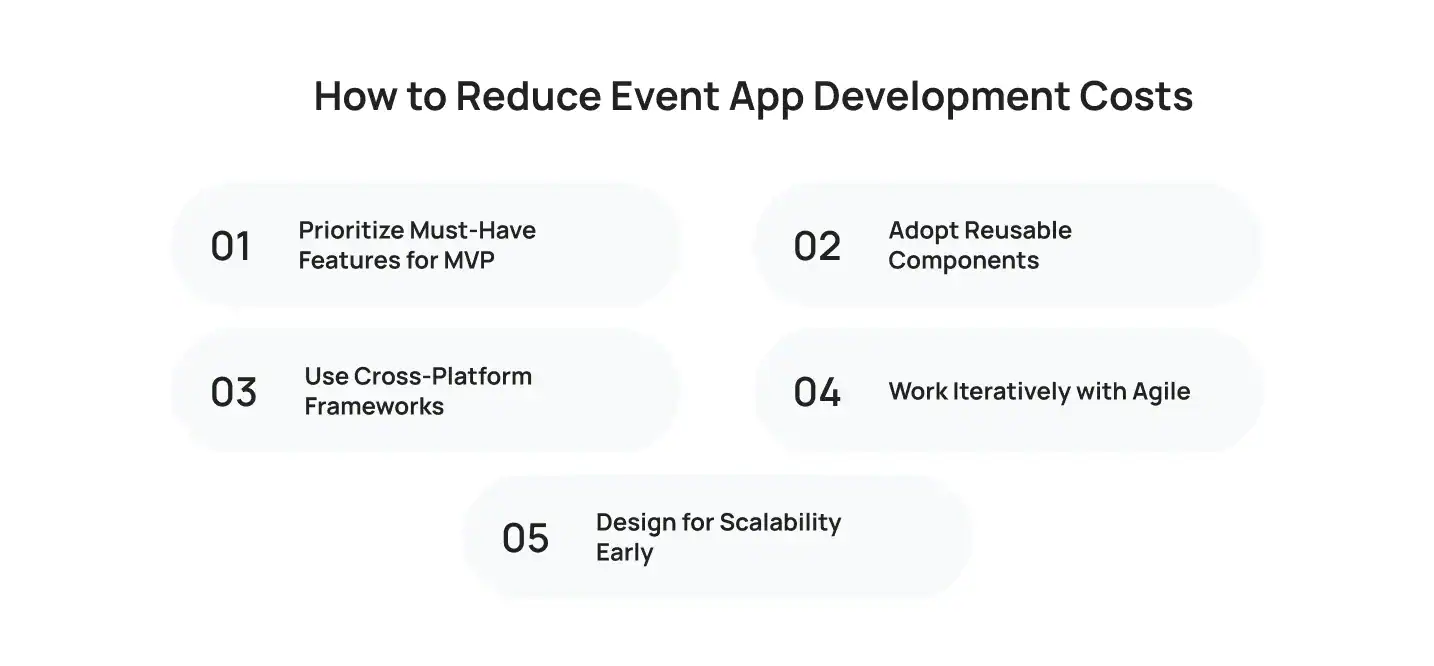
- Prioritize Must-Have Features for MVP: Distinguish essentials from extras, and plan advanced features for future updates.
- Adopt Reusable Components: McKinsey notes that pre-built modules can reduce development time by up to 30%.
- Use Cross-Platform Frameworks: Frameworks like Flutter or React Native allow you to cover iOS and Android with a single codebase.
- Work Iteratively with Agile: Launch faster and get feedback, so you avoid building costly, unnecessary features.
- Design for Scalability Early: This helps you avoid expensive technical debt as your attendee numbers grow.
Experienced development partners play a big role in managing event app development pricing. A Custom Mobile App Development Company knows how to combine Feature Prioritization, Agile methods, and Reusable Components to cut waste. These practices lower upfront costs and make future updates and maintenance more affordable.
Hidden Costs to Consider When Developing an Event App
Some expenses in event app projects often go unnoticed at first. To get an accurate total cost to build event app solutions, be sure to consider these common hidden costs before you start.
- Maintenance and Updates: Gartner reports that 15-20% of your event app development cost recurs every year for maintenance, covering security, bug fixes, and new OS releases.
- Third-Party Service Fees: APIs for maps, ticketing, or analytics add ongoing costs, and cloud hosting can surge if usage spikes.
- App Store Fees: Both Apple and Google charge annual publisher fees, plus possible app review or in-app purchase revenue share.
- Marketing and Onboarding: Don’t forget to budget for campaigns to drive downloads and user training for complex tools.
- Data Privacy and Compliance: Meeting GDPR, CCPA, or other data laws often adds time and expense.
If you skip these costs in your event app budget, you risk major overruns. Add them from the start for a budget that truly reflects your needs.
How to Estimate Your Event App Development Budget
A strong event app budget comes from careful planning at every step. By breaking the process into clear phases, you can track your event management app development cost and avoid surprises.
Scoping
List your requirements in detail before reaching out to developers. Note your Feature Set, expected attendee numbers, platforms, and crucial integrations. The more detail you provide, the less chance for budget surprises.
Quoting
Request detailed bids from firms experienced in event apps. Ask about support, maintenance, and which cloud services or APIs will have recurring costs. Make sure quotes distinguish between core app features and optional extras, so you can adjust as needed.
Iterating
Stay flexible. Discuss a phased MVP with your developer so you can launch quickly, then expand features over time. Check at each stage that your priorities and event app development cost 2026 projections still make sense.
Work closely with your development team and review working versions regularly to minimize missteps and keep your priorities on track.
How Cubix Adds Value to Event App Development
Choosing Cubix means working with a partner who understands the details of event app development cost and how to deliver results. Cubix is an established custom mobile app development company with proven experience managing event app development costs and quality.
- Complete Platform Coverage: Cubix builds across iOS, Android, and cross-platform frameworks, ensuring your app reaches your target users.
- Proven Results: Cubix has delivered successful apps for global conferences, high-profile trade shows, and private company events.
- Transparent Agile Process: You get clear timelines, budgets, and visibility throughout your project.
- Efficient Reusable Components: By leveraging reusable modules, Cubix speeds up delivery and reduces costs, helping clients launch sooner.
- Comprehensive Ongoing Support: Maintenance and feature updates keep your app current, secure, and aligned with industry best practices.
Event app development requires specialized skills, and Cubix brings strong experience with integrations, Cloud Services, and Third-Party APIs. This attention to detail means every cost in your event app development pricing is accounted for, helping you plan your budget with confidence. Cubix’s approach is detailed further in their mobile app development cost guide, which offers insights into budgeting and pricing strategies.
If you want guidance tailored to your event, Cubix offers deep expertise as a Custom Mobile App Development Company ready to support your goals.
Want to discuss your project? Our experts are just a click away.
Contact UsFrequently Asked Questions
1. How much does it cost to develop an event app in 2026?
Costs usually range from $40,000 for a basic MVP to over $200,000 for advanced, feature-rich apps. Price depends on features, platforms, and complexity.
2. What is the average cost of an event management app?
Average development costs fall between $60,000 and $120,000, depending on the required features and needed integrations.
3. How long does it take to build an event app?
The timeline depends on complexity: simple apps take 3-6 months, while enterprise-grade solutions may need 9-12 months. For more on timelines, see the app development timeline resource.
4. What features increase event app development costs?
Advanced features like AI matchmaking, live streaming, complex analytics, and third-party integrations increase total costs.
5. Is it cheaper to build an event app with Flutter or React Native?
Yes, cross-platform development with Flutter or React Native can cut costs by up to 30% versus building separate native apps. Learn more about these options in the cross-platform app development cost article.
6. How much does it cost to maintain an event app?
Annual maintenance is usually 15-20% of the initial build cost, covering updates, bug fixes, and new features. Maintenance specifics are discussed in cross-platform app maintenance.
7. Should I build a custom event app or use an existing platform?
Custom apps offer flexibility and branding but cost more upfront. Existing platforms launch faster but may lack key custom features
8. What are hidden costs in event app development?
Common hidden costs include maintenance, third-party service fees, app store costs, and compliance work for data privacy.
9. How does Agile development affect event app budgeting?
Agile lets you build in phases and adjust based on feedback, helping avoid major overruns and control your budget.
10. What’s the best way to estimate my event app budget?
Start with a detailed scope, prioritize must-have features, get quotes from experienced partners, and plan to iterate as your needs change.