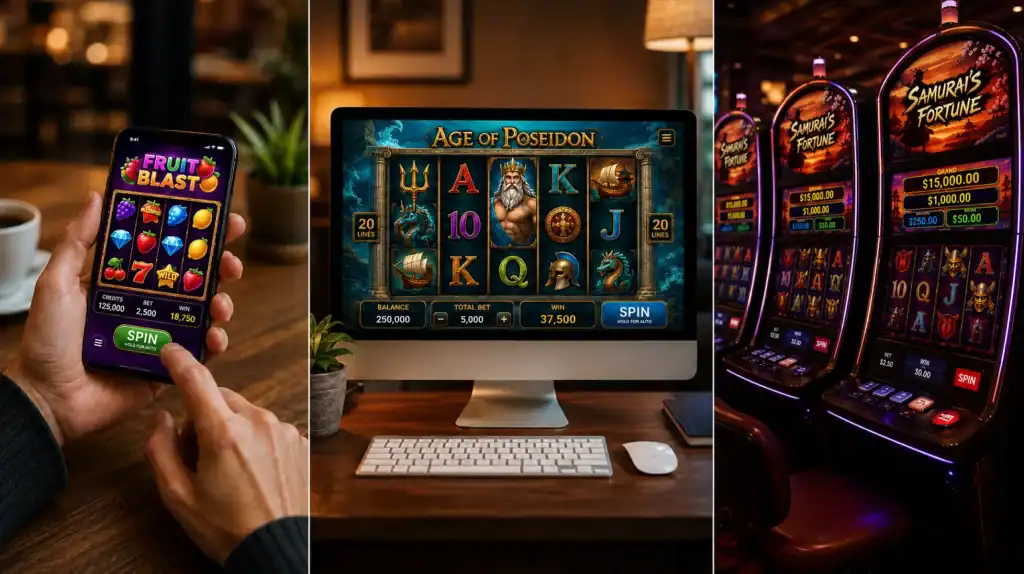
The online casino industry looks very different today than it did a few years ago. Players expect smooth gameplay, fast loading screens, exciting bonus rounds, and games that work perfectly on both mobile devices and desktops. That means developers can’t just focus on attractive graphics anymore. They also need to choose the right programming language and technology stack from the very beginning.
Whether you’re planning a social casino app, a real-money slot platform, or looking for a reliable mobile game development service to build your idea, the technology you choose will affect everything.
Performance, security, scalability, maintenance costs, and even how quickly your game reaches the market all depend on it. The same applies if you’re exploring professional slot game development services for a commercial casino product.
The numbers tell the same story. Grand View Research estimates that the global online gambling market continues to grow steadily through 2026, driven largely by mobile gaming, improved internet access, and expanding legalization across multiple regions. At the same time, Newzoo reports that mobile remains the biggest gaming platform worldwide, making mobile-first development a priority for casino game studios as well.
But here’s something many first-time founders overlook.
A slot game isn’t just a few spinning reels with colorful symbols. Behind every spin, there’s a random number generator (RNG), payout calculations, backend servers, player wallets, analytics, compliance systems, and often cloud infrastructure handling thousands of players at once. That’s why the question isn’t simply “What programming language do slot machines use?” It’s really “Which technology stack makes the most sense for the type of slot game you’re building?”
Slot Games Have Changed: What About the Technology Behind Them?
Walk into a casino twenty years ago, and you’d mostly see standalone slot machines running on dedicated hardware. Today, players are just as likely to spin the reels on a smartphone while waiting for coffee. That shift has changed almost everything about slot machine software development.
According to the UK Gambling Commission’s latest industry data, licensed operators recorded more than 71 million online slot sessions in March 2026 alone, with nearly 4.8 million average monthly active slot accounts. Online slot Gross Gambling Yield also remained above £770 million during the reporting period. Those figures show just how much infrastructure is required to support millions of secure, uninterrupted game sessions every month.
How are slot machines programmed?
At a high level, every modern slot game combines several independent systems that work together in real time.
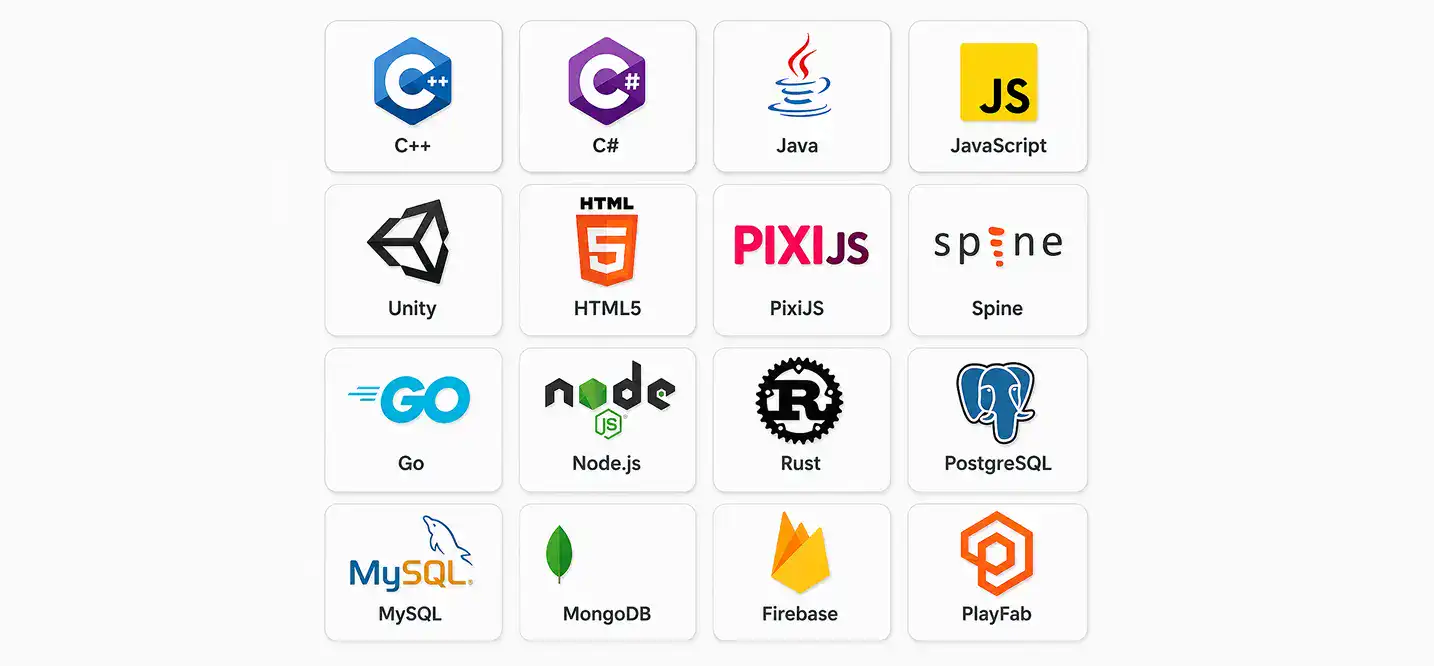
| Component | What It Does | Common Technologies |
| Random Number Generator (RNG) | Determines every spin outcome fairly | C++, C#, Java |
| Game Logic | Calculates paylines, payouts, multipliers, and bonus rounds | C#, JavaScript, C++ |
| Graphics & Animation | Displays reels, symbols, visual effects, and UI | Unity, HTML5, PixiJS, Spine |
| Backend Services | Stores player progress, wallets, promotions, and events | Go, Java, Node.js, Rust |
| Database | Saves user profiles and gameplay data | PostgreSQL, MySQL, MongoDB |
| Analytics | Tracks player behavior and retention | Firebase, PlayFab, GameAnalytics |
| Security & Compliance | Protects player data and supports regulatory standards | Encryption, authentication, GLI-certified systems |
What Programming Language Do Slot Machines Use?
There’s no single programming language behind every slot game. It depends on where the game will run, who it’s built for, and how much traffic it needs to handle.
For example, a browser-based social casino game uses a very different tech stack than a slot machine sitting inside a casino. Likewise, a mobile slot app has different performance requirements than a multiplayer casino platform serving thousands of players at once.
So if someone asks, “What programming language do slot machines use?”, the honest answer is: usually several.
One language powers the game itself, another manages the backend, and yet another might handle analytics or payment processing. Modern slot games are really a combination of technologies working together.
Here’s a closer look at the languages developers rely on in 2026.
C# remains the first choice for mobile slot games
If you’re building a mobile slot game today, C# is probably the safest bet.
That’s largely because Unity 6 continues to dominate cross-platform game development. Developers can write the game once and deploy it across Android, iOS, Windows, WebGL, and even some console platforms with relatively few changes. That saves months of development time.
C# also makes it easier to build features players now expect, such as:
- Animated bonus rounds
- Daily login rewards
- Leaderboards
- Progressive jackpots
- Live events
- Cloud saves
The same flexibility is one reason many studios that work as an rpg game development company also use Unity for their larger projects. While RPGs and slot games solve very different gameplay problems, both benefit from Unity’s mature toolset, strong asset ecosystem, and reliable cross-platform deployment.
C++ still powers many land-based casino machines
People often assume C++ has disappeared from game development. It hasn’t.
In fact, it’s still one of the most important languages for land slot machine software development.
It’s also widely used for:
- RNG engines
- Casino hardware drivers
- Embedded gaming systems
- High-performance math calculations
- Security modules
Many studios that offer a dedicated c++ game development service continue to use it for regulated casino products where reliability matters more than rapid development.
That said, C++ has a steeper learning curve than C#, so it’s generally chosen for specialized casino software rather than beginner-friendly projects.
JavaScript and TypeScript dominate browser slot games
Not every slot game needs to be downloaded.
Many online casinos now offer instant-play games that launch directly inside your browser. These games are usually built with HTML5 technologies, making JavaScript and TypeScript the preferred programming languages.
Modern browser slots can deliver surprisingly rich experiences, including:
- High-quality animations
- Responsive interfaces
- Touch controls
- Multiplayer tournaments
- Cross-device compatibility
If you’re planning to add blockchain-powered rewards or digital collectibles to a browser casino experience, modern JavaScript frameworks can also support web3 game development services.
Wallet connectivity, token-based rewards, and blockchain APIs can be integrated without rebuilding the entire game, provided those features genuinely improve the player experience.
Java and Kotlin continue to support Android casino apps
Developers often rely on Java or Kotlin for:
- User authentication
- In-app purchases
- Push notifications
- Secure payment processing
- Native Android performance
These languages are especially useful when the slot experience is only one part of a larger casino platform that includes poker, blackjack, sports betting, and player wallets.
Swift delivers the best experience for iPhone users
Apple devices have their own development environment.
That’s where Swift comes in.
Swift is Apple’s official programming language for iOS applications, and it’s designed to deliver fast performance while reducing common coding errors.
For casino operators targeting premium iPhone users, Swift offers several benefits:
- Smooth animations
- Strong security features
- Better battery efficiency
- Faster app performance
- Native Apple Wallet and payment integration
Many studios combine Unity for gameplay with Swift for platform-specific features, giving players the best possible experience on iPhones and iPads.
Python supports AI, testing, and analytics
You probably won’t build an entire slot game in Python. But you’ll almost certainly use it somewhere during development.
Python has become one of the most valuable supporting languages because it simplifies automation, machine learning, and data analysis. Developers use it behind the scenes rather than inside the game itself.
Common uses include:
- Player behavior analysis
- Automated testing
- Fraud detection
- AI-powered recommendations
- Performance monitoring
- Development tools
As AI becomes a bigger part of game production, Python’s role continues to grow.
For example, studios can analyze millions of gameplay sessions to understand where players stop playing, which bonus rounds perform best, or which promotions increase retention.
Rust and Go are becoming popular for modern backend systems
Backend technology has changed a lot over the last few years.
Large casino platforms now process thousands of game sessions every minute, and that requires fast, scalable servers.
That’s why many developers are adopting Rust and Go.
These languages are well suited for cloud-native systems because they handle high traffic while using fewer server resources. They’re commonly used for:
- Matchmaking services
- Player accounts
- Wallet management
- Leaderboards
- Tournament systems
- Real-time event processing
Comparing the most popular programming languages for slot game development
| Programming Language | Best For | Learning Curve | Performance | Most Common Use |
| C# | Mobile and cross-platform slot games | Easy | High | Unity development |
| C++ | Casino cabinets and RNG systems | Advanced | Excellent | Land-based slot machines |
| JavaScript | Browser-based slot games | Easy | High | HTML5 casinos |
| TypeScript | Large HTML5 projects | Medium | High | Web casino platforms |
| Java | Android casino apps | Medium | High | Native Android development |
| Kotlin | Modern Android apps | Medium | High | Android-first casino apps |
| Swift | iOS slot games | Medium | Excellent | Native Apple development |
| Python | AI, testing, analytics | Easy | Moderate | Automation and reporting |
| Rust | Cloud backend services | Advanced | Excellent | High-performance servers |
| Go | Multiplayer backend systems | Medium | Excellent | Scalable casino infrastructure |
Technology is only one part of a successful slot game. The visual experience matters just as much. That’s why many businesses choose to hire game app designers early in development to create intuitive reel layouts, bonus screens, and user interfaces.
So, the best choice always depends on what you’re building, who your players are, and how you expect the game to grow over the next few years. That’s why experienced slot machine software developers usually recommend selecting the technology stack only after defining the game’s business goals, target platforms, and compliance requirements.
Which Game Engine Makes Slot Development Faster?
Think of a game engine as the workspace where everything comes together. Your reels, animations, sound effects, user interface, bonus rounds, and payout logic all live inside it. A good engine speeds up development. A poor choice usually leads to extra work later.
The good news? Most modern engines already include tools for animation, physics, asset management, and cross-platform deployment. That means developers can spend more time improving gameplay instead of building everything from scratch.
Unity remains the industry favorite for slot games
It’s difficult to talk about casino games without mentioning Unity.
Unity continues to be one of the most widely used game engines in the world, and for good reason. According to the Unity Gaming Report 2026, studios are increasingly choosing Unity for live-service games because it supports faster iteration, cross-platform deployment, and AI-assisted production workflows.
For slot developers, Unity checks almost every box.
Unity is particularly strong for:
- Social casino games
- Mobile slot apps
- Cross-platform releases
- Live events and tournaments
- Reward systems
- Daily missions and progression
Unreal Engine shines when visuals are the priority
Unreal Engine is known for producing stunning graphics, realistic lighting, and cinematic visual effects.
For most traditional slot games, though, those capabilities are often more than you actually need.
That’s not to say Unreal isn’t useful. It works especially well for premium casino experiences where developers want immersive environments, interactive bonus rounds, or 3D slot worlds that feel closer to video games than classic casino machines.
Some studios also use Unreal when building luxury casino lobbies or virtual casino environments that support VR experiences.
The trade-off is development complexity. Unreal projects generally require more powerful hardware and longer production timelines than comparable Unity projects.
Godot is becoming a smart option for indie studios
Over the past two years, Godot has gained serious momentum.
As an open-source engine with no licensing fees, it’s becoming an attractive choice for startups and independent studios working with smaller budgets.
Godot offers:
- Lightweight projects
- Fast iteration
- Easy scripting
- Strong 2D development tools
- Growing community support
Phaser continues to dominate browser-based casino games
If your players never need to download the game, Phaser deserves a look.
Built around HTML5 and JavaScript, Phaser is designed specifically for browser experiences. That’s one reason many social casino platforms and instant-play slot games rely on it.
Because Phaser games run directly in the browser, developers can:
- Launch updates instantly
- Reach desktop and mobile players
- Avoid app store approvals
- Reduce installation friction
For casino operators focused on player acquisition, that convenience can make a real difference.
Comparing today’s most popular game engines
| Game Engine | Best For | Primary Language | Strength | Possible Limitation |
| Unity 6 | Mobile and cross-platform slot games | C# | Fast development, large ecosystem | Licensing costs for larger studios |
| Unreal Engine 5 | High-end 3D casino experiences | C++ | Exceptional graphics and rendering | Longer development time |
| Godot 4 | Indie and prototype slot games | GDScript, C# | Free and open source | Smaller asset ecosystem |
| Phaser | Browser-based HTML5 slots | JavaScript, TypeScript | Excellent web performance | Limited for advanced 3D experiences |
Industry Insight: According to Unity’s 2026 Gaming Report, studios are investing more in live operations than ever before. Frequent content updates, player retention events, and analytics-driven improvements are becoming standard practice, making engines with strong live-service support increasingly valuable.
How to Build a Slot Game That Players Actually Want to Keep Playing
A lot of people think slot games are simple because the gameplay looks simple. But that’s only true from the player’s side.
Behind every spin, there are dozens of systems working together. The reels have to stop at exactly the right time. The payout calculations need to be accurate. The RNG has to be certified. Then there are player wallets, analytics, security, and backend services keeping everything in sync.
So, how to build a slot game? It usually starts with one question.
What kind of slot game are you making?
A social casino game for casual players doesn’t need the same architecture as a regulated real-money casino platform. Defining that early saves time, money, and plenty of headaches later.
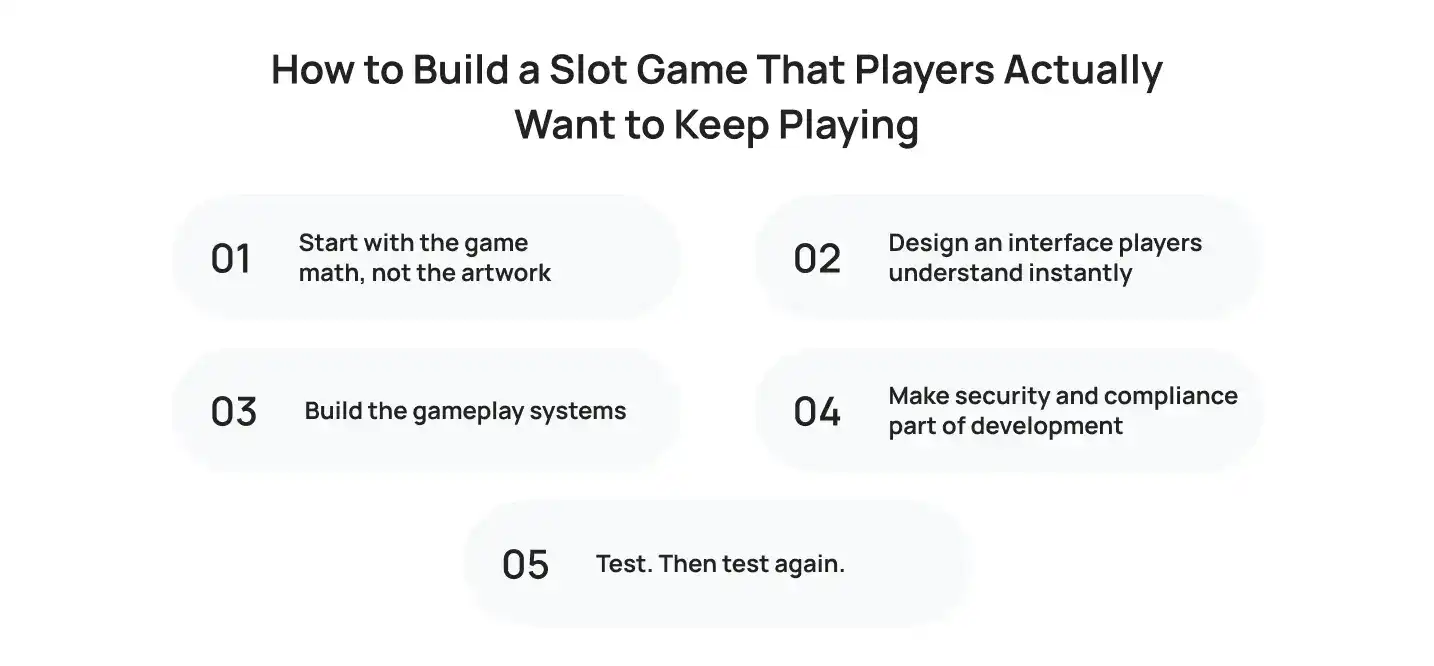
Step 1. Start with the game math, not the artwork
It sounds backwards, but the math comes first.
Before anyone designs symbols or bonus animations, developers build the mathematical model behind the game. This determines:
- Return to Player (RTP)
- Volatility
- Hit frequency
- Payline combinations
- Bonus probabilities
- Jackpot behavior
Every spin must produce fair and statistically accurate results. That’s why the RNG and payout model are usually designed before the art team begins creating visual assets.
Many first-time founders skip this step because it isn’t exciting. Later, they discover their game simply isn’t fun to play or the payouts don’t feel balanced.
Step 2. Design an interface players understand instantly
Players make decisions in seconds.
If they can’t understand where to spin, view payouts, or trigger bonus features, they’ll probably leave.
A strong user interface focuses on clarity rather than complexity. The goal is to make every interaction feel natural, whether someone is playing on a desktop monitor or a mobile phone.
This is also the stage where many studios choose to hire game app designers who specialize in casino interfaces. Small design decisions, like button placement, reel spacing, or animation timing, can noticeably improve player retention.
Step 3. Build the gameplay systems
Once the math and interface are ready, developers begin connecting everything together.
This includes:
- Reel mechanics
- Payline logic
- Wild and scatter symbols
- Free spins
- Multipliers
- Progressive jackpots
- Sound effects
- Animations
- Reward systems
At this stage, developers also integrate the backend so player progress, achievements, and balances remain synchronized across devices.
For social casino games, this often includes leaderboards, tournaments, daily rewards, and seasonal events that keep players coming back.
Step 4. Make security and compliance part of development
Commercial slot games must protect player accounts, transaction histories, payment information, and gameplay records. For regulated markets, developers also need certified Random Number Generators and independent testing to verify fairness.
Depending on where the game will be released, studios may also need to comply with regulations set by organizations such as GLI (Gaming Laboratories International), eCOGRA, or regional gaming authorities.
Skipping compliance early usually creates delays later. Sometimes expensive ones.
Step 5. Test. Then test again.
Even a tiny error can create major problems in a slot game.
Imagine a bonus round triggering twice when it shouldn’t. Or a payout being calculated incorrectly after millions of spins. Those bugs aren’t just frustrating. They can affect player trust and regulatory approval.
That’s why developers test every feature repeatedly before launch.
Testing usually covers:
- RNG validation
- Payout accuracy
- Device compatibility
- Performance optimization
- Load testing
- Security testing
- User experience
- Network stability
Many studios also simulate millions of automated spins before releasing a commercial slot game. The goal is to confirm that the actual RTP closely matches the intended mathematical model.
Typical development timeline
| Development Phase | Estimated Duration |
| Game concept and planning | 2–3 weeks |
| Mathematical model and RTP design | 2–4 weeks |
| UI/UX and visual design | 4–6 weeks |
| Core gameplay development | 8–12 weeks |
| Backend integration | 4–8 weeks |
| Testing and certification | 4–8 weeks |
| Soft launch and optimization | 2–4 weeks |
How Much Does It Cost to Develop a Slot Game in 2026?
One of the first questions founders ask is, “How much does it cost to develop a slot game?”
Here’s what a typical budget looks like in 2026.
| Project Type | Estimated Cost (USD) | Typical Timeline |
| Basic social slot game | $30,000–$60,000 | 3–4 months |
| Mid-level mobile slot game | $60,000–$150,000 | 5–7 months |
| Real-money online slot | $150,000–$350,000+ | 8–12 months |
| Enterprise casino platform with multiple games | $500,000+ | 12+ months |
Building Slot Games That Scale
At Cubix, we’ve learned that successful casino games aren’t built around flashy visuals alone. They’re built around stability, fair gameplay, and systems that continue performing as the player base grows.
Our team combines experienced slot machine software developers, artists, backend engineers, QA specialists, and product strategists to create reliable casino experiences across mobile, web, and desktop platforms.
As a trusted slot machine software developer, we also help businesses choose the right slot machine development software based on their goals, target platforms, and compliance requirements. That means avoiding unnecessary complexity while building technology that supports future updates, player retention, and business growth.
Do you have an idea for a slot game? Let’s turn it into a product players come back to every day.
Frequently Asked Questions
1. What programming language do slot machines use?
Modern slot games usually use multiple programming languages. C# is widely used with Unity for mobile development, C++ remains common in land-based casino machines, JavaScript and TypeScript power HTML5 browser games, while Go and Rust are increasingly used for backend services.
2. How are slot machines programmed?
Slot games combine several independent systems, including Random Number Generators (RNG), payout calculations, game logic, animations, backend services, databases, analytics, and security. Together, these systems ensure every spin is fair, responsive, and compliant with gaming regulations.
3. How much does it cost to develop a slot game?
A basic social slot game typically starts around $30,000, while commercial real-money casino games often exceed $150,000. Enterprise casino platforms with multiple games and advanced backend infrastructure can cost $500,000 or more, depending on features and compliance requirements.
4. Is Unity good for slot game development?
Yes. Unity is one of the most popular engines for slot game development because it supports cross-platform deployment, rapid content updates, smooth animations, and excellent mobile performance.
5. Is C++ still used for casino games?
Absolutely. C++ remains one of the preferred languages for land-based casino machines, embedded gaming systems, certified RNG implementations, and performance-critical casino software.