Key Takeaways
- You don’t need to compete with Roblox at its own scale. Most successful projects pick one audience, schools, a brand’s fans, a training team, and build for them first.
- Start small. A working first version, with basic accounts, hosting, and currency, is enough to prove people will actually use it.
- Content moderation cannot wait until after launch. If any part of your audience is under 18, you need a review system from day one.
- Ready-made game backends can get you started, but they don’t include a creator marketplace or payout system, that part still has to be built custom.
- Your virtual currency is basically a small bank. It needs real testing for cheating and errors before real users touch it.
Quick Answer: Building a simple version of a Roblox-style platform usually costs $150,000–$250,000 and takes 6 to 9 months. A fuller version, with a creator marketplace and payouts, runs $450,000–$800,000 over about a year. Most businesses don’t need to out-build Roblox, they need one focused platform for one clear audience, built by an experienced custom game development company.
Why So Many Businesses Want “Their Own Roblox”
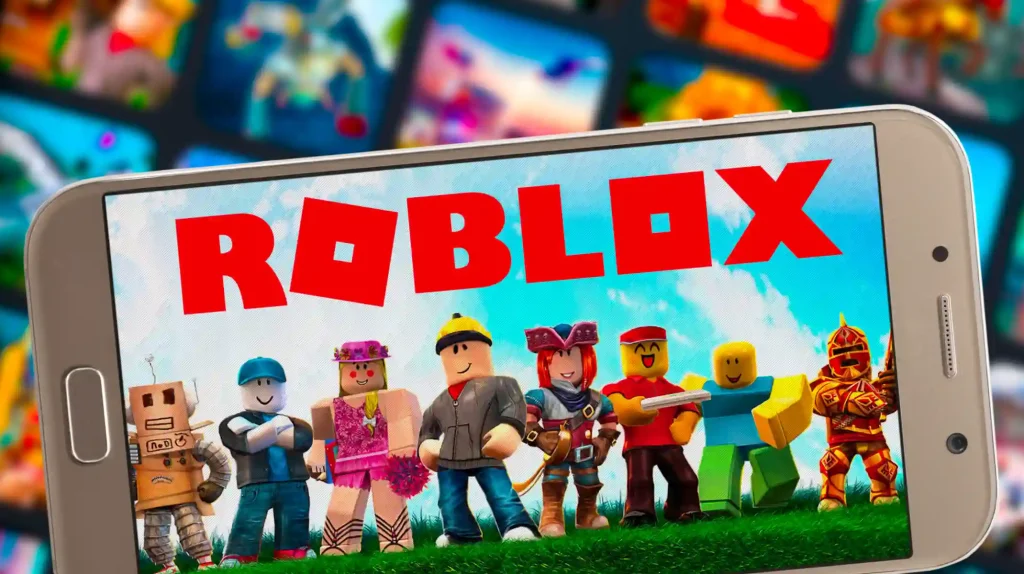
Roblox isn’t just a big game anymore, it’s one of the largest platforms in the world, and its numbers now rival major social networks and streaming services. As of Q4 2025, it had 144 million daily active users and 381.8 million monthly active users, more than most console networks and streaming gaming platforms combined. Full-year 2025 revenue reached $4.9 billion, up 36% from the year before, and players spent roughly 124 billion hours on the platform across the year.
The part that really gets businesses interested, though, isn’t the size, it’s the model behind it. Roblox has over 44 million games and experiences, built almost entirely by its own users rather than by Roblox itself. Its 3.5 million active developers collectively earned more than $1.5 billion in 2025 alone through the platform’s revenue-sharing system. That’s a business where the users are also the content creators, and everyone, creators, players, and the platform, earns something from the same activity. It’s a genuinely different model from a normal app or game, and it’s exactly why so many companies now ask how to build something similar for their own audience.
For a school, a media brand, or a training company, the appeal isn’t Roblox’s scale. It’s the underlying idea: give people the tools to build, let a community grow around what they make, and design a business model where that growth pays for itself.
Who Actually Needs a Platform Like This?
Very few businesses actually need to compete with Roblox directly, and trying to is usually the wrong goal. Most companies exploring this space are solving a much smaller, more specific problem. Four types of buyers come up again and again.
Schools and EdTech companies want teachers to build simple learning games, math practice, history quizzes, science simulations, but Roblox’s open content library isn’t something a school district will approve for classroom use. Their students need a closed, fully moderated environment where every piece of content has been reviewed by an adult, not a general-audience platform with millions of unrelated experiences.
Corporate training teams want to replace boring slide-deck training with something employees will actually finish. Interactive scenarios, a customer service simulation, a safety walkthrough, an onboarding experience, perform better than static e-learning, but the results need to feed into existing HR and compliance systems, which off-the-shelf platforms rarely support out of the box.
Sports teams and media brands already have a loyal, engaged fan base. A branded space where fans create and share content keeps that audience, and the money they spend, inside the brand’s own ecosystem instead of handing both to Roblox. This is fundamentally a brand and loyalty play, not a gaming business.
Web3 and blockchain gaming companies want a world where in-game items are genuinely owned by players and can be traded for real value outside the platform itself. This requires a different technical foundation than a standard creator platform, usually built with dedicated blockchain game development services to handle wallets, smart contracts, and on-chain ownership records safely.
Want to discuss your project? Our experts are just a click away.
Contact UsWhat Features Do You Actually Need?
The single biggest mistake in projects like this is trying to build everything at once. A phased approach, where you prove the core idea works before adding complexity, keeps both cost and risk under control. Most platforms move through three clear stages.
| Stage | Core Features | What It Proves |
| Starter (V1) | User accounts, game hosting, creator submission flow, basic virtual currency, content review queue, basic analytics | Creators will build, players will play, and money will move through the system |
| Growth (V2) | In-browser creator tools, item marketplace, player-to-player trading, creator payout system, mobile app | The economy works, and creators will stick around to earn from it |
| Full-Scale (V3) | Developer APIs, AI-assisted content moderation, cross-platform play, creator revenue dashboards, enterprise admin console | The platform can support real scale and outside developers |
Most companies never need to reach V3 in their first year, and that’s completely normal. The goal of a Starter build is not to impress anyone, it’s to get real creators and real players using the platform quickly enough that you learn what to build next, instead of guessing.
Ready-Made Tools vs. Building Custom
Before committing budget to a custom build, it’s worth understanding exactly what off-the-shelf tools can and can’t do for you.
Backend services built for game studios are genuinely excellent at things like matchmaking, player accounts, leaderboards, and basic analytics. What they’re built for, though, is one studio making one game, not a platform where outside creators upload their own separate games for other people to discover and play. These tools generally don’t include a content marketplace, a creator approval workflow, or a payout system for outside creators to cash out their earnings. If your idea depends on other people submitting content that your users then discover and play, you’ll end up building most of the platform layer yourself regardless of which backend you start with.
That’s the exact point where a Game studio with real platform-building experience becomes the better investment, a team that can combine strong game design services for the player experience with the backend engineering a creator-driven platform actually needs underneath it. Businesses looking to build a Roblox-inspired gaming platform can also benefit from a specialized Roblox Game Development Service tailored to their specific audience and requirements. Off-the-shelf tools aren’t wasted money in this scenario; they just end up as one layer inside a larger custom system rather than the whole solution.
How Much Does It Cost & How Long Does It Take?
| Version | Cost | Timeline |
| Starter (V1) | $150,000 – $250,000 | 24 – 36 weeks |
| Growth (V2) | $450,000 – $800,000 total | 44 – 60 weeks total |
| Full-Scale (V3) | $1.2 million+ | 72 – 104 weeks total |
These numbers shift depending on your exact feature list, where your development team is based, and how complex your virtual economy needs to be. A platform with a simple currency and no player-to-player trading will land toward the lower end of a range; one with trading, payouts, and blockchain-based ownership will land toward the higher end, even within the same stage. Treat these figures as a starting point for planning your budget and getting internal buy-in, not as a final, locked-in number, a proper scoping conversation with a development partner will narrow the range for your specific idea.
Where These Projects Usually Go Wrong
Two mistakes account for most of the failed or badly over-budget platforms in this space, and both are avoidable with the right planning upfront.
Leaving content moderation for later. If your platform allows any form of user-generated content, and especially if minors will use it, you need a review system, a way for users to report bad content, and a clear written policy from day one, not as an afterthought once the platform is already live. Treating moderation as a “we’ll figure it out after launch” problem either lets inappropriate content pile up, which is a genuine legal and reputational risk, or forces you to shut down creator submissions entirely once problems appear, which quietly kills the entire idea behind the platform.
Not testing the virtual economy for exploits. The moment your currency has real value, people will actively try to break it, whether that means duplicating items, faking purchases, or finding gaps in the payout logic. A currency exploit that isn’t caught before launch is far more expensive and damaging to fix afterward, because by then real money and real user trust are already on the line, and a rollback to fix a duplication bug can permanently damage confidence in your economy.
How Roblox-Style Platforms Actually Make Money
The classic model works like this: players buy virtual currency with real money, spend it inside creator-made games and experiences, and creators earn a share of whatever gets spent inside their content. Roblox pays creators an exchange rate on that currency and keeps the rest, a model that generated $4.9 billion in revenue for the company in 2025 and paid out over $1.5 billion to creators in the same year.
The catch is that this model needs real volume to work well. A platform with a few thousand users won’t generate meaningful revenue purely from virtual currency spending. Three revenue paths tend to work better at smaller scale, and many platforms use a mix of them before eventually layering in a full currency economy.
| Revenue Model | How It Works | Best For |
| Virtual currency & marketplace | Players buy currency, spend it in creator content, creators earn a share | Platforms with large, established user bases |
| Enterprise licensing | A business pays a yearly fee for a branded, private version of the platform | Schools, corporate training, sports/media brands |
| Creator subscriptions | Creators pay a monthly fee to access tools and publish to the platform | Platforms with genuinely strong, in-demand creator tools |
Most new platforms start with enterprise licensing or creator subscriptions, since both generate real revenue at a much lower user count, and add the full virtual currency model once they’ve built up enough active users for it to make economic sense on its own.
The Team & Tech Behind a Platform Like This
Building a platform like this takes more than a single backend developer working alone. In practice, most successful projects need a small, focused team covering several distinct skill sets at once:
- Game engine expertise, typically Unity or Unreal Engine, depending on the visual quality and platforms you’re targeting
- Multiplayer infrastructure to handle real-time interaction between players across the world
- Game and level design, which is where structured RPG game development services become genuinely useful if your platform includes quest-style progression, character growth, or story-driven experiences rather than purely simple minigames
- Economy and payment engineering, including blockchain integration for platforms that want provable, transferable item ownership
- Art direction, since a platform’s visual identity is one of the biggest factors in whether both creators and players stick around long-term, which is where dedicated AAA Game Art Studio Services make a real, visible difference for platforms aiming at a premium, polished look rather than a generic one
Trying to assemble this team piecemeal, hiring separately for each specialty, is one of the quieter ways these projects lose time and budget before development even really begins.
Why Build With a Game Studio Like Cubix
Platforms like this succeed or fail based on execution, not just the strength of the original idea. Cubix works as a full-cycle Game studio, handling everything from early concept and game design services through engineering, art, and long-term support after launch, so you’re not left stitching together five different vendors just to get one platform out the door.
Having one team own the entire build, from design through engineering, art, and the underlying economy, is what keeps a project like this on budget and on schedule instead of quietly drifting past both. If you’re ready to scope your own platform, talk to Cubix about your idea and get a realistic estimate for your specific version of it.
Want to discuss your project? Our experts are just a click away.
Contact UsFrequently Asked Questions
1. How much does it cost to build a gaming platform like Roblox?
A basic first version typically costs $150,000–$250,000. A fuller platform with a marketplace and creator payouts runs $450,000–$800,000. A platform built for real scale, with developer APIs and enterprise features, can cost $1.2 million or more. The right number for your project depends on your feature list and how complex your virtual economy needs to be.
2. How long does it take to build a platform like this?
A starter version usually takes 6–9 months. A growth version with more features takes closer to 10–14 months total. Full-scale platforms, built for large numbers of users and outside developers, can take 1.5–2 years from first sprint to full launch.
3. Should I build my own platform or just use Roblox?
If your audience is general and Roblox’s content rules are acceptable for your use case, using Roblox directly is faster and considerably cheaper than building your own. Build a custom platform when you need control over content standards (schools, healthcare, corporate training), when your brand can’t sit next to Roblox’s general content, or when you need a business model, like enterprise licensing, that Roblox doesn’t support.
4. What’s the difference between ready-made game backends and a custom platform?
Ready-made backends are built to support one game made by one studio, and they handle things like player accounts and matchmaking well. They don’t include a creator marketplace, a content approval workflow, or a payout system for outside creators. If your platform depends on other people submitting content for others to discover and play, you’ll need custom development on top of, or instead of, these tools.
5. How does the money-making model actually work?
Players buy virtual currency with real money and spend it inside creator-made experiences. Creators earn a share of what’s spent in their content and can cash it out over time. This model works best once you already have a large, active user base. Smaller, newer platforms often start with enterprise licensing or creator subscriptions instead, and add the full currency model later once user numbers support it.